
Big Island Wildlife
The Island of Hawaiʻi, usually called the Big Island, holds more wildlife variety than any other island in the chain. Its size and height create stacked climate zones, from coral reefs to alpine desert, and each zone shelters its own animals. Manta rays glide through Kona’s night waters. Nēnē graze on volcanic slopes. The ʻio, Hawaiʻi’s only native hawk, hunts nowhere else on Earth. This guide covers what lives here, where to find it, and how to watch responsibly.
In This Guide
Big Island Wildlife at a Glance
The Big Island is less than a million years old, the youngest in the Hawaiian chain, yet it already supports one of the most remarkable collections of wildlife in the Pacific. Covering about 4,028 square miles, it is larger than all the other main islands combined. That size matters for animals, because it creates room for extremes. The land rises from sea level to 13,803 feet at the summit of Mauna Kea, packing tropical rainforest, dry grassland, subalpine scrub, and near-arctic summit desert into a single island.
Isolation shaped everything here. The Hawaiian Islands are the most remote archipelago on the planet, roughly 2,400 miles from the nearest continent. Few species ever arrived on their own, and those that did evolved into forms found nowhere else. Before humans arrived, the only land mammal in all of Hawaiʻi was the Hawaiian hoary bat, which likely rode storm winds across the Pacific. Every other land mammal you see today, from feral pigs to mongoose, was brought by people.
That history gives Big Island wildlife a split character. On one side are the endemics: the ʻio hawk, the nēnē goose, forest honeycreepers like the ʻakiapōlāʻau, and a reef community where roughly a quarter of the fish species occur nowhere else. On the other side are the introduced animals, some destructive, that arrived with Polynesian voyagers, European ships, and modern trade. Feral ungulates damage native forest. Introduced predators threaten ground-nesting birds. Conservation on the Big Island is largely the story of protecting the first group from the second.
The ocean tells a brighter story. Hawaiʻi’s isolation produced extraordinary marine endemism, and the Big Island’s young volcanic coastline offers some of the clearest water in the state. The Kona and Kohala coasts sit in the rain shadow of the big volcanoes, so runoff stays low and visibility stays high. Coral reefs here are geologically young but biologically rich, and the deep water just offshore brings in the ocean’s largest visitors: manta rays, spinner dolphins, humpback whales, and the occasional whale shark.
For visitors, the practical takeaway is simple. Wildlife encounters on the Big Island reward patience, early mornings, and respect for distance rules. The sections below break down what to look for by habitat, then show you exactly where to go.
Marine Life
Manta Rays
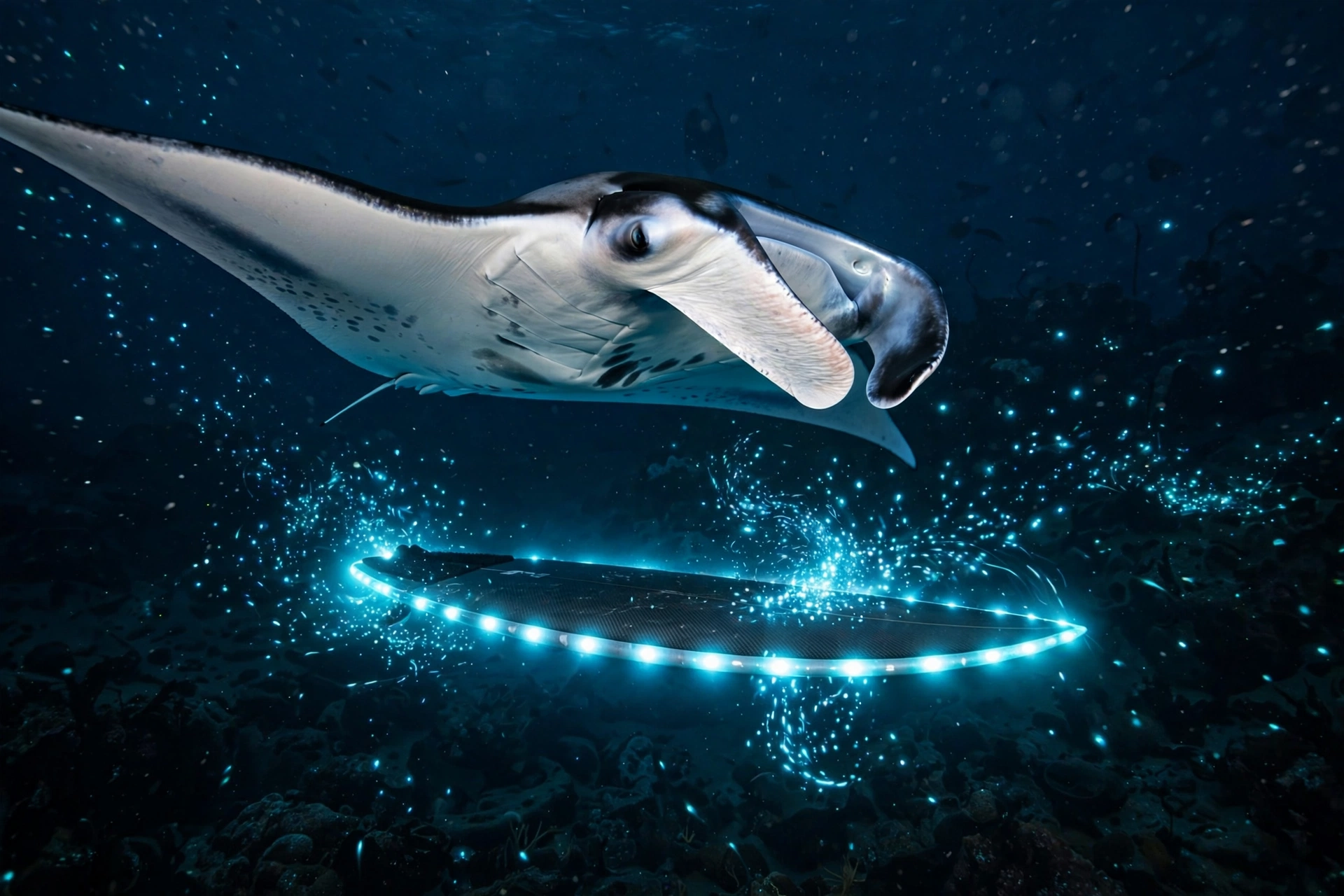
The Big Island’s most famous marine residents are its manta rays. These gentle filter feeders, with wingspans that can exceed 12 feet, gather at night off the Kona coast to feed on plankton drawn to lights in the water. Two sites are well known: the waters off Keauhou Bay, sometimes called Manta Village, and the area off Honokōhau Harbor to the north, sometimes called Manta Heaven. Snorkelers float at the surface holding onto lighted boards while the rays barrel-roll inches below, scooping plankton. It is a wildlife encounter, not a performance, and the rays come and go on their own terms. Strict no-touch rules apply, and reputable operators brief every swimmer before entering the water. This page is informational only and does not recommend specific operators.
Green Sea Turtles (Honu)
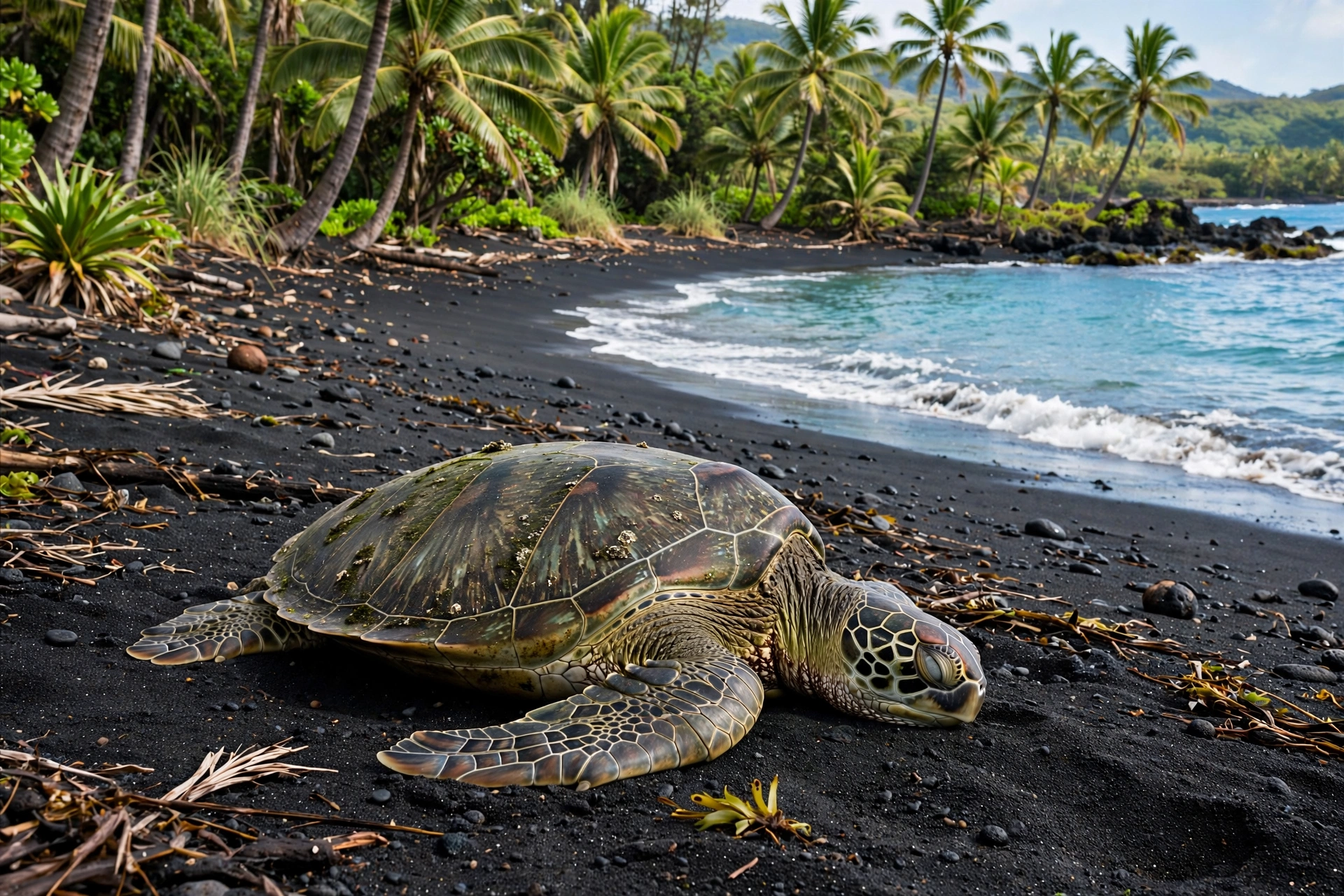
Hawaiian green sea turtles haul out and feed all around the island. Punaluʻu Black Sand Beach on the Kaʻū coast is the most reliable land viewing spot, where turtles often rest on the black sand in the afternoon. In the water, Kahaluʻu Beach Park, Puakō’s reef, and the Hilo-side beaches at Richardson and Carlsmith host resident turtles. Federal guidance asks viewers to stay at least 10 feet away and never touch, feed, or block a turtle’s path to the water. Turtles are protected under the Endangered Species Act, and harassment carries real penalties.
Hawaiian Monk Seals
About 1,600 Hawaiian monk seals remain in the wild, making them one of the most endangered marine mammals on Earth. Most live in the Northwestern Hawaiian Islands, but a growing number haul out on main island beaches, including Punaluʻu, South Point, and the Kona coast. If you see one, give it at least 50 feet of space (more if it is a mother with a pup), keep dogs leashed and far away, and do not post its exact location on social media, since crowds stress the animal. Report injured or entangled seals to NOAA Fisheries or the state Division of Aquatic Resources.
Spinner Dolphins (Naiʻa)
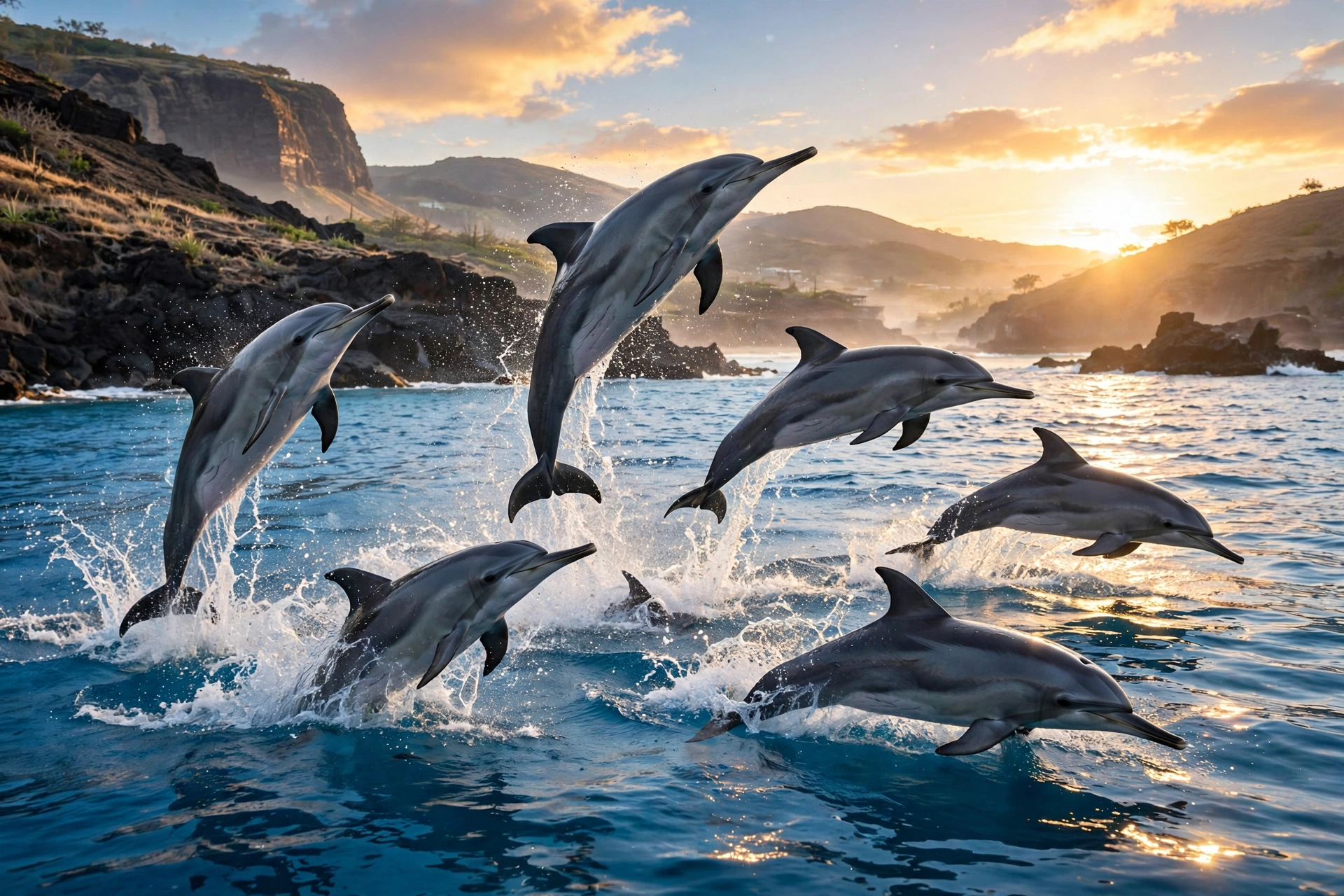
Spinner dolphins rest in the island’s calm bays during the day after feeding offshore at night. Kealakekua Bay, Hōnaunau, and the bays of the Kona coast are regular resting areas. Federal law requires staying at least 50 yards away from spinner dolphins in Hawaiʻi’s nearshore waters. Do not swim toward them, chase them, or cut them off. If dolphins approach you on their own, enjoy the moment quietly and avoid sudden movements.
Humpback Whales (Koholā)
From December to April, North Pacific humpbacks migrate to Hawaiian waters to breed and calve. The Kohala coast and the waters off the island’s west side offer the island’s best shore-based whale watching, and you can sometimes hear males singing while snorkeling on calm winter mornings. Federal rules require keeping 100 yards from whales, whether you are on a boat, a paddleboard, or swimming. Mothers with calves deserve extra space and extra quiet.
Reef Fish and Coral
Big Island reefs host the classic Hawaiian reef community: yellow tang, humuhumunukunukuāpuaʻa (reef triggerfish), parrotfish (uhu), Moorish idols, and the endemic Potter’s angelfish, found only in Hawaiʻi. Coral here grows slowly on young lava rock. Never stand on, touch, or kick coral, and choose reef-safe sunscreen that complies with Hawaiʻi’s Act 104, which bans oxybenzone and octinoxate. Wana (sea urchins) hide in reef crevices at entries like Kahaluʻu, so shuffle your feet or wear reef shoes where the bottom is rocky.
Whale Sharks
Whale sharks, the largest fish in the sea, are occasionally spotted off the Kona coast, usually in late summer and fall. Sightings are rare and unpredictable, which makes them a bonus rather than a plan. If you are lucky enough to see one, keep your distance, never touch it, and avoid blocking its path.
Birds of the Big Island
The ʻIo: Hawaiʻi’s Only Native Hawk
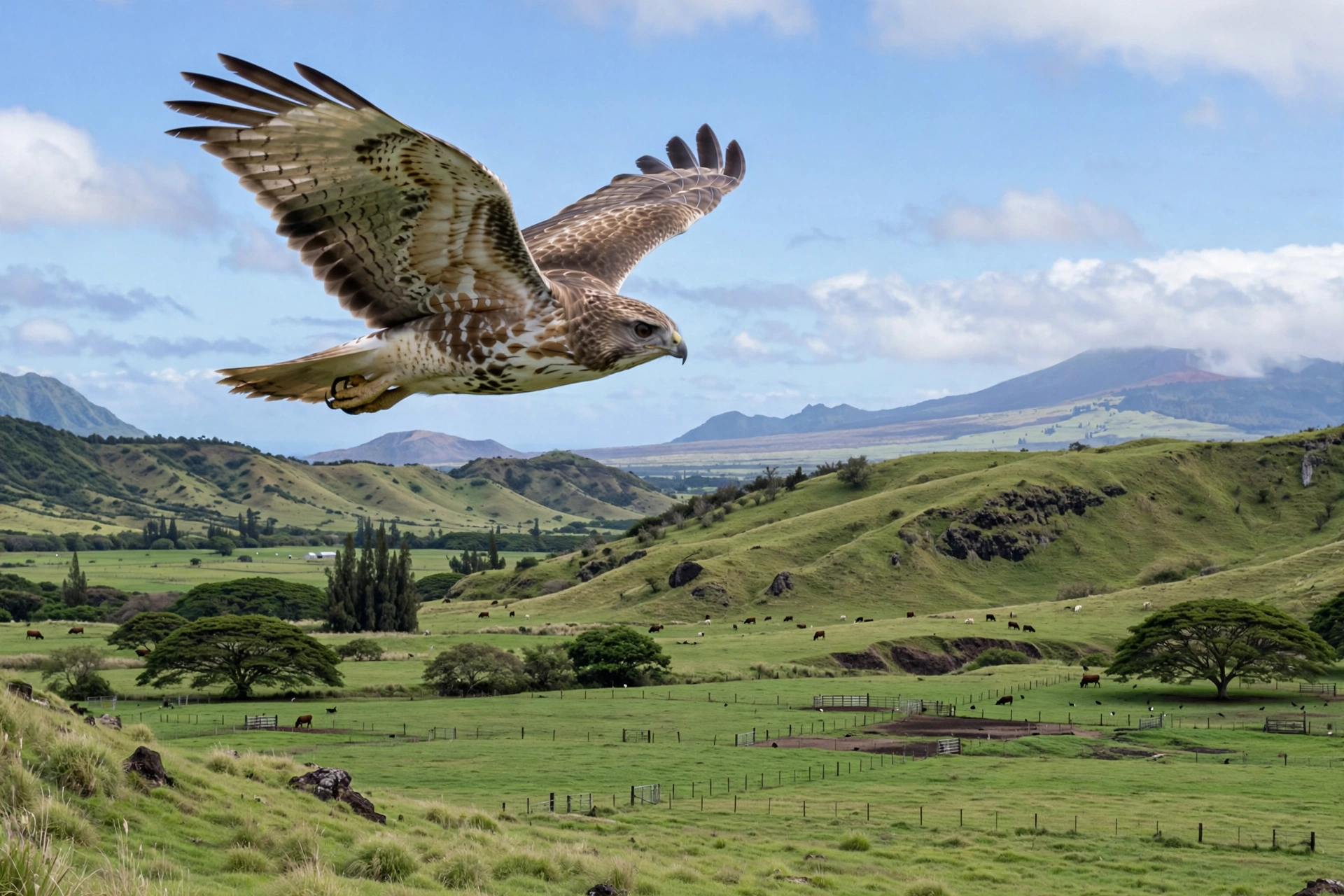
The Hawaiian hawk, or ʻio, is found only on the Island of Hawaiʻi. No other main island has a resident population. This broad-winged raptor hunts over grasslands, forests, and even suburban edges from sea level to the subalpine zone. Adults are usually dark brown, though a light color phase occurs. In Hawaiian culture the ʻio is an ʻaumakua, a family guardian, for some families, and it appears in traditional chant and story. Good places to scan for soaring ʻio include the Saddle Road corridor, the grasslands around Waimea, and the slopes of Mauna Kea. Once listed as endangered, the ʻio was delisted in 2020 after surveys showed a stable population of a few thousand birds, a genuine conservation success.
Nēnē: The Hawaiian Goose
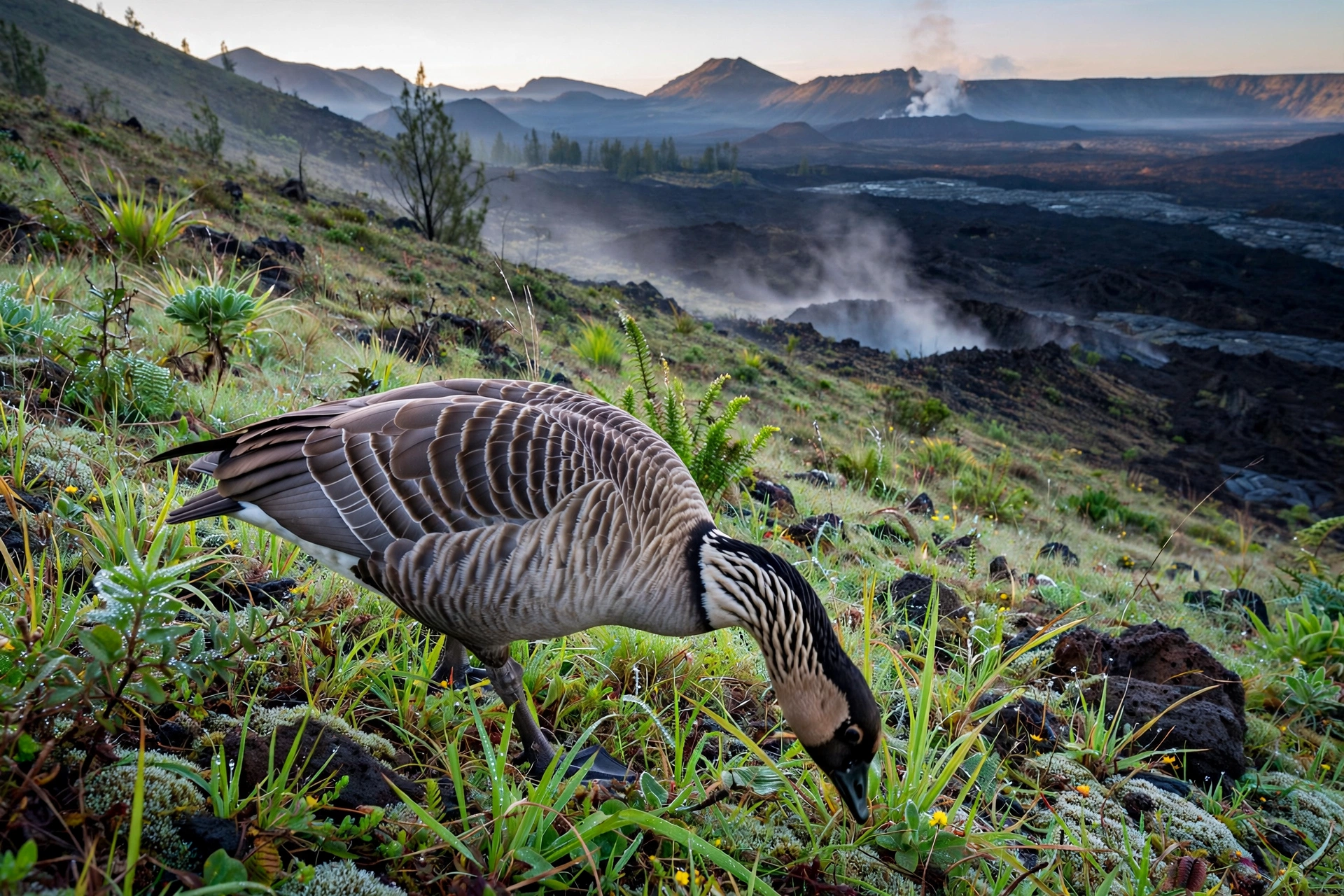
The nēnē, Hawaiʻi’s state bird, staged one of the great wildlife comebacks of the twentieth century. By the 1950s fewer than 30 wild birds remained, hammered by hunting, introduced predators, and habitat loss. Captive breeding and reintroduction, centered on Hawaiʻi Volcanoes National Park, rebuilt the population into the thousands statewide. On the Big Island, look for nēnē grazing on grassy slopes around the Kīlauea summit area, along Chain of Craters Road, and in the pastures near Volcano Village. Drive slowly in the park, especially at dawn and dusk: vehicle strikes are now one of the leading threats to the birds. Never feed nēnē; human food harms them and teaches them to beg near roads.
Forest Honeycreepers
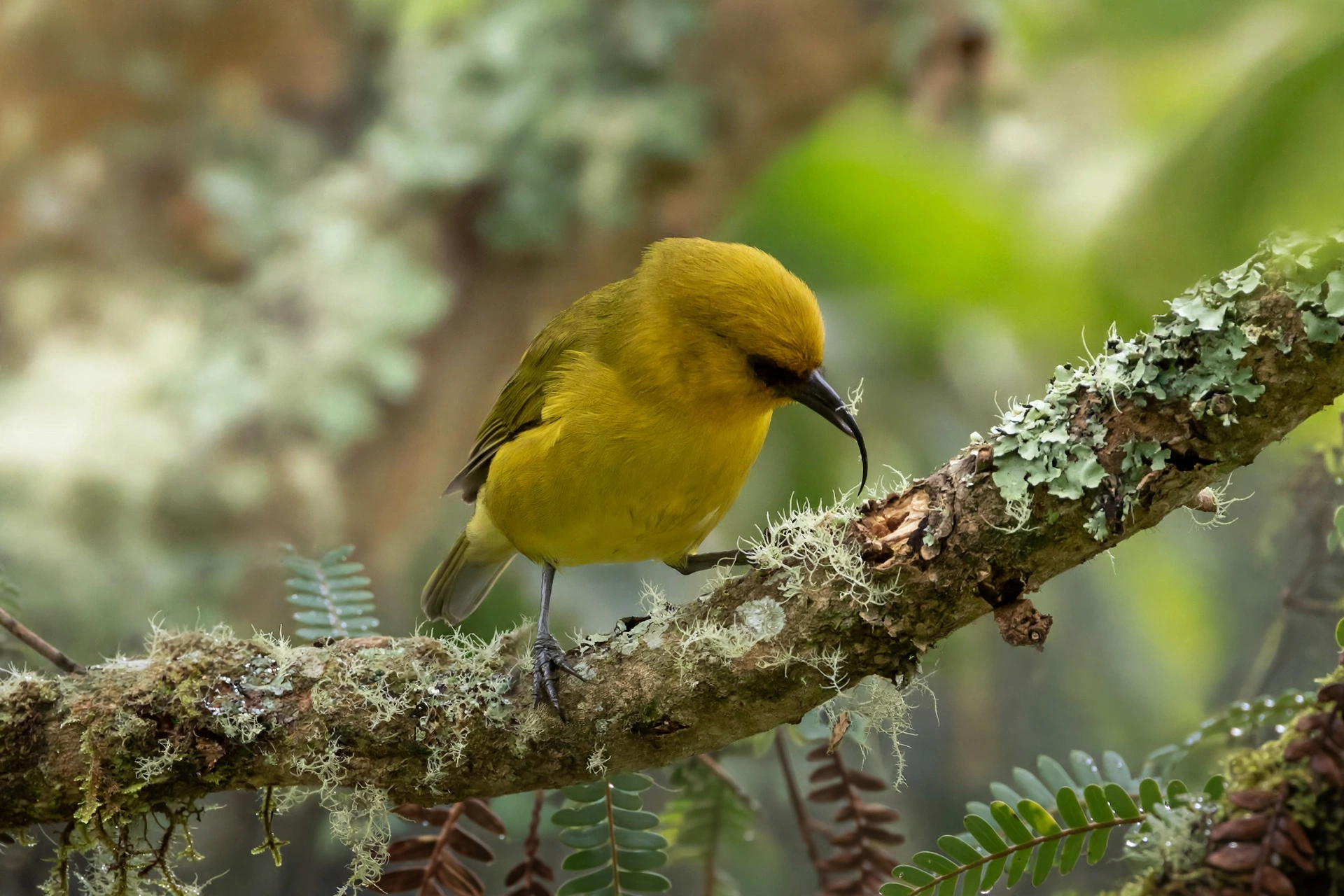
The Big Island’s high-elevation native forests shelter honeycreepers found nowhere else. The ʻakiapōlāʻau, with its extraordinary mismatched bill (a long curved upper bill and short chisel-like lower bill), pries insects from bark in koa and ʻōhiʻa forest, mainly within Hakalau Forest National Wildlife Refuge. The Hawaiʻi ʻakepa, a small orange-yellow bird, is critically endangered and now survives only on this island. The ʻiʻiwi (scarlet honeycreeper), ʻapapane, and Hawaiʻi ʻamakihi are more widespread in native forest above about 4,000 feet, where cooler temperatures hold back the mosquitoes that spread avian malaria. That disease has devastated low-elevation forest birds across the state, which is why the remaining strongholds are all high up. Conservation teams now use landscape-scale mosquito control, including the incompatible-insect technique, to push the disease line back down the mountain.
Pueo: The Hawaiian Short-Eared Owl
Unlike most owls, the pueo hunts by day, gliding low over grasslands and open slopes. It is also an ʻaumakua for many Hawaiian families. Look for pueo in the late afternoon over the Saddle Road grasslands, the Mauna Kea access road, and open country around Waimea. If you see one perched on a fence post, watch from your car rather than approaching on foot.
Seabirds
South Point (Ka Lae), the southernmost point in the United States, hosts nesting seabirds on its cliffs, including wedge-tailed shearwaters (ʻuaʻu kani) and brown boobies (ʻā). Dawn and dusk bring the best activity. Red-footed and masked boobies cruise the Kaʻū coastline, and great frigatebirds (ʻiwa) ride thermals along the cliffs. Stay on marked paths near cliff edges, which are undercut and unstable.
Introduced Game Birds
Not every bird you see is native. The kalij pheasant, Erckel’s francolin, wild turkey, and several dove species were introduced for hunting or by accident and are now common in ranchland and dry forest. They are part of the island’s modern landscape, but they do not carry the conservation weight of the endemics. Learning to tell the two groups apart makes every outing more rewarding.
Land Animals
The Hawaiian Hoary Bat (ʻŌpeʻapeʻa)
The ʻōpeʻapeʻa is Hawaiʻi’s only native land mammal and one of only two bat species found in the state. This solitary, tree-roosting bat is listed as endangered. It is most active at dusk, hawking moths over forests, pastures, and even resort landscaping. You are most likely to spot one as a fluttering silhouette against the evening sky near forest edges around Volcano, Hakalau, or the Kona uplands. If you find a grounded bat, do not handle it; contact the state Division of Forestry and Wildlife.
Feral Ungulates
Feral pigs, first brought by Polynesian voyagers and later by Europeans, root up native forest understory across the island and spread the seeds of invasive plants. Feral goats and sheep browse high-elevation vegetation on Mauna Kea, where management programs work to protect the fragile alpine ecosystem and the endangered palila, a finch-billed honeycreeper that depends on māmane forest. Hunters help control these populations under state regulations, and fenced management units protect the most sensitive forests.
Mongoose, Rats, and Cats
The small Indian mongoose was introduced in 1883 to control rats in sugar cane fields, a plan that failed because rats are nocturnal and mongoose hunt by day. Instead, mongoose prey on native ground-nesting birds, sea turtle hatchlings, and nēnē goslings. Rats and feral cats compound the damage, especially for seabirds and forest birds. Never feed feral cats near wildlife areas, and keep pet cats indoors: toxoplasmosis from cat feces washing into the ocean is a documented killer of monk seals and other marine life.
Wild Donkeys of Waipiʻo
Small herds of wild donkeys have roamed Waipiʻo Valley and the Hāmākua coast for well over a century, descendants of pack animals from the sugar plantation era. They are wary of people and best viewed from a distance. The valley itself is culturally sensitive and access is restricted; admire the landscape and its animals respectfully from designated viewpoints unless you are with an authorized guided visit.
One welcome absence: Hawaiʻi has no native snakes, and no snake species has established a breeding population on the Big Island. If you ever see a snake, report it immediately to the state’s 643-PEST hotline so inspectors can respond.
Where to See Wildlife
Hawaiʻi Volcanoes National Park
The national park is the island’s single best wildlife stop. Nēnē graze the lawns and slopes around Kīlauea’s summit, especially in the early morning. ʻIo soar over the caldera and along Chain of Craters Road. Native forest along the Kīlauea Iki Overlook, the Devastation Trail, and the Mauna Loa Road hosts ʻapapane, ʻiʻiwi, and ʻamakihi. Arrive at sunrise for the most bird activity, drive slowly for nēnē crossings, and check the park’s website for current conditions before you go.
Hakalau Forest National Wildlife Refuge
On the windward slope of Mauna Kea, Hakalau Forest protects some of the finest remaining native forest in Hawaiʻi and most of the surviving ʻakiapōlāʻau and Hawaiʻi ʻakepa population. Access is restricted to protect the habitat; visits are typically arranged through the refuge itself or its friends group on scheduled open days or guided entries. If you secure a spot, you will walk koa and ʻōhiʻa forest with a chorus of honeycreepers that exists almost nowhere else. Book well ahead and follow every biosecurity rule, including cleaning boots to avoid spreading invasive seeds and disease.
Kealakekua Bay
This marine life conservation district on the Kona coast combines spinner dolphin resting areas, resident honu, and exceptional reef fish. Access is by kayak (with landing restrictions near the Captain Cook monument), by boat, or by the steep trail down to the monument. Morning offers the calmest water and the most active reef. Observe the 50-yard dolphin rule and the 10-foot turtle guidance, and never touch coral.
Kona and Kohala Coasts
Puakō’s reef, Mauna Lani’s fishponds, and the Hapuna shoreline host turtles and reef fish in calm morning water. The Kohala coast from Kapaʻau to Upolu is prime shore-based whale watching in winter; bring binoculars and scan from the cliffs. Offshore, winter boat crossings regularly encounter humpbacks, pilot whales, and dolphin pods.
Punaluʻu and South Point (Ka Lae)
Punaluʻu Black Sand Beach is the island’s most reliable spot for seeing both honu and monk seals hauled out on land. Give every animal generous space and keep dogs leashed. Continuing south to Ka Lae, the cliffs hold nesting shearwaters and boobies, and the windswept point is one of the island’s great seabird viewpoints. The currents off South Point are dangerously strong: enjoy the birds from the cliffs and do not enter the water there.
Mauna Kea and Saddle Road
The high saddle between Mauna Kea and Mauna Loa is raptor country. ʻIo hunt the grasslands along the Daniel K. Inouye Highway, pueo glide over the pastures at dusk, and nēnē sometimes graze near the road. The palila, an endangered finch-billed honeycreeper, lives in the māmane forest on Mauna Kea’s upper slopes; it is difficult to see without a guide and a high-clearance vehicle, but its presence is one reason the mountain’s forests are so carefully managed. Dress warmly: temperatures at the summit can be 30 degrees colder than at the beach.
Hilo Side
Richardson Ocean Park and Carlsmith Beach Park in Hilo host resident turtles in their sheltered coves, and the Wailuku River mouth attracts herons and migratory shorebirds in season. The Liliʻuokalani Gardens area is an easy urban birding stop. Hilo’s wetter climate means lusher vegetation and more insects, which in turn means more insect-eating birds in town than on the dry Kona side.
Wildlife Ethics and the Law
Watching wildlife on the Big Island comes with legal obligations, not just suggestions. Marine mammals are protected under the Marine Mammal Protection Act, and several species carry additional Endangered Species Act protection. The distance rules are minimums, not targets: 100 yards from humpback whales, 50 yards from spinner dolphins, 50 feet from monk seals (more for mothers with pups), and at least 10 feet from sea turtles. If an animal changes its behavior because of you, you are too close, even if you are outside the legal distance.
Never feed wildlife. Food conditions animals to approach people and roads, spreads disease, and in the case of nēnē and turtles causes direct health harm. This applies to bread for fish, scraps for cats near seabird colonies, and anything offered to a monk seal or turtle for a photograph.
Protect the reef the same way you protect the animals on it. Do not stand on, touch, or collect coral or rock. Use sunscreen that complies with Hawaiʻi’s Act 104, which prohibits oxybenzone and octinoxate, and consider a rash guard to reduce sunscreen use altogether. At boat harbors and popular entries, rinse gear to avoid moving invasive algae between sites.
Dogs and wildlife do not mix. Keep dogs leashed at all times in parks and near beaches, and never allow them to chase birds, seals, or turtles. Toxoplasmosis from cat waste is a documented cause of monk seal deaths, so keep pet cats indoors and do not feed feral cat colonies near coastlines or seabird areas.
Report problems rather than handling them yourself. Injured or entangled marine animals should be reported to NOAA Fisheries or the state Division of Aquatic Resources. Snake sightings go to 643-PEST. Downed native birds, especially nēnē or seabirds, can be reported to the Division of Forestry and Wildlife. Quick reporting saves animals.
Golden rule: observe, do not interact. The best wildlife encounters are the ones where the animal never knew you were there.
Best Time for Wildlife Watching
Whale season runs December to April, with February and March usually the peak for both numbers and surface activity. This is also when you may hear humpback song while snorkeling the Kona and Kohala coasts on calm mornings. Manta rays feed off Kona year-round, with no strong seasonal pattern. Sea turtles and monk seals haul out in every month; seal pupping peaks in spring, when mothers need the most space.
Forest birds are present all year, but mornings are far more productive than afternoons, and the dry season from May to September offers the most comfortable hiking weather at Hakalau and in the park. Nēnē nesting runs roughly fall through winter, with goslings appearing in late winter and spring; this is when to be most careful driving near the park. Seabird nesting at South Point peaks in spring and summer.
Daily timing matters as much as season. Be at your chosen spot at first light for birds, mid-morning for calm snorkeling water, and late afternoon for turtles hauling out at Punaluʻu. Pueo and ʻōpeʻapeʻa own the dusk shift. Build rest into your days rather than chasing every hour; tired watchers miss more than they see.
Frequently Asked Questions
What animal is the Big Island most famous for?
Manta rays. The night snorkeling encounters off the Kona coast are the island’s signature wildlife experience and one of the most reliable manta ray viewing spots in the world. The nēnē and the ʻio run a close second for land animals found through the island’s parks.
Can I see manta rays from shore?
No. The feeding aggregations happen offshore at night where lights attract plankton. Viewing is from the water with a flotation device, floating quietly at the surface. Non-swimmers can sometimes watch from boats, but the rays are a snorkeling experience, not a shoreline one.
Where is the best place to see nēnē?
Hawaiʻi Volcanoes National Park, especially the grassy areas around Kīlauea’s summit at dawn. Drive slowly on park roads, never feed the birds, and keep your distance so they do not learn to associate people with food.
Is the Hawaiian hawk really found only on the Big Island?
Yes. The ʻio is the only hawk species native to Hawaiʻi and its resident population lives only on the Island of Hawaiʻi. Fossil records show hawks once lived on other islands, but the living species is a Big Island exclusive.
What should I do if I see a monk seal on the beach?
Stay at least 50 feet away, keep dogs leashed and far from the seal, keep noise down, and do not share its exact location publicly. If the seal looks injured or entangled, report it to NOAA Fisheries or the state Division of Aquatic Resources rather than approaching.
When can I hear whales while snorkeling?
From December to April, male humpbacks sing for hours at a time and their songs carry for miles underwater. On calm winter mornings off the Kona and Kohala coasts, snorkelers regularly hear them. Remember the 100-yard rule if a whale surfaces near you.
Are there really no snakes on the Big Island?
Correct. Hawaiʻi has no native snakes and no established snake population on any island. Occasional stowaways arrive in cargo and are intercepted. If you see a snake, call 643-PEST immediately so inspectors can respond.
Do I need a reservation to visit Hakalau Forest?
Access to Hakalau Forest National Wildlife Refuge is restricted and visits are arranged through the refuge or its friends group, usually on scheduled dates. Plan well ahead, and expect strict biosecurity rules such as boot cleaning to protect the forest.
Related Guides
- Big Island Map: orient yourself before heading out
- Big Island Hawaiʻi Beaches: where turtles haul out
- Big Island Hawaiʻi Snorkeling: manta rays, turtles, and reef etiquette
- Big Island Hawaiʻi Weather: plan around seasons and vog
- Maui Wildlife: whales, axis deer, and nēnē on the Valley Isle
- Oʻahu Wildlife: seabirds, monk seals, and forest birds near Honolulu
- Kauaʻi Wildlife: the island with the most endangered forest birds
- Hawaiʻi Beaches: statewide beach guide
A Final Note
The Big Island’s wildlife persists because people made deliberate choices to protect it: captive-bred nēnē released into the park, fenced forest units on Mauna Kea, fishing rules that let turtles rebound, and viewing guidelines that keep whales and seals wild. Every visitor continues that work or undermines it. Keep your distance, leave no trace, and report what looks wrong. The manta rays will still be circling the lights tonight, and the ʻio will still be riding the morning thermals over Waimea, as long as the island’s animals are given the space they need.