
Big Island Snorkeling
The Big Island of Hawaiʻi offers some of the clearest and most dramatic snorkeling in the Hawaiian Islands. Along the Kona and Kohala coasts, young volcanic reefs drop into deep blue water with visibility that often exceeds 100 feet. You can drift over coral gardens in a protected marine reserve, watch green sea turtles graze in shallow bays, and float above manta rays feeding in plankton-rich light at night. This guide covers the island’s best snorkel spots, marine life, safety rules, and practical tips, all specific to Hawaiʻi Island.
On this page
Big Island Snorkeling at a Glance
Hawaiʻi Island is the youngest of the main Hawaiian Islands, and its reefs reflect that youth. Unlike the broad, shallow fringing reefs of Oʻahu or Kauaʻi, the Kona and Kohala coasts feature narrow coral shelves that fall away quickly into deep water. Lava rock fingers, arches, and canyons create dramatic underwater terrain, and because the deep water sits so close to shore, the visibility is often exceptional. On calm mornings at places like Kealakekua Bay, you can see 100 feet or more through the water column.
The leeward (west) coast is where nearly all the island’s best snorkeling happens. The massive volcanoes of Mauna Loa and Hualālai block the northeast trade winds, so the Kona side stays calm and sunny while the windward (east) side around Hilo gets rain and rougher seas. This rain shadow effect is why the water stays clear: little runoff washes sediment onto the reefs, and the prevailing swells roll in from directions that the west coast largely escapes. The Hilo side has a few worthwhile spots, but the Kona and Kohala coasts are the heart of Big Island snorkeling.
Water temperatures range from about 75°F in winter to 82°F in late summer. Most snorkelers are comfortable without a wetsuit for an hour or two, though a thin rash guard or shorty adds warmth and sun protection. The island’s signature snorkeling experience is the manta ray night snorkel off the Kona coast, where giant mantas feed on plankton drawn to artificial lights. During winter, humpback whales migrate through the surrounding waters, and while you should never approach them in the water, you may hear their songs echoing while you snorkel on calm days.
A practical note: many of the best Big Island snorkel sites sit inside or next to protected areas. Kealakekua Bay is a Marine Life Conservation District (MLCD), which means stricter rules on fishing and collecting, and rangers do enforce them. Several county and state beach parks charge small parking or entry fees for nonresidents, and a few (notably Kaunaʻoa Bay) limit daily visitor numbers. Arriving early solves most access problems and also gets you the calmest water of the day.
The Top Snorkel Spots on the Big Island
Kealakekua Bay
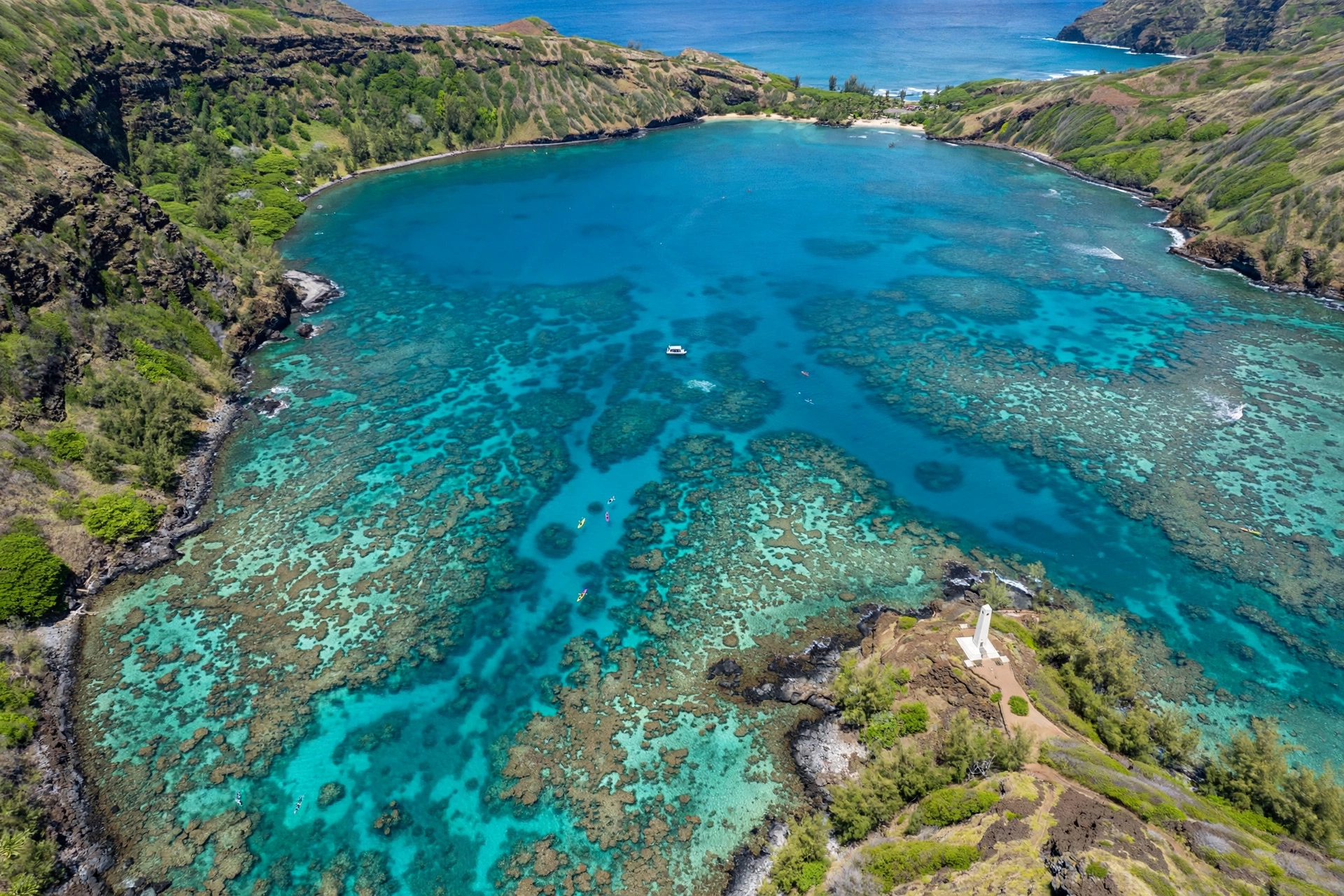
Kealakekua Bay, about 12 miles south of Kailua-Kona, is the most famous snorkeling spot on the island and one of the best in all of Hawaiʻi. The bay is a designated Marine Life Conservation District, so the coral and fish populations are unusually healthy. Spinner dolphins rest in the bay during the day, the water is famously clear, and the underwater topography of lava fingers and coral heads supports clouds of yellow tang, parrotfish, and butterflyfish. The white obelisk of the Captain Cook Monument stands on the far shore at Kaʻawaloa, marking where Captain James Cook died in 1779.
Access is the challenge. There is no road to the monument side; you reach the best snorkeling by kayak, by boat, or by hiking the steep Kaʻawaloa Trail down from the highway (about 1.9 miles each way with significant elevation change). Kayak rules have tightened in recent years: landing kayaks at Kaʻawaloa is now restricted, and commercial kayak landings are prohibited, so confirm current regulations with the Hawaiʻi Division of Boating and Ocean Recreation before you plan a paddle. Boat trips that carry snorkelers into the bay remain the most reliable access for most visitors. Wherever you enter, never stand on coral, keep a legal distance from dolphins, and remember that the bay’s calm surface can hide boat traffic, so stay within the snorkeling zones.
Hōnaunau (Two Step)
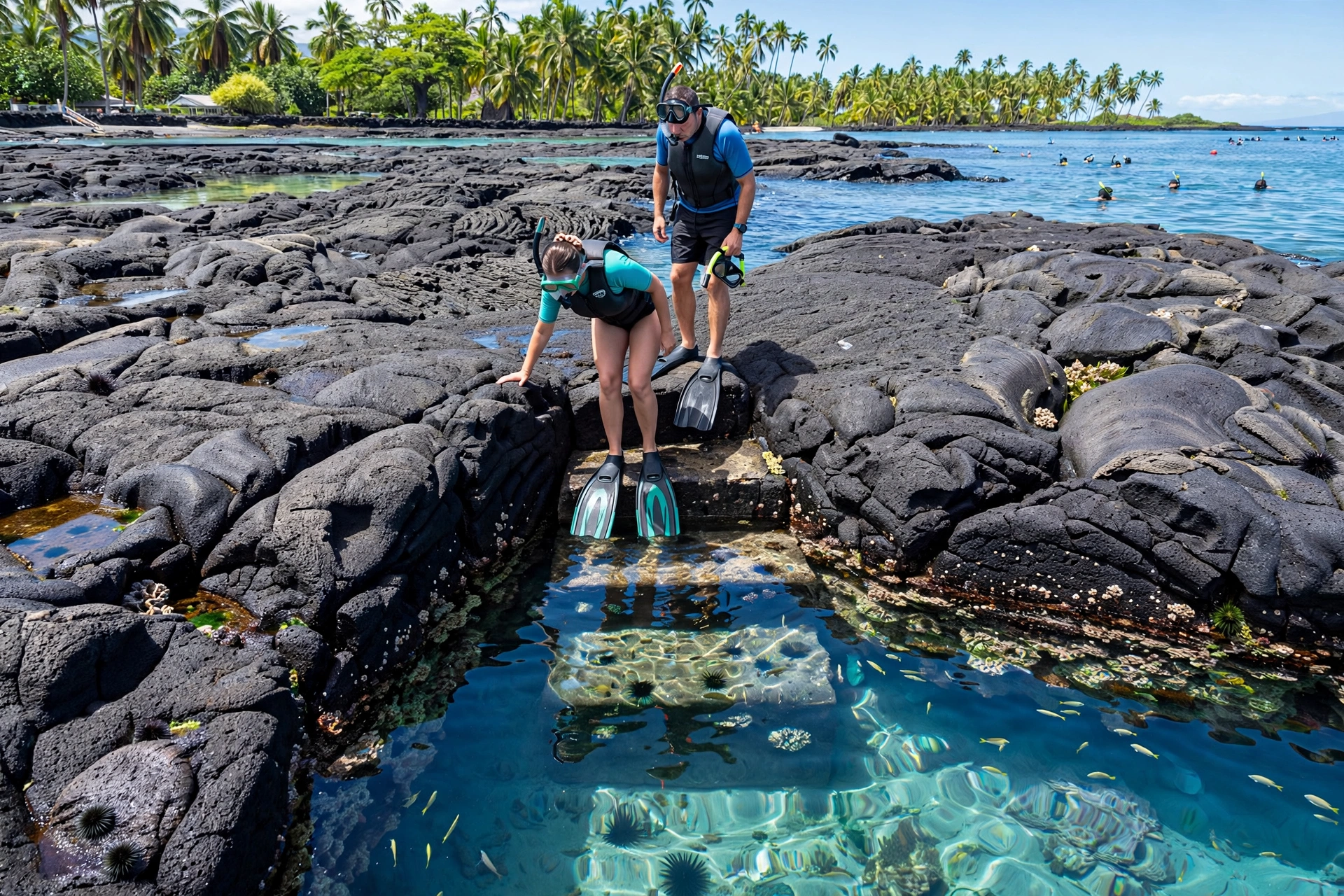
Just north of Puʻuhonua o Hōnaunau National Historical Park, the place of refuge, lies one of the island’s most beloved shore snorkels. Locally called Two Step, the entry is a pair of natural lava rock steps at the old boat ramp in Hōnaunau Bay. The name describes the entry: you sit on the rock ledge, put on your fins, and slip into deep, clear water. The reef here is rich, with coral heads in 15 to 35 feet of water, frequent turtle sightings, and excellent visibility on calm mornings.
Parking is the main constraint. The small lot at the end of the road fills early, especially on weekends, and the adjacent national park charges its own entry fee (the snorkel site itself is outside the park boundary). Arrive before 8 a.m. for the best chance at a spot. The entry looks easy but demands respect: the rock steps can be slippery, surge can push you against the lava, and the water is immediately deep. This is an intermediate site, not a beginner’s first swim. After snorkeling, the national park’s royal grounds and reconstructed temple complex are worth the visit.

Kahaluʻu Beach Park
Kahaluʻu, in Keauhou just south of Kailua-Kona, is the Big Island’s most beginner-friendly snorkel beach and one of its most reliable turtle spots. A shallow, protected reef sits just offshore with an easy sandy entry, lifeguards on duty, restrooms, and shade. Green sea turtles (honu) feed on the algae-covered reef here in numbers that surprise first-time visitors, and the calm water makes it an ideal place to practice mask clearing and finning before trying deeper sites.
The reef’s very accessibility means it gets crowded by mid-morning, and the shallow coral is fragile. Stay horizontal, keep your fins off the bottom, and give turtles plenty of space. Surf can break over the reef on south swells, particularly in summer, so check conditions before entering. A volunteer reef etiquette program operates at the park; the educational signs at the entry are worth reading.
Kaunaʻoa Bay (Mauna Kea Beach)
Kaunaʻoa Bay, fronting the Mauna Kea resort on the Kohala coast, is consistently ranked among the world’s best beaches, and its snorkeling matches the setting. The crescent bay holds a healthy reef along its rocky edges, with good fish diversity and frequent turtle visits, all in calm, clear water. The catch is access: public parking is limited to a small number of day passes issued at the resort gate, and they are typically gone by mid-morning. Arrive before 8 a.m. or consider visiting on a weekday.
The beach itself has full facilities, and the snorkeling along the point at either end of the bay is the best. Currents are generally mild inside the bay, but the outer reef edges can pull. As with all resort-adjacent beaches in Hawaiʻi, the sand and water are public up to the high-water mark, and the limited parking is the only real barrier.
Hapuna Beach and Waialea Bay (Beach 69)
Hapuna Beach State Recreation Area holds the largest white sand beach on the island, and while it is better known for swimming and bodysurfing, the snorkeling at its southern end near the rocky point is worthwhile on calm days. The real snorkel prize in the area is Waialea Bay, nicknamed Beach 69 for the old telephone pole marker, which sits within the Hapuna Beach State Recreation Area complex just north of the main beach. Waialea’s protected cove has a gentle entry, a lively reef, and frequent turtle sightings, making it one of the Kohala coast’s best all-around snorkel beaches for confident beginners and intermediates.
Both beaches have lifeguards, restrooms, and shaded pavilions. Hapuna’s shorebreak can be powerful, especially during winter swells, so snorkelers should favor the calmer Waialea side when the surf is up. Nonresident parking fees apply at state recreation areas.
Puakō
The small coastal community of Puakō, between Waialea and Mauna Lani, hides some of the Kohala coast’s healthiest reef. The shoreline here is mostly rocky with small pocket beaches, and the reef begins just steps from shore in many places. Paniau (a small county beach access) and the reef fronting the Puakō petroglyph area offer excellent fish life and coral in shallow water. Because there are no facilities and the entries are over rock and coral rubble, Puakō suits confident snorkelers with reef shoes and good buoyancy control.
Mahukona
At the northern tip of the Kona coast, Mahukona Beach Park occupies a former sugar plantation shipping port. The old loading dock’s submerged pilings and a sunken ladder entry lead into deep, clear water with excellent visibility. The underwater terrain is dramatic, with lava formations and a resident school of fish that swirls around the old pier structures. Turtles are common. The entry is via a metal ladder into deep water, which makes this an intermediate to advanced site. There are basic facilities but no lifeguard, and the remote location means you should snorkel with a buddy.
Hilo Side: Richardson Ocean Park and Carlsmith Beach Park
The windward side around Hilo is not known for snorkeling, but two county parks are worth knowing. Richardson Ocean Park, in Keaukaha, has a protected cove with a black sand beach, tide pools, and decent snorkeling when the surf is down. Green sea turtles haul out on the sand here regularly. Carlsmith Beach Park (Four Mile), nearby, offers a lagoon-like swimming area with some snorkeling over patch reef. Water temperatures run a degree or two cooler than Kona, visibility is more variable, and heavy rain can cloud the water quickly. These are pleasant local beaches rather than destination snorkel sites, but they are the best options on the east side.
Manta Ray Night Snorkeling
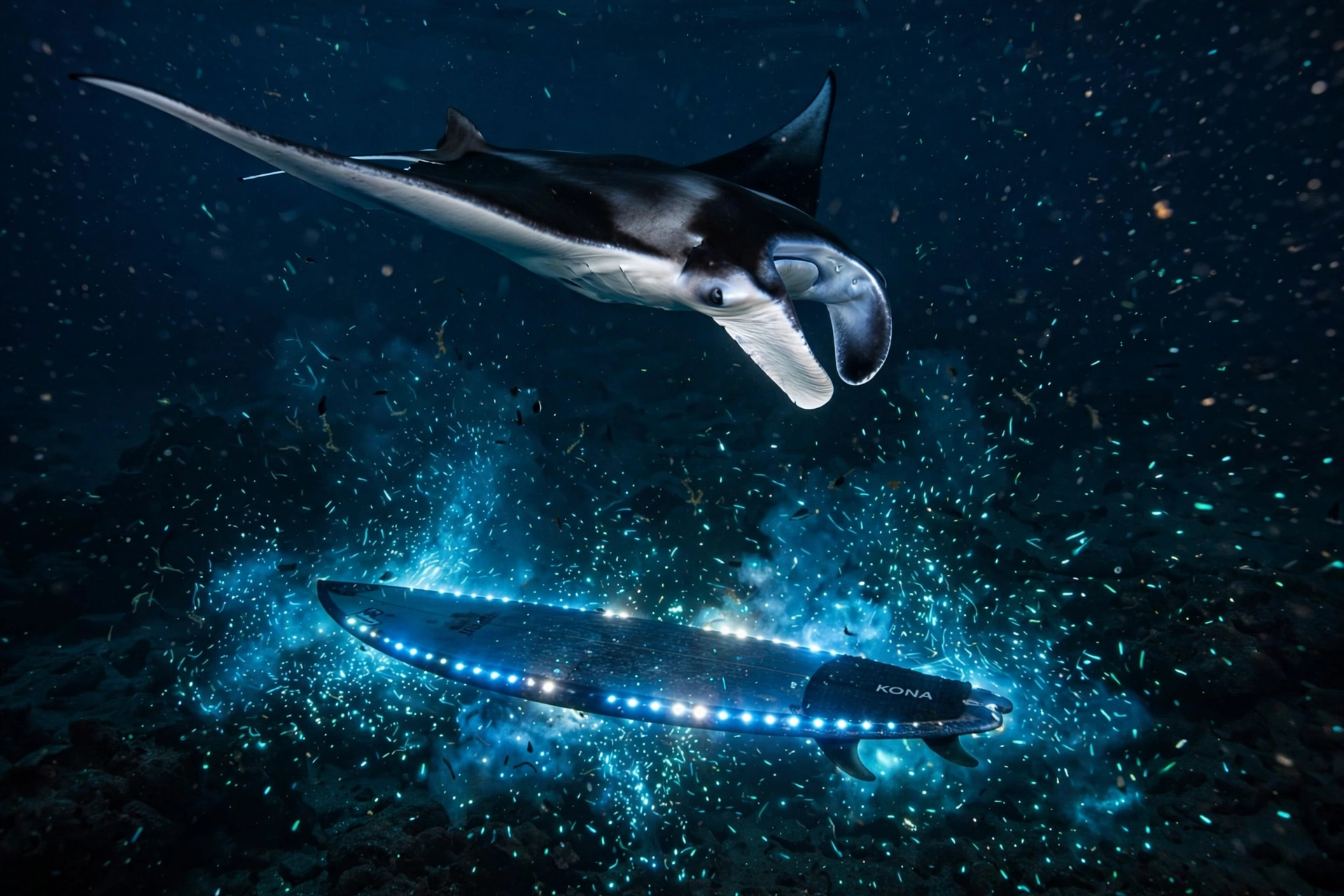
The manta ray night snorkel off the Kona coast is the Big Island’s signature ocean experience and one of the most remarkable wildlife encounters in Hawaiʻi. After dark, snorkelers float at the surface holding onto a lighted surfboard or raft while powerful lights shine down into the water. The lights attract plankton, and the plankton attracts reef manta rays, which loop and barrel-roll inches beneath the snorkelers as they feed. Mantas in Hawaiian waters can reach wingspans of 12 to 16 feet, and watching them feed in the light beams is genuinely unforgettable.
The two main viewing areas are off Keauhou Bay (sometimes called Manta Village) to the south of Kailua-Kona and off Honokōhau Harbor to the north (sometimes called Manta Heaven). Both are boat-accessed after sunset. The experience is observational: you float, you watch, and you do not touch the mantas or chase them. Reputable operators brief participants on passive observation, keep group sizes manageable, and follow wildlife viewing guidelines. If you go, choose an operator with a clear conservation ethic, and understand that mantas are wild animals, so sightings, while extremely reliable at these sites, are never guaranteed.
A few practical notes: the water is cooler at night, so most operators provide wetsuits. The activity is suitable for reasonably confident swimmers but not for non-swimmers. Motion-sensitive participants should know the boat ride and the floating can both cause seasickness. And while the mantas are the stars, the lights also draw other nocturnal life, from hunting reef fish to the occasional eagle ray passing through the dark.
Shore vs. Boat Snorkeling
Most Big Island snorkeling is done from shore, and the island is unusually well set up for it. Kahaluʻu, Waialea, Hōnaunau, Puakō, and the Hilo-side parks all offer walk-in access to good reef, and shore snorkeling costs nothing beyond gear and parking. The trade-off is that you are limited to what you can reach from the beach, entries can be tricky over lava rock, and you have no guide watching conditions for you.
Boat snorkeling opens up sites you cannot reach from shore, most notably Kealakekua Bay and the more remote sections of the Kona and Kohala coasts. Boats also carry you to the manta ray night sites, which are not shore-accessible. Morning departures get the calmest water everywhere on the island, and this is doubly true for boat trips: the Kona coast’s famous glassy mornings typically give way to breezier afternoons. If you are prone to seasickness, take precautions before boarding, and always choose operators that follow NOAA wildlife viewing guidelines and carry proper safety equipment.
The morning rule: On the Kona and Kohala coasts, snorkel before noon whenever possible. Trade wind breezes usually build in the afternoon, chopping up the surface and reducing visibility. The difference between 8 a.m. and 2 p.m. at the same reef can be dramatic.
Marine Life You Will See
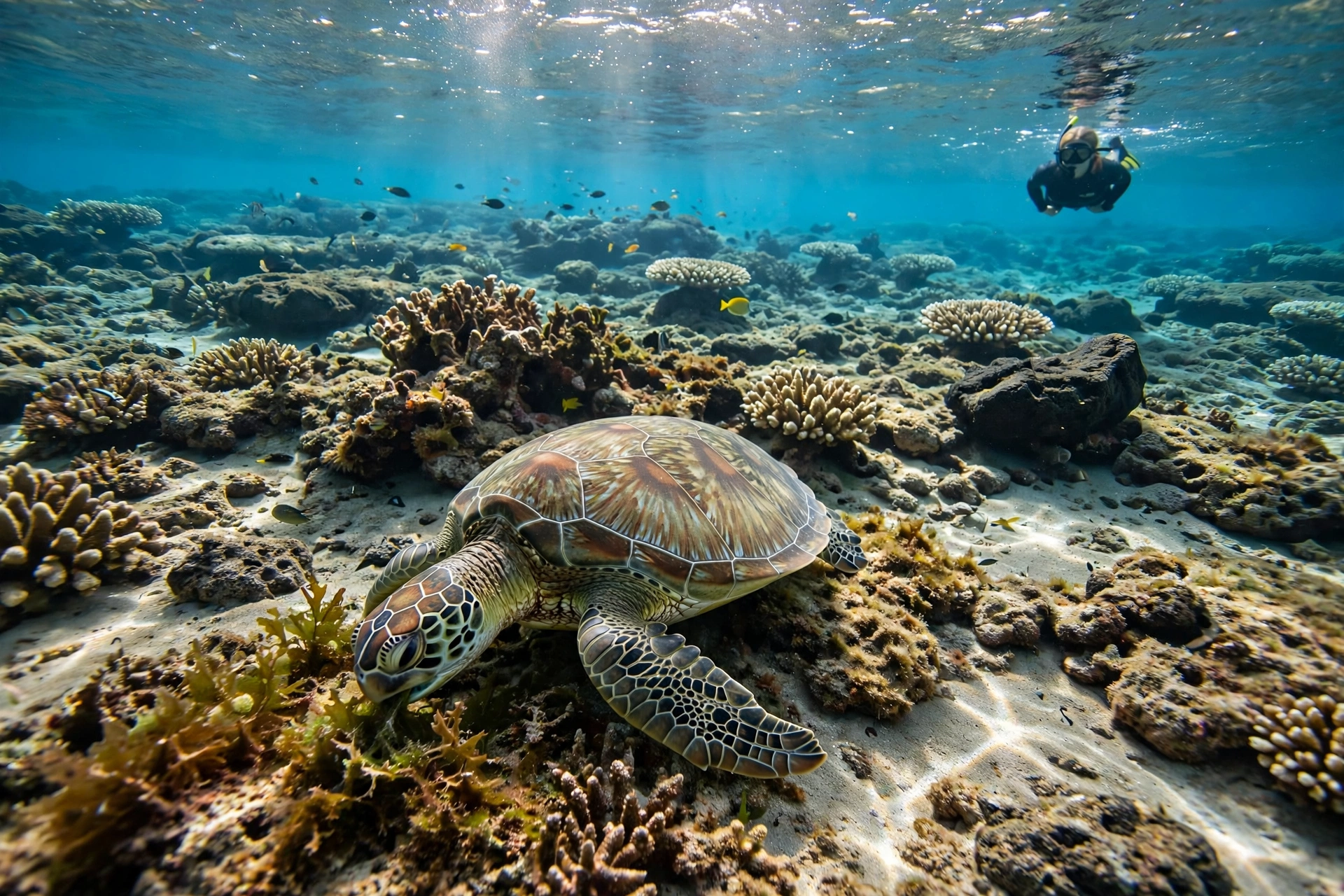
The Big Island’s reefs host the classic Hawaiian assemblage of marine life, with a few island-specific highlights. Green sea turtles (honu) are abundant at Kahaluʻu, Hōnaunau, Punaluʻu (better known as a beach than a snorkel site), and the Kohala coast. They are protected under the Endangered Species Act, and federal guidance asks viewers to stay at least 10 feet away, never touch them, and never block their path to the surface. A turtle resting on the bottom still needs to breathe, so give it a clear lane upward.
Reef manta rays (often called Hawaiian mantas) are the island’s most famous residents. Beyond the night snorkel sites, divers and snorkelers occasionally encounter them during the day along the Kona coast. They are filter feeders with no sting, and the same no-touch rule applies: admire them as they pass. Spotted eagle rays cruise the sandy edges of reefs, and the occasional bottlenose dolphin pod moves along the coast. Hawaiian spinner dolphins rest in sandy-bottomed bays like Kealakekua during the day; federal rules require staying at least 50 yards away, and swimming toward them is prohibited.
From December through April, humpback whales migrate through Hawaiian waters, and the Kona coast offers excellent whale watching from shore and boats. You will not snorkel with whales (federal law requires vessels and swimmers to stay 100 yards away), but on calm days you can sometimes hear their songs underwater while snorkeling, a strange and wonderful experience. Hawaiian monk seals, with only about 1,600 remaining, occasionally haul out on Big Island beaches; give them at least 50 feet of space (150 feet for mothers with pups) and report sightings to NOAA if no signs or volunteers are present.
The reef fish community includes yellow tang, convict tang, Moorish idol, raccoon and threadfin butterflyfish, parrotfish (uhu), triggerfish including the humuhumunukunukuāpuaʻa (reef triggerfish), moray eels, and octopus (heʻe) hiding in the reef by day. Coral itself is an animal, and the Big Island’s reefs include lobe, finger, and cauliflower corals. Never stand on coral, never break pieces off, and be aware that some urchins (wana) have long, fragile spines that break off in skin; reef shoes at rocky entries prevent most injuries.
Snorkeling Safety on the Big Island
Snorkeling looks effortless, but the ocean around Hawaiʻi Island demands respect. The single most important habit is checking conditions before you enter the water. Read the surf forecast from the National Weather Service Honolulu office, look at the water for at least a few minutes before gearing up, and talk to lifeguards where they are stationed. If the water looks rough, muddy, or unfamiliar, choose another site or another day. Conditions vary enormously between the calm Kona mornings and the exposed points and the Hilo side.
Entries and exits cause more snorkeling injuries than anything else. Lava rock is sharp, slippery when wet, and often covered in urchins. At sites like Hōnaunau’s Two Step and Mahukona’s ladder, time your entry between surges, keep your mask on, and consider reef shoes or fin booties. At sandy beaches like Hapuna, the hazard is shorebreak: powerful waves breaking directly on the sand can slam swimmers into the bottom. If the shorebreak looks heavy, do not enter.
Currents on the Kona coast are generally mild, but they exist, particularly around points and channels. Snorkel with a buddy, stay close enough to communicate, and agree on a plan before entering. Dehydration and sunburn sneak up on snorkelers who spend hours face-down in the water; drink water before and after, reapply reef-safe sunscreen to your back and legs, and consider a rash guard for full coverage. Hawaiʻi’s Act 104 bans the sale of sunscreens containing oxybenzone and octinoxate, so choose a mineral-based reef-safe formula.
Box jellyfish occasionally appear in Hawaiian waters, typically 7 to 10 days after a full moon, though they are far less common on the Big Island than on Oʻahu’s leeward beaches. Portuguese man o’ war can wash in with certain winds. If stung, rinse with vinegar if available, remove tentacles carefully, and seek lifeguard assistance. For any serious marine injury, breathing difficulty, or suspected drowning event, call 911 immediately.
Golden rules: Never snorkel alone. Never touch coral, turtles, or mantas. Never turn your back on the ocean at rocky entries. When in doubt, stay out. The reef will still be there tomorrow.
Gear and Practicalities
You do not need much gear to snorkel the Big Island well, but what you bring matters. A mask that seals to your face is the single most important item; a leaking mask ruins the experience. Test the seal by pressing the mask to your face without the strap and inhaling gently through your nose. Fins should fit snugly without cramping your feet, and a simple J-style snorkel is more reliable than complex dry-top designs for most swimmers. Full-face masks have been associated with safety concerns, including CO2 buildup; if you use one, choose a reputable design, follow the manufacturer’s guidance, and never use it beyond casual surface swimming.
Rental shops in Kailua-Kona, Waikoloa, and Hilo offer daily and weekly sets, and many also rent prescription masks, reef shoes, flotation vests, and underwater cameras. Buying a basic set before your trip is often cheaper than a week of rentals if you snorkel frequently. A mesh gear bag keeps sandy equipment contained in your rental car, and a dry bag protects valuables at beaches without lockers. Theft from parked cars is a real problem at trailheads and remote beaches statewide; take valuables with you or leave them at your lodging.
Parking logistics shape many Big Island snorkel days. State recreation areas and some county parks charge nonresident parking or entry fees; carry a card or cash as appropriate. Kaunaʻoa Bay’s limited day passes reward early arrival. At Hōnaunau, the small lot fills fast. And at Kealakekua Bay, there is no public parking at the water at all, which is why most visitors arrive by boat or via the long hike. Plan around these constraints rather than fighting them.
A Beginner’s Guide
If you are new to snorkeling, the Big Island is a forgiving place to learn, provided you pick the right beach. Kahaluʻu Beach Park is the island’s natural classroom: shallow, protected, lifeguarded, full of turtles and fish, with an easy sandy entry. Waialea Bay (Beach 69) is the Kohala coast equivalent. Go on a calm morning, stay inside the protected areas, and keep your first sessions short.
Practice the fundamentals in shallow water before venturing out. Learn to clear your mask by tilting your head back, exhaling through your nose, and pressing the top of the mask. Learn to clear your snorkel with a sharp exhale. Practice floating horizontally with your fins just below the surface; kicking from the knees with fins breaking the surface wastes energy and stirs up sediment. A flotation vest or pool noodle is nothing to be embarrassed about; many experienced snorkelers wear flotation at unfamiliar sites.
Etiquette matters as much as technique. Do not stand on coral, even if you are tired; float, or return to sand. Do not chase turtles or fish. Keep your distance from other snorkelers’ space. And if you are snorkeling from a boat, listen to the crew’s briefing; they know the site’s hazards better than any guidebook. With calm water, decent gear, and respectful habits, a beginner can have a spectacular first day at Kahaluʻu or Waialea.
Frequently Asked Questions
Where is the best snorkeling on the Big Island?
Kealakekua Bay offers the clearest water and healthiest reef but requires a boat, kayak, or strenuous hike to reach. For easy shore access, Hōnaunau (Two Step), Kahaluʻu, and Waialea Bay (Beach 69) are the top picks. The manta ray night snorkel off Kona is the island’s most unique snorkeling experience.
Can you snorkel with manta rays on the Big Island?
Yes. Night snorkeling with manta rays operates off Keauhou and Honokōhau on the Kona coast. You float at the surface holding a lighted board while mantas feed on plankton in the lights below. It is an observational activity; touching the mantas is prohibited.
Do I need a boat to snorkel Kealakekua Bay?
Not necessarily, but it is the easiest option. You can also kayak across the bay or hike the Kaʻawaloa Trail down to the monument. Note that kayak landing rules at Kaʻawaloa have been restricted, so check current Division of Boating and Ocean Recreation regulations before paddling over.
What is the best time of day to snorkel on the Big Island?
Morning, as early as you can manage. The Kona and Kohala coasts are typically glassy calm before the trade wind breezes build around midday. Visibility and comfort both decline in the afternoon.
Are there sharks where people snorkel on the Big Island?
Reef sharks, particularly whitetip reef sharks, live around Hawaiian reefs and are occasionally seen by snorkelers; they are generally shy and not considered dangerous. Tiger sharks are present in Hawaiian waters but encounters with snorkelers are extremely rare. Standard ocean awareness applies: avoid murky water, do not snorkel at dawn or dusk alone, and leave the water if you feel uneasy.
Can beginners snorkel at Two Step (Hōnaunau)?
Two Step is better suited to confident beginners and intermediates. The entry over lava rock steps into immediately deep water, plus occasional surge, makes it trickier than Kahaluʻu or Waialea. New snorkelers should build skills at a sandy, shallow beach first.
What marine life will I see snorkeling the Big Island?
Expect green sea turtles, yellow tang and other reef fish, moray eels, and octopus at most sites. Spinner dolphins rest in Kealakekua Bay. Manta rays appear at the night snorkel sites and occasionally by day. Humpback whales pass offshore in winter. Hawaiian monk seals are rare but possible.
Is the Hilo side of the Big Island good for snorkeling?
It is serviceable but not the island’s strength. Richardson Ocean Park and Carlsmith Beach Park offer the best east-side snorkeling when surf is low, but visibility is more variable and the water runs cooler than Kona. If snorkeling is a trip priority, base yourself on the west side.
Related Guides
- Hawaii Snorkeling: The Statewide Guide : the complete Hawaiʻi snorkeling overview across all islands
- Big Island Hawaiʻi Beaches : the island’s best beaches, from white sand to black sand to green sand
- Big Island Map : orient yourself with the island’s regions and districts
- Maui Snorkeling : Molokini Crater, Turtle Town, and Honolua Bay
- Hawaii Beaches: The Statewide Guide : the best beaches across all the islands
- Hawaii Map : the full island chain at a glance
A Final Note
Big Island snorkeling rewards the early riser and the careful observer. The reefs here are young, the water is clear, and the wildlife, from grazing honu to feeding mantas, is extraordinary. Treat the reef gently, respect the rules that protect places like Kealakekua Bay, and let the ocean set the schedule. Some of the island’s best snorkel days begin with a quiet morning entry at Kahaluʻu or Waialea and end with mantas looping through the lights after dark.