
Oʻahu sits at the center of the most isolated island chain on Earth, and that isolation shaped one of the most distinctive animal communities in the world. This guide to Oʻahu wildlife covers the animals you are most likely to see on the island, from green sea turtles grazing in shallow lagoons to Hawaiian monk seals hauled out on west side beaches, from the white terns nesting in downtown Honolulu trees to the Laysan albatross colony at Kaʻena Point. You will learn where to find each species, how to watch responsibly, and which laws protect them.
In This Guide
Oʻahu Wildlife at a Glance
Oʻahu is the third largest of the main Hawaiian Islands and home to roughly two thirds of the state population, yet it still supports a remarkable cast of native animals. The island rose from the ocean floor between three and four million years ago as two shield volcanoes, the Waiʻanae Range in the west and the Koʻolau Range in the east, and its long isolation meant that only a handful of species ever arrived on their own: birds, insects, a single land mammal (the Hawaiian hoary bat), and marine animals that could cross open ocean. Everything else, from the mongoose to the mynah bird, arrived with people.
That history explains why Oʻahu wildlife falls into two clear groups. Native species, found nowhere else on Earth, include the Hawaiian monk seal, the green sea turtle, the pueo (Hawaiian short-eared owl), the white tern known as Manu-o-Kū, and a dwindling set of forest honeycreepers in the high mountains. Introduced species, brought deliberately or by accident over the last two centuries, include the small Indian mongoose, feral pigs, Jackson chameleons, mynah birds, red-crested cardinals, and the geckos that chirp from lanai ceilings at night. Many visitors see far more introduced animals than native ones without realizing it.
Conservation on Oʻahu is an active, ongoing effort rather than a finished story. The island lost most of its lowland native birds to habitat clearing, introduced predators, and avian malaria carried by introduced mosquitoes, so the surviving native forest birds cling to high elevation ridges where mosquitoes are scarce. Marine species have fared better in some ways: green sea turtle numbers have rebounded strongly under federal protection, while Hawaiian monk seals remain one of the most endangered seal species in the world, with only about 1,600 animals left across the archipelago. Knowing which animals are rare, and why, makes every sighting on Oʻahu more meaningful.
This guide focuses on the species you can realistically encounter as a visitor, the places where sightings are most reliable, and the rules that keep both you and the animals safe. It does not cover every insect, fish, or seabird on the island. Instead it gives you the essential natural history of Oʻahu most useful wildlife encounters, organized the way a day of exploring naturally unfolds: from the ocean, to the sky, to the land.
Marine Life
The ocean around Oʻahu holds the island most reliable and most protected wildlife. Federal law shields every marine mammal in Hawaiian waters, and state rules add further protection for turtles and reef species. Learn the animals below and you will recognize most of what you see from shore, from a snorkel mask, or from a whale watch boat in winter.
Green Sea Turtles (Honu)
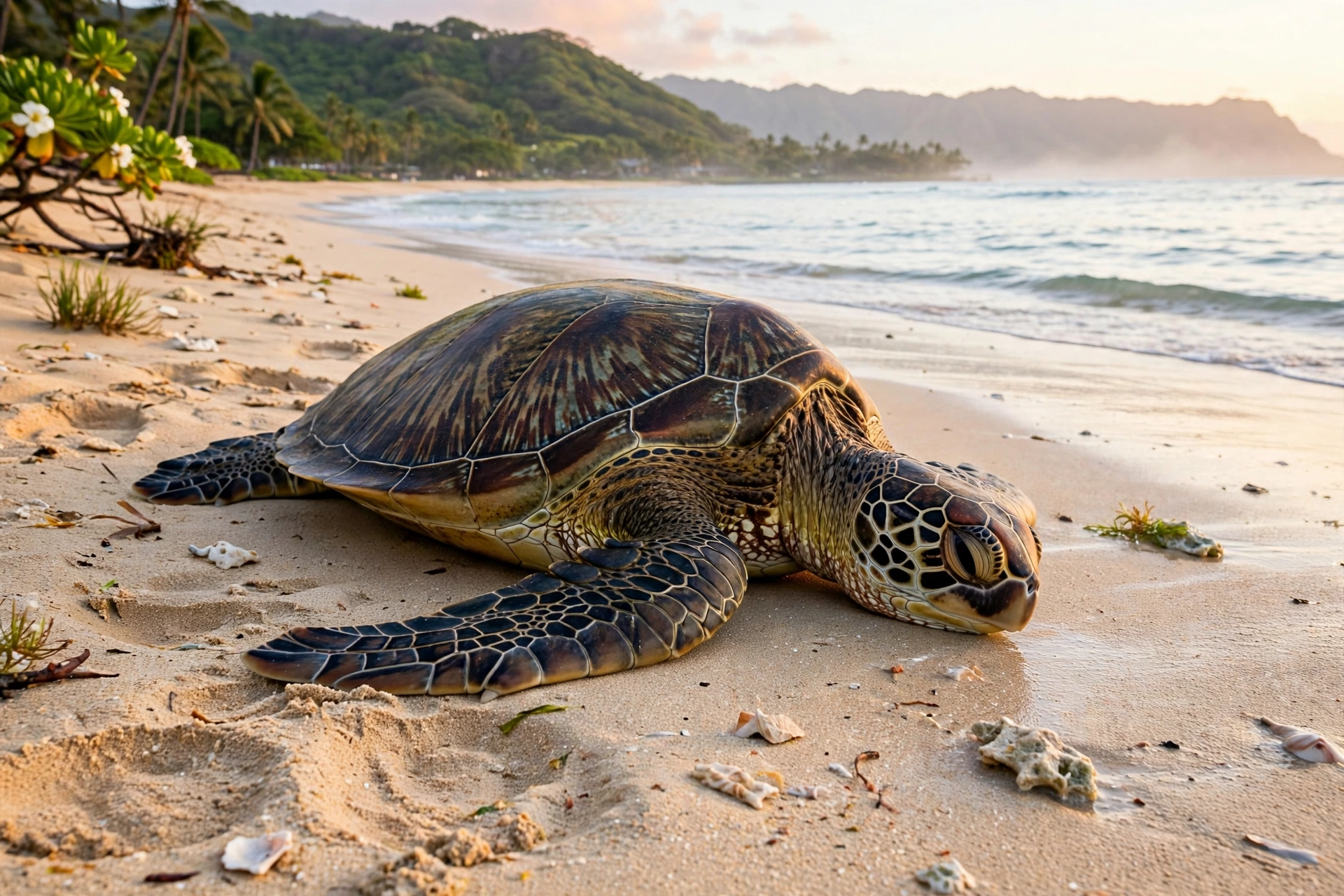
The Hawaiian green sea turtle, called honu, is the marine animal visitors see most often on Oʻahu. Adults weigh up to 400 pounds and graze on limu (seaweed) in shallow water, which is why they gather at predictable spots: Laniakea Beach on the North Shore, where turtles haul out to bask on the sand; the calm lagoons of the west side; and reef flats around the island where snorkelers regularly share the water with them. Basking, resting motionless on the beach, is normal behavior, not a sign of distress, and a resting turtle should never be disturbed.
Hawaiian green turtles were hunted nearly to collapse in the twentieth century and have recovered dramatically since gaining protection in the 1970s, one of the great conservation success stories in the Pacific. They remain listed as threatened, and every turtle in Hawaiʻi is protected by state and federal law. Harassing a sea turtle, which includes touching, riding, chasing, or blocking its path to the water, carries serious fines.
Hawaiian Monk Seals (ʻĪlio-holo-i-ka-uaua)
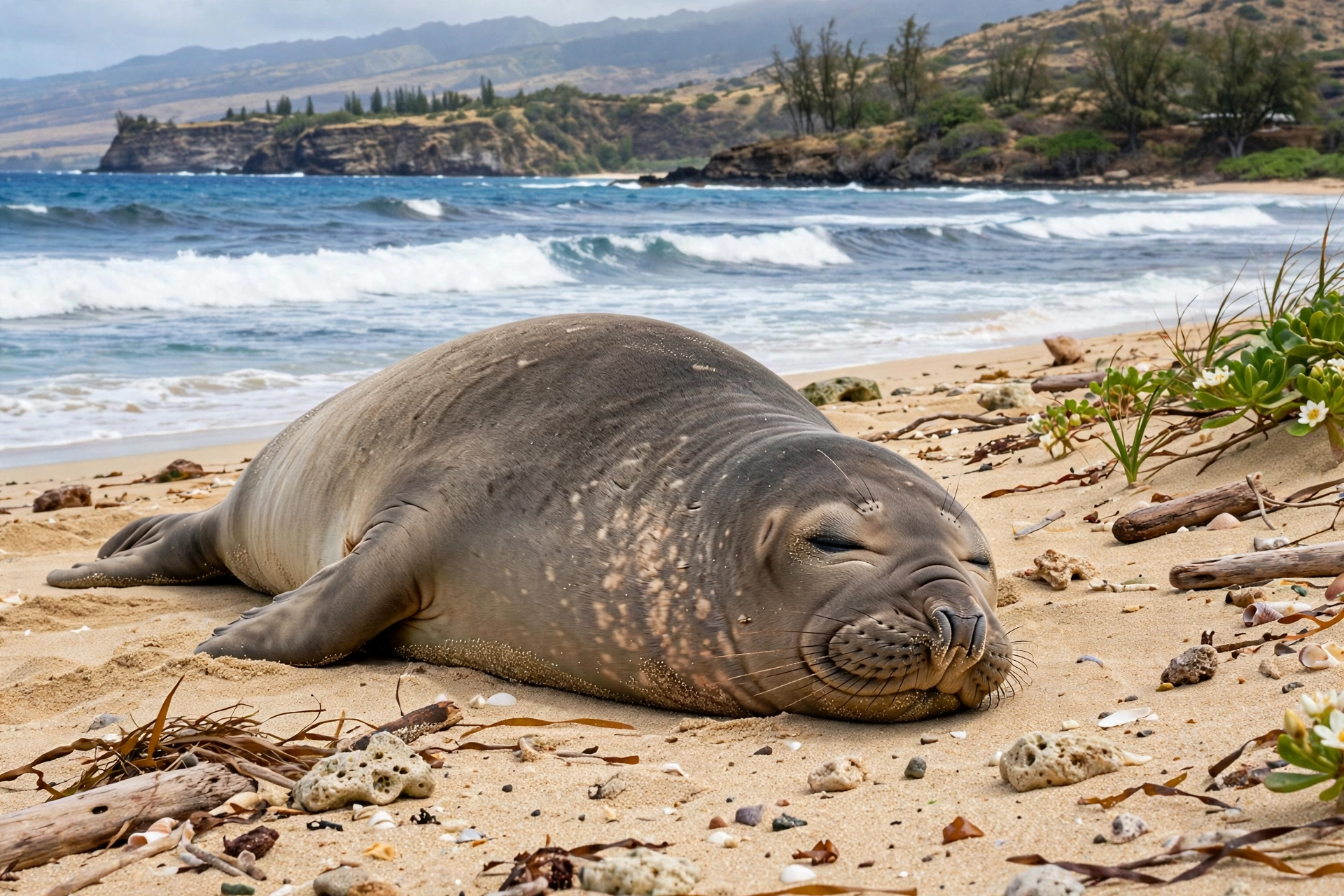
The Hawaiian monk seal is found only in Hawaiʻi and is one of the rarest seal species on the planet. On Oʻahu, individual seals haul out to rest on beaches around the island, with regular sightings along the Waiʻanae coast, at Mākaha, around Kaʻena Point, and occasionally at beaches closer to Honolulu. A hauled out seal may look sick or abandoned, but resting on shore for hours or even a full day is completely normal. Mothers with pups are especially sensitive to disturbance.
NOAA asks everyone to stay at least 50 yards (150 feet) from a monk seal, on land and in the water, and to keep dogs leashed and far away. Seals that become accustomed to people can become aggressive or dangerously habituated, so the distance rule protects both the animal and you. If you see a seal on the beach, enjoy the sighting quietly from a distance and report it to NOAA if it appears injured or entangled.
Spinner Dolphins (Naiʻa)
Spinner dolphins are named for their acrobatic spinning leaps, and pods of dozens to hundreds of animals frequent Oʻahu leeward coast. They feed offshore at night and rest in shallow, sandy bays during the day, which is when boats and swimmers most often encounter them. Because daytime rest is critical to their health, federal rules established in 2021 prohibit approaching within 50 yards of spinner dolphins in Hawaiian waters and forbid swimming with, touching, or otherwise interacting with them. If dolphins approach you on their own, remain still and let them pass.
Humpback Whales (Koholā)
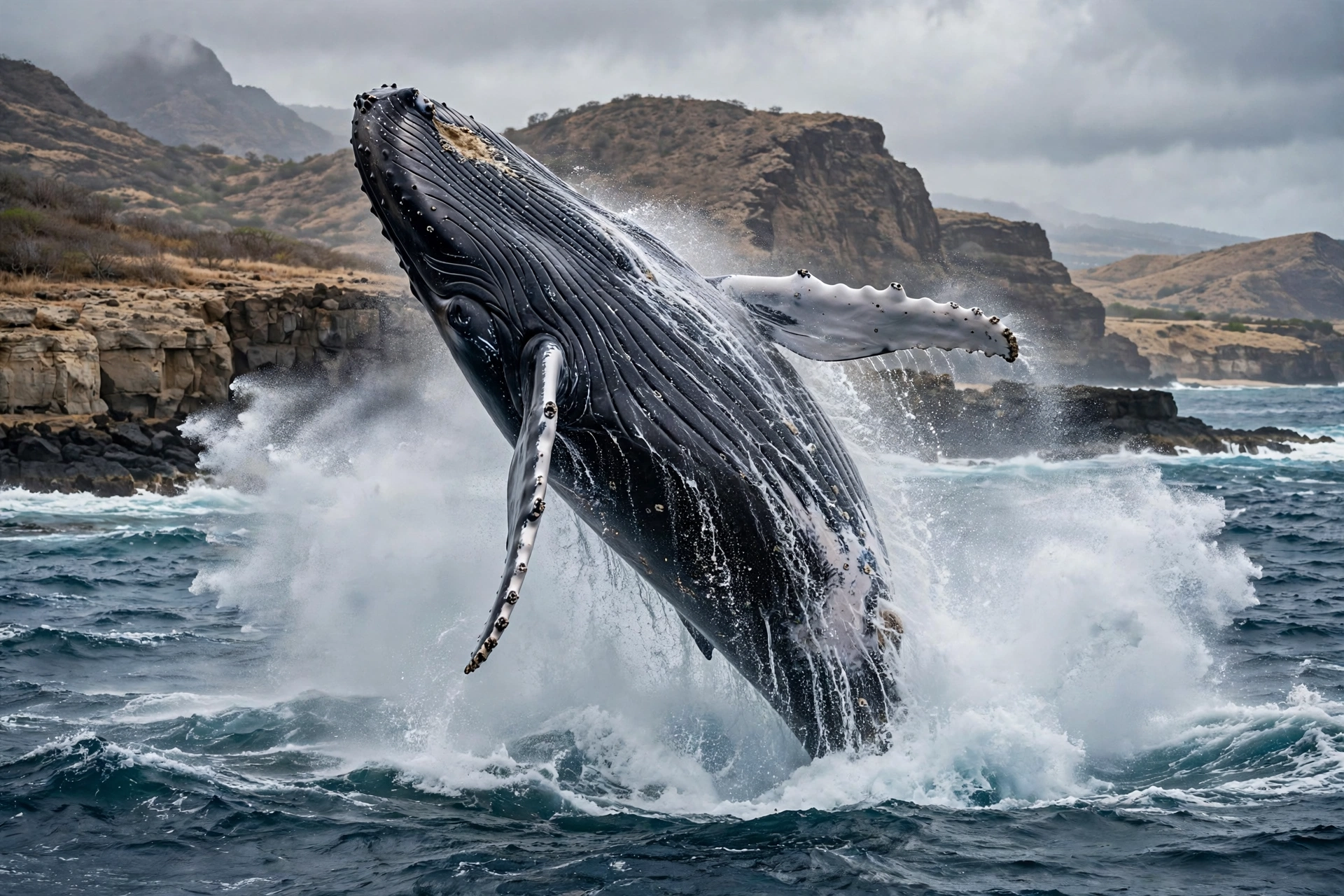
North Pacific humpback whales migrate to Hawaiian waters each winter to breed, calve, and nurse their young, and Oʻahu west and south shores offer excellent viewing from December through April, with peak numbers typically in February and March. Shore based lookouts at Kaʻena Point, Mākaha, and the Diamond Head area can all produce sightings on calm days, when blows, tail slaps, and full breaches are visible far offshore. Federal law requires vessels and swimmers to stay at least 100 yards from humpback whales, and aircraft must keep 1,000 feet of altitude above them.
Reef Fish and Other Marine Animals
Oʻahu reefs host hundreds of fish species, and a few are worth learning by name. The humuhumunukunukuāpuaʻa, or reef triggerfish, is Hawaiʻi state fish and one of the most common sights on snorkel reefs. Parrotfish (uhu) scrape algae from coral with beak like mouths and are responsible for much of the sand on Hawaiian beaches. Moorish idols, raccoon butterflyfish, and convict tangs school over the reef in large numbers. Reef sharks, usually white tip reef sharks, are shy and pose very little danger to swimmers, but they should be given space like any wild animal. Rays, including spotted eagle rays, glide over sandy areas near reef edges.
Coral itself is a living animal and the foundation of the reef. Standing on coral, touching it, or kicking it with fins kills the polyps and damages habitat that took decades to grow. Practice good buoyancy, keep your hands to yourself, and use reef safe sunscreen to reduce chemical stress on the reef.
Birds of Oʻahu
Oʻahu birdlife tells the island ecological story in miniature: a few precious native species hanging on in the mountains, and a colorful cast of introduced birds that now dominate the lowlands. Learning to tell them apart turns every walk, from downtown Honolulu to a ridge trail, into a wildlife outing.
Native Forest Birds
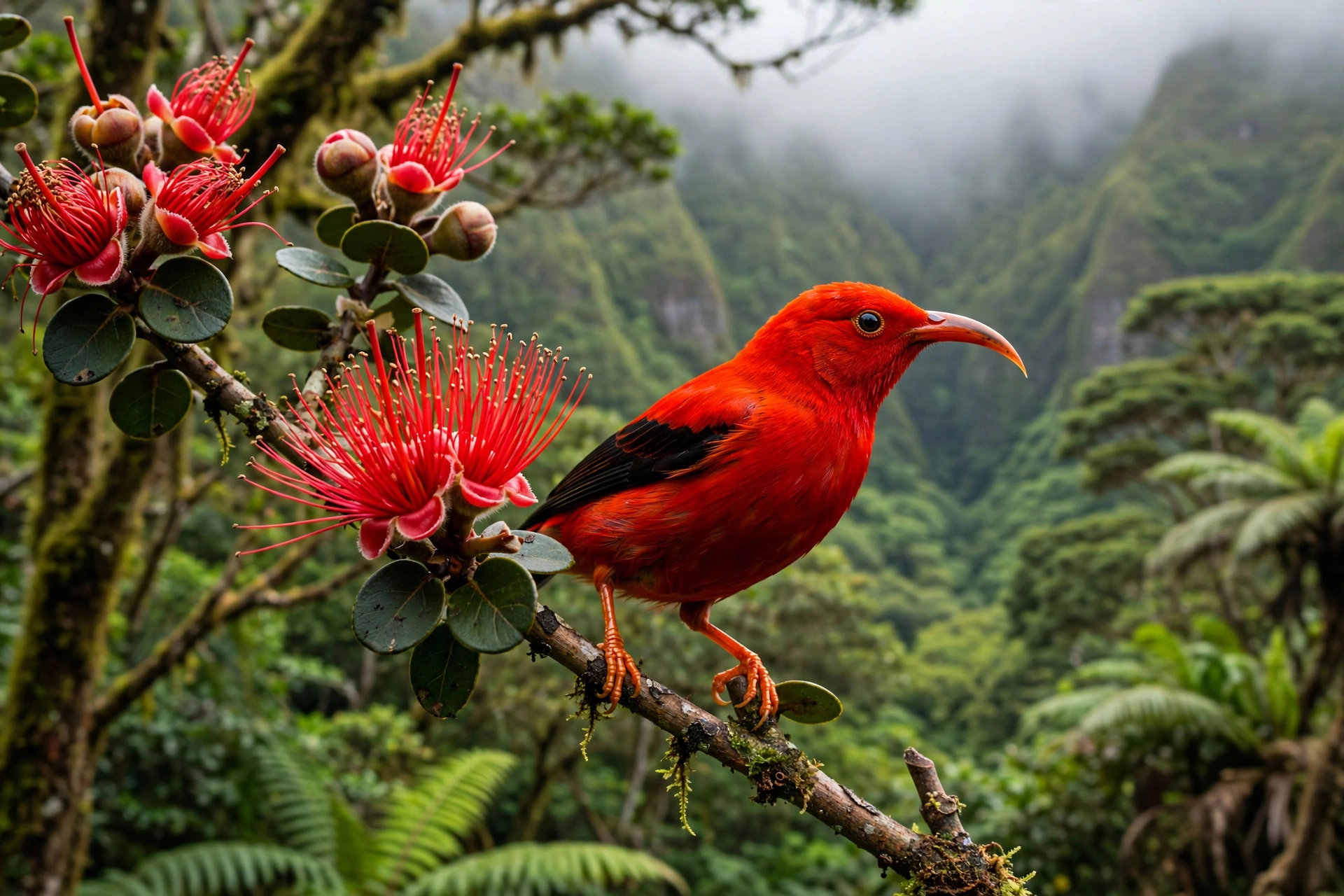
Hawaiʻi honeycreepers evolved from a single finch like ancestor into dozens of species found nowhere else, but on Oʻahu most are gone. The ʻiʻiwi, a brilliant scarlet honeycreeper with a curved salmon colored bill, still survives in small numbers at high elevations in the Koʻolau and Waiʻanae ranges, though sightings require effort, elevation, and luck. The ʻapapane, a crimson and black honeycreeper with a distinctive wing whir in flight, and the ʻamakihi, a yellow green bird with a slightly downcurved bill, are somewhat more findable in upper elevation native forest. Avian malaria, spread by introduced mosquitoes, keeps these birds restricted to elevations above roughly 4,000 feet where mosquitoes are rare, which is why most Oʻahu residents never see them. If you hike high ridges at dawn and listen for complex songs in ʻōhiʻa canopy, you are in the right place at the right time.
The Pueo (Hawaiian Short-Eared Owl)
The pueo is Oʻahu only remaining native land bird of prey and one of the island most culturally significant animals, regarded in Hawaiian tradition as an ʻaumakua (family guardian) for many families. Unlike most owls, pueo hunt by day, gliding low over open grasslands, former agricultural fields, and upland pastures on broad rounded wings. They are most often seen in the early morning or late afternoon around central Oʻahu and upland areas. Habitat loss has reduced their numbers, and they are listed as endangered on Oʻahu specifically, so a daytime owl sighting here is a genuine privilege.
The White Tern (Manu-o-Kū)
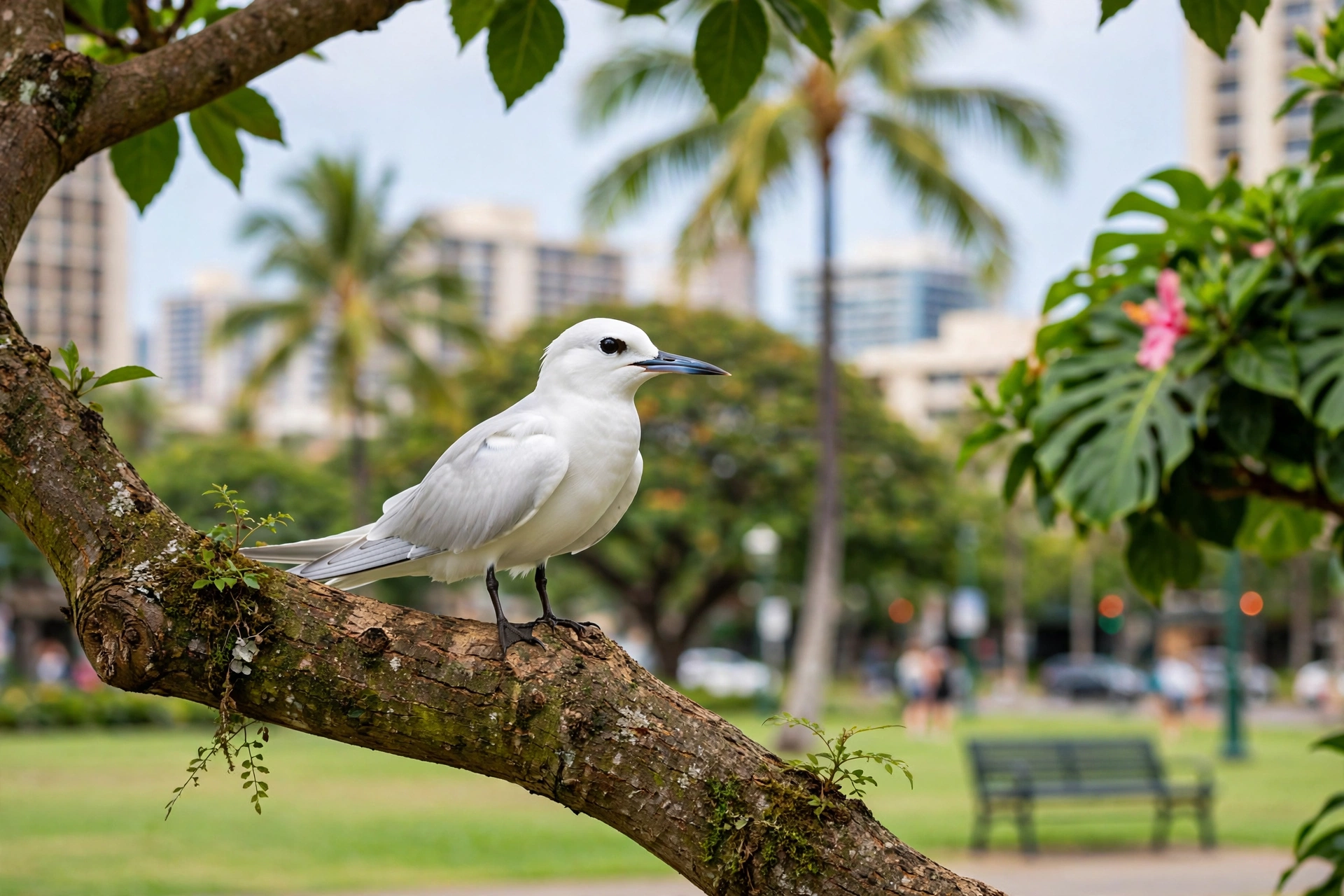
The white tern, called Manu-o-Kū in Hawaiian, is the official bird of the City and County of Honolulu and one of the easiest native birds to see, because it nests in the large trees of downtown Honolulu, Waikīkī, and residential neighborhoods. These small, pure white seabirds lay a single egg directly on a bare tree branch with no nest at all, and they are remarkably tolerant of urban life. Watch for them fluttering around kukui, banyan, and shower trees, carrying small fish back to their chicks. Their presence in the middle of a major city is a reminder that wild Hawaiʻi persists even in the most developed places.
Seabirds
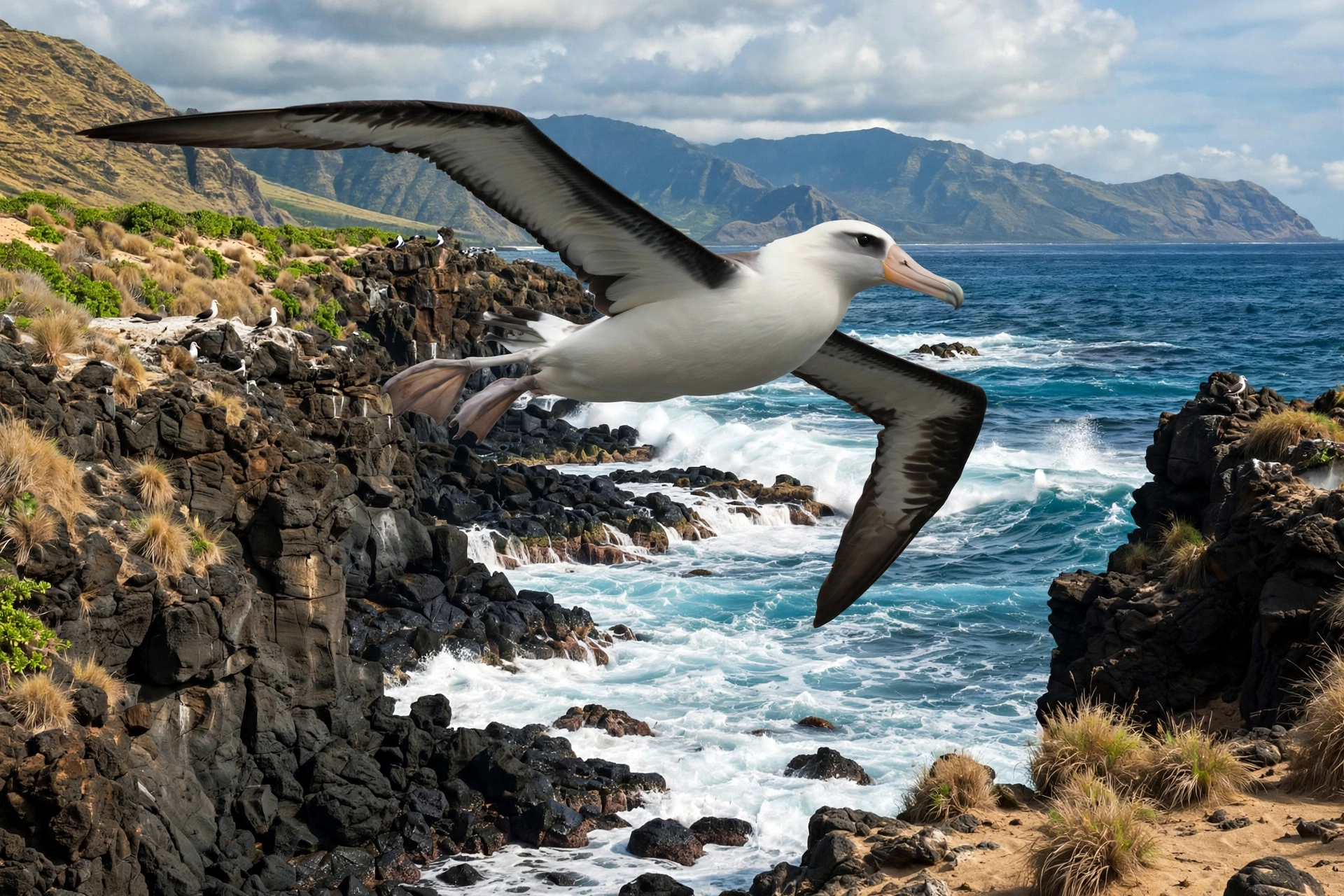
Oʻahu seabird colonies cluster at Kaʻena Point, the island westernmost tip, where a predator proof fence protects nesting Laysan albatross (mōlī) and wedge-tailed shearwaters (ʻuaʻu kani). Albatrosses nest from November through June, and the sight of a six foot wingspan bird gliding in to land is unforgettable. Wedge-tailed shearwaters nest in burrows and are best seen at dusk when they return from the ocean in large flocks. Offshore islets host additional colonies of boobies, terns, and tropicbirds visible from coastal lookouts with binoculars.
Introduced Birds
Most birds you see daily on Oʻahu were brought by people. The common mynah, introduced from India in the 1860s to control insects in cane fields, is the strutting brown bird with a yellow bill and eye patch that dominates parking lots and lawns. The red-crested cardinal, with its bright red head and crest, was introduced from South America as a cage bird and is now common in gardens. Zebra doves and spotted doves, both introduced, are the small doves that forage on the ground in pairs. The Japanese white-eye (mejiro), a tiny greenish bird with a bold white eye ring, travels in chattering flocks through gardens and forests. Red-vented bulbuls, dark birds with a red patch under the tail, arrived more recently and are spreading across the island. Cattle egrets stalk insects in fields and along roadsides. None of these birds are native, but they are now permanent parts of the Oʻahu soundscape.
Land Animals
Before people arrived, the only land mammal in Hawaiʻi was the Hawaiian hoary bat (ʻōpeʻapeʻa), which still flies over Oʻahu forests at dusk but is rarely seen by visitors. Every other land mammal on the island arrived with humans, and several have become serious conservation problems.
The Small Indian Mongoose
The mongoose is the land animal visitors notice most, a quick brown streak darting across roads and trails in daylight. Mongooses were introduced to Hawaiʻi in 1883 to control rats in sugar cane fields, but the plan backfired: rats are nocturnal and mongooses hunt by day, so the two rarely met, while the mongoose instead preyed heavily on native ground nesting birds. On Oʻahu the mongoose is now widespread in lowland areas. They are interesting to watch but ecologically destructive, and feeding them is both illegal in some contexts and harmful to native wildlife.
Feral Pigs
Feral pigs, descended from animals brought by early Polynesian settlers and later European introductions, roam Oʻahu forested valleys and ridges. They root up soil, spread invasive weeds, and damage native forest understory, which is why watershed partnerships and the state run active control programs. Hikers may see their distinctive churned up ground along trails in the Koʻolau and Waiʻanae mountains long before they see an actual pig, which are shy and mostly nocturnal. Never approach or feed a wild pig; large boars can be dangerous.
Geckos and Lizards
The chirping from ceilings and walls at night comes from geckos, all introduced species on Oʻahu. The mourning gecko, a small brownish lizard that reproduces without males, is the most common house gecko. The larger tokay gecko, with its loud distinctive call, is established in some areas. Gold dust day geckos, bright green with red and gold markings, are a Big Island specialty but have been found on Oʻahu as well. Jackson chameleons, the three horned lizards from Kenya, live in the moist forests of upper Mānoa, Moanalua, and the Koʻolau foothills; they were introduced through the pet trade in the 1970s and are a favorite find for patient observers who scan branches slowly.
Rats, Mice, and Feral Cats
Roof rats and other introduced rodents are among the most damaging animals in Hawaiian ecosystems, preying on bird eggs, chicks, seeds, and native snails. Feral cats compound the problem for ground nesting seabirds and native forest birds. Both are targets of control programs at sensitive sites like the Kaʻena Point predator proof fence, which excludes cats, dogs, rats, and mongooses from the seabird nesting area. Visitors can help by never feeding feral cats near natural areas and by securing food and trash at campsites and beaches.
What You Will Not See on Oʻahu
It helps to know what is missing. There are no native land snakes in Hawaiʻi at all, and the brown tree snake, a devastating invasive on Guam, is the subject of active prevention programs at ports and airports. The nēnē (Hawaiian goose), Hawaiʻi state bird, is found mainly on Kauaʻi, Maui, and the Big Island and is only a rare visitor to Oʻahu. Axis deer live on Molokaʻi and Lānaʻi, not Oʻahu. Coqui frogs, famous for their loud nighttime chorus, are a Big Island problem with only small controlled populations elsewhere.
Where to See Wildlife on Oʻahu
Knowing where to look matters more than luck. These are the most reliable wildlife watching locations on the island, organized from ocean to mountains.
Hanauma Bay Nature Preserve
Hanauma Bay is Oʻahu most famous snorkeling spot and a reliable place to see green sea turtles, parrotfish, Moorish idols, and other reef fish in calm, protected water. The bay is a nature preserve with mandatory visitor education, and reservations are required, so plan ahead. Go early in the morning for the calmest water and fewest crowds, and remember that standing on coral and feeding fish are prohibited.
Kaʻena Point State Park
The hike to Kaʻena Point, at the island western tip, is the single best wildlife outing on Oʻahu. The predator proof fence protects nesting Laysan albatross (November through June) and wedge-tailed shearwaters, and Hawaiian monk seals frequently haul out on the beaches along the way. The trail itself is flat and follows an old roadbed, making it accessible to most fitness levels. Bring sun protection, plenty of water, and binoculars. For more on the trail, see our Oʻahu hikes guide.
Laniakea Beach (Turtle Beach)
Laniakea on the North Shore is famous for the green sea turtles that bask on its sand, often with volunteer protectors keeping watch during busy periods. Turtles also feed in the nearshore waters where the surf breaks over shallow reef. Park only in designated areas, never on the shoulder vegetation, and give basking turtles plenty of room. Winter surf can make the water dangerous here, so winter visits are best for beach watching rather than swimming.
Mākaha and the Waiʻanae Coast
The Waiʻanae coast offers some of the island best marine wildlife watching with fewer crowds. Monk seals haul out regularly at Mākaha and nearby beaches, spinner dolphins rest in the bays offshore, and winter brings humpback whale sightings from shore. The leeward coast is also one of the driest and sunniest parts of the island, making it a good wildlife destination even when windward showers dampen other plans.
Honolulu Zoo and Waikīkī Aquarium
For guaranteed sightings and deeper learning, the Honolulu Zoo in Kapiʻolani Park houses native Hawaiian birds and other species in a garden setting, while the Waikīkī Aquarium on the beach at Kapiʻolani Park focuses on Pacific marine life, including native reef fish, sea turtles, and monk seals in care. Both are good options for families and for rainy days.
Upper Elevation Forests
Native forest birds live above the mosquito line, so seeing ʻapapane, ʻamakihi, and possibly ʻiʻiwi means hiking high. Trails in the upper Koʻolau and Waiʻanae ranges at dawn offer the best chances. Go with a local birding group if possible, since guides know the current hotspots and the subtle field marks. Our Oʻahu hikes guide covers trail access and difficulty.
Wildlife Ethics and the Law
Hawaiʻi wildlife protections are among the strongest in the United States, and visitors are expected to know the basics. The rules below are not suggestions; violations carry real fines under federal and state law.
Marine Mammal Distances
All marine mammals in U.S. waters are protected under the Marine Mammal Protection Act. In Hawaiʻi the practical rules are: stay at least 50 yards (150 feet) from Hawaiian monk seals on land or in the water; stay at least 50 yards from spinner dolphins and never swim with, chase, or touch them; and stay at least 100 yards from humpback whales. If an animal approaches you, do not touch it. Enjoy the encounter passively and let the animal decide when it ends. Feeding any marine mammal is illegal.
Sea Turtle Viewing
NOAA recommends staying at least 10 feet (3 meters) from sea turtles on the beach and in the water. Do not touch a turtle, do not block its path to or from the ocean, and never try to ride one. A basking turtle is resting, not stranded, and needs quiet to conserve energy. If a turtle appears injured, entangled in fishing line, or harassed, note the location and report it to NOAA rather than intervening yourself.
Birds and Nesting Areas
Native birds are protected under the Migratory Bird Treaty Act and, for endangered species, the Endangered Species Act. Keep your distance from nesting seabirds at Kaʻena Point and stay on marked trails so you do not collapse shearwater burrows hidden underfoot. Never feed wild birds: feeding changes natural behavior, concentrates animals where predators and disease spread more easily, and is prohibited in many parks and natural areas. Keep dogs leashed where required and out of wildlife areas entirely where prohibited.
Reefs and Tide Pools
Do not stand on, touch, or collect coral, and do not take rocks, shells, or sand from beaches and reefs. In tide pools, watch where you step, return any overturned rocks gently to their original position, and put back any animals you briefly observe. Use reef safe sunscreen and apply it well before entering the water so it absorbs rather than washing straight off.
General Principles
Observe quietly, keep your distance, and leave every place as you found it. Do not feed any wild animal on Oʻahu, from mongooses at a beach park to fish on a snorkel reef. Secure food and trash so animals cannot access them. If you see someone harassing wildlife, a calm, polite word sometimes helps, but do not put yourself in conflict; reporting to lifeguards, park staff, or NOAA is the safer option. Responsible viewing keeps Oʻahu wildlife wild, which is exactly why it is worth seeing.
Best Time for Wildlife Watching
Oʻahu offers wildlife year round, but different species peak in different seasons.
Winter (December through April) is the headline season. Humpback whales are present in the greatest numbers, typically peaking in February and March. Laysan albatross nest at Kaʻena Point from November through June, with courtship dancing in the early months. Winter also brings large surf to the North Shore, which makes for dramatic turtle beach watching at Laniakea even when swimming is unsafe.
Spring (March through May) bridges whale season and seabird season. Late whales linger into April, shearwaters return to Kaʻena Point burrows, and native forest birds are vocal and active in the mountains. This is an excellent all around season for combining marine and bird watching.
Summer (June through September) brings the calmest ocean conditions, which means the best snorkeling visibility for turtles, reef fish, and rays. Monk seals haul out year round but are easiest to spot on calm summer days. Forest bird activity quiets down after breeding season, but high elevation dawn hikes still produce sightings.
Fall (October and November) is a transition season. The first humpbacks typically arrive in late fall, albatrosses return to Kaʻena Point to reclaim nest sites, and ocean conditions gradually shift. Crowds thin out, which can make for more peaceful wildlife watching at popular spots.
Time of day matters as much as season. Dawn is the best time for forest birds and for the Kaʻena Point hike before heat builds. Marine mammals are often most active in the morning, while basking turtles can appear at any time. Spinner dolphins rest in leeward bays during midday, which is exactly when they should be left alone.
Frequently Asked Questions
What is the most common native animal visitors see on Oʻahu?
The green sea turtle (honu). Turtles bask at Laniakea Beach, swim at Hanauma Bay and other snorkel reefs, and graze in shallow lagoons around the island. The white tern (Manu-o-Kū) is the most commonly seen native bird, nesting in trees throughout Honolulu and Waikīkī.
How close can I get to a Hawaiian monk seal?
Stay at least 50 yards (150 feet) away, on land and in the water. Keep dogs leashed and far away. A hauled out seal is resting normally, not stranded, and needs quiet. If the seal appears injured or entangled, report it to NOAA rather than approaching.
Can I swim with dolphins on Oʻahu?
No. Federal rules prohibit approaching within 50 yards of spinner dolphins in Hawaiian waters, and swimming with, touching, or chasing them is illegal. The rules exist because daytime rest in shallow bays is critical to dolphin health. If dolphins approach you while you are in the water, stay still and let them pass.
When is whale season on Oʻahu?
Humpback whales are typically present from December through April, with peak numbers in February and March. Good shore based viewing spots include Kaʻena Point, the Waiʻanae coast, Mākaha, and elevated lookouts along the south shore. Federal law requires staying at least 100 yards from whales.
Are there snakes in Hawaiʻi?
There are no native land snakes in Hawaiʻi, and established snake populations do not exist on Oʻahu. The brown tree snake is the subject of active prevention and rapid response programs at ports and airports because of the devastation it caused on Guam. If you ever see a snake in Hawaiʻi, report it to authorities immediately.
Where can I see native Hawaiian birds on Oʻahu?
Native forest birds like the ʻapapane, ʻamakihi, and ʻiʻiwi live at high elevations above the mosquito line, so dawn hikes on upper Koʻolau and Waiʻanae ridge trails offer the best chances. The pueo (Hawaiian short-eared owl) hunts by day over open upland grasslands. The white tern nests in city trees throughout Honolulu and is easy to see without leaving town.
Is it safe to touch a sea turtle?
No. Touching a sea turtle is considered harassment under state and federal law and can result in significant fines. NOAA recommends staying at least 10 feet away, never blocking a turtle path to the water, and never riding or chasing turtles. Report injured or entangled turtles to NOAA.
What should I do if I see someone harassing wildlife?
A calm, polite word sometimes helps if the situation feels safe. Otherwise, report it to the nearest lifeguard, park staff, or NOAA enforcement rather than confronting anyone yourself. Note the location, time, and what you observed so the report is useful.
Related Guides
Reading Oʻahu Through Its Wildlife
Oʻahu rewards visitors who learn its animals before they arrive. A turtle on the sand stops being a photo opportunity and becomes a conservation success story decades in the making. A white tern over a Honolulu sidewalk stops being background and becomes proof that native wildlife can share a city. A distant albatross at Kaʻena Point stops being a large bird and becomes an animal that navigates thousands of miles of open ocean to nest behind a fence built specifically to give it a chance. The island most memorable encounters are not the ones you chase. They are the ones you are prepared to recognize, respect from the proper distance, and leave exactly as you found them.