
Big Island Beaches
The Island of Hawaiʻi, usually called the Big Island, holds the most surprising shoreline in the state. It is the youngest of the main islands, still growing in places where lava meets the sea, and its beaches change color from coast to coast: powdery white sand along the Kohala resorts, jet-black sand on the Puna and Kaʻū coasts, and one famous green sand beach reachable only on foot. This guide covers the best Big Island beaches, how to reach them, what each one is like, and how to stay safe on an island where ocean conditions vary dramatically within a single day of driving.
On This Page
Big Island Beaches at a Glance
The Big Island does not have the long, continuous stretches of sand found on Oʻahu or Maui. Its coastline is young and volcanic, so beaches appear in pockets: small coves tucked between lava points, long sandy strands along the Kohala coast where ancient eruptions left gentler terrain, and black sand beaches where recent lava flows shattered into fragments as they hit the ocean. Understanding this geography helps you plan, because the best beach day on the island usually means choosing one coast and committing to it rather than trying to see everything at once.
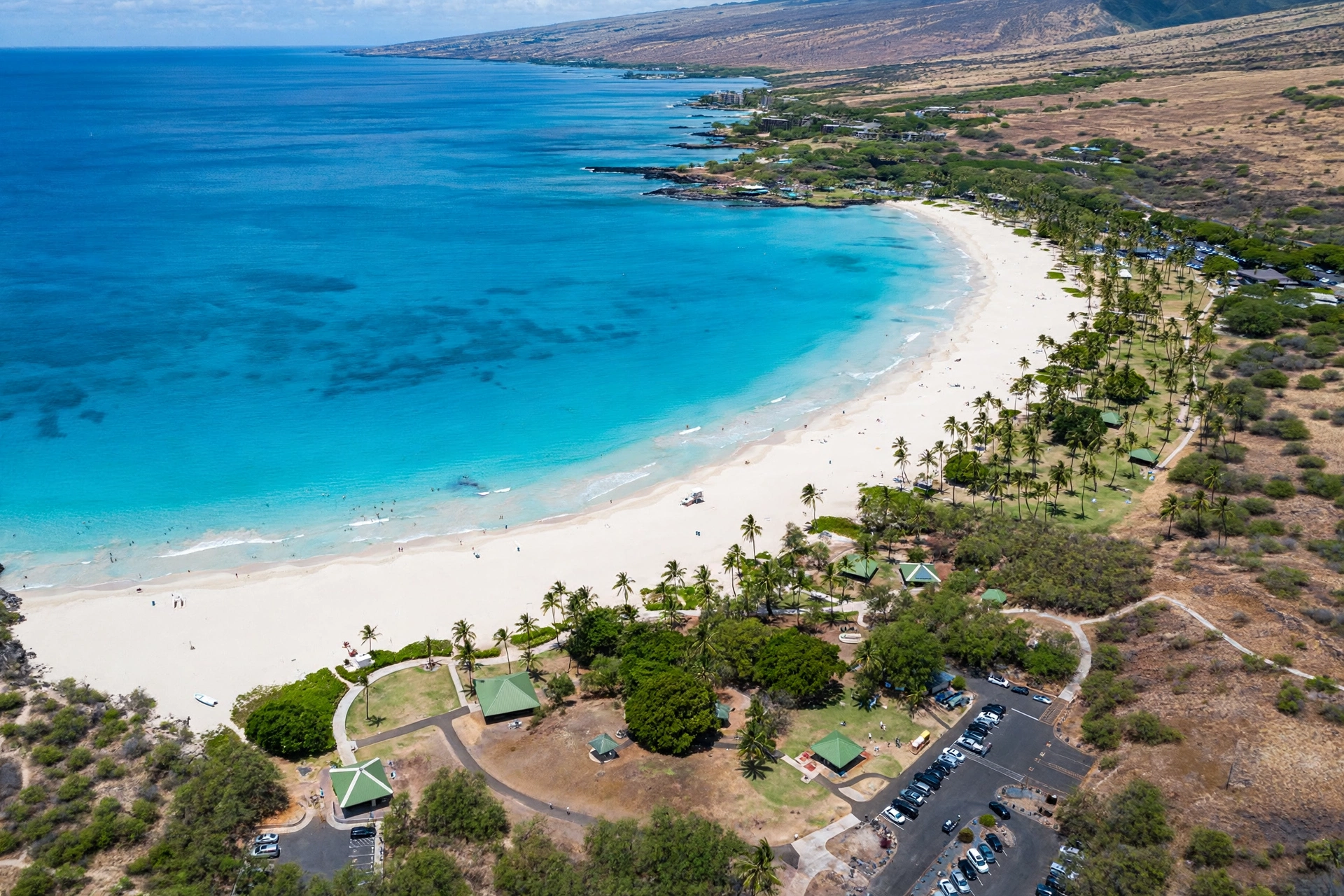
The island divides roughly into four beach regions. The Kohala coast on the northwest side holds the famous white sand beaches, including Hapuna Beach State Recreation Area, the largest white sand beach on the island, and several resort-adjacent strands with calm water and full facilities. The Kona coast on the west side is lined with small coves and rocky entries, plus a few sandy exceptions, and it offers the island’s best shore-accessed snorkeling. The Kaʻū coast on the south side is wild and windswept, home to Punaluʻu Black Sand Beach and the green sand beach at Papakōlea. The east side near Hilo has black sand and rocky beaches with cooler water and fewer crowds.
A few practical realities apply island-wide. Many of the best beaches are inside state parks or county parks with posted hours, parking areas, and sometimes day-use fees for nonresidents. A handful of the most beautiful spots require a hike to reach, and at least one famous beach sits behind a resort with controlled public access. Lifeguards staff only a small number of beaches, so on most of the island you swim at your own risk. Water temperatures hover in the mid-70s to low 80s Fahrenheit year-round, warmest in late summer and fall. Trade winds bring afternoon breezes to most coasts, and vog, the volcanic haze from Kīlauea, can drift over the Kona and Kaʻū coasts when the volcano is active, softening the light and occasionally irritating sensitive airways.
The Big Island rewards travelers who pick beaches to match their priorities. Families who want calm water and shade should head to the Kohala coast or the protected coves near Hilo. Snorkelers should focus on the Kona coast, where clear water and reef structure sit close to shore. Adventurers who want to see something found almost nowhere else should make the trek to the green sand beach or spend a morning watching turtles at Punaluʻu. The sections below break down each option in detail.
The Top Beaches on Hawaiʻi Island
Hapuna Beach State Recreation Area
Hapuna is the Big Island’s signature white sand beach and the one most first-time visitors picture when they imagine the island. The strand runs for roughly half a mile of soft, light sand fronting clear turquoise water, backed by a park with shaded picnic areas, restrooms, showers, and a lifeguard tower. It consistently ranks among the best beaches in the United States, and on a calm summer morning it is easy to see why: the water is bath-clear, the sand is genuinely white, and the offshore reef keeps the inner swimming area gentle.
Hapuna’s mood changes with the seasons. In summer the water is typically calm and ideal for swimming and snorkeling near the rocky points at either end of the beach. In winter, north swells can send powerful shorebreak pounding onto the sand, and the beach earns its reputation as one of the island’s more dangerous surf spots during big episodes. Check the surf forecast before you go, and respect posted warnings. The park charges a parking fee and a per-person entry fee for nonresidents, and the lot can fill on weekends and holidays, so arrive early.
Kaunaʻoa Bay (Mauna Kea Beach)
Just north of Hapuna, Kaunaʻoa Bay is the beach fronting the Mauna Kea Beach Hotel, and it is widely considered one of the finest small beaches in Hawaiʻi. The crescent of white sand is sheltered by offshore reefs, which keeps the water calm and clear most of the year, and the snorkeling along the rocky edges is excellent. Public access is guaranteed by law, but the hotel controls the number of public parking passes issued each day, so the beach never feels crowded. Arrive early in the morning to secure a pass; once the daily allotment is gone, later visitors are turned away.
Because access is limited, Kaunaʻoa has a tranquility that Hapuna cannot match on a busy day. There are no lifeguards and no food service for day visitors, so bring everything you need. The sand is soft, the water is a deep blue-green, and the manta rays that feed offshore at night sometimes cruise the bay at dusk. Winter swells can reach the bay, so check conditions before swimming.
Samuel Spencer Beach Park
Southeast of Kawaihae, Samuel Spencer Beach Park, usually called Spencer Beach, is a local favorite that visitors often overlook. The long, gently curving beach has shade trees, grassy areas, picnic tables, restrooms, and showers, and the water is usually calm enough for families. The offshore reef and the protection of the bay keep waves small through most of the year. It is a county park with free entry, and it rarely feels as busy as the state parks to the south.
Spencer Beach sits near the Puʻukoholā Heiau National Historic Site, so it pairs naturally with a morning of sightseeing. The snorkeling is decent along the rocky areas, and the sunset views across the channel toward Maui are outstanding. On weekends the park fills with local families, which is a good sign: this is where the island’s own residents choose to spend a beach day.
Maniniʻōwali Beach (Kua Bay)
Maniniʻōwali, known locally as Kua Bay, sits within Kekaha Kai State Park north of the Kona airport, and it is one of the most photogenic beaches on the island. The sand is brilliant white, the water shifts from turquoise to deep blue, and the lava rock framing the cove gives it a wild, dramatic feel. There are no facilities beyond portable restrooms and no lifeguards, and shade is scarce, so bring an umbrella or arrive prepared for full sun.
The entry is sandy and the swimming is usually good in calm conditions, but the shorebreak can be powerful when swells arrive, and the beach has a reputation for strong backwash. Bodyboarding is popular here when the waves are up. The access road is paved most of the way with a short rough section near the end; most rental cars handle it without trouble in dry weather. Because it feels remote despite being close to the highway, Kua Bay is a favorite for sunset.
Makalawena Beach
For travelers willing to walk, Makalawena is the reward. The beach sits north of Kua Bay within the same state park, reachable by a roughly 20-minute hike over a rough lava trail from the end of the access road. What waits at the end is a trio of small, pristine coves with white sand, clear water, and almost no one else around on weekdays. There are no facilities of any kind, no lifeguard, and no shade, so this is a bring-everything excursion.
The hike crosses sharp ʻaʻā lava, so sturdy footwear is essential; flip-flops are a mistake. The swimming can be excellent in calm summer conditions, with good snorkeling in the coves, but the entry is rocky in places and surge can be strong. Makalawena is best treated as a half-day adventure rather than a casual beach stop, and hikers should carry more water than they think they need.
ʻAnaehoʻomalu Bay (Waikōloa)
ʻAnaehoʻomalu Bay, usually shortened to A-Bay, fronts the Waikōloa resort area on the Kohala coast. The long beach has calm, shallow water protected by an offshore reef, making it one of the most reliable swimming beaches on the island for beginners and families. Ancient royal fishponds sit at the north end of the bay, and the Kings’ Shops and Queens’ MarketPlace nearby provide food and restrooms within walking distance.
A-Bay is a working beach: outrigger canoes launch from the sand, snorkelers work the reef edges, and paddleboarders cruise the calm inner bay. The sunsets are spectacular, and the beach path that runs along the shore makes for an easy evening walk. Parking is available in the resort area with validation options at the shops. Because the water stays shallow far out, it is also one of the warmest swimming spots on the coast.
Kahaluʻu Beach Park
Kahaluʻu, just south of Kailua-Kona, is the island’s most accessible snorkeling beach and one of its busiest. The small bay is protected by a fringing reef with a sandy entry channel, and the shallow water holds an impressive density of marine life, including green sea turtles that graze on the algae-covered reef. The park has restrooms, showers, picnic tables, and a lifeguard, plus a surf shop and food vendors nearby.
The ease of entry makes Kahaluʻu ideal for beginners, but the same shallow reef that makes it accessible demands care: water is sometimes only a few feet deep over coral, so swimmers should stay in the sandy channel and never stand on the reef. The bay can get crowded by mid-morning, so arrive early for the clearest water and the easiest parking. Winter swells occasionally make the bay rough; check conditions before entering.
Puʻuhonua o Hōnaunau (Two Step)
The beach at Puʻuhonua o Hōnaunau National Historical Park, universally called Two Step for its natural rock steps into the water, offers the best shore snorkeling on the Kona coast for experienced swimmers. The entry drops quickly into deep, clear water along a lava shelf, and the coral gardens just offshore hold schools of reef fish, turtles, and occasional dolphins. The national park setting means the surroundings are pristine and protected.
Two Step is not a lounging beach; there is essentially no sand, only lava rock, and the entry requires confidence in the water. Snorkelers should be comfortable swimmers, and everyone should enter only in calm conditions, since surge along the shelf can be strong. The park charges an entrance fee, and visitors should combine the snorkel with the cultural sites: the puʻuhonua, or place of refuge, is one of the most significant historic sites in Hawaiʻi. Arrive early, because the small parking area fills quickly.
White Sands Beach Park (Magic Sands)
Magic Sands, officially White Sands Beach Park, sits just south of Kailua-Kona and lives up to its nickname: after high surf events the sand can vanish entirely, stripped away to expose lava rock, then return just as mysteriously weeks later. When the sand is in, it is a lovely small beach with good bodyboarding and a lively local scene. The park has restrooms, showers, picnic tables, and a lifeguard.
The shorebreak at Magic Sands can be powerful even on moderate days, and the beach has a well-earned reputation for spinal injuries among visitors who bodysurf the dumping waves. Swim and play here with respect for the ocean, and watch the locals to read the conditions before entering. It is an excellent sunset spot regardless of the sand situation.
Punaluʻu Black Sand Beach
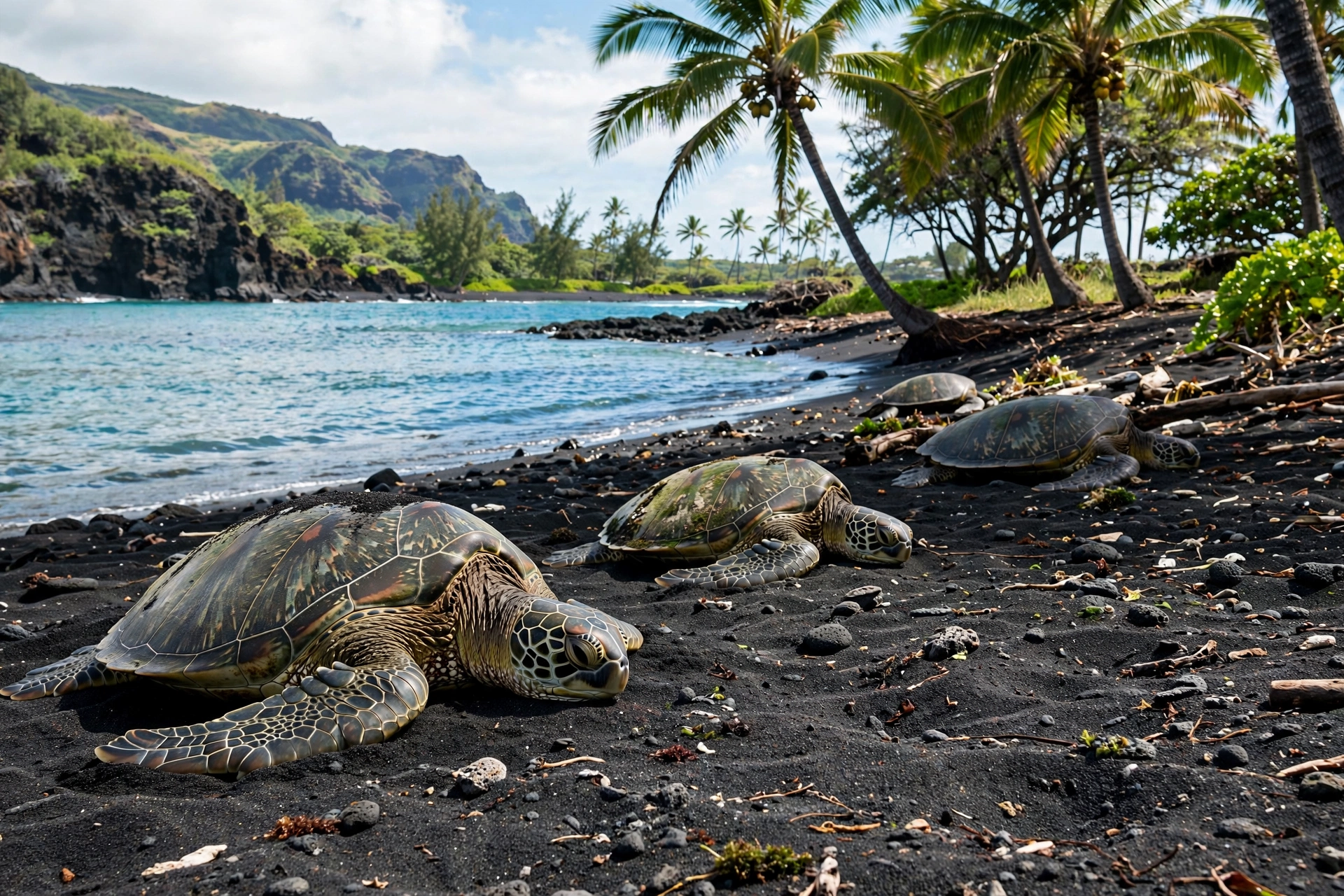
Punaluʻu, on the Kaʻū coast between Hawaiʻi Volcanoes National Park and South Point, is the island’s most famous black sand beach and one of the most photographed spots in the state. The jet-black sand comes from lava shattered by the ocean, and the beach is framed by coconut palms with a backdrop of green hills. Green sea turtles haul out on the sand here in numbers seen almost nowhere else, often resting just above the waterline.
The beauty comes with warnings. The water at Punaluʻu is often rough, with strong currents and a rocky entry, and swimming is recommended only for strong swimmers in calm conditions. The black sand absorbs heat and can burn bare feet at midday. Freshwater springs bubble up through the sand in the swimming area, creating startlingly cold patches. Give resting turtles plenty of space: federal law protects them, and touching or crowding a turtle carries serious penalties. The park has restrooms, showers, picnic areas, and a lifeguard.
Papakōlea (Green Sand Beach)
Papakōlea, near South Point (Ka Lae), is one of only four green sand beaches in the world. The olive-green color comes from olivine crystals eroded from the surrounding cinder cone, and the effect is genuinely startling the first time you see it. Reaching the beach requires a roughly 2.5-mile hike each way across open, windswept terrain from the South Point parking area, with no shade and no water along the route.
The hike is the price of admission, and it is not trivial: the trail is rough, the sun is intense, and the wind can be fierce. Some visitors pay local drivers for shuttle rides to the beach, which is permitted in the area. The cove itself is small and often has rough water; swimming is only for strong swimmers in calm conditions. Most visitors come for the spectacle rather than the swim, and the spectacle delivers. Bring far more water than you expect to need, wear sturdy shoes, and start early to avoid the worst heat.
Kealakekua Bay
Kealakekua Bay, south of Kailua-Kona, is a marine life conservation district with some of the clearest water in the state, and the snorkeling along its cliffs is extraordinary. The bay is best known as the site of the Captain Cook Monument on its far shore, reachable by kayak, by boat tour, or by a steep hiking trail. There is no sandy beach in the bay itself; access points include the small boat ramp at Nāpōʻopoʻo and the rocky shoreline near the monument trail.
The bay’s protected status means the marine life is abundant and relatively undisturbed: spinner dolphins rest in the bay during the day, and the coral walls hold dense schools of fish. Kayakers should be aware of local regulations governing kayak landings near the monument. Because there is no beach to lounge on, Kealakekua works best as a snorkeling expedition rather than a beach day, and the experience rewards the effort many times over.
Richardson Ocean Park
On the east side near Hilo, Richardson Ocean Park is the area’s most popular swimming beach. The black sand cove is protected by lava rock barriers that create calm, pond-like swimming areas, and the park has restrooms, showers, picnic pavilions, and a lifeguard. Green sea turtles are frequent visitors, often seen grazing in the shallows or resting on the sand.
The east side gets more rain than the west, and the water here is cooler and less clear than Kona’s, but on a sunny Hilo day Richardson is a delight: shady trees, calm water, and a local family atmosphere. It is an easy stop on a day that includes the Hilo farmers market or a drive to Hawaiʻi Volcanoes National Park.
Carlsmith Beach Park and Onekahakaha
Just down the coast from Richardson, Carlsmith Beach Park, also called Four Mile, offers a series of spring-fed lagoons separated by lava rock, with some of the calmest swimming water on the east side. The freshwater springs keep parts of the lagoons refreshingly cool. Onekahakaha Beach Park, nearby, has a protected sandy cove that is especially good for small children, with a lifeguard, restrooms, and picnic facilities.
These parks show the east side at its best: green, quiet, and unhurried. They lack the postcard drama of the Kohala coast, but for families staying in Hilo they are the most practical daily swimming option. The black sand here is finer and cooler underfoot than the exposed Kaʻū beaches.
Why the Sand Changes Color
The Big Island’s rainbow of sand colors is a direct result of its geology, and understanding it adds a layer of appreciation to every beach visit. White sand beaches, like those on the Kohala coast, are made mostly of parrotfish-processed coral and the shells of tiny marine organisms, accumulated over thousands of years in areas sheltered enough for sand to settle. Black sand forms where lava flows meet the ocean: the thermal shock shatters the lava into fine fragments, and waves grind those fragments into sand. Punaluʻu and the east side beaches are classic examples.
Green sand is the rarest variety. At Papakōlea, the sand gets its color from olivine, a green mineral common in Hawaiian lava but usually too soft to survive long as sand grains. The cinder cone enclosing the beach erodes directly into the cove, constantly replenishing the olivine faster than the ocean can carry it away. Only a handful of green sand beaches exist worldwide, which is why Papakōlea draws visitors willing to make the long, hot hike. Wherever you go, remember that removing sand, rocks, or coral from Hawaiʻi’s beaches is prohibited by state law.
Beach Safety on the Big Island
Ocean safety deserves serious attention on the Big Island, because conditions vary enormously between coasts and even between neighboring beaches. Drowning is a leading cause of visitor fatalities in Hawaiʻi, and most incidents involve visitors who underestimated the ocean. The single most important habit is checking conditions before you swim: read posted warning signs, consult the surf forecast, and watch the water for at least a few minutes before entering. If you are unsure, ask a lifeguard or a local.
The golden rule: never turn your back on the ocean. Waves arrive in sets, and a calm-looking shoreline can produce a much larger wave every several minutes. This is especially true on beaches with shorebreak, where waves break directly onto the sand.
Shorebreak and surf. Several Big Island beaches, including Hapuna and Maniniʻōwali, develop powerful shorebreak when swells arrive, most often in winter on north-facing shores. Shorebreak can slam swimmers into the sand with enough force to cause spinal injuries. Bodyboard and bodysurf only where locals do, keep your hands up when diving under waves, and never let children play at the water’s edge on a shorebreak beach during high surf.
Currents. Rip currents and longshore currents occur at many beaches, and they are not always visible from shore. If caught in a rip current, do not fight it by swimming directly back to shore; swim parallel to the beach until you are out of the current, then angle back in. At beaches like Punaluʻu, offshore currents can be strong even when the surface looks calm. Snorkelers should be particularly cautious about drifting away from their entry point.
Rocky entries and urchins. Many Kona coast beaches have lava rock entries rather than sand. Water shoes or reef-safe footwear help considerably, and swimmers should enter and exit slowly, watching for surge. Sea urchins inhabit rocky areas; stepping on one is painful but rarely dangerous. Vinegar, available at most lifeguard stations, helps dissolve the spines.

Vog. When Kīlauea is erupting, volcanic haze known as vog can drift over the Kona and Kaʻū coasts, reducing visibility and irritating eyes, throats, and lungs, particularly for people with asthma or other respiratory conditions. Check the vog forecast along with the weather forecast, and plan indoor or east-side activities on heavy vog days.
Sun and heat. The Hawaiian sun is intense year-round, and reflection off sand and water multiplies exposure. Black sand beaches can reach surface temperatures that burn bare feet; wear sandals even for short walks. Drink more water than you think you need, especially on hikes to beaches like Makalawena and Papakōlea, where there is no shade and no water.
Wildlife. Green sea turtles are common at many Big Island beaches, especially Punaluʻu, Kahaluʻu, and Richardson. Federal and state law requires staying at least 10 feet away from turtles on land and in water; never touch, feed, or block a turtle’s path to the sea. Hawaiian monk seals occasionally rest on Big Island beaches; give them at least 50 feet of space and keep dogs leashed and away.
Lifeguards. Only a handful of Big Island beaches have lifeguards, including Hapuna, Kahaluʻu, Spencer Beach, Magic Sands, Punaluʻu, and Richardson. At unguarded beaches you are entirely responsible for your own safety. Swim with a buddy, stay within your abilities, and remember that calm water in the morning can change by afternoon as winds and tides shift.
Best Beaches for Snorkeling
The Kona coast offers the best shore-accessed snorkeling on the Big Island, thanks to clear water, fringing reefs, and generally calm morning conditions. The island’s top snorkel beaches, ranked by a combination of marine life, accessibility, and water clarity, are:
- Two Step (Puʻuhonua o Hōnaunau): the best overall for experienced snorkelers. Deep, clear water, dense coral gardens, and abundant fish just offshore. Rocky entry, no sand, no lifeguard.
- Kahaluʻu Beach Park: the best for beginners. Shallow, protected, easy sandy entry, turtles guaranteed on most days. Can be crowded; arrive early.
- Kealakekua Bay: the best for pristine conditions. A marine life conservation district with exceptional visibility. No beach; kayak or boat access to the prime spots.
- Kaunaʻoa Bay: the best resort-adjacent option. Calm, clear, and uncrowded thanks to limited parking passes. Excellent along the rocky points.
- ʻAnaehoʻomalu Bay: the best for casual snorkelers. Shallow, calm, and easy, with reef edges worth exploring at the ends of the bay.
- Makalawena: the best for adventurous snorkelers willing to hike. Pristine coves with healthy reef, but no facilities and no lifeguard.
Morning is the best time to snorkel everywhere on the island: winds are lightest, water is clearest, and marine life is most active before the afternoon trade winds chop the surface. Never stand on coral; it is a living animal that dies underfoot, and Hawaiʻi law prohibits damaging it. Use reef-safe sunscreen, as required by state law, which bans the sale of sunscreens containing oxybenzone and octinoxate. Float, don’t stand, and keep a respectful distance from turtles and all other marine life.
Best Beaches for Families
Families with children should prioritize calm water, shade, restrooms, and lifeguards. The Big Island’s best family beaches are:
- ʻAnaehoʻomalu Bay: shallow, calm, and warm, with food and restrooms nearby. The top pick for families staying on the Kohala coast.
- Samuel Spencer Beach Park: gentle water, big shade trees, picnic facilities, and a local family atmosphere. Free and uncrowded.
- Onekahakaha Beach Park: a protected sandy cove near Hilo with a lifeguard, ideal for small children on the east side.
- Carlsmith Beach Park: spring-fed lagoons with exceptionally calm water, good for tentative swimmers.
- Kahaluʻu Beach Park: easy entry and guaranteed turtles, though the shallow reef requires supervision so children stay in the sandy channel.
- Hapuna Beach: excellent in calm summer conditions, with full facilities and a lifeguard; check the surf forecast first, as winter shorebreak is dangerous for children.
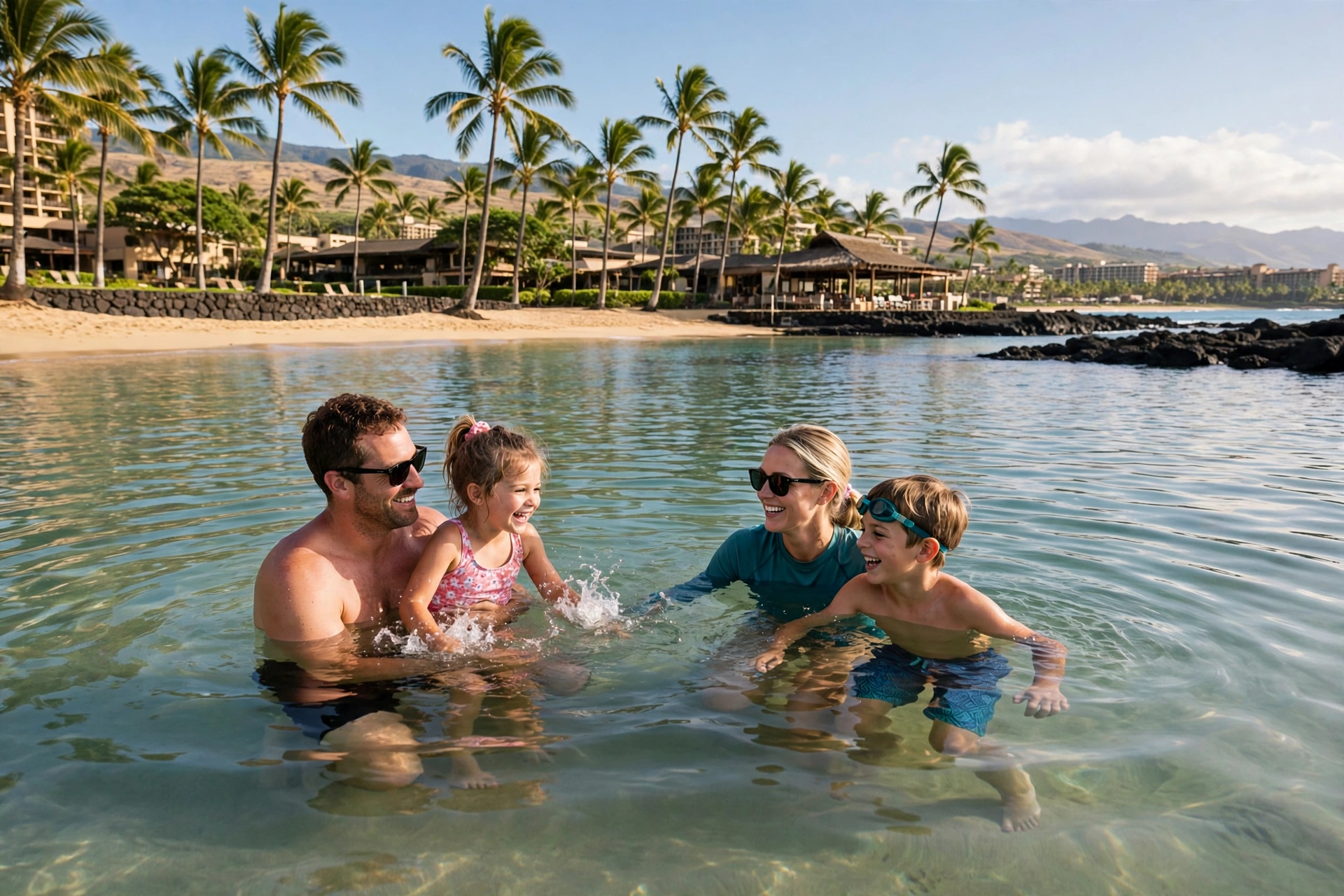
For families, the Kohala coast in summer is the sweet spot: the calmest water, the most white sand, and the most predictable conditions. Wherever you go, bring shade, apply reef-safe sunscreen frequently, keep children within arm’s reach in the water, and designate a water watcher so supervision never lapses.
What to Pack
Beach days on the Big Island go better with the right gear. The essentials: reef-safe sunscreen (required by state law), more water than you think you need, and sandals or water shoes, since black sand burns and lava rock cuts. A rash guard or swim shirt reduces sunscreen use and protects against sun and scrapes. Snorkel gear is worth bringing or renting, because the island’s best snorkeling is shore-accessed and spontaneous.
For specific beaches, tailor your kit. Hikes to Makalawena and Papakōlea demand sturdy closed-toe shoes, a hat, and at least a liter of water per person; there is no shade and no water on either trail. For rocky-entry snorkel spots like Two Step, water shoes or fins with booties make entry far easier. An umbrella or pop-up shade is valuable at beaches without trees, such as Maniniʻōwali and Makalawena. A dry bag protects phones and keys at beaches where you will leave belongings on the sand. And a small first-aid kit with vinegar, bandages, and antiseptic handles the minor scrapes that lava rock inevitably inflicts.
Best Time to Visit the Beaches
The Big Island’s beaches are enjoyable year-round, but conditions follow seasonal patterns worth knowing. Summer (May through September) brings the calmest ocean conditions on the Kona and Kohala coasts, with the smallest surf, the clearest water, and the warmest temperatures, both in the air and the sea. This is the best season for snorkeling, swimming, and family beach days on the west side. Winter (November through March) brings larger north swells that can make north-facing beaches like Hapuna rough or dangerous, while the Kona coast stays relatively sheltered and often remains swimmable.
The east side around Hilo is wetter year-round, with the rainiest months typically from November through March, though showers can arrive any day. Mornings are reliably the best beach time on every coast: winds are calm, skies are clearest, and the water is at its smoothest before afternoon trade winds build. Crowds peak during winter holidays, spring break, and summer, when parking at popular beaches like Hapuna fills early and the limited daily parking passes at Kaunaʻoa run out. For the thinnest crowds, visit in the shoulder months of April, May, September, or October, when the weather is excellent and the beaches breathe easier.

Frequently Asked Questions
What is the best beach on the Big Island?
For most visitors, Hapuna Beach State Recreation Area is the best all-around beach: the largest white sand beach on the island, with clear water, full facilities, and a lifeguard. Snorkelers often prefer Two Step at Puʻuhonua o Hōnaunau or Kahaluʻu Beach Park, while travelers seeking something unique should visit Punaluʻu Black Sand Beach or hike to Papakōlea Green Sand Beach. The “best” beach depends on whether you prioritize swimming, snorkeling, scenery, or solitude.
Does the Big Island have white sand beaches?
Yes. Although the island is famous for black sand, the Kohala coast on the northwest side has excellent white sand beaches, including Hapuna, Kaunaʻoa Bay (Mauna Kea Beach), Samuel Spencer Beach Park, Maniniʻōwali (Kua Bay), and ʻAnaehoʻomalu Bay. These beaches are made of coral-derived sand that accumulated in sheltered areas over thousands of years.
Can you swim at Punaluʻu Black Sand Beach?
Swimming is possible but often inadvisable. Punaluʻu frequently has rough water, strong currents, and a rocky entry, and it is best suited to strong swimmers in calm conditions. Most visitors come to see the black sand and the basking green sea turtles rather than to swim. Never turn your back on the ocean here, and keep at least 10 feet from resting turtles.
How long is the hike to the Green Sand Beach?
The hike to Papakōlea (Green Sand Beach) is roughly 2.5 miles each way from the South Point parking area, across open, unshaded terrain. Allow two to three hours round trip, carry at least a liter of water per person, wear sturdy shoes, and start early to avoid midday heat. Local shuttle drivers at South Point offer rides to the beach for those who prefer not to walk.
Where is the best snorkeling on the Big Island?
The Kona coast has the island’s best shore snorkeling. Two Step at Puʻuhonua o Hōnaunau offers the most pristine reef experience for confident swimmers, Kahaluʻu Beach Park is the easiest and most beginner-friendly, and Kealakekua Bay, a marine life conservation district, has exceptional visibility. Morning offers the calmest, clearest conditions everywhere.
Are Big Island beaches free?
Most county beach parks are free. State parks and national parks charge fees: Hapuna Beach State Recreation Area charges parking and per-person entry fees for nonresidents, and Puʻuhonua o Hōnaunau National Historical Park charges an entrance fee. Kaunaʻoa Bay (Mauna Kea Beach) is free but limits daily public parking passes, so arrive early.
Is the water warm enough to swim year-round?
Yes. Ocean temperatures around the Big Island range from the mid-70s Fahrenheit in winter and spring to the low 80s in late summer and fall. Most swimmers are comfortable without a wetsuit year-round, though a rash guard adds sun protection and warmth on breezy days.
Which side of the Big Island has the best beaches?
The west (Kona/Kohala) side has the best swimming and snorkeling beaches, with white sand, clear water, and the most sunshine. The south (Kaʻū) side has the most dramatic and unusual beaches, including black and green sand. The east (Hilo) side has pleasant black sand parks that are convenient for Hilo-based travelers but wetter and less spectacular. Most visitors base beach days on the west side.
Related Guides
- Hawaiʻi Beaches: the statewide guide to the best beaches across all islands.
- Big Island Map: orient yourself with a complete island map and region guide.
- Hawaiʻi Snorkeling: the statewide snorkeling guide, with Big Island sites in detail.
- Maui Beaches: compare the Valley Isle’s famous strands.
- Oʻahu Beaches: Waikīkī, Lanikai, and the North Shore.
- Hawaiʻi Map: the full archipelago at a glance.
A Final Note
The Big Island’s beaches tell the story of the island itself: a young, restless landscape still being built by fire and reshaped by the sea. A single trip can include a morning floating over coral gardens at Two Step, an afternoon watching turtles on black sand at Punaluʻu, and a sunset walk along the white strand at Hapuna, each beach a different chapter of the same volcanic story. Give each coast its due, respect the ocean’s power, leave the sand and rocks where you found them, and the island’s shoreline will reward you with some of the most varied and memorable beach days in Hawaiʻi.