
Maui holds a special place in Hawaiʻi wildlife. The island western coastline sits in the middle of the Auʻau Channel, one of the great humpback whale gathering places on Earth, and every winter thousands of whales turn these sheltered waters into a nursery. On land, Maui is the last stronghold of the nēnē, the Hawaiian goose that was once down to fewer than 30 birds in the wild. This guide to Maui wildlife covers the animals you are most likely to see on the island, from breaching humpbacks and grazing green sea turtles to axis deer at dawn in Upcountry pastures and the bright honeycreepers of Haleakalā slopes. You will learn where to find each species, how to watch responsibly, and which laws protect them.
In This Guide
Maui Wildlife at a Glance
Maui is the second largest Hawaiian Island, formed by two shield volcanoes joined by a low isthmus: the older West Maui Mountains, deeply eroded into dramatic valleys, and the younger, much larger Haleakalā, which rises 10,023 feet above the sea. That range of elevation, from sun baked lava fields at sea level to subalpine shrubland above the clouds, creates more ecological zones in a single island than most visitors expect, and each zone holds its own wildlife. The ocean matters just as much: Maui sits at the center of Maui Nui, a cluster of islands joined by shallow channels, and the protected waters between Maui, Lānaʻi, and Kahoʻolawe form one of the most important whale habitats in the North Pacific.
Like the other islands, Maui native land animals arrived on their own only rarely. Before people came, the island had birds, insects, one land mammal (the Hawaiian hoary bat), and marine animals that could cross open ocean. Everything else arrived with Polynesian voyagers or later settlers. The result is the same two tiered wildlife you find across Hawaiʻi: precious native species found nowhere else on Earth, and a large cast of introduced animals that now shape daily life on the island. On Maui the introduced cast is especially visible, from the axis deer that graze Upcountry hillsides at dawn to the flocks of zebra doves pecking along every beach park path.
Maui wildlife story includes some of Hawaiʻi brightest conservation wins and its hardest losses. The nēnē, the state bird, was reduced to a few dozen wild birds by the 1950s and has been brought back through decades of captive breeding and reintroduction, with Maui now holding one of the largest wild populations. Humpback whales, hunted nearly to extinction in the Pacific, now return to Maui waters by the thousands each winter. At the same time, Maui forest birds have suffered terribly from avian malaria and habitat loss, and several species that lived on the island a century ago are gone. The island sits at the front line of one of the most urgent conservation stories in the United States.
This guide focuses on the species you can realistically encounter as a visitor: the animals of the reefs and channels, the birds of the forests and wetlands, and the land animals you will spot from a car window or a trail. It explains where sightings are most reliable, when to look, and how to watch without harming the animals or breaking the law. Maui rewards patient watchers, and a little knowledge turns an ordinary beach day or mountain drive into a genuine wildlife encounter.
Marine Life
The waters around Maui hold the island most famous and most protected wildlife. Winter belongs to the humpback whales, but the reefs, channels, and coastlines teem with life year round. Every marine mammal in Hawaiian waters is protected by federal law, and sea turtles carry additional state and federal protection. Learn the animals below and you will recognize most of what you see from shore, from a snorkel mask, or from a whale watch boat.
Humpback Whales (Koholā)
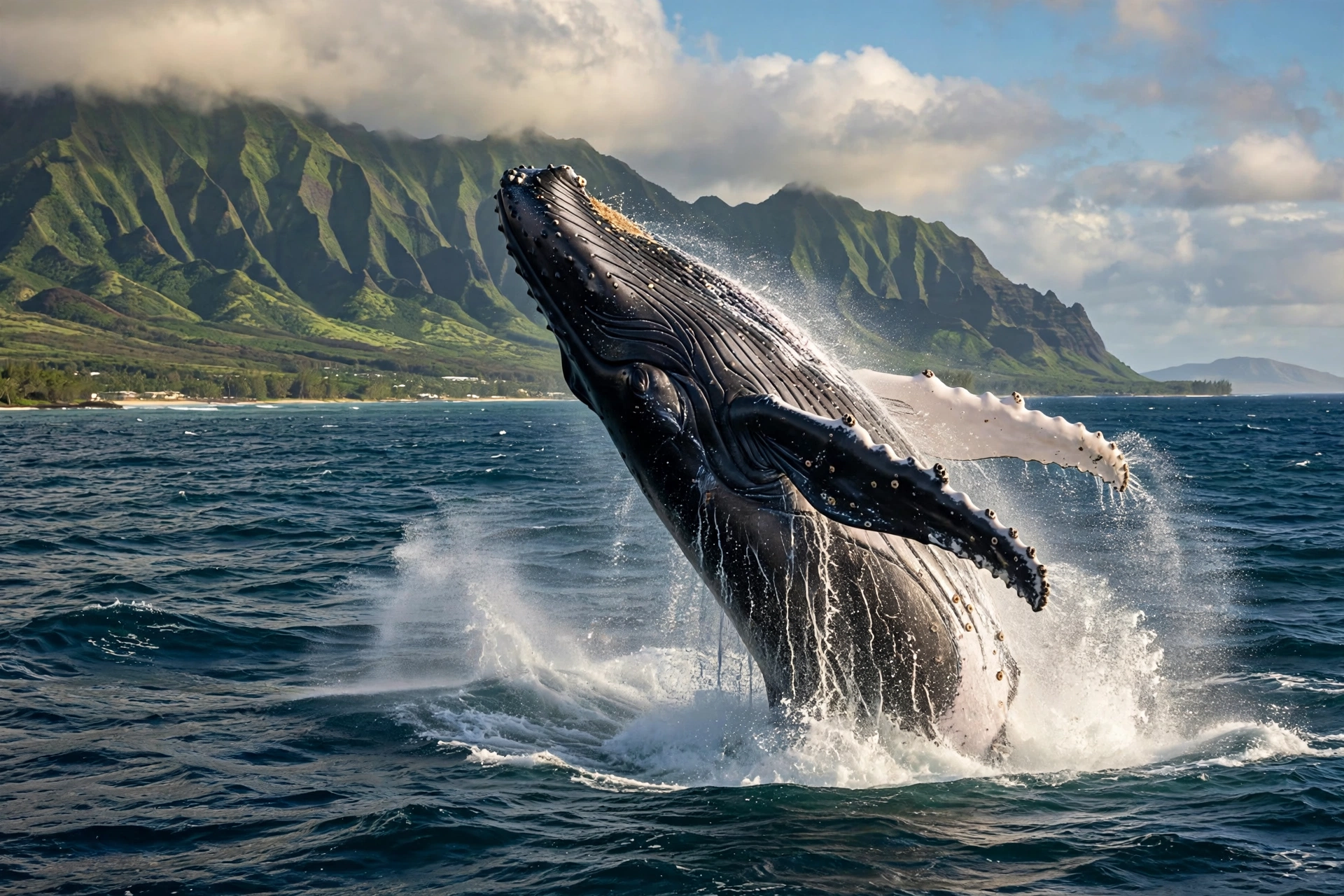
Maui is the whale capital of Hawaiʻi. Each winter, an estimated 10,000 to 12,000 North Pacific humpback whales migrate to Hawaiian waters to breed, calve, and nurse their young, and the greatest concentration gathers in the shallow, sheltered Auʻau Channel between Maui, Lānaʻi, and Kahoʻolawe. From December through April, with peak numbers in February and March, blows, tail slaps, pectoral slaps, and full breaches are visible from shore on calm days all along Maui western and southern coasts. A breaching humpback, 40 feet of whale launching clear of the water, is one of the great wildlife spectacles on Earth, and Maui offers it more reliably than almost anywhere else.
The whales are here for the nursery, not for food: humpbacks fast during their months in Hawaiʻi, living off blubber stored from summer feeding in Alaska. Mothers with newborn calves are common close to shore, and competitive groups of males pursuing a female can put on hours of surface displays. Federal law requires everyone, on vessels, on paddleboards, and swimming, to stay at least 100 yards from humpback whales, and aircraft must stay 1,000 feet above them. If a whale approaches you, which happens, remain still and let it pass. The Hawaiian Islands Humpback Whale National Marine Sanctuary, headquartered in Kīhei, protects these waters and runs a well known whale count each winter that visitors can join.
Green Sea Turtles (Honu)
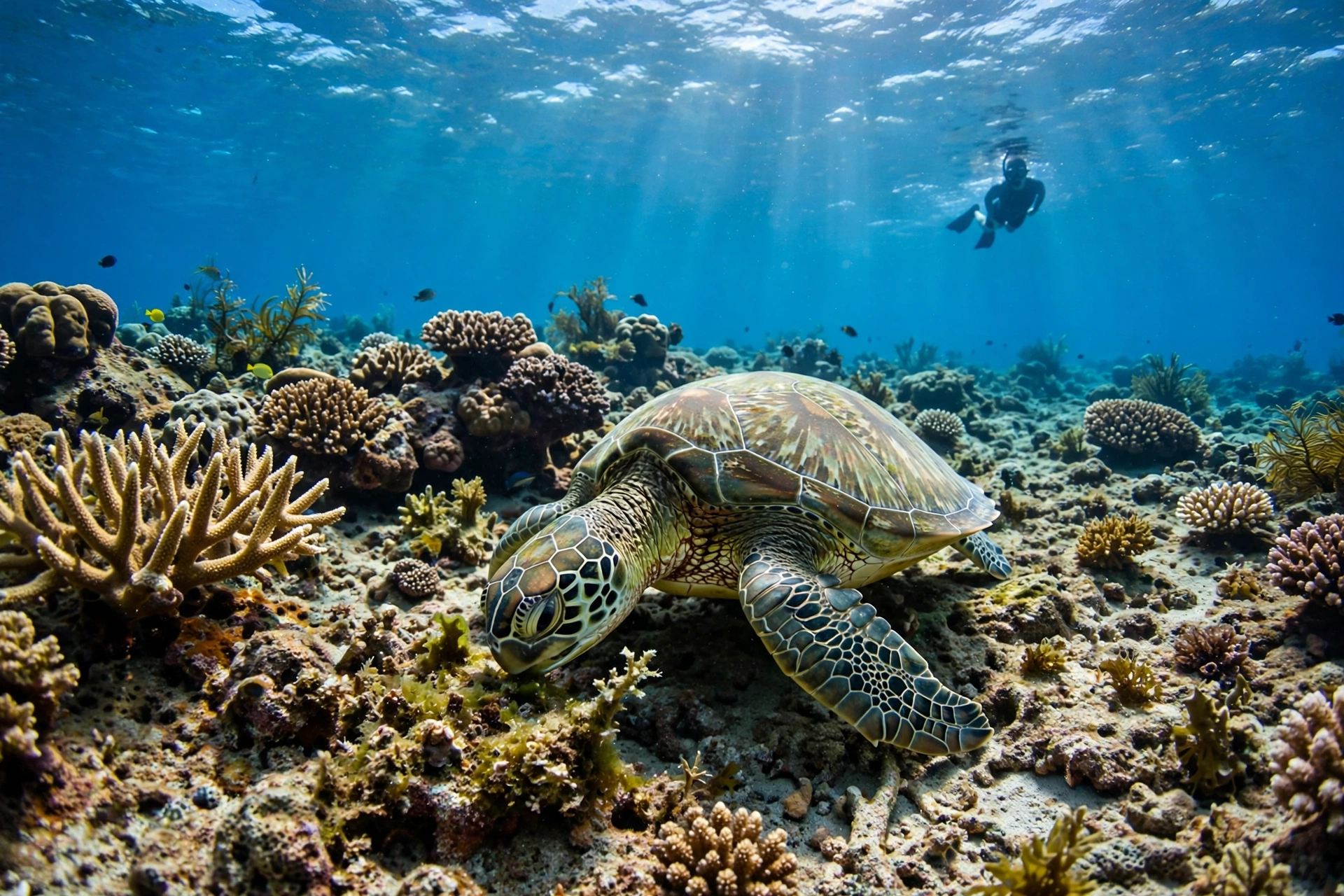
The Hawaiian green sea turtle, called honu, is the marine animal Maui visitors see most often. Adults weighing up to 400 pounds graze on limu (seaweed) in shallow water, and Maui calm leeward bays are ideal feeding grounds. Reliable spots include the reefs off Mākena and South Maui, the coves around Kapalua and Nāpili, and Olowalu reef. Turtles also haul out to bask on the sand, resting motionless for hours, which is normal behavior and not a sign of distress. A basking turtle should never be disturbed, and approaching closely enough to make it lift its head or move counts as harassment.
Hawaiian green turtles were hunted nearly to collapse in the twentieth century and have recovered strongly since gaining protection in the 1970s, one of the Pacific great conservation comebacks. They remain listed as threatened, and harassing a sea turtle, including touching, riding, chasing, feeding, or blocking its path to the water, carries serious fines under state and federal law. In the water, give turtles plenty of room and never reach for them, no matter how calm they seem.
Spinner Dolphins (Naiʻa)
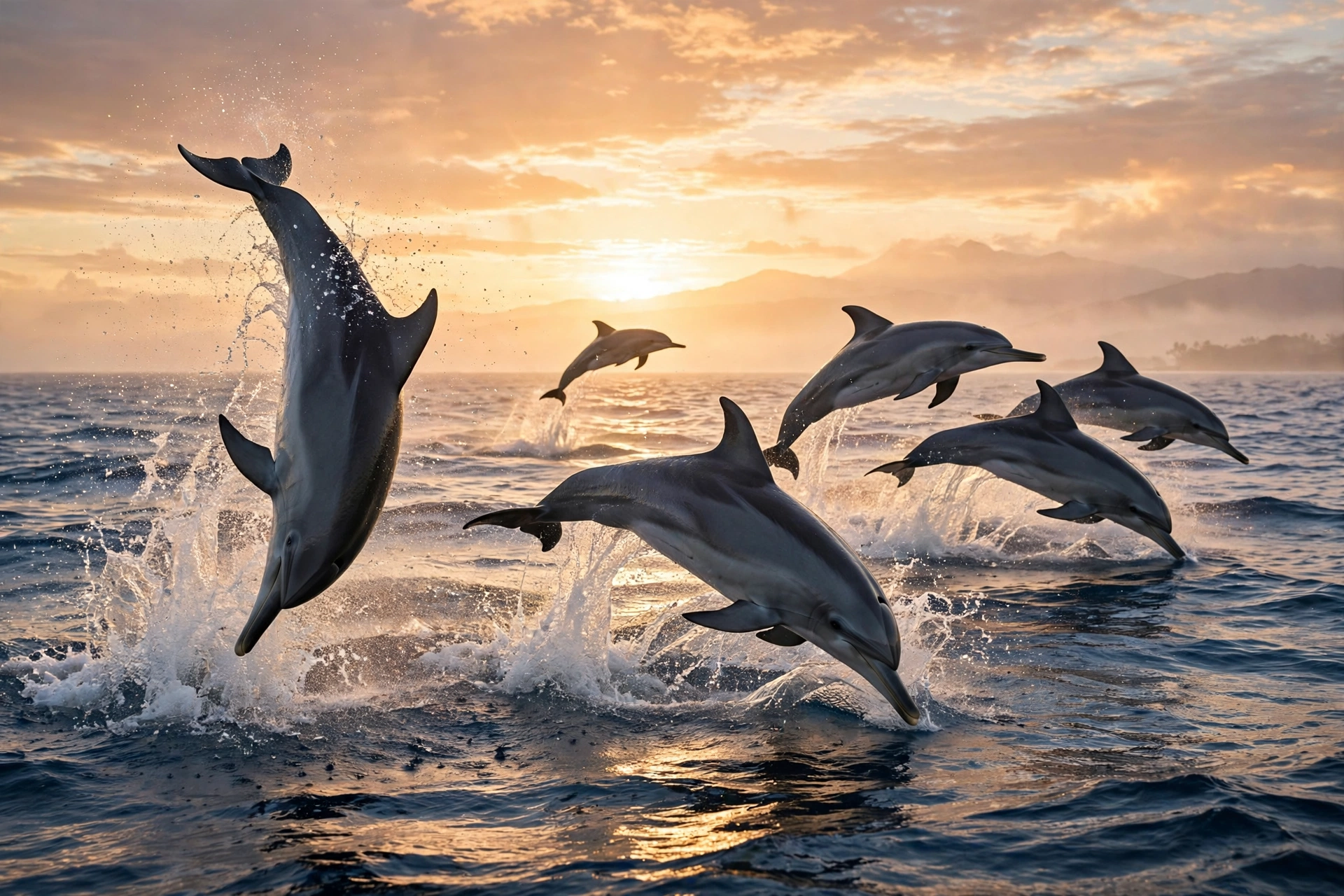
Spinner dolphins, named for their acrobatic spinning leaps, travel in pods that frequent Maui leeward coast, especially the waters off Lānaʻi and the Olowalu reef area. They feed offshore at night and rest in shallow, sandy bays during the day, which is when boats and swimmers most often encounter them. Because daytime rest is critical to their health, federal rules established in 2021 prohibit approaching within 50 yards of spinner dolphins in Hawaiian waters and forbid swimming with, touching, or otherwise interacting with them. Tour boats operating legally keep their distance, and swimmers who find dolphins approaching should remain still and let the animals pass on their own terms.
Manta Rays and Other Rays
Manta rays glide through Maui channels and along reef edges, most often seen by divers and snorkelers at sites like Molokini back wall drift areas and the deeper reefs off South Maui. With wingspans reaching 15 feet, they are unmistakable and completely harmless, feeding on plankton. Spotted eagle rays also cruise sandy areas near reef edges and are a common, graceful sighting for snorkelers at spots like Ulua Beach. As with all wild marine animals, mantas and rays should be watched without chasing or touching.
Hawaiian Monk Seals (ʻĪlio-holo-i-ka-uaua)
The Hawaiian monk seal is found only in Hawaiʻi and is one of the rarest seals on the planet, with only about 1,600 animals left. Most live in the Northwestern Hawaiian Islands, but a growing number have taken up residence around Maui, hauling out to rest on beaches around the island. A hauled out seal may look sick or stranded, but resting on shore for hours or even a full day is completely normal. Mothers with pups are especially sensitive to disturbance and can become defensive.
NOAA asks everyone to stay at least 50 yards (150 feet) from a monk seal on land and in the water, and to keep dogs leashed and far away. Seals that become used to people can become aggressive or dangerously habituated, so the distance rule protects both the animal and you. If you spot a seal on the beach, enjoy it quietly from a distance and give volunteers and researchers room to work if they are monitoring the animal.
Reef Fish and Coral
Maui reefs, especially at Molokini Crater and Honolua Bay, hold the clearest water and most diverse fish communities in the main islands. The humuhumunukunukuāpuaʻa, or reef triggerfish, is Hawaiʻi state fish and a constant presence on the reef. Parrotfish (uhu) scrape algae from coral and produce much of the sand on Hawaiian beaches. Moorish idols, raccoon butterflyfish, yellow tangs, and convict tangs school over the reef, and at Molokini lucky snorkelers spot reef sharks and the occasional manta. Coral is a living animal and the foundation of the reef: standing on it, touching it, or kicking it with fins kills polyps that took decades to grow. Practice good buoyancy, keep hands to yourself, and use reef safe sunscreen.
Birds of Maui
Maui birdlife spans the full arc of Hawaiian conservation: a remarkable comeback story in the nēnē, surviving native forest birds on the high slopes of Haleakalā, and a colorful cast of introduced birds that dominate the lowlands. Dawn on the Haleakalā slopes and mornings at Keālia Pond are the island two great birding experiences.
Nēnē (Hawaiian Goose)
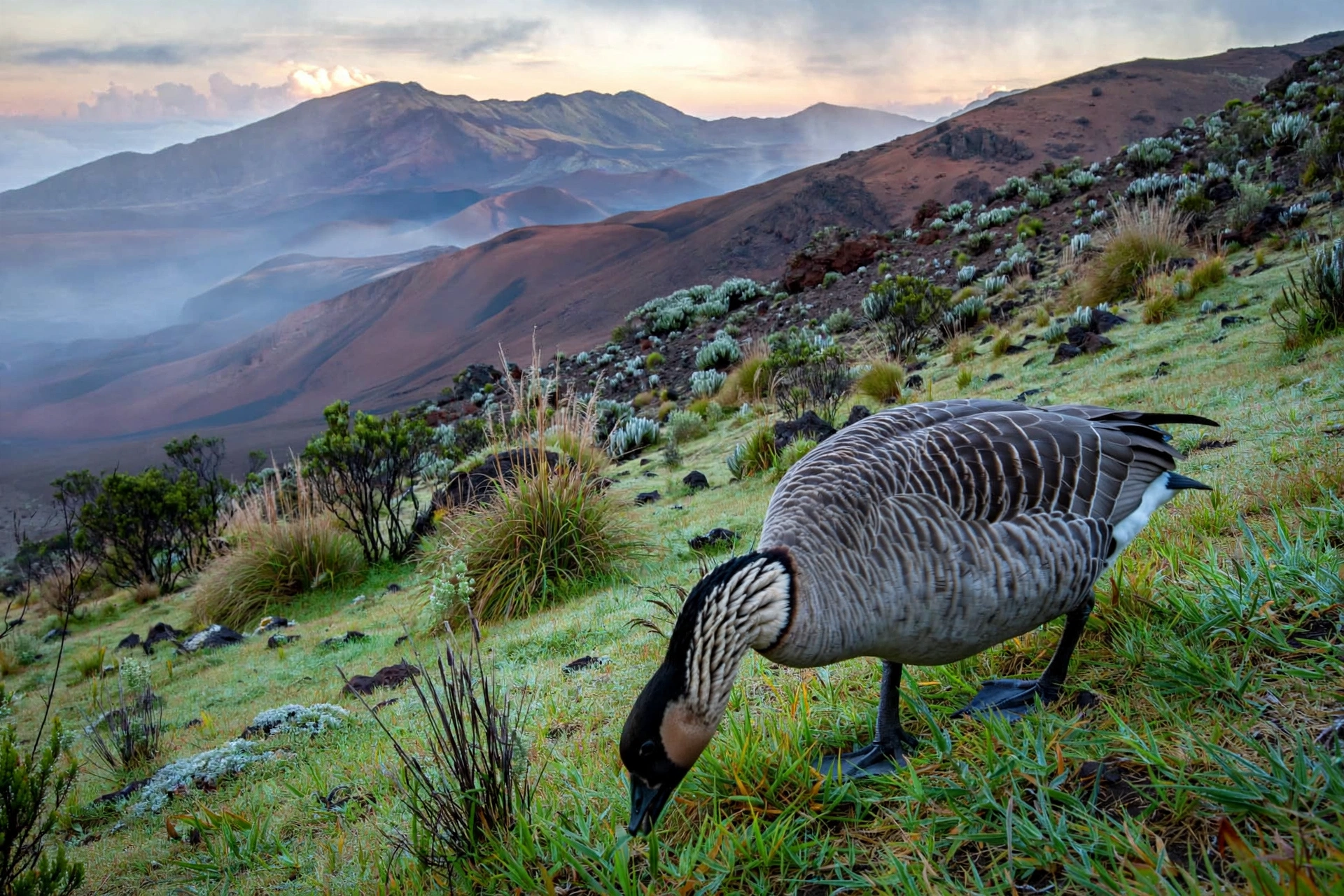
The nēnē is Hawaiʻi state bird and Maui greatest avian conservation success. By the early 1950s fewer than 30 wild nēnē remained in the world, confined to the Big Island. Decades of captive breeding and reintroduction have brought the wild population back to a few thousand birds, and Maui now holds one of the largest populations, centered on Haleakalā National Park and the ranchlands of Upcountry. Visitors regularly see nēnē grazing on the grassy slopes around the Haleakalā summit, at Hosmer Grove, and along the road to the summit at dawn and dusk.
Nēnē look like small Canada geese with buff colored cheeks, deeply furrowed neck feathers, and partially webbed feet adapted for walking on lava. They are protected by state and federal law, and feeding them is illegal and harmful. Keep your distance, stay on roads and trails, and drive slowly in nēnē country, especially at dawn and dusk when the birds cross roads. Vehicle strikes are one of the leading causes of nēnē deaths on Maui.
Native Forest Birds of Haleakalā
The high elevation forests on Haleakalā slopes, especially around Hosmer Grove and the Waikamoi Preserve, shelter some of Hawaiʻi surviving native honeycreepers. The scarlet ʻiʻiwi, with its curved salmon colored bill, and the crimson ʻapapane are the most likely sightings, flashing through ʻōhiʻa blossoms in the early morning. The olive green ʻamakihi is common and easier to spot. These birds survive here because the cool high elevations have fewer mosquitoes, which carry the avian malaria that devastated lowland bird populations. A morning walk at Hosmer Grove, listening for the ʻiʻiwi whistle and the ʻapapane wing whir, is one of Maui finest free wildlife experiences.
Maui also carries the weight of what has been lost. Species like the poʻouli, discovered in 1973 and extinct by the early 2000s, lived only on Maui northeastern slopes. The Maui parrotbill (kākāwahie) and Maui ʻalauahio (creeper) survive in tiny numbers in the same forests. Conservation programs, including mosquito control using the incompatible insect technique, are now underway on Maui to give these birds a future, and visitors who stay on trails and clean their boots help by not spreading invasive seeds and disease.
Pueo (Hawaiian Short-Eared Owl)
The pueo is Hawaiʻi only native owl and hunts by day, which makes it far easier to see than most owls. On Maui it quarters over the grasslands of Upcountry, the open slopes of Haleakalā, and the fields around Keālia Pond, gliding low over the grass searching for rodents. In Hawaiian tradition the pueo is an ʻaumakua, a family guardian, and it holds deep cultural respect. The species is endangered on Oʻahu but more secure on Maui, though habitat loss remains a concern. Dawn and late afternoon are the best times to watch for its buoyant, moth like flight.
Seabirds
Maui cliffs and offshore islets host nesting seabirds, though most colonies are on remote headlands. Wedge tailed shearwaters (ʻuaʻu kani) nest in burrows along coastal areas and are often heard at dusk rather than seen. White terns (Manu-o-Kū) patrol the coastlines. During winter, the offshore waters hold migratory seabirds passing through the Pacific. The best seabird watching for most visitors is incidental: shearwaters and petrels gliding past the cliffs on the Road to Hāna, and frigatebirds soaring over the ʻĪao Valley.
Introduced Birds
The birds most visitors notice first on Maui are the introduced ones. Zebra doves peck along every beach park path. Mynah birds strut through parking lots with their harsh calls. Red crested cardinals, with their striking red heads, sing from resort landscaping. Japanese white eyes flit through gardens, and spotted doves coo from telephone wires. These birds are now permanent residents, and learning to tell them from the native species sharpens every outing.
Land Animals
Maui land mammals are all introduced, and some of them shape the island landscape as visibly as any native species. Dawn and dusk are the prime viewing times, when the heat breaks and animals move.
Axis Deer
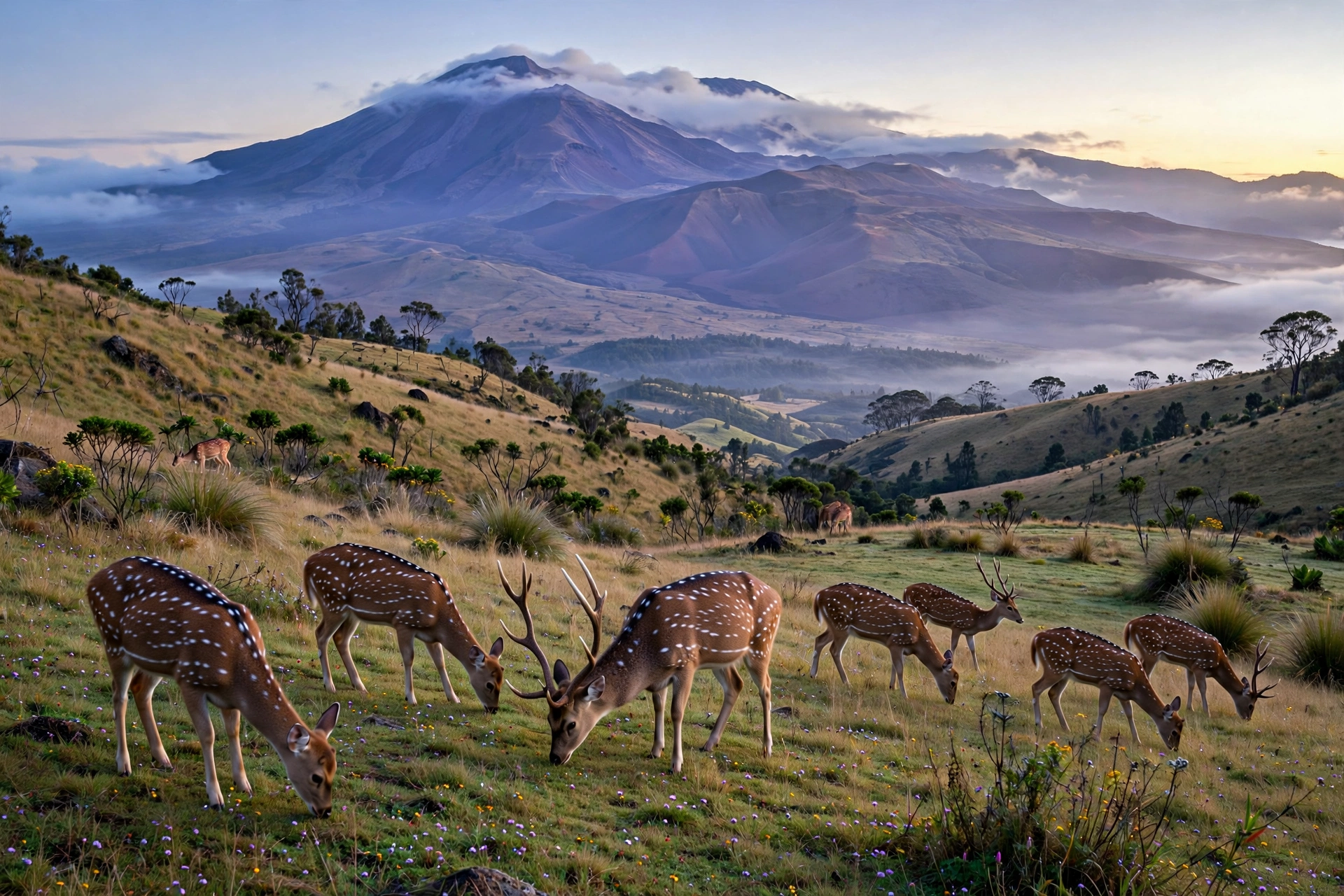
Axis deer, introduced to Maui in the 1950s as a game animal, have become one of the island most visible and most problematic wildlife species. Herds graze the pastures and hillsides of Upcountry Maui, around Kula and ʻUlupalakua, and along the slopes above Mākena at dawn and dusk. The deer are beautiful, with chestnut coats and white spots, but their population has exploded into the tens of thousands, damaging native forests, farms, and watersheds. The state manages them as a game species with hunting seasons, and the deer are a constant topic of island debate. For visitors, a herd of axis deer silhouetted on a Kula ridge at sunrise is a memorable sight.
Feral Pigs
Feral pigs, descended from animals brought by Polynesian voyagers and later settlers, root through forests and valleys across Maui, from the West Maui Mountains to the slopes of Haleakalā. You are more likely to see their sign, torn up ground and muddy wallows along trails, than the animals themselves, though dawn hikers in ʻĪao Valley and the Waiheʻe Ridge occasionally spot them. Pigs damage native plants and spread invasive seeds, and watershed partnerships across Maui work constantly to fence and remove them from sensitive forests.
Mongoose
The small Indian mongoose was deliberately introduced to Hawaiʻi sugar plantations in 1883 to control rats in cane fields, a plan that failed because rats are nocturnal and mongooses hunt by day. Instead the mongoose became a devastating predator of native ground nesting birds and sea turtle nests. On Maui, mongooses are a common daytime sight along roadsides and trails, especially in South Maui and the central isthmus. They are quick, weasel like, and always worth a look, but they are also a reminder of how a single introduction can unravel an island ecology.
Geckos, Chameleons, and Other Small Animals
Mourning geckos and gold dust day geckos chirp and skitter across lanais, walls, and tree trunks across Maui, and the bright green and gold day geckos are a favorite visitor sighting. Jackson chameleons, introduced from Kenya, live in the moist forests of the West Maui Mountains and parts of Upcountry; their three horned faces make them unmistakable if you spot one. Feral cats and rats, both introduced, prey on native birds and are the targets of predator control around sensitive colonies. Notably, Hawaiʻi has no native snakes and no established snake populations, and the brown tree snake interdiction program works hard to keep it that way.
Where to See Wildlife on Maui
Maui wildlife concentrates in a handful of places where habitat, protection, and access line up. Plan your outings around these locations and your odds of memorable sightings rise sharply.
Whale Watching: The West and South Shores
From December through April, the entire leeward coast of Maui becomes a whale watching ground. The best shore based lookouts include the McGregor Point scenic turnout on the Honoapiʻilani Highway, the beaches of Mākena and South Maui, the shoreline at Lahaina, and the cliffs around Kapalua. On calm mornings, especially February and March, blows and breaches are visible with the naked eye, and binoculars turn distant splashes into full displays. The Sanctuary visitor center in Kīhei offers exhibits and the annual whale count events. Boat based whale watching departs from Lahaina Harbor and Māʻalaea Harbor; choose operators that follow the 100 yard federal approach rule and advertise their sanctuary partnership.
Keālia Pond National Wildlife Refuge
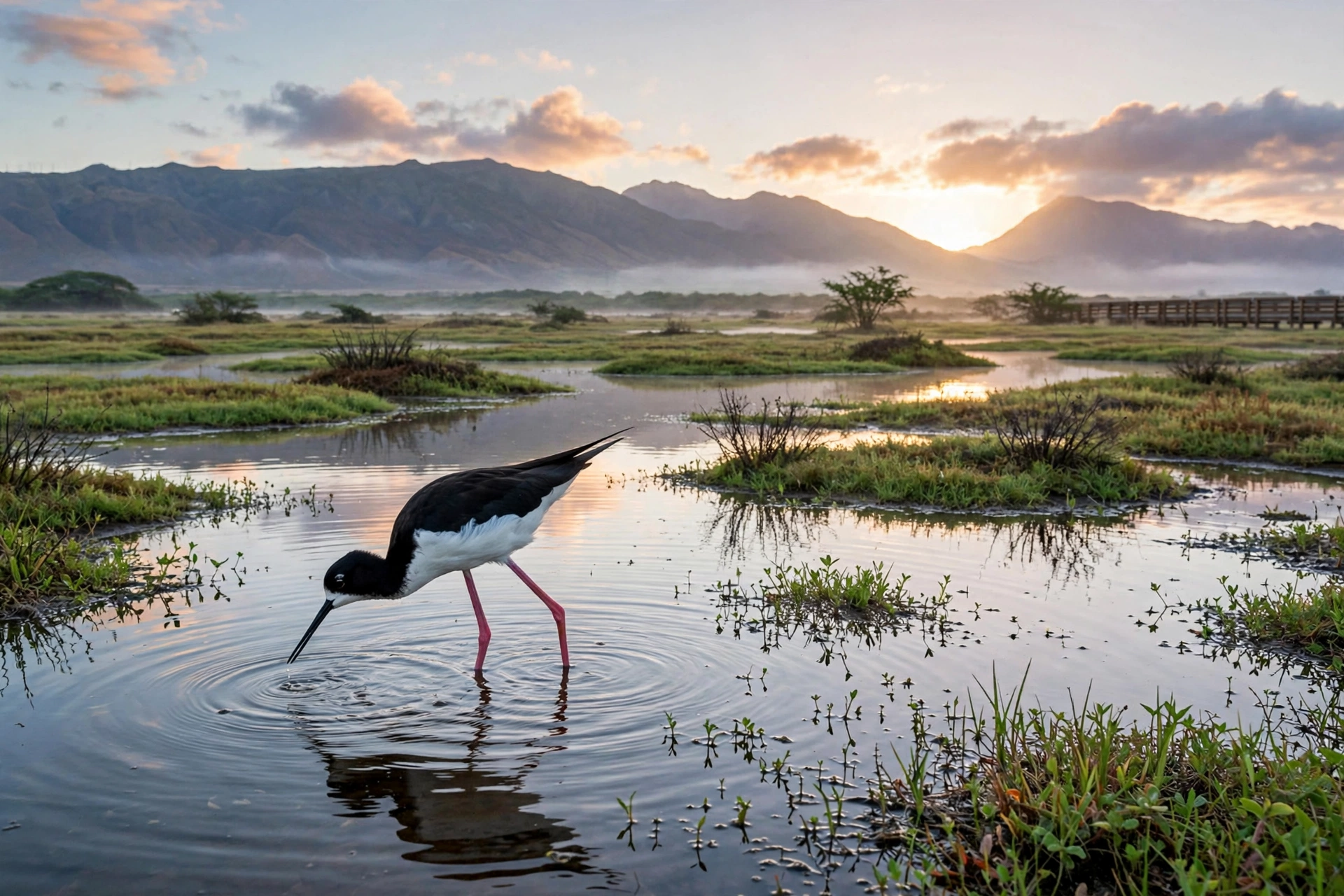
Keālia Pond, between Kīhei and Māʻalaea, is Maui most important wetland and one of the best birding spots in the islands. The refuge protects endangered Hawaiian stilts (aeʻo), with their impossibly long pink legs, and Hawaiian coots (ʻalae keʻokeʻo), along with migratory ducks and shorebirds in winter. A boardwalk and the visitor center exhibits make it an easy, rewarding stop, and dawn visits offer the most bird activity. The adjacent beach at Sugar Beach is also a reliable spot for turtle sightings in the shallows offshore.
Haleakalā National Park
The summit district of Haleakalā National Park is Maui premier land wildlife destination. Nēnē graze the subalpine grasslands around the visitor centers, especially in the early morning. The Hosmer Grove nature trail, a short loop through alien and native forest, is the island most accessible native birding walk, with ʻiʻiwi, ʻapapane, and ʻamakihi all possible. The silversword plants, while not animals, share the cinder landscape with the birds and complete the otherworldly scene. Arrive early, dress warmly, and drive slowly: nēnē cross the summit road.
ʻĪao Valley State Monument
The lush, needle spired valley of ʻĪao is a quick and easy wildlife outing from Central Maui. The stream and forest edges hold introduced birds, Jackson chameleons hide in the vegetation, and the valley walls catch the soaring flight of white terns and frigatebirds. It is also a good place to appreciate the sheer density of life that Maui windward valleys support, even where most of the birds are newcomers.
Molokini Crater
Molokini, the crescent shaped volcanic islet off Maui southwestern coast, is a Marine Life Conservation District with some of the clearest water in Hawaiʻi. Snorkelers and divers regularly see reef sharks, moray eels, octopus, and clouds of reef fish, and manta rays and whale sharks pass through on occasion. In winter, humpback whales are often visible from the boats on the crossing. Access is by boat only, and the protected status means fishing is prohibited, which is why the marine life is so abundant.
Honolua Bay and Olowalu
Honolua Bay, a Marine Life Conservation District on the northwestern coast, offers Maui best shore snorkeling in summer, with turtles, reef fish, and occasional manta rays over healthy coral. Olowalu reef, off the Honoapiʻilani Highway, is one of the healthiest fringing reefs in the main islands, home to a famous manta ray cleaning station and a resident turtle population. Both sites show what Hawaiian reefs look like when they are protected, and both reward calm, respectful snorkeling.
Wildlife Ethics and the Law
Hawaiʻi wildlife protections are among the strongest in the United States, and visitors are expected to know the basics. The rules below keep animals safe and keep you on the right side of the law.
Marine Mammal Distances
All marine mammals in Hawaiian waters are protected by the federal Marine Mammal Protection Act. Stay at least 100 yards from humpback whales, at least 50 yards from spinner dolphins (and never swim with or pursue them), and at least 50 yards from Hawaiian monk seals on land and in the water. Harassment, which includes any act that disturbs an animal natural behavior, carries fines that can reach tens of thousands of dollars. If an animal approaches you, stay calm, remain still, and let it pass.
Sea Turtle Rules
Green sea turtles are protected by state law and the federal Endangered Species Act. Do not touch, ride, chase, feed, or block a turtle path to the water. Give basking turtles wide berth on the beach, and in the water keep enough distance that the turtle does not change its behavior because of you. Photographs are wonderful; contact is not.
Birds and Nesting Areas
Native birds are protected by the Migratory Bird Treaty Act and, for endangered species like the nēnē, the Endangered Species Act. Never feed nēnē or any native bird; human food harms them and teaches dangerous roadside begging. Stay on marked trails in forest bird habitat to avoid crushing nests and spreading invasive seeds, and clean boots and gear between hikes. At Keālia Pond and other refuges, observe posted boundaries and keep noise low.
Reefs and Tide Pools
Coral is a living animal. Never stand on, touch, or kick coral, and avoid stirring up sediment that smothers it. Hawaiʻi law bans the sale and distribution of sunscreens containing oxybenzone and octinoxate, the chemicals most damaging to reefs; choose mineral based reef safe sunscreen and apply it well before entering the water. Take only photographs from tide pools, and return any rocks you lift to their original position.
General Principles
Watch quietly, keep your distance, and leave no trace. Do not feed any wild animal, on land or in the sea; feeding changes behavior, spreads disease, and creates dangerous dependency. Keep dogs leashed and away from wildlife, especially seals, turtles, and nesting birds. Report injured, entangled, or distressed marine animals to NOAA rather than intervening yourself.
Best Time for Wildlife Watching
Maui offers wildlife year round, but the calendar has clear peaks. Winter, from December through April, is whale season, with February and March the most reliable months for humpback sightings from shore and boat. Winter is also when migratory ducks and shorebirds crowd Keālia Pond and when the surf makes Honolua Bay inaccessible, shifting snorkelers to the calm leeward sites.
Spring, from April through June, brings the tail end of whale season, active nesting at seabird colonies, and nēnē goslings on the Haleakalā slopes. The weather is generally settled, the water is warming, and crowds are thinner than in winter. Summer, from July through September, offers the calmest ocean conditions for snorkeling and diving, with Honolua Bay at its best and Molokini visibility at its peak. Turtles are abundant on the reefs, and the long days give more time for dawn and dusk wildlife outings.
Fall, from October through November, is a shoulder season with warm water, thinning crowds, and the first humpback arrivals usually in late October or November. Forest birding on Haleakalā is good year round, with early morning always the most productive time. Whatever the season, the two daily windows that matter most are dawn and dusk, when land animals move, birds sing, and the light is kind.
Frequently Asked Questions
When is whale season on Maui?
Humpback whales are present in Maui waters from December through April, with peak numbers in February and March. The first arrivals often appear in late October or November, and a few stragglers remain into May. Shore based sightings are most reliable on calm mornings along the west and south coasts.
Where is the best place to see whales from shore on Maui?
The McGregor Point scenic turnout on the Honoapiʻilani Highway, the beaches of South Maui and Mākena, and the Kapalua coastline are all excellent shore lookouts. Bring binoculars, go on a calm morning, and watch for blows, which hang in the air before anything else becomes visible.
Can I swim with dolphins or turtles on Maui?
No. Federal rules prohibit approaching within 50 yards of spinner dolphins or swimming with them, and harassing sea turtles in any way is illegal under state and federal law. You can watch both from a respectful distance while snorkeling, which is often a better experience than a close encounter.
Where can I see nēnē on Maui?
Haleakalā National Park summit district is the most reliable spot, especially around the visitor centers and along the summit road at dawn and dusk. Nēnē also graze Upcountry ranchlands around Kula. Never feed them, keep your distance, and drive slowly in nēnē country.
Are there sharks on Maui?
Yes. Reef sharks, mostly white tip reef sharks, are common on Maui reefs and are shy around people. Tiger sharks, which demand more respect, patrol deeper waters around all the islands. Shark incidents are rare; swim at guarded beaches, avoid murky water and dawn or dusk swimming in remote areas, and never swim with open wounds.
What is the 100 yard rule for whales?
Federal law requires vessels, paddleboards, kayaks, and swimmers to stay at least 100 yards from humpback whales in Hawaiian waters, and aircraft must stay 1,000 feet above them. The rule protects mothers and calves from disturbance during the critical breeding season.
Is it safe to snorkel at Molokini?
Molokini is generally an excellent snorkeling destination with clear water and abundant marine life, but it is an open ocean site reached by boat, and conditions vary. Go with a reputable operator, wear flotation if you are not a strong swimmer, and follow the crew safety briefing. In winter, swells can make the crossing rough.
What should I do if I see a monk seal on the beach?
Stay at least 50 yards away, keep dogs leashed and far from the seal, keep noise down, and do not try to shoo it back into the water. Resting on shore is normal seal behavior. If the seal looks injured or entangled, report it to NOAA rather than intervening.
Related Guides
Maui wildlife rewards those who slow down and look carefully. A morning spent watching nēnē graze beneath the Haleakalā cinder cones, an afternoon snorkel shared with a green turtle over Olowalu reef, a February dawn broken by the blow of a humpback off McGregor Point: these are the encounters that stay with visitors long after the trip ends. The island animals have survived isolation, hunting, disease, and development, and every one of them is still here because people chose to protect them. Watch from a respectful distance, follow the rules that keep them safe, and leave Maui waters and forests exactly as you found them. The whales will be back next winter, and the nēnē will still be grazing at dawn.