
Hawaiʻi Beaches
Hawaii Beaches at a Glance
Hawaiʻi has more than 400 named beaches spread across six main islands open to visitors, and no two behave exactly alike. A beach on the windward coast of Oʻahu can be glassy and calm while a leeward beach on the same island is pounded by winter swell. The same beach can feel like a different place in July and in January. This guide treats the islands as one beach destination while respecting what makes each stretch of sand distinct, so you can match your beach days to the season, the island, and the kind of water time you want.
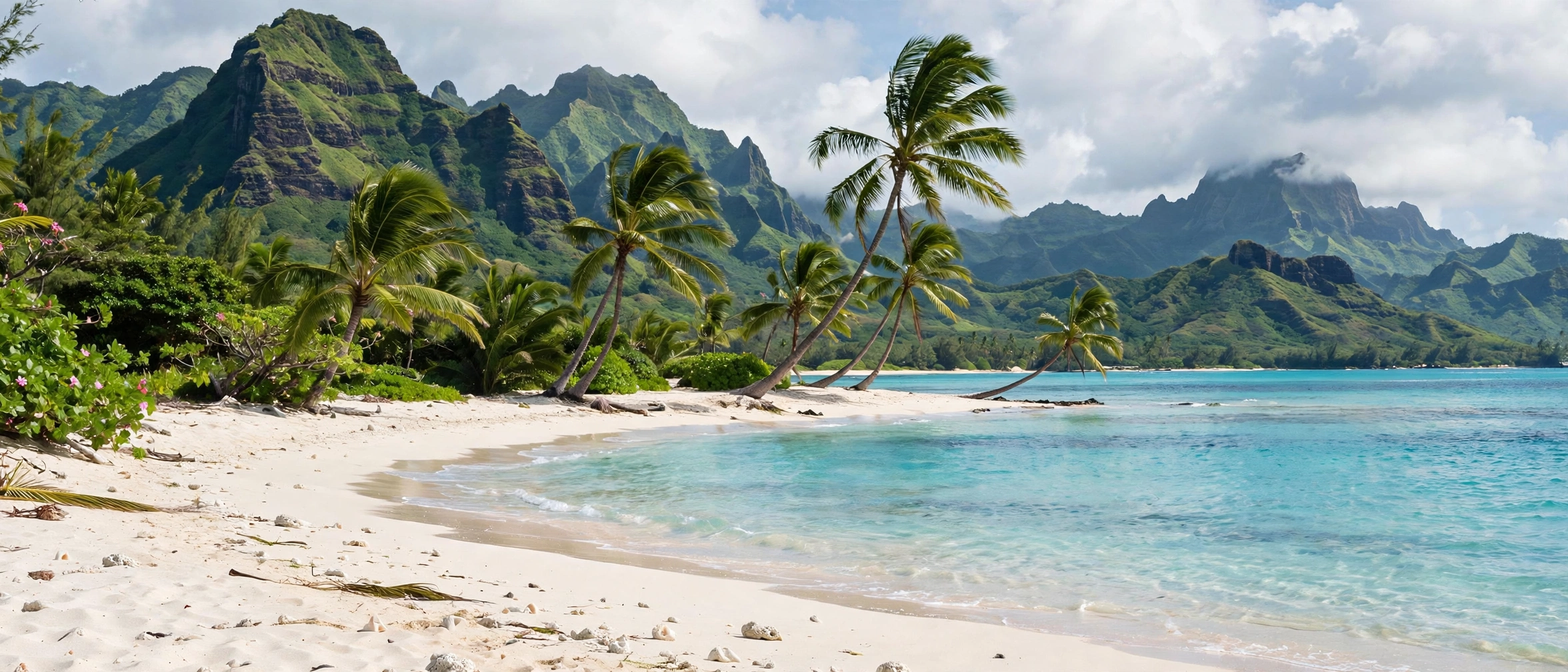
What makes Hawaii beaches different from mainland beaches starts with their geology. Most beaches here are not the wide, flat, gently sloping strands of the Gulf Coast. They were built by fringing coral reefs and volcanic rock, so many have a protective reef just offshore that creates calm swimming lagoons, while others open directly to the deep Pacific and take the full force of ocean swell. Sand here is mostly ground coral, shells, and volcanic minerals rather than quartz, which gives it a different texture and color. You will find white, gold, red, green, and black sand beaches in Hawaiʻi, and the color usually tells you the geology underneath.
Why Hawaii beaches are unique
The Hawaiian archipelago is the most isolated inhabited island chain on Earth, and that isolation shaped the shoreline. There is no continental shelf softening the ocean, so swells generated by storms thousands of miles away in the North Pacific arrive as powerful, well-organized waves. The islands sit in the trade winds, which blow consistently from the northeast and shape daily conditions. Every island has a windward side that catches the trades and a leeward side sheltered from them, which means you can usually find a calm beach on any island by choosing the sheltered side on any given day.
The reefs matter enormously. Hawaiʻi has some of the healthiest fringing reefs in the United States, and a fringing reef acts like a natural breakwater. Inside the reef, water is shallow, warm, and calm. Outside it, the same water is deep ocean. Learning to read where the reef is, and where the channels cut through it, is the single most useful beach skill in Hawaiʻi. Snorkeling guides at our Hawaii snorkeling guide explain how reef geography creates the best underwater viewing.
Sand colors of Hawaiʻi
- White and gold sand: the most common. This is ground-up coral, shells, and calcareous algae. Beaches like Lanikai on Oʻahu and Hapuna Beach on the Big Island get their famous white color from this composition.
- Black sand: formed when hot lava met the ocean and shattered into glass-like fragments. Punaluʻu on the Big Island is the most famous black sand beach, but smaller ones hide along the Puna coast.
- Green sand: Papakōlea Beach near South Point gets its olive-green color from olivine crystals that eroded out of a volcanic cinder cone faster than the surrounding rock. It is one of only four green sand beaches in the world.
- Red sand: Kaihalulu Beach near Hāna on Maui gets its red color from iron-rich cinder cliffs. Reaching it requires a short hike along a narrow cliff path.
Do not remove sand, rocks, or coral from any Hawaiian beach. It is illegal in some protected areas, disrespectful everywhere, and Hawaiʻi’s beaches lose enough sand to erosion without visitors taking souvenirs.
Reef basics every visitor should know
Coral reefs are living animals, and they are fragile. Standing on coral kills it. Hawaiʻi banned the sale of sunscreens containing oxybenzone and octinoxate in 2021 because these chemicals damage coral, and Maui County went further with a ban on non-mineral sunscreens. Bring reef-safe mineral sunscreen or sun-protective clothing. When snorkeling or wading over reefs, float horizontally and never touch, stand on, or grab the reef. If you are not confident in your swimming ability, choose a sandy-bottom beach instead of a reef beach.
Best Beaches by Island
Each island has a distinct beach personality. Oʻahu offers the widest variety in the smallest area. Maui has the most consistently sunny beach weather. The Big Island has the most geological variety. Kauaʻi has the most dramatic scenery. Molokaʻi and Lānaʻi have the fewest crowds. Use this section to pick your island base, then read our island-specific beach guides for the full details.
Oʻahu
Waikīkī Beach is the most famous beach in Hawaiʻi, a two-mile curve of sand in Honolulu backed by Diamond Head. It is protected by an offshore reef that keeps the waves small and gentle, which made it the birthplace of modern surfing. It is also the most crowded beach in the state. Go early in the morning for the best experience, and consider the less crowded sections near Kapiʻolani Park on the Diamond Head end.
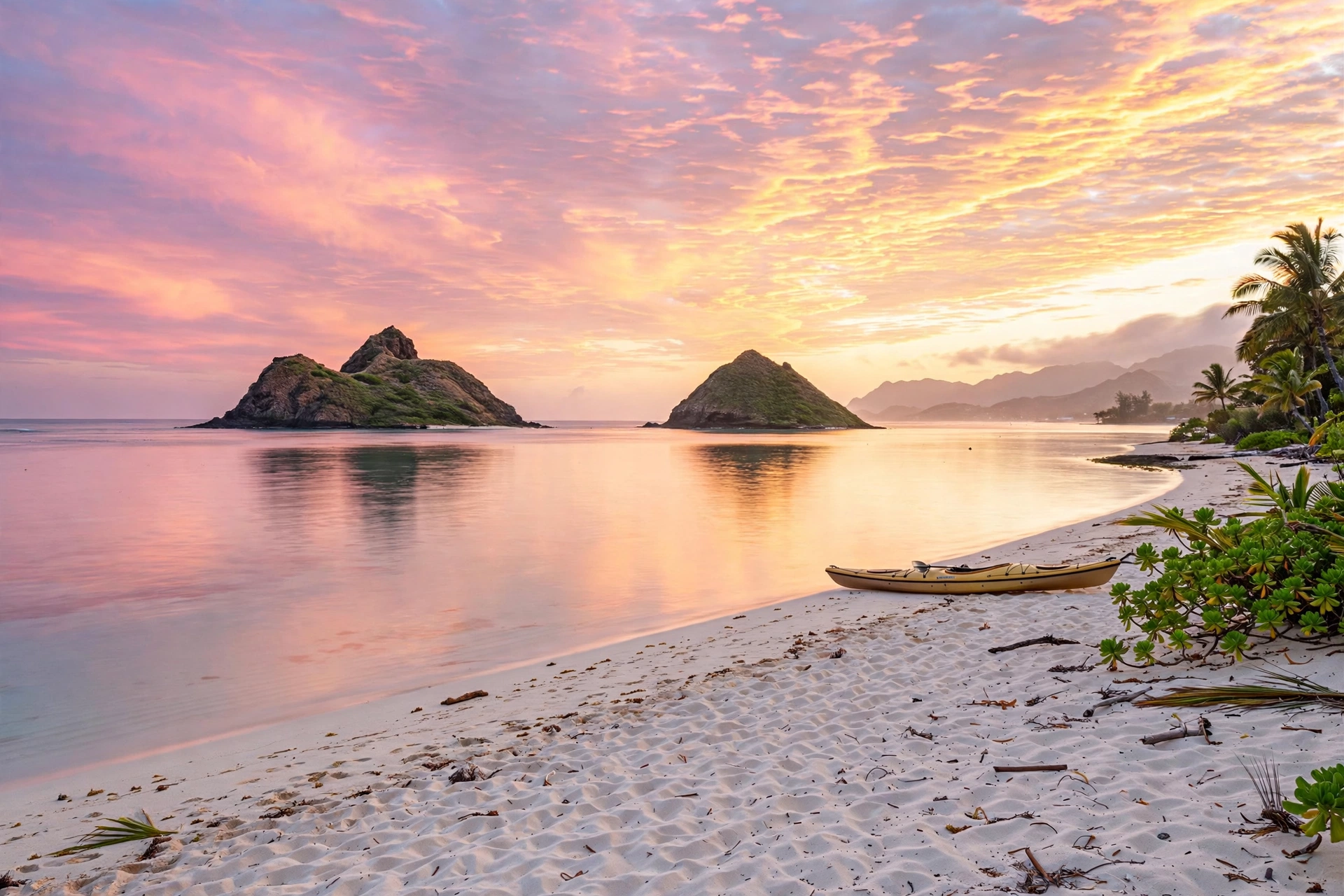
Lanikai Beach on the windward coast regularly appears on lists of the world’s best beaches, and the photographs are accurate. Powdery white sand, turquoise water, and the Mokulua Islands offshore create a postcard scene. Parking is extremely limited in the residential neighborhood, and there are no facilities, so arrive early or consider nearby Kailua Beach Park, which has parking, restrooms, and almost the same sand.
Hanauma Bay is a flooded volcanic crater that became one of the world’s great snorkeling spots. It is so popular that the City and County of Honolulu requires reservations and charges an entry fee for non-residents, and the bay closes on Mondays and Tuesdays to let the reef rest. Book reservations as early as the booking window allows.
Maui
Kāʻanapali Beach was once named America’s best beach, and its three miles of golden sand still anchor Maui’s west coast resort scene. Black Rock (Puʻu Kekaʻa) at the north end is a landmark snorkeling spot and the site of nightly cliff diving ceremonies. The beach walk behind the hotels connects the whole shoreline.
Wailea Beach on the south coast is calmer, more manicured, and sheltered from the trade winds. The Wailea Beach Path runs along the water past luxury resorts and rocky coves, and the swimming is consistently good.
Mākena Beach (Big Beach) is the wild one: a vast crescent of golden sand backed by the Puʻu Olaʻi cinder cone, with no resorts and powerful shorebreak. It is spectacular to look at and dangerous for casual swimming. Bodysurfing experts love it. Everyone else should swim elsewhere.
Read the full island rundown at Maui Beaches: The Complete Guide.
Big Island
Hāpuna Beach State Recreation Area is widely considered the best white sand beach on the Big Island, with a half mile of sand, clear water, and lifeguards. Arrive before 10 am on weekends because the parking lot fills.
Mauna Kea Beach (Kaunaʻoa Bay) is the Big Island’s classic postcard beach, fronting the Mauna Kea Beach Hotel. Public access is guaranteed by law but limited: a small number of public parking passes are issued each day, and when they are gone, the beach is effectively full for day visitors.
Punaluʻu Black Sand Beach on the southeast coast is the most famous black sand beach in the state, and the place most visitors go to see Hawaiian green sea turtles (honu) resting on the sand. The water is cold where freshwater springs seep in, and swimming is rough. Go for the turtles and the scenery, not the swimming.
Kauaʻi
Poʻipū Beach Park on the south shore is Kauaʻi’s most reliable family beach, with a protected wading area for children, a tombolo sandbar, and regular monk seal sightings. The offshore reef keeps conditions calm most of the year.
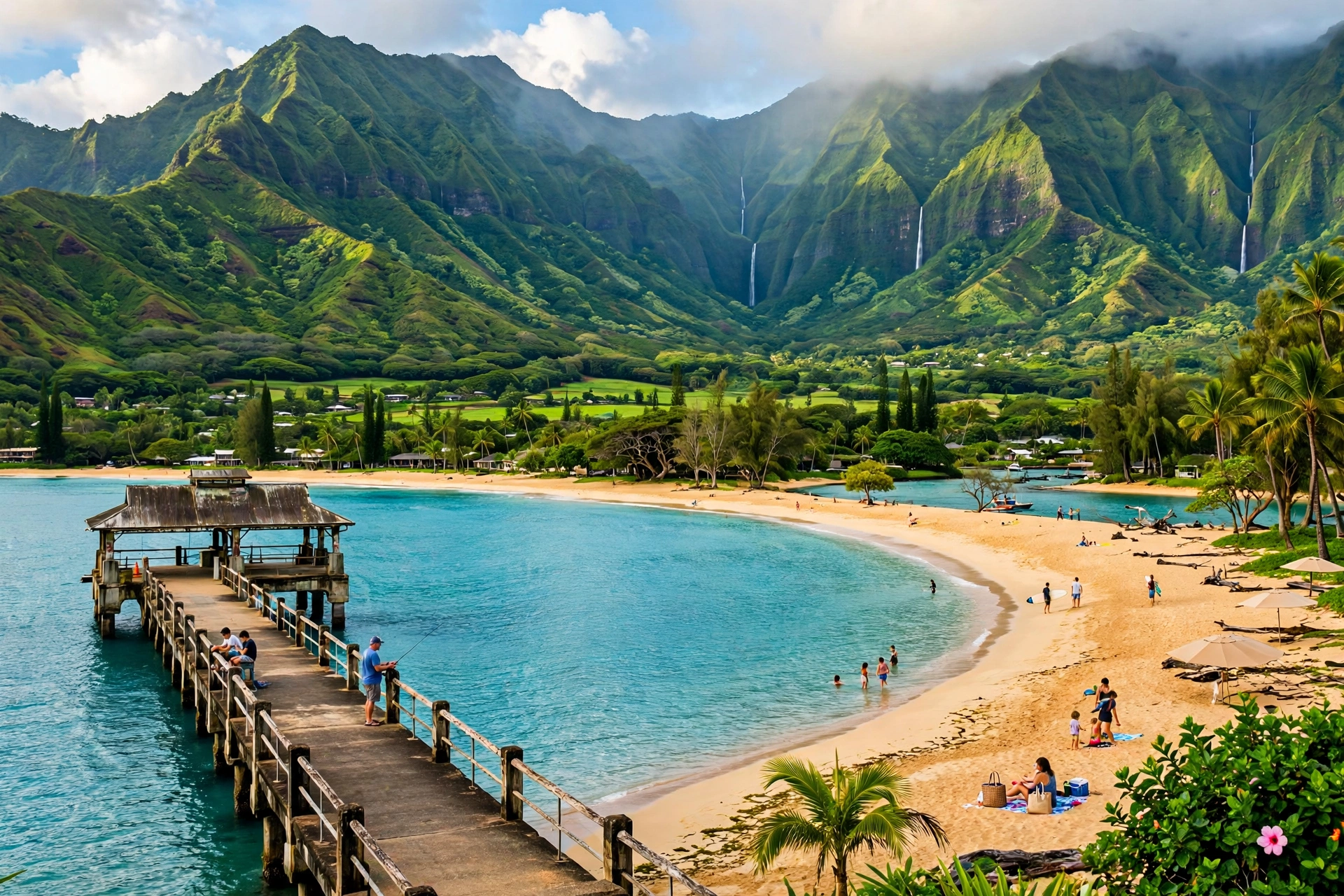
Hanalei Bay on the north shore is a two-mile crescent backed by emerald mountains and the historic Hanalei Pier. It is glassy and calm in summer and a serious surf spot in winter, which makes it a beach you read before you visit. Our Hanalei Bay map guide covers the four beach sections, surf breaks, and parking.
Keʻe Beach at the end of the road on the Nāpali Coast is the trailhead for the Kalalau Trail and a beautiful reef-protected beach. It requires a reservation to visit, booked through the state’s park reservation system, and it fills far in advance.
Molokaʻi and Lānaʻi
Pāpōhaku Beach on Molokaʻi’s west end is one of the longest white sand beaches in the state, three miles of it, and you will often share it with almost no one. The water can be rough, and Molokaʻi has few lifeguarded beaches, so treat it as a walking and sunset beach.
Hulopoʻe Bay on Lānaʻi is a protected marine preserve with some of the best shore snorkeling in the islands. Spinner dolphins frequent the bay. Lānaʻi has very few beaches open to the public, so Hulopoʻe is the one to plan around.
Best Beaches by Activity
Start with what you want to do, not which beach looks best in photographs. The right beach for your activity is more important than the most famous beach for anyone’s activity.
Best beaches for swimming
Look for beaches with offshore reefs, lifeguards, and gentle entries. The safest bets statewide are Waikīkī and Ala Moana Beach Park on Oʻahu, Nāpili Bay and Wailea Beach on Maui, Hāpuna Beach on the Big Island, and Poʻipū Beach Park on Kauaʻi. These all have protection from open ocean swell and regular lifeguard coverage.
Best beaches for snorkeling
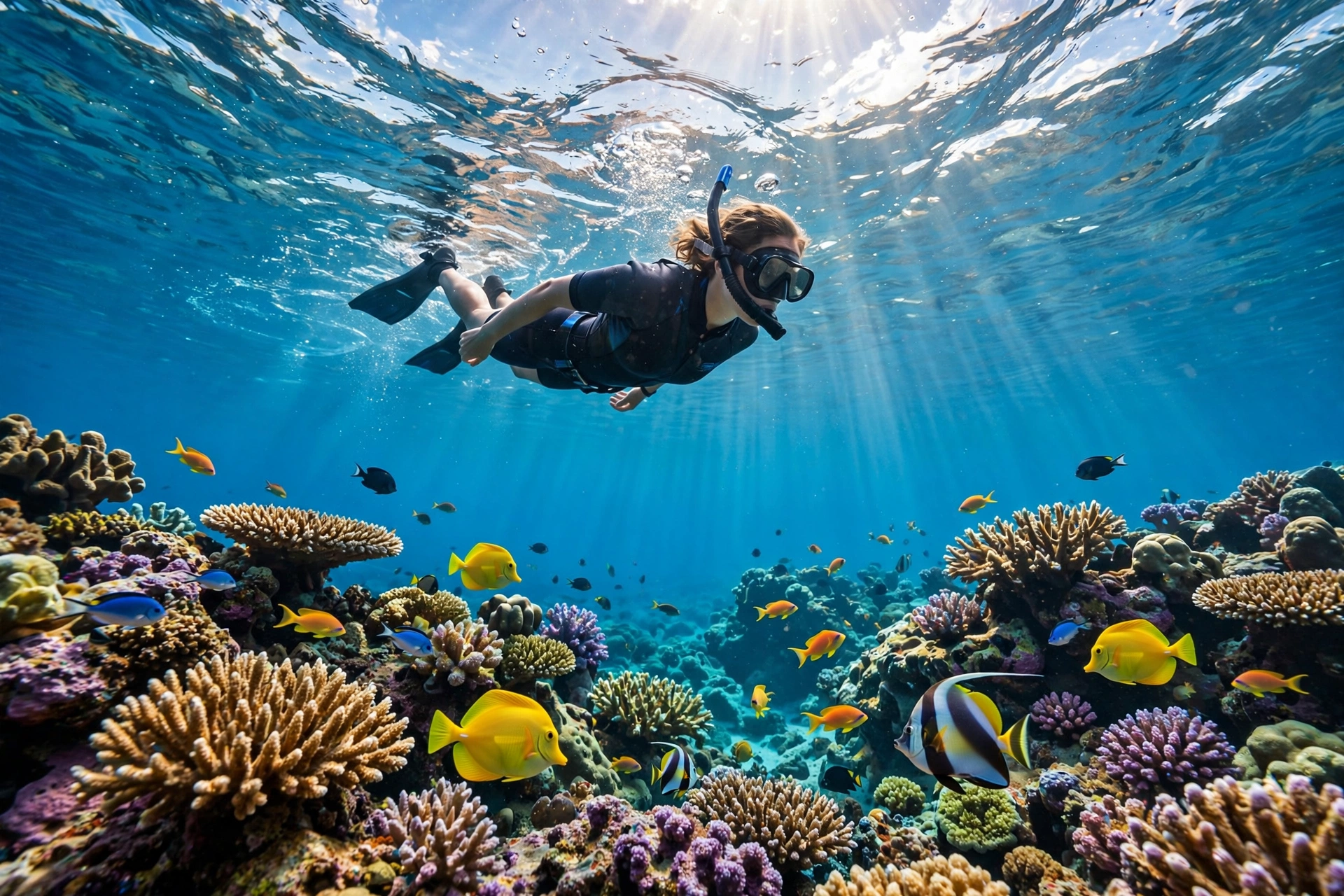
Snorkeling needs clear water, healthy reef, and calm conditions. Hanauma Bay on Oʻahu, Kapalua Bay and Molokini (by boat) on Maui, Kealakekua Bay on the Big Island, and Tunnels Beach on Kauaʻi are the standouts. Conditions are best in the morning before the wind picks up. Full detail lives in our Hawaii snorkeling guide.
Best beaches for surfing
Beginners should start at Waikīkī, where the reef keeps waves small and surf schools line the beach. Intermediate surfers head to White Plains Beach on Oʻahu’s west side or Lahaina’s Breakwall on Maui. Experienced surfers plan around winter swells at the North Shore of Oʻahu, Honolua Bay on Maui, and Hanalei Bay on Kauaʻi. Never paddle out at a break beyond your ability; Hawaiʻi’s surf injuries cluster around visitors who overestimated themselves.
Best beaches for families
The family checklist is short: lifeguards, restrooms, calm water, shade, and parking. Kailua Beach Park on Oʻahu, Baby Beach in Lahaina on Maui, Spencer Beach Park on the Big Island, and Salt Pond Beach Park on Kauaʻi all check every box. Baby Beach in particular has a natural rock wall that creates a wading-pool calm swimming area for small children.
Best beaches for sunset
West-facing beaches win. On Oʻahu, try Ala Moana or the west side beaches near Ko Olina. On Maui, Kāʻanapali and Mākena face straight into the sunset. On Kauaʻi, Polihale and Salt Pond face west. On the Big Island, the Kona coast from Kailua-Kona south to Kealakekua faces the setting sun. Arrive thirty minutes before sunset and stay for the afterglow, which is often the best part.
Most secluded beaches
Seclusion in Hawaiʻi usually costs effort. Kalalau Beach requires an 11-mile hike or a boat. Miloliʻi on Kauaʻi needs a boat or the Kalalau Trail. Papakōlea’s green sand beach needs a hike across open ranch land. Polihale needs a long dirt road. The reward is a beach you share with a handful of people instead of hundreds. Bring everything you need, because secluded beaches have no facilities, no lifeguards, and often no cell service.
Beach Safety
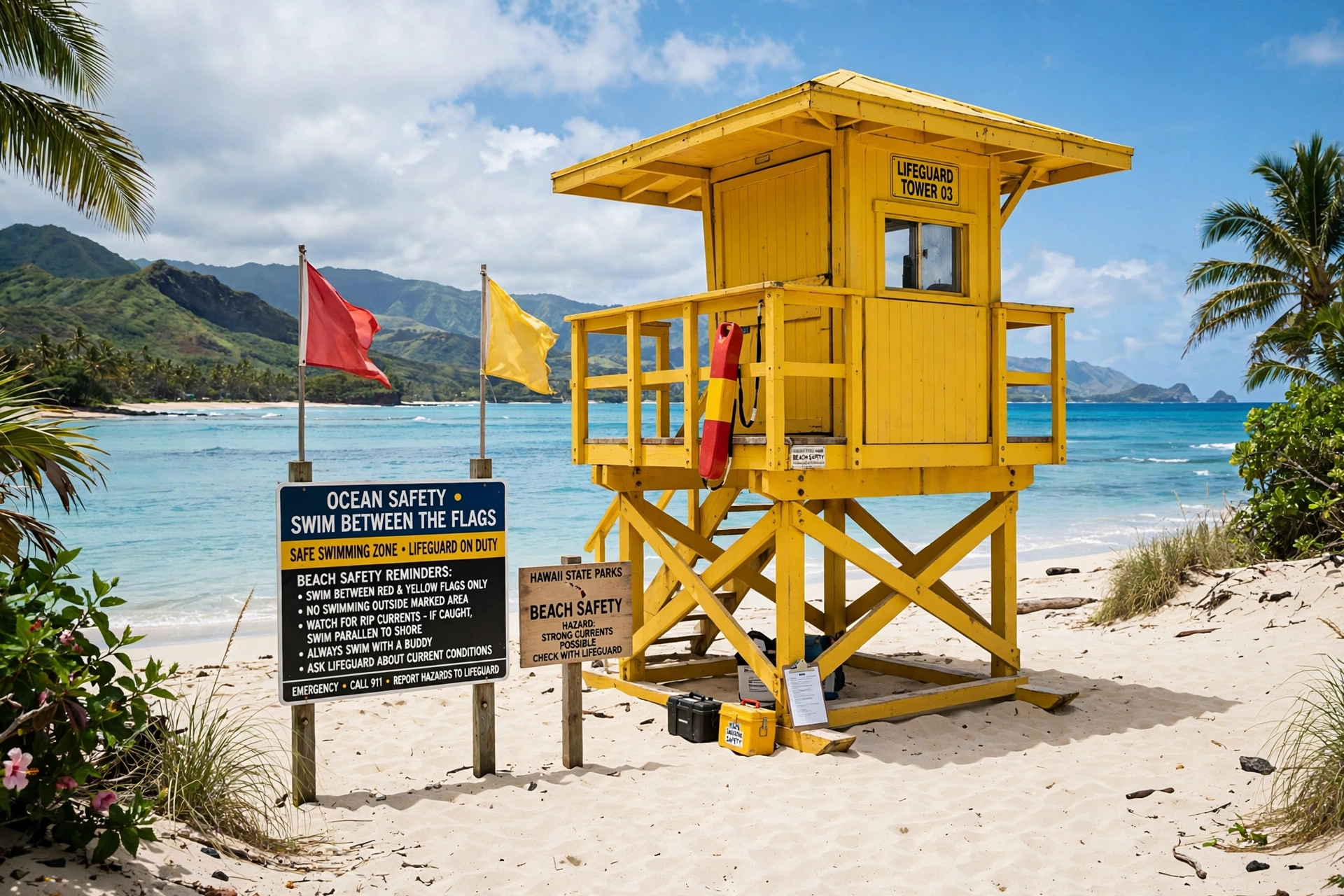
More visitors are hurt or killed in Hawaiʻi’s ocean than in any other outdoor activity in the state. Almost all of these incidents were preventable. The ocean here demands more respect than a mainland beach, and the rules below are not suggestions.
Ocean conditions
Rip currents are the leading cause of ocean rescues in Hawaiʻi. A rip current is a narrow channel of water flowing away from shore. If you are caught in one, do not swim against it. Swim parallel to shore until you are out of the current, then swim in. If you cannot escape, float and wave for help. Lifeguarded beaches have the fewest incidents because lifeguards read the currents all day.
Shorebreak is the wave that breaks directly on the sand. It causes more spinal injuries than any other wave type in Hawaiʻi because visitors bodysurf waves that dump them headfirst onto shallow sand. Sandy Beach on Oʻahu and Mākena’s Big Beach on Maui have the most dangerous shorebreak. Never turn your back on the ocean, and never bodysurf shorebreak you have not watched first.
Winter surf transforms north-facing shores from November through March. Beaches that are calm in summer, including Waimea Bay, Hanalei Bay, and Honolua Bay, can produce waves over 30 feet in winter. Never assume a beach is safe because it was safe last summer. Check the surf forecast every day.
Marine life
Box jellyfish arrive on Hawaiʻi’s south-facing shores roughly 8 to 12 days after each full moon, and they sting painfully. Lifeguards post warnings and may close beaches during an influx. Portuguese man o’ war blow in with strong onshore winds, especially on windward beaches; their long tentacles sting even when the animal is dead on the sand. Do not touch blue or purple jelly-like creatures on the beach.
Sharks live in Hawaiian waters, as they do in every tropical ocean. Attacks are extremely rare. Reduce risk by avoiding swimming at dawn and dusk, avoiding murky water near stream mouths after rain, and not swimming alone.
Sea urchins (wana) hide in reef crevices at many rocky entries. Wear reef shoes or water sandals at beaches with rocky entries like Hanauma Bay’s entry channel or the lava-rock shores of the Big Island.
Sun and reef-safe sunscreen
The Hawaiian sun is stronger than most visitors expect because the islands sit near the Tropic of Cancer and the trade winds cool your skin while you burn. Wear reef-safe mineral sunscreen, a rash guard, and a hat, and reapply sunscreen after swimming. Hawaiʻi law bans the sale of sunscreens containing oxybenzone and octinoxate statewide, and Maui County bans non-mineral sunscreens entirely. Buy compliant sunscreen before you travel or at any island drugstore.
How to check conditions
Check the surf and beach forecast every morning. The National Weather Service Honolulu office issues surf zone forecasts for every island. When in doubt, choose a lifeguarded beach and ask the lifeguard about conditions before you swim. Lifeguards would rather answer your question than rescue you.
Tides, Swells, and Reading a Surf Forecast
Hawaiʻi’s ocean changes every day, and the visitors who check the forecast every morning have better and safer beach days. You do not need to become an oceanographer. You need three numbers and one habit.
Swell height and direction tell you which shores will be rough. A 6-foot northwest swell means the north shores of every island will be pounding while south shores stay calm. A 4-foot south swell means the opposite. The direction matters more than the height: a 3-foot swell hitting your beach straight on can be rougher than a 6-foot swell hitting the other side of the island.
Wind matters because the trade winds blow from the northeast most days and typically strengthen in the afternoon. Morning is almost always calmer than afternoon, which is why experienced visitors do their ocean time before lunch and their land sightseeing after. When the trades drop entirely, the air gets hot and still, and the ocean gets glassy; locals call these Kona wind days.
Tide changes which beaches are swimmable. Some reef beaches are only good at mid to high tide, when there is enough water over the reef. Others have shorebreak that gets worse at low tide. Check a tide chart for the island you are on; free tide apps cover every Hawaiian harbor.
The habit is simple: check the National Weather Service Honolulu surf zone forecast each morning, pick the sheltered side of your island for that day’s swell direction, and go in the morning. Beach parks with lifeguards also fly warning flags and post condition boards; read them.
| Month | North shores | South shores | Notes |
|---|---|---|---|
| January | Rough, big surf | Calm, best swimming | Whale season peak |
| February | Rough, big surf | Calm, best swimming | Whale season peak |
| March | Moderating | Calm | Whale season ends |
| April | Calming | Calm | Shoulder season, fewer crowds |
| May | Calm | Small south swells begin | Summer pattern starts |
| June | Calm, best snorkeling | South swells | Warmest water ahead |
| July | Calm, best snorkeling | South swells | Peak summer crowds |
| August | Calm | South swells, hurricane watch | Warmest ocean water |
| September | Calm | South swells fading | Hurricane season continues |
| October | First winter swells | Calming | Transition month |
| November | Winter surf arrives | Calm | Whale season begins |
| December | Rough, big surf | Calm, best swimming | Whale season, holiday crowds |
Hawaii Beach Packing List
Packing right for the beach in Hawaiʻi is different from packing for a mainland beach, and getting it right saves you from buying overpriced replacements at resort shops.
- Reef-safe mineral sunscreen: required by law in Hawaiʻi. Bring it or buy compliant sunscreen on arrival.
- Rash guard or swim shirt: the best sun protection, better than any sunscreen, and it protects against reef scrapes.
- Reef shoes or water sandals: essential for rocky entries, lava rock shores, and urchin country.
- Snorkel gear: renting daily adds up fast on a week-long trip. If you snorkel more than twice, bringing your own set pays for itself.
- Beach umbrella or sun shade: many beaches have little natural shade. A compact umbrella changes the whole day.
- Cooler with water and snacks: remote beaches have no concessions. Dehydration sneaks up in the trade winds.
- Dry bag: for phones, keys, and wallets on beaches where you swim away from your towel.
- Beach towels and a change of clothes: for the drive home, especially after black or red sand beaches that stain.
- First aid basics: vinegar for jellyfish stings, tweezers for urchin spines, bandages for reef scrapes.
Molokaʻi and Lānaʻi Beaches in Detail
These two islands get a fraction of the visitors, and their beaches reflect that. Planning matters more here because there are fewer beaches, fewer facilities, and fewer lifeguards.
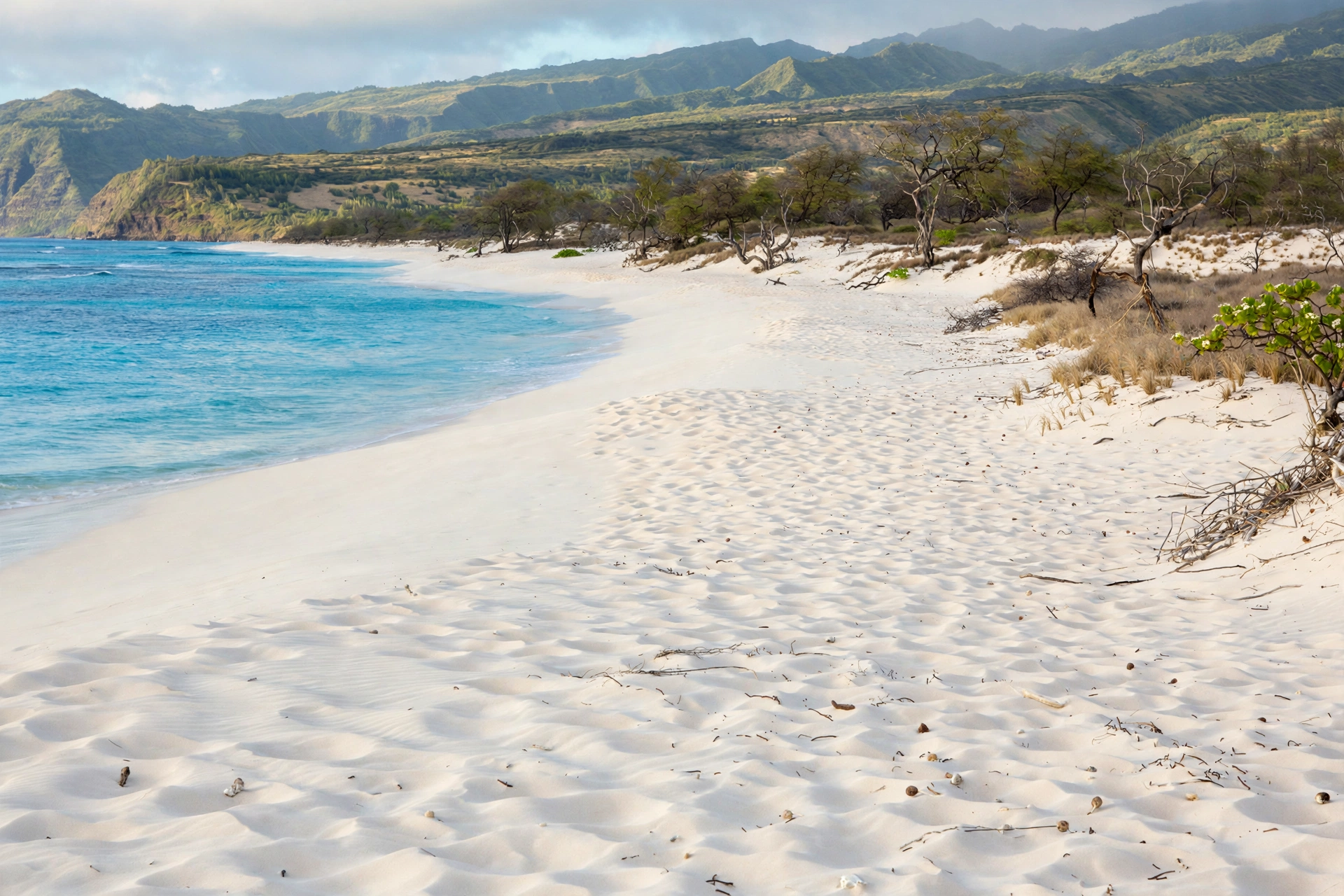
Molokaʻi: Pāpōhaku Beach Park on the west end is the island’s beach crown jewel, three miles of white sand that you will often have nearly to yourself. The water can be rough and there is no lifeguard, so swim cautiously. Kepuhi Beach and the shore fronting the west end resorts offer calmer water. The east end has small pocket beaches like Murphy’s (Kumimi) Beach, a locals’ favorite with a protected reef. Molokaʻi’s north shore is the world’s tallest sea cliffs; there are no accessible beaches there, only views.
Lānaʻi: Hulopoʻe Bay Beach Park is the island’s must-visit beach, a protected marine preserve with excellent shore snorkeling and frequent spinner dolphin visits. It has restrooms, showers, and lifeguards in season. Shipwreck Beach (Kaiolohia) on the north shore is famous for the rusting WWII liberty ship offshore and for the wind; it is a walking and photography beach, not a swimming beach. Lānaʻi’s beaches require a 4WD vehicle or a shuttle from the ferry landing for most access points.
Beach Etiquette
Hawaiʻi’s beaches belong to everyone, and the law guarantees public access to the shoreline. With that access comes responsibility to the place and to the people who call it home.
- Do not take sand, rocks, shells, or coral. Removing natural material from beaches is illegal in many areas and disrespectful everywhere.
- Give sea turtles and monk seals space. Hawaiian green sea turtles (honu) and Hawaiian monk seals (ʻīlioholoikauaua) are protected by federal law. Stay at least 10 feet from turtles and 50 feet from monk seals, and never touch or feed them.
- Do not walk on coral. Whether snorkeling, wading, or entering the water, keep your feet off the reef. Use sandy channels for entry and exit.
- Pack out everything you pack in. Many beaches have no trash service. Microplastics and cigarette butts wash into the ocean and onto the reef.
- Respect kapu areas. Some beaches and coastal areas are culturally sensitive or closed for wildlife protection. Obey all posted signs.
- Keep noise down in residential beach neighborhoods. Beaches like Lanikai sit in quiet neighborhoods. Arrive quietly, park legally, and leave early.
- Do not feed fish. Feeding alters fish behavior and damages the reef ecosystem. It is illegal in marine protected areas.
Best Time to Visit Hawaii Beaches
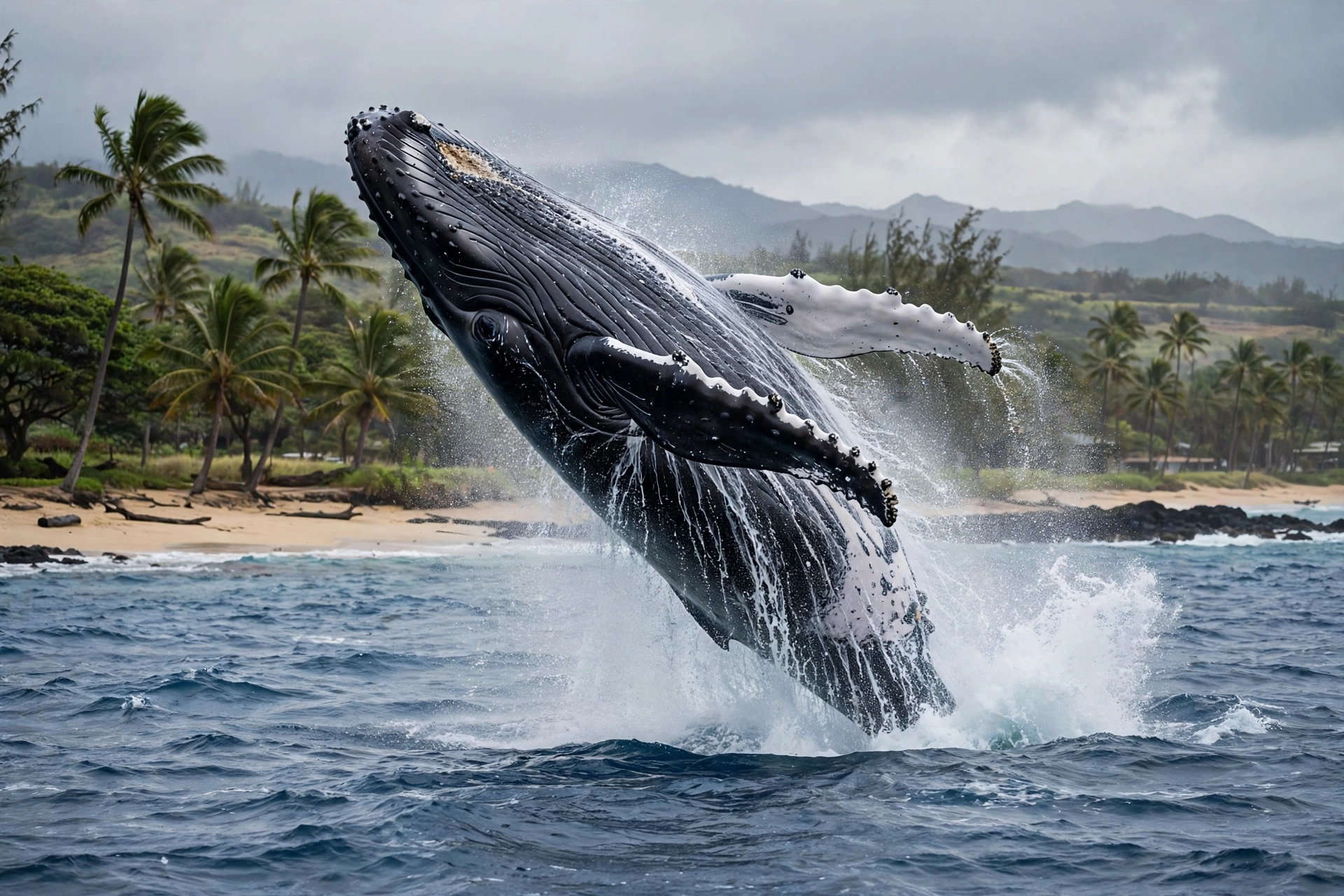
There is no bad month for Hawaiʻi beaches, but the islands have two distinct ocean seasons. Summer (May through September) brings calm conditions to south-facing shores and the year’s best swimming and snorkeling on the Kona coast, south Maui, and south Oʻahu. Winter (November through March) brings big surf to north-facing shores and calmer water to the south. Trade winds blow most afternoons year round, so mornings are almost always calmer than afternoons at any beach. Whale season (December through April) adds breaching humpbacks to the view from many west and south-facing beaches. Hurricane season runs June through November, but direct hits are rare.
The practical rule: in winter, swim on the south shores. In summer, the north shores open up. In every season, go in the morning.
Frequently Asked Questions
What is the best beach in Hawaii?
There is no single best beach, because the answer depends on what you want. For classic swimming and people-watching, Waikīkī. For postcard beauty, Lanikai. For snorkeling, Hanauma Bay or Kapalua Bay. For surfing, the North Shore in winter. For seclusion, the beaches that require effort: Kalalau, Papakōlea, Polihale. Pick your activity first, then pick the beach.
Which Hawaiian island has the best beaches?
Oʻahu has the most variety in the least driving. Maui has the most reliably sunny beach weather. The Big Island has the most geological variety, including black and green sand. Kauaʻi has the most dramatic scenery. Molokaʻi and Lānaʻi have the fewest crowds. Every island has excellent beaches; the right island depends on your trip style.
Are Hawaii beaches safe for swimming?
Many are, with conditions. Lifeguarded beaches with offshore reefs, such as Waikīkī, Hāpuna, Poʻipū, and Nāpili Bay, are safe for average swimmers on calm days. Open-ocean beaches with shorebreak or rip currents are not. Check conditions daily, swim at lifeguarded beaches, and never swim alone at an unfamiliar beach.
Do I need reef-safe sunscreen in Hawaii?
Yes. Hawaiʻi bans the sale of sunscreens containing oxybenzone and octinoxate, and Maui County bans all non-mineral sunscreens. Bring mineral sunscreen or buy compliant sunscreen at any island store. Sun-protective clothing is even better for the reef.
Can you swim in the ocean in Hawaii in winter?
Yes, on the right beaches. Winter brings big surf to north-facing shores but leaves south-facing shores calm. In winter, swim on the south and west shores: Waikīkī, Poʻipū, Wailea, and the Kona coast. Avoid north shore beaches in winter unless you are an experienced surfer.
What is the most dangerous beach in Hawaii?
Danger depends on conditions, but Sandy Beach on Oʻahu and Mākena’s Big Beach on Maui cause the most injuries because of powerful shorebreak. North shore beaches in winter are dangerous for non-surfers. The common thread in almost every incident is a visitor swimming at a beach or in conditions beyond their ability.
Are there nude beaches in Hawaii?
Public nudity is illegal on Hawaiʻi beaches. Little Beach on Maui (Puʻu Olaʻi) is unofficially clothing-optional and tolerated by authorities, but it is the exception and technically still illegal. Everywhere else, keep your swimsuit on.
Can you drink alcohol on Hawaii beaches?
No. Drinking alcohol on public beaches is illegal in Hawaiʻi, and so is having an open container. Fines are common at popular beaches. Save the drinks for the resort or restaurant.
Which beaches have lifeguards?
Major county and state beach parks on every island have lifeguards, including Waikīkī, Kailua, and Hanauma Bay on Oʻahu; Kāʻanapali, Wailea, and Mākena on Maui; Hāpuna and Spencer on the Big Island; and Poʻipū and Hanalei on Kauaʻi. Remote and neighborhood beaches generally do not. When a beach has a lifeguard tower, swim near it.
What should I do if I see a monk seal on the beach?
Stay at least 50 feet away, keep dogs leashed and far from the seal, and do not touch or feed it. Hawaiian monk seals are endangered and protected by federal law, with fines for harassment. Enjoy watching from a distance and let the seal rest.
Are Hawaii beaches crowded?
The famous ones are, especially Waikīkī, Hanauma Bay, and Lanikai. Go before 9 am for the thinnest crowds. Weekdays are quieter than weekends. And remember that Hawaiʻi has hundreds of beaches; the famous ten are crowded, but the other 390 mostly are not.
Can I take sand home from Hawaii?
Do not. Removing sand, rocks, or coral from beaches is illegal in many protected areas and disrespectful everywhere. Hawaiian legend also warns that taking volcanic rock angers Pele. Leave everything where you found it.
Related Guides
- Maui Beaches: The Complete Guide
- Hanalei Bay Map: Complete Reference Map & Area Guide
- Hawaii Snorkeling: Complete Guide
- Hawaii Map: Complete Reference Map & Area Guide
- Maui Map: Complete Reference Map & Area Guide
- Hawaii Hikes
- Oʻahu Hikes: The Complete Guide
- Maui Hikes: The Complete Guide
Reading the Water
The travelers who love Hawaiʻi’s beaches most are not the ones who found the prettiest beach. They are the ones who learned to read the water: which side of the island is calm today, where the reef ends and the channel begins, when the tide and wind favor a morning swim. That skill takes a few days to build and pays off on every beach for the rest of the trip. Start with the sheltered, lifeguarded beaches in this guide, watch the ocean before you enter it, and let each beach day teach you something the next one can use.