Hot Springs in Hawaii: What Actually Exists

Does Hawaii have hot springs? The honest answer is yes, but not the kind most people picture. Hawaiʻi has no mountain soaking resorts, no steaming rivers of mineral water, and no long list of developed springs. What it has is rarer and stranger: a small family of warm ponds on one volcanic coastline in Puna, on Hawaiʻi Island, where geothermally heated groundwater meets the Pacific. And the story of those ponds includes an eruption that erased the most famous ones in a single summer.
This is the complete guide to hot springs in Hawaii: what exists today, what was lost in 2018, how the warm ponds at Pohoiki actually work, how to visit them safely and respectfully, and what to do instead on the other islands, where the honest answer is that the ocean itself, at 75 to 82 degrees Fahrenheit, is the warm soak.
The Short Answer: One Coastline, Warm Ponds, Real Caveats
| Place | Status today | Notes |
| Pohoiki warm ponds, Isaac Hale Beach Park | Open landscape, conditions change | Geothermally warmed ponds by a new black sand beach; check county park status before going |
| Ahalanui Warm Pond | Destroyed in 2018 | Covered by Kīlauea lava in July 2018; gone, do not navigate to it |
| Kapoho Tide Pools and Champagne Pond | Destroyed in 2018 | Covered by lava in June 2018; the bay itself was filled |
| Other islands | No natural hot springs | Warm ocean, waterfall pools, and heated resort pools are the alternatives |
Everything in this guide flows from that table. If a website shows you a long list of Hawaiian hot springs with photographs of Ahalanui or Kapoho, it is recycling the pre 2018 world. Those places were real and beloved, and they no longer exist. Hawaiʻi County and the United States Geological Survey documented the losses during the 2018 lower East Rift Zone eruption of Kīlauea, the largest such eruption in at least 200 years, which destroyed hundreds of homes along with the Kapoho and Ahalanui recreation areas.
Pohoiki: The Warm Ponds That Survived and Reformed
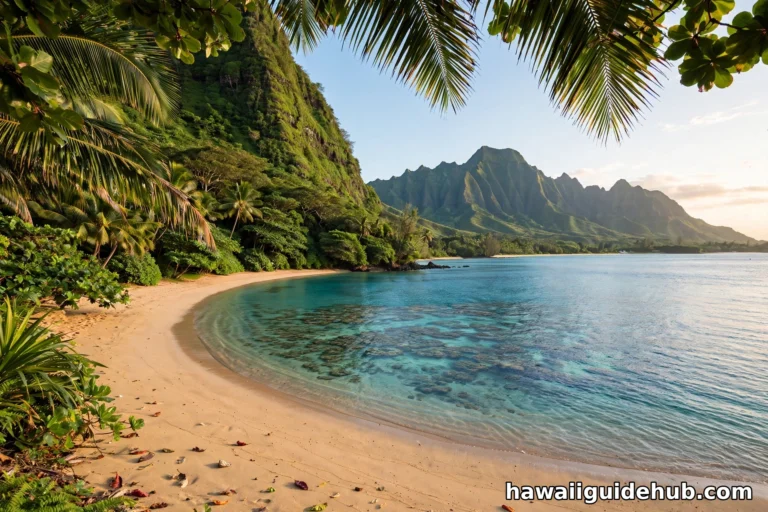
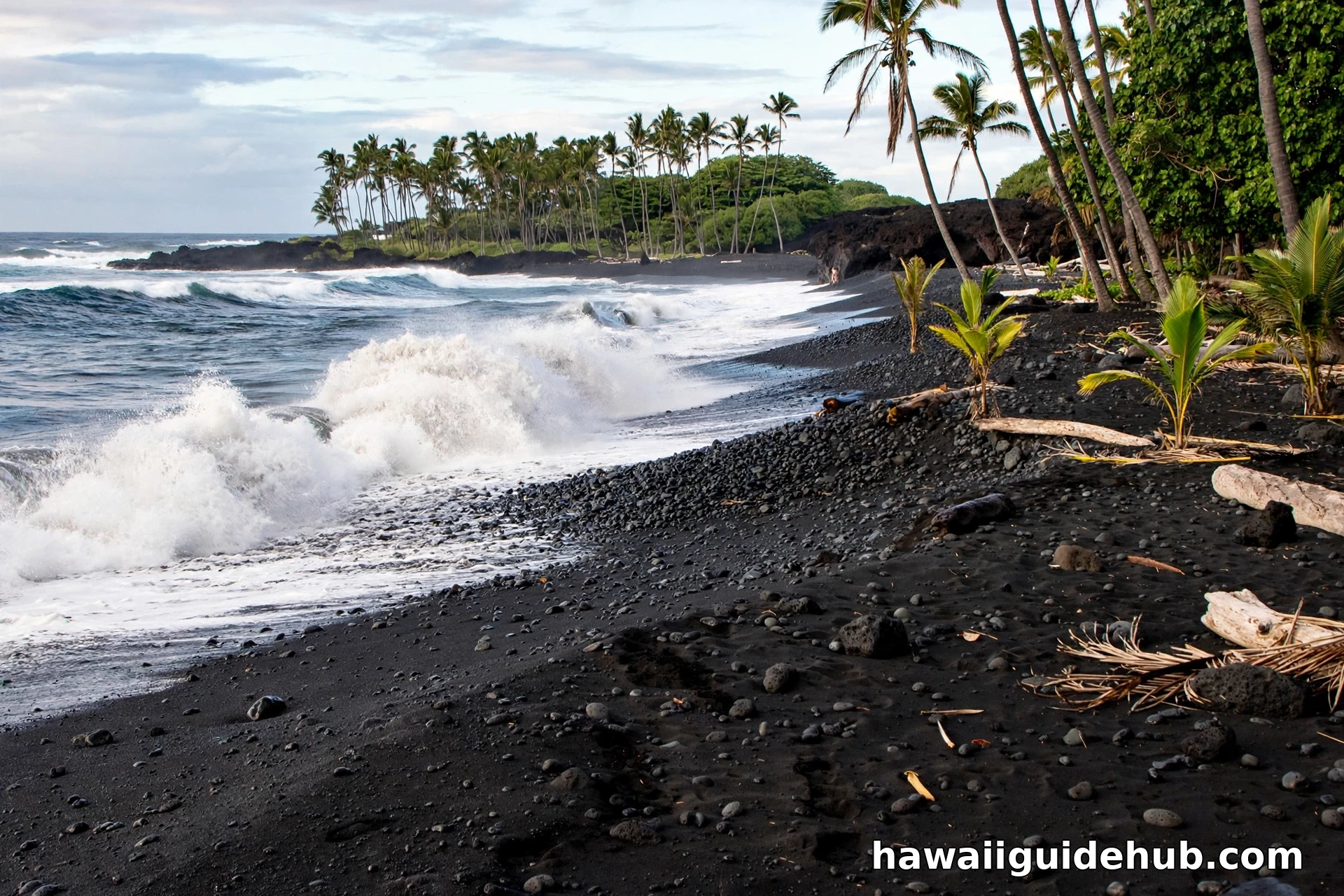
Pohoiki Bay, in Isaac Hale Beach Park on the Puna coast, sat at the edge of the 2018 flow. Lava stopped remarkably close to the park, and the eruption left a gift behind: an entirely new black sand beach, built from lava fragments ground down by the surf, which sealed the old boat ramp and reshaped the shoreline. Behind that new beach, groundwater heated by the warm volcanic system below collects in ponds where it mixes with seawater seeping through the sand. The result is a series of warm to hot ponds, varying with tide and season, the closest thing to natural hot springs that Hawaiʻi offers today.
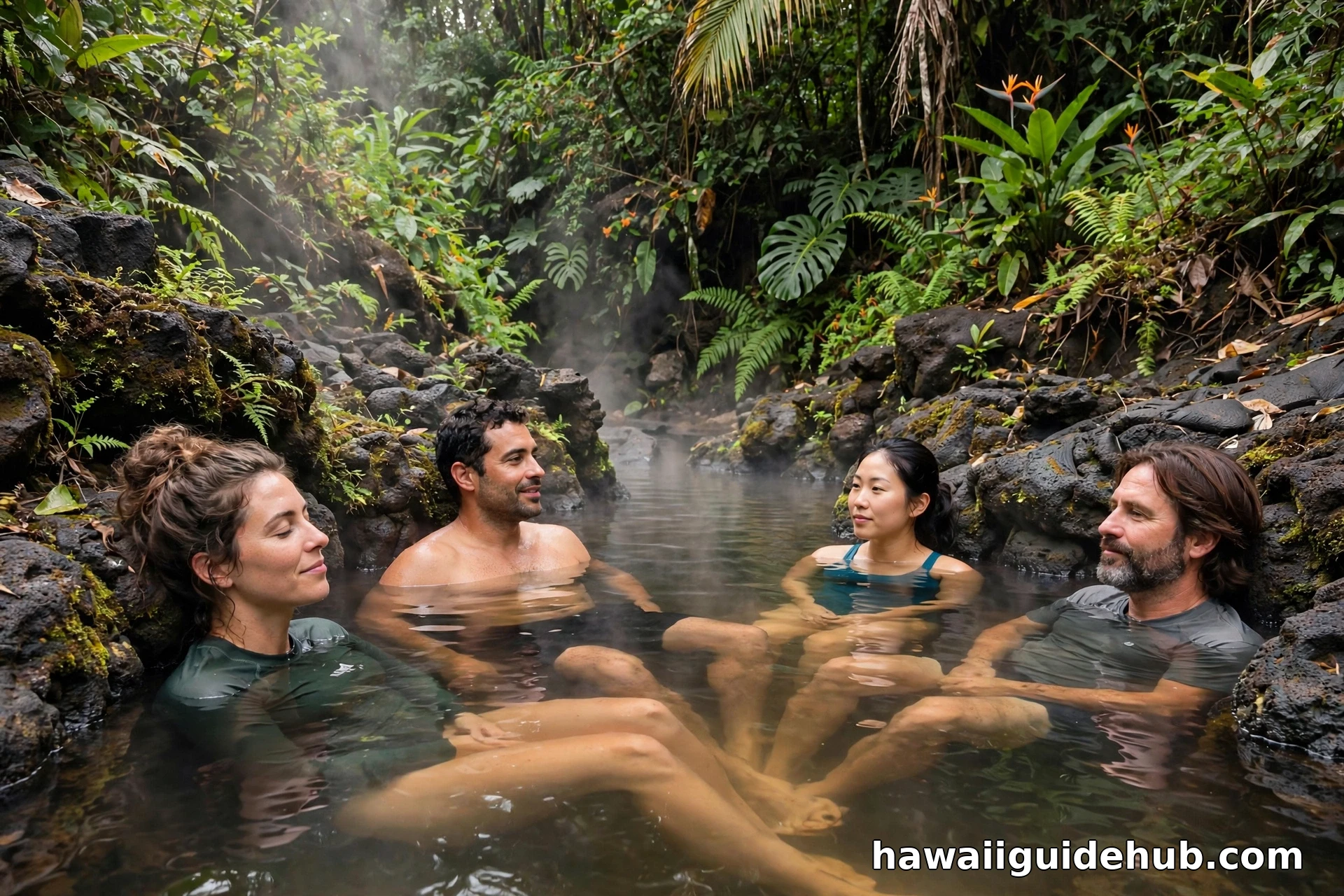
Expect temperatures that feel like a warm bath rather than a mainland hot spring, often somewhere in the 90s Fahrenheit, with individual ponds running warmer or cooler. The ponds are natural and untreated. That sentence matters for safety, and the safety section below returns to it. The park itself is a Hawaiʻi County beach park reached by Highway 137, the Red Road, about an hour drive southeast of Hilo through Pāhoa. Facilities are basic, the ocean at Pohoiki is rough and exposed with no safe casual swimming, and in recent years county and federal recovery work around the boat ramp has changed access patterns more than once. Check the Hawaiʻi County parks listing for Isaac Hale Beach Park for the current status before you make the drive.
What Was Lost: Ahalanui and Kapoho
Older guidebooks sent everyone to Ahalanui, a large, spring warmed pond at Puʻalaʻa County Park, enclosed by a low wall where waves washed in, with lifeguards in its later years and generations of local families in the water. In July 2018, lava from fissure 8 covered the park completely. Kapoho went earlier and just as finally: in June 2018 the flow filled Kapoho Bay, taking the tide pool network and the warm, clear Champagne Pond with it. Naming these places matters, because visitors still arrive in Puna following outdated directions. There is nothing to find at those sites today except young lava fields on private and public land. Treat the whole 2018 flow area with respect: it covers homes and places people loved, not just scenery.
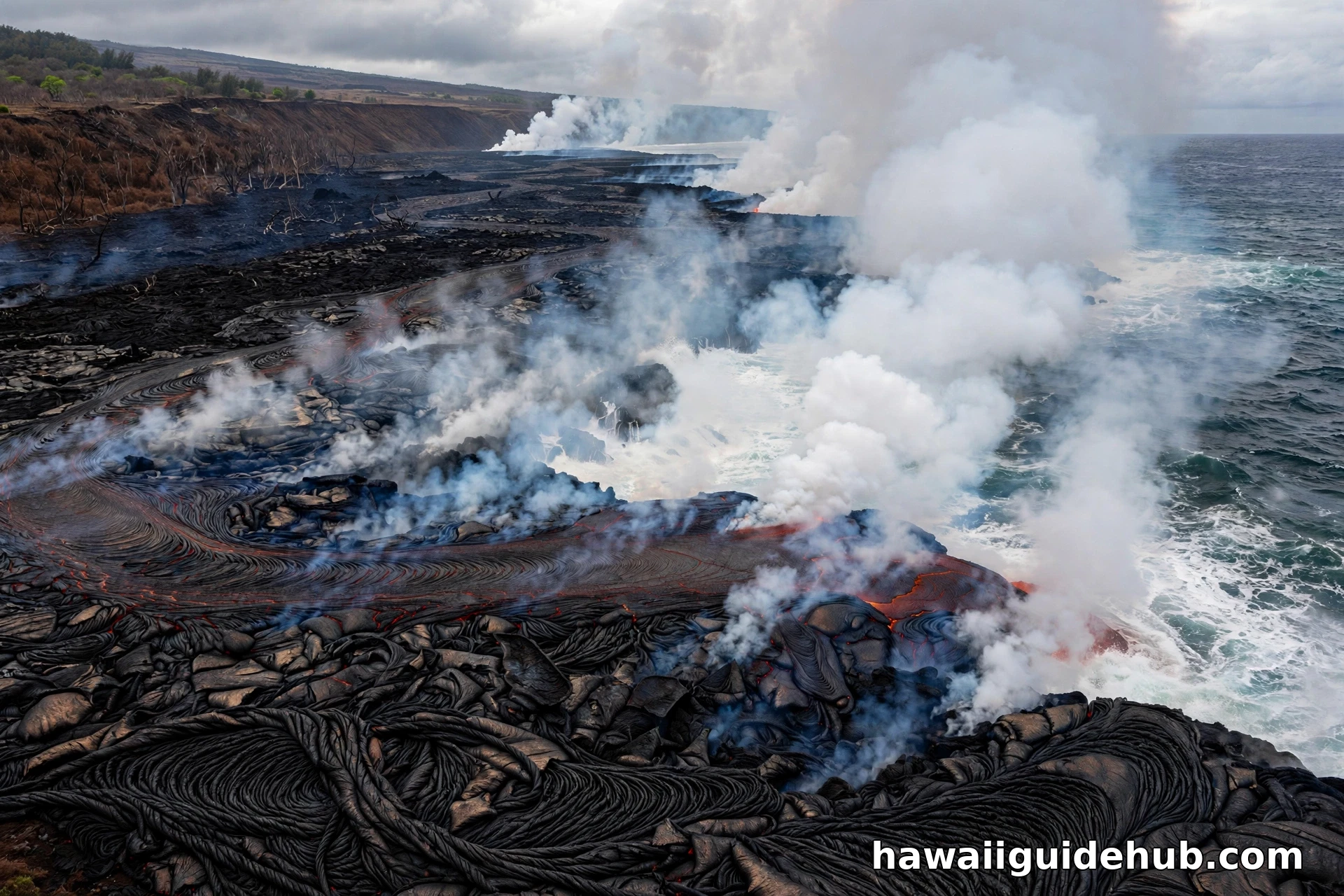
The geology explains both the loss and the survival. Puna sits on the flank of Kīlauea, where rainwater sinks, warms as it circulates near hot rock, and rises along the coast. That is why every genuine warm pond in Hawaiʻi lives within a few miles of this one shoreline, and why no amount of searching will turn up a hot spring on Maui, Oʻahu, or Kauaʻi. Those islands are older, their volcanic heat long faded, and their springs run at ocean temperature. The warm water map of Hawaiʻi is a young volcano map, drawn in one district of one island.
Safety at Natural Warm Ponds
Natural warm ponds are not chlorinated pools, and Hawaiʻi health officials have long advised treating them with a specific caution. Warm, still, untreated water can carry bacteria, including leptospirosis, which is present in freshwater environments across Hawaiʻi and enters through cuts and broken skin. The practical rules are simple. Do not enter warm ponds with open cuts or wounds. Do not put your head under in still, warm freshwater ponds, and never swallow the water. Shower after soaking. If the water looks murky, smells off, or a pond is posted with warning signs, admire it from the rocks and keep your day. The Hawaiʻi Department of Health is the authority to check for any posted advisories affecting beaches and ponds.
Then there is the ocean, which at Pohoiki is the more serious hazard. The new beach faces open Pacific swells, the shoreline is young, sharp lava, and there are no lifeguards on the warm ponds. Watch local children and regulars and copy their caution: they soak in the ponds, walk the black sand, and leave the surf to watching. Add the standard Puna advice: reef shoes or sturdy sandals for lava rock, more drinking water than feels necessary, and awareness that the area is a living community first and a destination second. Keep voices down at the ponds, pack out everything, and never climb on the warm pond walls or the boat ramp structures.
How to Plan a Pohoiki Visit
Make it a Puna day, not a detour. Drive from Hilo in the morning, stop in Pāhoa for food and fuel, and continue down Highway 130 to Highway 137. The Red Road itself, shaded by tree tunnels and passing the 2018 flow margins, is half the experience. Give the park two unhurried hours: walk the new beach, find the pond temperatures with a careful hand first, soak, rinse, and sit in the shade. Pair the day with Hilo other pleasures, the waterfall parks above town and the farmers market, remembering that each Hawaiian island plays by its own geology, as the black sand contrast in our guide to Maui black sand beach stops shows on Maui. Visitors based in Kona should know the honest math: Pohoiki is a long cross island drive, better folded into a Hilo or Volcano overnight than attempted as a day trip between breakfast and dinner, and it pairs naturally with a Hawaiʻi Volcanoes National Park day in the island hopping style of our Hawaii itinerary planning.
Feeling the Earth Heat Without a Pond
Travelers who love geothermal places can still meet Hawaiʻi underground heat face to face. In Hawaiʻi Volcanoes National Park, the Sulphur Banks trail, called Haʻakulamanu, winds past steaming vents and sulfur crusted ground a short walk from the Kīlauea visitor center area, with gases rising straight out of the volcano plumbing. Steam vents along Crater Rim Drive tell the same story: rainwater sinking, heating, and returning as vapor. Down in Puna, the geothermal landscape is industrial as well as natural. The Puna Geothermal Venture plant, which generates electricity from the volcanic heat, was itself overrun in part by the 2018 eruption and later returned to operation, a reminder that the same heat warming the ponds is powerful enough to light homes and to take land back. None of these are soaking spots. They are better: proof that the warm ponds belong to a living system, not a spa menu.
Best Time to Visit the Warm Ponds
Go on a weekday morning. Puna residents treasure these ponds, and weekend afternoons can feel crowded in a place with no formal capacity and no staff. Mornings also bring the calmest light on the black sand and the best odds of a quiet soak. Avoid the ponds after very heavy rain, when runoff clouds the water and freshwater bacteria risk rises across Hawaiʻi streams and ponds generally, and skip any visit when county closures or high surf advisories are posted for the coast. Bring reef shoes, a towel you do not mind staining on lava dust, drinking water, and patience for a coastline that still changes year to year. The drive out at golden hour, back along the Red Road tree tunnels, is the day quiet reward.
No Hot Springs on Your Island? The Real Alternatives
On Maui, Oʻahu, and Kauaʻi the warm soak is the ocean itself, and at 80 degrees Fahrenheit in late summer it needs no apology. Add the islands freshwater pleasures at safe, well known spots: waterfall pools viewed from trails, calm morning snorkeling bays like those along the La Perouse Bay coast on Maui, and simple heated pools at your lodging after a hiking day, which deliver most of what travelers actually want from a hot spring anyway: warm water, tired muscles, and a quiet hour. What you should not do is follow social media pins to unmarked warm ponds on private land or in fragile areas. In Hawaiʻi, if a warm pond is real, it is in Puna, and if it is easy to reach and legal, it is in this guide.
A walk around Pohoiki and its warm ponds shows the new beach and the ponds behind it.
Frequently Asked Questions
Does Hawaii have hot springs?
Yes, in one place: the geothermally warmed ponds at Pohoiki, in Isaac Hale Beach Park on the Puna coast of Hawaiʻi Island. Hawaiʻi has no developed hot spring resorts and no natural hot springs on Maui, Oʻahu, Kauaʻi, Molokaʻi, or Lānaʻi.
What happened to the Ahalanui hot pond?
Lava from the 2018 Kīlauea eruption covered Ahalanui and its county park in July 2018. The Kapoho tide pools and Champagne Pond were destroyed weeks earlier in the same eruption. None of these places can be visited today, whatever older guides still say.
How hot are the Pohoiki warm ponds?
They are warm rather than scalding, commonly in the 90s Fahrenheit and varying by pond, tide, and recent weather, because heated groundwater mixes with cooler seawater. Test each pond with a hand first. Temperatures shift, and the warmest pockets collect away from where seawater washes in. Local regulars move between ponds the way mainland soakers move between pools, following the warmth as the tide and the morning change it.
Is it safe to swim in Hawaii warm ponds?
With precautions. The ponds are natural and untreated, so skip them with open cuts, keep your head above water, avoid swallowing water, and shower afterward. Follow any posted Hawaiʻi Department of Health or county signs, and treat the rough ocean at Pohoiki as a look but do not swim shoreline.
Hot springs in Hawaii turn out to be a small, honest story: one young coastline, a handful of warm ponds, and a community that rebuilt its relationship with them after an eruption redrew the map. Go to Pohoiki with modest expectations and real respect, and the place gives back something no resort spa can copy, a warm soak at the exact edge where new land is still being made.