Blue Sand Beach in Hawaii: The Honest Answer and the Colors That Do Exist

Here is the honest answer first, because you deserve it before the geology: there is no blue sand beach in Hawaii. Not a hidden one, not a locals only one, not one that appears at a certain tide. Hawaii has white sand, golden sand, black sand, green sand, and red sand, a palette almost no other place on earth can match. Blue is the one color its volcanoes and reefs never made.
This guide explains why blue sand cannot happen in Hawaii, why so many photos seem to show it anyway, and where to find the real colored sand beaches, plus the beaches where the water turns the most unbelievable blue. If you have been searching for anything about a blue sand beach in Hawaii, or about the different color sand beaches in Hawaii, everything is on this one page.
Blue Sand in Hawaii at a Glance
| Blue sand beach in Hawaii | Does not exist |
| Why not | Sand copies local rock and reef; Hawaii has no blue mineral source |
| Colors that do exist | White, golden, black, green, red, gray |
| Rarest real color | Green, at Papakōlea on the Big Island |
| Best blue water over white sand | Kailua and Lanikai on Oahu |
| Rainbow sand beach | No single beach; colors sit side by side at a few shores |
| Taking sand home | Prohibited; leave every color where it lies |
Why There Is No Blue Sand: Sand Copies Its Source
Beach sand is not manufactured. It is local material, broken down. On a volcanic island, sand comes from exactly two factories: the volcano and the reef. Lava rock erodes into mineral grains, and coral, shells, and the skeletons of marine organisms erode into pale grains. Parrotfish even help, grazing on coral and passing ground up limestone that washes ashore as white sand. The color of any beach is simply the color of what it is made of.
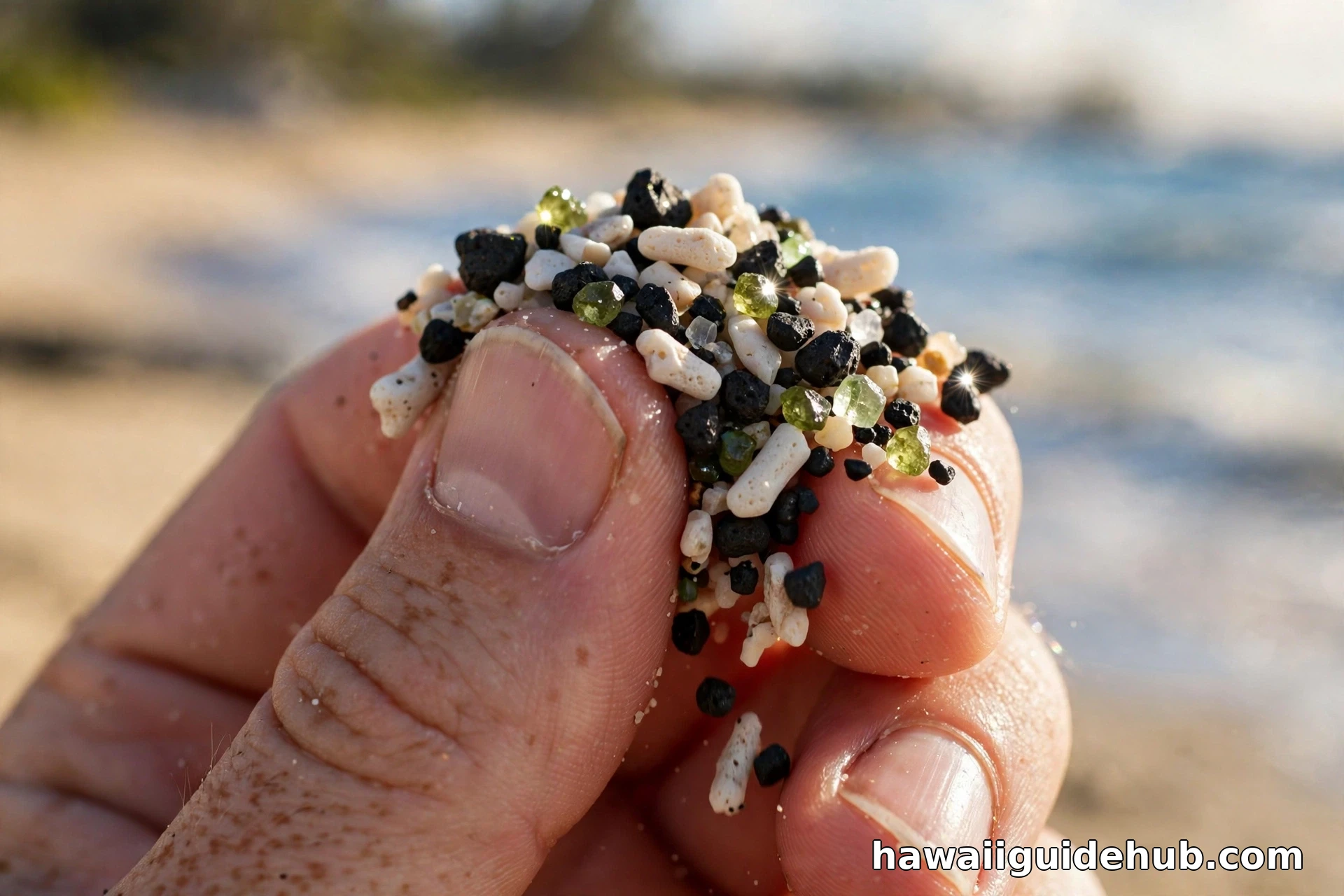
Run through Hawaii’s ingredients and blue never appears. Basalt, the islands’ foundation rock, weathers black, gray, and rusty brown. Olivine, a mineral inside that basalt, is green. Iron rich cinder oxidizes red. Coral and shell are white to golden. There is no blue mineral anywhere in the Hawaiian volcanic system in quantities that could build a beach, and blue is rare in surface rocks worldwide, which is why no well documented natural blue sand beach exists anywhere. A blue sand beach in Hawaii would need a blue mountain behind it. The islands never built one.
How a Sand Color Is Born
Every color on the list follows the same recipe: a source material, a grinding force, and time. Black sand starts when a lava flow pours into the ocean and the thermal shock shatters it into glassy bits; because the beach sits next to young flows, a black sand beach can appear within a single eruption and wash away within decades as the supply runs out. Green sand works in slow motion instead: waves undercut the Papakōlea cinder cone grain by grain, and because olivine is denser than the ash around it, the surf sorts the heavy green crystals into a deposit while carrying the lighter material offshore. Red sand is simply iron rich volcanic cinder rusting in place, the same chemistry that turns Hawaii’s volcanic soil red. White sand runs on biology as much as geology, built from coral fragments, shells, coralline algae, and the sand that parrotfish produce as they graze reef rock. None of these assembly lines can output blue, because none of their raw materials start blue.
Then Why Do Photos Show Blue Sand?
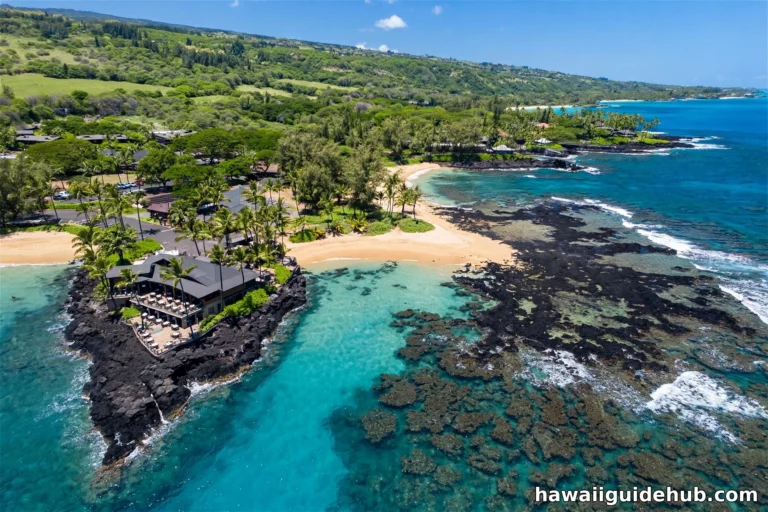
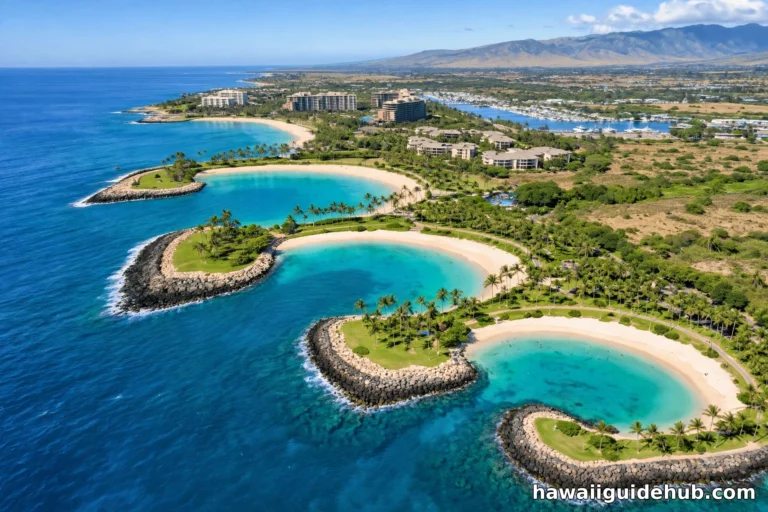
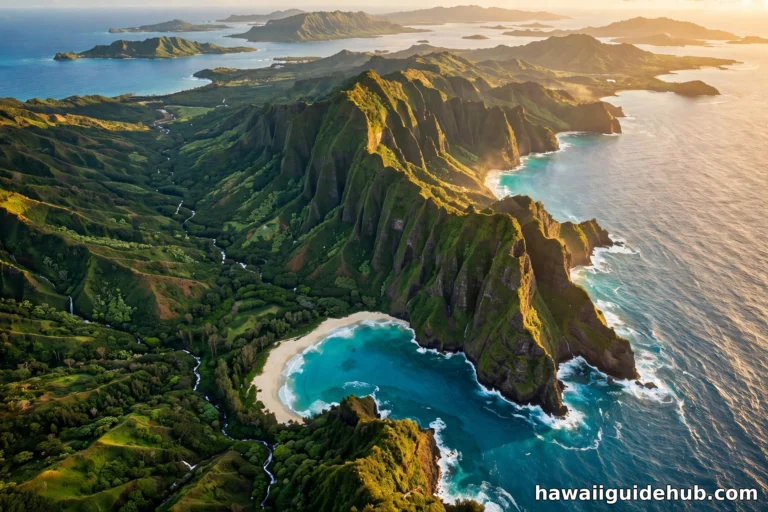
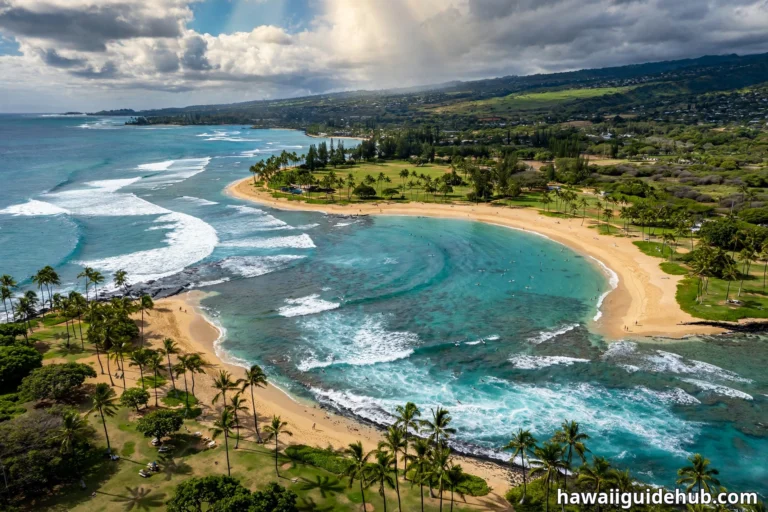
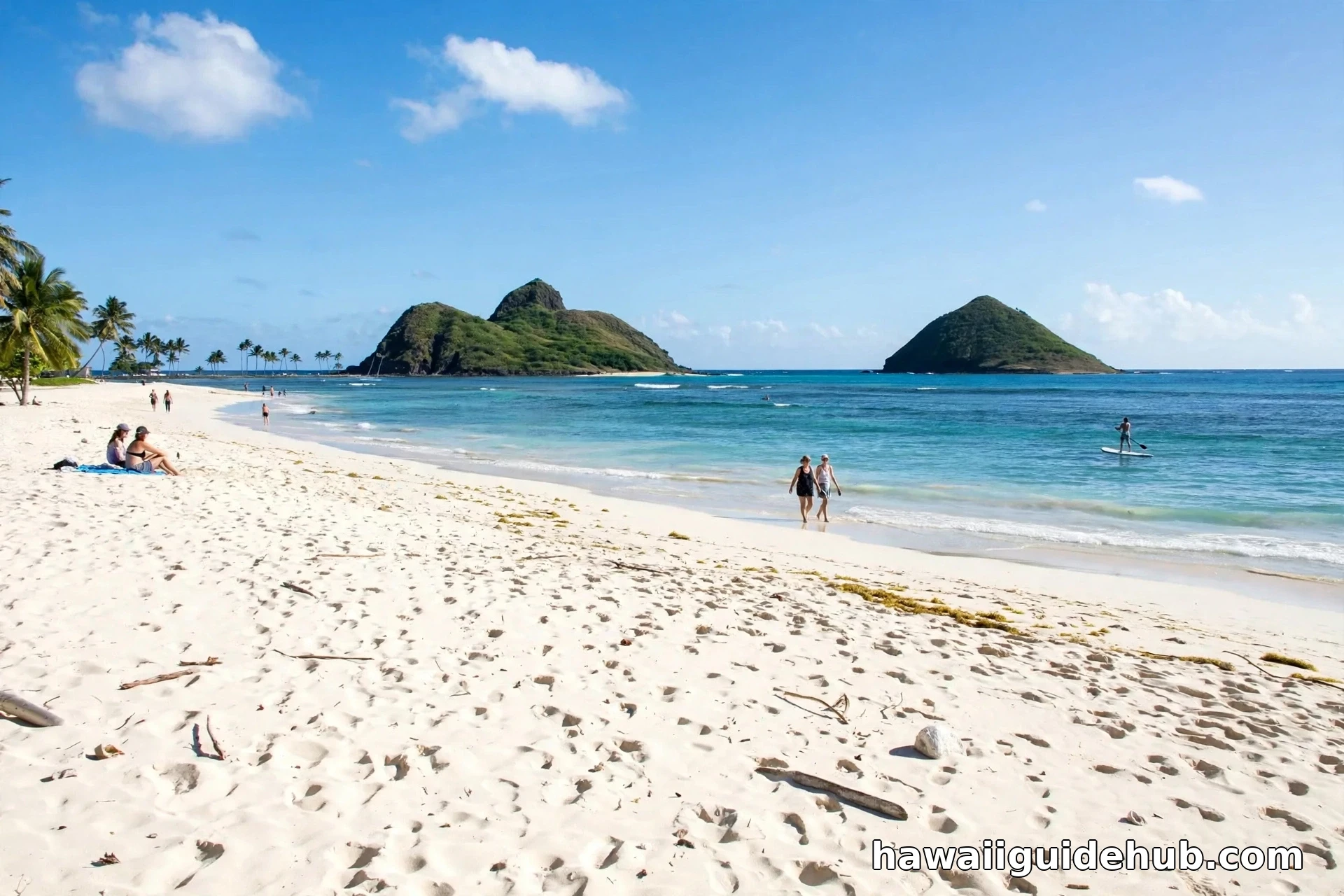
Three tricks create the illusion. The first is water. A thin sheet of clear ocean washing over bright white sand reflects the sky and reads as pale blue, especially at the shoreline where the sand is wet. The second is editing: travel photos are often saturated until turquoise water bleeds visually into the sand at its edge. The third is honest confusion. Beaches like Kailua and Lanikai pair white sand with water so intensely blue that visitors remember the whole scene, sand included, as blue. The sand under your towel was cream colored. The lagoon in front of you was the blue part, and it was spectacular enough to rewrite the memory.
The Colors Hawaii Actually Has
White and Golden Sand
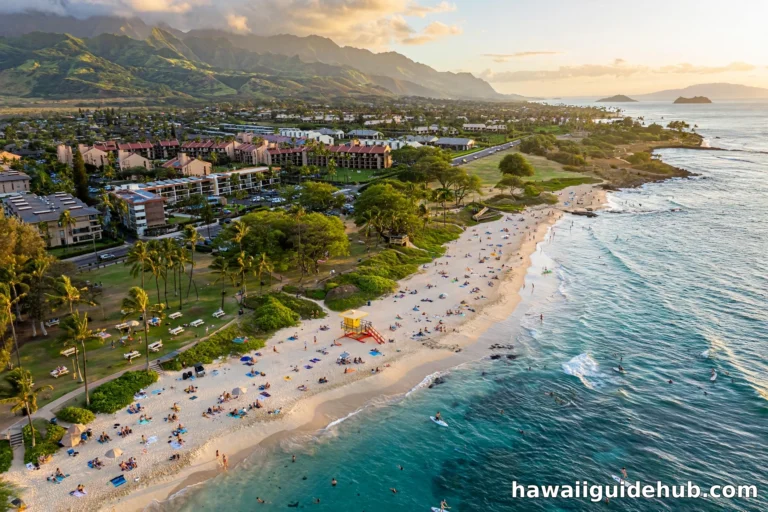
The classic Hawaii beach is reef sand: coral and shell fragments ground fine and pale, glowing almost white on Oahu and Kauai and warmer gold on Maui. Waikīkī, Kailua, Poʻipū, and Kāʻanapali all belong to this family. These are the swimming beaches, with the full beach park kit at the developed ones: lifeguards, restrooms, showers, and parking. White sand is also the canvas for the blue water effect, because a bright bottom reflects light back through clear water and intensifies the color.
Black Sand
When lava reaches the sea, it shatters into glassy fragments that waves grind into black sand. Punaluʻu on the Big Island is the most accessible example, a roadside beach park with facilities, lifeguards, and sea turtles resting on the dark shore. On Maui, Honokalani at Waiʻānapanapa State Park is the famous black crescent, covered in our Maui black sand beach guide; nonresidents need an advance reservation, with entry and parking fees, to visit that park. Black sand absorbs heat and can burn bare feet at midday, and these beaches are often better for looking and wading than for swimming, since the same young lava coasts that make them tend to be rocky and rough.
Green Sand
Papakōlea, near South Point on the Big Island, is Hawaii’s green sand beach and one of only a handful in the world. Its color comes from olivine crystals weathered out of the cinder cone behind the beach; the dense green grains settle while lighter grains wash away. Reaching it takes a hike of about 2.5 miles each way across open, hot, windy terrain, with no facilities and no lifeguard at the end, and swimming there is for calm days and strong swimmers only. Our dedicated green sand beach guide covers the hike in full. Green is as close as Hawaii gets to an impossible color, and it rewards the effort.
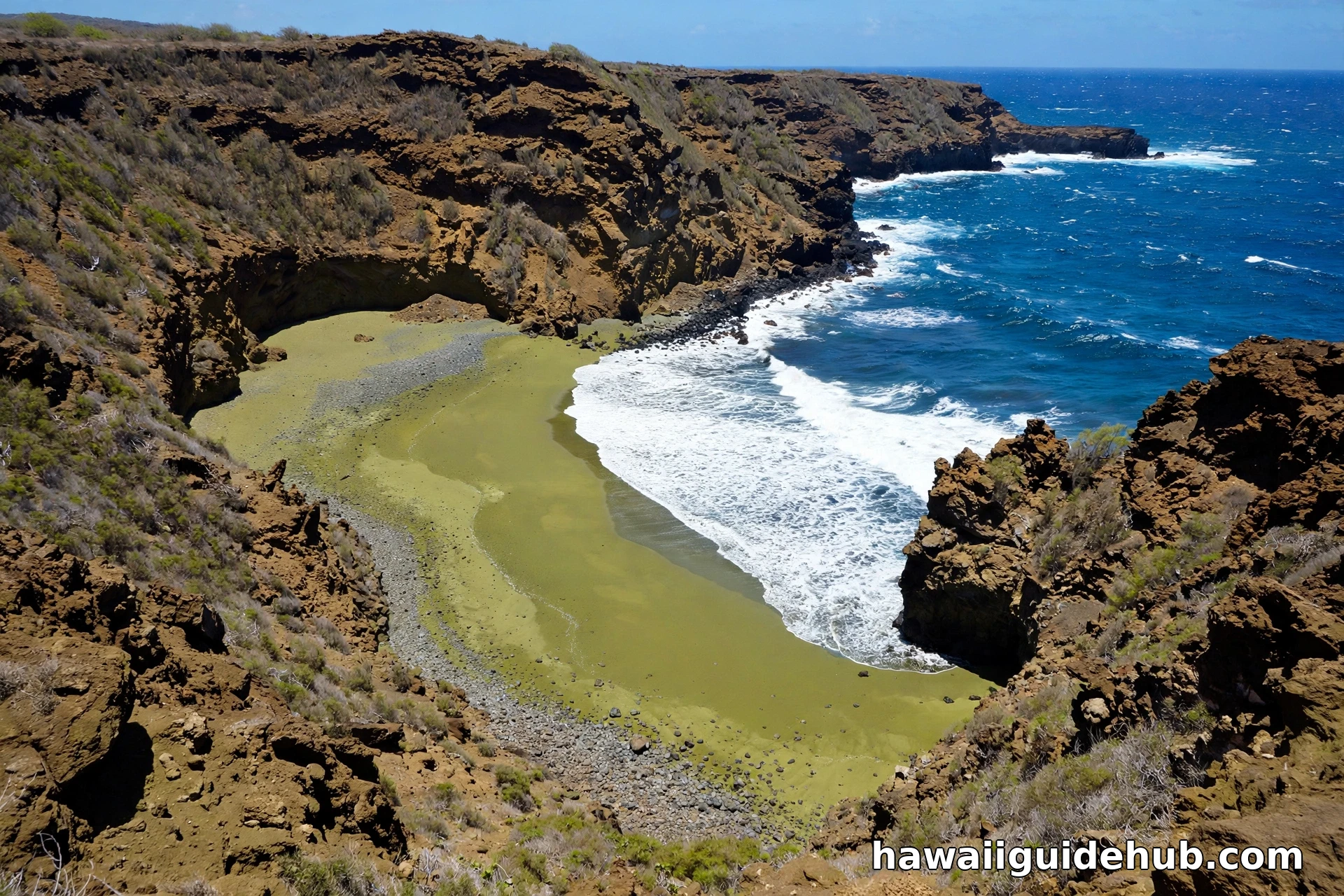
Red Sand
Kaihalulu, near Hāna on Maui, is a small cove of rust red sand eroded from an iron rich cinder cone. It is the most fragile entry in the color list. The trail to it is unofficial, crosses private land, and has a history of injuries and rescues, and Maui officials have repeatedly advised visitors against making the hike. Treat red sand as a color to appreciate in photos and from sanctioned viewpoints, not as a checklist stop. A color is never worth a cliff edge trail.
Gray and Brown Sand
The quietest colors in the palette are the river mouth sands. Where streams deliver eroded volcanic soil and rock to the sea, beaches turn gray, tan, or chocolate brown. The dark sand at Waimea on Kauai, stained by sediment from the Waimea River, and the gray brown shores near Big Island river mouths belong to this family. They rarely make postcards, but they are working beaches, used by local families for fishing and picnics, and they complete the honest inventory: Hawaii’s sand runs on a volcanic spectrum from white through gold, gray, red, and green to black.
What About a Rainbow Sand Beach?
Searches for a rainbow sand beach in Hawaii come from the same hopeful place as the blue sand searches, and the answer is similar: no single beach officially wears every color at once. What does happen, at a few shores, is mixing. Where a young lava flow meets an old reef, black and white grains blend in streaks along the waterline. The edges of Papakōlea run olive, gold, and black in bands. On Kauai, the famous Glass Beach near Port Allen sparkles with tumbled sea glass in many colors, though that rainbow is human made, the polished remains of an old dump site, and it is a beachcombing curiosity rather than a swimming beach. Hawaii’s rainbow is real. It is just spread across an archipelago instead of one shoreline.
Where to Chase the Blue Instead
If what you really want is the blue, Hawaii delivers it by the acre, in the water. Start at Kailua Beach on Oahu’s windward side: a long white sand beach park with lifeguards, restrooms, and parking, fronting a lagoon that grades from pale aqua to deep cobalt, with the Mokulua islands sitting offshore. Next door, Lanikai Beach may be the bluest half mile in the state, though it is a residential shoreline with narrow access paths, no facilities, and strict parking rules, so go early and be gracious in the neighborhood. Waikīkī Beach adds the easy version, turquoise shallows over bright sand with every facility a visitor could need. For the strongest color, visit on a sunny late morning, when the sun is high enough to light the water column; after heavy rain, runoff near stream mouths can cloud windward beaches brown for a day or two, so pick a dry day for a color hunt.
Rules and Respect for Every Color
One rule covers the whole palette: leave the sand on the beach. Hawaii law prohibits removing sand and coral from state shorelines, and the rule has a cultural twin, the understanding that taking pieces of the islands home disrespects the place and, in the story of Pele’s curse, brings bad luck besides. Photograph the colors, sort a handful for a close look, and let it fall. At colored sand sites the stakes are higher than usual, because places like Papakōlea depend on a single eroding cone: every pocket of green sand walked out is sand the beach cannot quickly replace. Seasonal conditions matter too. Winter surf pounds north facing shores, summer brings calmer water, and remote colored sand beaches have no lifeguards, so let the color be the adventure and the ocean be scenery whenever conditions look rough.
Video: Hawaii’s Real Sand Colors
Watch white, black, and green sand beaches in one tour of Hawaii’s real palette.
Frequently Asked Questions
Is there really no blue sand beach in Hawaii?
Correct. No beach in Hawaii has naturally blue sand, and geologists do not document one anywhere else either. Sand takes its color from local rock and reef material, and Hawaii’s sources are black basalt, green olivine, red cinder, and white coral. Every blue sand photo you have seen shows blue water over pale sand, or an edited image.
What colors of sand does Hawaii have?
White, golden, black, green, red, and gray. Black sand is ground lava, green sand is olivine crystals at Papakōlea, red sand is eroded cinder at Kaihalulu on Maui, and white and golden sands are ground coral and shell. It is one of the widest natural sand palettes on earth, missing only blue.
Where is the bluest water in Hawaii?
The windward Oahu coast around Kailua and Lanikai is the famous answer, where clear water over white sand produces intense turquoise and cobalt. The Kona coast of the Big Island also runs a deep, clear blue. Sunny late mornings on dry days show the strongest color.
Can I take colored sand home as a souvenir?
No. Removing sand or coral from Hawaii’s state beaches is prohibited, and at rare sites like Papakōlea it also depletes a finite natural feature. Take photographs instead; a close up of green olivine grains sparkling in the sun makes a better souvenir anyway.
Why is the water in Hawaii so blue?
Ocean water is naturally blue because water itself absorbs red, orange, and yellow wavelengths of sunlight and scatters blue light back to your eye. Hawaii intensifies the effect: the islands sit far from continental runoff, so the water carries little sediment or plankton to cloud it, and bright white sand on the bottom reflects the blue upward. Depth grades the result, pale turquoise over shallow sand, deep cobalt where the bottom falls away.
Which colored sand beach is easiest to visit?
Punaluʻu Black Sand Beach on the Big Island is the easiest true colored sand stop: roadside parking, restrooms, and lifeguards, with turtles often resting on shore. Waiʻānapanapa’s black sand on Maui is nearly as easy once you have the required state park reservation. Green sand at Papakōlea is the hardest, a five mile round trip hike.
The blue sand beach is a lovely idea that geology declined to build. What Hawaii built instead is better: a working palette of white, gold, black, green, and red, each color a chapter of the islands’ story, and water so blue it convinces half its visitors the sand must match. Go see the real colors in person, stand where green olivine meets cobalt water, and you will not miss the myth at all.