Sea Turtle Beach in Hawaii: A Guide to Seeing Honu

Sea Turtle Beach is the nickname for Laniakea Beach on Oahu’s North Shore, the most reliable place in Hawaii to see Hawaiian green sea turtles, called honu, basking on the sand. On a calm afternoon you can watch half a dozen of these ancient animals hauled out on the beach, resting in the sun while volunteer honu guardians keep visitors at a respectful distance. This is the single complete guide to Sea Turtle Beach and the best turtle beaches on every island.
This page covers where Sea Turtle Beach is, how to get there, the best time to see turtles, the viewing rules that protect them, the cultural meaning of the honu, and the top turtle beaches on Maui, Kauai, and the Big Island. Everything about seeing sea turtles in Hawaii is here on this one page.
Where Is Sea Turtle Beach?
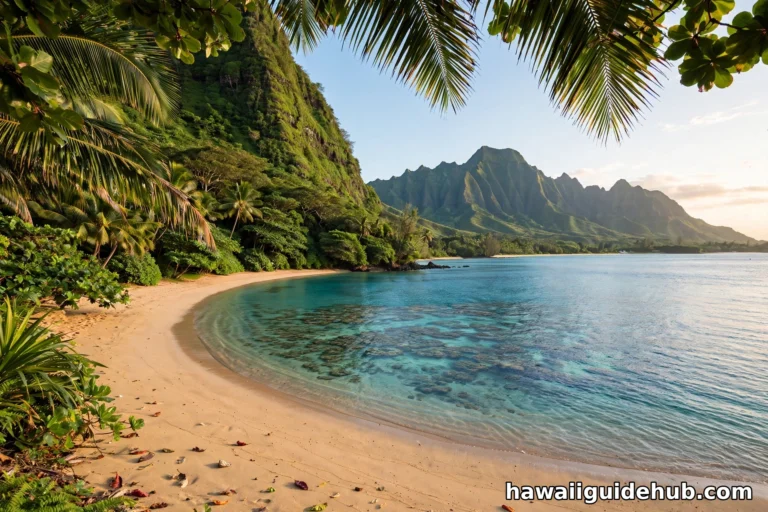
Sea Turtle Beach is Laniakea Beach, a small pocket of sand on Oahu’s North Shore along Kamehameha Highway, between Haleiwa town to the south and Sunset Beach to the north. The name Laniakea is sometimes written as two words, and locals also call it Honulani. Do not confuse it with Turtle Bay: Turtle Bay is a resort on Oahu’s North Shore, but Laniakea is the beach where the turtles actually haul out in numbers.
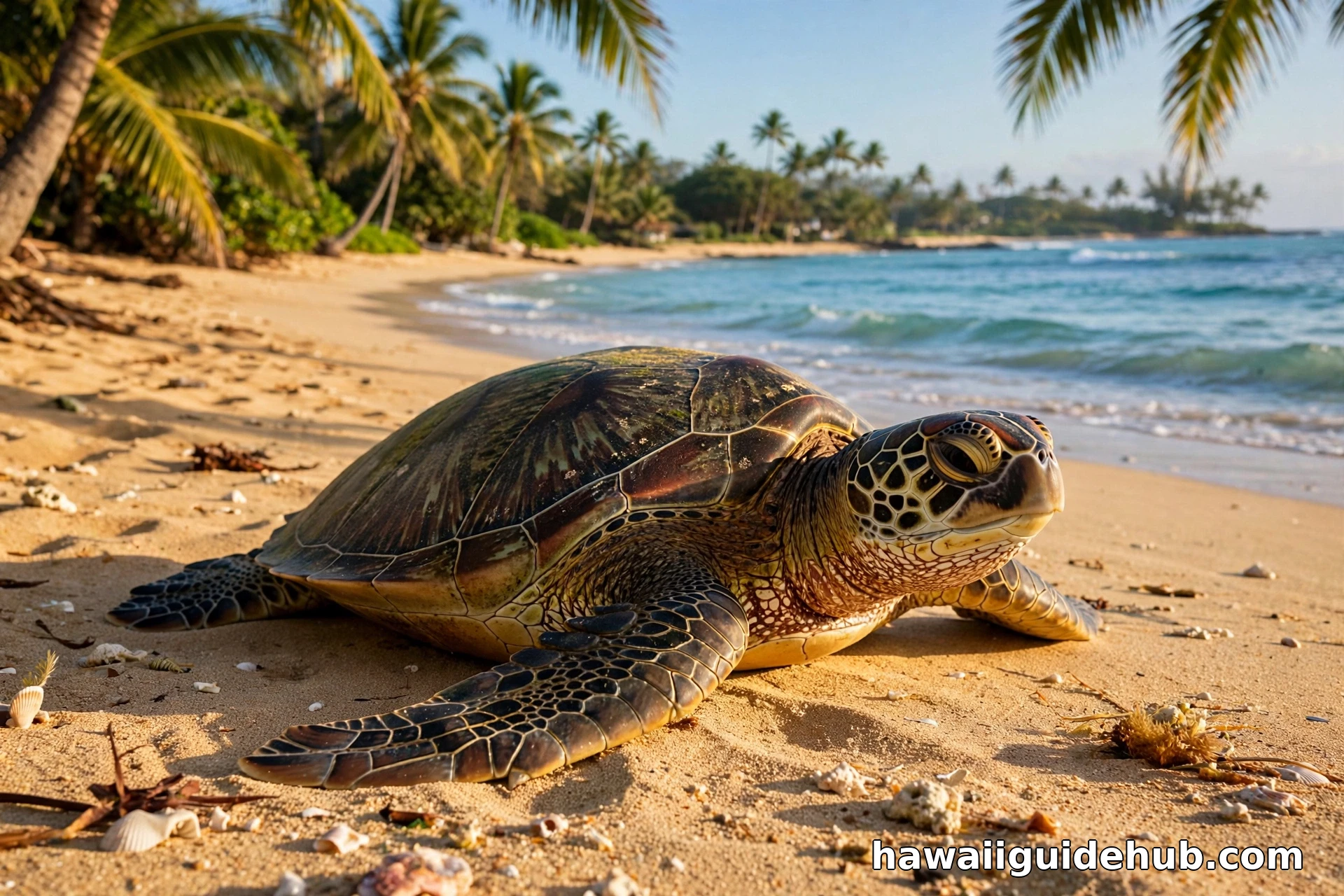
The beach sits right beside the highway, which makes it one of the most accessible wildlife viewing spots in Hawaii. Turtles are drawn to the rocky shoreline and the algae growing on it, their main food. They swim in close to feed, then crawl up the sand to bask, warming themselves in the sun, a behavior seen in very few sea turtle populations in the world.
How to Get to Sea Turtle Beach
From Waikiki, Laniakea is about a 60 to 75 minute drive via the H-1 and H-2 freeways to Kamehameha Highway, or a slower scenic route along the windward coast. From Haleiwa town it is about 10 minutes north. The beach has no big sign: look for the cluster of cars parked along the highway shoulder and the small beach access path. TheBus Route 55 runs from Honolulu to the North Shore and stops nearby, but the ride takes about two hours each way, so a rental car is far more practical.
Parking is the main hassle. The paved lot holds only a handful of cars and the highway shoulder fills fast on weekends and holidays. Arrive before 10 AM for the easiest parking, and never park where signs prohibit it: North Shore parking tickets are expensive and tow trucks are quick. There are no lifeguards, no restrooms, and no food at Laniakea itself, so use the facilities in Haleiwa before you come.
Best Time to See Turtles at Sea Turtle Beach
Turtles haul out year round, but your odds are best on calm days from late morning through the afternoon, roughly 11 AM to 3 PM, when basking turtles have warmed up and settled. Summer, May through September, brings the calmest surf on the North Shore and the most consistent basking. In winter, big surf can keep turtles offshore, which is the tradeoff of visiting during big wave season.
There is no guarantee on any given visit. Turtles come and go as they please, and a beach that held six basking honu yesterday can hold none today. If you strike out, try again later the same day or the next morning. Parking is the real constraint: the small roadside lot fills by midmorning, so arrive early or be ready to circle.
What a Basking Turtle Is Actually Doing
First time visitors often worry that a motionless turtle is sick or stranded. It is not. A basking honu has deliberately crawled up the beach to rest, warm its body in the sun, and let the heat and drying discourage the algae and parasites that grow on its shell. Turtles may stay on the sand for hours, sometimes an entire afternoon, barely moving except to shift position.
This is exactly why the 10 foot rule matters so much. A resting turtle is conserving energy, and every time it is startled back into the water, that rest is lost. Crowding a turtle for a selfie can undo hours of the rest it came ashore to get. The volunteers rope off a buffer zone around basking turtles for this reason. Take your photos from outside the rope, keep voices low, and keep dogs leashed and well away.
Turtle Viewing Rules: The 10 Foot Law of Respect
Hawaiian green sea turtles are protected under the US Endangered Species Act, and harassing them is a federal offense. In practice, the rule every visitor must follow is simple: stay at least 10 feet away from every turtle, on land and in the water. Never touch a turtle, never feed one, never block its path to the ocean, and never use flash photography close up.
At Laniakea, volunteer honu guardians often rope off basking turtles with a red cord and will happily answer questions. They are there to protect the animals, so follow their guidance even if it means stepping back from your photo. A basking turtle is not sick or stuck; it is resting and warming up, and the kindest thing you can do is let it rest. For the full etiquette, see our guide to Hawaiian green sea turtle conservation and snorkeling etiquette.

Watching from Sand vs Snorkeling with Turtles
Sea Turtle Beach is a watching beach, not a snorkeling beach. The shoreline is rocky, the surf can be rough, and the turtles come here to rest, not to be swum with. If you want the in water experience, go to a proper snorkeling spot instead: Turtle Town on Maui, Hanauma Bay on Oahu, or a guided turtle snorkel off Waikiki. The etiquette is the same in the water, 10 feet of space, no touching, no chasing, but the experience is completely different: a honu gliding past you over the reef is one of the great moments in Hawaii travel.
Whichever you choose, wear reef safe sunscreen. Chemical sunscreens damage the coral reefs that grow the algae turtles feed on, and Hawaii has banned the sale of sunscreens containing oxybenzone and octinoxate. Mineral sunscreen protects both your skin and the turtles’ food supply.
Choosing Your Turtle Beach: Every Island Compared
Laniakea is the most famous, but every island has a turtle beach worth knowing. Use this to match the beach to your trip.
| Beach | Island | What you get | What to know before you go |
| Laniakea (Sea Turtle Beach) | Oahu | Turtles basking on the sand, honu guardian volunteers | Tiny roadside lot fills by midmorning; winter surf keeps turtles offshore |
| Punaluʻu Black Sand Beach | Big Island | Turtles basking on black volcanic sand | Remote southeast coast; bring water and sun protection |
| Maluaka Beach (Turtle Town) | Maui | Snorkeling with turtles over the reef | Go in the morning when it is calmest; never touch or chase |
| Poipu Beach | Kauai | Turtles hauling out near sunset | Evening viewing; monk seals rest here too, give them 50 feet |
| Hanauma Bay | Oahu | Turtles grazing in a shallow protected reef | Entry reservation required; closed Monday and Tuesday |
The pattern: Oahu gives you basking turtles you can watch from the sand, Maui gives you the best in water encounters, the Big Island gives you the most dramatic setting. If snorkeling with turtles is the goal, our ultimate guide to turtle snorkeling in Oahu covers the best spots and techniques.
The Honu in Hawaiian Culture
The honu is more than wildlife in Hawaii; it is an ʻaumakua, a family guardian spirit, in Native Hawaiian tradition, and a symbol of longevity, peace, and navigation. Ancient Hawaiians watched turtles to learn about ocean currents, and the honu appears in legend, carving, and tattoo art across Polynesia. That cultural weight is part of why protections are taken so seriously: disturbing a basking turtle is not just illegal, it is disrespectful.
The conservation story is a genuine success. Hawaiian green turtles were hunted nearly to collapse in the mid 20th century; after federal protection in 1978, the population rebounded strongly. The honu guardian program at Laniakea is part of that story: trained volunteers station themselves at the beach during peak basking hours, rope off resting turtles, count and identify individuals by the scale patterns on their faces, and teach visitors why the distance rule exists. If a guardian is on duty during your visit, ask questions. They know the resident turtles by name and can tell you which one has basked at Laniakea for a decade.
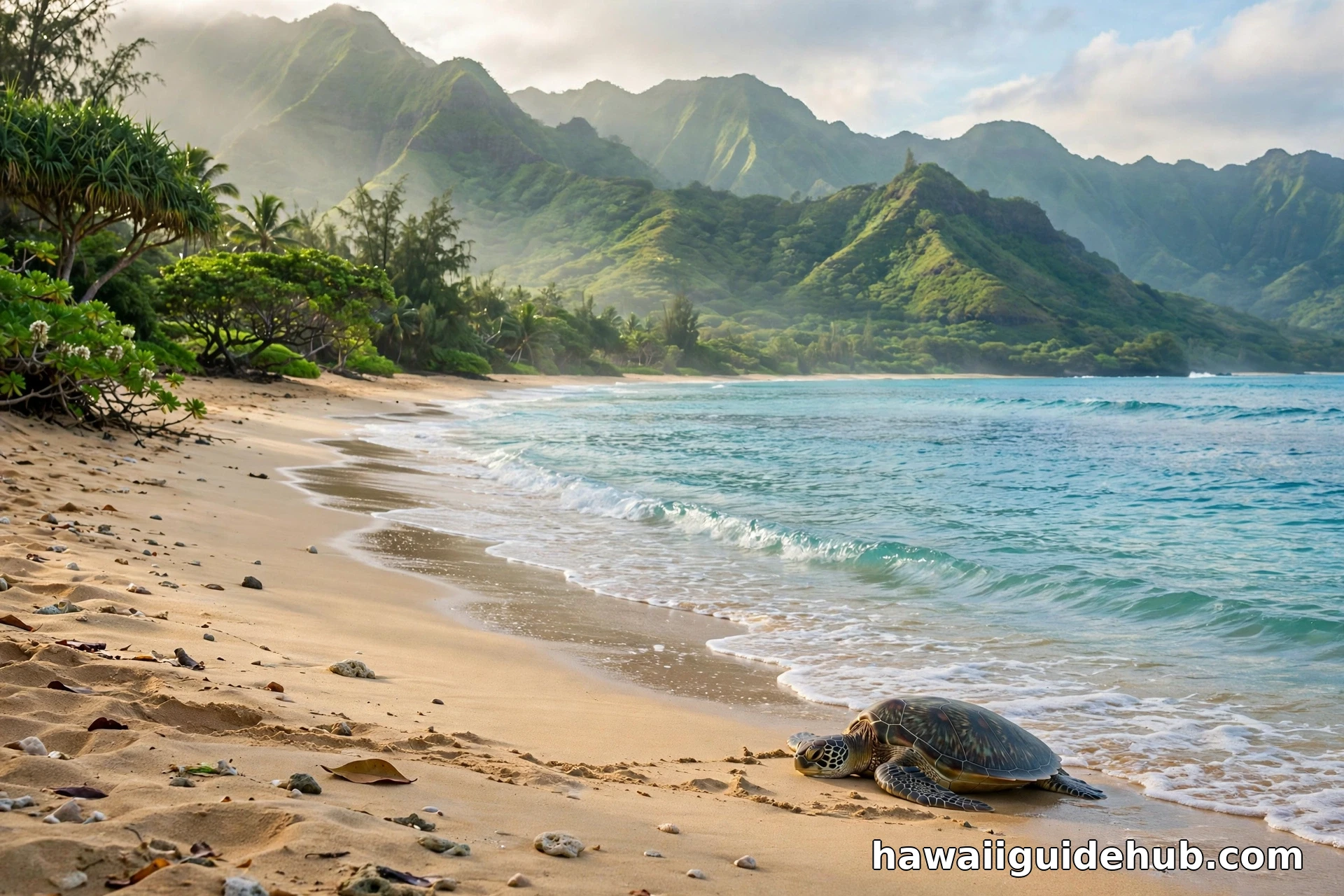
One detail that delights repeat visitors: researchers identify individual honu by the unique scale patterns on the sides of their faces, like fingerprints. The guardians’ logs show that many of the turtles basking at Laniakea are regulars that return to the same beach for years, which is why the volunteers greet them like old friends.
What Else to Do Near Sea Turtle Beach
Laniakea sits in the middle of the North Shore’s famous 7 mile miracle of surf beaches. Pair your turtle visit with the surf watchers at Banzai Pipeline and Waimea Bay in winter, or with swimming and snorkeling at Shark’s Cove and Three Tables in summer. Haleiwa town, ten minutes south, has the North Shore’s best concentration of shrimp trucks, shave ice, and shops. If you want a non beach stop, Waimea Valley is minutes away, with a paved botanical garden walk leading to Waimea Falls and cultural demonstrations. For the underwater side of Oahu’s marine life, see our closer look at Oahu’s marine life and sea turtle habitat.
Video: Sea Turtles at Laniakea Beach
A family visit to Laniakea Beach: where to park, how to spot turtles safely, and the North Shore surf culture around it.
Frequently Asked Questions
Where is Sea Turtle Beach in Hawaii?
Sea Turtle Beach is Laniakea Beach on Oahu’s North Shore, along Kamehameha Highway between Haleiwa and Sunset Beach. It is the nickname for the beach, not the official name.
Can you touch the sea turtles at Turtle Beach?
No. Hawaiian green sea turtles are federally protected. Stay at least 10 feet away, never touch or feed them, and never block their path to the water.
What is the best time of day to see turtles at Laniakea?
Late morning through mid afternoon, roughly 11 AM to 3 PM, on calm days. Summer months bring the calmest surf and most consistent basking.
Is Sea Turtle Beach the same as Turtle Bay?
No. Turtle Bay is a resort on Oahu’s North Shore. Sea Turtle Beach is the nickname for Laniakea Beach, where the turtles actually bask.
Are there sea turtle beaches on Maui and the Big Island?
Yes. Maluaka Beach (Turtle Town) on Maui is the best snorkeling spot, and Punaluʻu Black Sand Beach on the Big Island is the top basking beach. Poipu on Kauai is excellent at sunset.
Why do sea turtles bask on the beach in Hawaii?
They haul out to rest and warm themselves in the sun, which also helps control skin parasites. Very few sea turtle populations bask in daylight, making it a special Hawaiian behavior.
Is there an entry fee for Sea Turtle Beach?
No. Laniakea Beach is free and open to the public. There are no facilities, so bring water, sun protection, and reef safe sunscreen.
Sea Turtle Beach earns its nickname honestly: nowhere else in Hawaii lets you watch wild sea turtles resting on the sand as reliably as Laniakea. Go midday, park early, bring reef safe sunscreen, and give every honu its 10 feet. The turtles were here millions of years before the road beside the beach, and with a little respect, they will be here long after your visit.