La Perouse Bay Maui: Lava Fields, Snorkeling and the Hoapili Trail at the End of the Road

There is a point on Maui where the pavement simply gives up. South of Mākena, past the last resort and the last beach park, Makena Alanui Road narrows, the houses disappear, and you find yourself driving through a landscape that looks like the island is still being born. When the road finally ends at a small gravel lot, you have arrived at La Perouse Bay, known to Hawaiians as Keoneʻōʻio, one of the wildest and most honest places on Maui.
This is not a beach day destination in the usual sense. There is no soft sand to speak of, no lifeguard tower, no snack bar, and no shade. What there is: the youngest lava rock on Maui, some of the clearest snorkeling water on the island for those skilled enough to handle it, a 200-year-old coastal trail, spinner dolphins cruising past in the morning light, and a sense of standing at the edge of the map. If that sounds like your kind of place, keep reading. This guide covers everything you need to know before you go.
Where La Perouse Bay Is and How to Get There
La Perouse Bay sits at the southwestern tip of Maui, at the very end of Makena Alanui Road. From central Kīhei, drive south on South Kīhei Road until it becomes Makena Alanui Road, then keep going past Wailea, past Mākena State Park and Big Beach, until the road simply ends. The parking area is near mile marker 7.
The drive itself is part of the experience. The last few miles wind through dry coastal scrub and old lava flows, and the road gets rougher as you go. Take it slow, especially in a rental car. One practical note that every local will tell you: there are no gas stations past Kīhei. Fill your tank before you head south, because there is nothing but lava and ocean between Mākena and the bay.
The parking lot is small, gravel, and fills up by mid-morning on busy days. Arrive early, not just for a parking spot but because the morning brings the calmest water and the best chance of seeing dolphins. Portable restrooms are available at the lot, but that is the full extent of the facilities. There is no drinking water, no food, no trash cans worth counting on, and no lifeguards. Pack everything in, pack everything out.
The Story Behind the Name
The Hawaiian name for this bay is Keoneʻōʻio, and it was a significant place long before any European arrived. On May 29, 1786, the French admiral Jean-François de Galaup, comte de La Pérouse, anchored here and became the first Westerner to set foot on Maui. His visit was brief but historically important, marking the beginning of sustained contact between Hawaiians and the Western world, a contact that would eventually bring missionaries, whalers, and traders to the islands.
La Pérouse recorded his impressions of the Hawaiians he met: their agricultural skill, their seafaring ability, and their hospitality. The bay has carried his name ever since, though many locals and cultural practitioners prefer Keoneʻōʻio. When you visit, you are walking ground that has been significant to Hawaiians for centuries, and the archaeological sites scattered through the area are a reminder to treat it with respect.
Maui’s Youngest Lava Fields
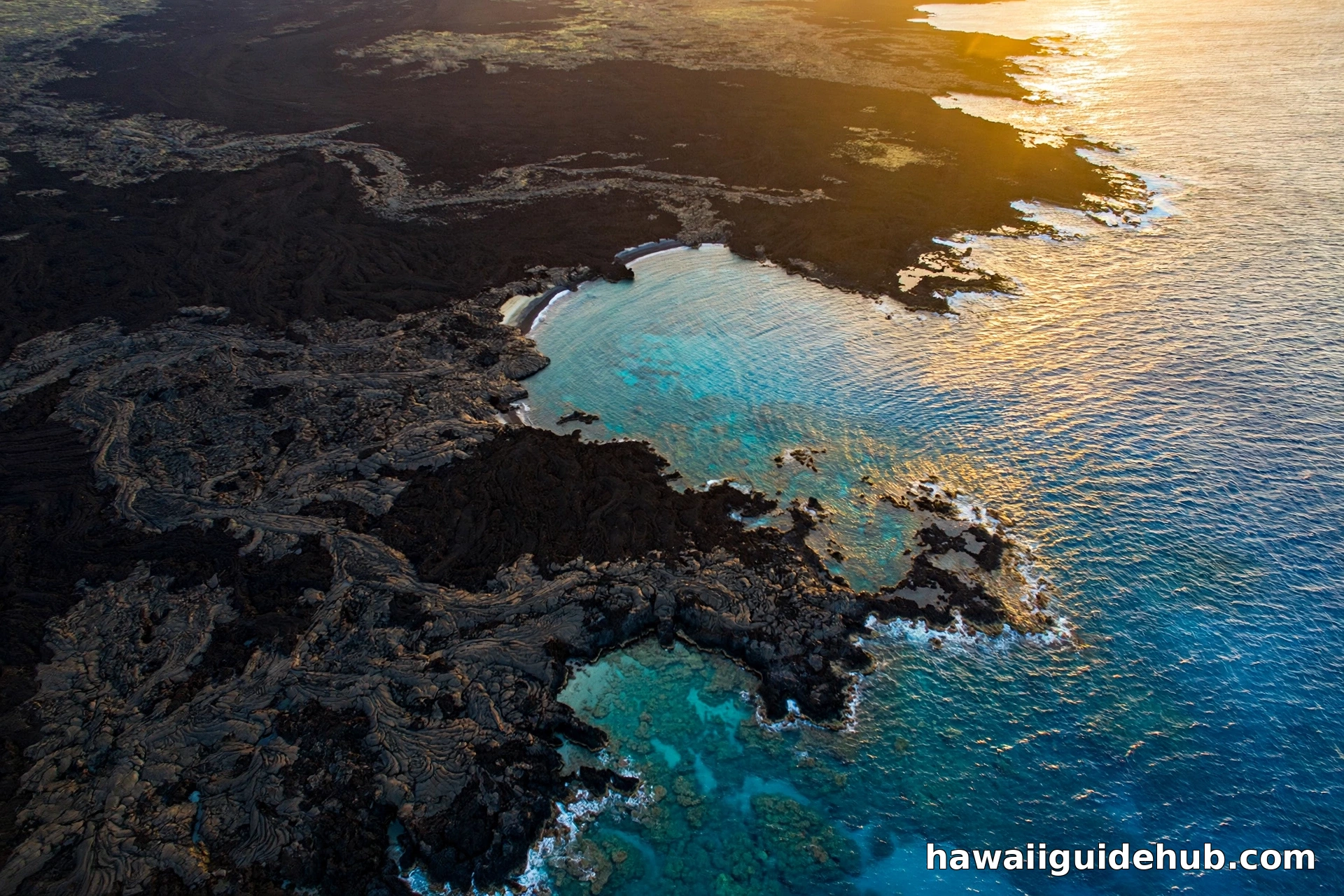
The most striking thing about La Perouse Bay is the ground itself. The black, twisted lava rock stretching in every direction is the product of Maui’s most recent volcanic eruption, which occurred around 1790. Notably, this lava did not come from the summit of Haleakalā. It erupted from the volcano’s southwest rift zone, flowing down to the sea and creating the rugged coastline you see today.
This makes the La Perouse lava fields the youngest volcanic landscape on Maui, and walking through them feels like stepping onto another planet. The rock is mostly ʻaʻā, the rough, clinkery type of lava that will shred ordinary footwear and bare feet alike. This is not a place for flip-flops. Wear sturdy closed-toe shoes or hiking sandals with real soles, and watch every step. The lava is sharp enough to cut skin with a careless stumble.
Geologists consider these flows an excellent example of a young volcanic landscape, and you can see classic features everywhere: lava tubes, pressure ridges, and places where the molten rock met the ocean and shattered into strange formations. Take your time here. The lava fields reward slow looking.
Snorkeling: Excellent, But Not for Everyone
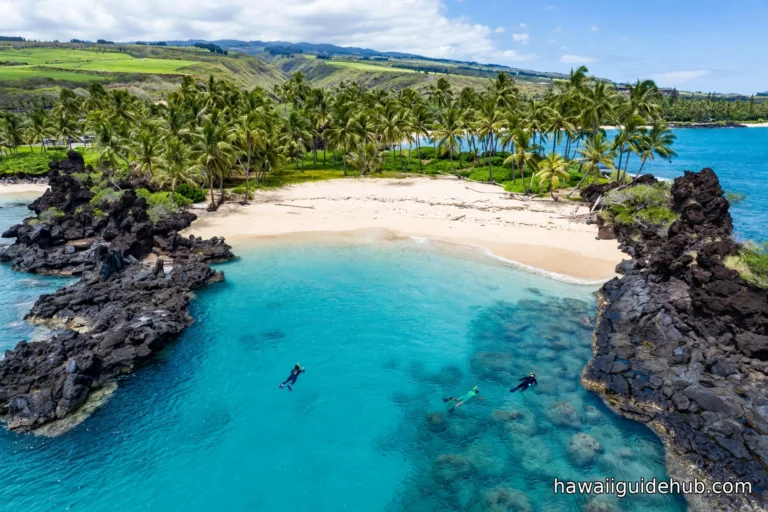
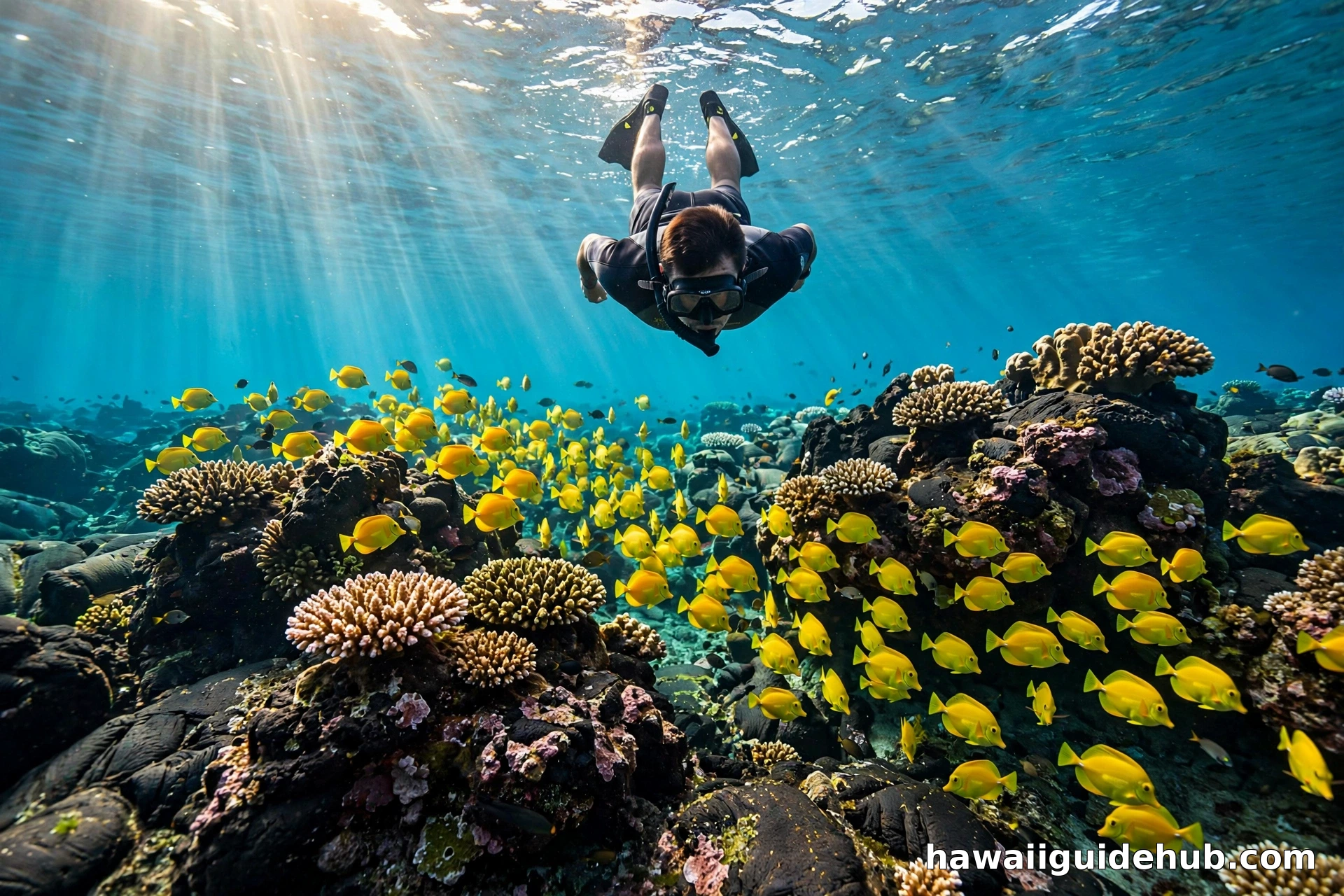
Let us be direct about this, because it matters for your safety. The snorkeling at La Perouse Bay can be superb, with clear water and abundant marine life including yellow tang, butterflyfish, parrotfish, and the occasional green sea turtle. But this is not a beginner spot, and it is not even an intermediate spot on most days.
The challenges are real. Entry is over sharp lava rock with no sandy beach to ease you in. The swim out to the good reef is long. Currents can pick up quickly on this exposed coast, and the wind that makes the drive down so pleasant can chop up the surface by afternoon. There are no lifeguards. Local snorkel shops are blunt about it: if you are not a strong, confident swimmer with open-water experience, choose another spot.
If you are experienced and conditions are calm, usually in the early morning, the rewards are genuine. The visibility can be outstanding, and the marine life is abundant precisely because the site gets fewer visitors than the famous Shark’s Cove does on Oʻahu. Go with a buddy, wear fins, check the ocean conditions before you commit, and have an exit plan. For a broader look at what swims in Hawaiian waters, see our guide to Hawaii’s marine life.
Walking the Hoapili Trail
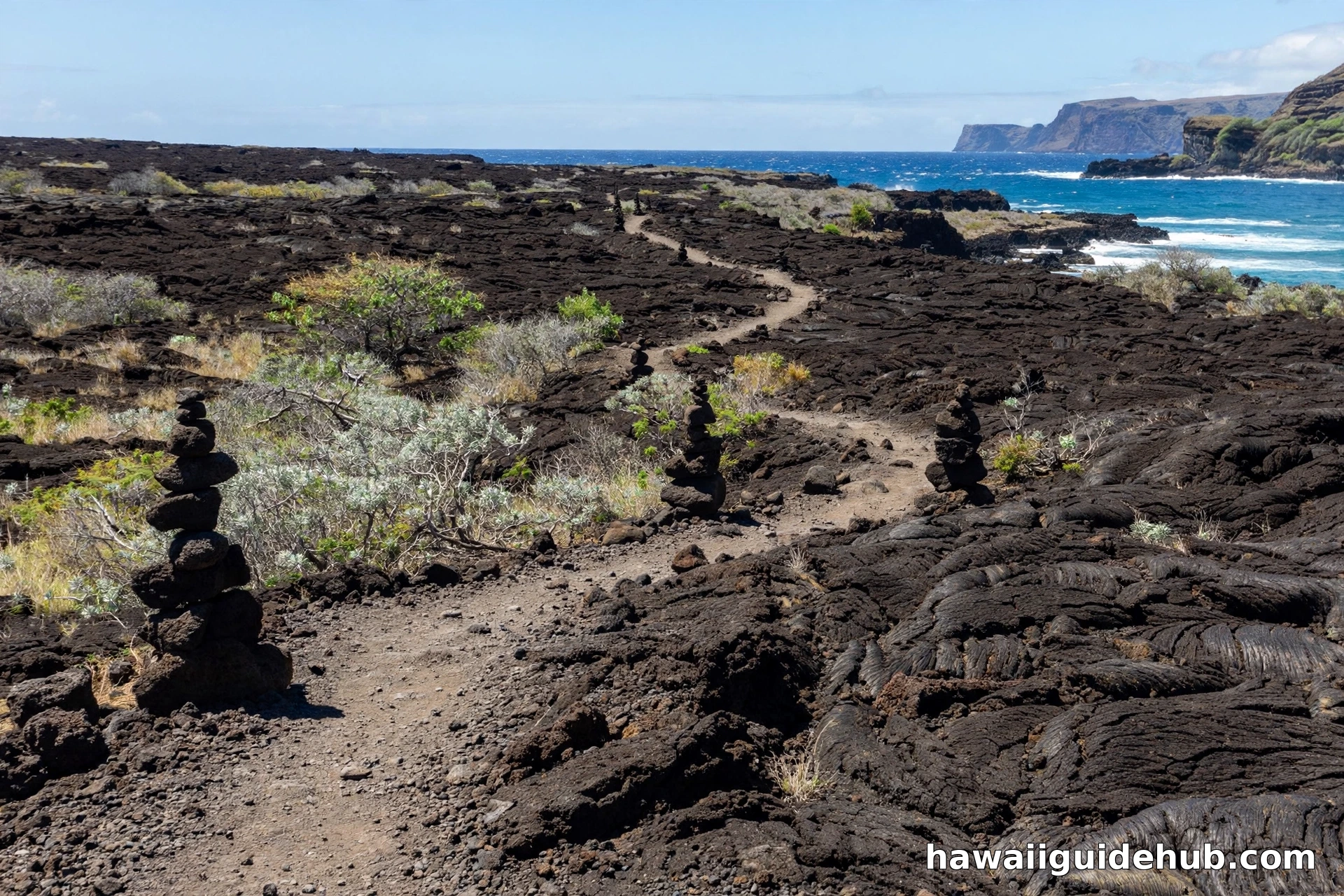
For many visitors, the real highlight of La Perouse Bay is not the water but the trail. The Hoapili Trail, also called the King’s Highway, begins at the parking lot and follows the coastline through the lava fields. This is an ancient Hawaiian coastal trail, originally built under the chief Piʻilani and later improved in the 1800s under Governor Hoapili, from whom it takes its name. It once circled much of the island.
Walking it today, you follow a route that Hawaiians have traveled for centuries, marked in places by stacked stone cairns across the black rock. The trail hugs the coast past secluded coves, tide pools, and some of the most dramatic shoreline on Maui. About half a mile in, the landscape opens into wider lava fields with views back toward the mountains and out to the islands of Kahoʻolawe and Lānaʻi on clear days.
A few honest notes. There is essentially no shade, and the black rock radiates heat, so this hike is much harder than its modest distance suggests. Start early, carry far more water than you think you need (at least two liters per person), wear a hat and reef-safe sunscreen, and wear real shoes. The trail can be rough and uneven. It is also an archaeological landscape: you will pass ancient sites including fishing shrines and stone structures. If you see a sign reading “Kapu,” respect it absolutely. Kapu means forbidden or sacred, and these places are not photo backdrops.
The Hoapili Trail is one of the great outdoor adventures in Hawaii, but it demands preparation. Tell someone your plans, carry a charged phone, and turn back if the heat or the terrain starts winning.
Tide Pools and Shoreline Exploring
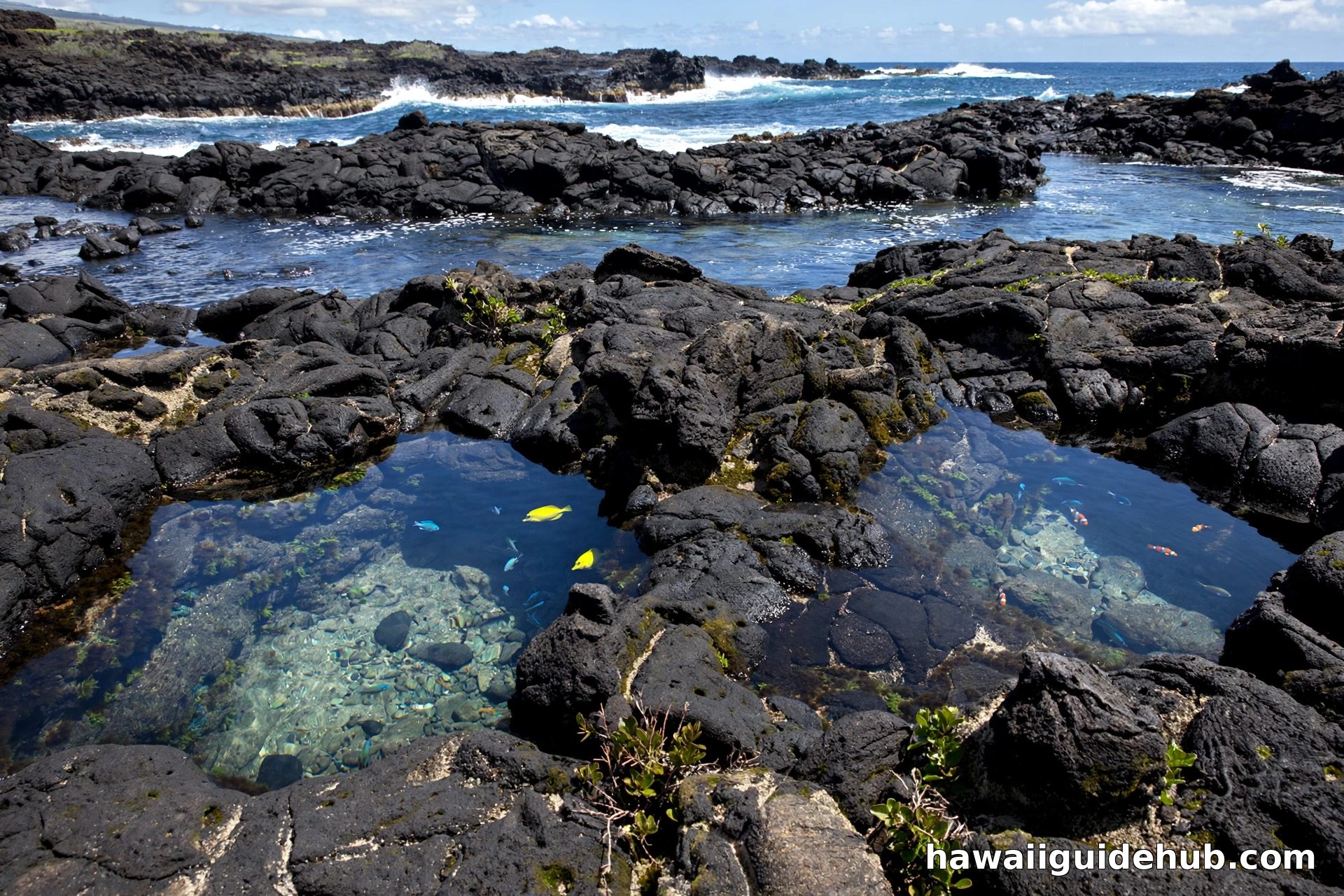
If swimming the bay sounds like too much, the shoreline itself offers plenty. At low tide, the lava rock shelves hold tide pools full of small fish, crabs, sea urchins, and algae in improbable colors. These pools are best explored with reef shoes and a careful step, and they are a wonderful option for kids who are old enough to be steady on uneven rock.
The rocky shoreline is also simply a beautiful place to sit and watch the ocean work. Waves explode against the lava in plumes of white spray, and the contrast of black rock against blue water is endlessly photogenic. Sunrise here is spectacular, with the light raking across the lava fields. Just remember the ocean safety rule that applies everywhere in Hawaii: never turn your back on the water. Surging waves can sweep much farther up the rocks than you expect.
Wildlife Watching From Shore
You do not need to get in the water to see remarkable animals at La Perouse Bay. Spinner dolphins frequently cruise through the bay in the morning, and you can often spot their arcs and splashes from the shoreline or the first stretch of the trail. Bring binoculars if you have them.
Green sea turtles (honu) feed in the nearshore waters and are commonly seen from the rocks. Hawaiian monk seals occasionally haul out on the rocky shore to rest. And in winter, from roughly December through April, humpback whales pass offshore, their blows and breaches visible from the trail. If you are lucky enough to see a monk seal on shore, give it plenty of space: at least 50 feet. They are endangered, they are federally protected, and they are trying to rest. Our sea turtle etiquette guide covers the respectful way to watch honu as well.
What to Bring: The Honest Packing List
Because there are no services of any kind at La Perouse Bay, your packing list matters more here than at almost any other Maui destination. At a minimum, bring: at least two liters of water per person, reef-safe sunscreen, a wide-brimmed hat and sunglasses, sturdy closed-toe shoes for the lava, reef shoes or booties if you plan to snorkel, your own snorkel gear, snacks or lunch, a fully charged phone, and a trash bag for packing out everything you brought in.
A few things people forget: there is no shade, so a lightweight long-sleeve sun shirt earns its place. The wind can be strong, so secure hats and loose gear. And if you are hiking the Hoapili Trail, trekking poles are genuinely useful on the uneven lava.
Safety: Read This Before You Go
La Perouse Bay is a place where the usual Hawaii safety advice applies double. The ocean here is powerful and unguarded. The lava is sharp enough to cause serious cuts. The heat and sun exposure on the black rock can sneak up on you. There is no cell service guarantee, no lifeguard, no ranger station, and help is a long way away.
The specific risks: strong currents and surf that can change quickly, sharp lava rock on entry and on the trail, extreme sun and heat with no shade, and dehydration on the hike. Check ocean conditions before swimming, and if anything looks questionable, enjoy the bay from shore. There is no shame in that. The landscape, the trail, the wildlife, and the history are more than enough for a memorable visit.
When to Visit
Morning is the best time, full stop. The winds are calmest, the water is clearest, the parking lot has space, and the dolphins are most active. By early afternoon, the wind typically picks up, the surface chops up, and snorkeling conditions deteriorate. The heat on the lava fields also builds through the day, making afternoon hiking genuinely unpleasant.
Seasonally, the bay is visitable year-round, but winter brings bigger surf to this coast and more variable conditions. Summer generally offers the calmest mornings. Whale season (December through April) adds the bonus of humpback sightings from shore. Whenever you go, check the surf and wind forecast the morning of your visit and be ready to change plans.
See La Perouse Bay on Video
A Place That Asks Something of You
La Perouse Bay is not the easiest place on Maui to visit, and that is exactly its value. It rewards preparation, respects honesty about your abilities, and gives back something that the manicured resort beaches cannot: the feeling of Hawaii as it was before the roads arrived. Walk the King’s Highway with water and humility, watch the dolphins from the black rock at sunrise, and leave nothing behind but footprints on stone that has been here far longer than any of us. For more reasons to visit Maui, this wild southern corner belongs near the top of the list.