Maui Black Sand Beach: Your Guide to Honokalani and the Island’s Dark Shores

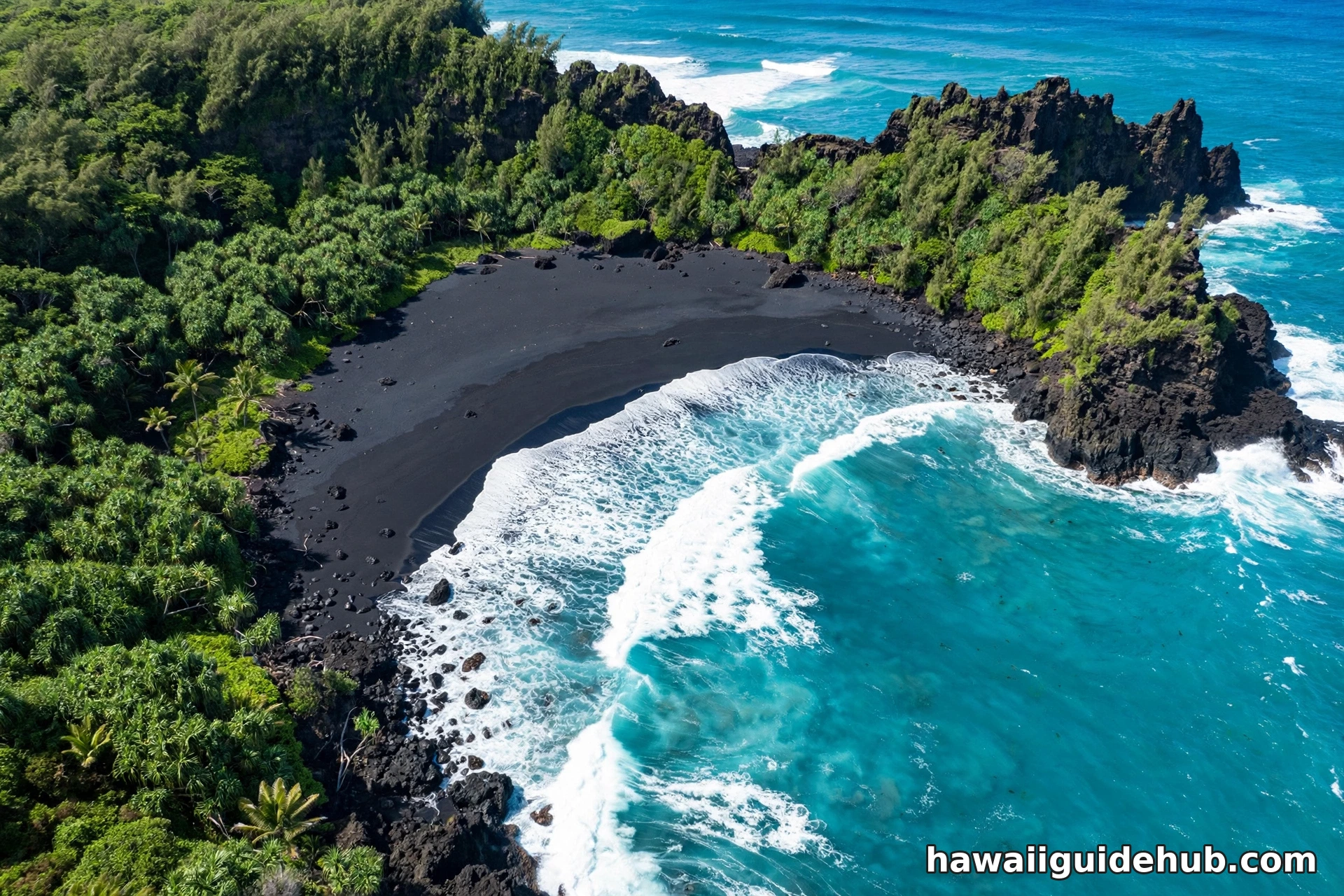
There is a moment on the Road to Hāna when the jungle parts and the world turns black and blue. You round a bend past mile marker 32, step out of the car at Waiʻānapanapa State Park, and there it is: a crescent of jet-black sand cupped by jagged lava rock, with turquoise waves breaking white against it. This is Honokalani, the black sand beach at the heart of the park, and it is the single most photographed shoreline on Maui’s east side.
Maui has more than one black sand beach, but Honokalani is the one people mean when they say “the Maui black sand beach.” It sits inside a 122-acre state park wrapped in hala trees and old Hawaiian legend, and it now requires an advance reservation to enter. This guide covers it all in one place: why the sand is black, how to book your visit, what to do in the park beyond the beach, where else to find black sand on Maui, and the honest truth about swimming here. If Maui is high on your list of reasons to visit Maui, this beach belongs near the top of your Road to Hāna day.
What Makes the Sand Black
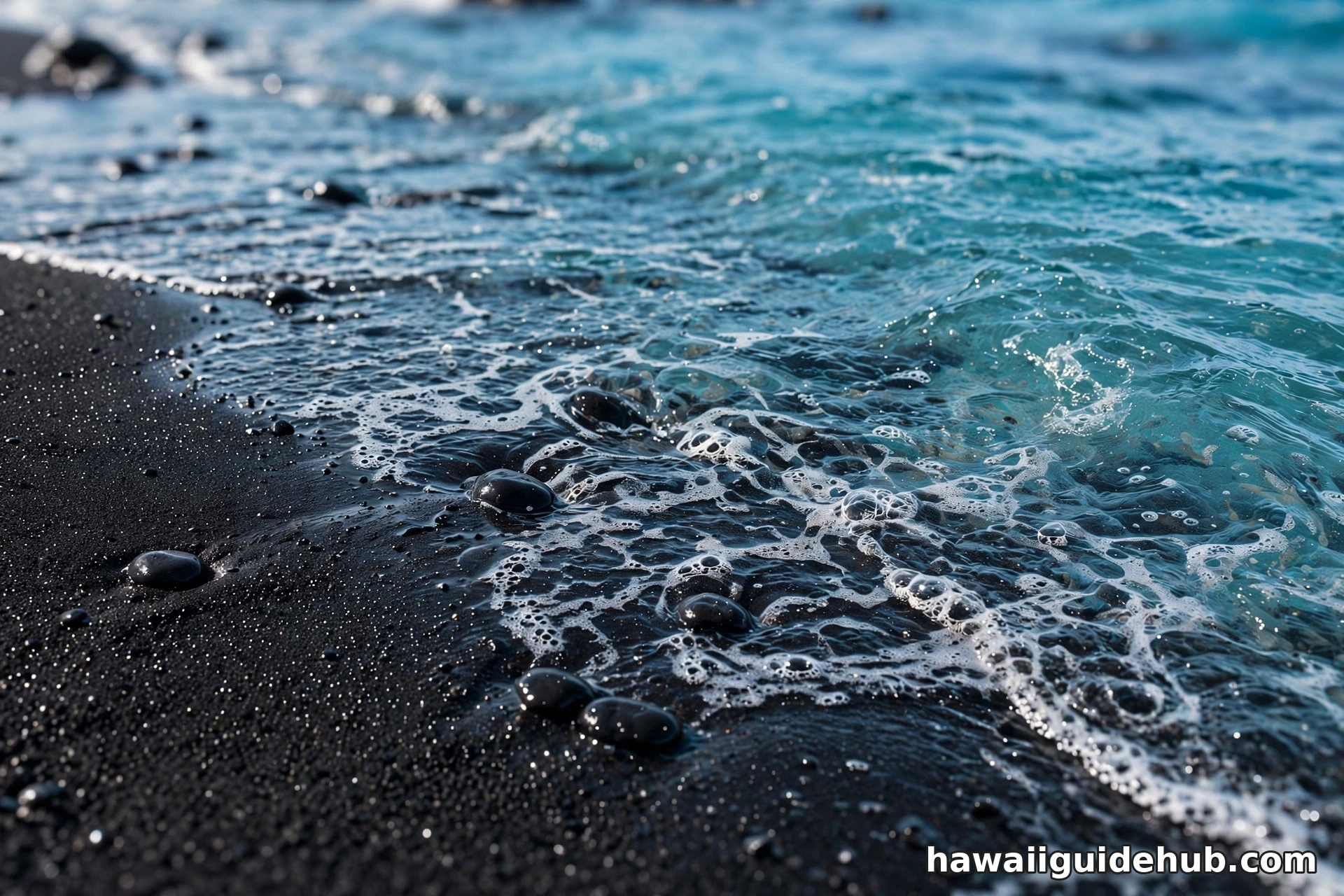
Maui’s black sand is not dyed and not painted. It is lava, ground down by the ocean itself. When molten basalt lava pours into the sea, it explodes on contact with the cold water and shatters into tiny glassy fragments. Surf and currents then tumble those fragments for years, smoothing them into fine dark grains that pile up wherever the coastline traps them.
The color comes from the rock itself. Basalt is rich in iron and magnesium, the same minerals that make Hawaii’s volcanic soil so dark. White sand beaches, by contrast, are mostly ground-up coral and shells. Black sand is ground-up volcano, and every grain at Honokalani started as lava.
One thing that surprises first-time visitors is the heat. Dark colors absorb sunlight, so on a bright afternoon the black sand can burn bare feet in seconds. Water shoes or sturdy slippers are not optional at a black sand beach. They are the difference between a pleasant stroll and a quick retreat to the nearest patch of shade.
Honokalani Beach at Waiʻānapanapa State Park
Honokalani, also called Pailoa Bay, is the beach at the heart of Waiʻānapanapa State Park, about three miles before the town of Hāna on the Hāna Highway. The park’s name means “glistening water,” and you understand it the moment you see sunlight moving across the wet black sand.
The beach itself is small. You will not stroll for miles here. What you will do is stand at the edge of a lava-rock cove and watch some of the most dramatic wave action on Maui. The contrast is the whole point: black sand, white foam, turquoise water, green cliffs. Photographers arrive early for soft light, and honestly the beach is at its best in the morning before the midday crowds fill the small cove.
Waiʻānapanapa is far more than a beach. The 122-acre park holds sea caves, a blowhole, a freshwater cave, ancient Hawaiian sites, and the Piʻilani coastal trail. Plan at least 90 minutes here, and a full two hours if you like to walk. The park has restrooms, picnic areas, drinking water, and a campground with tent sites and cabins for travelers who book well ahead.
The Stories Behind the Park
Waiʻānapanapa is a storied place, and the Hawaiians who lived here left stories in the landscape. The park holds burial sites and ancient structures that are still treated with deep respect, so stay on marked paths and leave every stone unmoved. One well-known legend tells of a high chiefess who hid in the freshwater cave to escape a cruel husband, and of the water turning red with her blood. Whether you take the story literally or as a cautionary tale, it marks the cave as a place of real cultural weight, not just a photo stop.
The hala trees that shade the park are part of the story too. Hala leaves were woven into mats, sails, and baskets, and the trees still drop their heavy fruit along the trails. Walking here with even a little of this context changes the visit. You are not just looking at a pretty beach. You are standing in a place people have cared for, fought over, and told stories about for centuries.
Reservations: What You Must Book Before You Go
This is the part that ruins trips when people skip it. All out-of-state visitors must have a reservation to enter Waiʻānapanapa State Park, and that includes parking. Without one, you will be turned away at the gate, with no exceptions and no standby line.
Reservations open 30 days in advance at midnight Hawaii time, and there are no same-day bookings. The park runs four time slots each day: 7:00 to 10:00 in the morning, 10:00 to 12:30, 12:30 to 3:00, and 3:00 to 6:00 in the afternoon. You must arrive within the first 30 minutes of your slot, and you must leave when it ends. The system exists to keep the small park from being loved to death, and it works.
Entry costs $5 per person for ages 4 and up, and parking is $10 per vehicle for non-residents. Hawaii residents enter free with a valid state ID, though the ID covers the holder only, not everyone in the car. Book through the Hawaii state parks reservation site as soon as your dates open. The 10:00 and 12:30 slots are the first to sell out, and timing a Road to Hāna day around a fixed slot takes planning, so sort this out before you fly, not after you land.
What to Do at Waiʻānapanapa
The beach is the headline, but the park rewards visitors who keep walking. Give yourself time for at least two of these stops.
The sea cave
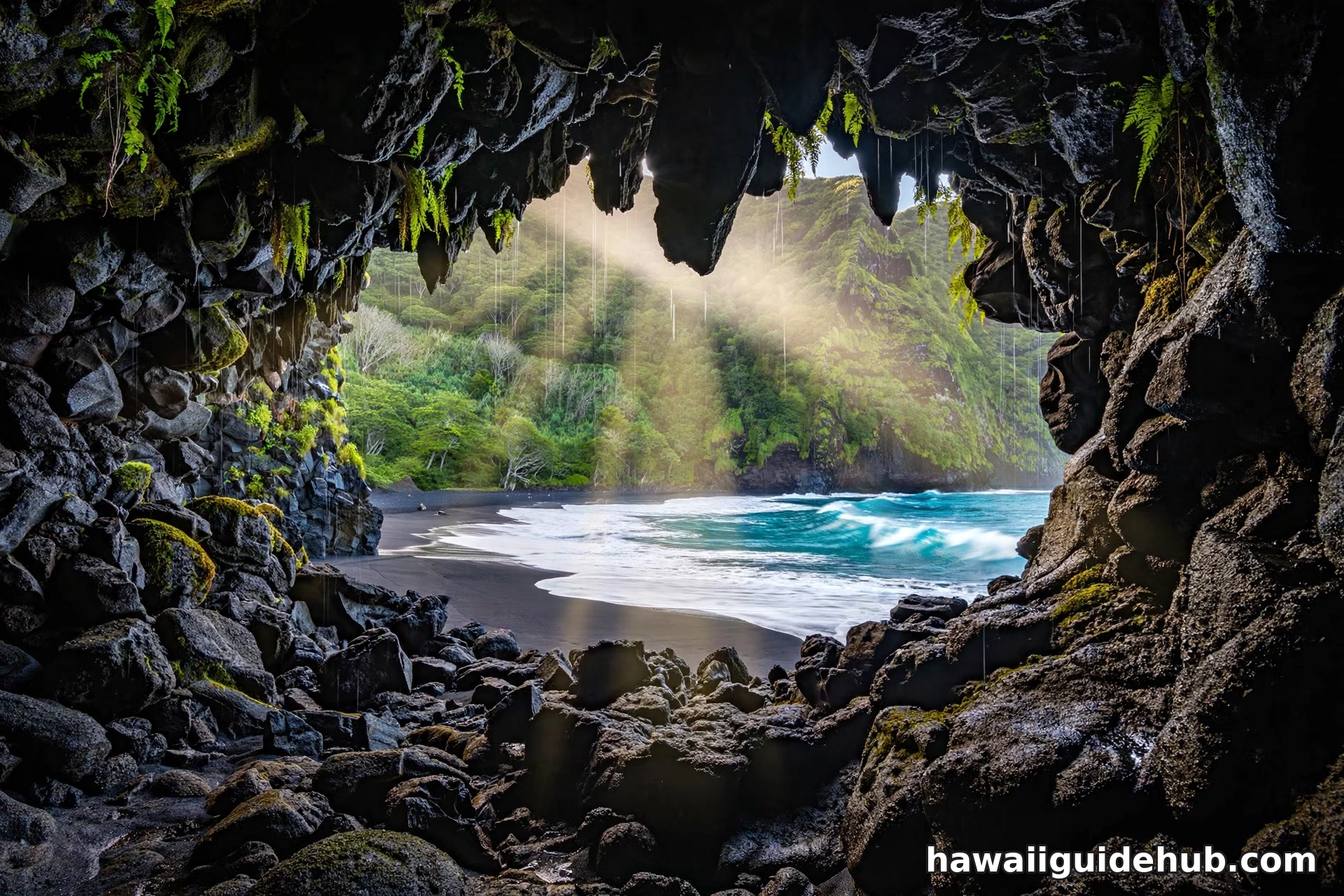
On the right side of the beach as you face the ocean, a low opening in the lava rock leads into a small sea cave. You duck to get in, and then the space opens up and frames the beach through the cave mouth like a natural window. It is one of the best photo spots in the park and one of the most shared images from the Road to Hāna. Watch the tide and the waves rolling in before you enter, and do not go in when the surf is up. A wave that looks small from the beach feels very different inside a rock room.
The blowhole and the Piʻilani Trail
To the left of the beach, a short climb leads to a blowhole that shoots spray skyward when the swells are running. From there, the Piʻilani Trail follows the coast in both directions past sea arches, islets, and tide pools, with the open ocean on one side and hala forest on the other. The walking is easy in places and uneven in others, so wear real shoes rather than flip-flops. Even a 20-minute walk in either direction pays off in views you cannot get from the beach.
The freshwater cave
A short walk inland sits a freshwater pool inside a lava tube, wrapped in the old legend of the chiefess. The water is cold, the rocks are slippery, and the cultural weight of the place is real. Many visitors look and few swim, and that is fine. Treat it as a cultural site first and a swimming hole a distant second. If you want more outdoor adventures in Hawaii beyond the park, the Hāna side of Maui has waterfalls and hikes to fill several days.
When to Go and How to Photograph It
The black sand beach photographs best in the morning. An early time slot means softer light, fewer people, and wet sand that reflects the sky. By midday the sun is harsh, the sand is hot, and the small cove holds the most visitors. If you booked a late slot, the light turns golden again in the last hour, and the cliffs glow.
For photos, the classic shot is from the trail above the beach, looking down at the full crescent. The sea cave gives you the framed shot. The blowhole trail gives you the drama of waves against black rock. Bring a lens cloth or a dry bag for your phone, because the spray at the blowhole and the cave mouth will find your camera. And remember that drones are not welcome in Hawaii’s state parks without a permit, so leave the aerial shots to your memory.
Season matters less here than at surf beaches, since most people come to look rather than swim. Winter brings bigger swells and more dramatic wave action, which is better for photos and worse for wading. Summer is calmer and hotter. Either way, check the surf report the morning of your visit.
Swimming and Safety: An Honest Word
Can you swim at Honokalani? People do, on calm days, in the shallows near shore. But the honest answer is that this is not a swimming beach in the way Kāʻanapali or Wailea are. There is no protective reef, the currents are strong, riptides are common, and there is no lifeguard on duty. The shore break alone can knock an adult off their feet.
The ocean here deserves respect. Portuguese man o’ war and jellyfish drift in with the currents. Rocks hide just under the surface at the cove’s edges. If the surf is up, stay on the sand and enjoy the show, because the show is spectacular. If you do wade in on a calm day, stay close to shore, keep your footing, and never turn your back on the ocean.
Parents should treat this as a look-don’t-leap beach for small kids. The park is wonderful for children who like tide pools, caves, and trails, but the water itself is for strong, confident swimmers only, and only when conditions are calm. When in doubt, ask a local or check the day’s surf report before anyone goes in.
Other Black Sand Beaches on Maui
Honokalani gets the fame, but it is not Maui’s only dark shore. If you want black sand without the reservation system, you have options.
Oneuli Beach sits on the south shore near Mākena, a quiet stretch of dark sand backed by kiawe trees and old lava flows. It is far less visited than Waiʻānapanapa, and on calm summer days the water here can be gentle enough for a careful swim. There are no facilities and no lifeguard, so bring everything you need, watch the conditions, and treat it as the wild beach it is. It is one of the island’s true hidden gems.
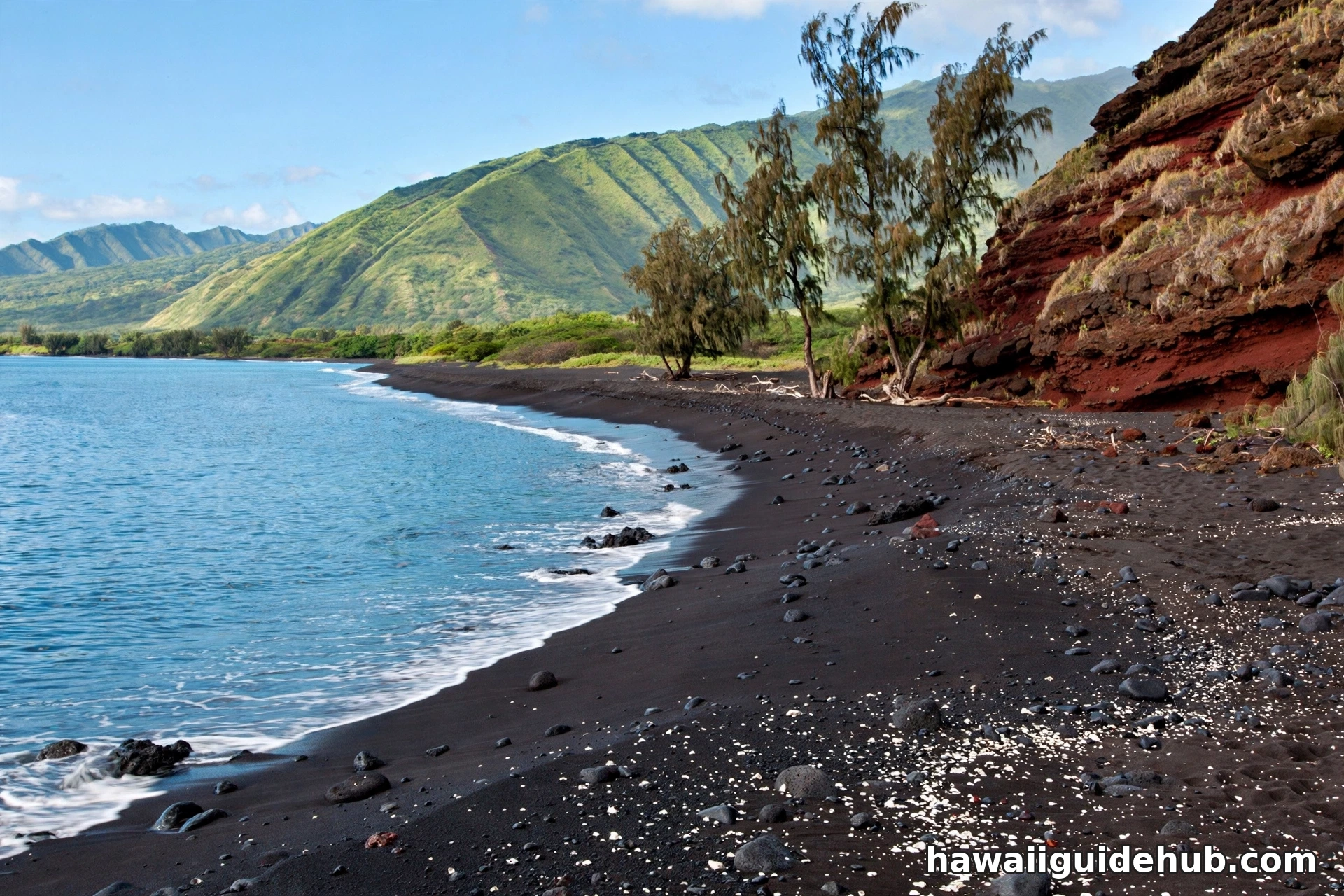
Koki Beach, just past Hāna town, has sand with a reddish-black tint and a photogenic offshore islet. It looks inviting and it is dangerous. Strong currents and a heavy shore break make Koki a beach to admire from the sand, not to swim in. Local families surf and bodyboard here when conditions allow, but visitors should keep their feet dry and their cameras ready.
Travelers sometimes ask about the Big Island’s famous Punaluʻu black sand beach, where sea turtles haul out onto the sand. It is spectacular and worth a visit if your trip includes the Big Island, which has its own long list of things to do on the Big Island. On Maui, Honokalani is the essential stop. If you spot a Hawaiian green sea turtle resting on the rocks here, give it plenty of space and never touch it. Federal law protects them, and they were here first.
Getting There
Waiʻānapanapa State Park sits just off the Hāna Highway (Highway 360) at about mile marker 32, a few miles before Hāna town. Turn onto Waiʻānapanapa Road and follow it to the parking lots. The drive from Kahului takes around two hours without stops, and there will be stops, because the Road to Hāna earns its reputation one waterfall and banana bread stand at a time.
Build your whole Hāna day around your park time slot. The highway is slow, winding, and gloriously unpredictable, and you must arrive within the first 30 minutes of your reservation. Most visitors pair an early park slot with the rest of the Road to Hāna afterward, or take a late slot on the way back toward Kahului. Either way, download an offline map before you go. Cell service drops out for long stretches of the highway, and you do not want to be guessing at turns.
What to Bring
Pack for a state park, not a resort beach. Bring reef-safe sunscreen, water shoes, a hat, and more drinking water than you think you need. There are restrooms, picnic tables, and drinking water in the park but no food for sale, so eat before you arrive or pack a cooler. A towel, a dry change of clothes, and a waterproof pouch for your phone round out the list. If you plan to walk the Piʻilani Trail, add sturdy closed-toe shoes and insect repellent.
One rule to remember: it is illegal to take black sand or pebbles from Hawaii’s beaches. Leave every grain where it lies. The old story about Pele’s curse makes for good campfire talk, but the law is real and the fines are not worth a souvenir jar.
See the Black Sand Beach on Video
Watch this walkthrough of Waiʻānapanapa State Park to see Honokalani, the sea cave, and the coastal trails before you go.
Maui’s black sand beaches are a reminder that the island is still, geologically speaking, young. The sand at Honokalani did not wash in from somewhere else. It was made right there, where lava met the ocean and the ocean ground it down, grain by grain, over thousands of years. Book your reservation, arrive early, walk the trails, and give the water the respect it deserves. The black sand will take care of the rest.