Trails in Hawaii: The Best Hikes on Every Island

Hawaii’s trails are the islands at their most honest: volcanic craters, knife edge ridges, bamboo forests, and waterfalls you earn with your legs. From the Kalalau Trail’s Na Pali cliffs to the boardwalks of Kilauea Iki, the best hikes in Hawaii span every island and every fitness level. This is the single complete guide to the trails that matter, organized by island, with difficulty, fees, permits, and the expert judgment on which ones deserve your limited vacation days.
This page covers the signature hike on each island, the best easy/moderate/challenging options, permits and fees you must know about, safety rules specific to Hawaii, what to pack, and FAQs. Every trail worth your time is here on this one page.
Hawaii’s Signature Hikes: Which One Is Yours?
| Trail | Island | Distance | Difficulty | Fee or permit | The payoff |
| Kalalau Trail | Kauai | 22 mi RT full; 4 mi RT to Hanakapiai | Strenuous | Day-use reservation required per Hawaii DLNR | Na Pali Coast: the best hike in Hawaii |
| Diamond Head | Oahu | 1.6 mi RT | Moderate | Reservation + entry fee for non-residents | Waikiki panorama from a volcanic crater |
| Pipiwai Trail | Maui | 4 mi RT | Moderate | $30/vehicle Haleakalā NP entry per NPS | Bamboo forest to 400 ft Waimoku Falls |
| Kilauea Iki | Big Island | 3.3 mi loop | Moderate | $30/vehicle HVNP entry per NPS | Walk across a steaming volcanic crater floor |
| Manoa Falls | Oahu | 1.6 mi RT | Easy-moderate | Parking ~$5-7 per recent reports | Rainforest waterfall 15 min from Waikiki |
| Waiheʻe Ridge | Maui | 5 mi RT | Moderate-hard | Free | The West Maui mountains from above |
Kauai: The Kalalau Trail
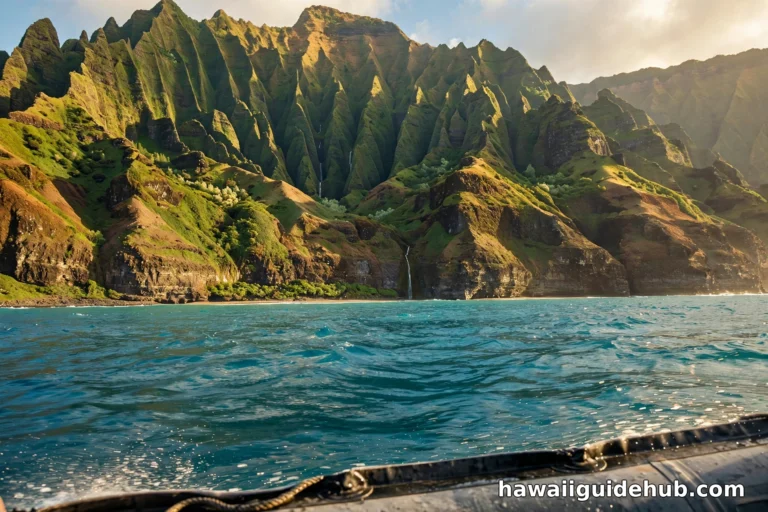
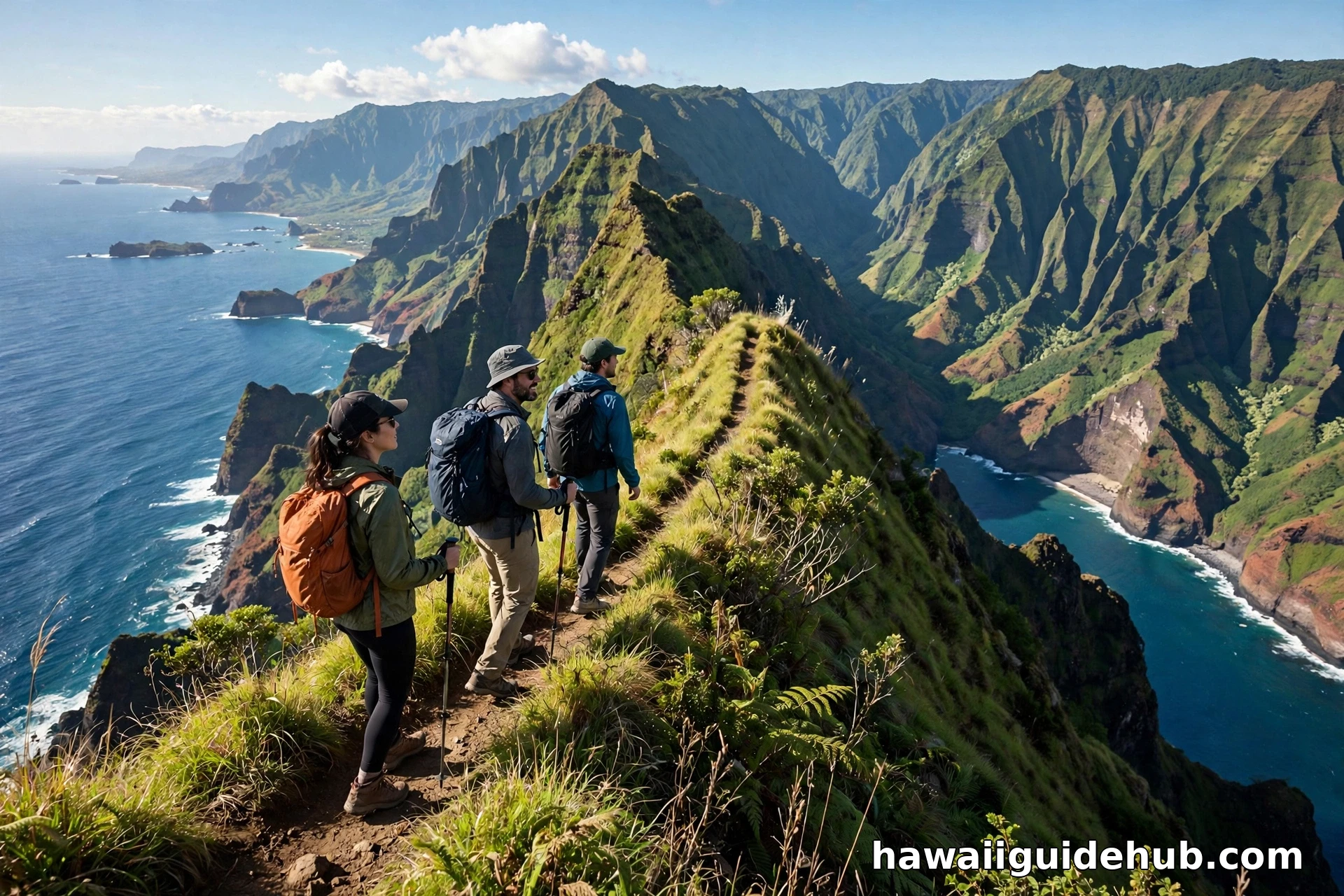
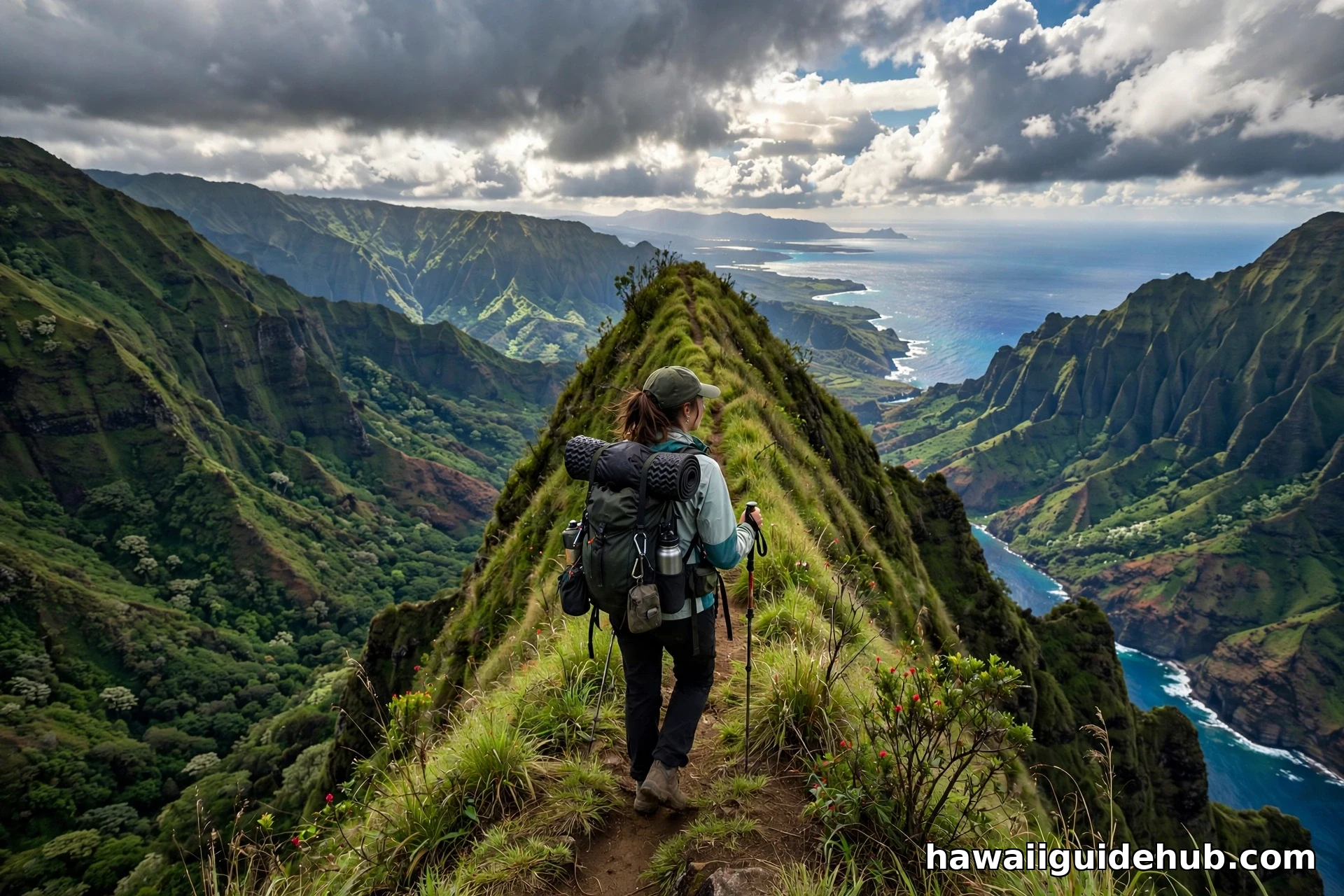
The Kalalau Trail along the Na Pali Coast is not just Hawaii’s best hike; it is routinely ranked among America’s best. The full trail runs 11 miles one way to Kalalau Beach, but most visitors hike the first 2 miles to Hanakapiai Beach and back, a half day that delivers the coast’s drama without the commitment. Even that short section is strenuous: stream crossings, narrow cliff ledges, and mud that locals call the island’s own special surface.
The critical detail: Hawaii DLNR requires day-use reservations for Haʻena State Park, the trail’s entry point, and they sell out. Book the moment your dates are firm. Beyond Hanakapiai, permits are required and stream crossings can become deadly in rain: never cross a flooded stream, and check conditions before you go. The reward is a coastline so vertical and green it looks computer generated, except it is real and you are standing in it.
Oahu: Diamond Head and Beyond
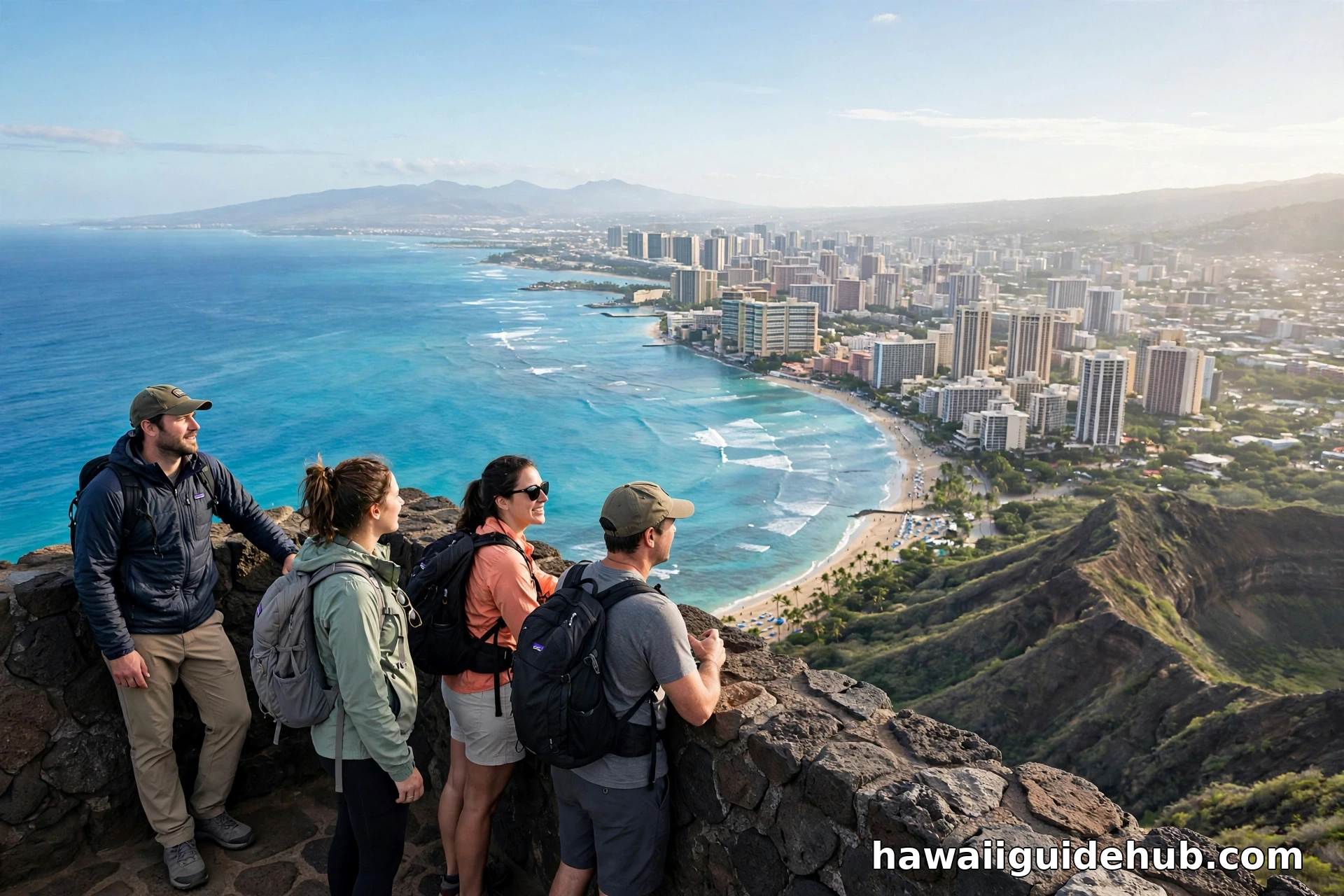
Diamond Head is the hike everyone does and nobody regrets. The 1.6 mile round trip climbs through tunnels and bunkers to a summit with the definitive Waikiki panorama. Non-residents need an advance reservation and pay an entry fee, and sunrise slots are the prize: book early. Go on a weekday if you can; weekends are a conga line.
For the second Oahu hike, choose by appetite. Manoa Falls is the rainforest waterfall 15 minutes from town. Koko Crater’s 1,000+ railroad tie steps are the workout, with Hanauma Bay views as the reward. The Lanikai Pillbox hike gives sunrise over the Mokulua Islands. Makapuʻu Point Lighthouse is the easy paved option, and in winter it doubles as a whale watching platform.
Maui: Pipiwai and the West Maui Mountains
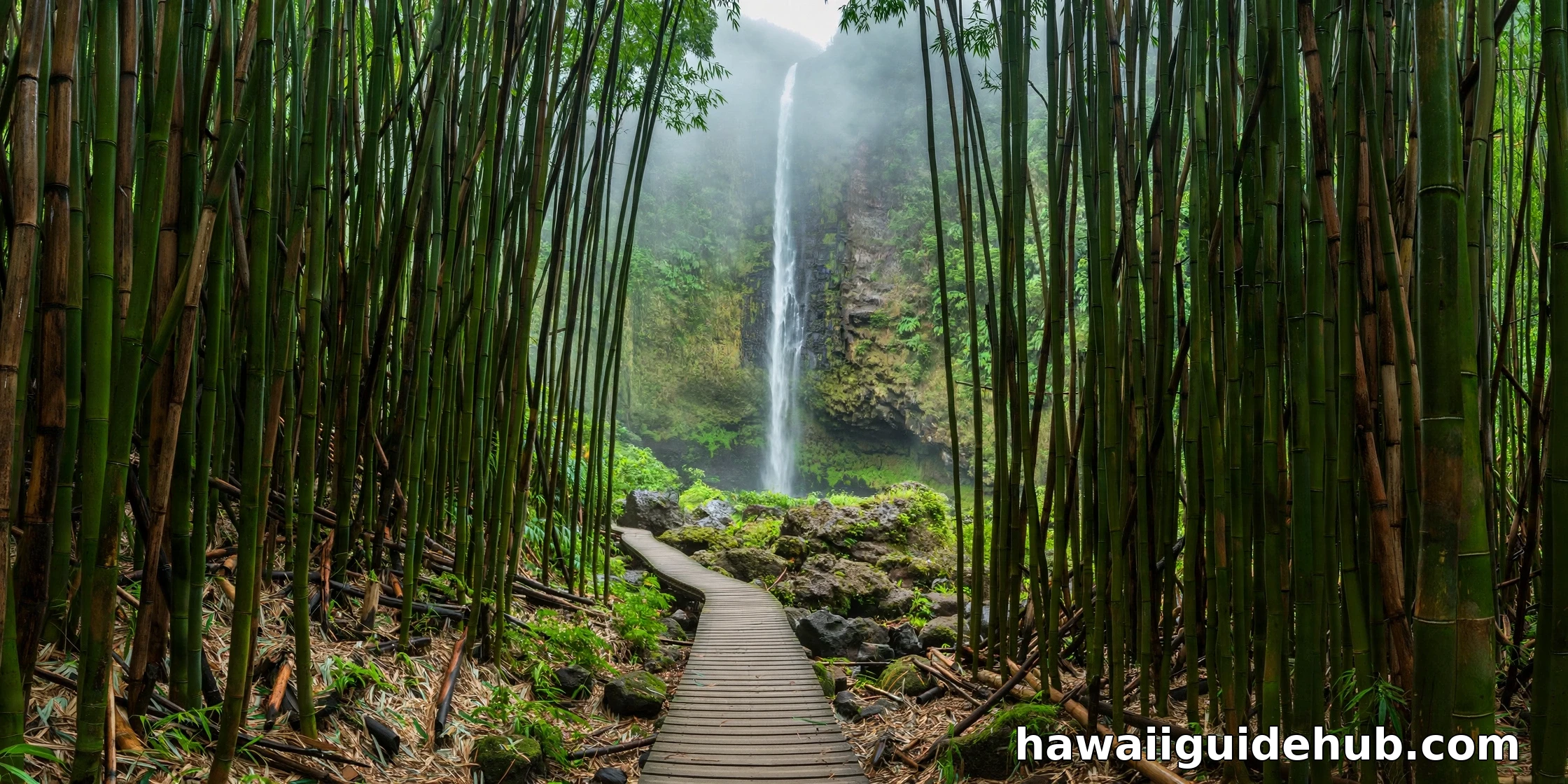
The Pipiwai Trail in Haleakalā National Park’s Kipahulu District is Maui’s signature hike: 4 miles round trip through a bamboo forest that sounds like a rain stick orchestra, past banyan trees and waterfalls, to the 400 foot Waimoku Falls. It sits at the end of the Road to Hana, so it pairs naturally with the drive. Park entry is $30 per vehicle per the NPS, good for three days across both park districts.
Waiheʻe Ridge is the locals’ favorite: 5 miles round trip climbing through guava forest to a ridge with aerial views of the West Maui mountains and the central valley. It is free, less crowded than Pipiwai, and the morning cloud show is spectacular. At the summit district, the Sliding Sands trail drops into the volcanic crater past silversword plants, but remember the altitude: 10,000 feet makes every step harder, and the weather can be brutal.
Big Island: Walk on a Volcano
Kilauea Iki is the hike you tell people about for years: 3.3 miles descending through rainforest into a crater, across the still steaming floor of a 1959 eruption, and back up the other side. The contrast, jungle to moonscape in twenty minutes, is unmatched. Park entry is $30 per vehicle per the NPS. Start early for the light and the solitude.
Pololu Valley’s short steep trail drops 400 feet to a black sand beach at the valley floor, a half day that feels like an expedition. The Mauna Kea summit is a drive-up, not a hike, but the altitude demands respect. For the full Big Island picture, see the best five things to do in Hawaii Volcanoes National Park and the best things to do on the Big Island of Hawaii.
Molokai and Lanai: The Quiet Trails
The smaller islands have trails worth the ferry ride. On Molokai, the Kalaupapa trail descends 1,700 feet down sea cliffs to the historic settlement, 3.5 miles of switchbacks with mule history and staggering views; access requires a tour and a permit, which keeps it uncrowded. Lanai’s Koloiki Ridge trail winds through pine forest to overlooks of Maui and Molokai, an easy walk that feels like the Pacific Northwest dropped into Hawaii. These are the anti crowds hikes: you may not see another person all day.
Hiking With Kids in Hawaii
Hawaii is a superb place to hike with children if you pick right. Makapuʻu Lighthouse is stroller friendly and paved. Manoa Falls thrills kids with mud and bamboo. The Kilauea Iki overlook lets small legs see the crater without descending. Skip Koko Crater stairs and any ridge trail with exposure for under-10s. Bring twice the snacks, a change of clothes in the car, and reef safe sunscreen: the sun at the trailhead is stronger than it looks.
Trail Etiquette: Leave No Trace, Island Style
Hawaii’s trails run through sacred and fragile places, and the etiquette is specific. Stay on the trail: the vegetation beside it may be endangered species found nowhere else on earth. Do not stack rocks: those cairns are not art, they are graffiti on cultural sites. Do not take lava rocks, sand, or plants. Keep noise down near heiau and cultural sites. Pack out everything, including fruit peels, which are not native here. And never feed the nene, Hawaii’s endangered goose: human food kills them.
If You Only Do One Hike Per Island
Forced to choose one per island, here is the expert shortlist. Oahu: Diamond Head at sunrise, no contest. Kauai: Kalalau to Hanakapiai, the state’s best half day. Maui: Pipiwai, the bamboo forest and Waimoku Falls. Big Island: Kilauea Iki, the crater floor walk. Four hikes, four completely different planets, and a trip you will talk about for a decade. Book the permits first, then the flights.
Hawaii Hiking Safety: Read This First
Hawaii’s trails injure confident hikers every year, and the causes are specific to the islands. Flash floods turn streams deadly in minutes: if it is raining hard in the mountains, stay out of stream beds and narrow valleys. Ridge trails have exposure that punishes a stumble; the Kalalau’s narrow sections have no margin. Heat and humidity dehydrate faster than you expect: carry more water than the distance suggests, at least a liter per two hours. Leptospirosis bacteria can be present in stream water: do not drink it, and cover open cuts. Tell someone your plan, check Hawaii DLNR’s Na Ala Hele site for closures, and turn back when conditions change. The mountain will be there tomorrow.
The Best Sunrise and Sunset Hikes
Some Hawaiian trails are time-of-day dependent. Diamond Head at sunrise is the classic: the sun rises over the ocean directly in front of you, and the early reservation slots are worth the alarm. Lanikai Pillbox at sunrise frames the Mokulua Islands in gold. For sunset, the Tantalus lookouts above Honolulu and the Mauna Kea summit (a drive, not a hike, but the same planning applies) deliver the islands’ great evening shows. Night hiking is legal on some trails but inadvisable for visitors: the terrain is unforgiving in the dark, and headlamps do not replace familiarity.
Rainy Day Hikes vs Fair Weather Hikes
Rain does not cancel hiking in Hawaii; it redirects it. On wet days, choose Manoa Falls or the Lyon Arboretum, where the rain is the point and the forest glows. Avoid ridge trails in high wind and rain: the Kalalau’s narrow sections and any Koʻolau summit trail become genuinely dangerous when slick. Crater hikes like Kilauea Iki are fine in light rain but miserable in downpours with no shelter. The local rule: if the mountains are wearing clouds like a hat, hike low and in the forest; save the ridges for the clear mornings.
What to Pack for Hawaiian Trails
The Hawaii hiking kit: trail shoes or hiking sandals with grip (not flip flops), 2+ liters of water per person, sun protection, a rain shell, mosquito repellent, and a fully charged phone with downloaded offline maps, because cell service dies in the valleys. Add a headlamp for any hike that might run long. Leave the cotton at home: it stays wet and cold in the trade winds.
For Oahu trip planning around your hikes, see what not to miss on Oahu.
Permits Cheat Sheet
Hawaii’s permit system confuses everyone, so here it is in one place. National parks (Haleakalā, Hawaii Volcanoes): entry fee per vehicle, no advance reservation needed except Haleakalā sunrise. Hawaii state parks: many now require advance day-use reservations for non-residents, including Diamond Head, Haʻena (Kalalau access), and several Maui and Kauai parks; book through the state’s GoHaena and park reservation sites. Na Ala Hele state trails: generally free, no permit. Camping: permits required everywhere, book early. When in doubt, check Hawaii DLNR’s site before you go: the rules change, and rangers do check.
Video: The Best Oahu Hikes
Six of Oahu’s best easy to intermediate hikes: Diamond Head, Koko Crater, Makapuʻu, and the pillboxes.
Frequently Asked Questions
What is the best hike in Hawaii?
The Kalalau Trail on Kauai’s Na Pali Coast, by expert consensus. The first 2 miles to Hanakapiai make a superb half day; the full 22 mile round trip is a serious expedition.
Do I need a permit to hike in Hawaii?
Some trails yes: Haʻena State Park (Kalalau access) requires day-use reservations via Hawaii DLNR, Diamond Head requires advance reservations for non-residents, and national parks charge entry fees. Most state trails are free.
What is the easiest famous hike in Hawaii?
Makapuʻu Point Lighthouse on Oahu: 2 miles round trip, fully paved, ocean views and winter whales. Manoa Falls is the easy rainforest option.
Can beginners hike Diamond Head?
Yes. It is 1.6 miles round trip and rated moderate, with stairs and tunnels but no technical sections. Bring water and go early.
What should I not do on Hawaiian trails?
Do not cross flooded streams, do not leave the trail, do not stack rocks or carve trees, do not feed wildlife, and do not hike closed trails: closures exist because people have died there.
When is the best time to hike in Hawaii?
Year round, but start early: trails are cooler, less crowded, and afternoon showers are common. Winter brings muddier trails and bigger waterfalls.
Hawaii’s trails are the fastest way to understand the islands: every ecosystem, from rainforest to lava desert, is a hike away. Pick the trail that matches your ambition, respect the permits and the weather, and carry more water than you think you need. The islands reward the walker like nowhere else on earth, one muddy bootprint at a time.