White Plains Beach at Barber’s Point

White Plains Beach sits on the sunny leeward coast of Oʻahu, in Kalaeloa near Kapolei, and it feels a world away from the crowds of Waikīkī. The sand is wide and pale, the water is a clear blue green, and the surf rolls in with the kind of patience that makes first time surfers relax. Military families, Kapolei neighbors, and visitors who have done their homework share the shoreline here, and the mood is unhurried in a way that is hard to find on the south shore.
This is the single complete guide to white plains hawaii. It covers where the beach is and how to reach it, parking and facilities, swimming and surfing, seasonal conditions, hazards, and nearby alternatives.
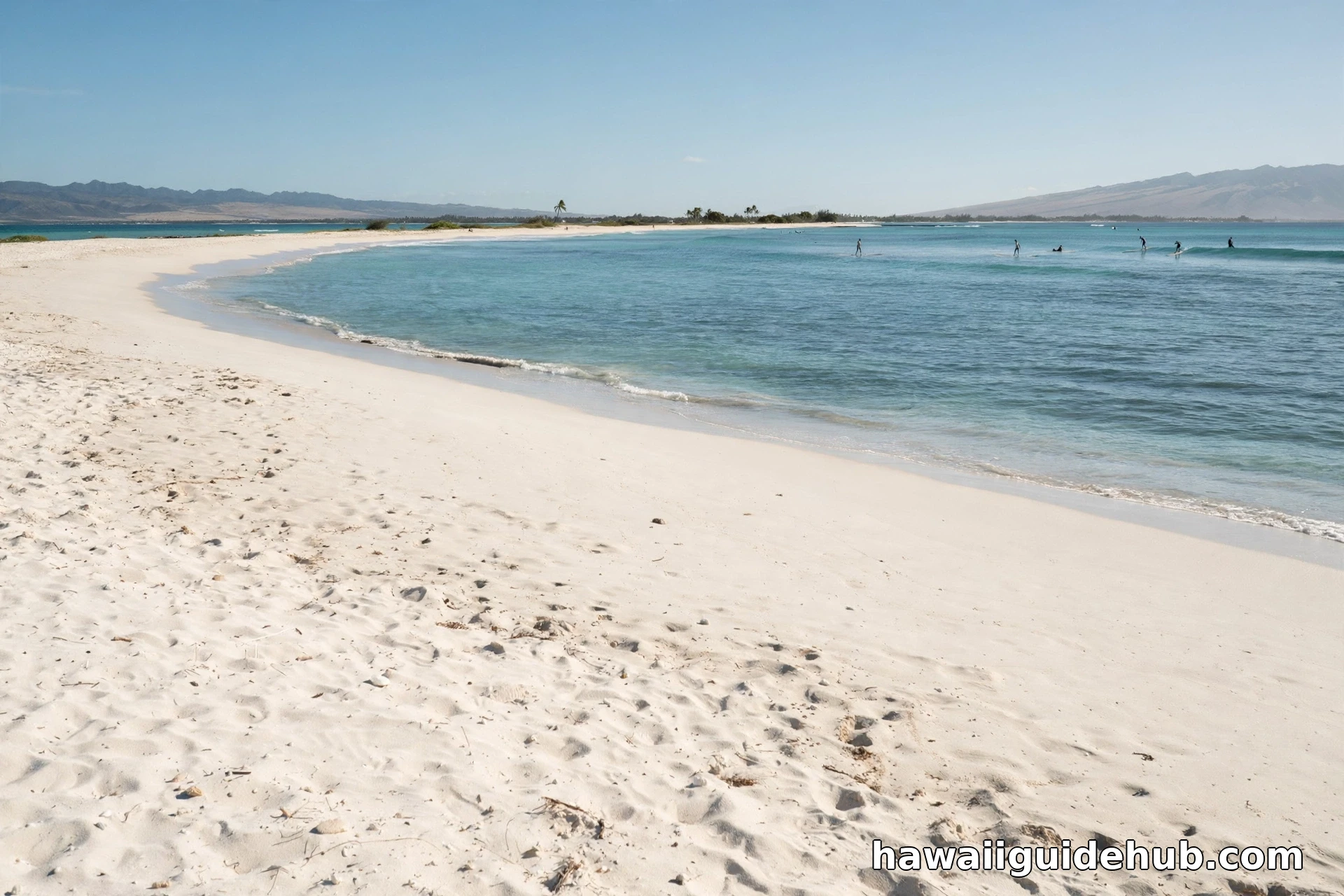
White Plains Beach at a Glance
| Location | Kalaeloa, at Barber's Point, near Kapolei and ʻEwa Beach, Oʻahu |
| Address | White Plains Road, ʻEwa Beach, HI 96706 |
| Setting | Wide, pale sand beach on the dry leeward coast |
| Best known for | Gentle, consistent beginner surf and longboard waves |
| Swimming | Good on calm days, always check conditions first |
| Surf Shack hours | Daily, 9:30 a.m. to 4:30 p.m. for rentals |
| Facilities | Indoor and outdoor showers, restrooms, volleyball courts, patios |
| Accessibility | Beach access wheelchairs listed among the beach features |
| Parking | Large on site lot, free, busiest on weekends |
| Tents | No tents allowed, according to the Navy MWR beach listing |
Where White Plains Beach Is
White Plains Beach fronts Kalaeloa Point on the southwestern shore of Oʻahu. Kalaeloa is the district that replaced the former Naval Air Station Barbers Point, and the beach still carries that history in its street names and its open flat land. The official Navy MWR listing gives the address as White Plains Road, ʻEwa Beach, HI 96706, and describes the beach as a serene spot on the leeward side of the island. That word, serene, is exactly right on a weekday morning.
The beach is not in a resort row and it is not hidden behind a gate. It is a working local beach with a Surf Shack, covered patios, and a broad lawn behind the sand.
A Short History of Barber's Point and Kalaeloa
The name Barber’s Point comes from Captain Henry Barber, whose ship wrecked on the reef off this point in 1796. The Hawaiian name, Kalaeloa, means the long point, which describes the low headland here. For much of the twentieth century this coast was military land. Naval Air Station Barbers Point was commissioned in April 1942 and grew into one of the busiest naval airfields in the Pacific, known as the Crossroads of the Pacific.
The air station closed on July 1, 1999, after 57 years of service, under the federal Base Realignment and Closure process. Its runways became Kalaeloa Airport, and much of the land passed to the state for the Kalaeloa Community Development District. The beach kept its role. Joint Base Pearl Harbor Hickam MWR still runs the Surf Shack, the patios, and the beach cottages nearby, which is why White Plains has better facilities than many beaches of its size.
How to Get There and Where to Park
From Honolulu, drive west on Interstate H-1 toward Kapolei and take the Kalaeloa exit. Follow Kalaeloa Boulevard south, then follow the signs for White Plains Beach. The drive from Waikīkī takes roughly 40 to 50 minutes without traffic, and considerably longer during the weekday afternoon commute west, so timing matters.
Parking is one of the beach’s quiet strengths. There is a large paved lot right behind the facilities, and parking is free. On sunny weekends the lot fills in waves, with the busiest stretch from late morning into early afternoon, so arrive before 10 a.m. on a Saturday for an easy space. As at any beach lot on Oʻahu, lock your car and leave nothing visible inside it.
Most visitors find a car makes White Plains simple. Riders exploring more of the island can pair the trip with the stops in our Oʻahu travel guide.
What the Beach Looks and Feels Like
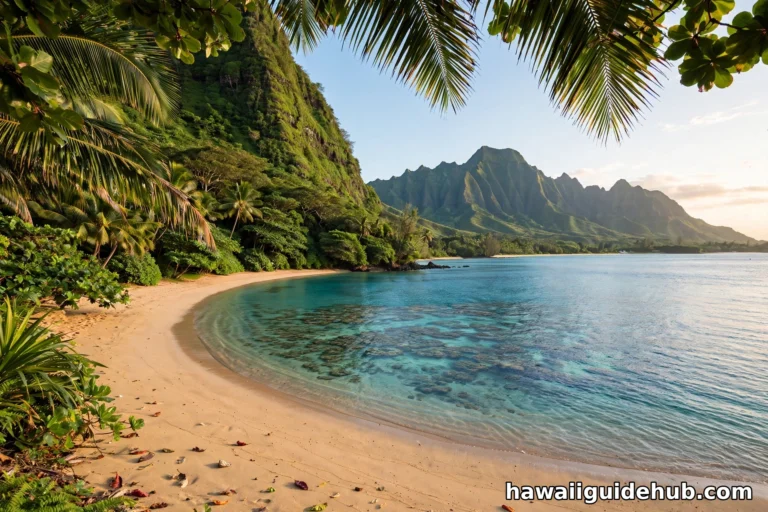
The first thing you notice is space. White Plains is a long, wide beach, and even on a busy day the sand rarely feels claimed the way it does in Waikīkī. The sand is pale and soft near the water, with patches of reef and rock further out. The shoreline curves gently, so a short walk changes your view, your crowd level, and often the size of the waves in front of you.
Behind the sand there is grass, shade structures, and the low Surf Shack building. Covered patios host birthday parties and family gatherings, and the official MWR listing notes patio rentals for gatherings of up to 200 people. Volleyball courts sit behind the beach. It feels less like a resort beach and more like a community beach park that happens to have excellent surf, and that is meant as a compliment.
Swimming at White Plains
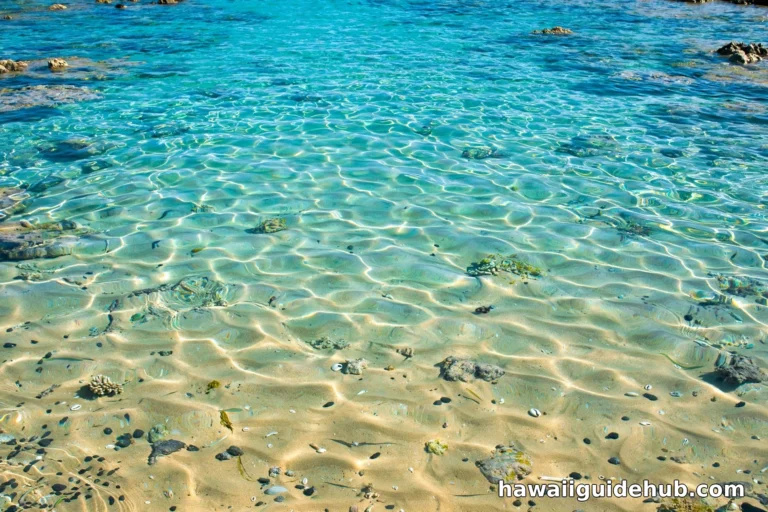
On a calm day, swimming at White Plains is straightforward and pleasant. The water warms quickly over the shallow sand, leeward Oʻahu sees water temperatures in the mid 70s Fahrenheit in winter and around 80 degrees Fahrenheit in late summer, and the inside area near shore is gentle enough for confident swimmers to float and cool off.
Two honest cautions belong in any swimming guide here. First, the bottom is not sand everywhere. Reef and rock patches sit offshore, which is part of why the waves break the way they do, so water shoes help if you plan to walk out far, and you should never dive. Second, White Plains does not appear on the Hawaiʻi Ocean Safety list of lifeguarded beaches published by the state. Conditions and staffing can change, so check on the day, swim with a buddy, and be ready to keep children within arm’s reach. A beach can be gentle most days and still deserve your full attention every day.
Surfing: Why Beginners Love This Break
Ask local surfers where a beginner should learn on the leeward side and White Plains comes up again and again. The official MWR page calls it a great spot to learn how to surf, and the reasons are physical. The waves here are usually slow, soft, and forgiving. They break over a mix of sand and reef, they peel in both directions, and the inside whitewater near shore gives new surfers a safe place to practice standing up without paddling into the main lineup.
Longboarders love this beach for the same reasons. On a small south swell the waves offer long, mellow rides that suit bigger boards and an unhurried style, and the lineup is friendly by Oʻahu standards, with space to spread out along the beach. That does not remove the need for etiquette. Do not drop in on a surfer already riding, and hold onto your board in the whitewater. Beginners who respect those basics are welcomed here in a way that is not true everywhere.
The Surf Shack is the center of the surf scene. Its rental list, published by Navy MWR, includes surfboards at $10 per hour or $25 per day, bodyboards at $5 per hour or $15 per day, and fins at $2 per hour or $6 per day. Prices are listed as subject to change, and rentals depend on ocean conditions. One detail matters for visitors: some MWR gear and patio programs carry eligibility rules for military affiliated guests, so call the Surf Shack at 808-682-4925 before you count on a rental. Rental hours are listed as 9:30 a.m. to 4:30 p.m. daily.
Surf lessons are offered for beginners by appointment, Monday through Friday, and the rental page notes that lesson participants must be proficient swimmers. If you are choosing between learning here and learning in town, the honest trade is this: Waikīkī Beach offers more lesson operators and a livelier scene, while White Plains offers more room, a local crowd, and waves that forgive mistakes. Many new surfers learn faster with fewer people around them.
Seasonal Ocean Conditions
White Plains faces south to southwest, so its surf calendar follows the south swell season. Summer, roughly May through September, brings the most consistent surf, as southern hemisphere storms send swells north to Oʻahu’s south facing shores. This is the season when the beach earns its reputation, with regular small to moderate waves and the warmest water of the year. It is also when the leeward coast is hottest and driest, so shade and water bottles matter as much as boards.
Winter tells a different story. From November through February the big wave season belongs to the north shore, while south facing beaches like White Plains often go small or nearly flat for days at a time. Those flat spells can be lovely for swimming and paddling, as long as you check for the occasional Kona storm, when winds swing from the south and the weather turns wet. Spring and fall sit between the patterns, with smaller, less predictable surf and fewer people in the water.
Whatever the season, check a surf and beach safety forecast on the morning you go. A rising south swell can double the wave size between breakfast and lunch, and the gentle beach in the photographs can become a shore break that is wrong for small children and new swimmers.
Morning tip: Morning is the reliable window at White Plains. Winds are usually lightest early, the rental line at the Surf Shack is shortest, the parking lot is calm, and the surf is at its cleanest before the afternoon breeze roughens the surface. If you can only visit once, visit before 10 a.m.
Hazards, Stings, and Staying Safe
The hazards at White Plains are the ordinary ones for a south shore Oʻahu beach, and they are manageable with a little knowledge. Box jellyfish arrive on leeward and south shores on a lunar cycle, most often about 8 to 10 days after a full moon, and their stings are painful. If warning signs are posted, stay out of the water. Portuguese man of war can wash in on windy days, and their blue tentacles sting even on the sand, so look before you sit. Seek care promptly for any sting that involves trouble breathing or a young child.
Sharp reef, sea urchins in rocky pockets, and strong sun complete the list. Step carefully, and clean any coral cut well, since reef cuts infect easily in the tropics. The leeward coast is one of the driest, sunniest parts of Oʻahu, so reef safe sunscreen, a hat, and shade breaks matter. After heavy rain, check for brown water advisories before swimming.
Facilities, Accessibility, and Beach Rules
For a local beach, White Plains is unusually well equipped. The MWR feature list includes indoor and outdoor showers, restrooms, volleyball courts, and beach access wheelchairs, which makes this one of the more accessible surf beaches on the island. If you need the beach wheelchair, ask at the Surf Shack, since staff handle the equipment. Covered patios can be reserved for gatherings, and patio availability is handled in person rather than by phone or email.
Rules are simple and worth respecting. No tents are allowed at the beach, according to the MWR beach listing, so bring a beach umbrella or use the pavilions for shade instead. Pack out everything you pack in. The families who use this beach every week keep it clean, and visitors who do the same are easy to welcome back.
Best Time to Visit
For surfers, the best months are May through September, when south swells are most reliable and the water is warmest. For swimmers and families, the sweet spots are calmer spells in spring and fall and flat days in winter, when the beach turns quiet. Weekday mornings are the best time of any week, in any season, when Kapolei locals surf before work and the beach feels most like itself.
Early mornings bring offshore breezes and clean waves, midday brings the strongest sun, and late afternoon brings golden light and west side sunsets that drop straight into the ocean. A morning surf followed by a shaded picnic lunch is the classic White Plains rhythm.
Nearby Alternatives on the Leeward Coast
White Plains pairs naturally with a leeward coast day. Just north in Kapolei, Ko Olina’s calm lagoons suit toddlers and nervous swimmers better than any open ocean beach. Further up the coast, Electric Beach at Kahe Point draws snorkelers and divers to its warm water reef, a very different scene from the sandy surf zone at White Plains.
For contrast on another day, Kailua Beach on the windward side trades surf for soft sand, offshore islands, and kayaking. Comparing the two coasts is one of the pleasures of an Oʻahu trip, and White Plains is the beach that teaches many visitors that the leeward coast is not a drive through, it is a destination.
Frequently Asked Questions
Is White Plains Beach open to the public?
Yes, the beach is open to the public through Kalaeloa. Some Navy MWR programs, such as certain rentals and patio reservations, carry eligibility rules, so confirm those services with the Surf Shack if they matter to your visit.
Is White Plains Beach good for beginner surfers?
Yes, it is one of the most recommended beginner breaks on Oʻahu. The waves are usually slow and forgiving, the inside whitewater is good for practice, and lessons are offered by appointment on weekdays for people who are already proficient swimmers.
Are there lifeguards at White Plains Beach?
White Plains does not appear on the state Hawaiʻi Ocean Safety list of lifeguarded beaches, so do not assume a lifeguard is on duty. Swim with a buddy, keep children close, and stay out when warnings are posted.
How much does it cost to park and enter?
Entry and parking at the beach lot are free. Your costs are optional ones, such as gear rentals from the Surf Shack, where a surfboard is listed at $10 per hour or $25 per day, with prices subject to change.
Can I set up a tent or bring my dog?
No tents are allowed, according to the Navy MWR beach listing. Use a beach umbrella or a pavilion for shade instead, and leave dogs at home for this beach.
When is the surf biggest at White Plains?
The most consistent surf arrives with south swells in summer, roughly May through September. Winter often brings small or flat spells here, even while the north shore is at its biggest.
White Plains Beach rewards the visitors who find it. It is not the most famous beach on Oʻahu, and it does not try to be. It is a wide, sunny, working local beach with forgiving waves, real facilities, and a history that runs from a 1796 shipwreck through a naval air station to the Kapolei community that surfs it today. Go in the morning, respect the lineup and the signs, and you will understand why leeward families keep this beach at the center of their weekends.