Electric Beach Oahu: Snorkeling and Diving at Kahe Point’s Warm Water Reef

On the southwest shore of Oahu, across the highway from a 650-megawatt power plant, there is a beach where the water runs warmer than anywhere else on the island. Warm water attracts fish. Fish attract turtles. Turtles attract divers. And so Kahe Point Beach Park, known to everyone simply as Electric Beach, has become one of the best snorkeling and shore diving spots on Oahu, the kind of place locals mention when someone asks where the real underwater action is.
This guide covers everything about Electric Beach: where the nickname comes from, what the warm water outflow actually is, how to snorkel and dive here, what you will see, and the honest safety picture you need before you get in the water.
What “Electric Beach” Actually Is
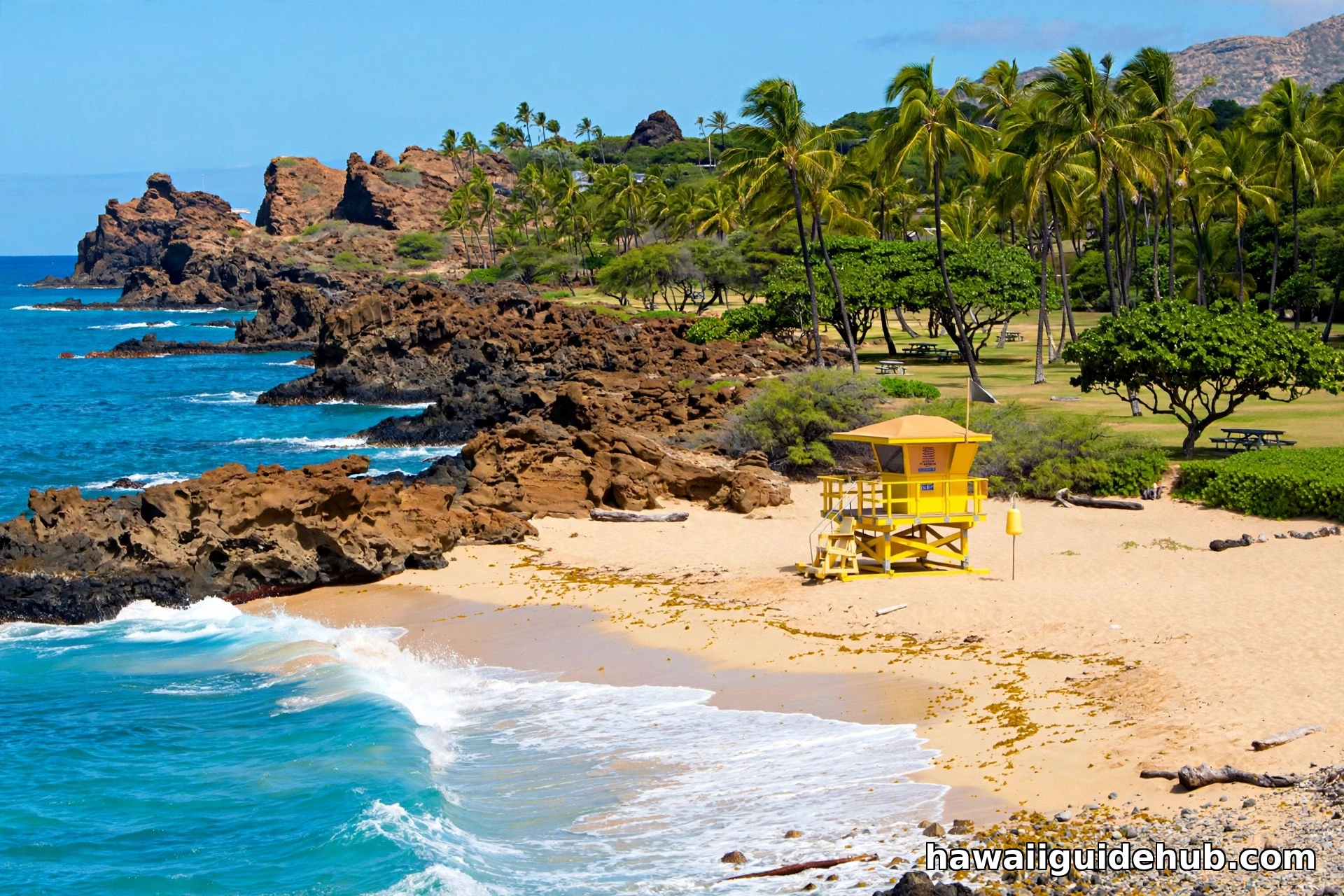
First, the names, because they confuse visitors. Kahe Point Beach Park is the official name of the small city beach park at 92-301 Farrington Highway in Kapolei. It sits at the southern end of the stretch, and it is the part with the parking lot, restrooms, showers, and lifeguard tower.
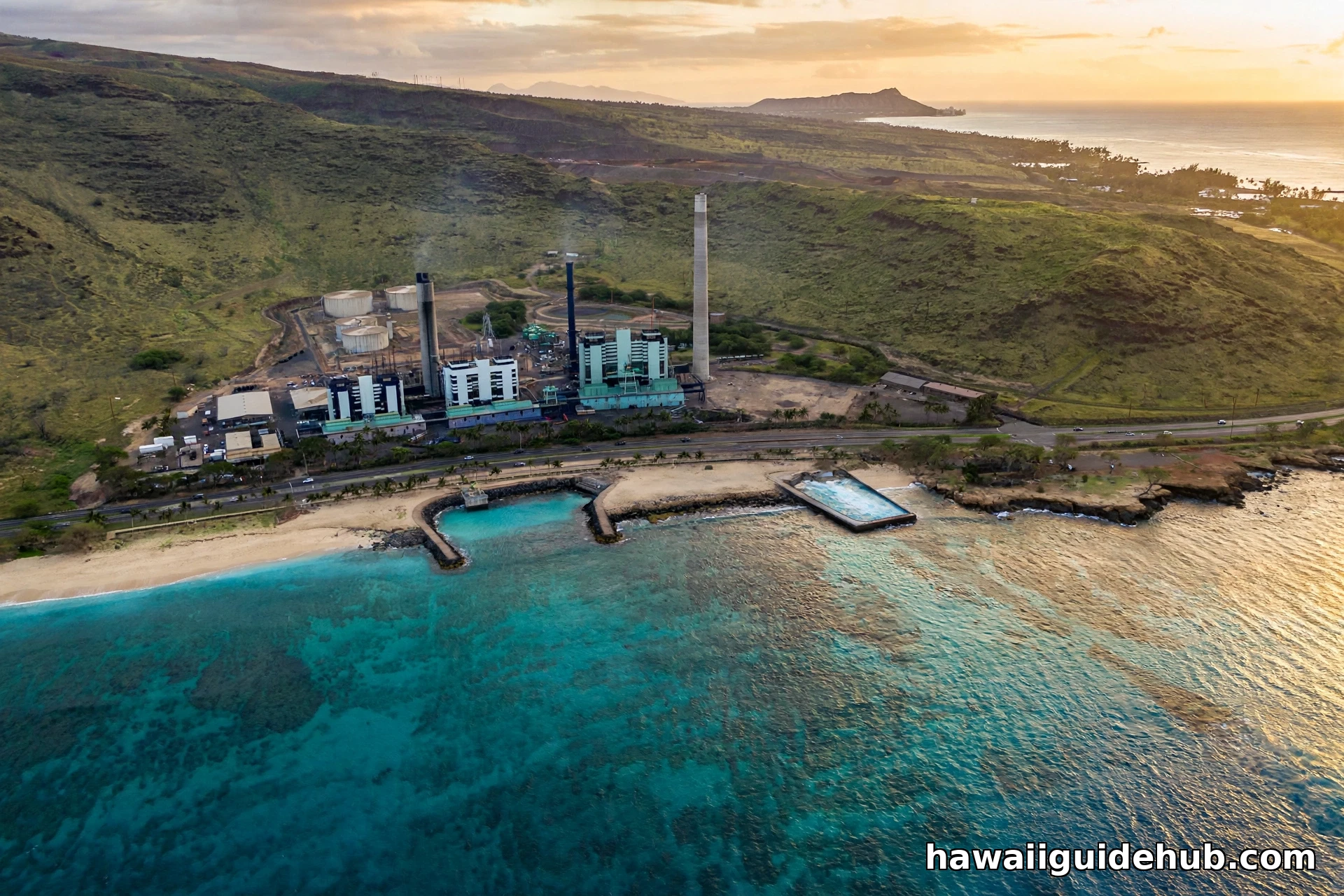
Tracks Beach is the stretch just north of the park, named for the old railroad tracks that once ran along the road there. Electric Beach is the nickname for the whole area, taken from the Hawaiian Electric Kahe power plant that sits on the mountain side of Farrington Highway directly across from the water. When locals say “Electric Beach,” they usually mean the snorkeling and diving reef offshore, centered on the power plant’s warm water outflow.
The beach itself is narrow, more of a launch point than a lounging spot. Nobody comes here for the sand. They come for what is under the surface.
The Warm Water Outflow: Why All the Fish Are Here
The Kahe plant is oil-fired and the largest generating station on Oahu. To cool its generators, it draws in seawater and pumps it back out warmer than it went in, through large pipes that run along the sea floor and discharge about 200 yards offshore. The plant can send up to 612 million gallons of this warmed water out in a single day.
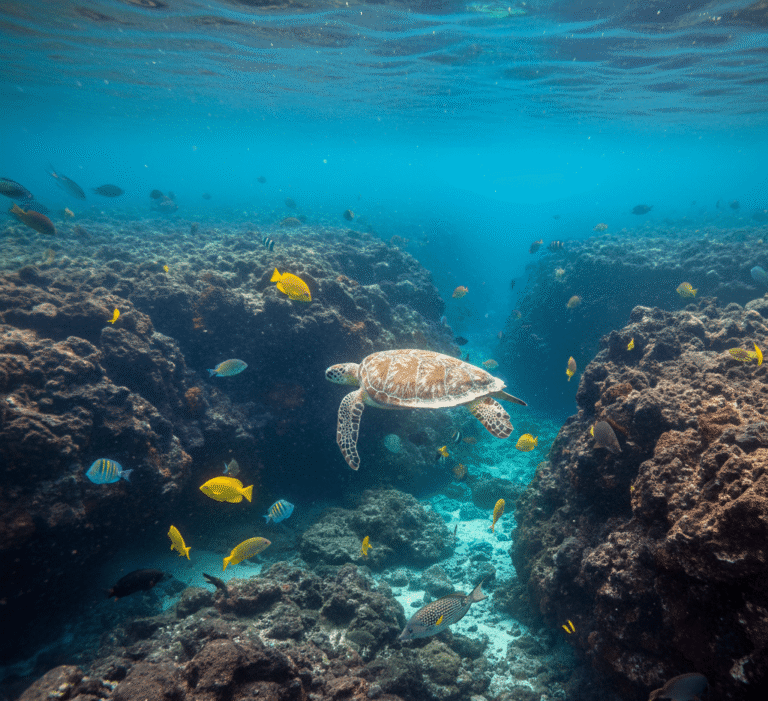
Warmer water does two things. First, it sits at a temperature that is very friendly to coral growth, and the rocks around the twin pipes have become a thriving artificial reef. Second, it acts like a dinner bell. The warm current carries nutrients and small organisms, and the food chain shows up in force: clouds of tropical fish gather around the pipe opening, green sea turtles ride the current straight out of it, and dolphins, eagle rays, and small reef sharks pass through regularly.
You can spot the outflow zone from shore on a calm day. The warm water rising to the surface gives the ocean a shimmering, almost boiling appearance over the pipes. That “bubbling” patch of water is exactly where you want to aim.
Snorkeling at Electric Beach
The snorkel route here is straightforward: enter from the small sandy area at Kahe Point Beach Park, swim past the shore break, and follow the reef out toward the pipes. The pipes run straight out from shore and are covered in coral and rock the entire way, so if you find yourself over empty sand, you have drifted off course. Stay over the reef and the pipes will lead you right to the outflow.
The swim out takes some effort. Depending on where you enter, the pipes end a few hundred feet from shore, in water about 30 feet deep. That distance, plus the current around the outflow, is why this spot is rated for intermediate to advanced snorkelers. Confident swimmers who pace themselves will be fine, but this is not a casual float-in-the-shallows kind of reef.
A good technique is to enter slightly upcurrent and let the water help carry you along the reef line, saving energy for the swim back. Many snorkelers swim out along one pipe and return along the other, which gives you two slightly different reef views in one session. Keep an eye on your position relative to shore the whole time. The current near the outflow can push you sideways, and it is easy to drift further than you intended while you are distracted by a turtle.
If the shore break looks rough on arrival, walk north along the beach toward the Tracks stretch. The entry can be calmer a few hundred yards up, though you will have a longer swim to the pipes. Either way, time your entry between wave sets, get past the break quickly, and never turn your back on the surf while you are still in the shallows.
Once you arrive, the payoff is immediate. Schools of fish stack up around the pipe opening in numbers you do not see at most Oahu snorkel spots. Turtles are regulars, sometimes several at once, cruising the warm current. Eagle rays glide past on the deeper edge. If you are lucky, a pod of dolphins moves through. Visibility is often excellent here, 30 to 40 feet on a good day, because the west side of the island gets less runoff than the windward coast.
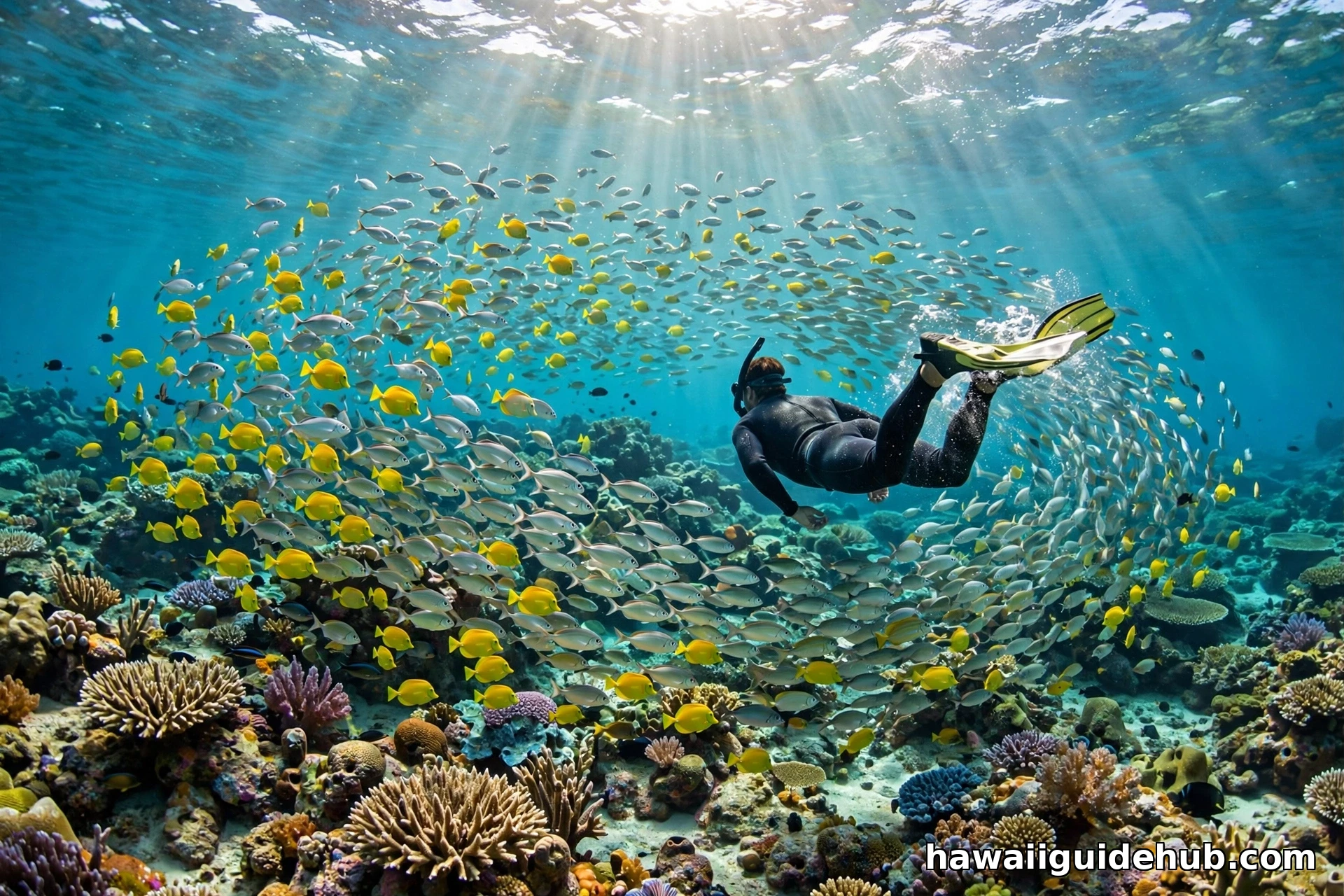
If you are comparing snorkel destinations, Shark’s Cove on the North Shore offers calmer, more beginner-friendly conditions in summer, while Electric Beach rewards stronger swimmers with bigger marine life and fewer crowds.
Scuba Diving from Shore
Electric Beach is one of the best shore dives on Oahu, and many divers rate it the best on the island. The same pipes that guide snorkelers become a proper dive profile: follow the artificial reef out to the discharge at around 30 feet, then work the area around the opening where the biggest fish aggregate.
Dive shops on the west side run guided shore dives here, which is the smart move if you have not dived the site before. A guide knows the entry timing through the shore break, the current behavior around the outflow, and the spots where turtles and rays tend to gather. If you are diving independently, standard shore diving discipline applies: check conditions with a local shop first, dive with a buddy, and carry a surface marker.
There is also a bit of local lore under the surface. Divers talk about an underwater Buddha statue somewhere in the area, a fun navigation target once you know the reef. Ask around at the dive shops; the regulars know where it sits.
Exploring the Wider Area: Tracks Beach and Beyond
The park is only the southern anchor of a longer stretch of coast worth knowing. Tracks Beach, immediately north of Kahe Point, is where the old Oahu Railway roadbed ran, and the name stuck. The shoreline here is rockier, with tide pools at low water and a wilder feel than the park. Shore anglers work the points, and on calm days snorkelers enter from the small coves along this stretch too.
Further north, the coast opens into the long sandy run toward Nanakuli and beyond. This is the leeward coast at its most local: few tourists, strong community roots, and a coastline that locals know intimately. If you drive the whole Farrington Highway run, you will pass through a side of Oahu that feels a world away from Waikiki, which is exactly why the snorkeling here still feels like a discovery.
One thing to keep in mind along the entire west side: conditions change fast. Trade winds build through the day, and what was glassy at 8 AM can be choppy by noon. Plan your water time for the morning, and save the driving and exploring for the afternoon.
What You Will See Underwater
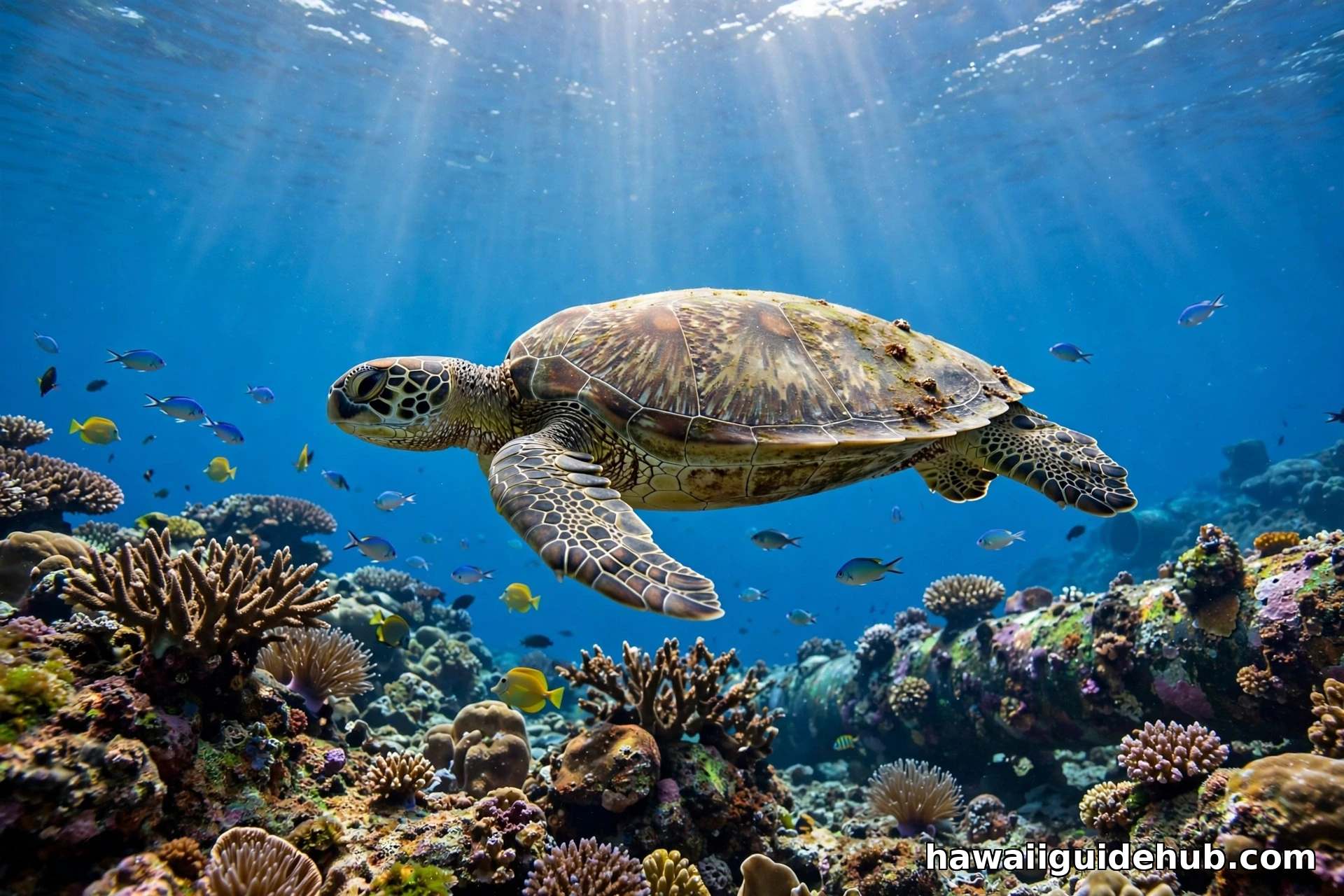
The species list here reads like a greatest-hits of Hawaii’s marine life. Expect large schools of reef fish, including snapper, surgeonfish, and parrotfish, plus trumpetfish drifting over the coral. Green sea turtles (honu) are near-guaranteed on a good day, often riding the warm current out of the pipe itself.
Spotted eagle rays cruise the deeper sand channels. Whitetip reef sharks rest on the bottom near the pipe output; they are shy and not a concern for snorkelers and divers who keep their distance. Dolphins pass through the area regularly, and during whale season you can sometimes hear humpbacks singing underwater, which is an experience you do not forget.
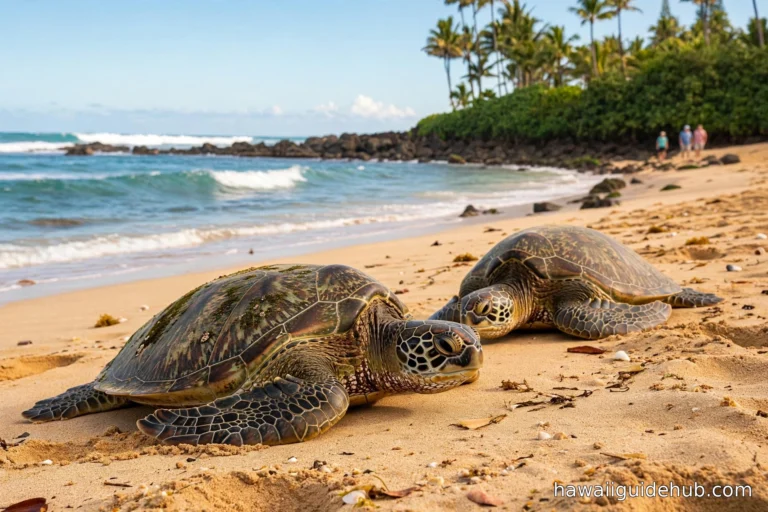
Remember the rule with turtles: look, do not touch. Green sea turtles are protected, and federal law requires keeping your distance. Our sea turtle etiquette guide covers exactly how to behave around honu so the encounter stays safe for both of you.
Safety: The Honest Version
Electric Beach is not a beginner spot, and you should treat it with respect. The shore break at the entry can be rough, and there is a real current around the outflow, especially in winter when the swells come up. Snorkelers report that the swim back can feel like an endless pool on choppy days. Wear fins, and if you are not a strong swimmer, wear a flotation vest or skip the long swim to the pipes and stay closer in.
A few specific cautions:
Do not swim down in front of the pipes. The water coming out of the discharge is turbulent and powerful. It will knock you around or push you out to sea. Enjoy the fish from the side, not from directly in the outflow.
Check conditions before you go. Winter swells can make the entry and the whole site rough. Call a west side dive shop or check surf reports for the leeward coast before driving out. If the waves are up, pick another day.
Never snorkel or dive alone. This is true everywhere, but especially at a site with currents and a long swim out.
Ocean Safety Tower 40 stands at Kahe Point Beach Park, which adds a layer of reassurance, but lifeguard coverage does not change the fact that the site demands experience. If you want a gentler introduction to Oahu’s underwater world, start with the calm lagoons and work your way up to Electric Beach.
Facilities and Practical Details
Kahe Point Beach Park is a city park, open daily from 6:00 AM to 10:00 PM, and entry is free. The facilities are basic but useful: a parking lot, restrooms, outdoor showers, and a lifeguard tower. There is limited shade and no food for sale at the park, so bring water and snacks.
One serious warning: the parking lot has a well-known break-in problem. Do not leave anything valuable in your car, and do not leave bags visible. Take only what you need, lock up, and keep your keys on you in the water in a waterproof case. This is the single most common complaint about Electric Beach, and it is entirely avoidable with a little discipline.
The park can feel a little rough around the edges compared to the manicured resort beaches nearby. That is part of its character. It is a locals’ spot, free, unpretentious, and all about the water.
Getting There
Electric Beach sits on Oahu’s southwest coast, about 45 minutes from Waikiki by car. Take the H1 west until it ends, then continue on Farrington Highway (Highway 93) north past Ko Olina. The park is on the ocean side of the highway, just past the Kahe power plant, which you cannot miss. Look for the beach park signs and the lifeguard tower.
The drive from Honolulu is straightforward, and the coastal scenery along Farrington Highway is a bonus. If you are staying at Ko Olina, it is only about five minutes north. For a broader look at planning your island days, see our Oahu island guide and our roundup of outdoor adventures in Hawaii.
When to Visit
Conditions matter more than the calendar here, but some patterns hold. Summer generally brings calmer water and easier entries, which is why many snorkelers prefer May through September. Winter can bring bigger swells to the west side, and when the surf is up, the site gets rough and the dive shops will tell you to stay out.
Mornings are the best bet for any season. The wind is usually lighter, the water is clearer, and the marine life is most active. Arrive early and you will also have an easier time with parking. Weekdays are quieter than weekends.
Watch: Snorkeling at Electric Beach
Electric Beach is the rare snorkel spot where the attraction is not just the reef but the reason for the reef. A power plant’s cooling water created an accidental marine sanctuary, and the fish, turtles, and rays figured it out long before the guidebooks did. Go prepared, respect the current, and you will see why divers call it the best shore dive on the island.