Can You Surf in Hawaii? The Complete Beginner-to-Pro Guide

Yes, you can surf in Hawaii: this is where surfing was born. The Hawaiians called it heʻe nalu, wave sliding, and practiced it for centuries before the world knew the word “surf.” Today Hawaii offers a wave for every level: the gentlest beginner rollers on Earth at Waikiki, and the heaviest big-wave arena on the planet at Pipeline. Whether you have never touched a board or you charge 20-foot faces, Hawaii has your wave. This guide covers where, when, and how.
This page covers the beginner spots by island, the seasons, the North Shore for advanced surfers, lessons and costs, surf etiquette, safety, and FAQs. Everything about surfing in Hawaii is on this one page.
The Short Answer
Yes. Hawaii is the birthplace of surfing and the best place on Earth to learn: warm water year-round (76-81°F), gentle beginner waves at Waikiki and other south-shore spots, and surf schools on every island. Advanced surfers get the North Shore’s legendary winter waves: Pipeline, Sunset, Waimea. Summer (May-Sep) is beginner season on the south shores; winter (Nov-Mar) is big-wave season on the north shores.
Where to Learn: Beginner Spots by Island
| Island | Beginner spot | Why it works |
| Oahu | Waikiki (Canoes) | Long gentle rollers; surf schools on the sand |
| Maui | Launiupoko Beach Park | Mellow reef break; calm and uncrowded |
| Kauai | Poipu Beach | Sandy bottom; small consistent waves |
| Big Island | Kahaluʻu Beach Park | Gentle waves; lifeguarded; rentals nearby |
Waikiki: The Birthplace of Your Surfing
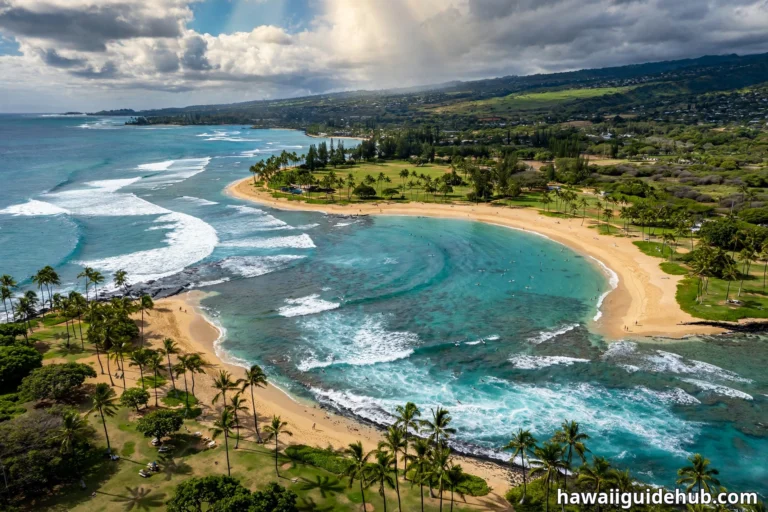
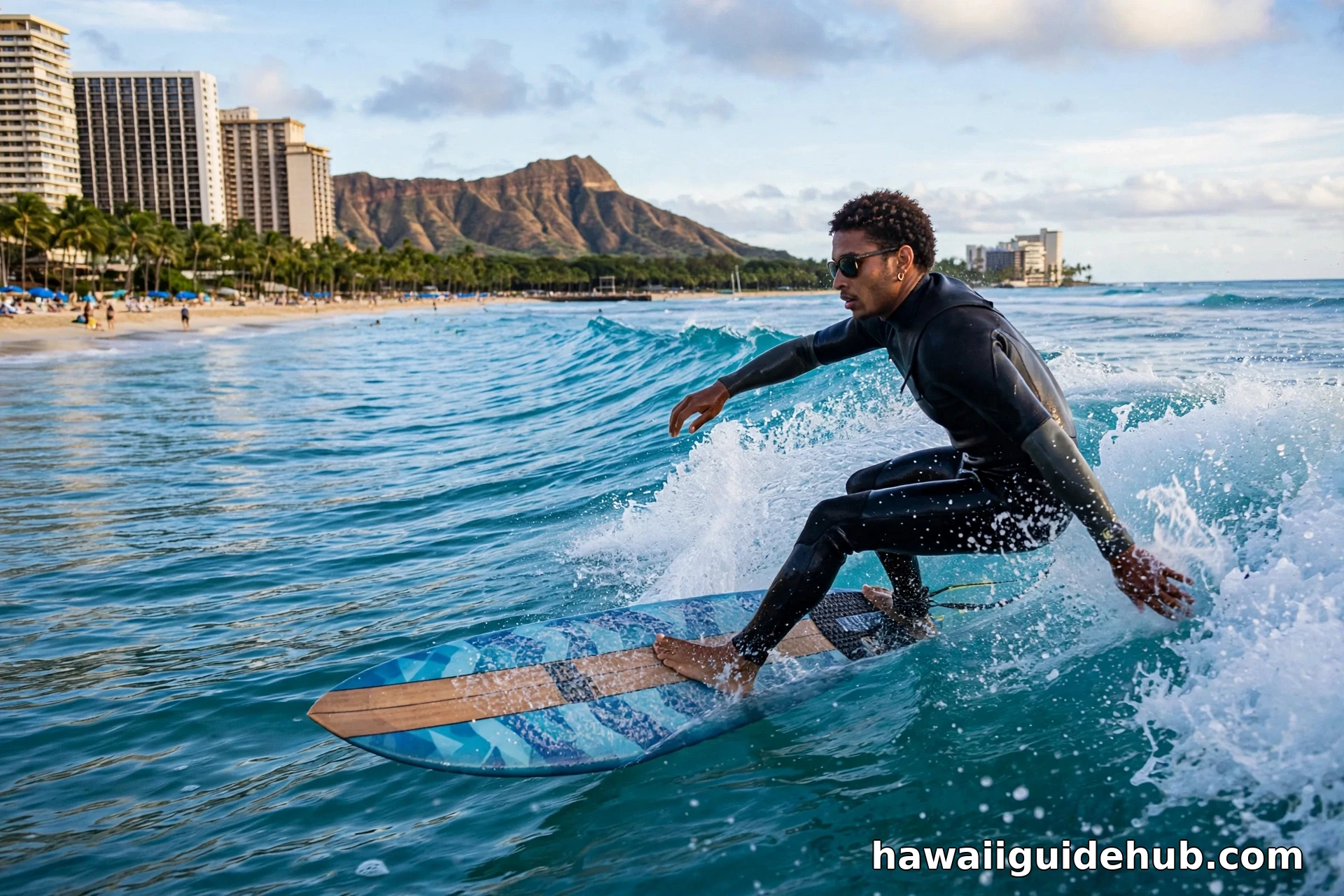
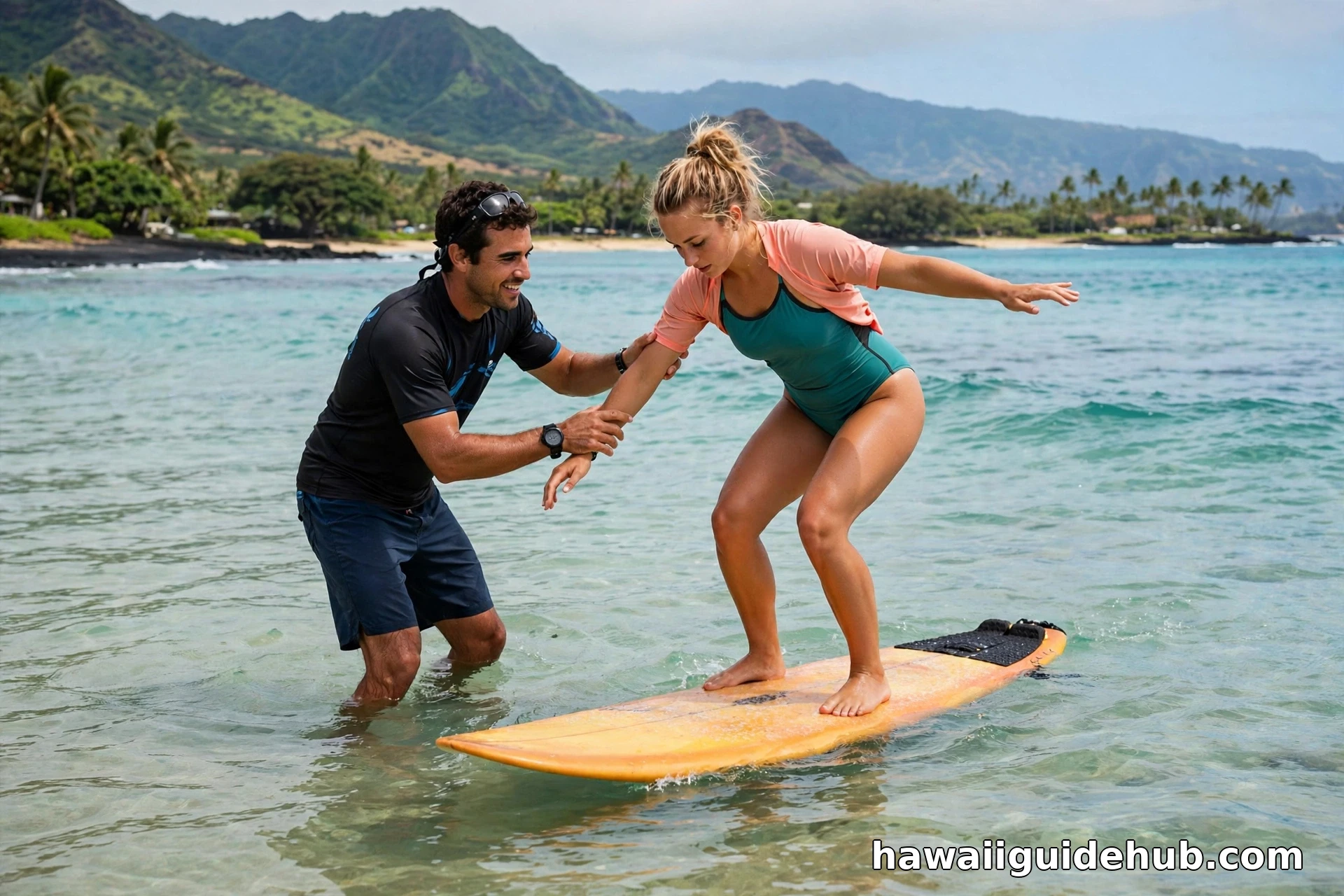
Waikiki is where most of the world learns to surf, and for good reason. The waves at breaks like Canoes are long, slow, rolling whitewater: perfect for standing up on your first try. The water is warm, the bottom is forgiving, and a dozen surf schools line the beach. Duke Kahanamoku, the father of modern surfing, rode these same waves. A two-hour group lesson runs roughly $75-100; private lessons $100-150. You will stand up. Almost everyone does.
The Seasons: When to Surf What
Hawaii’s surf runs on two engines. Winter (November-March): North Pacific storms send massive swells to the north and west shores. This is big-wave season: Pipeline, Waimea, Sunset. Beginners should stay away from these coasts in winter. Summer (May-September): Southern Hemisphere storms send gentle swells to the south shores. This is beginner season: Waikiki, Kihei, Poipu at their best. Spring and fall are the transitions: mixed conditions, fewer crowds. Match your trip to your level, not the other way around.
The North Shore: For Watching (and Pros)
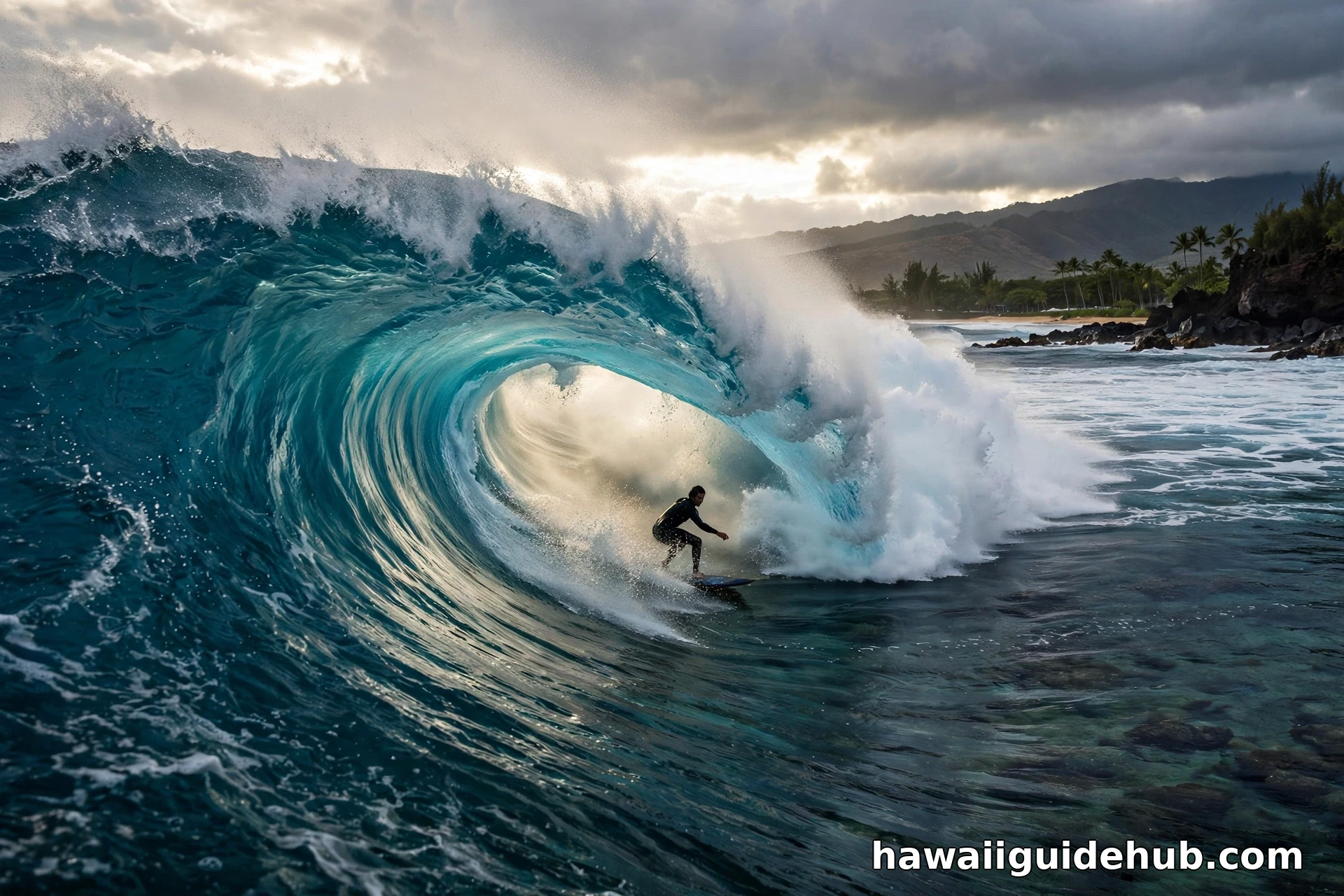
Oahu’s North Shore, the “Seven-Mile Miracle,” is surfing’s proving ground: Pipeline, Sunset Beach, Waimea Bay. In winter, waves reach 20-30 feet, breaking over shallow lava reef with terrifying power. This is for the world’s best surfers only: people die here. For everyone else, it is the greatest surf spectacle on Earth: go in winter, watch from the beach, and witness the Eddie Aikau or the Triple Crown if the timing aligns. In summer, the North Shore goes flat and becomes a snorkeling paradise.
Lessons: What to Expect
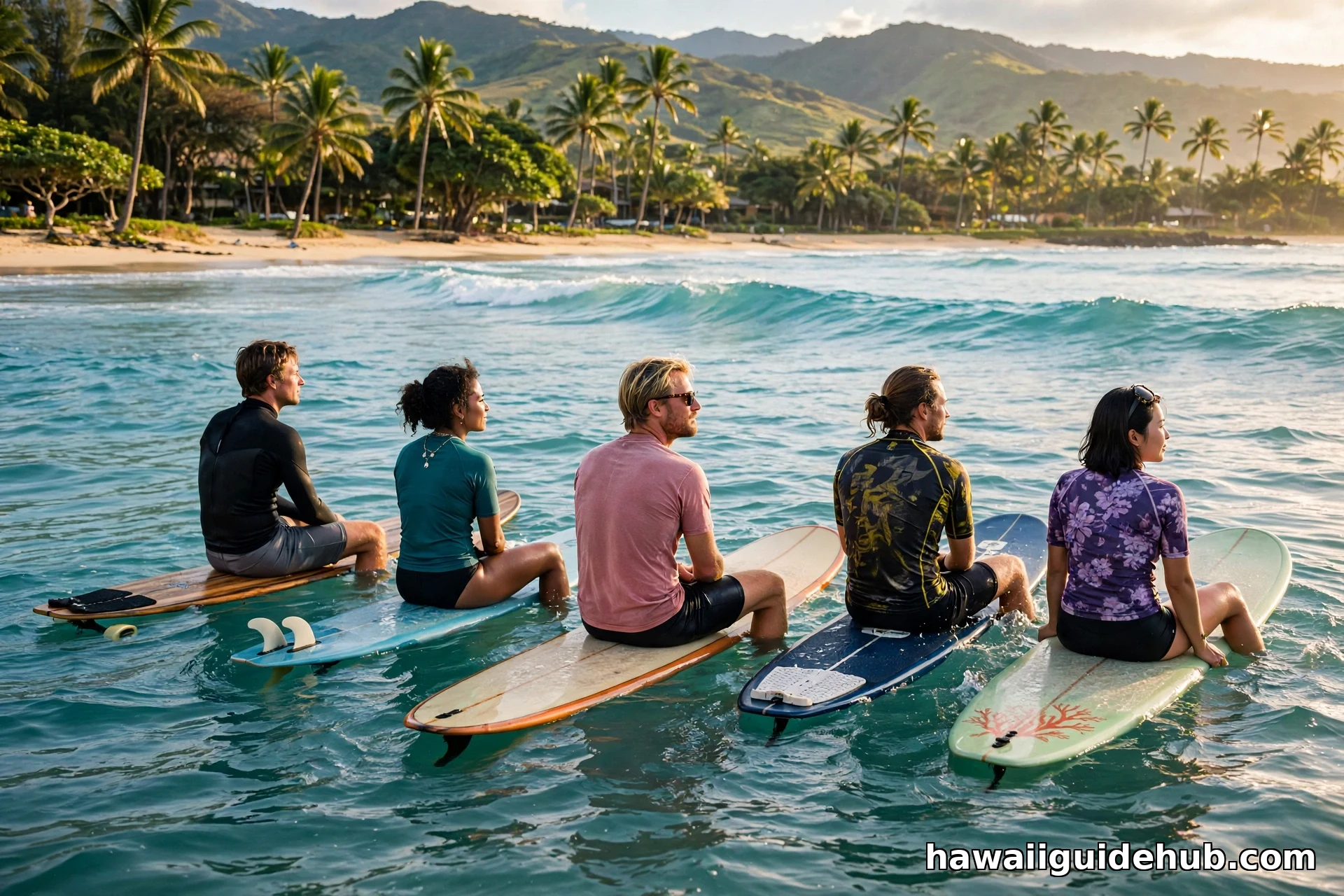
Book a lesson for your first day: it is the fastest way to learn and the safest. Group lessons (4-6 students) are cheapest; semi-private and private cost more but progress faster. Good schools provide the board, rash guard, and reef shoes. You need to be able to swim. Kids as young as 5-6 can learn with private instructors. The standard lesson: 15 minutes of beach instruction, then an hour in the water with the instructor pushing you into waves. By the end, you will be riding whitewater to the beach, grinning.
Surf Etiquette: The Unwritten Rules
Hawaii invented surf etiquette, and it enforces it. The rules: the surfer closest to the peak has the right of way; do not “drop in” on someone’s wave. Do not paddle through the lineup; go around. Wait your turn. Respect the locals: they were here first, and the lineup hierarchy is real. Do not ditch your board. Apologize for mistakes. At heavy spots like Pipeline, the rules are life-and-death serious. At Waikiki, they are relaxed but still observed. When in doubt, watch for 20 minutes before paddling out.
Safety: The Ocean Is Serious
Surfing’s dangers are real: shallow reef, strong currents, big surf, and other surfers’ boards. Beginners: stay at beginner spots, stay with your lesson group, and never surf alone. Intermediates: know your limits; if the surf looks too big, it is. Everyone: wear reef shoes, use a leash, and learn to fall flat, not headfirst. Check the surf forecast before going out. The ocean does not care about your vacation plans. Respect it, and it will give you the ride of your life.
For more ocean adventures, see Hanalei Beach: Kauai’s most beautiful beach, top 5 Kauai beaches for swimming, and Hawaii weather in December.
Heʻe Nalu: The Ancient Sport
Long before “surfing” existed, Hawaiians practiced heʻe nalu: wave sliding. It was more than recreation: it was religion, social order, and art. Chiefs rode the best breaks on the longest boards (the olo, up to 18 feet); commoners rode shorter alaia boards. Surfing had its gods, its prayers, its board-shaping rituals. Missionaries suppressed it in the 19th century, but it never died: the beaches of Waikiki kept the tradition alive until Duke Kahanamoku carried it to the world. Every wave you ride in Hawaii is a continuation.
Duke Kahanamoku: The Legend
Duke Paoa Kahanamoku (1890-1968) was Hawaii’s greatest waterman: Olympic swimming champion, surfer, and the man who introduced surfing to Australia, California, and the world. His statue stands at Waikiki, lei-draped daily by admirers. Duke rode a 16-foot redwood board and made it look effortless. He also saved eight lives in a 1925 shipwreck rescue at Corona del Mar. When you surf Waikiki, you surf Duke’s beach. Touch the statue’s lei for luck: everyone does.
Surfing by Island: The Full Breakdown
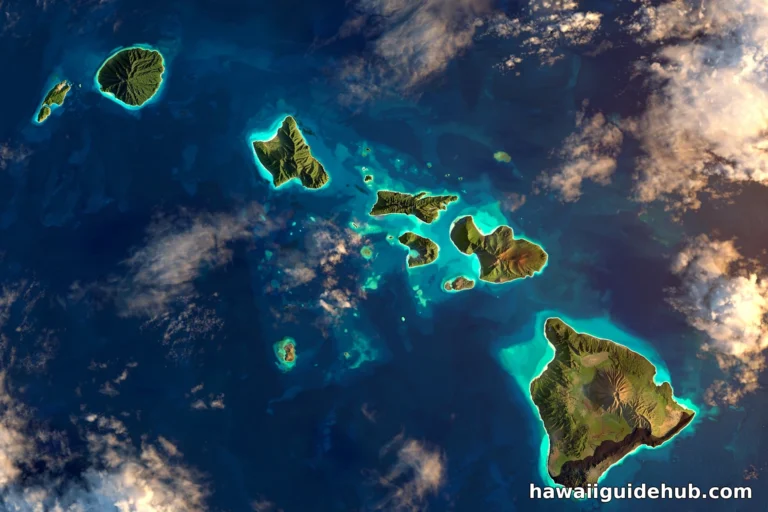
Oahu: the complete package. Waikiki for beginners, the North Shore for experts, Diamond Head and Ala Moana for intermediates. Maui: Honolua Bay (experts, winter), Launiupoko and Kihei (beginners), Hoʻokipa (windsurfing capital). Kauai: Hanalei Bay (all levels, seasonal), Poipu (beginners). Big Island: Kahaluʻu and Pine Trees (beginners), Honoliʻi (intermediates and up). Each island has its own surf culture: Oahu is the mecca, Maui the progressive lab, Kauai the soulful escape, the Big Island the frontier.
The Eddie Aikau: The Super Bowl of Surfing
The Eddie Aikau Big Wave Invitational at Waimea Bay runs only when the surf tops 20 feet: it has run just a handful of times in decades. Named for Eddie Aikau, the legendary lifeguard who died saving others, its motto is “Eddie would go.” When the Eddie runs, the whole surf world stops. If you are on Oahu when it is called, drop everything and go: it is the rarest event in sports. The bay will be packed; the waves will be enormous; the memory will be permanent.
Surfing with Kids
Hawaii is the best place on Earth to teach kids to surf. Private lessons for young children pair them one-on-one with an instructor; many schools take kids as young as 5. Waikiki’s gentle whitewater is forgiving, the water is warm, and the instructors are patient professionals. Tandem surfing (riding with the instructor) is an option for the very young. The family that learns together at Waikiki has a story for life: the photo of your six-year-old standing up will outlive every other souvenir.
Beyond the Surfboard
Surfing is just the start. Stand-up paddleboarding (SUP) is huge in Hawaii’s calm bays. Foil surfing lets riders fly above the water. Outrigger canoe surfing at Waikiki is the traditional thrill: six people, one canoe, one wave. Bodyboarding and bodysurfing need no lesson at all. Windsurfing and kitesurfing rule Maui’s north shore. The ocean offers a dozen ways to ride; the surfboard is the classic, but the Hawaiians would approve of all of them.
What to Bring
For a lesson: just yourself and swimwear; the school provides the rest. For independent surfing: board (rentals everywhere, $20-40/day), leash, reef-safe sunscreen, rash guard, and reef shoes. Bring water and snacks: surfing is exhausting. Leave valuables in the car trunk or with a non-surfing friend: beach theft is real. And bring humility: the ocean is the teacher, and the first lesson is always respect.
Reading the Forecast
Learn the basics of the surf forecast: swell height, period, and direction. Long-period swells (14+ seconds) mean powerful, organized waves; short-period means choppy windswell. North swells hit the north shores; south swells hit the south. The forecast sites give surf heights in “Hawaiian scale” (roughly half the face height): a “4-foot” Hawaiian day is an 8-foot face. When the forecast says the North Shore is 10 feet Hawaiian, that is 20-foot faces: stay on the beach. Knowledge is safety.
Localism: The Honest Talk
Hawaiian surf localism is real and rooted in real history: the waves are a cultural heritage, and crowds of visitors can feel like an invasion. The solution is respect, not fear. Do not paddle out at a heavy local spot as a visitor. At beginner breaks, follow the etiquette, wait your turn, smile, and thank people. Take a lesson from a local instructor: it is the fastest integration. The vast majority of Hawaiian surfers are welcoming to respectful visitors. Be the visitor they welcome.
Your First Wave
Here is what will happen. The instructor will push you into a rolling whitewater wave. You will pop up, wobble, and ride to the beach. It will last ten seconds and feel like flying. You will paddle back out immediately, because ten seconds was not enough. By the end of the lesson you will be hooked, and you will understand why the Hawaiians made this a religion. The first wave is free; the addiction costs the rest of your vacations.
The Boards: What You’ll Ride
Beginners ride foam longboards: 8 to 9 feet of stable, forgiving float. The schools use soft-tops that will not injure you (or others) when you fall. As you progress, you will graduate to hard-top longboards, then funboards, then shortboards. Do not rush the progression: the longboard is the most fun board in small waves, and Hawaii’s beginner waves are longboard waves. The Hawaiians rode 18-foot olo boards; your 9-foot foamie is the modern descendant. Ride it proudly.
Book the lesson for your first full day, not your last: you will want every remaining day to practice. Morning sessions have the cleanest conditions before the trades pick up. And when you catch that first wave, remember where you are: the birthplace of surfing, on a beach where Duke rode, in water the Hawaiians have surfed for a thousand years. You are not just learning a sport. You are joining a lineage.
Video: Surf Lessons at Waikiki
Learning to surf at Waikiki: what a lesson looks like.
Frequently Asked Questions
Can beginners surf in Hawaii?
Yes. Waikiki has some of the gentlest learning waves in the world, and every island has beginner spots.
What is the best time to surf in Hawaii?
Summer (May-Sep) for beginners on the south shores; winter (Nov-Mar) for advanced surfers on the north shores.
How much do surf lessons cost?
Group lessons run roughly $75-100 for two hours; private lessons $100-150 and up.
Do I need a wetsuit?
No. Water is 76-81°F year-round; boardshorts and a rash guard are enough.
Can I surf the North Shore?
In winter, only if you are an expert: the waves are deadly. In summer it is flat and swimmable.
Where did surfing originate?
Hawaii. The Hawaiians called it heʻe nalu and practiced it for centuries; Duke Kahanamoku popularized it worldwide.
Can you surf in Hawaii? The islands invented the sport, perfected the lesson, and kept the heaviest waves on Earth for the grand finale. Start at Waikiki, where the waves are gentle and the history is deep. End at the North Shore in winter, watching the pros ride what you now understand. Somewhere in between, you will catch a wave and understand why the Hawaiians called it the sport of kings.