Waikiki Beach: Oahu’s Most Famous Stretch of Sand, Explained

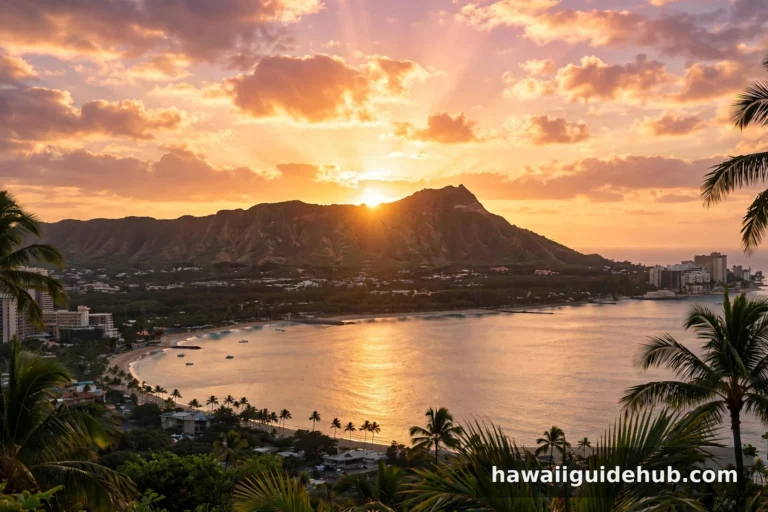
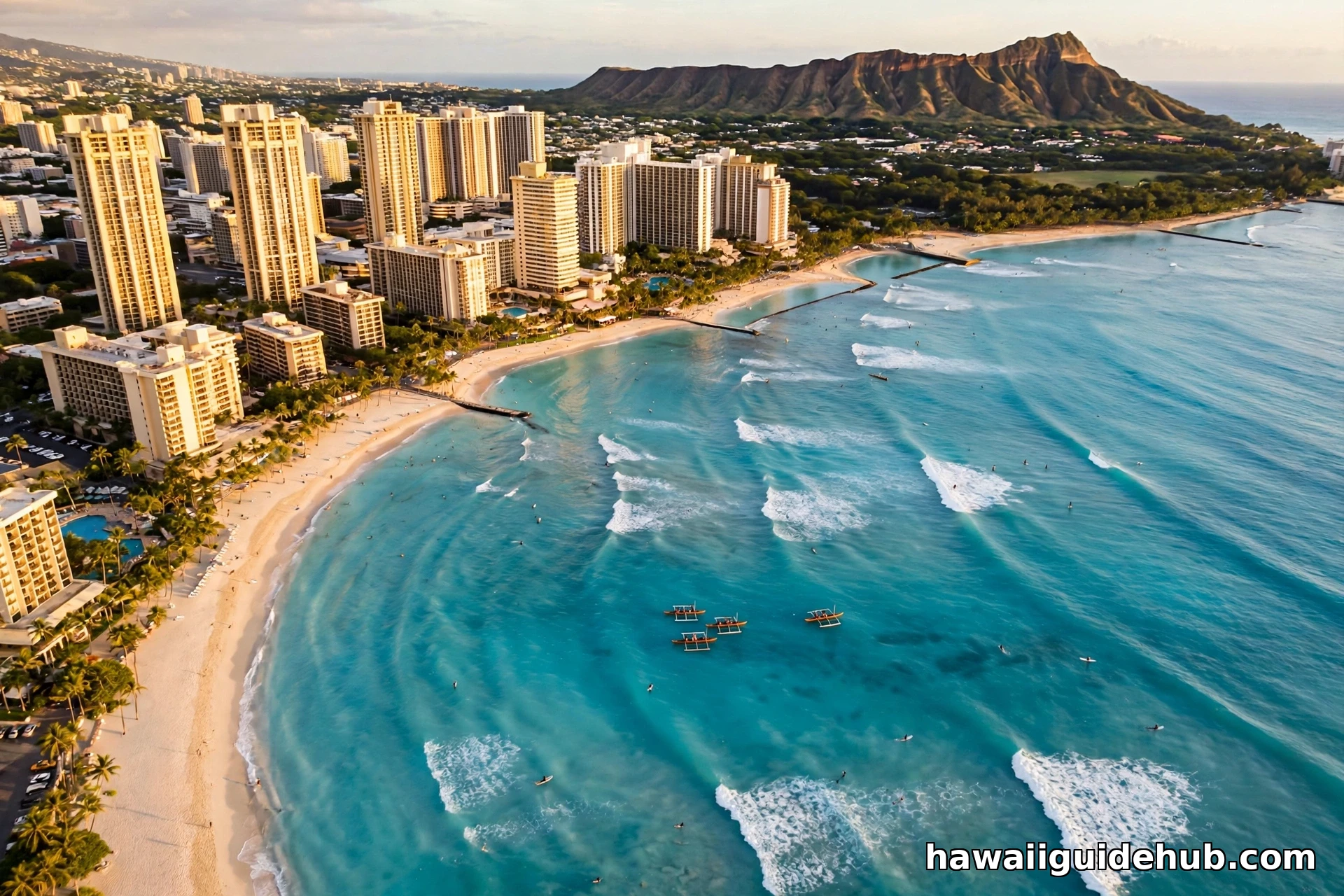
Few beaches on earth are as famous as Waikiki Beach, and few are as misunderstood. People arrive expecting one long postcard of sand and leave surprised to learn that “Waikiki Beach” is really eight separate beaches strung along two miles of Oahu’s south shore, each with its own personality. Some are calm and shallow, made for kids and first timers. Others face the rolling surf that made this the birthplace of modern surfing. All of them sit in the shadow of Diamond Head, with the high rises of Honolulu rising just behind the palms.
This is the complete guide to all of it: the eight beaches from west to east, how Waikiki went from royal retreat to the most famous beach in the Pacific, where to surf and swim, what to see within walking distance, and the practical details that make the difference between a good beach day and a great one.
What “Waikiki Beach” Actually Means
The name Waikiki comes from the Hawaiian Waikīkī, usually translated as “spouting water.” It refers to the freshwater springs and streams that once bubbled up through this coastal plain, feeding taro fields, fishponds, and wetlands long before the hotels arrived. The whole area sits between the Ala Wai Canal on the west and the volcanic cone of Diamond Head, known in Hawaiian as Lēʻahi, on the east.
Before 1950, the shoreline here was one continuous beach. Then came decades of seawalls, groins, piers, and hotel construction, which broke the coast into pieces. Today the family of beaches is still collectively called “Waikiki Beach,” but each section has its own name and character. From west to east they are: Fort DeRussy Beach, Duke Kahanamoku Beach, Halekulani Beach, Royal Hawaiian Beach, Kūhiō Beach, Kapiʻolani Beach, Queens Beach, and Kaimana Beach.
One thing worth knowing upfront: nearly all of the sand you stand on was put there by people. Since 1951, roughly 2.8 million cubic feet of sand has been pumped or shipped in to fight erosion, some of it famously barged over from Manhattan Beach, California, in the 1920s and 1930s. The shoreline is heavily managed, and it shows in the best way: wide, clean, swimmable sand where nature alone would have left rock and seawall.
A Short History of the World’s Most Famous Beach
Waikiki was not always a tourist town. For centuries it was a retreat for Hawaiian royalty, the aliʻi, who kept residences here and surfed the long rolling waves on massive wooden olo boards. The surf break at Waikiki was considered the finest on the island, and riding waves was woven into Hawaiian culture as the “sport of kings.”
The first beach resorts appeared in the 1880s and 1890s, small guest houses catering to wealthy travelers. But the Waikiki we know was really born in the 1920s, when the Ala Wai Canal was dredged between 1921 and 1928 to drain the mosquito filled wetlands behind the beach. The reclaimed land became buildable, the hotels followed, and the beach entered its golden age.
The figure who carried Waikiki’s name around the world was Duke Paoa Kahanamoku. Born in Honolulu in 1890 and raised surfing these very waves, Duke won five Olympic medals in swimming across the 1912, 1920, and 1924 Games, then used his fame to introduce surfing to Australia, California, and beyond. He and the original Waikiki Beachboys, the watermen who taught visitors to surf and paddle canoe, turned the beach into a global symbol. The nine foot bronze statue of Duke near Kūhiō Beach, installed in 1990 for the centennial of his birth, is almost always draped in fresh leis.
The Eight Beaches, West to East
Fort DeRussy Beach
The westernmost stretch fronts Fort DeRussy Beach Park, one of the only real green spaces in Waikiki. The park has shaded lawns, picnic tables, and the U.S. Army Museum of Hawaiʻi, housed in a former coastal artillery battery. The beach itself is wide and usually less crowded than the central sections, with calm water that suits casual swimming. It is a good pick if you want sand without the scene.
Duke Kahanamoku Beach and Lagoon
Named for the man himself, this section fronts the Hilton Hawaiian Village. The manmade lagoon next to it is sheltered and shallow, popular with families and stand up paddleboarders. The beach here is a hub for water sports rentals, catamaran sails, and outrigger canoe rides.
Halekulani Beach
A short, quiet stretch in front of the Halekulani hotel, known for its house without a key and legendary sunset views. Gray’s Beach, the tiny sliver nearby, can nearly disappear at high tide, so check the water level before settling in.
Royal Hawaiian Beach
This is the postcard: the pink Royal Hawaiian Hotel, opened in 1927, rising behind the sand with Diamond Head framing the view. It is also the busiest section, packed with hotel guests, surf schools, and beach vendors. The surf here breaks in long, gentle rollers that are ideal for first time surfers, and the lineup of longboards is a Waikiki signature.
Kūhiō Beach
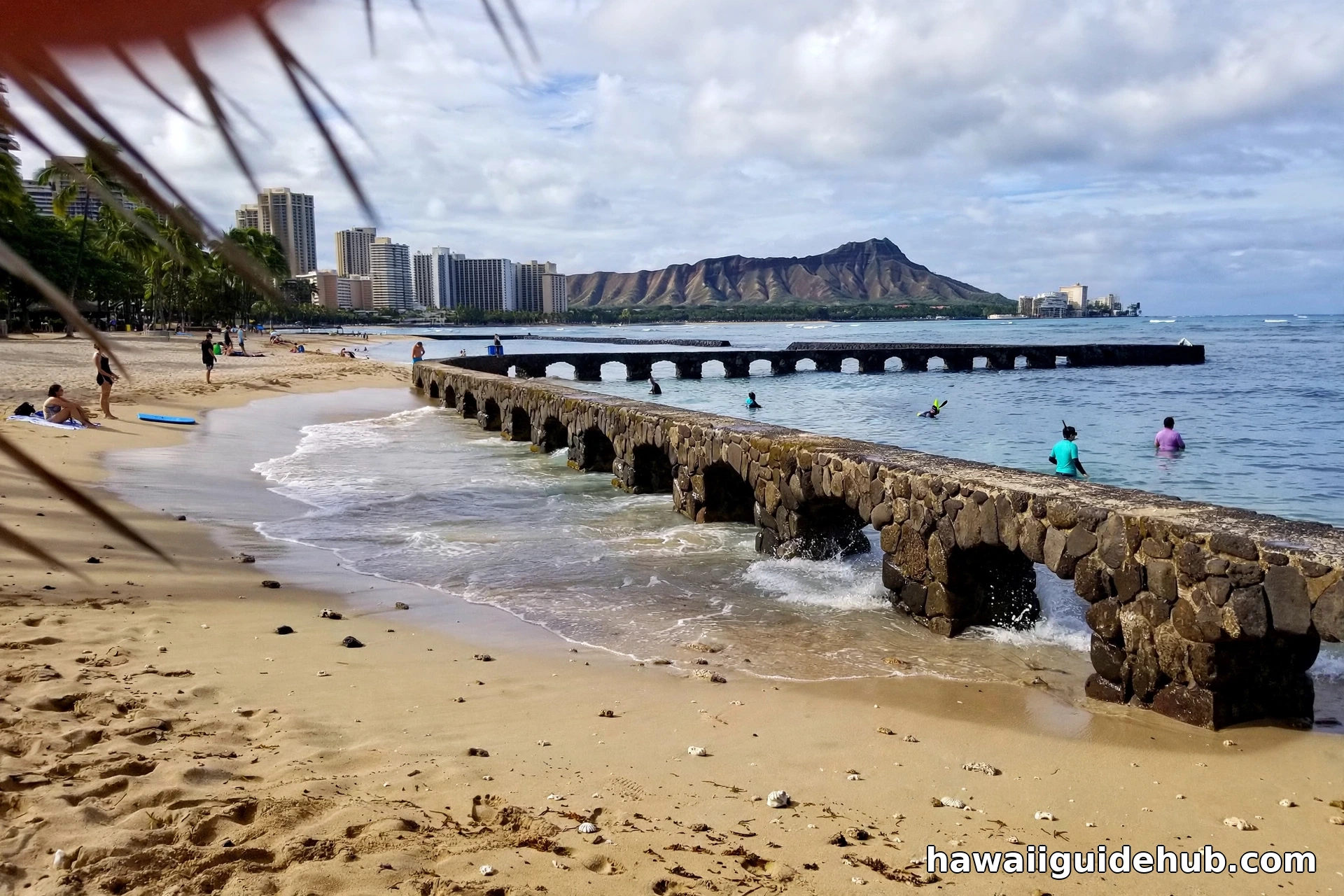
Named for Prince Jonah Kūhiō Kalanianaʻole, this is the sheltered heart of Waikiki. Two concrete walls enclose a calm swimming area nicknamed “the Ponds,” making it the best section for small children and nervous swimmers. The beach park here hosts free hula performances and a torch lighting ceremony on Tuesday, Thursday, and Saturday evenings, one of the best free shows on the island. The Duke statue stands just off the sidewalk at the park’s edge.
Queens Beach
East of Kūhiō, Queens draws bodyboarders and bodysurfers to its shore break, known locally as “the Wall.” It is livelier in the water and a bit more local in feel than the hotel fronted sections.
Kapiʻolani Beach Park
Fronting Kapiʻolani Park, this stretch is quieter, with a wide promenade popular with joggers and morning walkers. In summer it hosts outdoor movie nights and community events on the grass.
Kaimana Beach
The locals’ favorite at the far eastern end, tucked below Diamond Head near the War Memorial Natatorium. Kaimana, also called Sans Souci, has calm water, a low key crowd, and some of the best sunrise views on the south shore. The historic New Otani Kaimana Beach Hotel sits right on the sand.
Surfing at Waikiki
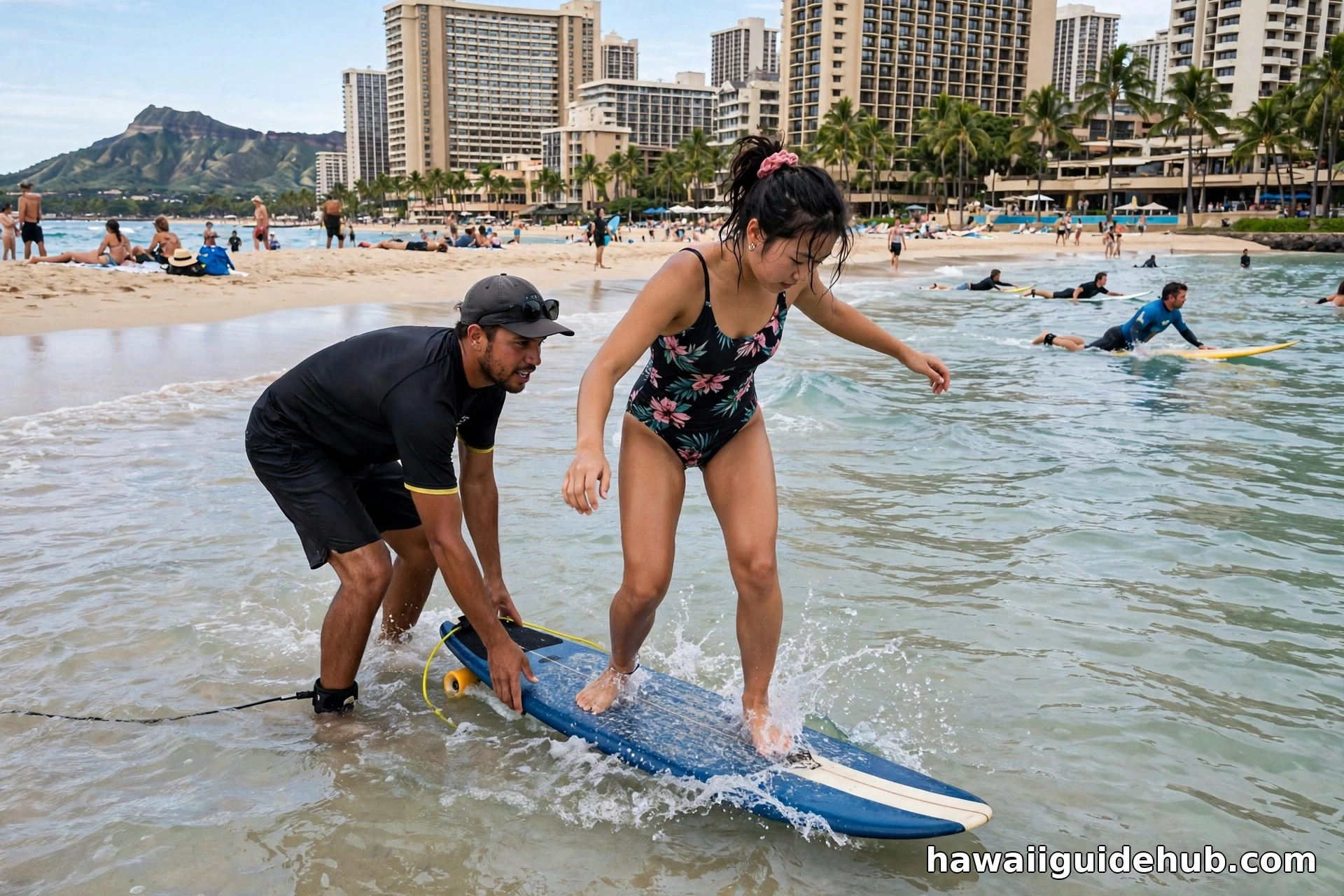
Waikiki’s surf is famous for one thing above all: long, slow, rolling waves that peel gently toward shore over a sandy and reef patched bottom. There are no heavy barrels here, no sharp reef slabs, no strong currents pulling you out to sea. It is the single best place in Hawaii to learn to surf, and the lineup shows it, with dozens of longboards gliding in at any given moment.
The traditional way to ride these waves is the way the Beachboys have taught it for a century: on a longboard, catching the whitewater or the soft shoulder, standing up in waist deep water. Surf schools line every section of the beach, and a one hour group lesson typically runs under a hundred dollars with board and rash guard included. Private lessons cost more but get you standing faster.
Experienced surfers should temper expectations. Waikiki is not a performance wave. The breaks here, with names like Canoes, Queens, and Publics, are about glide and style, not power. But on a clean south swell, a longboard ride at Canoes that runs for hundreds of yards is one of surfing’s great simple pleasures. If you want bigger waves, the North Shore is the winter answer, but that is a different ocean entirely.
Swimming, Snorkeling, and Other Ways In the Water
For pure swimming, head to the sheltered spots: the Kūhiō Beach ponds, the Duke Kahanamoku Lagoon, or Kaimana Beach at the east end. The water is warm year round, usually in the high 70s to low 80s Fahrenheit, and the sandy entries are gentle.
Snorkeling at Waikiki is modest. The nearshore reef has fish and the occasional turtle, but the visibility and marine life cannot compare to dedicated snorkel spots. If snorkeling is a priority, plan a separate outing rather than expecting much from the beach in front of your hotel. Outrigger canoe surfing, where a steersman paddles you out and catches a wave back in, is the signature Waikiki thrill and worth doing once. Catamaran sails, parasailing, and stand up paddleboarding round out the menu, all bookable from beachside vendors.
One safety note that applies everywhere on this coast: the bottom has scattered rocks and reef patches, and waves can push harder than they look on windy days. Swim near lifeguards, of which Waikiki has many, and watch for the occasional box jellyfish, which tend to arrive about a week after a full moon.
What to See Within Walking Distance
The beach is only half of Waikiki. The bronze Duke Kahanamoku statue near Kūhiō Beach is the essential photo stop. A few steps away, four large boulders known as the Wizard Stones of Kapaemahu mark a site of genuine ancient significance, said to hold the healing powers of four Tahitian visitors from centuries ago.
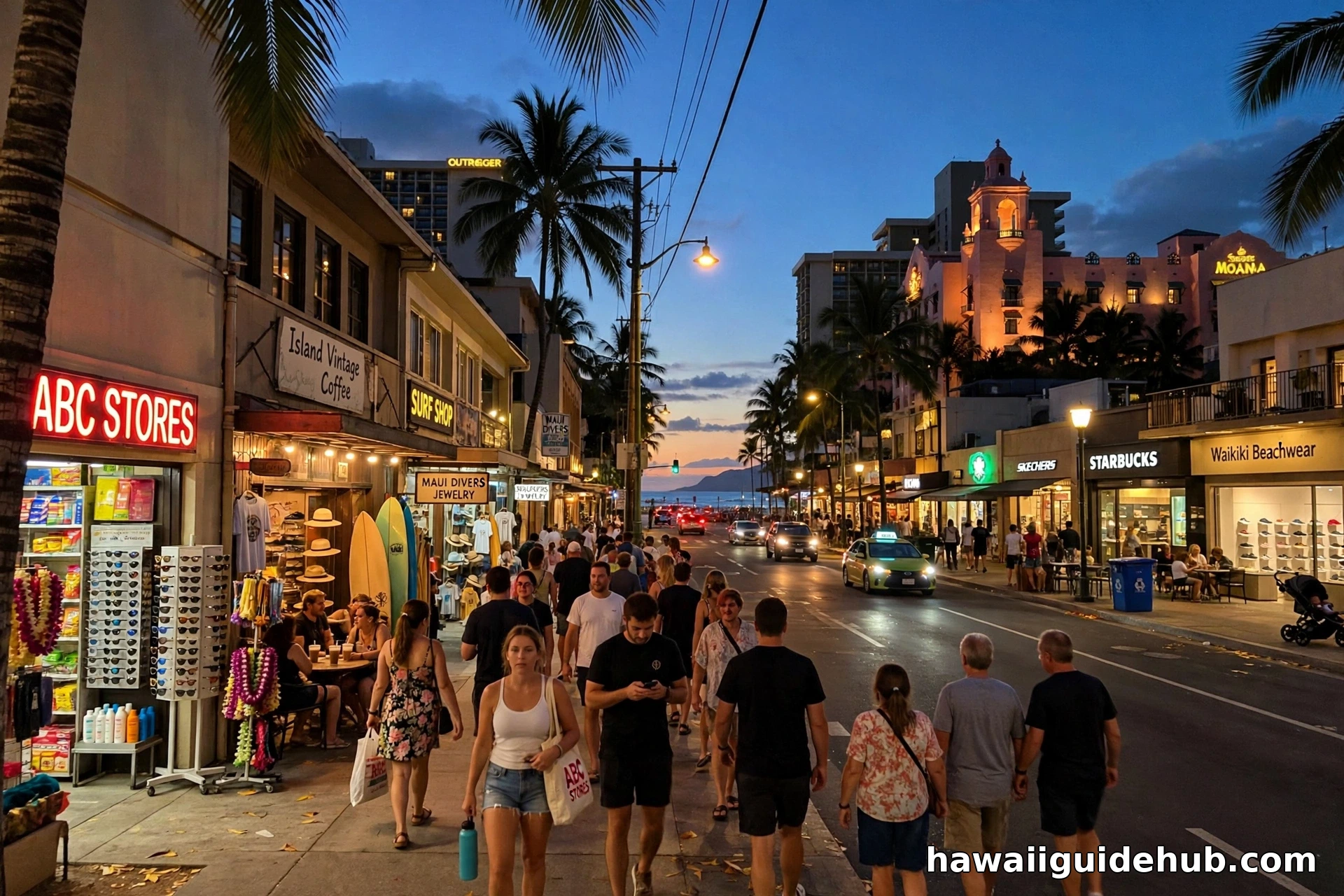
Kalākaua Avenue, the main drag one block inland, is Waikiki’s beating heart: designer shops and surf brands, ABC Stores on every corner, street performers, and a constant parade of people. The Royal Hawaiian Center and International Market Place are the two big open air shopping complexes. For a quieter escape, the Honolulu Zoo and Waikiki Aquarium sit at the Diamond Head end of Kapiʻolani Park, both easy half day outings from the sand.
Diamond Head itself looms over everything. The hike to the summit is short, steep, and enormously popular, best done early in the morning before the heat and crowds build. If you are planning a broader island trip, our Oahu island guide puts Waikiki in context with everything else the island offers.
Practical Tips for a Waikiki Beach Day
Arrive early. By midmorning the central sections fill up, and the best sand in front of the Royal Hawaiian goes fast. Morning also brings the calmest water and the softest light for photos with Diamond Head.
Parking is the eternal Waikiki headache. Street parking is scarce and metered, hotel lots charge steep daily rates, and the public lots near the zoo fill early. If you are staying in Waikiki, walk. If you are driving in, budget extra time and money, or consider the bus, which runs the length of the district cheaply.
Bring reef safe sunscreen and more water than you think you need. There is almost no natural shade on the sand itself, and the tropical sun is strong even on hazy days. Rent chairs and umbrellas from beach vendors rather than hauling your own. And keep valuables minimal: use the hotel safe and bring only what fits in a small dry bag.
For first-time visitors, Waikiki is the easiest possible introduction to Hawaii: everything is walkable, the water is gentle, and help is always nearby. But it is also the most commercialized corner of the islands. If you want a taste of wilder Hawaii, pair a Waikiki base with day trips. Our guide to outdoor adventures in Hawaii covers the hikes, snorkel spots, and paddling trips that balance out the resort scene, and the hidden gems guide points to the quieter places most visitors miss.
Watch: A Walk Along Waikiki Beach
The Bottom Line on Waikiki Beach
Waikiki Beach is not Hawaii’s most beautiful beach, and it was never trying to be. It is something rarer: a beach that works for everyone at once. Toddlers splash in the sheltered ponds at Kūhiō while longboarders glide past the pink walls of the Royal Hawaiian. A hundred thousand people a day move through two miles of sand, and somehow the spirit of the place, the easy aloha the Beachboys have been selling since Duke’s day, survives intact. Come for the postcard, stay for the surf lesson, and leave understanding why this stretch of sand changed beach culture around the world.