Waipoʻo Falls Hike: The Canyon Trail to Kauaʻi’s 800-Foot Waterfall

There is a moment on the Canyon Trail when the forest opens and the ground simply falls away. One step you are under a green tunnel of tree ferns, the next you are standing at the rim of Waimea Canyon with 800 feet of waterfall dropping past red cliffs in front of you. That is the Waipoʻo Falls hike, and it earns its reputation as one of the best short hikes on Kauaʻi.
This guide covers everything you need to hike it well: the waterfall itself, the Canyon Trail route, how hard it really is, where to park, what the park fees cost, safety tips that matter, and what to bring. It is written as the single complete resource for this hike, so you do not need to piece it together from five different pages.
What Waipoʻo Falls Is
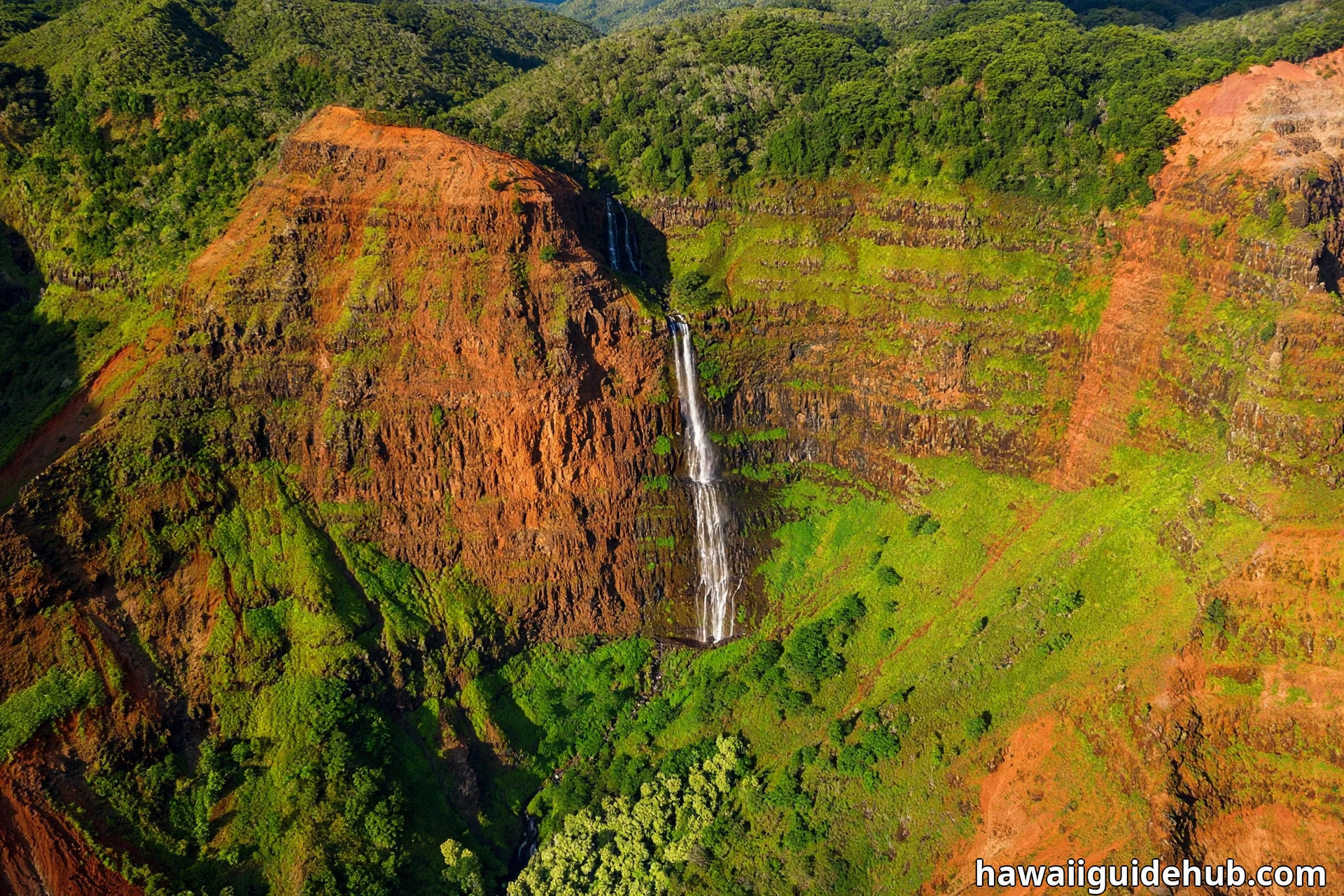
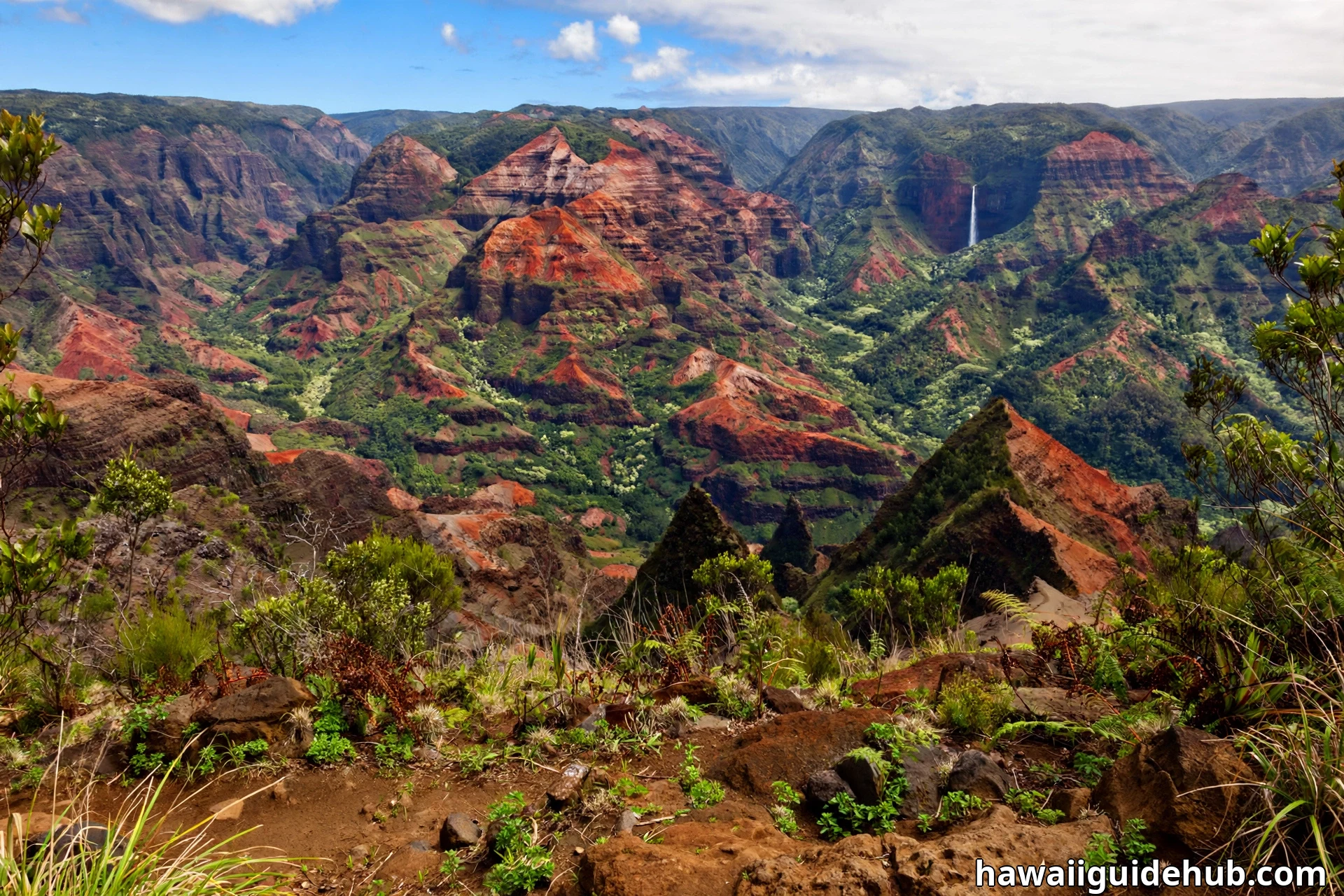
Waipoʻo Falls is an 800-foot waterfall in Waimea Canyon, often called the Grand Canyon of the Pacific. The falls drop in two tiers: a short upper cascade of about 25 feet, then a long plunge down the sheer red and ochre cliff face into the canyon below.
Here is the important thing to understand before you lace up your shoes. The Canyon Trail does not take you to the bottom of the falls. There is no maintained trail to the base from this route. What the hike gives you is the top of the falls, the smaller upper cascades and pools just upstream, and several spectacular lookout points along the canyon rim where you can see the full drop from the side.
If you want the classic postcard view of the entire waterfall at once, drive to the Waimea Canyon Lookout on Highway 550, just past mile marker 10. The falls are clearly visible from there on a clear day. The hike, though, is about the journey through the canyon landscape, not just the waterfall.
The Canyon Trail: Route Overview
The Canyon Trail to Waipoʻo Falls is a 3.2-mile out-and-back hike near Kekaha in Kōkeʻe State Park. Most hikers finish it in 2 to 3 hours, depending on how long they linger at the viewpoints and the upper pools.
The route starts at the Canyon Trail parking area off Highway 550. From there you walk up the dirt Halemanu Road for a short stretch to reach the actual trailhead. The trail then descends through native forest along the canyon rim, with the path dropping and climbing as it works toward the falls. Total elevation change is roughly 800 to 1,000 feet, concentrated in a few steep sections rather than spread evenly.
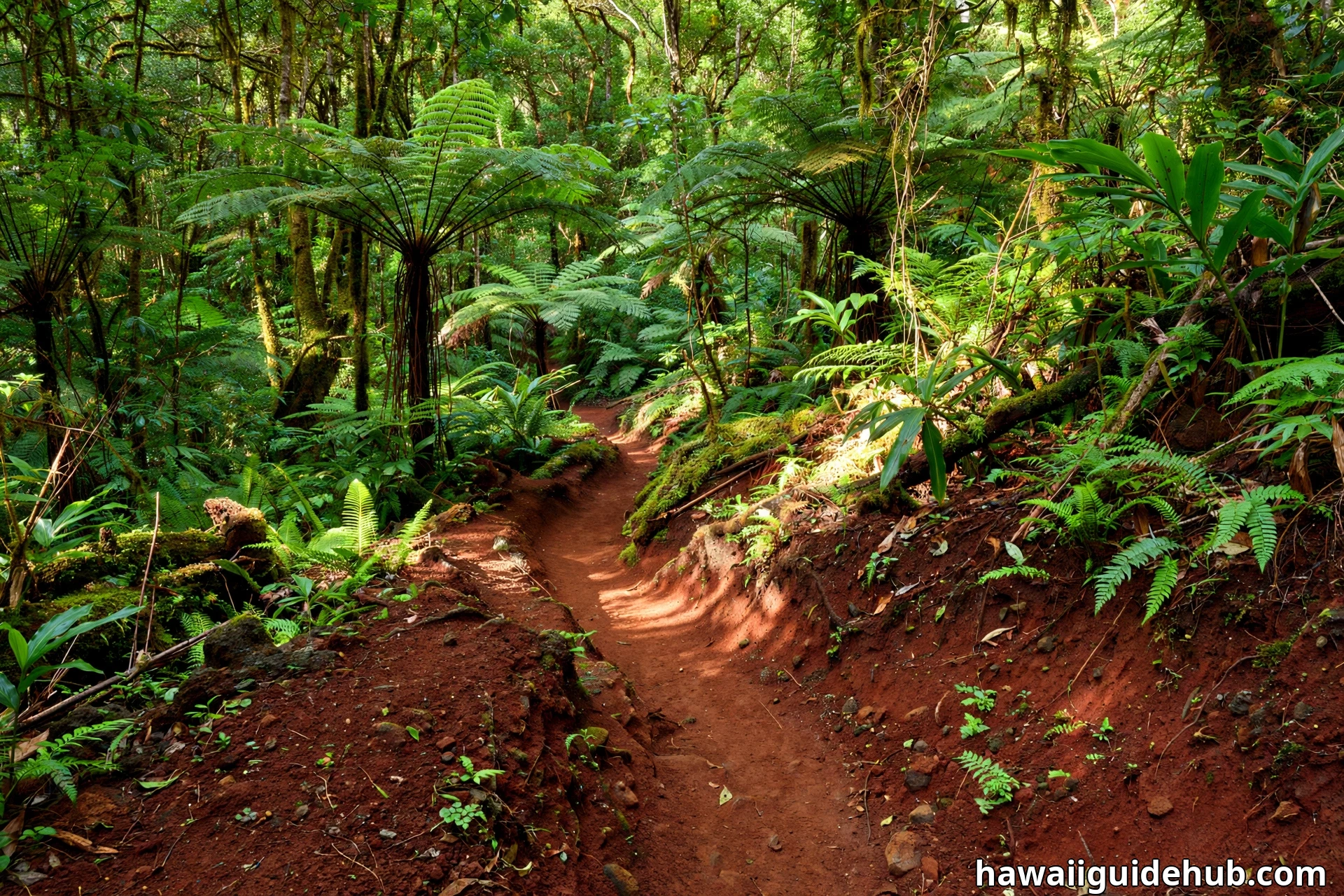
The trail is rated moderate. That rating assumes dry conditions and decent footwear. After rain, the famous red dirt of Kauaʻi turns to a slick clay that makes every downhill feel twice as steep, and the difficulty jumps noticeably. Plan for the conditions you actually find, not the ones you hoped for.
Finding the Trailhead
Getting to the start is straightforward once you know what to look for. Drive Highway 550, also called Kōkeʻe Road, up from the town of Waimea toward Kōkeʻe State Park. The Canyon Trail parking area sits between mile markers 14 and 15, near the Puʻu Hinahina area.
The lot is a decent-sized paved parking area with restrooms. From the lot, follow the signs toward the trailhead along Halemanu Road, a short dirt road walk that leads to where the Canyon Trail properly begins. The route is marked, but downloading an offline map before you go is smart because cell service fades in and out along Highway 550 and inside the park.
Arrive early, especially on weekends. The lot fills up on busy mornings, and an early start also gives you cooler hiking temperatures and softer light for photographs. The drive from Waimea town takes about 40 to 50 minutes each way, and the road is winding with limited shoulders in places, so build that into your day.
Difficulty and What to Expect
The Canyon Trail earns its moderate rating honestly. The tread is uneven, with roots, rocks, and a few genuinely steep pitches. The downhill sections going out can be hard on knees, and the climb back up is a real workout, particularly in the heat of midday.
Mud is the defining variable. Kōkeʻe sits at elevation and catches frequent showers, and the red volcanic soil holds water. After a rainy night, expect deep, slippery sections where every step needs care. Hiking shoes or trail runners with aggressive lugs make an enormous difference. Trekking poles help too, especially on the steep descents.
The trail runs through beautiful forest for much of its length, with tree ferns, ʻōhiʻa, and the sounds of native birds. Then it breaks open at the canyon rim, and the views arrive all at once: layered red ridges, green valley floors far below, and the white thread of Waipoʻo Falls against the cliff. There are several natural lookout points along the rim section, each slightly different, so take your time and enjoy more than one.
The Upper Pools and Cascades
One of the best surprises of this hike sits just upstream of the main drop. The smaller upper cascades of Waipoʻo Falls feed a series of clear pools over smooth dark basalt, tucked into the forest near the top of the falls. On a warm day, dipping your feet in these pools is one of the most refreshing moments on Kauaʻi.
A few words of caution here. The rocks around the pools are slippery, and the current can be stronger than it looks after rain. Never go near the edge where the water drops off. People have been seriously hurt at waterfall edges in Hawaiʻi, and the drop at Waipoʻo is unforgiving. Enjoy the pools, stay well back from the brink, and do not attempt to climb down toward the main falls.

Park Fees and Logistics
Kōkeʻe and Waimea Canyon state parks charge fees for nonresident visitors. As of the latest published rates, nonresidents pay a $5 per person entry fee and a $10 per vehicle parking fee, paid at self-service kiosks near the park areas. Hawaiʻi residents with a valid state ID or driver license are exempt. Keep your receipt visible on the dashboard.
There are restrooms at the Canyon Trail parking lot but none on the trail itself. There is no drinking water along the route either, so carry everything you need from the car. Dogs are not allowed on this trail, so leave pets at your lodging.
No advance reservation is required for the Canyon Trail itself. That is worth knowing because some Kauaʻi parks, like nearby Hāʻena, do require reservations. For this hike you simply show up, pay the fees, and walk.
Safety Tips That Actually Matter
Most of what goes wrong on this trail is predictable and preventable. The red mud catches people off guard, the canyon rim edges crumble, and the mountain weather changes fast. A little preparation goes a long way.
Wear real traction. This is the single most important tip for the Canyon Trail. Hiking shoes or trail runners with deep lugs grip the red clay far better than smooth-soled sneakers, and sandals are a bad idea here. If you own trekking poles, bring them.
Stay back from cliff edges. The canyon rim rock is undercut and crumbly in places, and edges can give way without warning. Take your photos from a few steps back. No photograph is worth the risk, and rangers and rescue crews will tell you the same.
Check the weather and be willing to bail. Kōkeʻe gets fast-moving showers year round. If the trail has turned into a stream, or if visibility has dropped to nothing, turning back is the right call. The canyon will still be there tomorrow.
What to Bring
Pack like you mean it, even for a short hike. Carry 1 to 2 liters of water per person and a salty snack. Kōkeʻe’s elevation means the sun can feel stronger than you expect, even under the forest canopy, so bring sunscreen and a hat.
A light rain jacket is worth its weight. Showers arrive quickly in the mountains, and getting soaked early in the hike makes the rest of the day miserable. A small dry bag for your phone and camera is a good companion to the jacket.
Bring a trash bag or use a pocket of your pack for all waste. There are no trash cans on the trail, so everything you carry in comes back out with you, including fruit peels and tissues. This is basic outdoor adventure etiquette in Hawaiʻi, and it keeps the trail clean for the next hiker.
Best Time to Hike
The trail is open year round, and any dry morning is a good morning for it. Early starts win on every front: cooler air, calmer light for photography, easier parking, and fewer people on the narrow sections.
Seasonally, the summer months tend to be drier in the mountains, which means firmer trail conditions. Winter brings more frequent storms, and a single heavy rain can turn the red soil into something resembling a skating rink for a day or two. If you are visiting in winter, watch the forecast and aim for the hike after two or three dry days in a row.
One more timing note: afternoon clouds often build over the canyon and can hide the waterfall and the views entirely. Morning gives you the best odds of seeing Waipoʻo Falls in full.
Pair It With the Waimea Canyon Lookout
The smartest way to experience Waipoʻo Falls is to do both the hike and the drive-up viewpoint. Before or after your hike, stop at the Waimea Canyon Lookout on Highway 550 past mile marker 10. From there you get the full frontal view of the 800-foot drop that the trail itself cannot give you, since the trail stays at the top.
While you are up there, the broader area rewards exploring. Kōkeʻe State Park holds some of the best hiking in Waimea Canyon, from short rim walks to full-day ridge routes. If you are building a Kauaʻi itinerary, our guide to things to do on Kauai covers how to fit the canyon country into a wider trip, and seeing the Nā Pali Coast by boat makes a spectacular companion day to a canyon hike.
See the Canyon Trail on Video
Want a preview of the trail before you go? This walkthrough shows the forest sections, the rim viewpoints, and the upper falls area.
Waipoʻo Falls Hike: Frequently Asked Questions
How long is the hike to Waipoʻo Falls?
The Canyon Trail to Waipoʻo Falls is about 3.2 miles round trip, out and back. Most hikers take 2 to 3 hours including stops at the viewpoints and upper pools.
How difficult is the Canyon Trail?
It is rated moderate, with roughly 800 to 1,000 feet of elevation change, steep rocky sections, and red mud that gets very slippery after rain. Fit beginners can do it in dry conditions with good shoes, but it is a genuine workout on the climb back up.
Can you swim at Waipoʻo Falls?
The upper pools near the top of the falls are sometimes used for a quick dip on calm, dry days, but there is no safe swimming at the main 800-foot drop, and there is no trail to the bottom. Treat the pools with caution, stay away from the edge, and skip the water entirely after rain when currents run strong.
Do you need a permit or reservation?
No permit or advance reservation is needed for the Canyon Trail itself. Nonresident visitors pay a $5 per person entry fee and a $10 per vehicle parking fee at self-service kiosks. Hawaiʻi residents are exempt.
Are dogs allowed on the Canyon Trail?
No. Dogs are not allowed on the Canyon Trail to Waipoʻo Falls. Leave pets at your lodging.
Can you see Waipoʻo Falls without hiking?
Yes. The Waimea Canyon Lookout on Highway 550, past mile marker 10, offers a clear view of the full 800-foot waterfall on a clear day. It is the best no-hike viewpoint, and it pairs perfectly with the trail for the complete experience.
A Hike Worth the Mud
The Waipoʻo Falls hike distills Kauaʻi’s canyon country into a single morning: red dirt underfoot, green forest overhead, and then the sudden vastness of Waimea Canyon with an 800-foot waterfall threading down the cliff. It asks for sturdy shoes, water, and a little respect for the mud, and it pays back with some of the finest views on the island. For hikers who want more of the island’s wild side, the off-the-beaten-path outdoor adventures across Hawaiʻi offer plenty of next steps.