Waimoku Falls Height

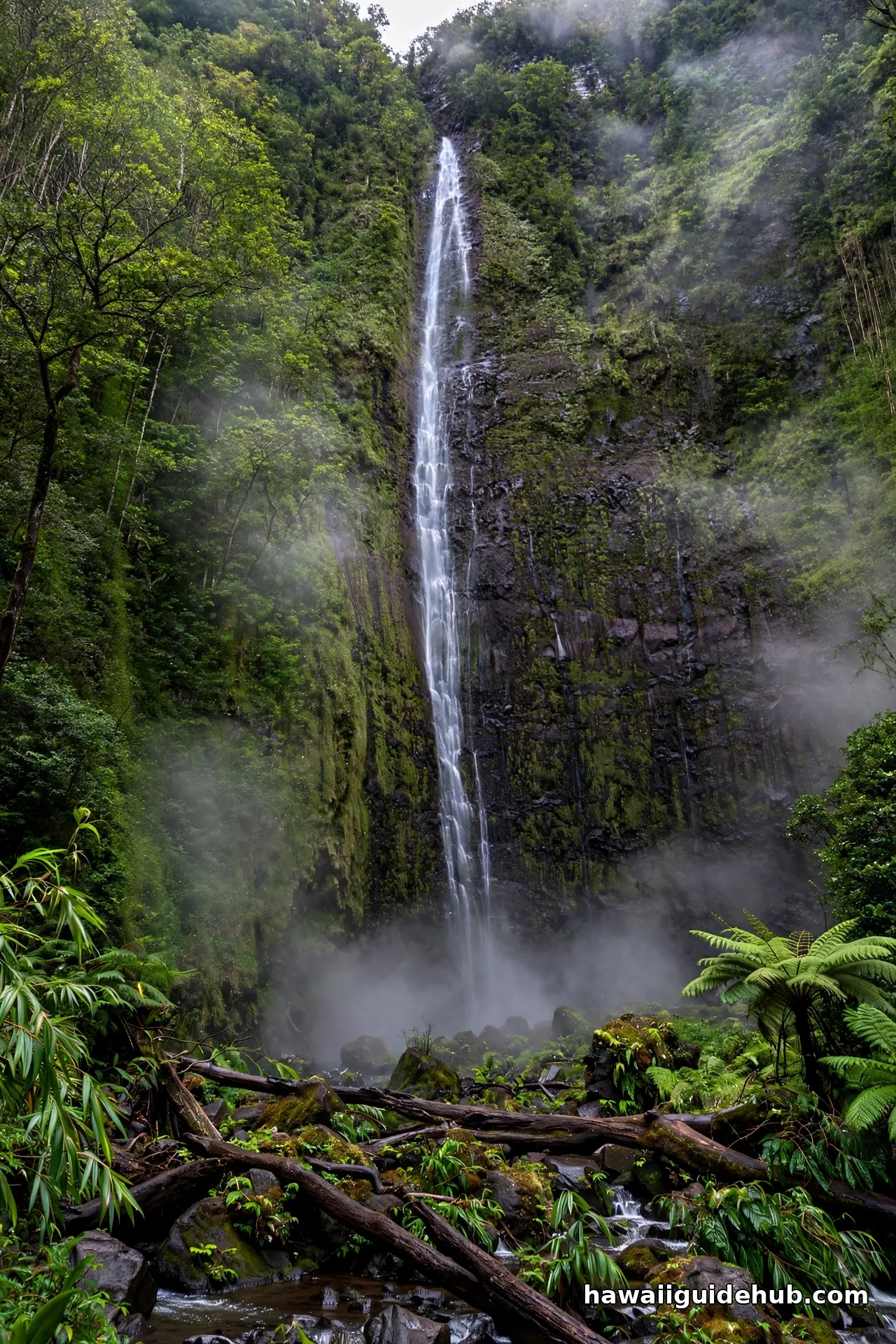
Waimoku Falls is 400 feet tall: a single, thundering ribbon of water that drops down a sheer lava-rock wall at the end of the Pipiwai Trail in Haleakalā National Park’s Kīpahulu district. To stand beneath it, you crane your neck straight up while the cliff shakes faintly under your feet. It is one of the tallest waterfalls in Hawaiʻi and one of the great payoffs on Maui, but you cannot see it from any road. The only way there is a 4-mile round-trip hike through rainforest, past another waterfall, under a giant banyan tree, and into one of the most famous bamboo forests on Earth.
This guide answers the height question and everything around it: where Waimoku Falls is, how the Pipiwai Trail hike goes mile by mile, how long it takes, what to bring, the park fee, the rockfall danger at the base, and the other stops that make Kīpahulu worth the long drive. Everything about Waimoku Falls lives here on this one page.
Waimoku Falls at a Glance
| Spec | The number |
|---|---|
| The payoff | Waimoku Falls: 400 feet (122 meters) |
| Distance | 4 miles round trip |
| Elevation gain | Roughly 650 to 800 feet |
| Difficulty | Moderate |
| Time | 2.5 to 3 hours round trip |
| Park fee | $30 per vehicle, valid 3 days at both park districts |
| Trailhead | Across from the Kīpahulu Visitor Center, about 10 miles past Hana, in Haleakalā National Park |
| Non-negotiable | Do not go past the signed viewpoint; rockfall is a real and lethal danger. No swimming at the base. No food or drinks for sale in the park; bring everything you need. |
How Tall Is Waimoku Falls?
Waimoku Falls is 400 feet tall, measured from the lip where Pīpīwai Stream pours over the cliff to the boulder field at its base. That makes it one of the tallest waterfalls in Hawaiʻi and roughly twice the height of the Makahiku Falls you pass on the way up. The number alone undersells it: because you stand close to the base, the full 400 feet fills your entire field of vision, and photographs struggle to capture the scale. It is a sheer plunge down a dark lava-rock amphitheater, framed by dripping green walls, and on a wet day the volume of water is genuinely startling.
Where Waimoku Falls Is
Waimoku Falls is in the Kīpahulu district of Haleakalā National Park, on Maui’s remote southeast coast, about 10 miles past the town of Hana at the end of the Road to Hana. This is a completely different entrance from the Haleakalā summit: the park has two districts, and your $30 vehicle pass covers both for three days. The trailhead is across the road from the Kīpahulu Visitor Center. There are no food or drinks for sale anywhere in the district, so eat before you arrive and pack in everything you need, including at least two liters of water per person.
The Pipiwai Trail: Mile by Mile
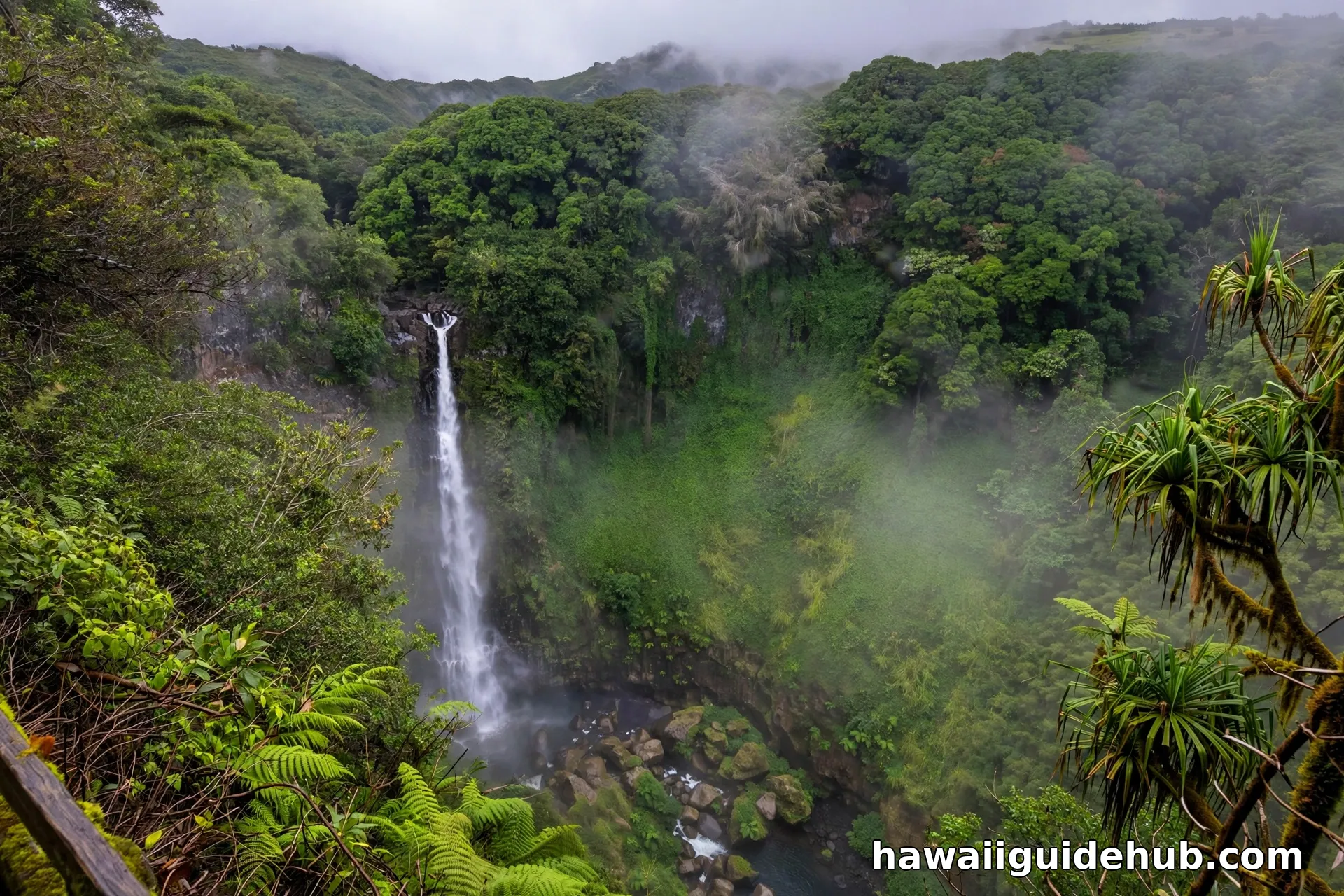
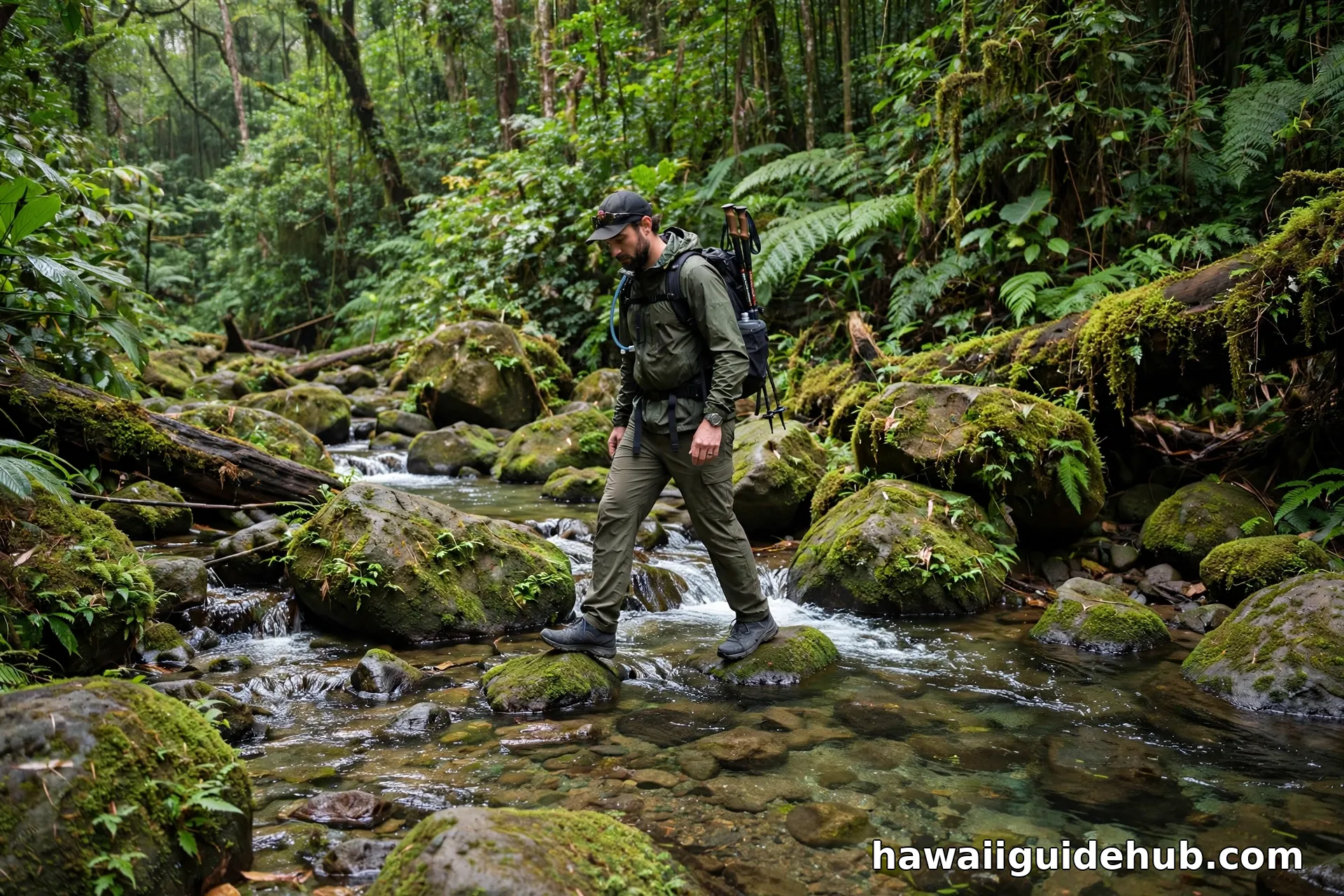
The hike to Waimoku Falls is the Pipiwai Trail, 2 miles each way, and it earns its reputation as one of Maui’s best hikes long before you reach the falls. About half a mile in, you reach the overlook for Makahiku Falls, a 200-foot cascade dropping into a deep gorge: a worthy destination on its own. A massive banyan tree spreads its limbs across the trail nearby. Around a mile in, two bridges cross Pīpīwai Stream, and then the trail enters the bamboo forest, a cathedral of towering stalks on a smooth boardwalk where the wind makes the bamboo knock together in an eerie, beautiful music. The last stretch crosses the stream on rocks before the final viewpoint opens onto Waimoku Falls.

How Long the Hike Takes
Plan 2.5 to 3 hours round trip at a comfortable pace with stops. The elevation gain is roughly 650 to 800 feet, spread over the two miles up, which makes it moderate rather than hard, but the trail can be muddy and slippery after rain, and the humidity is intense. Start early, ideally before 9 AM, to beat both the heat and the crowds. Wear hiking shoes with real grip, not flip-flops. Bring bug spray, a rain jacket, and reef-safe sunscreen. The drive from most of Maui is long: the Road to Hana takes 2.5 to 3 hours each way, so this is a full-day commitment.
One more timing tip: Kīpahulu gets wetter as the day goes on, so an early start usually means drier trail conditions and lower stream levels. If it is raining hard when you arrive, consider waiting it out or choosing another day: flash flooding is a real risk in narrow valleys, and the park may close the trail in severe weather.
Safety at the Falls: Read This
The base of Waimoku Falls is dangerous, and the park is blunt about it. Rocks fall from the cliff without warning, and people have been seriously injured and killed. A sign marks the official end of the trail for this reason: stay behind it. Do not scramble closer for a photo, do not wade into the plunge pool, and do not stand under the falls. There is no swimming at the base. The view from the signed viewpoint is spectacular, and it does not get meaningfully better closer up. Treat the warning like a cliff edge, because that is effectively what it is.
What Else to See in Kīpahulu
Do not rush back to the car after the hike. The Kuloa Point Trail is an easy half-mile loop near the visitor center with coastal views. ʻOheʻo Gulch, often called the Seven Sacred Pools, is a series of cascading pools flowing to the ocean just down the road: beautiful to look at, though swimming has been closed for years, so check the park’s current guidance before you go. The drive itself is the attraction for many visitors, so plan your Road to Hana stops around it. For more waterfall adventures across the islands, see our guides to Big Island waterfalls and Mānoa Falls on Oʻahu.
Getting There: Road to Hana Logistics
Waimoku Falls is a full-day trip from almost anywhere on Maui. The Road to Hana is about 52 miles of winding road with one-lane bridges, and the drive to the Kīpahulu trailhead takes 2.5 to 3 hours each way from Kahului or the resort areas. Leave early: an 8 AM departure puts you at the trailhead by 11, hiking by 11:30, and back at the car by 2:30, which leaves comfortable daylight for the drive back. Fill your gas tank in Kahului or Paia, because there is no gas in Kīpahulu. Eat a real meal before the park, since nothing is sold inside, and carry at least two liters of water per person plus snacks. Cell service is spotty to nonexistent for long stretches, so download offline maps before you leave.
What to Pack
The trail punishes the unprepared and rewards the ready. Hiking shoes or trail runners with real tread are essential; the mud after rain is slick, and the stream crossings need grip. Bring a rain jacket even on a sunny morning, because Kīpahulu weather changes fast. Bug spray matters: the mosquitoes in the bamboo forest are legendary. Pack reef-safe sunscreen for the exposed stretches, a hat, and a dry bag or ziplock for your phone and car keys. A small towel is useful after the stream crossings. Trekking poles help on the muddy descents if you have them. Everything you carry in, you carry out: there are no trash cans on the trail.
The Bamboo Forest: Why It Steals the Show
Ask hikers what they remember most, and many name the bamboo forest before the falls. The stalks tower overhead in a dense green tunnel, and the boardwalk keeps your feet dry while the forest does its strange, creaking performance around you. Bamboo is not native to Hawaiʻi: Polynesian voyagers brought ʻohe with them centuries ago, and it has thrived in wet valleys like Kīpahulu ever since. Stand still in the middle of the boardwalk and just listen. On a windy day the stalks knock together in a hollow, musical clatter that sounds like nothing else in nature. It is the single most photographed stretch of the Pipiwai Trail, and it earns every frame.
Waimoku Falls vs. Other Hawaiʻi Waterfalls
Context helps: at 400 feet, Waimoku is among the tallest waterfalls you can hike to in Hawaiʻi, roughly double the 200-foot Makahiku Falls on the same trail and far taller than Mānoa Falls on Oʻahu, which drops about 150 feet. What sets Waimoku apart is not just height but the setting: a sheer lava-rock amphitheater in deep rainforest, reached only on foot, with no roadside viewpoint and no crowds at the railing. Many of Hawaiʻi’s tallest falls are visible only by helicopter; Waimoku is one of the few giants you can stand beneath with your own two feet. That combination of scale and effort is what makes it special. For more falls across the islands, see our guides to Big Island waterfalls and Mānoa Falls.
Video: The Pipiwai Trail
A walk through the Pipiwai Trail’s rainforest, bamboo forest, and Makahiku Falls overlook, ending at the 400-foot Waimoku Falls.
Frequently Asked Questions
How tall is Waimoku Falls?
Waimoku Falls is 400 feet (122 meters) tall, making it one of the tallest waterfalls in Hawaiʻi. It sits at the end of the Pipiwai Trail in Haleakalā National Park’s Kīpahulu district on Maui.
How long is the hike to Waimoku Falls?
The Pipiwai Trail is 4 miles round trip with roughly 650 to 800 feet of elevation gain. Most hikers need 2.5 to 3 hours round trip at a comfortable pace with stops.
Can you swim at Waimoku Falls?
No. Swimming at the base is not allowed, and going past the signed viewpoint is dangerous: rocks fall from the cliff without warning, and injuries and fatalities have occurred. Enjoy the falls from the official viewpoint.
How much does it cost to visit Waimoku Falls?
Haleakalā National Park charges $30 per vehicle, and the pass is valid for 3 days at both the Kīpahulu district and the summit district. There are no additional fees for the Pipiwai Trail.
What is the best time to hike the Pipiwai Trail?
A dry morning is best. Arrive before 9 AM to beat the heat and the crowds, and to give yourself plenty of daylight for the long drive back. The trail is muddier and the streams higher after heavy rain.
Is the Pipiwai Trail good for kids?
Older kids who hike regularly do fine, but it is a real 4-mile hike with stream crossings and mud, not a stroll. Young children will struggle with the distance and the slippery sections. Bring more water and snacks than you think you need, and turn around if anyone is miserable: the bamboo forest at 1.5 miles is a fine turnaround point.
Do I need a reservation for the Pipiwai Trail?
No reservation is needed for the trail itself. You pay the $30 per vehicle Haleakalā National Park entrance fee at the Kīpahulu entrance, valid for 3 days at both park districts. Arrive early on busy days, since the small parking area fills up.
Is the Pipiwai Trail hard?
It is rated moderate. The elevation gain is gradual, but the trail can be muddy and rooty, the humidity is heavy, and the stream crossings need care. Anyone in reasonable shape with proper footwear can do it.
Waimoku Falls is the rare waterfall that rewards the journey as much as the destination: a 400-foot giant at the end of a trail that gives you a gorge waterfall, a banyan tree, a bamboo cathedral, and stream crossings along the way. Respect the rockfall warnings, start early, pack water and bug spray, and give Kīpahulu the full day it deserves. For the rest of your Maui planning, see our reasons to visit Maui and our Wailea guide.