Lāʻie Point: Oʻahu’s Wild Sea Arch Lookout

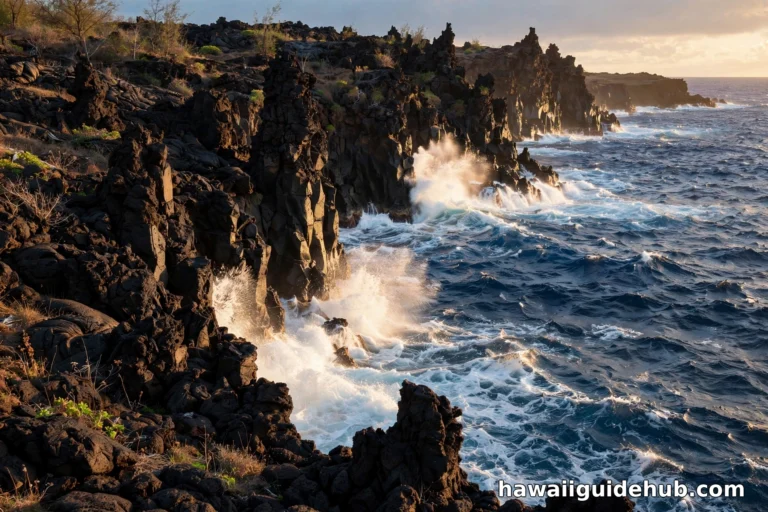
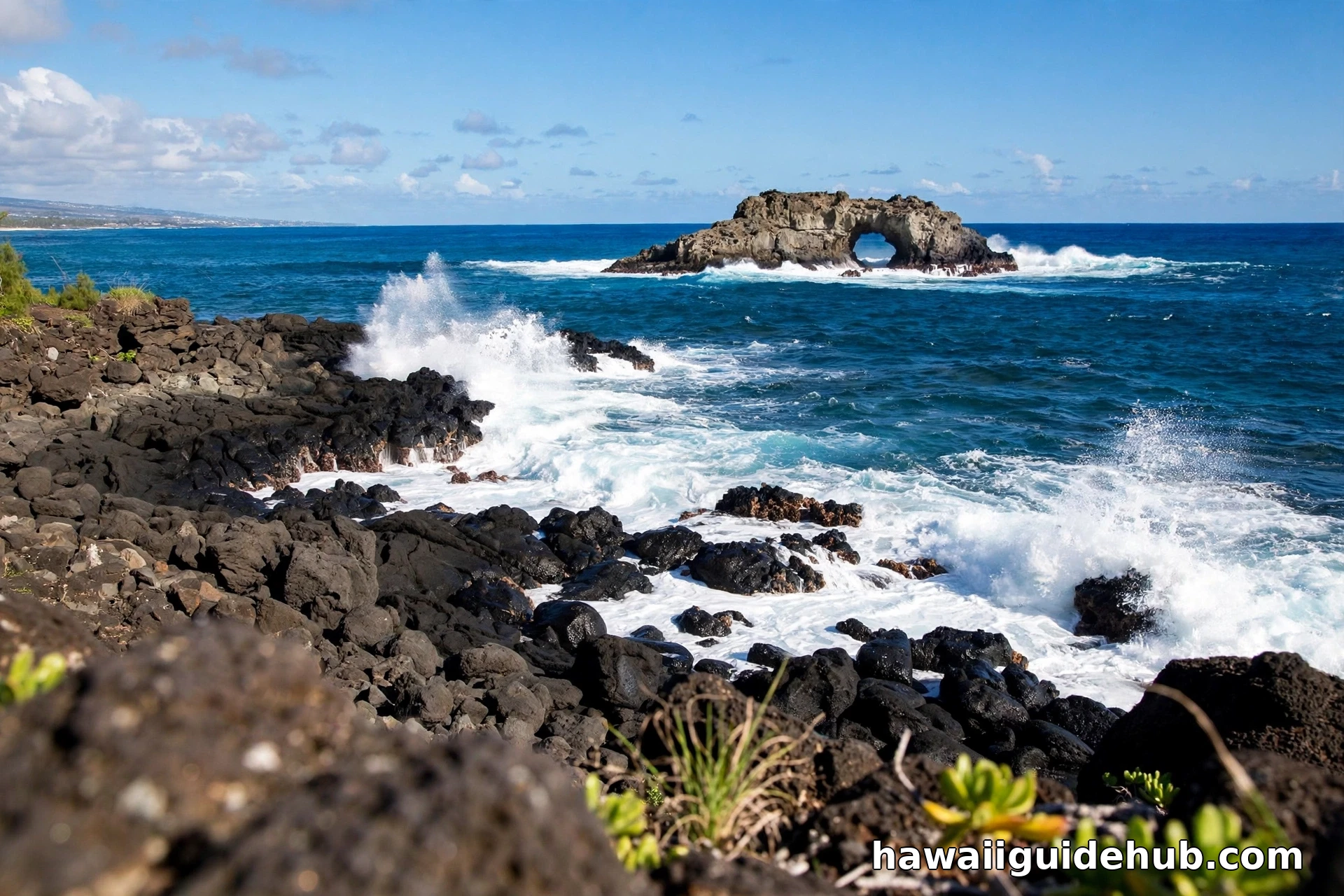
Lāʻie Point is not a beach, and that is exactly why people love it. At the end of a quiet residential street in Lāʻie, on Oʻahu’s northeastern shore, a finger of ancient sand dune rock juts into the Pacific and simply stops. In front of you the ocean works against black cliffs. To your left, an offshore islet wears a hole clean through its middle, punched by a tsunami. Beneath your feet, according to the plaque bolted to a boulder beside the parking area, a hero once chopped a monster into the five small islands you can see scattered along the coast.
This is the complete guide to Lāʻie Point State Wayside. It covers where the point is and how to reach it, the legend of Laniloa and the moʻo, the famous sea arch in Kukuihoʻolua Island, what you can and cannot do here, the fishing that draws local families at dawn, the real hazards of this sharp and wave washed rock, and the nearby beaches and towns that turn a twenty minute lookout stop into a proper windward side day.
Lāʻie Point at a Glance
| Location | End of Naupaka Street, Lāʻie, northeastern Oʻahu |
| Park | Lāʻie Point State Wayside, Hawaii State Parks |
| Main sight | Kukuihoʻolua Island and its natural sea arch, the puka |
| Parking | Very small lot, only a handful of cars, free |
| Facilities | None: no restrooms, no picnic area, no water |
| Swimming | No. Rocky point, strong currents, no lifeguards |
| Known for | Views, shore fishing for ulua, sunrise, the Laniloa legend |
| Best light | Sunrise, since the point faces east |
Where Lāʻie Point Is and How to Get There
Lāʻie is a small town on the windward side of Oʻahu, between Kahuku and Hauʻula, roughly an hour’s drive from Waikīkī in normal traffic. The point sits at the seaward end of Naupaka Street, a residential lane that runs off Kamehameha Highway through the middle of town. There is no big entrance gate and no visitor center. The road simply ends at a small paved parking area, and the point opens in front of you.
Because the lot holds only a handful of cars, timing matters. Early morning visitors usually park easily. By late morning on a sunny weekend, cars circle or spill onto the residential street, which is exactly what the neighborhood asks you to avoid. Park only in the lot or where signs allow, keep voices down at sunrise, and do not block driveways. City bus service reaches Lāʻie town, but the point itself is a walk from the highway stops, so most visitors arrive by car as part of a windward or North Shore loop like the routes in our guide to what to do on the North Shore of Oʻahu.
The Legend of Laniloa, the Moʻo of Lāʻie
The point’s older name is Laniloa, and the story is written on a granite plaque in the park, drawn from published collections of Hawaiian legend such as William Hyde Rice’s Hawaiian Legends. In the story, a moʻo, a giant supernatural lizard, stood at this point and killed people who passed. The hero Kana, traveling around the islands with his brother after rescuing their mother, came to Lāʻie, fought the moʻo, and destroyed it. He cut its head into five pieces and threw them into the sea.
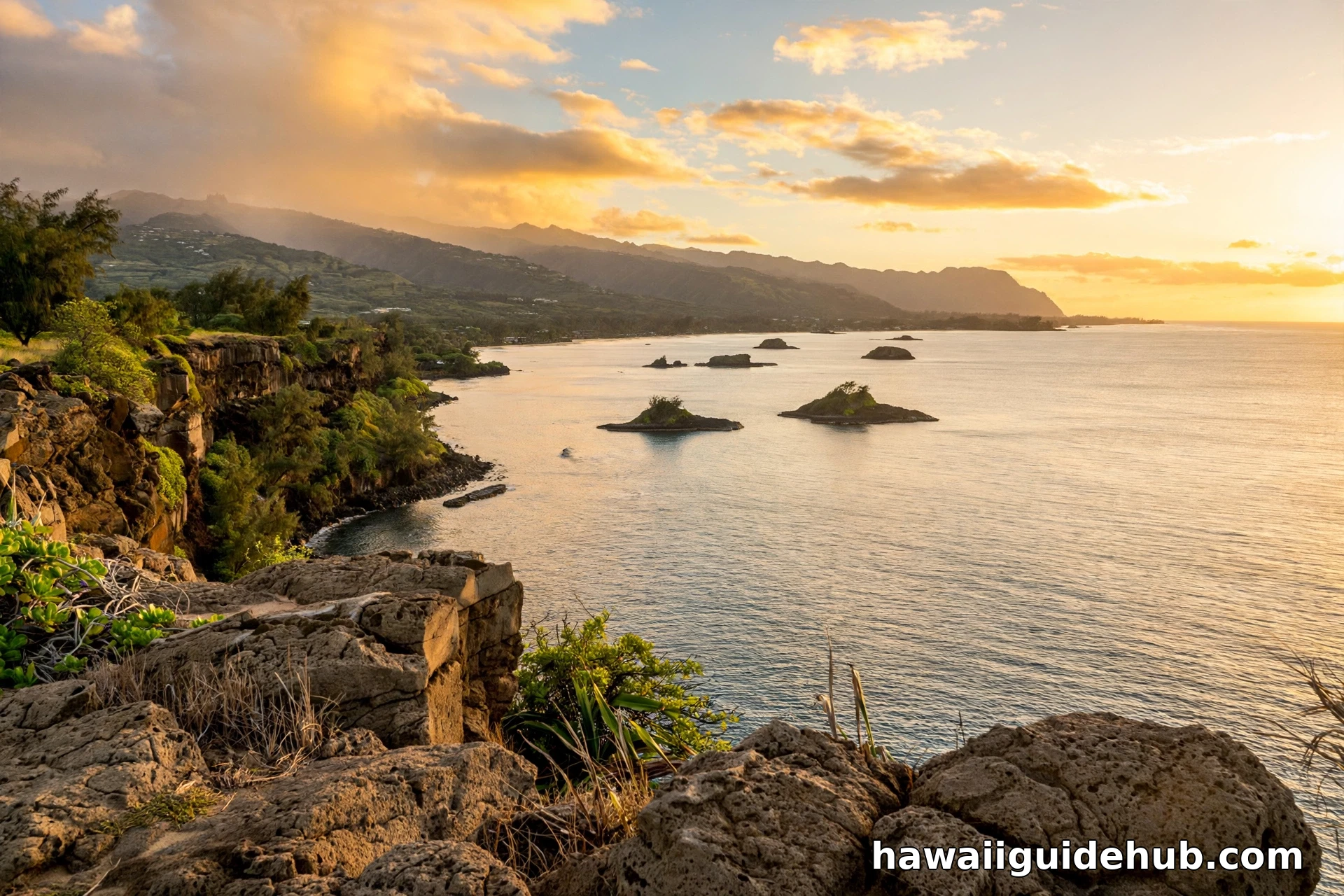
Those five pieces, the story says, are the five islets lying off this coast today: Kihewamoku, Mokuʻauia, Pulemoku, Kukuihoʻolua, and Mokualai. Stand at the railing and count them along the shoreline toward Mālaekahana. Whether you read it as history, metaphor, or a way of remembering a dangerous stretch of water, the legend does what Hawaiian place stories often do: it warns you. This point was respected long before it was photographed.
The Sea Arch: Kukuihoʻolua and the 1946 Tsunami
The photograph everyone takes at Lāʻie Point is the puka, the round hole through Kukuihoʻolua Island, the islet just left of the point. The islets here are not lava like most of Oʻahu’s young looking shoreline rocks. They are lithified sand dunes, ancient sand cemented into stone, which is why they erode into such dramatic shapes. Local historical accounts note that before 1946, Kukuihoʻolua had a cave, not an arch. The great tsunami of April 1, 1946, generated by an earthquake in the Aleutian Islands and devastating on this coast, punched through the cave and left the arch you see today.
That same soft rock is a safety fact, not just a story. The seaward tip of the point itself has broken off in storm surf within living memory, and the edges continue to crumble. Keep back from cliff edges, especially where the rock looks undercut, and never climb out onto the narrow fingers of stone that reach toward the islets. The view is identical three steps back, and the landing is not.
What to Do at Lāʻie Point
Come for the view first. The point faces east, so sunrise is the show: the sky lightens over the Pacific, the five islets darken against the horizon, and the Koʻolau coast stretches away in both directions. On clear winter days, watch for humpback whales between December and April, when spouts and breaches are regularly visible from high rocky points on this coast. Seabirds work the water year round, and the offshore islets are protected seabird sanctuaries, which is why landing on them is prohibited. Enjoy them from shore, with binoculars if you have them.
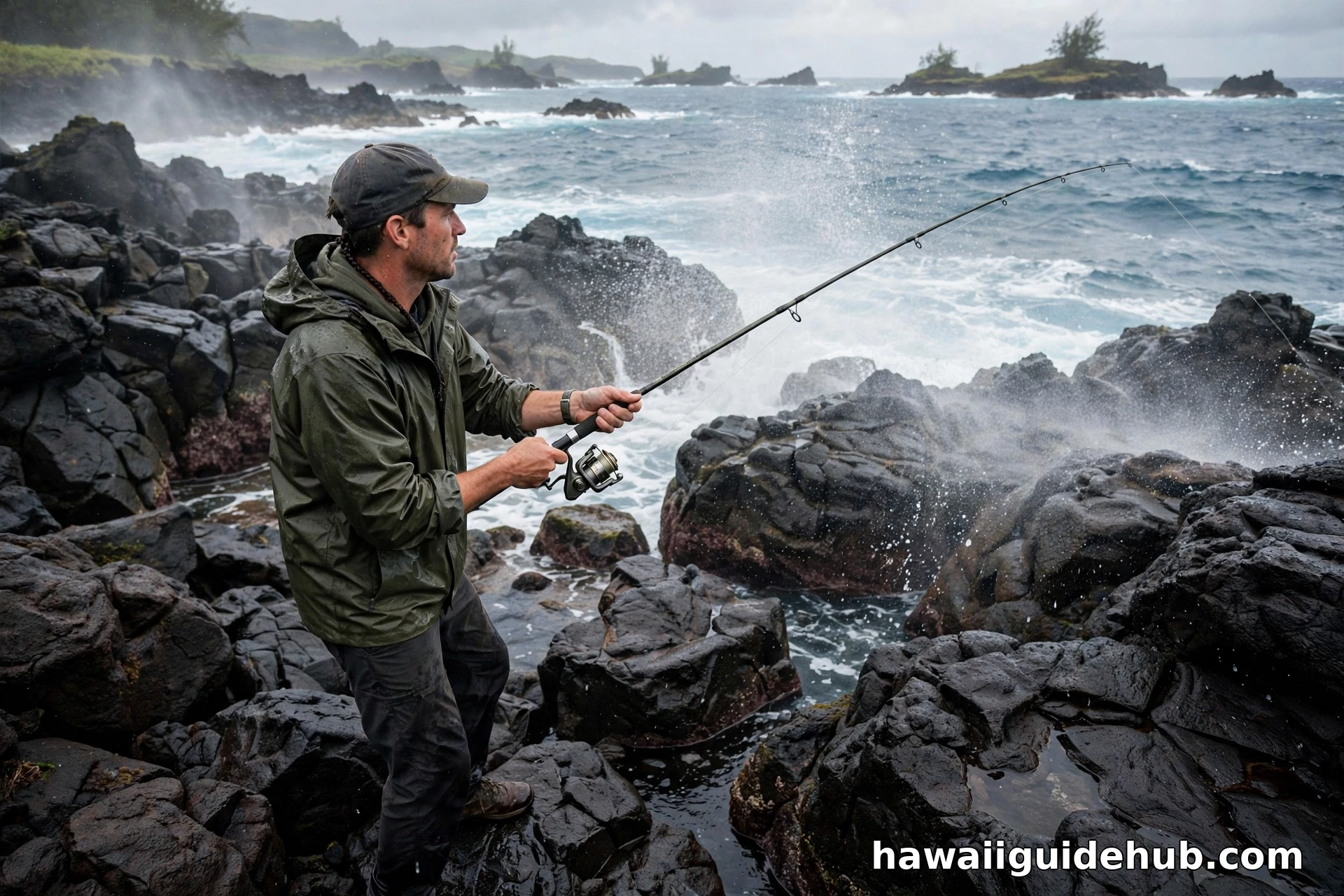
Fishing is the point’s other long tradition. Local anglers cast from the rocks for ulua, the powerful trevally that hunts in the surf zone, along with other reef and shore species. If you fish, follow Hawaii’s fishing rules and size limits, bring every scrap of line and tackle back out with you, and yield space gracefully: this is a working neighborhood fishing spot that visitors are guests at. Photographers will find the arch, the surf, and the islets give strong compositions in almost any light, with sunrise and the golden hour before sunset the most forgiving.
What Not to Do: Swimming, Snorkeling, and Cliff Jumping
Let this be plain. Lāʻie Point is a lookout and a fishing point, not a swimming place. There is no sand entry, no lifeguard, and no calm water. The shore is sharp rock, the currents along this coast are strong, and surf wraps around the point even on moderate days. Snorkeling and surfing belong at the proper beaches nearby, not here.
You may see videos of people jumping from the rocks, and the spot became widely known after a cliff jump scene in a popular comedy film was shot here. What the videos do not show is the climb back up sharp rock in moving water, or how quickly conditions change when a new swell arrives. People have been seriously injured at rocky jump spots on this coast. The state wayside does not present this as a swimming or jumping area, and the respectful, sensible choice is to watch the water, not enter it. For actual swimming, continue to the beaches listed below.
Hazards and Practical Safety
The rules of any Hawaiian rocky point apply double here. Wear closed shoes with grip, because the rock is sharp enough to cut bare feet and turns slick when wet. Never turn your back on the ocean, and keep well away from places where waves are already washing over stone: a dry rock that suddenly gets wet is telling you exactly where the next big set will land. Keep children within arm’s reach, since there are no railings along most of the point. Winter surf on this coast is far bigger than summer surf, and the point is at its most dangerous, and most spectacular, in the winter months.
Bring what you need, because the wayside provides nothing: no restrooms, no drinking water, no shade structure, no picnic tables. The nearest facilities are in Lāʻie town. There is no entrance fee. State park rules apply, including packing out all trash, and the small lot means a short visit serves everyone: most people stay twenty to forty minutes, which is plenty for the legend, the arch, and the view in both directions. Our broader Oʻahu travel guide shows how a stop like this fits into a full windward day.
Best Time to Visit Lāʻie Point
Sunrise is the connoisseur’s choice, with soft light, an empty lot, and fishermen for company. Morning generally beats afternoon, because trade winds build through the day and roughen the sea, though rough water makes the surf watching more dramatic. In winter, come for whale season and big wave energy, and keep further back from the edges. In summer, the ocean settles, the islets photograph cleanly, and the point pairs easily with a swimming day at the beaches near Kahana Bay, covered in our Kahana Bay Beach Park guide, or an afternoon continuing north to Sunset Beach.
Accessibility and Visiting With Children
Set expectations before you promise this stop to the whole car. The viewing area near the parking lot is rough, uneven rock and compacted ground, not a paved promenade, and there are no guardrails along most of the edge. Visitors who use wheelchairs or walkers will find the terrain genuinely difficult, and the best views require a short scramble over broken stone. Families with toddlers usually admire the arch from beside the car, keep small children in arms or in hand the entire time, and treat the visit as a brief lookout stop rather than a playground. Sturdy shoes matter more here than at any beach park on this coast, and a hat and water bottle matter too, because the point offers no shade and no services at all.
Nearby: Making a Day of the Lāʻie Coast
Lāʻie town itself holds the Polynesian Cultural Center, the Lāʻie Hawaii Temple with its manicured grounds and visitor center, and Brigham Young University Hawaiʻi, all within a few minutes of the point. For sand and swimming, Hukilau Beach Park sits just north of town, and Mālaekahana State Recreation Area, a long, wild, tree backed beach, lies a short drive south, in front of Mokuʻauia, the largest of the five legend islets, known to many as Goat Island. Kahuku, ten minutes north, is famous for its shrimp trucks and food stands, which make an easy lunch after a sunrise at the point.
Video: The Lāʻie Point Cliff Area From the Water
Watch the water movement around the point before your visit. It explains, better than any warning sign, why this is a place to look from the rocks rather than enter.
Frequently Asked Questions
Can you swim at Lāʻie Point?
No. Lāʻie Point is a rocky lookout and fishing spot with strong currents, sharp rock, and no lifeguards. Swim at Hukilau Beach Park or Mālaekahana instead, and always follow posted conditions and lifeguard guidance where present.
Is there parking at Lāʻie Point?
Yes, a small free lot at the end of Naupaka Street, but it holds only a handful of cars. Arrive early, especially on weekends, and do not block the residential street or driveways.
What is the hole in the island at Lāʻie Point?
It is a natural sea arch through Kukuihoʻolua Island, an islet of lithified sand dune rock. Historical accounts say a cave stood there until the 1946 tsunami punched through it, leaving the puka seen today.
What are the five islands off Lāʻie Point?
Kihewamoku, Mokuʻauia, Pulemoku, Kukuihoʻolua, and Mokualai. In the Laniloa legend told on the park plaque, they are the five pieces of the moʻo’s head, thrown into the sea by the hero Kana. The islets are protected seabird sanctuaries and landing on them is prohibited.
How long should I spend at Lāʻie Point?
Twenty to forty minutes suits most visitors: read the plaque, see the arch, watch the surf, and take in the coast in both directions. Photographers and anglers stay longer.
Are there restrooms at Lāʻie Point?
No. The wayside has no restrooms, water, or picnic facilities. Plan around stops in Lāʻie town before or after your visit.
Lāʻie Point asks little of you: a short drive down a quiet street, a few minutes on sharp rock, a little care near the edges. In return it gives you one of Oʻahu’s great small places, where a tsunami carved an arch, a legend explains the islands, the ulua hunt in the foam, and the whole windward coast opens at your feet. Come at sunrise, keep your shoes on and your distance from the edge, and it will be the stop you describe when people ask what surprised you about Oʻahu.