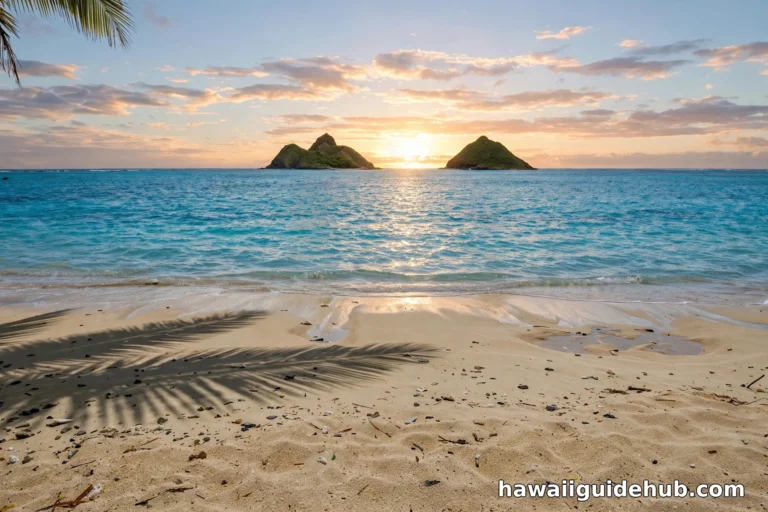
Ehukai Beach Park: Oahu’s Banzai Pipeline, Surf Spectacle and Beach Guide

Some beaches you visit. Others you witness. Ehukai Beach Park on Oahu’s North Shore belongs firmly in the second category. The golden sand, the picnic tables under the palms, the restrooms and showers. All of that is ordinary beach park stuff. What is not ordinary is the wave breaking just offshore: the Banzai Pipeline, the most famous surf break on the planet, where winter swells detonate over a shallow reef and the world’s best surfers take turns inside some of the heaviest barrels ever ridden.
Ehukai means “sea spray” in Hawaiian, and the name fits. When the winter surf is up, the whole beach hums with spray and the thud of breaking waves. In summer, the same beach goes quiet and glassy, turning into a gentle family beach with soft sand and clear water. This guide covers both versions of Ehukai: the winter surf spectacle and the summer beach day, plus everything practical: parking, facilities, directions, and how to visit safely.
Where Ehukai Beach Park Is
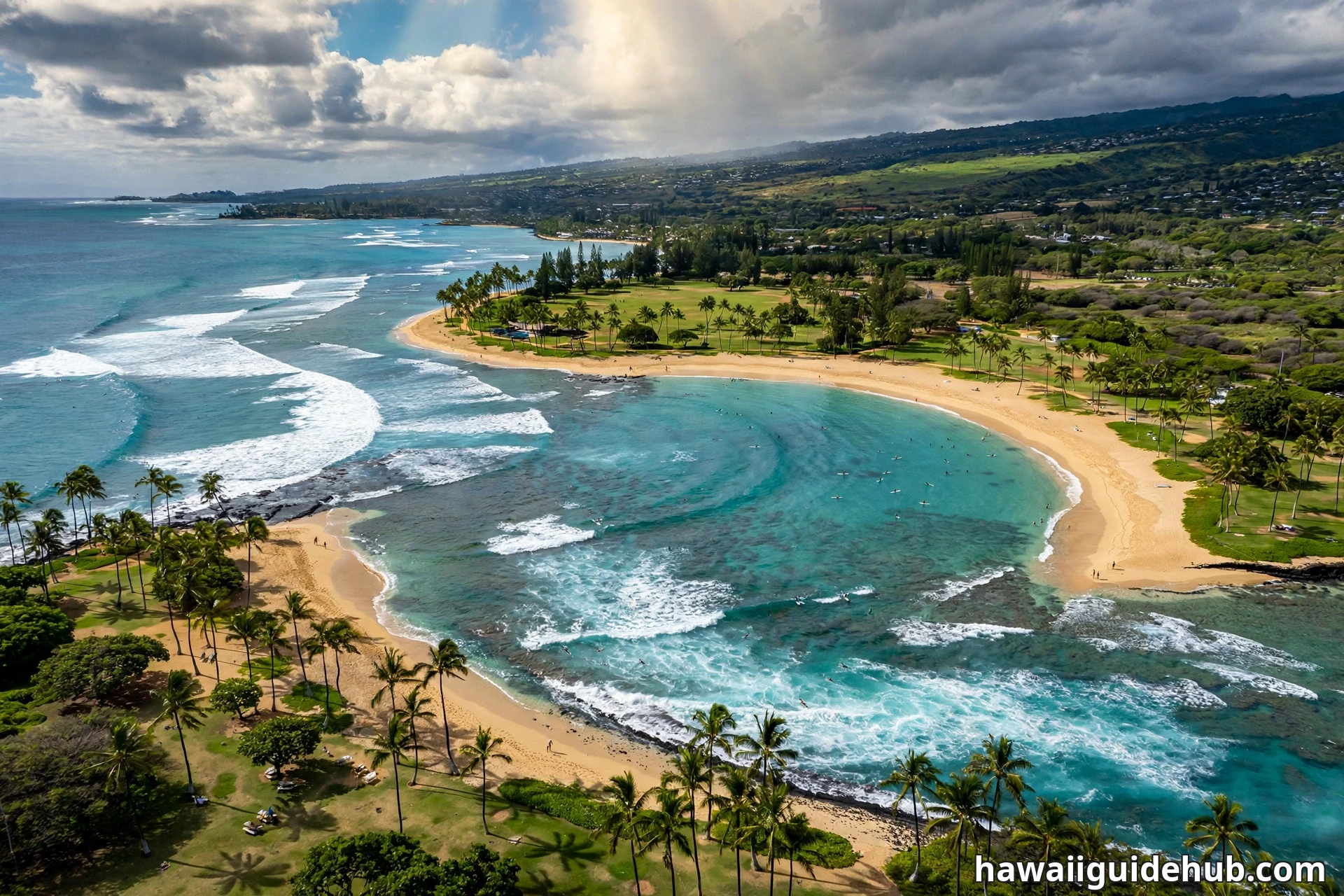
Ehukai Beach Park sits on Oahu’s North Shore between Haleiwa and Sunset Beach, in the coastal community of Pupukea. The park entrance is off Kamehameha Highway (Route 83), turning onto Ke Nui Road. The official address is 59-337 Ke Nui Rd, Haleiwa, HI 96712.
The park is a City and County of Honolulu beach park, managed by the Department of Parks and Recreation. The Pipeline surf break sits directly offshore from the park, which is why “Ehukai Beach Park” and “Banzai Pipeline” are used almost interchangeably. When someone says they are going to watch Pipe, this is where they go.
Sunset Beach Elementary School sits just across Kamehameha Highway from the park, a useful landmark. Nearby, Shark’s Cove and Pupukea Beach Park are about a mile to the south, and the town of Haleiwa with its shops and shave ice is a short drive west.
Why It Is Called the Banzai Pipeline
The name has one of the best origin stories in surfing. In December 1961, surf filmmaker Bruce Brown was driving up the North Shore with Californian surfers Phil Edwards and surfboard shaper Mike Diffenderfer. They stopped at an unridden break in front of what was then called Banzai Beach so Brown could film Edwards catching waves.
At the time, there was a construction project on Kamehameha Highway with large concrete pipes stacked nearby. Diffenderfer looked at the waves, looked at the pipes, and suggested naming the break Pipeline. The name first appeared in Brown’s film “Surfing Hollow Days,” and in 1963 the surf-rock instrumental “Pipeline” by The Chantays turned it into a worldwide hit. The full compound name, Banzai Pipeline, combines the beach name with the break name.
Phil Edwards is generally credited as the first surfer to ride the wave, on that December 1961 day, in front of Brown’s camera. Within a year, a solid crew of surfers was riding Pipeline regularly, and the wave began its long reign as the sport’s most iconic arena.
The Beach Itself
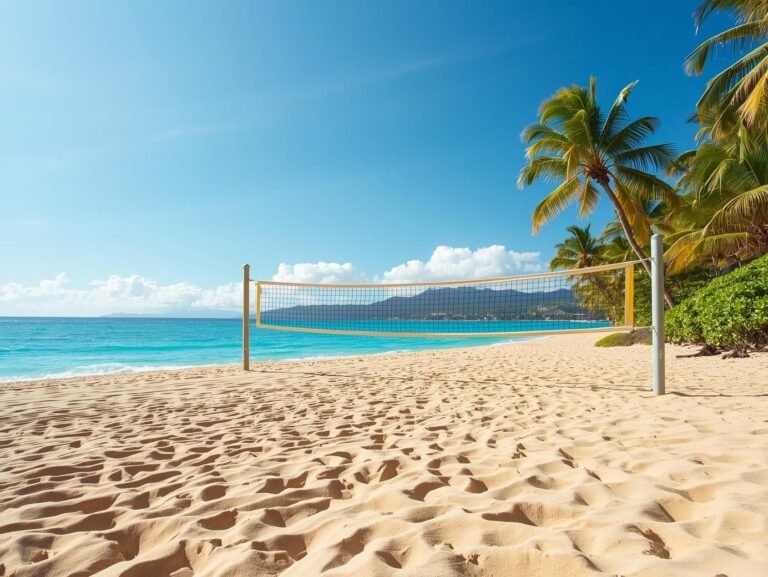
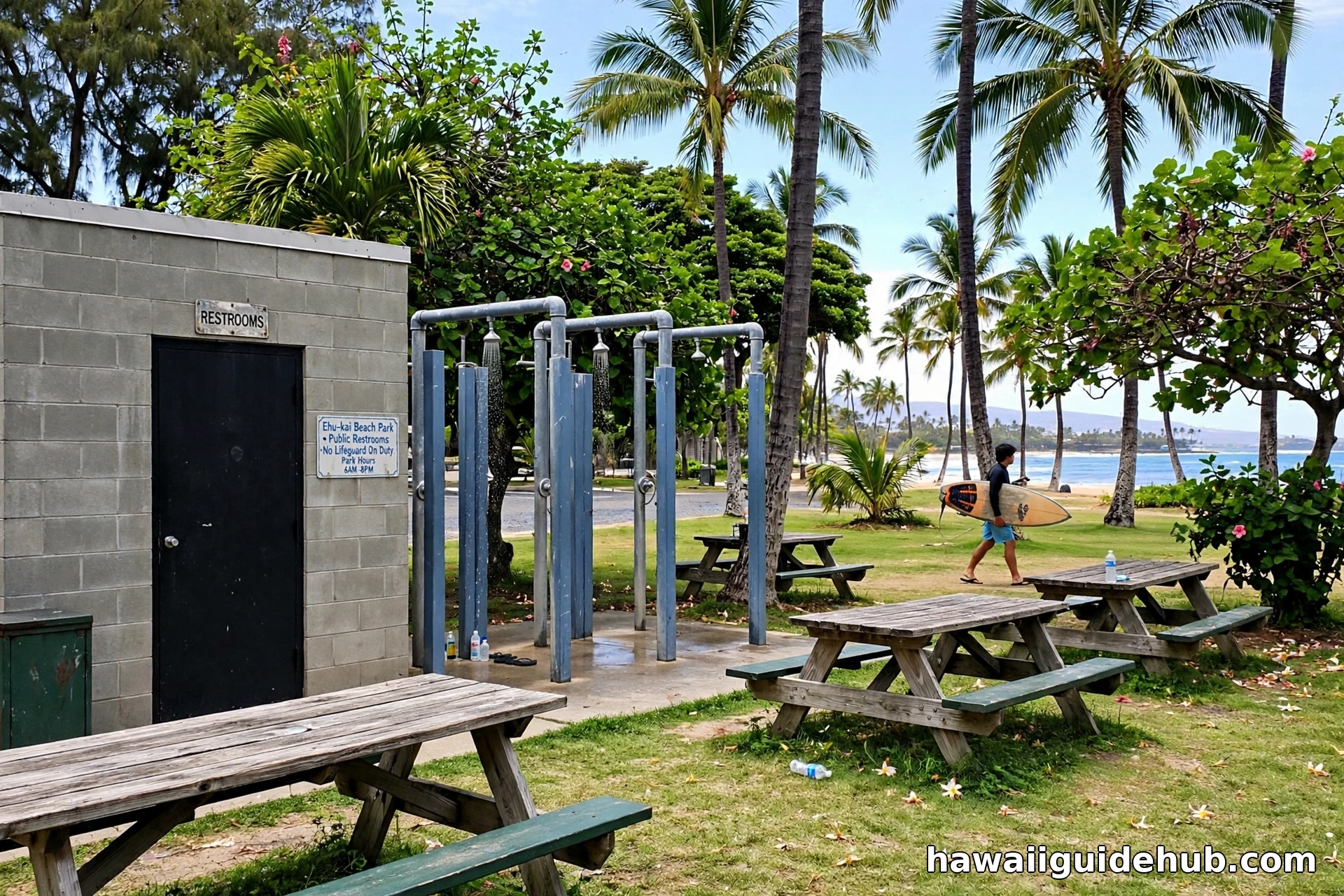
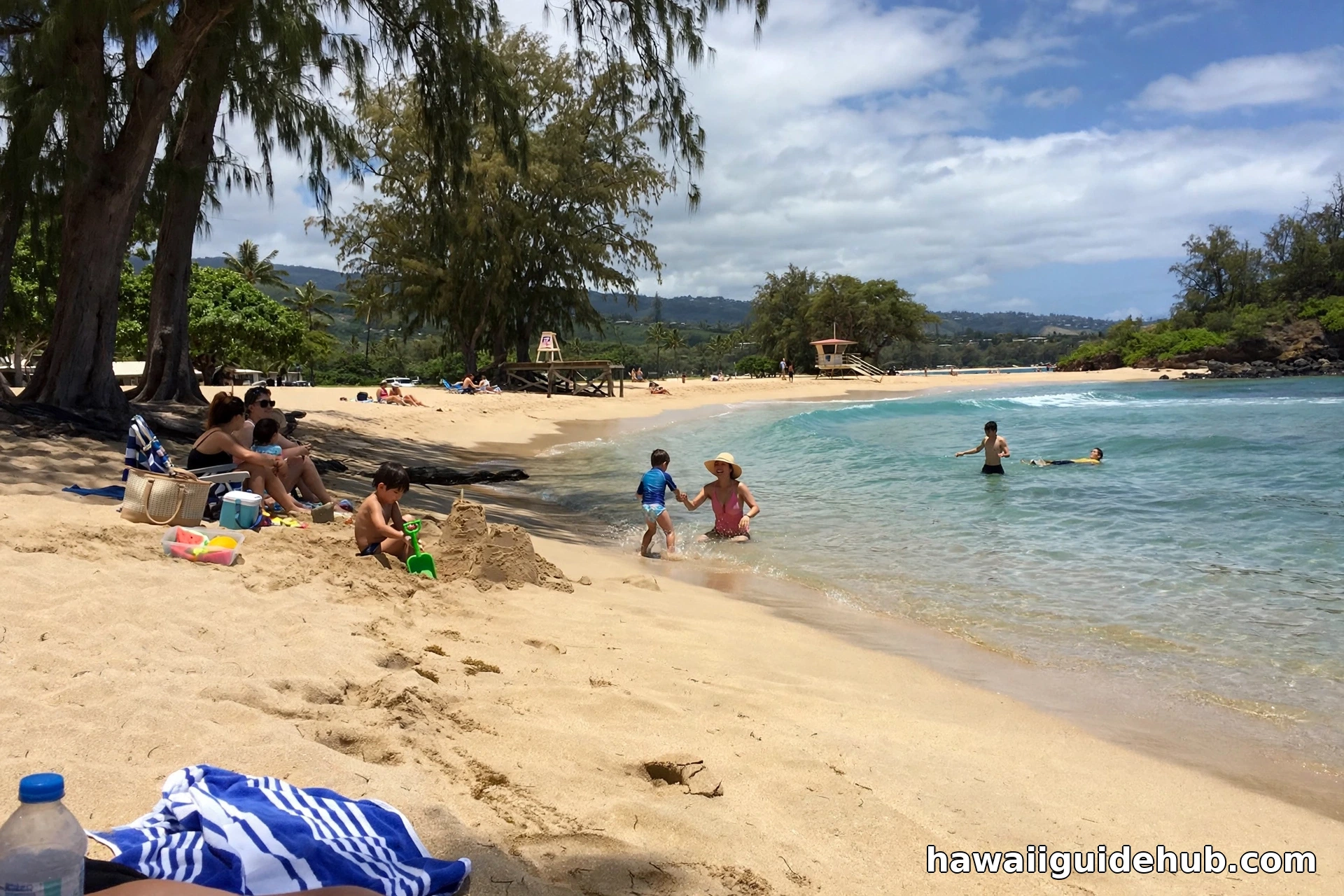
Set the surf fame aside for a moment and Ehukai is a lovely beach park in its own right. A wide crescent of golden sand stretches along the shore, backed by a grassy lawn dotted with picnic tables and shaded by coconut palms and ironwood trees. Families spread blankets on the grass, kids play in the sand, and on calm days the water turns a clear, inviting turquoise.
The park has the practical things a beach day needs: public restrooms, outdoor freshwater showers to rinse off, picnic tables, and grassy areas for lounging. There is no food for sale inside the park, but Kamehameha Highway is lined with food trucks, shrimp trucks, and small shops a short drive in either direction.
Ehukai is a lifeguarded beach. City and County of Honolulu ocean safety officers staff the towers during daylight hours. The state water safety records show Ehukai drawing well over half a million beachgoers a year, which tells you something about how many people come just to stand on the sand and watch.
The Wave: Pipeline Explained
Pipeline is a reef break, which means the waves form when open-ocean swells hit the shallow underwater reef and rear up. What makes Pipe special is the shape of that reef: it creates waves that pitch forward into enormous, hollow, perfectly cylindrical barrels, the “tubes” surfers dream about.
There are three reefs at Pipeline, in progressively deeper water farther offshore. First Reef, closest to shore, breaks on smaller swells. Second Reef handles medium surf. Third Reef, far out to sea, only activates on the biggest days of the season. Right beside the main left-breaking wave sits Backdoor, the right-breaking wave that shares the same peak. On the right swell direction, both fire at once.
The wave performs best on west to northwest swells, typically from October through March. When a big swell arrives, the faces can reach 8 to 20 feet or more, and they break in extremely shallow water over sharp reef. Pipeline is widely considered one of the most dangerous waves in the world, and it is strictly for expert surfers.
Winter: The Surf Spectacle (October to March)
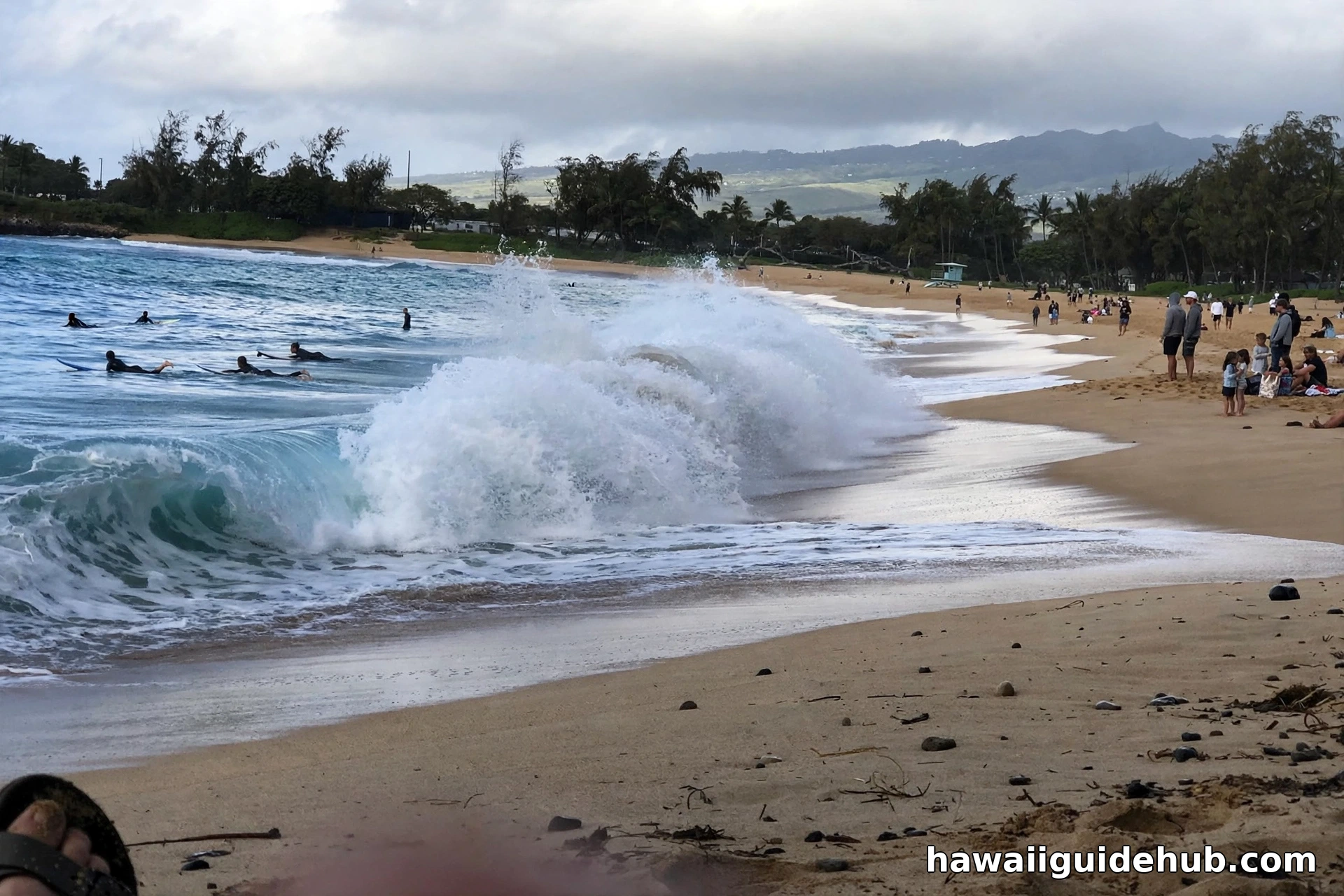
Winter is when Ehukai becomes a stadium. Northwest swells march in from across the Pacific, and Pipeline starts doing what it does best. The beach fills with spectators, photographers with enormous lenses line the sand, and the lineup offshore fills with the best surfers on earth warming up for, or competing in, the season’s contests.
The headline event is the Lexus Pipe Masters, the World Surf League Championship Tour finale, held December 8 to 20 in 2026 with the world titles decided right here. There is no ticket, no gate, and no grandstand for the public: you bring a towel, find a patch of sand, and watch the best surfers alive from closer than almost any other sport allows. The contest only runs on days when the surf cooperates, so check the WSL’s morning call before driving up.
The winter supporting cast includes the Da Hui Backdoor Shootout in early January and the Lexus Pipe Challenger (a Championship Tour qualifying event) running late January into early February in recent seasons. Dates shift every year, so check the World Surf League schedule before planning a trip around a specific event.
A word of warning for winter visitors: this is a spectator season, not a swimming season. The shore break is violent, the currents are strong, and the reef is unforgiving. Stay on the sand, keep children well back from the waterline, and never turn your back on the ocean.
Summer: The Family Beach (April to September)
Summer at Ehukai is a completely different beach. The big northwest swells fade, the ocean calms, and the wide sand becomes one of the North Shore’s most pleasant family beaches. The water turns clear and gentle, good for swimming and snorkeling, and the park’s lawns and picnic tables get their heaviest use.
This is the season to bring the cooler, the beach umbrella, and the kids. The sand is soft, the entry is sandy, and the whole atmosphere shifts from surf arena to neighborhood beach park. If your idea of Ehukai involves actually getting in the water, plan your visit for summer.
Parking and Facilities
Parking is the one practical headache at Ehukai, and it is worth planning around. The park’s free parking lot off Ke Nui Road is small (roughly a few dozen spots), and in winter surf season it fills fast, often before mid morning. On big swell days and contest days, it can feel hopeless by 9 AM.
Your backups: street parking along Kamehameha Highway on both sides of the park, and the small lot at Sunset Beach Elementary School across the highway. All of it is free. The golden rule is simple: arrive before 10 AM, earlier in winter, and you will park without drama.
Inside the park you will find restrooms, outdoor showers, picnic tables, and the lifeguard towers. There are no equipment rentals at the park and no food vendors, so bring what you need. The North Shore’s famous food trucks serving shrimp, tacos, and shave ice are scattered along Kamehameha Highway within a few minutes’ drive.
Getting There
From Waikiki or Honolulu, the drive to Ehukai Beach Park takes about one hour. Take H-1 west to H-2 north, then follow Kamehameha Highway (Route 83) through Haleiwa and up the North Shore. The scenic H-3 route across the Koolau mountains is beautiful but adds time, closer to an hour and a half without stops.
When using GPS, search for “Ehukai Beach Park,” since Pipeline itself is not always clearly marked. The park entrance is on Ke Nui Road, just off Kamehameha Highway.
You can also get there by bus. TheBus routes 51, 52, and 60 serve the North Shore, but the ride from Waikiki takes about twice as long as driving. If you are doing a full North Shore day, with Haleiwa, Pipeline, Sunset Beach, Waimea, a rental car is the practical choice. For more ideas on building that day, see our guide to things to do on Oahu’s North Shore.
Ocean Safety at Ehukai
Ehukai demands respect in every season, and especially in winter. The rules are simple and non-negotiable:
- Never turn your back on the ocean. Sneaker waves and sudden surges happen even on calm-looking days.
- In winter, stay on the sand. Do not wade, do not bodysurf the shore break, and keep children close to the dune line.
- Swim only in calm summer conditions, near a lifeguard tower, and never alone.
- Check the posted conditions board at the lifeguard tower and ask the guards about the day’s hazards before entering the water.
- If you see red flags or warning signs, obey them. The guards know this beach better than you do.
Pipeline’s reef is shallow and sharp, and the wave breaks with real force. Hundreds of surfboards are broken on that reef every year, along with a steady toll of injuries. If you surf, this wave is for experts only. Beginners should take lessons at a gentle Waikiki beach instead.
See Pipeline on Video
Pairing Ehukai With Your Oahu Trip
Ehukai works best as part of a North Shore day. Start in Haleiwa for coffee and shave ice, stop at Ehukai to watch the surf, continue to Sunset Beach and Waimea Bay, and finish with dinner back in Haleiwa as the sun drops. In winter, time your arrival for mid morning when the light is good and the offshore winds are often grooming the waves into perfect shape.
If this is your first trip to Hawaii, our guide for first-time visitors and our Oahu island guide will help you fit the North Shore into a bigger itinerary. And if the ocean has you hooked, our guide to outdoor adventures in Hawaii covers surfing, snorkeling, and hiking across the islands.
Frequently Asked Questions
Is Ehukai Beach Park free to visit?
Yes. Entry is free, parking is free, and no reservations or permits are required. It is a public City and County of Honolulu beach park, open to everyone.
Can you swim at Ehukai Beach Park?
In summer, when the ocean is calm, swimming and snorkeling are comfortable. In winter, the surf is extremely dangerous and swimming is not safe. Always check with the lifeguards and swim only in calm conditions near a tower.
When is the best time to see big waves at Pipeline?
November through February is peak season for massive surf, with the biggest swells typically arriving on northwest pulses. Check a surf forecast before you go, since conditions change day to day.
Where do you park for the Banzai Pipeline?
Use the small free lot at Ehukai Beach Park off Ke Nui Road, or park along Kamehameha Highway nearby. Arrive before 10 AM in winter for the best chance at a spot.
Is the Pipeline surf contest free to watch?
Yes. The Lexus Pipe Masters and other winter contests are free to watch from the beach. There are no tickets or gates. You watch from the sand like everyone else.
What does Ehukai mean?
Ehukai means “sea spray” in Hawaiian, a fitting name for a beach where winter waves throw spray high into the air.
A Beach Worth the Drive
Ehukai Beach Park earns its place on every North Shore itinerary for two completely different reasons. In winter, it is the front-row seat to the greatest show in surfing, where you can stand on free public sand and watch the world’s best riders take on the most famous wave on earth. In summer, it is simply a beautiful, uncrowded beach park with soft sand, clear water, and shade trees, the kind of place locals bring their families on a Sunday. Go in the right season for what you want, arrive early, respect the ocean, and you will understand why this stretch of sand has been famous for more than sixty years.