James Kealoha Beach Park: Hilo’s 4-Mile Beach

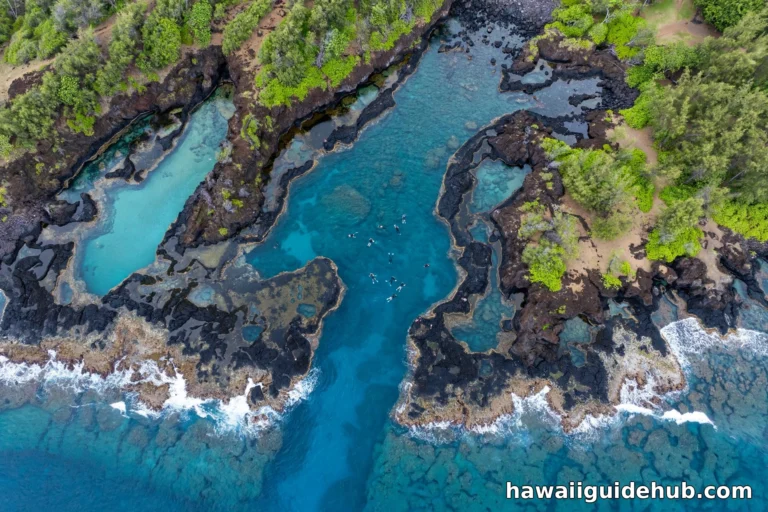
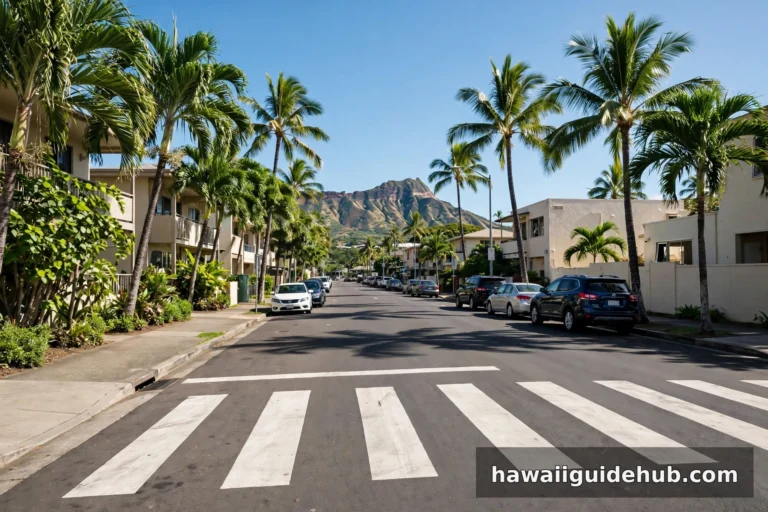
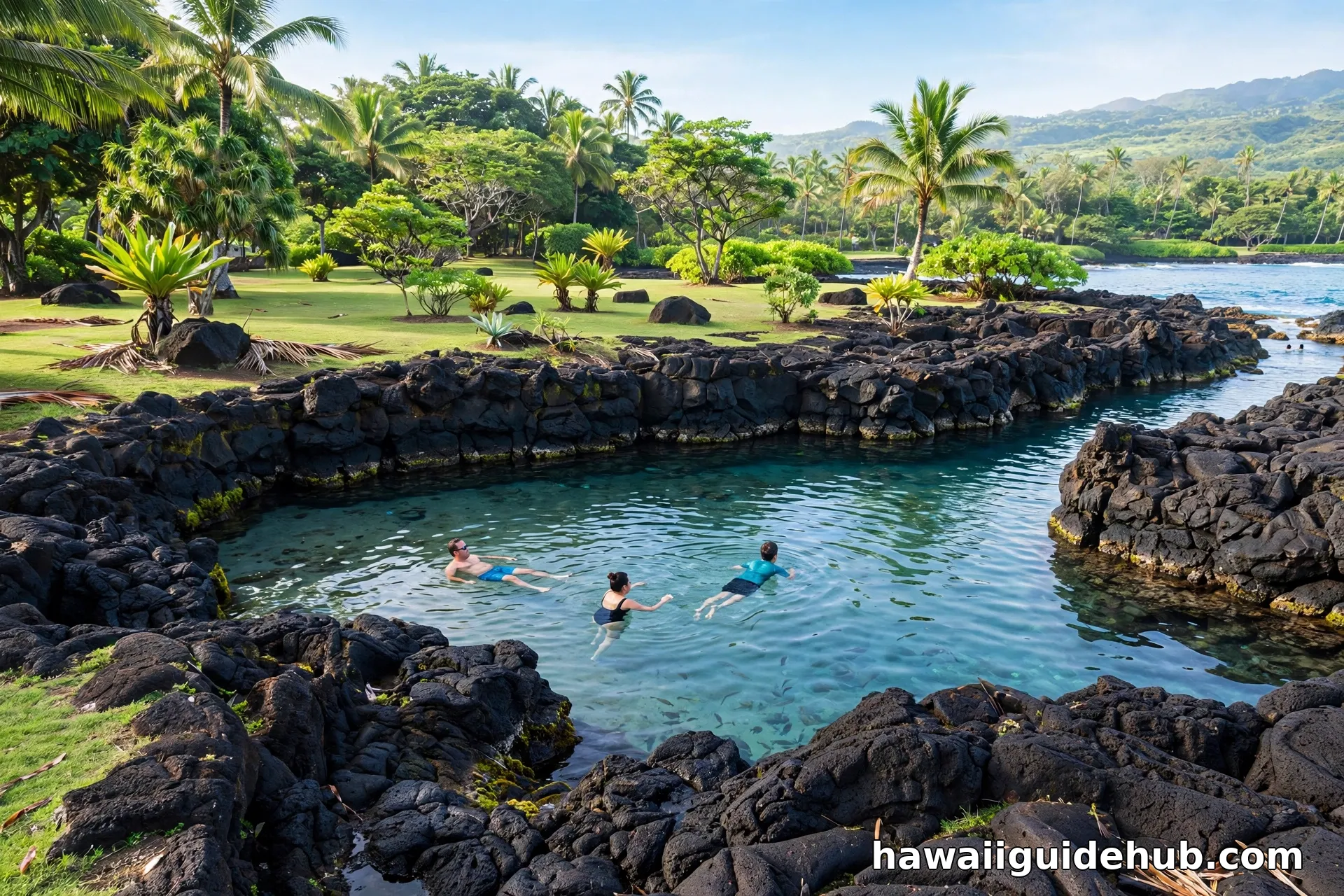
On the road out of Hilo toward the Keaukaha coast, the beaches change character fast. The black sand gives way to jagged black lava rock, and tucked into that rocky shoreline sits James Kealoha Beach Park, the spot Hilo locals just call 4-Mile Beach. It is not the kind of beach with postcard sand stretching for a mile. It is something better for swimmers and snorkelers: a protected basin of warm, clear water wrapped in reef and rock walls, with cold freshwater springs bubbling up right where you swim.
This is the single complete guide to Kealoha Beach Park. It covers where the park is and how to get there, the story behind the 4-Mile name, parking and facilities, swimming and snorkeling conditions on each side of the beach, the hazards you need to respect, whether lifeguards are on duty, the best time to visit, nearby alternatives, and answers to the questions visitors ask most. Everything about Kealoha Beach Park is right here on this one page.
Kealoha Beach Park at a Glance
| Good news | Know before you go |
|---|---|
| Swimming, snorkeling, and picnics in a calm, protected basin | Mostly rocky shoreline with pockets of white sand, not a long sand beach |
| Restrooms, showers, covered pavilions, picnic tables, free parking | A lifeguard tower stands here, but staffing varies; swim as if no lifeguard is on duty |
| No entry fee | About 4 miles from the downtown Hilo post office, at Kalanianaʻole Ave and Keaukaha Rd |
| Mornings bring the calmest water; weekdays the thinnest crowds | Known locally as 4-Mile Beach (full name: James Kealoha Beach Park) |
Where Kealoha Beach Park Is and Why It Is Called 4-Mile
Kealoha Beach Park sits on Kalanianaʻole Avenue at Keaukaha Road, on the coast east of downtown Hilo. The nickname is literal: the park is almost exactly four miles from the Hilo town post office, and generations of Hilo residents have called it 4-Mile Beach. The official name honors James Kealoha, who served as the first Lieutenant Governor of Hawaiʻi under Governor William F. Quinn and before that as a longtime legislator from the island of Hawaiʻi.
Getting there is simple. From downtown Hilo, follow Kalanianaʻole Avenue (Highway 11) east along the water through the Keaukaha neighborhood. The park entrance is on the ocean side of the road, with a public parking lot plus street parking along the avenue. Parking is free and usually easy on weekdays; weekends and summer afternoons fill up with local families, which tells you something about how the community feels about this beach. Hilo makes a great base for the island’s east side, so pair your beach morning with our roundup of the best things to do on the Big Island of Hawaiʻi.
Two Beaches in One: The East Basin and the West Side
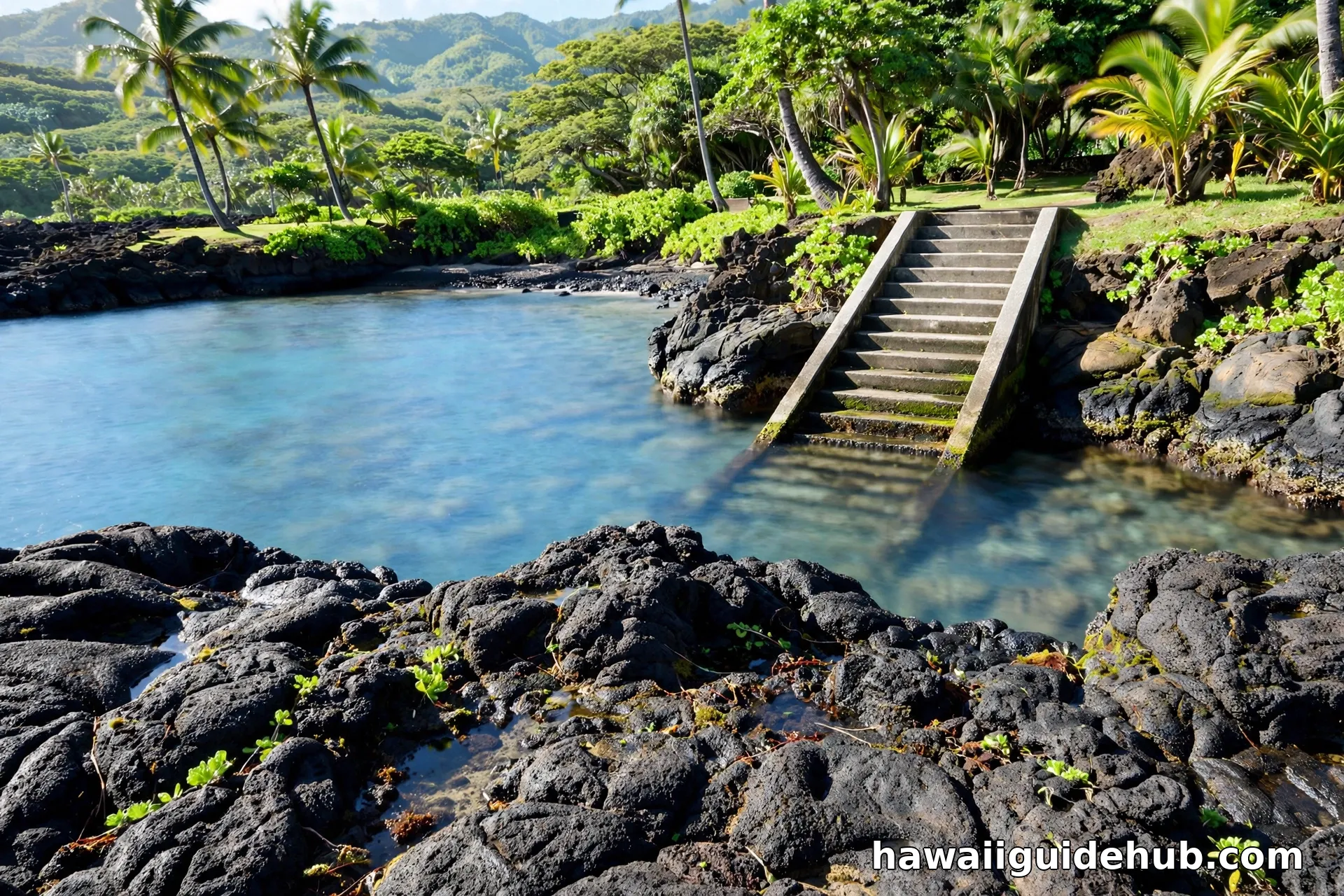
The most important thing to understand about Kealoha Beach Park is that it has two personalities, and you should pick the right one for your day. The eastern side of the park holds a deep, protected basin with generally calm, clear water and pockets of white sand. A public stairway on the eastern end gives easy access to the water, and the reef and rock walls just offshore calm the wave action before it reaches you. This is the swimming and snorkeling side, and it is where families settle in.
The western and central areas open to the deeper offshore water and behave like open ocean. When the surf picks up, especially in winter, local surfers ride the swells breaking on the outer reef, and a strong rip current can run seaward through the central part of the bay. This side is for watching, not swimming, unless you are an experienced ocean swimmer who has checked the day’s surf forecast. The contrast is the whole story of the park: sheltered and gentle on one end, wild Pacific on the other.
Swimming at Kealoha Beach Park
Swimming here comes with a quirk you will not find at most Hawaiʻi beaches: cold freshwater springs bubble up from underwater close to shore. Swim out a few yards and you pass through a band of noticeably cooler water before reaching the warm water beyond. The area in front of the lifeguard tower tends to be the warmest, thanks to a soft sandy bottom that helps heat the water column. It is a strange and pleasant sensation, and kids tend to love hunting for the cold spots.
Stick to the eastern basin for swimming. Enter via the public stairway or anywhere along the shore on that side, and stay inside the protected water. The water is clear enough that you can usually see the bottom, which makes it easy to pick a sandy patch to float over. Because the shoreline is mostly lava rock rather than sand, water shoes are a smart move for getting in and out, and they protect against the occasional sea urchin tucked into the reef.
Snorkeling at Kealoha Beach Park
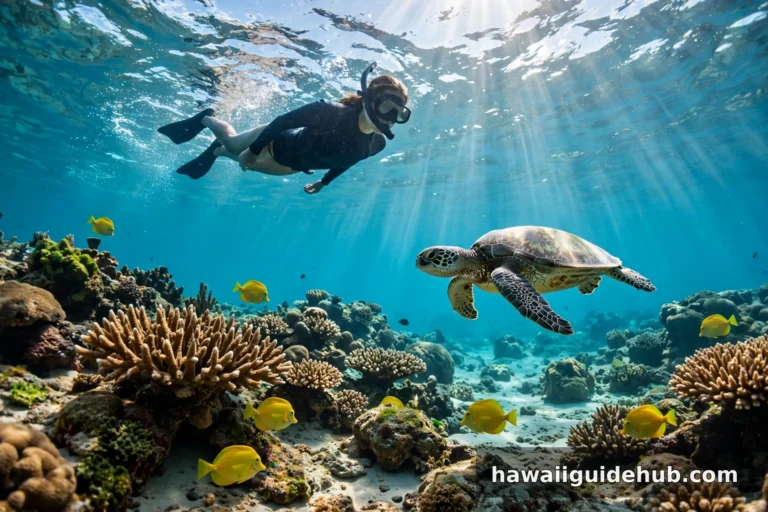
Snorkeling is best in the rocky and reefy areas, where the structure draws in marine life. Signs at the parking lot entrance describe the kinds of fish, honu (Hawaiian green sea turtles), sea urchins, and marine invertebrates you might see, which gives you a preview before you get wet. Turtles are regulars here, often spotted resting on the rocks or cruising the reef edge. As with everywhere in Hawaiʻi, give honu plenty of space and never touch them; they are protected by state and federal law.
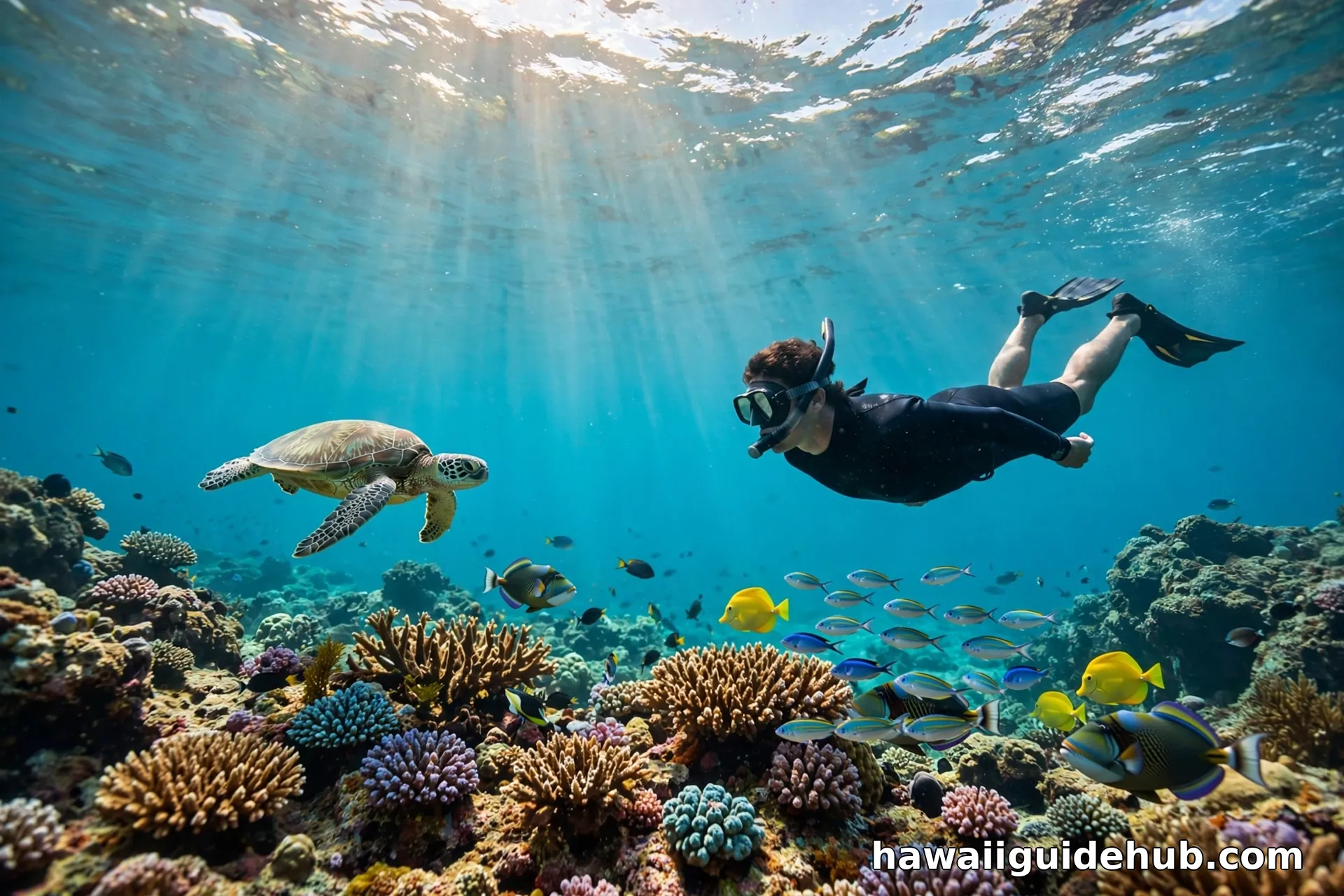
Visibility is generally good in the protected basin, though it varies with surf and recent rain. Hilo is famously rainy, and runoff after heavy rain can cloud the water near shore for a day or two. Mornings are usually clearest, before the wind picks up. If the water looks murky or the surf is up, save the snorkel for another day; the reef will still be there.
Facilities, Parking, and Food Trucks
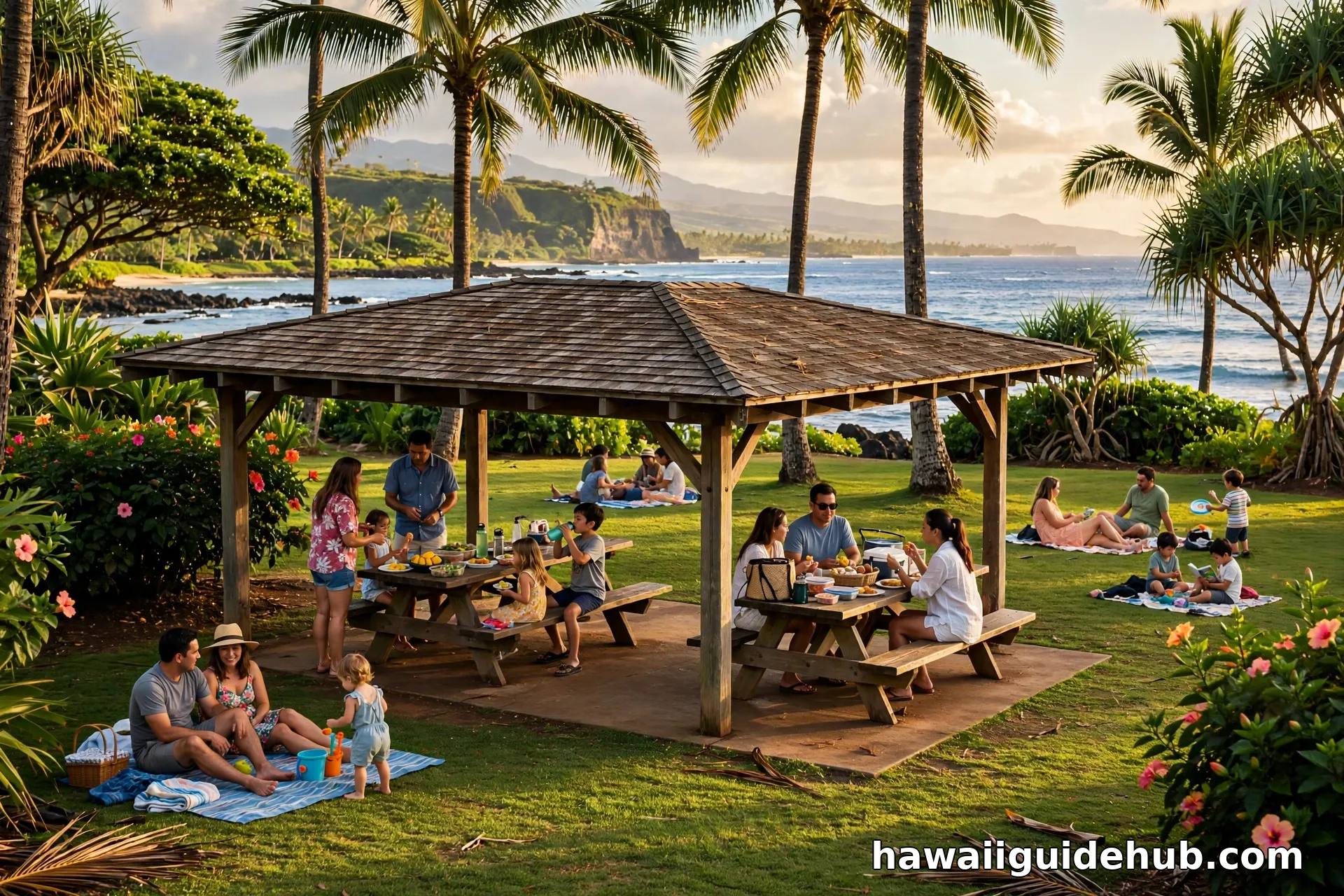
The park is well set up for a full beach day. There are restrooms and showers, covered pavilions with picnic tables, and benches scattered around the grounds. Parking is free in the public lot, with additional street parking along Kalanianaʻole Avenue when the lot fills. The grounds are grassy in parts, which matters because sitting space on the rocky shore itself is limited; bring beach chairs or a blanket if you want to lounge comfortably.
On weekends, the park gets a local flavor boost: shave ice trucks, crack seed trucks, and plate lunch trucks often set up to serve the beach crowd. It is a small thing that says a lot about the park’s place in Hilo life. There is also a seafood restaurant and aqua farm nearby on the avenue if you want a sit-down meal after your swim.
Safety: What to Respect at Kealoha Beach Park
Kealoha Beach Park is a county park, not a resort beach, and it rewards visitors who read the ocean before getting in. The honest answer on lifeguards is nuanced: a lifeguard tower stands at the park, but published sources differ on whether it is regularly staffed. Swim as if no lifeguard is on duty. Never turn your back on the ocean, and keep children within arm’s reach.
The specific hazards here are the rocky entries, the rip current that can run through the central bay during high surf, and the open-ocean west side. Sea urchins live in the reef crevices, which is another reason for water shoes. The cold springs are harmless but can startle first-timers. None of this should keep you out of the water on a calm day; it should keep you in the eastern basin, which is exactly what the park’s design encourages.
Best Time to Visit
Morning is the sweet spot. The water is calmest and clearest, the parking lot is emptiest, and the light on the bay is beautiful. Midday brings the warmest water and the strongest sun, so bring reef-safe sunscreen and shade. Late afternoon draws local families after work and school, which is lovely for people-watching but busier. Winter (roughly November through March) brings bigger surf to the west side and occasionally closes the swimming to all but the most protected pockets; summer is the calmest season overall.
Nearby Alternatives
If Kealoha’s rocky shore is not your style, you have excellent options within a few minutes. Carlsmith Beach Park, just down the avenue, is the famous turtle beach with sandy entries and great snorkeling. Richardson Ocean Park (Richardson Beach) offers black sand, tide pools, and a lifeguarded swimming area that many families prefer. Onekahakaha Beach Park has a shallow, sandy-bottomed keiki (children’s) pool protected by a breakwater, ideal for small kids. Each has its own character; Kealoha’s edge is the warm protected basin and the local scene.
Video: Touring Hilo’s Beach Parks
This driving tour of Hilo’s beach parks includes Kealoha Beach Park (at the 10:46 mark), plus neighboring Carlsmith and Richardson parks.
What to Bring
Kealoha Beach Park rewards visitors who pack for a rocky-shore beach rather than a sandy one. Water shoes top the list: the lava rock entries are sharp, and urchins hide in the reef crevices. Reef-safe sunscreen is essential, since you will be in and out of the water all day and Hilo’s sun is strong even when clouds drift through. Bring beach chairs or thick blankets, because the comfortable sitting space is on the grass, not the shore. A cooler with drinks and snacks turns the pavilions into a proper picnic base, and a dry bag keeps your phone and keys safe while you swim. If you snorkel, bring your own gear; there are no rental stands at the park.
One more thing to watch for overhead and on the grass: nēnē, the Hawaiian goose, have been returning to the area around the park as habitat across the road has been cleaned up. The pond and grassy areas are natural habitat for them. Enjoy watching them, keep your distance, and never feed them human food. Picking up your trash matters doubly here; a clean park keeps the wildlife coming back.
Frequently Asked Questions
Is Kealoha Beach Park good for swimming?
Yes, in the protected eastern basin, which has calm, warm, clear water and a sandy bottom in places. Avoid the western and central areas when the surf is up, since they open to the ocean and can develop a strong rip current.
Are there lifeguards at Kealoha Beach Park?
A lifeguard tower stands at the park, but sources differ on staffing, so you should swim as if no lifeguard is on duty. Stay in the protected eastern basin, watch the surf forecast, and keep kids close.
Is there sand at Kealoha Beach Park?
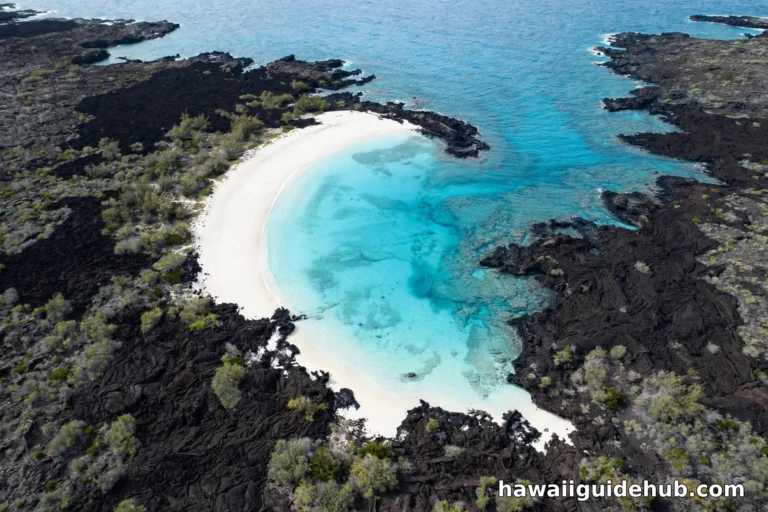
Only in pockets. The shoreline is mostly lava rock with patches of white sand in the eastern swimming basin. Bring water shoes for entries and chairs or a blanket for lounging on the grass.
Is Kealoha Beach Park free?
Yes. Entry and parking are free. It is a Hawaiʻi County park, open to everyone.
Can you snorkel at Kealoha Beach Park?
Yes, and it is one of the park’s best features. Snorkel the rocky and reefy areas of the eastern basin, where you are likely to see reef fish and honu (green sea turtles). Mornings offer the clearest water.
Why is it called 4-Mile Beach?
Because it sits about four miles from the Hilo town post office. The official name, James Kealoha Beach Park, honors Hawaiʻi’s first lieutenant governor.
Why Kealoha Beach Park Deserves a Morning
Most visitors to the Hilo side rush from the airport to Volcanoes National Park and never stop at the coast in between. Kealoha Beach Park is the reason to slow down. It is where Hilo swims: a warm, reef-sheltered basin, turtles on the rocks, shave ice trucks on weekends, and water so clear you can watch the cold springs shimmer as they rise. Go in the morning, bring water shoes, and swim the east basin like a local.