Non Touristy Things to Do in Honolulu

Most visitors see Honolulu through the same narrow window: a hotel on Kalākaua Avenue, a few blocks of beach, and a shuttle bus to Pearl Harbor. That version of the city is real, but it is only a fraction of the place. Honolulu is also the city where locals live, eat, and spend their weekends, and that side of town looks nothing like the postcard strip.
This is the single complete guide to non touristy things to do in Honolulu. It covers the free viewpoints, gardens, museums, and neighborhoods where Honolulu residents actually go, with real hours, real prices, and practical logistics for each one. Everything here sits inside the Honolulu city limits or a short drive away, and almost all of it is free or close to it.
Honolulu Beyond Waikiki at a Glance
| Spot | What it is | Cost |
| FREE | ||
| Capitol Modern | Hawaiʻi’s free state art museum | Free |
| Lyon Arboretum | Rainforest garden in Mānoa Valley | Free, $5 donation requested |
| Kaimukī | Local food and boutique street | Free to wander |
| Kakaʻako | Street art murals and warehouses | Free |
| Punchbowl | National Memorial Cemetery of the Pacific | Free |
| Koko Crater Botanical Garden | Desert garden inside a volcanic crater | Free |
| Hoʻomaluhia Botanical Garden | 400-acre garden beneath the Koʻolau range | Free |
| A FEW DOLLARS | ||
| Tantalus Lookout | Panoramic city and ocean viewpoint | Free, $3 parking for nonresidents |
| Foster Botanical Garden | 14-acre historic garden downtown | $5 nonresident, $3 resident, kids under 6 free |
| THE SPLURGE | ||
| Honolulu Museum of Art | Asian, Pacific, and European art | $20 general, free on select days |
Watch the Sunset from Tantalus Lookout
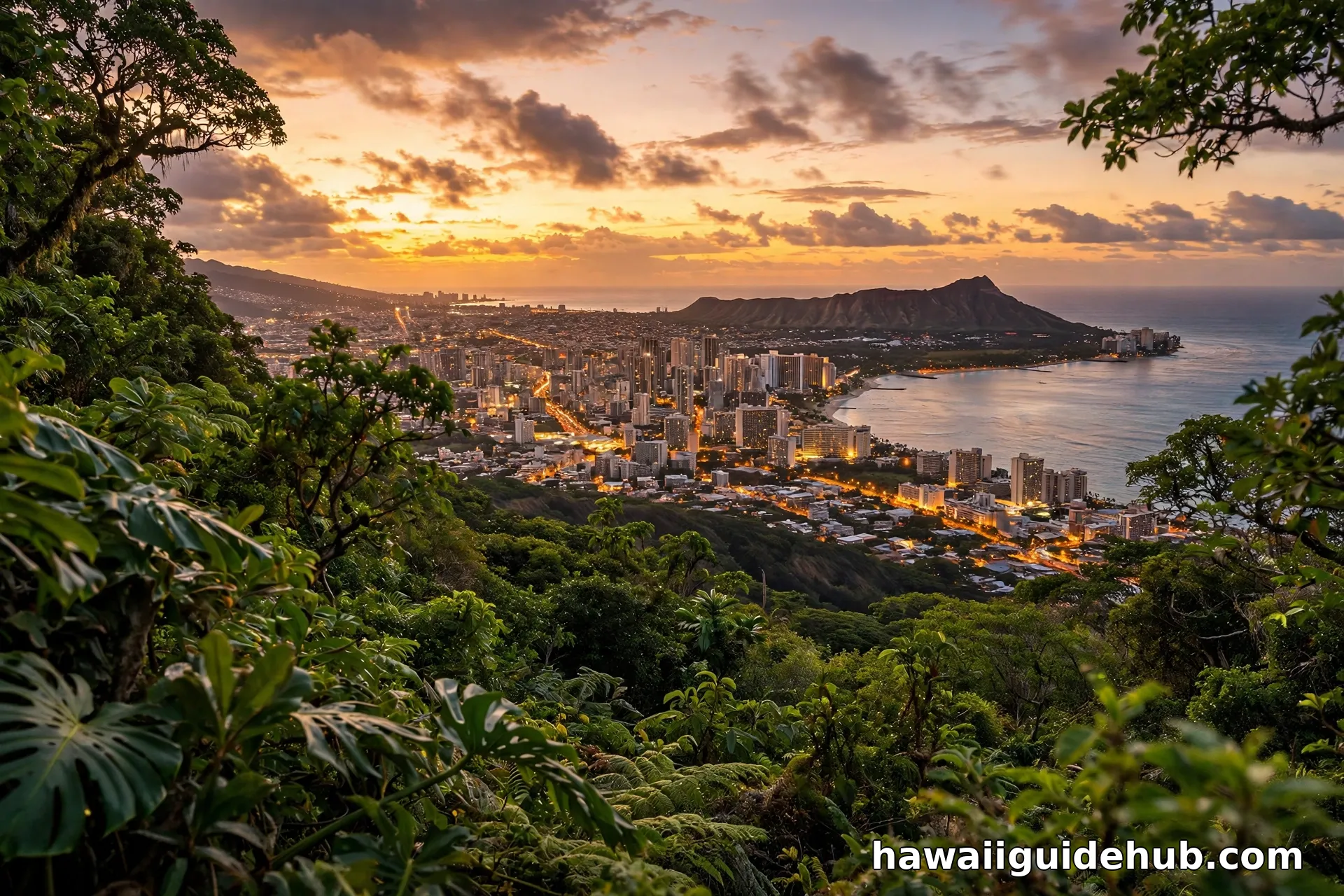
The drive up Round Top Drive is the first non-touristy thing most locals recommend, and for good reason. Puʻu ʻUalakaʻa State Wayside, better known as the Tantalus Lookout, sits on a forested ridge about 15 minutes above Waikiki and delivers the widest view of Honolulu you can get without hiking: Diamond Head on one side, the downtown skyline and Pearl Harbor on the other, and the whole glittering coastline in between.
Admission is free and nonresident parking costs $3. The park opens at 7 a.m. and closes at 6:45 p.m. in winter, stretching to 7:45 p.m. in summer, so it is built for sunset rather than sunrise. Arrive about an hour before sundown to claim a spot, because the parking area is small and sunset draws a local crowd. The short ʻUalakaʻa Loop Trail circles through koa forest behind the lookout if you want a ten-minute walk with your view.
A practical note: the road is narrow and winding, and break-ins do happen at the parking area, so take your valuables with you and lock the car. That is standard advice for any Oahu trailhead. The capitol district sits just below the ridge, and if you want to pair the lookout with the historic core, read what to know before going to ʻIolani Palace first.
Free Art: Capitol Modern, First Friday, and Family Sunday
Honolulu has a genuine art scene, and the cheapest way into it is the Hawaiʻi State Art Museum, now called Capitol Modern. It sits at 250 South Hotel Street in the downtown capitol district, two floors of work by Hawaiʻi artists drawn from the state’s Art in Public Places collection. Admission is always free. The museum is open Wednesday through Saturday from 10 a.m. to 4 p.m., and on the first Friday of every month the galleries stay open from 6 to 9 p.m. with live music, which makes it one of the best free evenings in the city.
Honolulu Museum of Art on a Free Day
The Honolulu Museum of Art at 900 South Beretania Street holds one of the strongest Asian and Pacific art collections in the country, and you do not need to pay the $20 general admission if you time your visit. The museum opens its doors free on the third Sunday of every month for Bank of Hawaiʻi Family Sunday, with art activities and entertainment, and again on the first Wednesday of every month. Kids 18 and under are always free.
First Friday in Chinatown
Honolulu’s Chinatown is one of the oldest in the United States, and on the first Friday of each month its galleries, studios, and shops stay open late for a free block-party-style art walk. The streets fill with locals rather than tour groups, food vendors set up, and the whole district feels alive. Pair it with the Capitol Modern evening hours and you have a full Friday night that costs nothing.
Three Gardens Locals Actually Visit
The Honolulu Botanical Gardens system runs five gardens across Oahu, and three of them make excellent non-touristy Honolulu outings. Each one feels completely different from the others, and two are entirely free.
Foster Botanical Garden
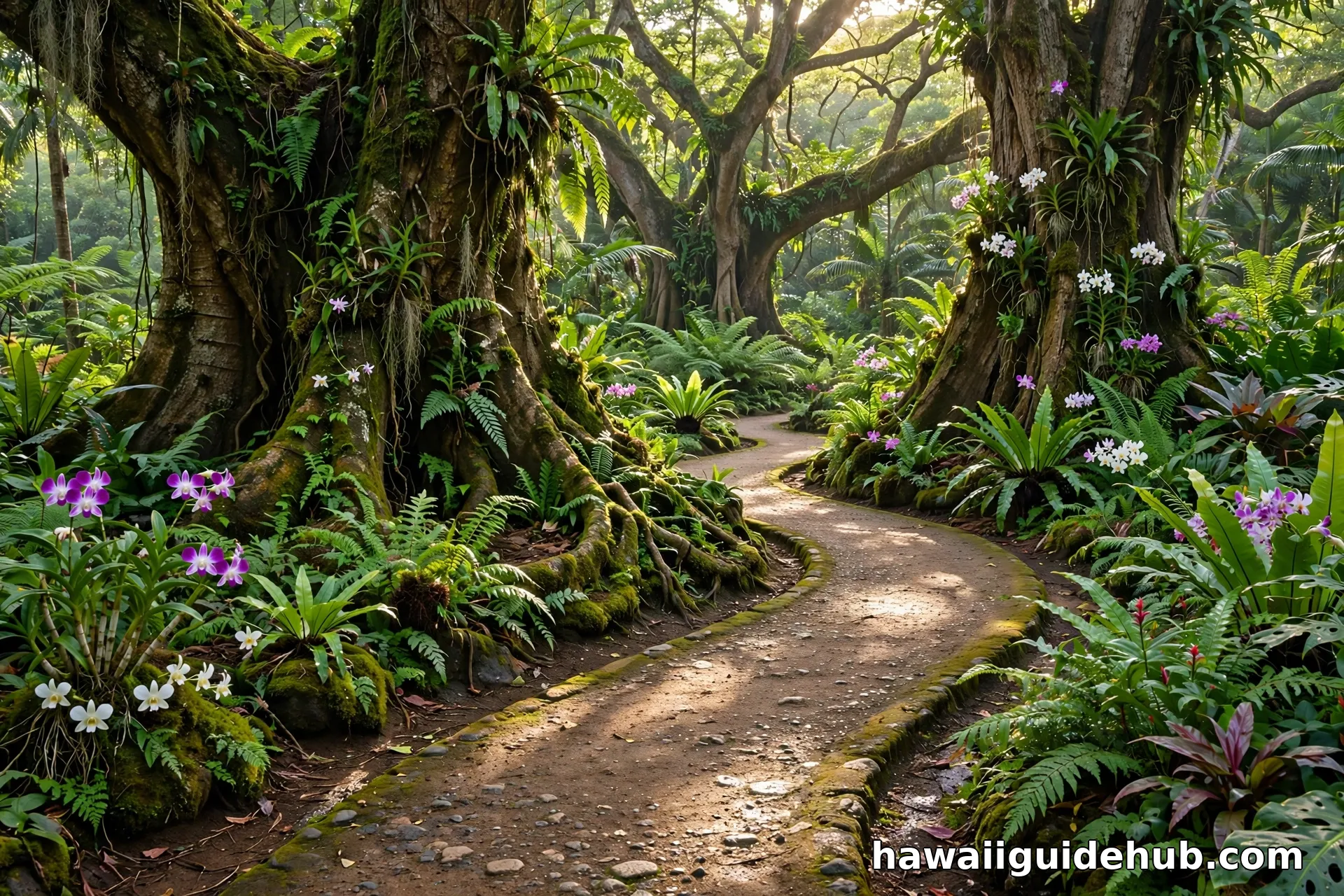
Foster Botanical Garden is the oldest of the city’s gardens, a 14-acre pocket of mature tropical forest wedged between Chinatown and Vineyard Boulevard at 180 North Vineyard Boulevard. Some of its trees were planted in the 1850s, and the collection includes an orchid conservatory, a prehistoric glen of cycads, and 24 trees designated exceptional under state law. It opens daily from 9 a.m. to 4 p.m., closing only on Christmas and New Year’s Day. Admission is $5 for nonresidents, $3 for residents, $1 for kids ages 6 to 12, and free for children under 6. Free docent-led tours leave at 10:30 a.m., and the ticket booth can fill up on weekend mornings.
Koko Crater Botanical Garden
About 25 minutes east of downtown, past Hanauma Bay, sits a botanical garden inside an actual volcanic crater. Koko Crater Botanical Garden is free and open daily from sunrise to sunset. A two-mile loop trail winds through plumeria groves, African baobabs, cacti, and dryland palms, all inside the 200-acre crater basin. Visit in late spring or summer for the plumeria grove at its most fragrant, go early or late to avoid the midday heat, and bring your own water, because there are no drinking fountains and only a portable restroom at the trailhead.
Hoʻomaluhia Botanical Garden
Hoʻomaluhia means “a place of peace and tranquility,” and the name fits. This 400-acre garden sits in Kāneʻohe at the base of the Koʻolau mountains, about 30 minutes from Waikiki over the Pali Highway. Entry and parking are free, and the garden is open daily from 9 a.m. to 4 p.m. The entrance road, with the green Koʻolau cliffs rising dead ahead, is one of the most photographed drives on Oahu, but stopping on the road itself is prohibited, so pull into the designated areas. Weekend catch-and-release fishing happens at the lake with bamboo poles provided, and the picnic areas under the mountain views are where local families spend their Saturdays.
Get Lost in Mānoa Valley
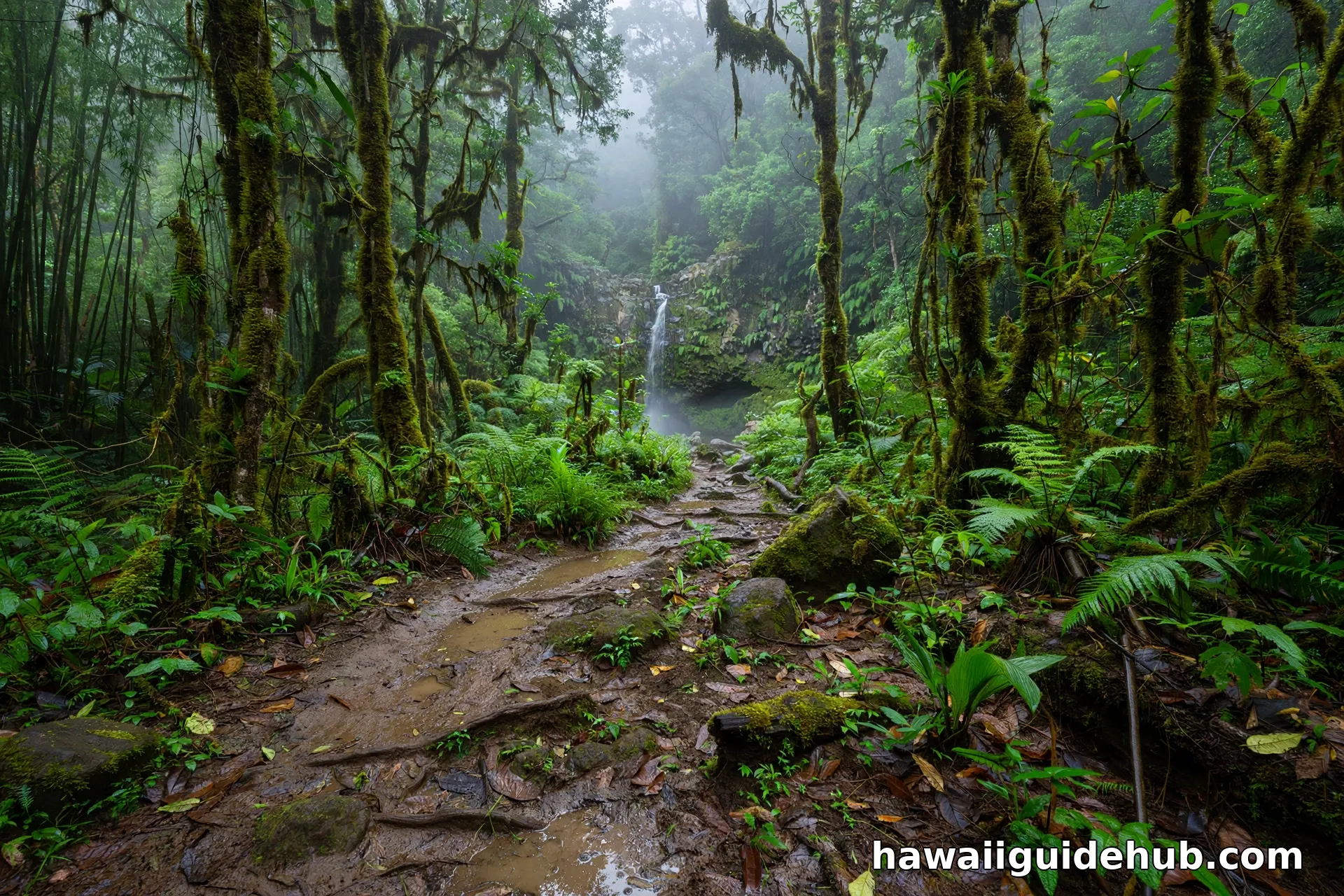
Mānoa Valley is Honolulu’s rainforest backyard, five miles from Waikiki and a world away from it. The valley floor holds the University of Hawaiʻi campus and quiet residential streets, but the back of the valley is pure jungle, and Lyon Arboretum is the way in. The Harold L. Lyon Arboretum covers nearly 200 acres of tropical rainforest managed by the university, with more than seven miles of trails, native Hawaiian plant collections, and an elevation gradient that climbs from 450 to 1,850 feet.
Entry is free with a $5 donation requested, and the arboretum is open weekdays from 9 a.m. to 3 p.m. Mānoa gets around 165 inches of rain a year, so trails are often muddy and mosquitoes are enthusiastic. Bring repellent, wear shoes you do not mind ruining, and arrive early, because the small parking lot fills and the gates close at 3 p.m. sharp. If you want a more famous Mānoa trail to pair with the arboretum, our guide to Mānoa Falls covers the waterfall hike just up the road.
Walk and Eat in Kaimukī
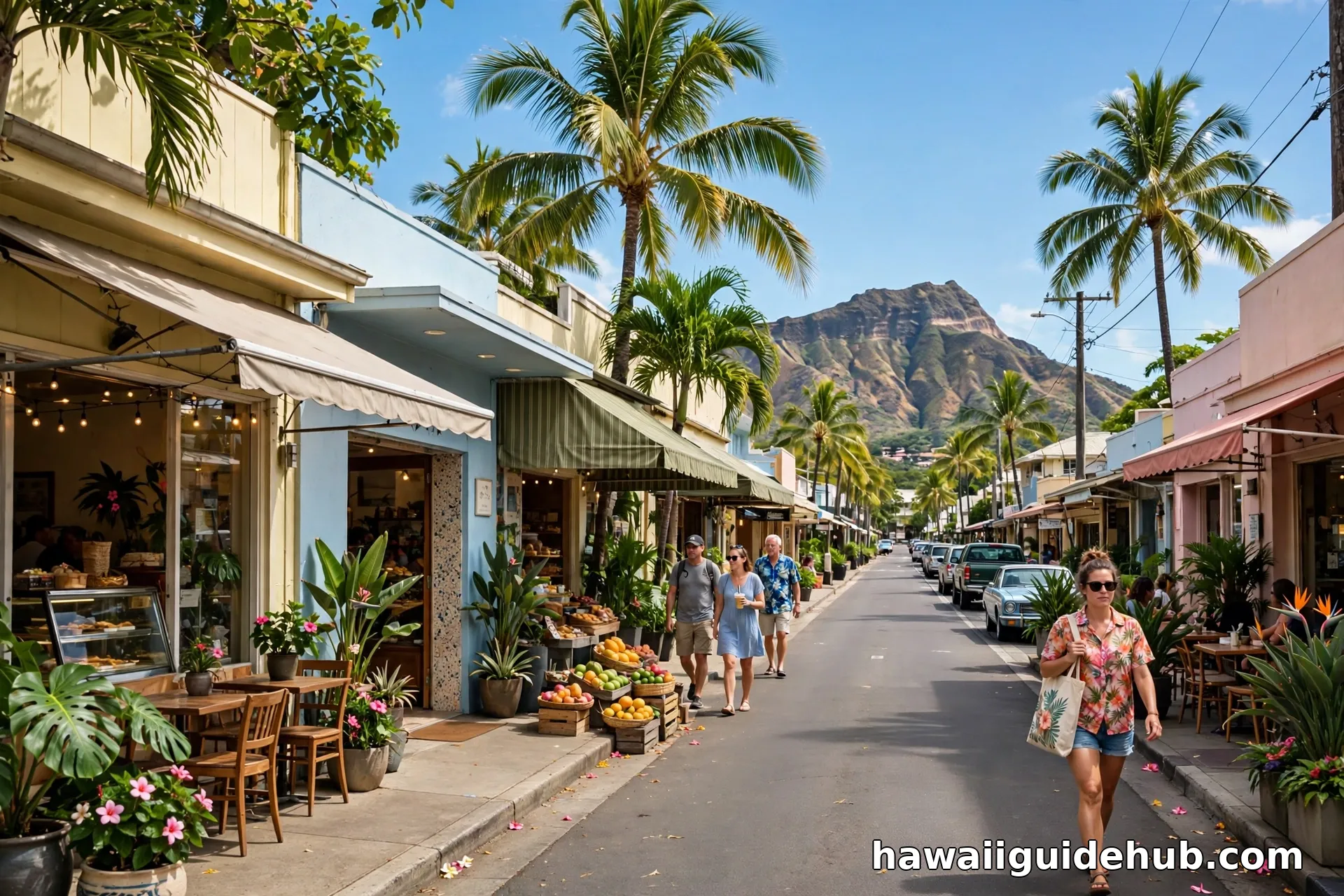
If you want to eat where Honolulu eats, skip the resort restaurants and spend an afternoon in Kaimukī. This neighborhood along Waiʻalae Avenue, just east of Waikiki over the hill from Diamond Head, is a dense row of independent bakeries, ramen counters, poke shops, vintage stores, and small boutiques. It has the feel of a small town that happens to sit inside a capital city, and almost everyone on the sidewalk is a local running errands.
Nearby Kapahulu Avenue continues the theme with its own stretch of beloved local spots, including the famous pink bakery that has drawn lines for hot malasadas since 1952. Come hungry, park once, and walk. Between the two streets you can graze your way through an entire afternoon without spending tourist prices or standing in a single tour-bus line. To understand what you are tasting, read our guide to must-try local dishes in Hawaii before you go.
Hunt Murals in Kakaʻako
Kakaʻako, the warehouse district between downtown and Ala Moana, has become Honolulu’s open-air gallery. Over the past decade the area’s walls have filled with dozens of large-scale murals by local and international artists, many painted during the annual mural festival that put the neighborhood on the map. The works rotate as buildings change hands, so no two visits look quite the same. For a broader day plan around town, see what not to miss in Oahu to stitch the murals together with the rest of the island.
Start at the SALT at Our Kakaʻako complex for food and shopping in converted warehouses, then wander the side streets with your camera. The area also hosts monthly night markets and pop-up events, which draw a young local crowd. Kakaʻako is flat, walkable, and free, and it pairs naturally with Ala Moana Beach Park next door for a sunset picnic after your mural hunt.
Pay Respects at Punchbowl
The National Memorial Cemetery of the Pacific sits inside Puowaina, an extinct volcanic crater above Honolulu known as Punchbowl. More than 50,000 service members are interred here, and the grounds include the Honolulu Memorial and the Courts of the Missing, which honor the missing from World War II, Korea, and Vietnam. The cemetery is open to visitors daily and admission is free.
This is not a photo opportunity in the usual sense. Dress respectfully, keep voices low, stay on the paths, and avoid visiting during active services. The reward for that restraint is one of the most moving places in Honolulu and, almost incidentally, a sweeping view over the city and Diamond Head that most visitors never see.
Time It Right: Free Days and Events
Getting Around Without the Tourist Traps
Almost everything in this guide is reachable by car in 15 to 35 minutes from Waikiki, and parking at these spots is either free or a few dollars. If you would rather not drive, TheBus reaches Foster Botanical Garden, Capitol Modern, the Honolulu Museum of Art, Kaimukī, and Kakaʻako directly from Waikiki on standard city routes. Lyon Arboretum and the windward gardens are easier with a car, though bus route 23 gets you within a third of a mile of Koko Crater’s entrance.
One honest tip: the rental car shuttles and hotel concierges will try to steer you toward paid tours to the places in this guide. You do not need one. Every spot here is self-guided, and the money you save goes further at the neighborhood restaurants in Kaimukī and Chinatown. If you are still deciding how to structure your days, our Oahu island adventure guide lays out what not to miss beyond Honolulu.
Safety and Etiquette for the Local Side of Town
The non-touristy side of Honolulu is safe, but it rewards a little local awareness. Lock your car and take valuables with you at every trailhead and lookout, including Tantalus and Koko Crater. At the botanical gardens, stay on the paths and never pick plants or remove plant material, a rule the gardens enforce to protect rare collections. In Chinatown and Kakaʻako at night, stick to the well-lit main streets where the crowds are. And at Punchbowl, remember you are a guest in a cemetery: quiet voices, no food or drink on the grounds, and no climbing on the memorials.
Weather is the other thing to respect. Mānoa and the windward gardens sit in some of the wettest microclimates on the island, so a sunny Waikiki morning can turn into a muddy afternoon five miles away. Check the forecast before you commit to a valley hike, and keep a rain jacket in the car as a matter of routine.
Video: Honolulu’s Local Hidden Gems
Local couple Amanda and Felix share little-known food gems across Honolulu, including spots on Kapahulu and Waiʻalae avenues.
Frequently Asked Questions
What is there to do in Honolulu besides Waikiki?
Plenty. Tantalus Lookout for sunset, Foster Botanical Garden, the free Capitol Modern art museum, First Friday in Chinatown, the Kaimukī food streets, Kakaʻako murals, Lyon Arboretum in Mānoa Valley, Punchbowl cemetery, and the free botanical gardens at Koko Crater and Hoʻomaluhia all sit within 35 minutes of Waikiki.
Are there free things to do in Honolulu?
Yes, most of the non-touristy highlights are free. Tantalus Lookout, Capitol Modern, Koko Crater and Hoʻomaluhia botanical gardens, Punchbowl, Kakaʻako murals, and Lyon Arboretum all cost nothing, and the Honolulu Museum of Art is free on the third Sunday and first Wednesday of each month. Our Oahu island adventure guide covers more budget ideas across the island.
Where do locals hang out in Honolulu?
Kaimukī for food and shopping, Chinatown on First Friday, Kakaʻako for murals and night markets, Mānoa for the valley and the university scene, and the botanical gardens on weekends. These are working neighborhoods where daily Honolulu life happens.
Is Chinatown Honolulu safe for tourists?
Chinatown is generally safe during the day and lively on First Friday evenings when the streets are full. Like any downtown district, it has some rough edges after dark, so stick to the well-lit main streets, go with the crowds on event nights, and keep valuables out of sight.
What is the best free viewpoint in Honolulu?
Tantalus Lookout at Puʻu ʻUalakaʻa State Wayside. It is free, about 15 minutes above Waikiki, and the panorama covers Diamond Head, Waikiki, downtown, and Pearl Harbor in a single sweep. Go for sunset; the park stays open until 6:45 p.m. in winter and 7:45 p.m. in summer.
Honolulu rewards the visitor who wanders past the edge of the postcard. The city behind Waikiki is a real, lived-in place with free museums, century-old gardens, rainforest valleys, and neighborhood streets where the food is better and the prices are honest. Start with one or two spots from this guide, leave room to get a little lost, and you will come home with a version of Honolulu that most tourists never meet.