Things to Do in East Maui

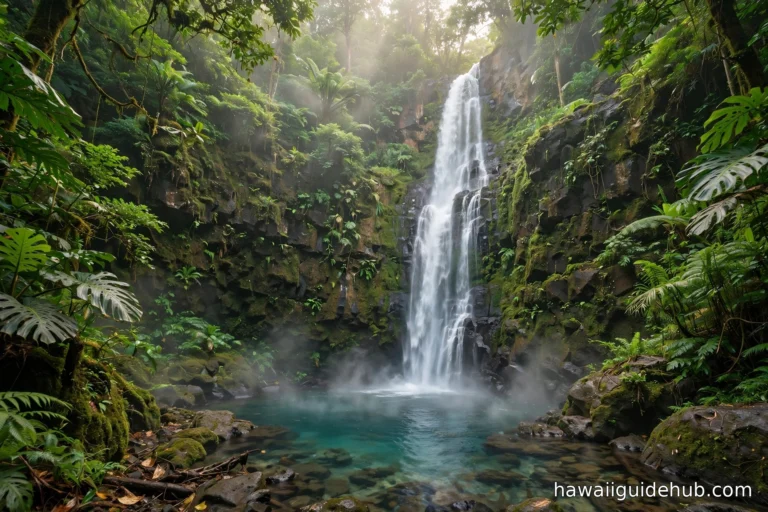
East Maui is the island’s wild side. While West Maui stacks resorts along sunny beaches, the eastern half of the island is all rainforest, waterfalls, and black sand, connected to the rest of Maui by one of the most famous drives on earth. This is the side of Maui where the road itself is the attraction, where tiny towns move at plantation-era pace, and where a single day can include a bamboo forest, a 400-foot waterfall, and a beach made of jet-black volcanic sand.
This is the complete guide to things to do in East Maui. It covers the Road to Hana and its best stops, Waiʻanapanapa’s black sand beach, the hikes and pools of Kīpahulu, the town of Hana, East Maui’s beaches, when to visit, and the practical logistics that make or break the trip. Everything about East Maui lives here on this one page.
East Maui at a Glance
| East Maui trip planner | The details | Do not get caught out |
|---|---|---|
| Where it is | The windward (eastern) half of Maui, from Paʻia to Kīpahulu | Bigger than the drive suggests |
| Main attraction | The Road to Hana, about 64 miles of rainforest highway | The road IS the attraction; the destination is a bonus |
| Signature stops | Waiʻanapanapa black sand beach, Pīpīwai Trail, ʻOheʻo Gulch, Hana town | You cannot do them all in one day; pick two |
| Best for | Waterfalls, rainforest hikes, scenic driving, local culture | Come for the waterfalls, stay for the rainforest |
| Weather | Lush and rainy year round; drier from May through September | Rain is the price of the waterfalls |
| How long | A full day at minimum; an overnight in Hana is better | The overnight changes the whole trip |
| Reservations needed | Waiʻānapanapa State Park (entry and parking), Haleakalā National Park entrance fee | Book Waiʻānapanapa before you leave home |
| Getting around | Rental car on the Hana Highway; many visitors drive it as a day trip from Kahului | No car, no Hāna; the highway is the only way in |
| Good to know | Cell service is spotty; fill up on gas before Paʻia; start early | Download offline maps and gas up in Paʻia |
Where East Maui Is
Maui is shaped roughly like two volcanic mountains joined by a valley, and East Maui is the larger, older eastern volcano, Haleakalā. The Hana Highway (Routes 36 and 360) runs from Kahului along the island’s rugged north shore to the town of Hana, then continues south to the Kīpahulu District of Haleakalā National Park. This is the windward side of the island, where trade winds pile clouds against the mountain and squeeze out rain, which is exactly why East Maui is so green. West Maui sits in the rain shadow and stays sunny; East Maui catches the weather and turns it into waterfalls.
That geography shapes everything about visiting. East Maui is not a beach-hopping destination like the resort coasts. It is a driving and hiking destination, where the experiences are strung along one road and the weather can change from one valley to the next. Understanding that before you go is the key to enjoying it. For a look at the island’s sunny side, see our guide to the best things to do in Wailea, which sits on Maui’s dry southwest coast.
The Road to Hana: The Drive Is the Destination
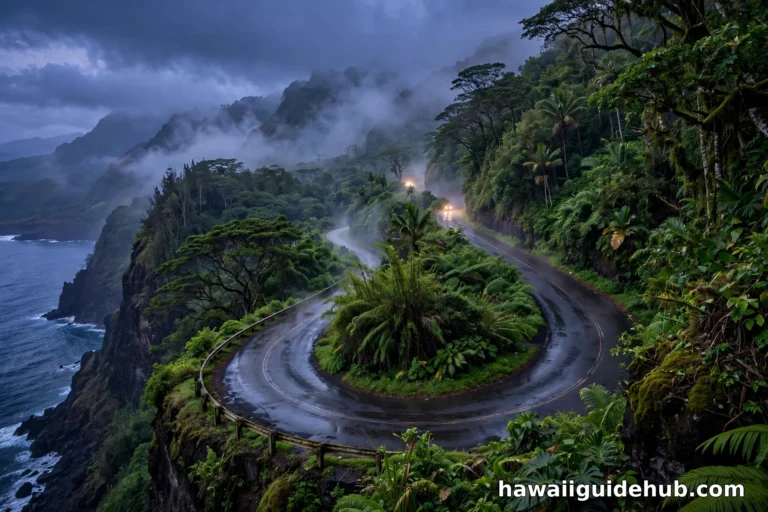
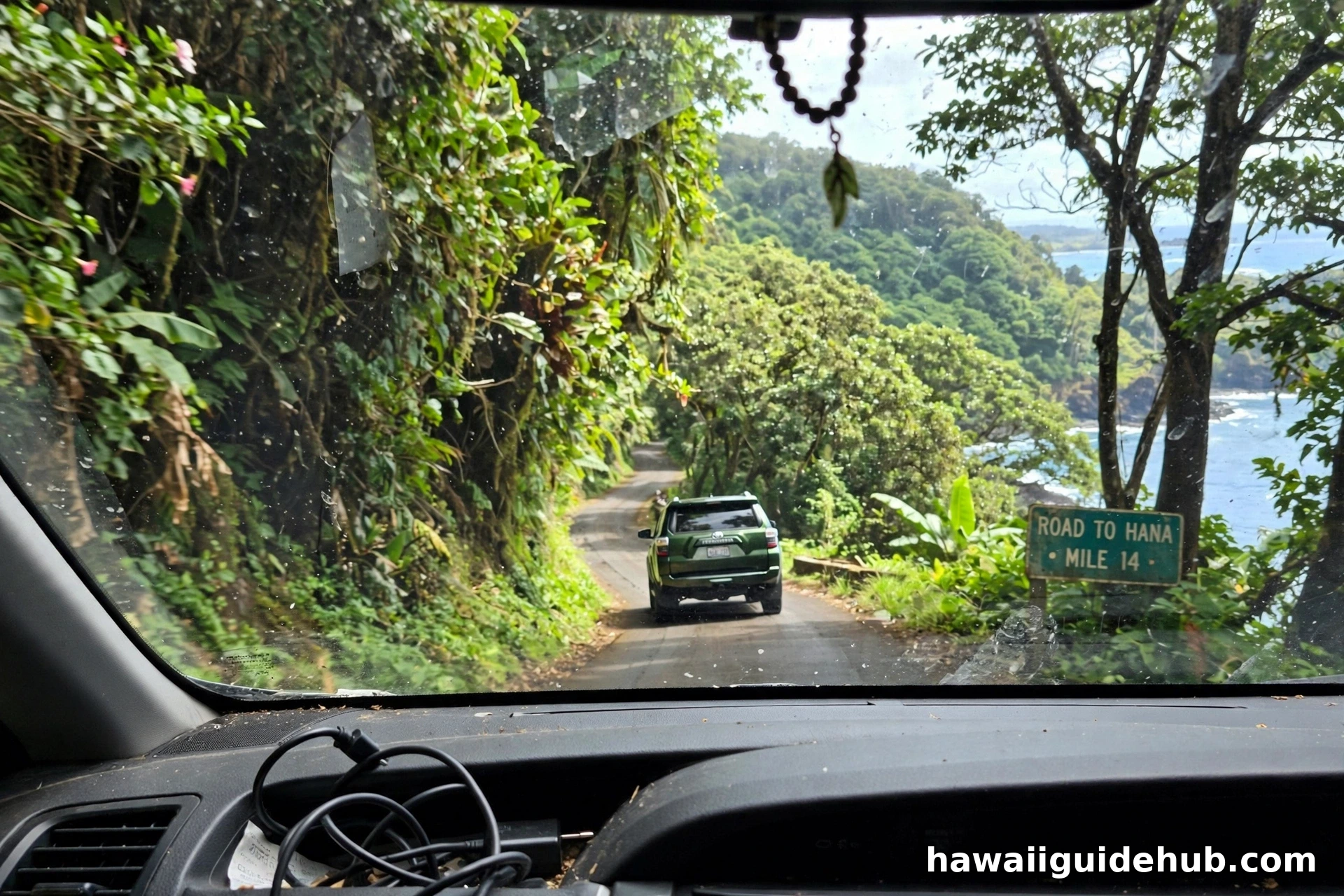
The Road to Hana is about 64 miles long and packs in more than 600 curves and some 50 one-lane bridges. The official drive time from Kahului to Hana is roughly two and a half hours with no stops, but nobody should drive it without stopping. Plan on ten to twelve hours round trip if you do it as a day trip, with the understanding that you will turn around at Hana or Kīpahulu and drive back the way you came. The road demands slow, courteous driving: pull over for locals, yield at one-lane bridges, and never stop in the middle of the road for a photo.
The classic stops follow the mile markers. Twin Falls at mile 2 is the easy first waterfall stop, with a farm stand and short trails. The Keʻanae Arboretum at mile 16 shows off rainbow eucalyptus trees, and the Keʻanae Peninsula just beyond it offers taro fields, crashing surf, and Aunty Sandy’s famous banana bread stand. Puaʻa Kaʻa State Wayside at mile 22 has roadside waterfalls and restrooms. Then comes the big one at mile 32: Waiʻanapanapa State Park and its black sand beach. Past Hana, Wailua Falls drops about 80 feet right beside the road at mile 45, an easy roadside stop before the road ends at Kīpahulu.
Waiʻanapanapa State Park and the Black Sand Beach
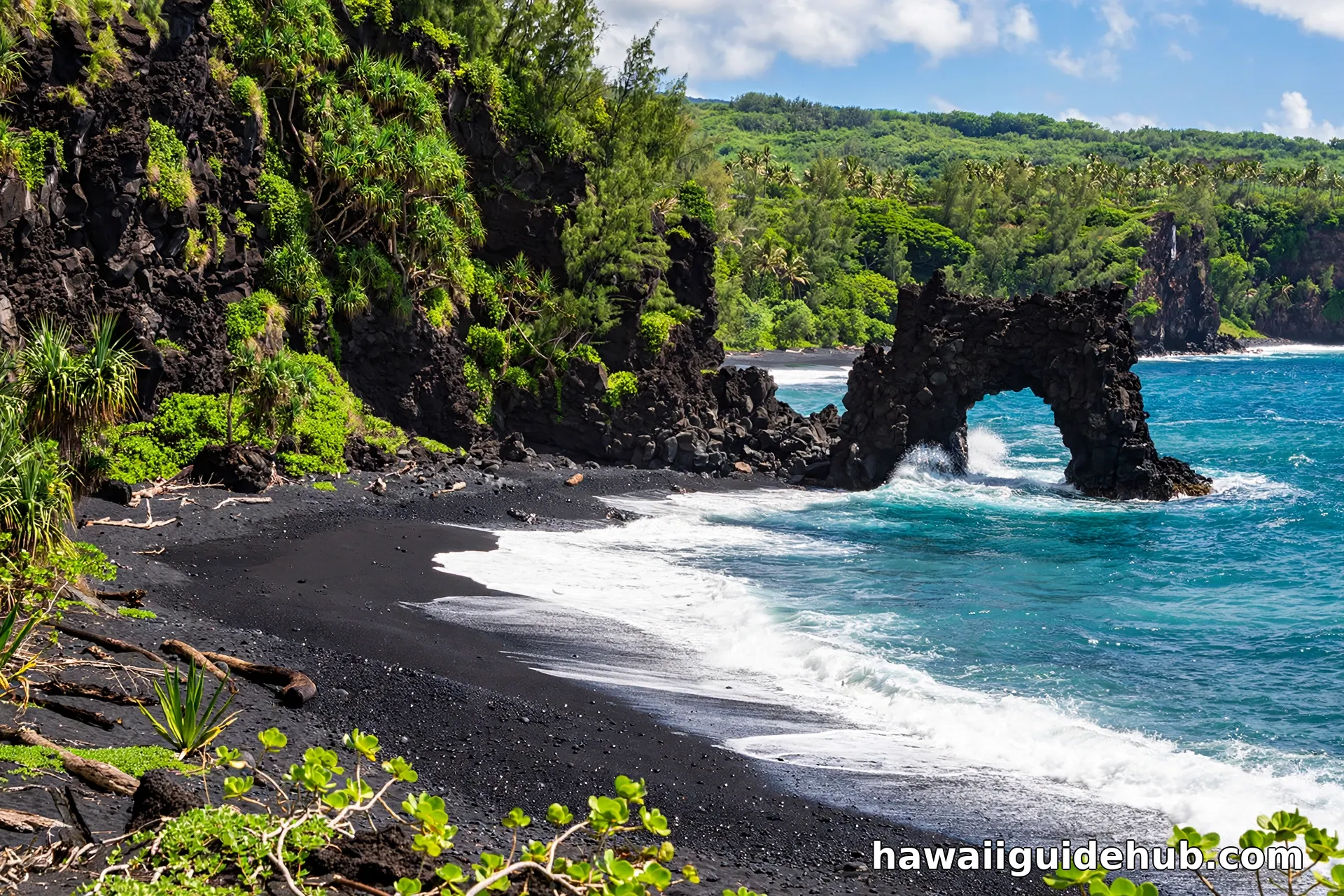
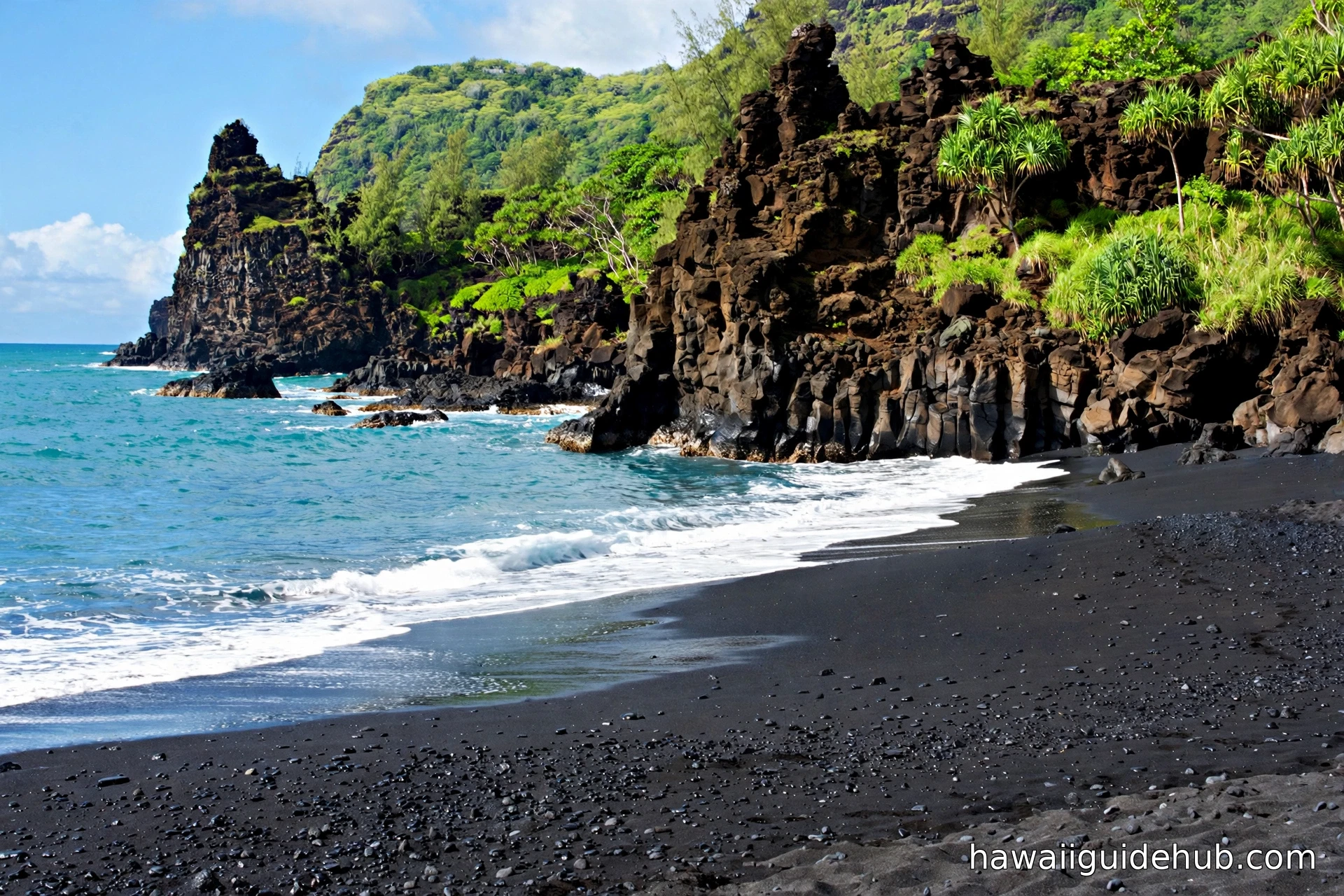
Waiʻanapanapa State Park is the crown jewel of the Road to Hana, a 122-acre coastal park where a jet-black sand beach fills a small bay framed by lava cliffs. The black sand formed when hot lava met the ocean and shattered into tiny fragments, and the contrast with the turquoise water is startling in person. The park also holds a natural stone arch, a blowhole, freshwater caves, ancient Hawaiian burial sites, and coastal hiking trails, so plan at least an hour or two here rather than a quick photo stop.
This is the one stop that requires advance planning. Nonresidents must book both entry and parking reservations ahead of time through the state’s reservation system, and walk-ins without reservations are turned away. Entry carries a small per-person fee and parking has a separate per-vehicle fee, while Hawaiʻi residents enter free with ID. Book as early as you can, because the most popular time slots sell out, and build your whole Road to Hana schedule around your reservation window. The park also offers tent and cabin camping by reservation for those who want to sleep to the sound of the surf.
Kīpahulu: ʻOheʻo Gulch and the Pīpīwai Trail
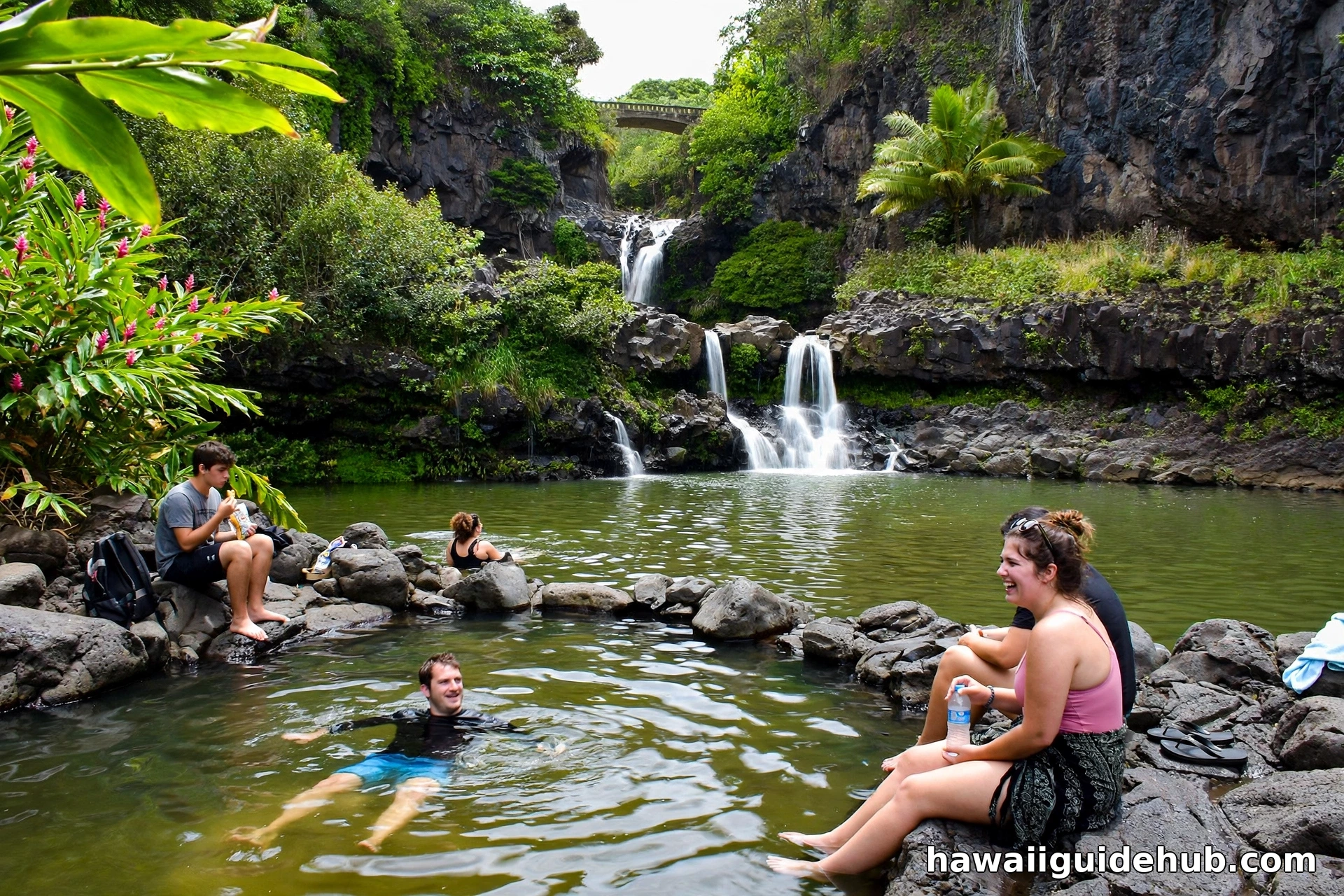
About twelve miles past Hana, the road reaches the Kīpahulu District of Haleakalā National Park, home to East Maui’s two greatest hikes. The ʻOheʻo Gulch, known as the Seven Sacred Pools, is a series of terraced freshwater pools and waterfalls stepping down to the sea. They are beautiful to look at and strictly off limits for swimming: the pools are prone to sudden flash floods and falling rocks, and the National Park Service does not allow swimming in them. The short Kūloa Point Trail gives you the coastal views and the pools overlook without any risk.
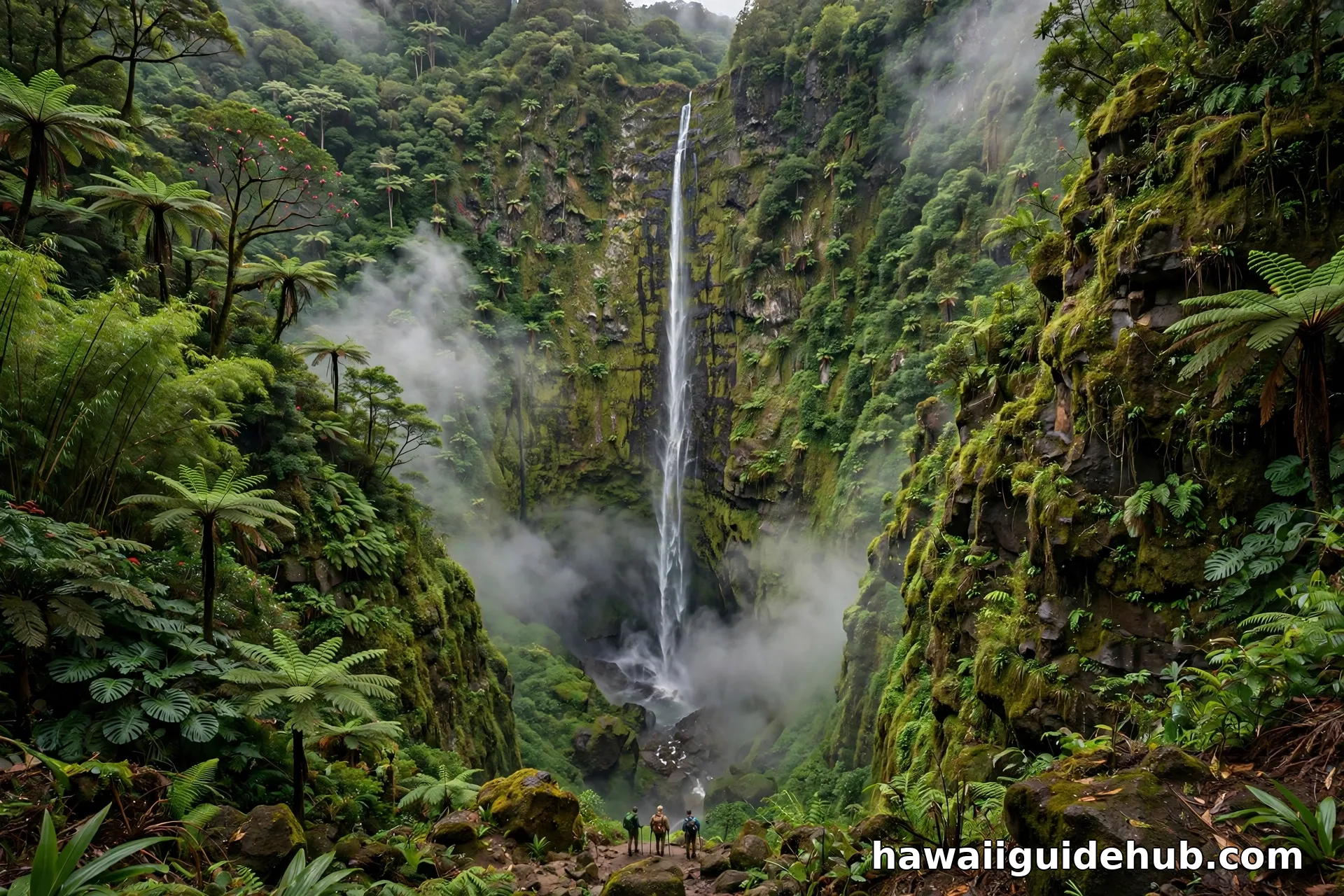
Across the road, the Pīpīwai Trail is the hike East Maui is famous for: four miles round trip through a towering bamboo forest to the base of Waimoku Falls, a 400-foot waterfall pouring down a sheer cliff. The bamboo grove alone is worth the walk, a vast grove where the stalks knock together in the wind like wooden chimes. Give the hike two to four hours, wear shoes that can handle mud, and bring rain gear, because this is rainforest and afternoon showers are routine. Park entry costs a per-vehicle fee that covers both districts of Haleakalā National Park for three days, so keep your receipt if you plan to visit the summit on another day. For the summit experience, see our guide to watching sunset at Haleakalā.
Hana Town: Slow Down
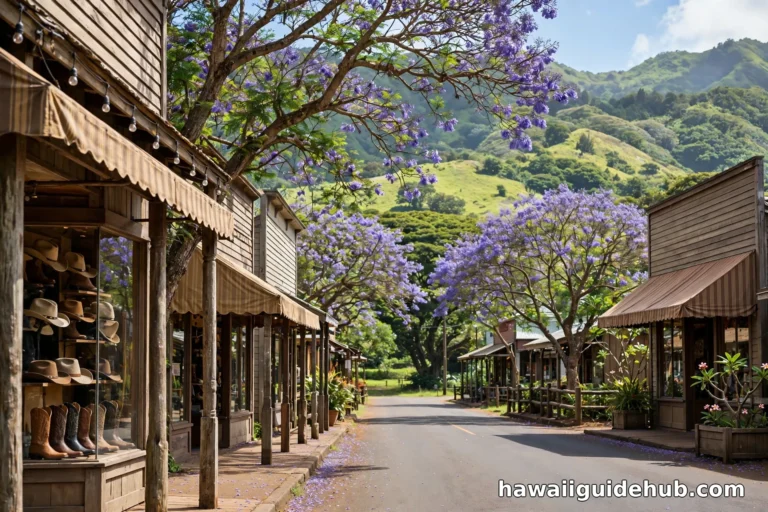
Hana itself is a town of roughly 1,200 people with no traffic lights, no chain stores, and a pace that feels decades removed from the resort coasts. It grew up around sugar plantations, and the plantation era still shows in its wooden storefronts and quiet streets. The Hana Cultural Center and Museum is worth a stop for the history of the area, and Hasegawa General Store is a local institution. Food trucks and small cafes serve the town’s visitors, and the weekly farmers market is a good place to taste what grows nearby.
If your schedule allows, spending a night in Hana transforms the trip. The day-trippers leave by mid-afternoon, and the town settles into a quiet that the drive-in crowds never see. Lodging options are limited and book up early, so reserve well ahead. An overnight also lets you visit Kīpahulu and the back side of the island without rushing, and you can catch sunrise over Hana Bay with almost no one around.
Beaches of East Maui
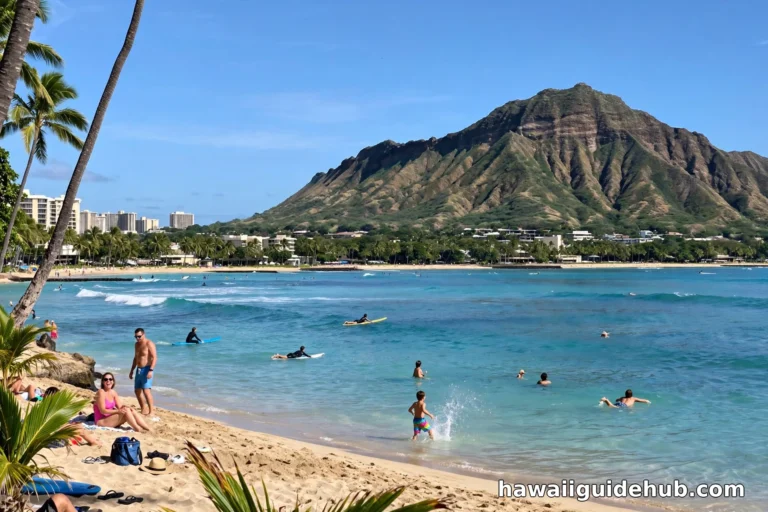
East Maui’s beaches are dramatic rather than swimmable, and that is part of their appeal. Hamoa Beach, a few miles south of Hana, is the prettiest of the golden-sand beaches, a perfect crescent framed by cliffs, though it has no lifeguard and the surf can be rough. Koki Beach near Hana is known for its red-tinged sand and the Huli Huli chicken stand that sets up nearby. Red Sand Beach, or Kaihalulu, is a stunning pocket of red cinder sand in a hidden cove, but the eroded cliff trail to reach it is genuinely dangerous and swimming there is not advised. Treat every East Maui beach with respect: admire them, photograph them, and swim only where conditions are clearly calm. For the island’s classic swimming beaches, the Dragon’s Teeth coastline article shows a very different, drier side of Maui’s shore.
When to Visit East Maui
East Maui is the wet side of the island in every month, but there are drier and wetter seasons. May through September brings the most stable weather, with trade winds keeping showers brief and the waterfalls still flowing. November through March is the wetter season, when storms can make the road slick, swell the streams, and occasionally close trails. That said, rain is part of the East Maui experience in any month: the waterfalls exist because it rains, so a passing shower is not a ruined day. For the full seasonal picture, see our guide to what time of year it rains in Hawaii.
Practical Tips for East Maui
A few logistics make the difference between a great East Maui day and a stressful one. Start early, ideally on the road by 7 AM, to beat the crowds at the popular stops and to give yourself the full day. Fill your gas tank in Kahului or Paʻia, because fuel options past Paʻia are extremely limited. Download offline maps before you go, because cell service disappears for long stretches. Pack rain gear, swimwear, reef-safe sunscreen, insect repellent, and more water and snacks than you think you need, since food stops are spread out.
Drive with aloha. The Hana Highway is a working road for the people who live along it, so pull over to let locals pass, never park illegally or block driveways, and stay out of private property and posted no-trespassing areas. Do not attempt the rough back road past Kīpahulu toward Kaupō unless you are certain your rental agreement allows it; many rental companies prohibit it, and the unpaved sections can damage a standard car. And take your trash with you. East Maui’s beauty is fragile, and the communities along the road notice who treats it with respect.
Video: The Road to Hana’s Best Stops
A mile-by-mile look at the Road to Hana’s best stops, from Keʻanae to Waiʻanapanapa to the Pīpīwai Trail.
Frequently Asked Questions
How long does the Road to Hana take?
The drive itself is about two and a half hours each way with no stops, but plan ten to twelve hours round trip with stops. Most visitors turn around at Hana or Kīpahulu and drive back the same way. Starting by 7 AM gives you the full day.
Do you need reservations for the Road to Hana?
The road itself needs no reservation, but Waiʻanapanapa State Park does: nonresidents must book entry and parking in advance and are turned away without a reservation. Haleakalā National Park’s Kīpahulu District charges a per-vehicle entrance fee but needs no reservation for day visits.
Can you swim in the Seven Sacred Pools?
No. Swimming is not allowed in the pools of ʻOheʻo Gulch because of flash flood danger and falling rocks. Enjoy the pools from the overlook trail, and save swimming for calmer beaches elsewhere on Maui.
Is the Road to Hana dangerous?
It is demanding but safe for careful drivers. The road is narrow with hundreds of curves and one-lane bridges, so drive slowly, yield at bridges, pull over for locals, and never stop in the roadway. Avoid it in heavy rain or after dark if you are not confident.
What is the best stop on the Road to Hana?
Most visitors name Waiʻanapanapa’s black sand beach or the Pīpīwai Trail to Waimoku Falls. If you only have time for two stops, make it those: one shows East Maui’s volcanic coast at its most dramatic, the other its rainforest at its lushest.
Should you stay overnight in Hana?
If you can, yes. An overnight lets you experience Hana after the day-trippers leave, visit Kīpahulu without rushing, and break up the long drive. Lodging is limited, so book well in advance.
East Maui rewards travelers who slow down. The waterfalls, the black sand, the bamboo forest, and the little town of Hana have been here long before the tour buses found them, and they will be here long after. Give the road a full day, respect the communities along it, and East Maui will give you the Maui you came to find.