Road to Hana at Night: Why You Shouldn’t Drive It After Dark

Should you drive the Road to Hana at night? The short answer is no. This is one of the most dangerous drives in Hawaiʻi after dark: 64 miles of winding cliffside road, more than 600 curves, over 50 one-lane bridges, no streetlights, sheer drops, and long stretches with no cell signal. Every local guide, rental company, and safety official says the same thing. But visitors still ask, because itineraries run long and sunsets are tempting. This guide gives you the full honest picture: why the night drive is dangerous, when you must turn back, what to do if you get caught after dark, and how to plan the Road to Hana so you never have to. Read it before you go, not after the sun goes down.
This is the single complete guide to the Road to Hana at night. It covers why night driving here is dangerous, the 4 PM turnaround rule, the rental car backside restriction, what to do if darkness catches you, the safe timeline for the drive, and the alternatives that give you the magic without the risk. Everything about the Road to Hana after dark is right here on this one page.
Road to Hana at Night at a Glance
| The problem | The detail | Your move |
|---|---|---|
| The road | 64 miles, 600+ curves, 50+ one-lane bridges | Do not start what you cannot finish by dark |
| Light | No streetlights for most of the route | High beams and blind curves do not mix |
| Turnaround | Leave Hana/Kīpahulu by 4 PM | Set the alarm; the road decides your schedule |
| Cell signal | Spotty to nonexistent on long stretches | Tell someone your plan before you lose bars |
| Gas | Fill up in Paia; no stations on the road | A full tank in Paia is non-negotiable |
| Rental rules | Many agreements forbid the unpaved backside past Kīpahulu | Read the fine print before the back road tempts you |
| The verdict | Night driving strongly discouraged by locals and officials | Start at sunrise, or stay overnight in Hana |
Why the Night Drive Is Dangerous
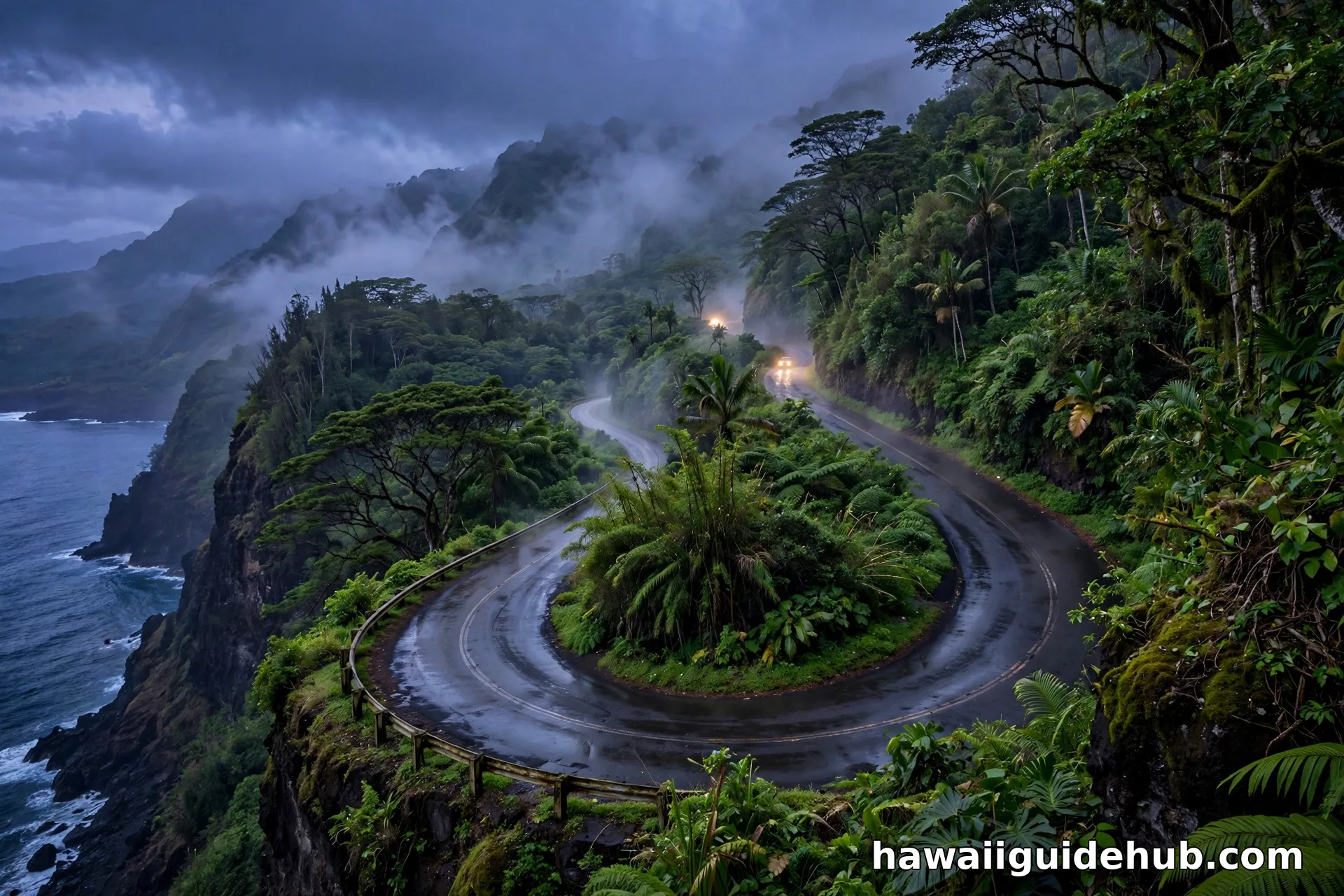
The Road to Hana, Highway 360, is a marvel in daylight and a hazard after dark. The numbers tell the story: about 64 miles from Kahului to Hana, with more than 600 curves and over 50 narrow one-lane bridges. Much of it hugs cliffs with sheer drops and no guardrails. There are no streetlights. Rain can arrive in minutes, turning the road slick and sending waterfalls across it. Fog settles in the higher sections. After dark, you cannot see the curves, the bridges, the oncoming cars, or the drop. Local drivers know every bend; you do not.
What Makes It Dangerous After Dark
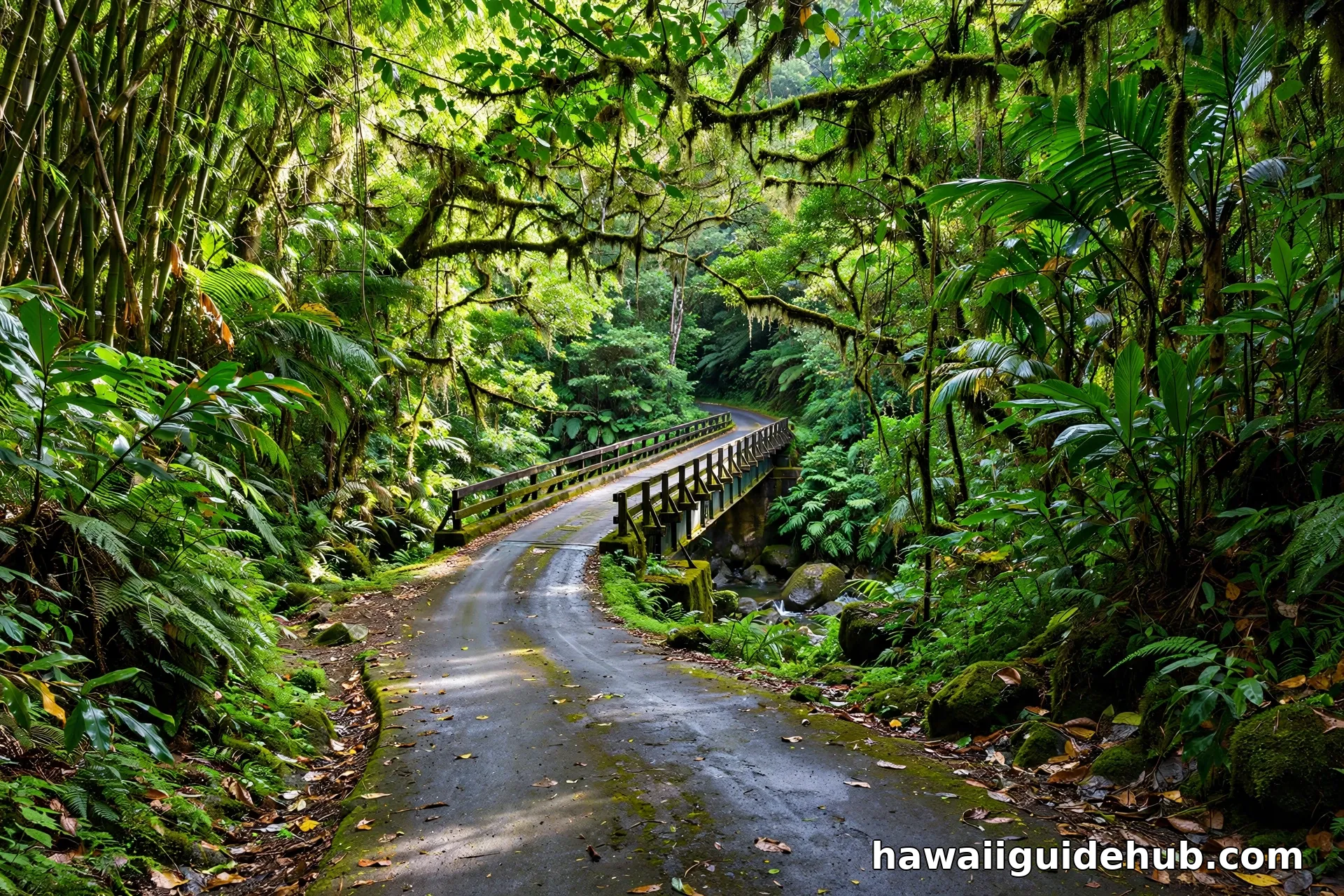
Each hazard on the Road to Hana is manageable in daylight and multiplied at night. The one-lane bridges require you to see oncoming traffic early and yield; in the dark, you meet headlights around a blind curve with nowhere to go. The road surface is often wet from rain or waterfall spray, and it stays slick long after the rain stops. Fog rolls through the higher elevations without warning. Rockfalls happen, especially after heavy rain. There are long stretches with no guardrails between your tires and a steep drop. And if something goes wrong, a flat tire, an overheated engine, a wrong turn, you may have no cell signal to call for help. Daylight forgives mistakes here. Darkness does not.
The Backside Road in Detail
The “backside” is the southern loop past Kīpahulu, where the Piʻilani Highway continues around the island through Kaupō. Parts of it are unpaved, narrow, and unmaintained, with washboard gravel, blind crests, and no services whatsoever. This is the section most rental agreements restrict. Even where it is paved, it is remote: fewer cars, no help nearby, and a long way from a tow truck. Drivers who take it in daylight with the right vehicle and a full tank generally report it as rough but passable. At night, it is a different proposition entirely, and breaking down there after dark is the scenario every safety warning is written to prevent.
The 4 PM Rule
The standing local advice: be heading back, or be settled in Hana for the night, by 4 PM. In winter, sunset in Hawaiʻi comes around 6 PM, and the road takes two to three hours each way without stops. Leaving Hana at 4 PM puts you back in central Maui around dusk with a margin for the slow sections. Leaving at 5 or 6 PM means driving the cliffside curves in full darkness. Plan your day backward from 4 PM: it is the single most important number in this guide.
The Rental Car Backside Problem
Many visitors consider looping around the island’s south side, the so-called backside, past Kīpahulu and back through Kaupō. Read your rental agreement first. Many major rental companies restrict or forbid driving the unpaved, unmaintained section of the Piʻilani Highway past Kīpahulu, and violating the agreement can void your coverage. If you break down or crash on a forbidden section, you may be fully liable. The backside is also the most remote stretch, with the worst road surface. Check the contract, not the forums. If the backside tempts you, the legal and safe way to see it is from a guided tour whose operator carries the proper coverage and knows the road.
Driving Tips for the Daylight Hours
A few habits make the daylight drive safer and more pleasant. Honk gently before blind curves; locals do it, and it prevents surprises. On one-lane bridges, the vehicle closest to the bridge usually has the right of way, but when in doubt, yield; the few seconds cost nothing. Pull fully off the road at turnouts to let faster local drivers pass, and never stop on a bridge or in a curve for a photo. Keep your headlights on even in daylight so oncoming drivers see you through the shadows. These small courtesies are the difference between a stressful drive and a great one.
What If Darkness Catches You?
Sometimes it happens: a swim took longer than planned, a waterfall held you, and now the light is going. Do not panic, and do not rush. Slow down dramatically; 15 to 20 mph is reasonable on the tight sections. Use your high beams whenever no oncoming car is near. Pull fully off the road to let local drivers pass; they will be faster than you and grateful for the courtesy. If you are exhausted or the rain is heavy, the safest choice is to stop in Hana for the night if you can find a room, rather than push through. Call your hotel to warn them you will be late, conserve your phone battery in case of emergency, and remember that arriving an hour later is always better than not arriving at all. The road has seen too many drivers who valued their schedule over their safety.
The Safe Timeline
The classic safe itinerary: leave Paia by 7 or 8 AM, reach Hana by midday with stops, swim and eat in the early afternoon, and turn around by 4 PM. You get the waterfalls, the black sand beach at Waiʻānapanapa, the banana bread stands, and Hana town itself, all in daylight. The drive back in the late afternoon light is beautiful, and you are home for dinner. This is how locals recommend doing it, and it has worked for decades.
Key Stops Worth Your Daylight
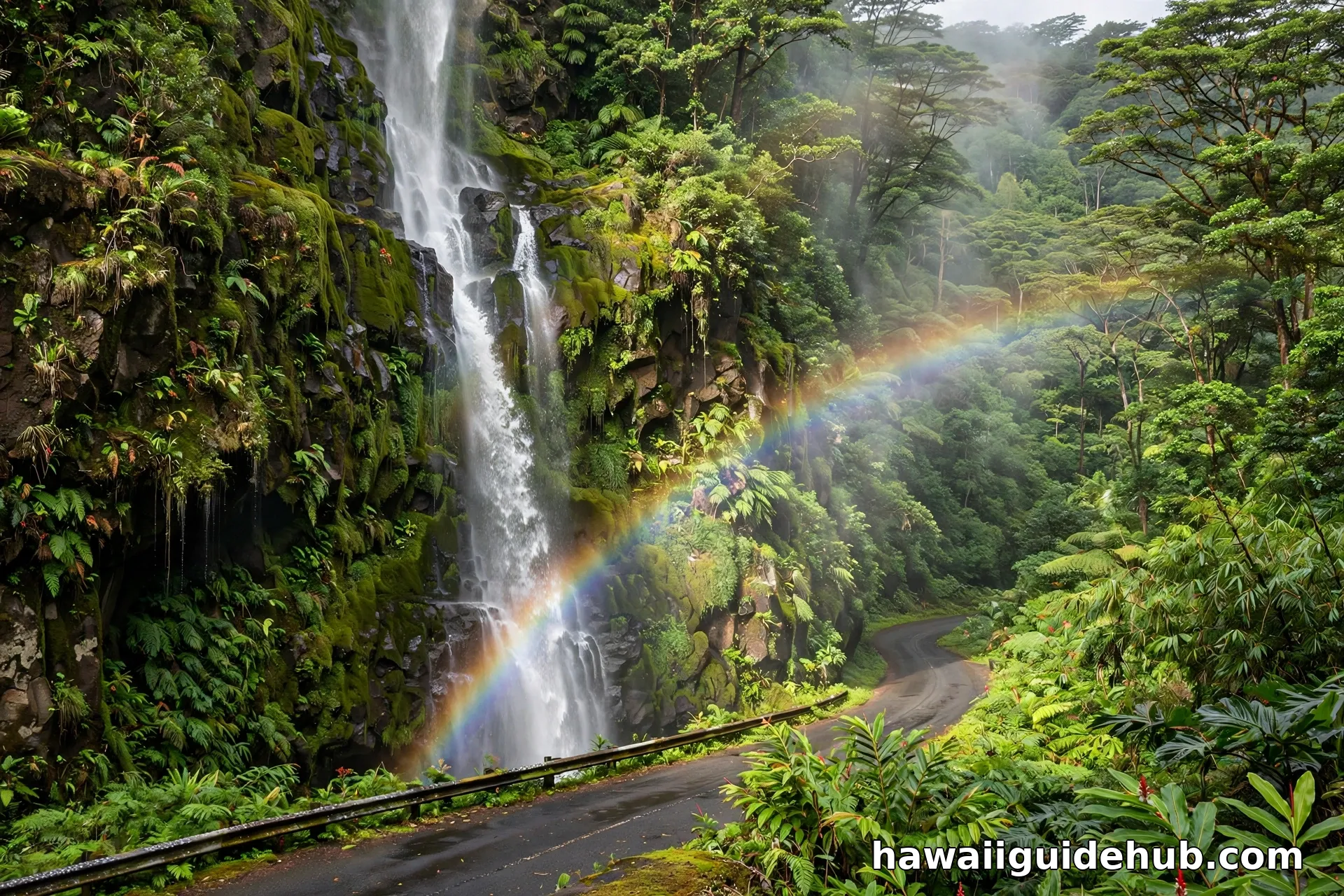
The reason to do this drive in daylight is the stops, and they deserve unhurried time. Twin Falls, early on the route, offers swimmable pools. The Keʻanae Peninsula serves the famous Aunty Sandy’s banana bread. Waiʻānapanapa State Park holds the black sand beach; note that reservations are now required for entry, so book ahead. Hana town itself is small and quiet, worth a wander. Past Hana, the Kīpahulu District of Haleakalā National Park offers the Pipiwai Trail through bamboo forest to Waimoku Falls. Trying to compress these into a late start is exactly how drivers end up racing the sunset.
Staying Overnight in Hana
Hana after the day-trippers leave is a different town: quiet, starry, and slow. Options range from the historic hotel in town to vacation rentals and campgrounds, including the well-known campground at Waiʻānapanapa. Book well ahead, especially in high season; Hana is small and rooms go fast. An overnight stay transforms the Road to Hana from a marathon into two relaxed half-days, and it completely removes the night-driving question. Wake up, have breakfast in town, and drive back in morning light.
Better Alternatives to the Night Drive
If the day trip feels rushed, stay overnight in Hana. Waking up in Hana means you experience the town after the day-trippers leave, and you can drive the road back in morning light. Another option: start at sunrise from Paia, reaching the far waterfalls before the crowds. Guided van tours are also worth considering; the driver knows the road, and you can watch the scenery instead of the curves. All three beat a night drive. On another day, the Dragon’s Teeth lava formations at Makaluapuna Point show you a wilder side of Maui’s coast.
What Locals Want You to Know
The Road to Hana passes through real communities, not a theme park. Drive slowly through the small towns, do not block driveways or narrow bridges for photos, and respect private property signs at waterfalls and pools. Take your trash with you, including anything from your roadside snack stops. The residents along the highway deal with tourist traffic every day, and the road’s beauty depends on visitors treating it as someone’s home rather than a backdrop. Courtesy costs nothing and is remembered; the banana bread tastes better when you are a welcome guest.
Frequently Asked Questions
Is it illegal to drive the Road to Hana at night?
No, it is not illegal, but it is strongly discouraged. The road has no streetlights, hundreds of blind curves, and one-lane bridges that are hazardous after dark.
What time should I leave Hana to get back before dark?
Leave by 4 PM. The drive back takes two to three hours without stops, and sunset in Hawaiʻi can be as early as 6 PM in winter.
Can I drive the backside of the Road to Hana?
Check your rental agreement. Many companies forbid the unpaved section past Kīpahulu, and violating it can void your coverage.
Is there cell service on the Road to Hana?
Service is spotty to nonexistent on long stretches. Download offline maps before you leave Paia.
Video: Road to Hana Driving Guide
This complete Road to Hana guide drives the route mile by mile, covering the best stops, driving tips, road conditions, rental car restrictions, and the back road past Kipahulu.
Where is the last gas station before the Road to Hana?
Fill up in Paia. There are no gas stations on the road itself, and running low with no signal is a bad combination.
Is it safe to stay overnight in Hana?
Yes. Hana has hotels, vacation rentals, and campgrounds. Staying over is the best way to experience the town without rushing the drive.
How long does the Road to Hana take?
Two to three hours each way without stops, and a full day of 8 to 10 hours with the classic stops. Drivers who try to do it in an afternoon almost always run out of light.
Do I need a 4WD vehicle?
No. The main highway to Hana is paved and fine for any car. The unpaved backside section past Kīpahulu is rougher, but most rental agreements forbid it regardless of vehicle.
Are there guided tours that drive at night?
Reputable tour operators run the Road to Hana in daylight. Be wary of anyone offering a night drive; the safety concerns apply to vans as much as rental cars.
The Bottom Line
The Road to Hana is one of the great drives in the world, and it deserves daylight. Start early, respect the 4 PM turnaround, check your rental agreement before considering the backside, and never let an ambitious itinerary push you onto those cliffside curves after dark. The waterfalls will still be there in the morning, and you will be around to see them. That is the whole point: the Road to Hana rewards the unhurried and punishes the rushed, so give it the daylight it deserves.