Road to Hana Waterfalls: Every Fall Worth Stopping For

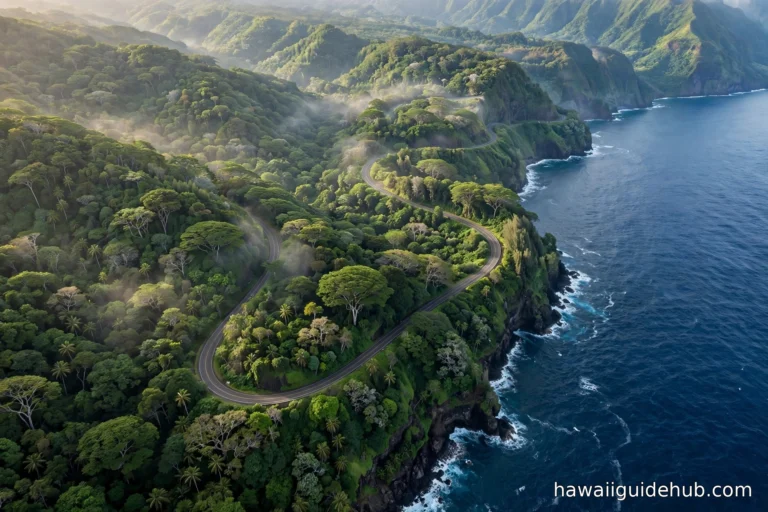
The Hana Highway does not ease you in. Within minutes of leaving Paia, the road narrows, the rainforest closes over the pavement, and water starts appearing everywhere. It sheets down cliffs, threads through bamboo, and spills across the road in thin silver ribbons after a morning shower. Somewhere along those 64 miles to Hana, you stop counting the waterfalls. Drivers who try to see them all end up seeing none of them well, because the falls here reward the patient and punish the rushed.
This guide takes the opposite approach. It covers the waterfalls actually worth your time, in the order you will meet them, with honest notes on which ones you can swim in, which ones you should only photograph, and which ones to drive past. If you are still deciding whether the drive fits your trip, our overview of reasons to visit Maui puts it in context. A separate guide covers the full Road to Hana drive itself. This one is only about the falling water.
How This Guide Is Organized
Every waterfall below is listed by mile marker, driving east from Paia toward Hana. Mile markers are the small green signs along the highway, and they are the only reliable way to find anything out here. Cell service is patchy at best, so save this page or screenshot the markers before you go. Falls are marked as roadside, short walk, or hike-in, with swimming notes for each.
Twin Falls: Mile Marker 2
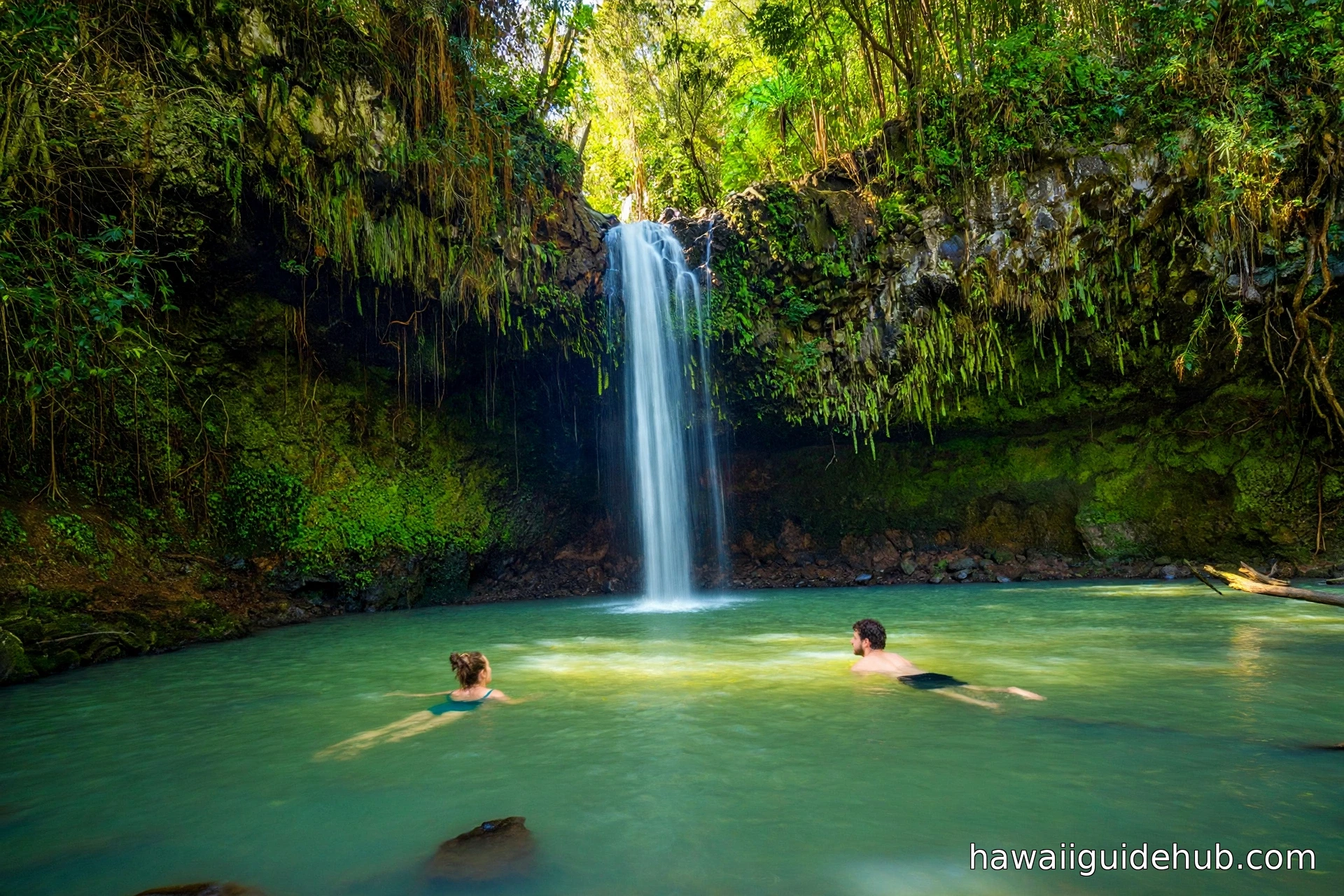
Twin Falls is the first waterfall stop on the Road to Hana, and it sets the tone for everything after. Located on Wailele Farm at 6300 Hana Highway in Haiku, it sits just past mile marker 2, about 15 to 20 minutes east of Paia. The farm is private land opened to visitors, and the family that runs it maintains the trails, the parking area, and a well stocked fruit stand at the entrance.
Parking is the first thing to sort out. There are 55 paid spots at about $10 per vehicle, first come first served, and the lot fills early. Arrive before 9 in the morning or you may find yourself turned away, since street parking on the highway and the bridge is not allowed. No reservations are taken, and walk-ins without a car are not permitted.
From the lot, a short jungle trail leads to the lower falls, an easy walk that most visitors manage in regular shoes. The upper falls require a longer hike through bamboo and past banyan trees, roughly 30 to 40 minutes each way, with a stream crossing near the end. Wear shoes you can get wet. The pools at both falls are swimmable when water levels are normal, and on a hot morning there is nothing better than floating in cool fresh water with the falls drumming down beside you. Check conditions at the farm stand before swimming, since heavy rain upstream can change the pools fast.
Upper Waikani Falls (Three Bears): Mile Marker 19
Between mile markers 19 and 20, the highway crosses a bridge with a view that stops first timers mid sentence. Upper Waikani Falls, nicknamed the Three Bears for its trio of cascades at different heights, drops about 70 feet down a mossy cliff into a clear pool. After rain, the three streams merge into one wide curtain. In drier months, they separate into the distinct falls that gave the spot its nickname.
You can see the falls from the bridge, which makes this one of the easiest photo stops on the drive. A short path, about a tenth of a mile, leads down to the pool for a closer look. The descent is steep in places and the rocks stay slick, so take it slowly and wear shoes with grip. Swimming here is a judgment call. The pool is inviting, but the terrain around it is uneven and there are no facilities, no lifeguard, and no one to help if you get hurt. Many visitors are content to photograph the falls and keep driving.
Puaa Kaa State Wayside: Mile Marker 22
Puaa Kaa is the most civilized waterfall stop on the highway. This small state wayside park between mile markers 22 and 23 has something almost nowhere else on the route offers: a real parking lot, restrooms, and picnic tables. The falls themselves are modest, a short cascade feeding a calm wading pool, but that is exactly the appeal. Families with small children, travelers who want a swim without a hike, and anyone who needs a proper rest stop all do well here.
The pool is one of the safer swimming spots on the drive, shallow near the edges and easy to enter. As with every freshwater pool in Hawaii, avoid submerging open cuts, and skip the swim entirely if the water looks brown or is running unusually high after rain. There is no fee to enter the wayside, and the stop takes as little as 20 minutes or as long as a lazy picnic lunch.
Hanawi Falls: Mile Marker 24
Hanawi Falls is a roadside glimpse rather than a destination. The falls tumble down a cliff face visible from the highway near mile marker 24, and most drivers catch them in a slow roll past. There is very little parking here, just the usual narrow shoulder, so this is a look-don’t-stop waterfall unless you find a safe pullout and traffic is light. It is worth knowing the name so you can call it out when someone in the car spots white water through the trees.
Wailua Falls: Mile Marker 45
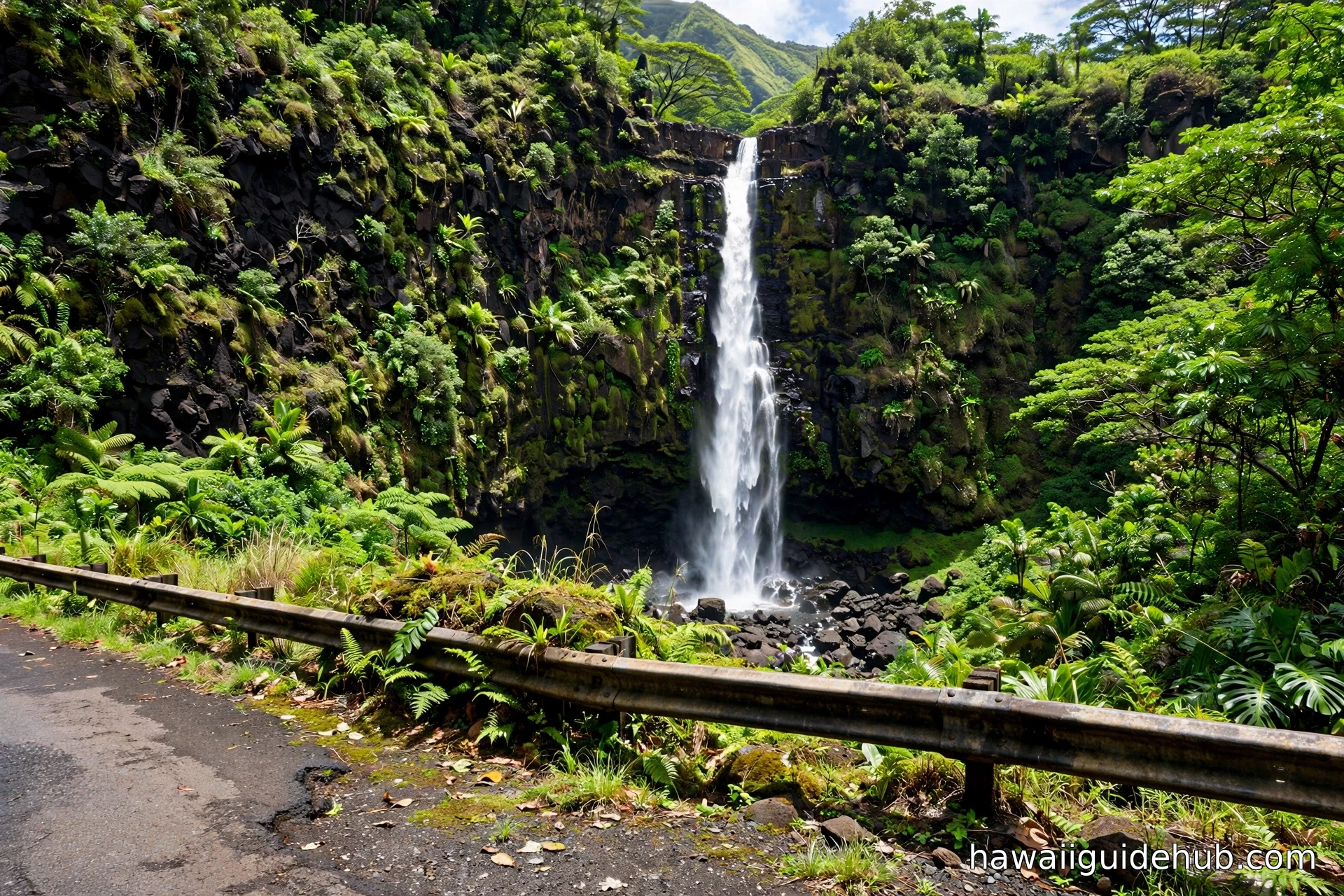
Past Hana town, the highway climbs and the landscape opens up. Near mile marker 45, Wailua Falls appears beside the road in a single dramatic drop of about 80 feet. This is the classic roadside waterfall photograph: a tall white plume against dark volcanic rock and dense green, framed perfectly from the small pullout.
Wailua Falls is a viewing waterfall, not a swimming one. The base sits on private land, access is restricted, and the rocks below are treacherous. Enjoy it from the roadside, take the photograph, and keep your expectations in the right place. Some of the most beautiful falls on the island are the ones you never touch.
Oheo Gulch (Seven Sacred Pools): Kipahulu
About 12 miles past Hana, the highway reaches the Kipahulu District of Haleakala National Park, home to Oheo Gulch, better known as the Seven Sacred Pools. The name is a bit of a myth. There are far more than seven pools when the water is up, and nothing about them was ever sacred in the traditional sense. What they are is a stunning staircase of tiered pools and small cascades running down to the ocean, and one of the most photographed spots in East Maui.
Here is what every visitor needs to know before arriving: swimming in the pools is not permitted. The National Park Service closed the pools to entry because of flash flood danger, falling rocks, and changing stream conditions, and the closure is enforced. Several fatalities over the years made the decision final. You can still walk the Kuloa Point Trail for excellent views of the pools and the coastline, which is honestly the best way to experience them. Obey every posted sign. The water may look calm, but rain falling miles upstream in the mountains can send a wall of water through the gulch with almost no warning.
Entry to the Kipahulu District requires the standard Haleakala National Park vehicle fee, currently $30, which covers both the summit and Kipahulu districts for three days. Keep your receipt. There are restrooms and a visitor center at Kipahulu, but no gas or major services, so fill up before you leave central Maui.

Pipiwai Trail: Makahiku Falls and Waimoku Falls
The Pipiwai Trail starts at the Kipahulu Visitor Center and delivers the finest waterfall hiking in Hawaii has to offer on Maui. The full trail runs 2 miles each way, about 4 miles round trip, and most hikers need 2 to 3 hours with stops. The path climbs through rainforest, crosses streams on footbridges, passes a giant banyan tree, and threads through a towering bamboo forest that clacks and sways overhead. Two major waterfalls punctuate the route.
Makahiku Falls
About half a mile in, a short side trail leads to an overlook for Makahiku Falls, a 184-foot cascade dropping into a deep gorge. You view it from across the ravine rather than up close, which suits the falls just fine. It is a preview of what the trail has in store, and a good turnaround point if anyone in your group is tiring.
Waimoku Falls
At the end of the trail, Waimoku Falls drops 400 feet down a sheer lava rock wall. It is one of the tallest waterfalls on Maui, and the sight of it after the bamboo forest feels earned in a way roadside falls never do. But Waimoku demands respect. The cliff face above the falls is unstable, and rocks detach without warning. People have been killed here. Do not go past the signed viewpoint, do not try to reach the base, and do not treat the boulder field as a playground. The boulders themselves are the warning.
Flash floods are the other serious hazard. Rain in the mountains can flood the valley even when the sky above you is blue. If stream crossings start rising while you are on the trail, turn back immediately. Check the weather before you start, wear shoes with real traction, and carry more water than you think you need. There is no drinking water on the trail.
One Waterfall to Skip: Blue Pool (Chings Pond)
Near mile marker 16, a small blue pool beside the highway draws cliff jumpers and social media crowds. It is known as Blue Pool or Chings Pond, and it has a long record of serious injuries and deaths. The pool sits on private land, access is trespassing, the jump heights are deceptive, and submerged rocks have ended lives. Local authorities and residents have asked visitors to stay away for years. There are so many safe, legal waterfalls on this drive that there is no reason to risk this one. Drive past.
Waterfall Swimming Safety on the Road to Hana
Freshwater swimming in Hawaii carries risks that ocean swimming does not, and the Road to Hana concentrates all of them. Flash floods are the biggest danger. East Maui’s mountains wring moisture from the trade winds daily, and a storm you never see can turn a calm pool into a torrent in minutes. Never swim during or after heavy rain, and if the water looks muddy or is rising, stay out.
Leptospirosis, a bacterial infection present in freshwater streams across Hawaii, is the risk most visitors never hear about. Do not drink stream water, and keep open wounds out of freshwater pools. Waterfall bases also hide submerged rocks and logs, so never dive or jump without knowing exactly what is below, and even then, think twice. The safest swimming on the drive is at established spots like Twin Falls and Puaa Kaa, where pools are well used and conditions are visible.
When the Falls Are at Their Best
Waterfalls on the windward side of Maui flow year round, but they are fullest during the wetter months, roughly November through March. That winter on Maui brings the most frequent trade wind showers. That is also when flash flood risk is highest, so bigger water cuts both ways. Summer falls run thinner but the pools are calmer and the trails drier. Morning is the best time of day regardless of season. Clouds build over the mountains by afternoon, rain becomes more likely, and the popular stops fill with tour vans by midday.
What to Bring for a Waterfall Day
Pack like the weather will change, because it will. Reef-safe sunscreen, insect repellent, and a rain shell cover the basics. Footwear matters more than almost anything else: water shoes or sandals with straps for the pools, and hiking shoes with grip for the Pipiwai Trail. Bring twice the water you expect to drink, snacks or a full lunch since food options past Hana are thin, and a dry bag or waterproof case for your phone and camera. A small towel and a change of clothes in the car turn a damp afternoon into a non-event.
See the Waterfalls on Video
This mile-by-mile video tour from Hawaii Walking Tours walks the full route from Kahului to Kipahulu, with footage of Twin Falls, Puaa Kaa, Wailua Falls, the Pipiwai Trail bamboo forest, and Waimoku Falls. It is a useful preview of what each stop actually looks like before you commit your day.
Frequently Asked Questions
How many waterfalls are on the Road to Hana?
There is no official count. Dozens of named and unnamed falls line the highway, from roadside cascades you glimpse at 15 miles per hour to major falls that require a hike. The ones in this guide are the falls worth planning around. Everything else is a bonus.
Can you swim in waterfalls on the Road to Hana?
At some of them, yes. Twin Falls and Puaa Kaa State Wayside have the most reliable swimming. Many other falls are for viewing only, either because access is restricted, the terrain is dangerous, or swimming is prohibited, as at Oheo Gulch. Always assess conditions on the day, and never swim after heavy rain.
Do you need a reservation for the waterfalls?
No reservations are needed for the waterfalls themselves. Twin Falls parking is first come first served. The Kipahulu District requires the national park entrance fee but no timed reservation. Note that Waianapanapa State Park, which some waterfall itineraries include for its coastal scenery, does require advance reservations for non-residents.
Is the Pipiwai Trail worth it?
If you can handle 4 miles of sometimes muddy trail, yes. The bamboo forest alone justifies the walk, and Waimoku Falls is the most dramatic waterfall on the drive. Go early, respect the closure signs at the falls viewpoint, and turn back if streams start rising.
The waterfalls are the reason the Road to Hana exists in the imagination of travelers, more than the beaches or the bends in the road. They are also the part of the drive that demands the most judgment. The falls that look the calmest can turn the fastest, and the pools that photograph best are not always the ones to swim in. Pick your stops by mile marker, give the water the respect it is owed, and the drive gives back everything it promises.