Kapalua Bay: Maui’s Snorkeling Beach Guide

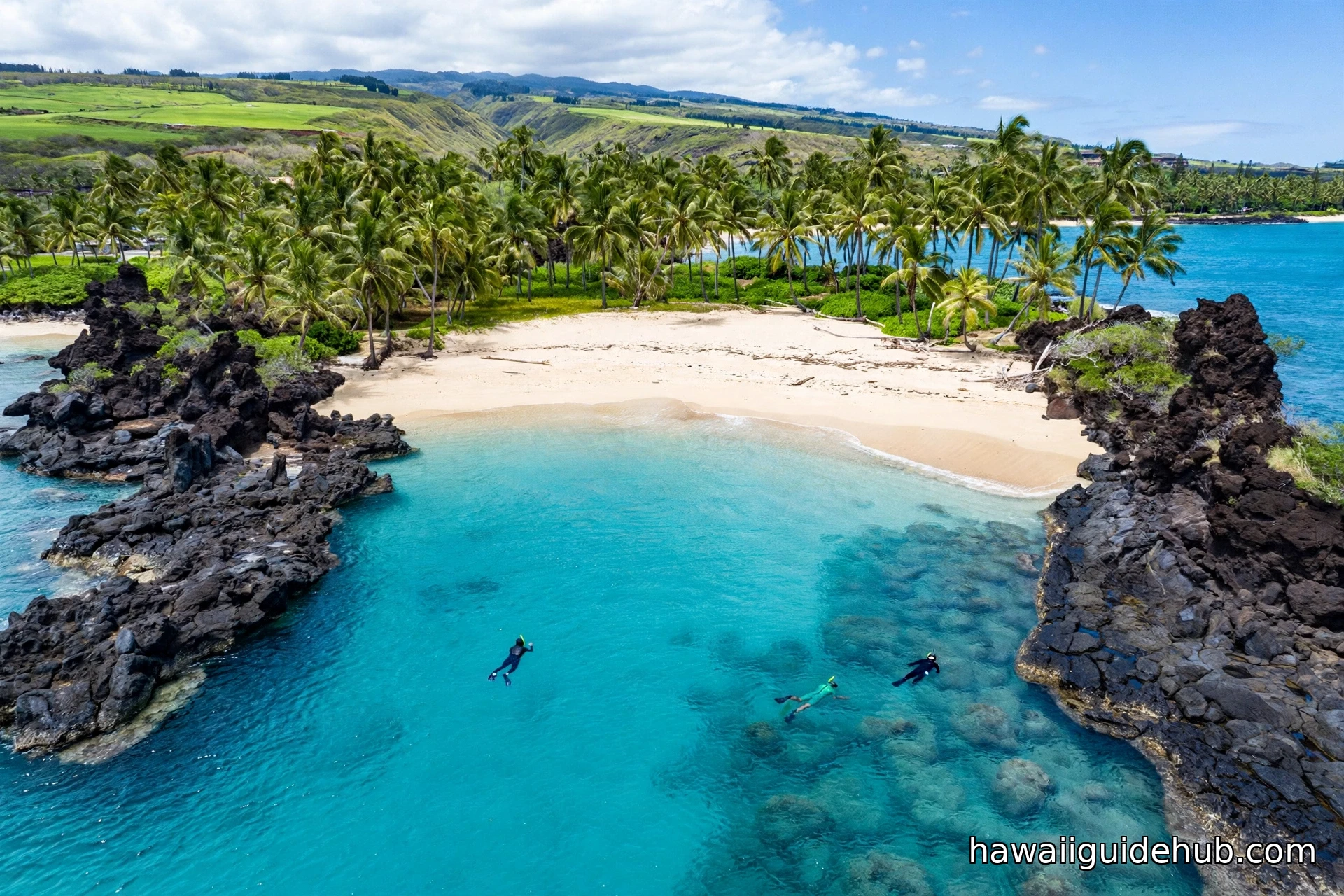
Some beaches impress you with size. Kapalua Bay wins you over with shape. From above it looks like a perfect crescent moon stamped into the northwest coast of Maui, a curve of golden sand held between two dark lava rock points with water so clear you can read the reef from the shoreline. It is the kind of beach that makes first-time visitors stop mid-step on the sand, and it has the snorkeling to back up the view.
Tucked into the Kapalua Resort area on West Maui, this small bay has collected an outsized reputation. Readers of Condé Nast Traveler once voted it the best beach in the world, and the Travel Channel has called it the best beach in America. Awards aside, what keeps people coming back is simpler: calm, protected water, reefs you can reach straight from the sand, and sea turtles that treat the bay like a neighborhood they have no intention of leaving.
This guide covers everything you need for a day at Kapalua Bay: where it is and how to get there, what the snorkeling is really like, where to park without circling for an hour, what facilities exist, and how to pair the beach with the Kapalua Coastal Trail. If you are visiting Maui and want one beach day done right, this is a strong candidate.
Where Is Kapalua Bay?
Kapalua Bay sits on Maui’s northwest coast, inside the Kapalua Resort community, roughly 10 to 20 minutes north of Lahaina by car and 45 minutes to an hour from Kihei or Wailea in South Maui. It is farther up the coast than the busy Kaʻanapali strip, which is exactly why the crowds thin out and the setting feels more tucked away.
To get there, take Honoapiʻilani Road (Highway 30) up the west side of the island, turn onto Napilihau Street, then right onto Lower Honoapiʻilani Road. Watch for the beach access signs just past the Napili Kai Beach Resort. The entrance is easy to miss if you are driving fast, so slow down once you see the resort buildings and scan the left side of the road for the marked driveway and parking area.
The bay sits between two better-known neighbors. Napili Bay, another beloved snorkeling cove, is just south. D.T. Fleming Beach Park, a larger county beach park with a lifeguard, is a short drive north. Many visitors pair Kapalua Bay with one of these in a single day, and the Kapalua Coastal Trail physically connects several of these coastal spots on foot.
The Beach Itself
Kapalua Bay is not a big beach, and that is part of its charm. The sandy shoreline forms a compact crescent, wide enough for spreading out a towel but small enough that the whole bay feels like one shared space. The sand is soft and golden-white, sloping gently into the water, and a fringe of palm trees and low coastal vegetation lines the back of the beach.
What defines the bay is its shape. Two long rocky points reach into the ocean on either end, sheltering the shoreline from incoming swells. The result is a natural swimming pool effect: the water inside the bay stays noticeably calmer than the open ocean just past the points. On a typical morning the surface is glassy, and you can watch fish moving over the reef without even putting your face in the water.
Shade is limited. A handful of palms offer patches of relief, but the shady spots get claimed early. If you burn easily, bring your own umbrella or sun shelter rather than counting on tree cover. The beach can also feel full by midday despite its small size, which is why arrival time matters more here than at Maui’s bigger beaches.
Snorkeling at Kapalua Bay
This is why most people come. Kapalua Bay is widely considered one of the best shore-entry snorkeling spots on Maui, and it is especially good for beginners. The protected shape keeps the water calm, the sandy entry lets you wade in gradually instead of scrambling over rocks, and the reefs along both rocky edges hold a genuine variety of marine life within easy swimming distance of the sand.
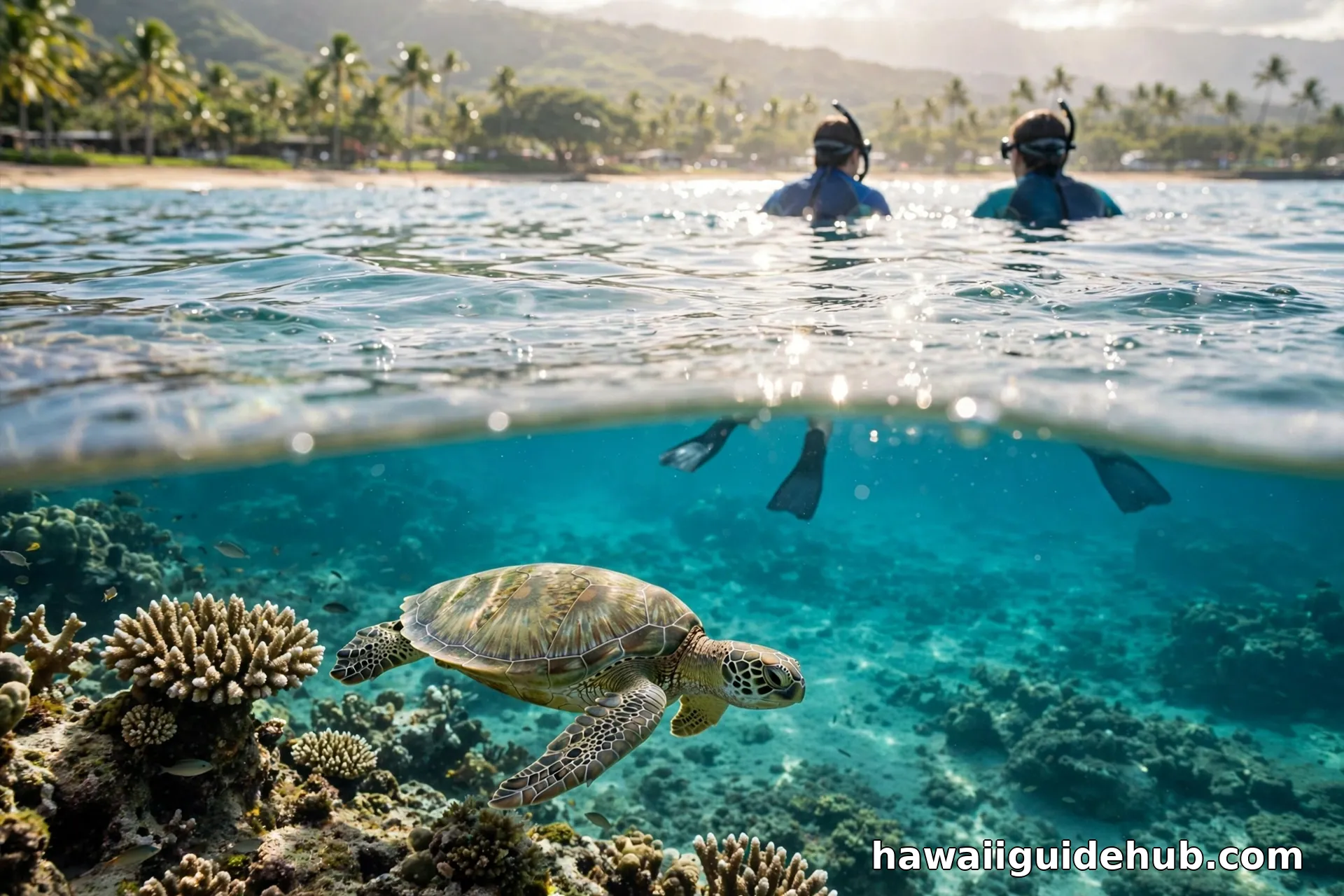
The best snorkeling follows the rocks. Swim out from the sandy center, then turn toward either the north or south reef edge and follow the rocky contour. The north side tends to have the clearest water and the most active fish, while the south side is known for turtle sightings and the occasional octopus tucked into the reef. Visibility is usually best in the morning before the beach fills up and swimmers stir the sand.
Swimming and Ocean Safety
Inside the bay, swimming conditions are usually gentle, which makes Kapalua Bay a favorite for families and newer swimmers. The sandy bottom in the center deepens gradually, and the enclosing reefs knock down most of the wave energy before it reaches the shore. That said, this is still the open Pacific, and conditions are never guaranteed.
There is no lifeguard on duty at Kapalua Bay, so you are responsible for your own safety assessment. Check the surf and wind before you go, swim with a buddy, and stay inside the bay. The water past the rocky points on either end gets deeper quickly and currents can run stronger there. If you find yourself drifting toward the points, swim back toward the sandy center where the water is calmest.
Two reef-specific cautions apply. First, never stand on or touch the coral. It is a living organism, it breaks easily, and standing on it can injure both the reef and you. Enter and exit over sand, and keep your fins clear of the reef. Second, sea urchins hide among the rocks and their spines deliver a painful sting, so reef shoes or fins are strongly recommended any time you are near the rocky edges.
Ocean safety note: conditions at any Hawaii beach can change with swell, wind, and tide. Check the day’s ocean report before entering the water, never swim alone, and if in doubt, stay out. When snorkeling, keep at least 10 feet from sea turtles and never chase or touch marine life.
Parking and Beach Access
Parking is the trickiest part of a Kapalua Bay visit, so plan for it. The dedicated beach access lot is small, with only a few dozen marked spaces, and it fills up early, often by 8 or 9 in the morning on busy days. The lot is managed digitally with payment by QR code on site, and non-Hawaii residents pay a daily rate (recently in the mid twenty dollar range). Your payment typically covers the other nearby beach access lots for the same day, but confirm the current signage when you arrive.
If the main lot is full, you have options. Free street parking is available along Lower Honoapiʻilani Road where there is room to pull clear of traffic, but those spots go fast and require a careful road crossing. The Merriman’s restaurant lot next door offers paid parking on weekday and Saturday mornings. The Kapalua Tennis Garden, a short walk away, has the cheapest paid option, usually around ten dollars for a few hours. None of these are far, but all of them reward an early arrival.
From the parking area, the beach access is straightforward: walk past the restrooms, head down the stairs, and go through a short tunnel that opens directly onto the sand. The tunnel is part of the experience, a brief dark passage that frames the bright bay like a photograph when you step out. If you have heavy gear, unload near the lot entrance before parking, since the walk involves stairs.
Facilities
For a small beach, Kapalua Bay is reasonably equipped. Public restrooms and outdoor showers sit near the parking lot at the top of the access stairs, which makes rinsing off sandy feet easy at the end of the day. There is no lifeguard station, as noted, so plan accordingly.
A beach services kiosk near the sand rents snorkel gear, chairs, and umbrellas, and sells light snacks and drinks. It is handy if you forgot something or want to try stand-up paddling, but the food selection is limited to basics like chips, bars, and cold drinks. Do not count on it for lunch. There are no restaurants directly on the beach, though the Sea House at Napili Kai next door and Merriman’s nearby are walkable options, and the Montage resort’s dining sits just above the bay’s north end.
The Kapalua Coastal Trail
One of the best reasons to visit Kapalua Bay is what starts at its edge. The Kapalua Coastal Trail is a scenic oceanfront path that runs roughly two and a half miles along this stretch of West Maui, passing lava rock formations, small coves, and some of the island’s most dramatic shoreline scenery. Sections of the trail run right along the sand at Kapalua Bay, so you can walk off the beach and onto the path without getting in your car.
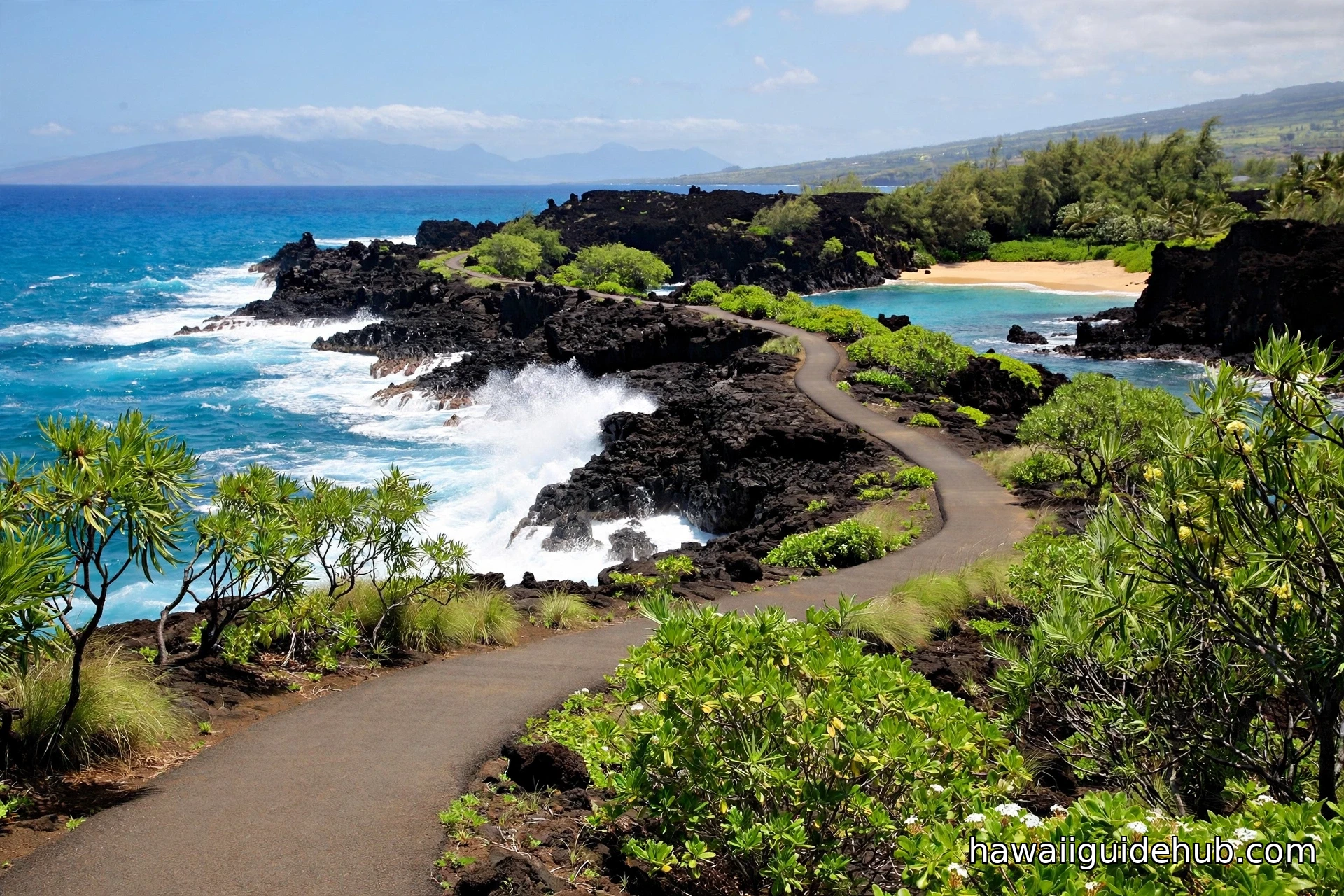
Heading north from the bay, the trail passes Dragon’s Teeth, a field of jagged lava rock formations that looks genuinely otherworldly, along with Ironwood Beach and views toward the island of Molokaʻi on clear days. The walking is mostly easy and paved, with some uneven lava rock sections where sturdy shoes help. Early morning or late afternoon are the most pleasant times, when the light is soft and the heat eases.
You do not need to hike the whole trail to enjoy it. Even a twenty-minute stroll in either direction from Kapalua Bay delivers ocean views, seabirds, and a completely different perspective on the coastline than you get from the sand. Combine it with a morning snorkel and you have one of West Maui’s best half days.
Best Time to Visit Kapalua Bay
Mornings win at Kapalua Bay, for three reasons. The parking lot still has spaces, the water is at its calmest and clearest before the afternoon trade winds pick up, and the marine life is most active. Aim to arrive before 9 a.m. if you can, and you will experience a noticeably quieter beach than the midday crowd finds.
Seasonally, summer brings the calmest ocean conditions to West Maui’s northwestern shores, while winter can push bigger swells toward this side of the island. The bay’s protected shape handles most of it well, which is why snorkeling stays good year round, but always check the surf forecast in winter months. Whale season, roughly December through April, adds a bonus: you can sometimes spot humpbacks spouting offshore while you float in the bay. If you are planning winter on Maui, Kapalua Bay deserves a spot on the itinerary.
Nearby Beaches Worth Knowing
Kapalua Bay does not exist in isolation, and knowing the neighbors helps you plan. Napili Bay, just south, is another crescent-shaped snorkeling beach with a similar protected feel and a few casual dining options right on the sand. It makes an easy backup if Kapalua Bay’s lot is full.
D.T. Fleming Beach Park, a few minutes north, is the practical contrast: a bigger county beach park with a lifeguard, larger parking, picnic facilities, and a surf break that can get rough. It is the better pick if anyone in your group wants lifeguard supervision or bigger waves, while Kapalua Bay remains the better pick for calm snorkeling straight off the sand.
What to Bring
Pack like the beach has limited services, because it does. Reef shoes or fins for the rocky entries, your own snorkel gear if you have it (rentals exist but lines form), and plenty of water. Food is the big one: with only a snack kiosk on site, bring a cooler with lunch or plan to walk to one of the nearby restaurants midday and accept that you might lose your parking spot.
Sun protection matters more here than it looks. The limited natural shade means you will be exposed most of the day, so reef-safe sunscreen, a hat, and a rash guard for snorkeling are all worth the bag space. A dry bag for phones and keys is useful too, since you will be leaving belongings on the sand while you swim.
See Kapalua Bay Before You Go
This walking tour follows the Kapalua Coastal Trail from D.T. Fleming Beach Park all the way to Kapalua Bay, then gets in the water for snorkeling footage with green sea turtles at the bay itself. It is a good preview of both the trail and what the reef looks like on a clear day.
The Bottom Line on Kapalua Bay
Kapalua Bay earns its reputation the honest way. The crescent shape really does shelter the water, the reefs really are within easy reach of the sand, and the turtles really do show up. It asks a little planning in return: an early start for parking, your own food, and respect for a reef that is both the attraction and the thing most worth protecting. Get those right and you get one of Maui’s finest beach days, a morning in calm turquoise water followed by an afternoon wandering one of the island’s prettiest coastal trails. Few beaches on the island pack that much into one small bay.