Makawao: Maui’s Paniolo Cowboy Town and What to Do There

High on the slopes of Haleakalā, where the air turns cool and jacaranda trees bloom purple, sits Makawao: Maui’s paniolo cowboy town. Wooden storefronts line Baldwin Avenue, art galleries fill old plantation buildings, and the smell of fresh cream puffs drifts from a bakery that has been open since 1916. If your Maui trip has been all beaches so far, Makawao is the perfect change of pace.
Makawao means “edge of the forest” in Hawaiian, and the name fits. The town sits at about 1,600 feet elevation between the ranch lands below and the forests above, with a heritage shaped by Hawaiian cowboys, Portuguese immigrants, and working artists. Here are the best things to do in Makawao, plus the nearby Upcountry stops worth pairing with your visit.
Makawao at a Glance
| The setting | Upcountry Maui, on the slopes of Haleakalā |
| The climate | About 1,600 feet, noticeably cooler than the coast |
| Why it is different | Paniolo (Hawaiian cowboy) heritage, art galleries, boutiques |
| The main drag | Baldwin Avenue |
| Do not miss | Komoda Store cream puffs, Hui Noʻeau, Makawao Forest Reserve |
| Getting there | About 20 minutes from Kahului Airport |
| Pair it with | Haleakalā, Paʻia, Kula, ʻUlupalakua |
Makawao’s Story: From Forest Edge to Cowboy Town
Long before the boutiques, Makawao was ranch country. In the 1830s, King Kamehameha III brought Mexican vaqueros to Hawaiʻi to teach cattle handling, and their skills took root on the slopes of Haleakalā. The Hawaiian cowboys who emerged, the paniolo, developed their own traditions of horsemanship, roping, and ranch life that continue today on the working ranches around Makawao.
The town grew as a service center for the ranches and plantations, and Portuguese immigrants who came to work the fields left their mark on its food, churches, and festivals. When the plantation era faded, artists moved into the old wooden buildings, drawn by cheap rents and mountain light. That is the Makawao you see today: a cowboy town that became an art town without ever stopping being a cowboy town.
Stroll Baldwin Avenue
Baldwin Avenue is Makawao in miniature: a walkable strip of wooden false-front buildings housing boutiques, galleries, and cafes. Start at one end and wander. You will find western wear shops selling paniolo boots and hats, jewelers working with local materials, and gift shops that are a world away from resort-town souvenirs.
The street looks like a film set, but it is a working town. Ranchers still come in for supplies, artists keep studios upstairs, and on the third Friday of each month the town throws a street party with food, music, and open galleries. If your visit lines up with Third Friday, plan your evening around it.
Take your time with the side streets too. Courtyards behind the main strip hide sculpture gardens, coffee roasters, and workshops where you can watch jewelers and woodworkers at their craft. Many shops are closed on Sundays and Mondays, so check hours if you are visiting early in the week. What Makawao lacks in size it makes up for in density of interesting: nearly every doorway leads somewhere worth a look.
Discover Paniolo Heritage
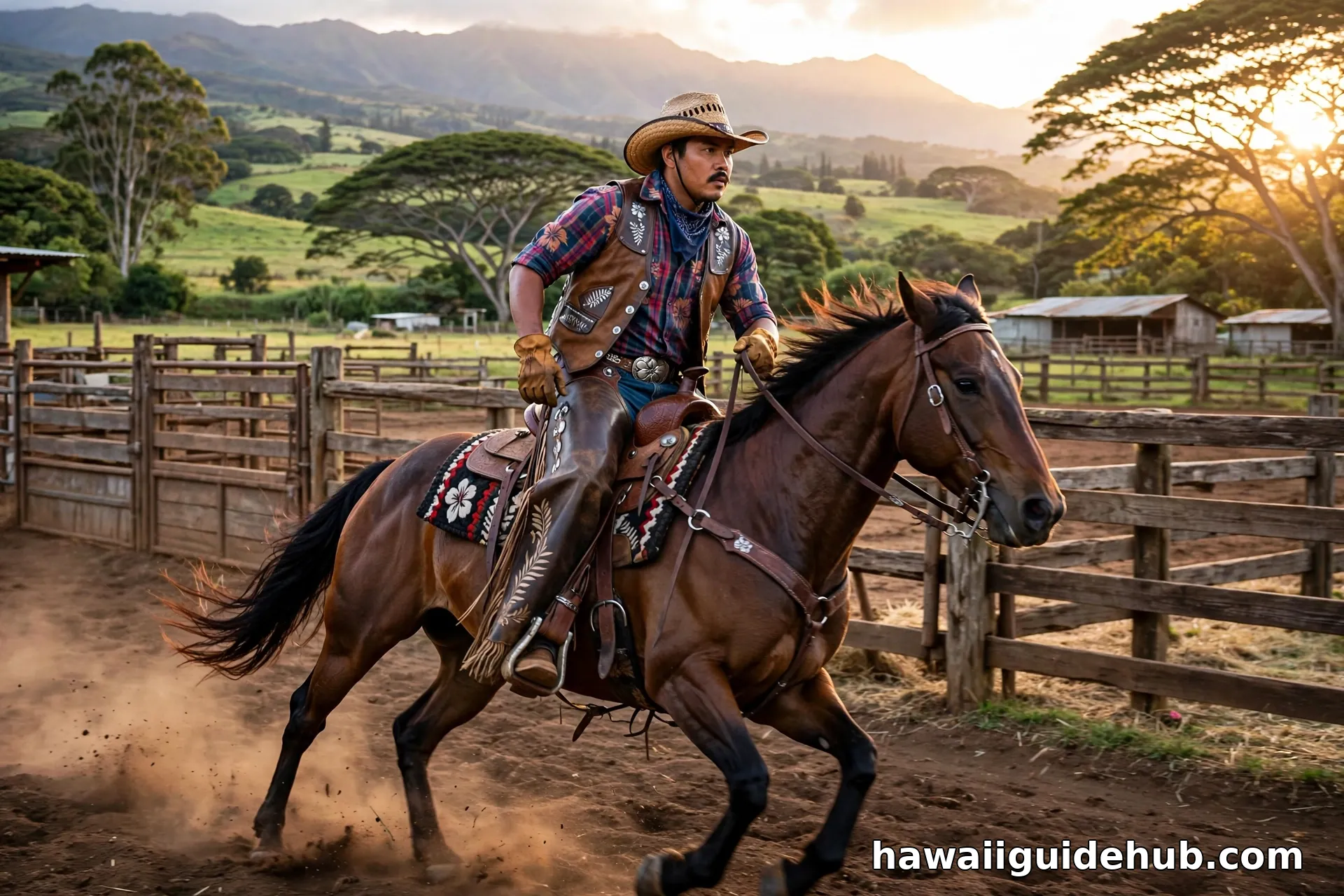
Makawao is the heart of paniolo country. Hawaiian cowboys have worked these slopes since Mexican vaqueros arrived in the 1830s to teach cattle handling, and the tradition is still alive on the ranches around town. You will see it in the architecture, the boot shops, and the easy way locals talk story about horses.
The biggest celebration is the Makawao Rodeo, held every Fourth of July weekend at the Oskie Rice Arena just outside town. Bull riding, barrel racing, and roping draw riders from across the islands, and the whole town turns out. If you visit in summer, it is worth planning around. The small Makawao History Museum in town fills in the backstory the rest of the year.
Explore the Arts Scene
Makawao is one of Maui’s great art towns. Dozens of galleries and working studios line Baldwin Avenue and the surrounding streets, showing everything from traditional Hawaiian crafts to contemporary painting and sculpture. The town has a glassblowing tradition too, and watching molten glass take shape is worth an afternoon on its own.
The anchor is the Hui Noʻeau Visual Arts Center, set in the historic 1917 Kaluanui estate just outside town. It hosts exhibitions, classes, and workshops in a beautiful old plantation-era home surrounded by gardens. Even if you do not take a class, the grounds and gallery are worth the stop.
Do not miss the Holy Ghost Church, an octagonal Catholic church built in 1894 by Portuguese immigrants. Its unusual eight-sided shape and hand-painted interior make it one of the most distinctive churches in Hawaiʻi, and it tells the story of the plantation workers who helped build Upcountry Maui.
What sets Makawao’s art scene apart is how hands-on it is. Many studios welcome visitors to watch artists at work, and the Hui Noʻeau runs regular classes in everything from ceramics to printmaking. If you have ever wanted to try throwing a pot or blowing glass, this is the town to do it. You will leave with a souvenir you made yourself and a story to go with it.
Eat Your Way Through Town
No visit to Makawao is complete without Komoda Store and Bakery. Open since 1916, this family-run institution is famous island-wide for its cream puffs and guava malasadas. Go early in the day, because the best items sell out, and expect a line of locals who have been coming for decades.
For a sit-down meal, the town’s longtime Mexican restaurant on Baldwin Avenue has been feeding locals and visitors for generations, and the cafes along the strip do excellent breakfasts with Upcountry produce. On Saturday mornings, the Upcountry farmers market nearby overflows with just-picked fruit, flowers, and baked goods. Eat before you shop, or you will buy out of hunger.
Makawao rewards grazers. Between the bakery, the cafes, and the market, you can easily build a whole food tour out of a single morning. Try the lilikoi butter, the Kula strawberries when they are in season, and anything with Maui coffee in it. Upcountry grows some of the best produce in the state, and the short trip from farm to plate shows in every bite.
Get Outside: Forest Reserve and Ranch Country
The Makawao Forest Reserve rises just above town, with miles of trails through eucalyptus and pine forest. The Kahakapao Loop Trail is the classic outing: a scenic loop popular with hikers and mountain bikers, with cool air and forest birdsong a world away from the beach crowds. Bring a layer, since Upcountry weather shifts fast.
Horseback riding is the most fitting way to see ranch country. Local stables offer guided trail rides across the slopes of Haleakalā, following in the literal hoofprints of the paniolo. Zipline courses also run through the gulches above town for a faster view of the forest canopy.
The forest reserve sits at the transition between ranch land and the native forest higher up, which makes it great for birdwatching. Native honeycreepers work the canopy while introduced songbirds fill the understory. Go in the morning when the birds are most active, and bring binoculars if you have them. The trails are well marked but can be muddy after rain, so wear shoes you do not mind dirtying.

Nearby Upcountry Stops
Makawao anchors a full Upcountry day. Ten to twenty minutes away in Kula you will find the Aliʻi Kula Lavender Farm, with 45 varieties of lavender blooming against a bi-coastal view, and the Surfing Goat Dairy, where you can meet the goats behind some of Hawaiʻi’s best chèvre. Coffee farms dot the slopes too, growing 100 percent Maui coffee at 3,000 feet.
Further along, ʻUlupalakua hosts MauiWine, Hawaiʻi’s only winery, pouring pineapple wine on the grounds of a historic ranch that dates to the 1800s. The ranch store nearby is famous for its elk burgers. Pair these stops with Makawao for a slow, delicious day above the clouds.
The drive itself is part of the experience. The road from Makawao through Kula to ʻUlupalakua climbs through flower farms and cattle pastures with views that stretch from the West Maui Mountains to the ocean. Pull over at the overlooks. Upcountry Maui is one of those places where the journey genuinely rivals the destination.
Winter Bonus: Whale Season
Visit between December and April and Makawao pairs perfectly with whale season. Humpbacks migrate about 3,000 miles from Alaska to Hawaiʻi every winter, and the ʻAuʻau Channel between Maui and Lānaʻi is one of the best places on Earth to see them. Drive down from Upcountry in the morning for a whale watch from Māʻalaea or Lahaina, then head back up the mountain for sunset. It is one of Maui’s great two-world days.
Planning Your Makawao Visit
Makawao is about 20 minutes from Kahului Airport and 15 minutes from Paʻia, which makes it an easy half-day trip or a full Upcountry day combined with Kula and ʻUlupalakua. It also sits on the road to Haleakalā, so many visitors stop on the way up or down from the summit. Our Haleakalā sunset guide pairs well with a Makawao afternoon.
Bring a light jacket. At 1,600 feet, Makawao runs 10 to 15 degrees cooler than the beaches, and mornings can be crisp. Most shops open by 10 AM and close by late afternoon, so plan town browsing for midday. For more island planning, see our 10 reasons to visit Maui and cheapest time to visit Hawaii guides.
If you are staying on the west or south side of Maui, Makawao makes an ideal morning trip before the beach crowds peak. Arrive when Komoda opens, browse the galleries while the light is good, have lunch in town, and you will be back at the sand by mid-afternoon with a car full of bakery boxes and a completely different Maui memory.
Video: A Day in Makawao
Glassblowing, countryside drives, and small-town food: a half day in Makawao and Upcountry Maui.
Frequently Asked Questions
What is Makawao known for?
Makawao is known as Maui’s paniolo (Hawaiian cowboy) town, with a historic main street of wooden storefronts, a thriving arts and gallery scene, and the famous Komoda Store bakery.
How far is Makawao from the beach?
Makawao is about 15 minutes from Paʻia and the North Shore beaches, 35 minutes from Kīhei, and 20 minutes from Kahului Airport. It is an Upcountry mountain town, not a beach town.
When is the Makawao Rodeo?
The Makawao Rodeo takes place every Fourth of July weekend at the Oskie Rice Arena, with bull riding, barrel racing, roping, and a full town celebration.
What does Makawao mean in Hawaiian?
Makawao means “edge of the forest” in Hawaiian, a fitting name for a town between the ranch lands below and the forests of Haleakalā above.
Is Makawao worth visiting?
Yes, especially if you want to see a different side of Maui. The paniolo heritage, art galleries, Komoda bakery, and cool mountain air make it one of the island’s most distinctive towns.
How much time do you need in Makawao?
Two to three hours covers Baldwin Avenue, Komoda Store, and a gallery or two. A half day lets you add the Hui Noʻeau or a forest reserve hike. A full day pairs Makawao with Kula, the lavender farm, and the winery at ʻUlupalakua.
Is Makawao cooler than the beach areas?
Yes. At about 1,600 feet elevation, Makawao runs 10 to 15 degrees cooler than the coast, with crisp mornings and cool evenings. Bring a light jacket.
Makawao is Maui at its most down-to-earth: cowboy boots and art galleries, cream puffs and forest trails, all at 1,600 feet above the beach crowds. Give it half a day, or better yet a full Upcountry day with Kula and the winery. For the resort side of the island, our guide to Wailea covers the coast.