Where to See Sea Turtles From Shore on Oahu

You do not need to snorkel to look for Hawaiian green sea turtles on Oahu. Some honu rest on beaches, while others may be visible feeding or surfacing close to shore. A land-based visit lets you observe without pursuing an animal into the water, though no beach guarantees a sighting.
This guide focuses on watching turtles from shore, especially basking sites on the North Shore. It covers how to position yourself, what to expect at different coastal settings and when to leave an animal undisturbed. Snorkeling locations and seasonal water conditions have separate guides linked below.
The Honu: Hawaii’s Gentle Giant
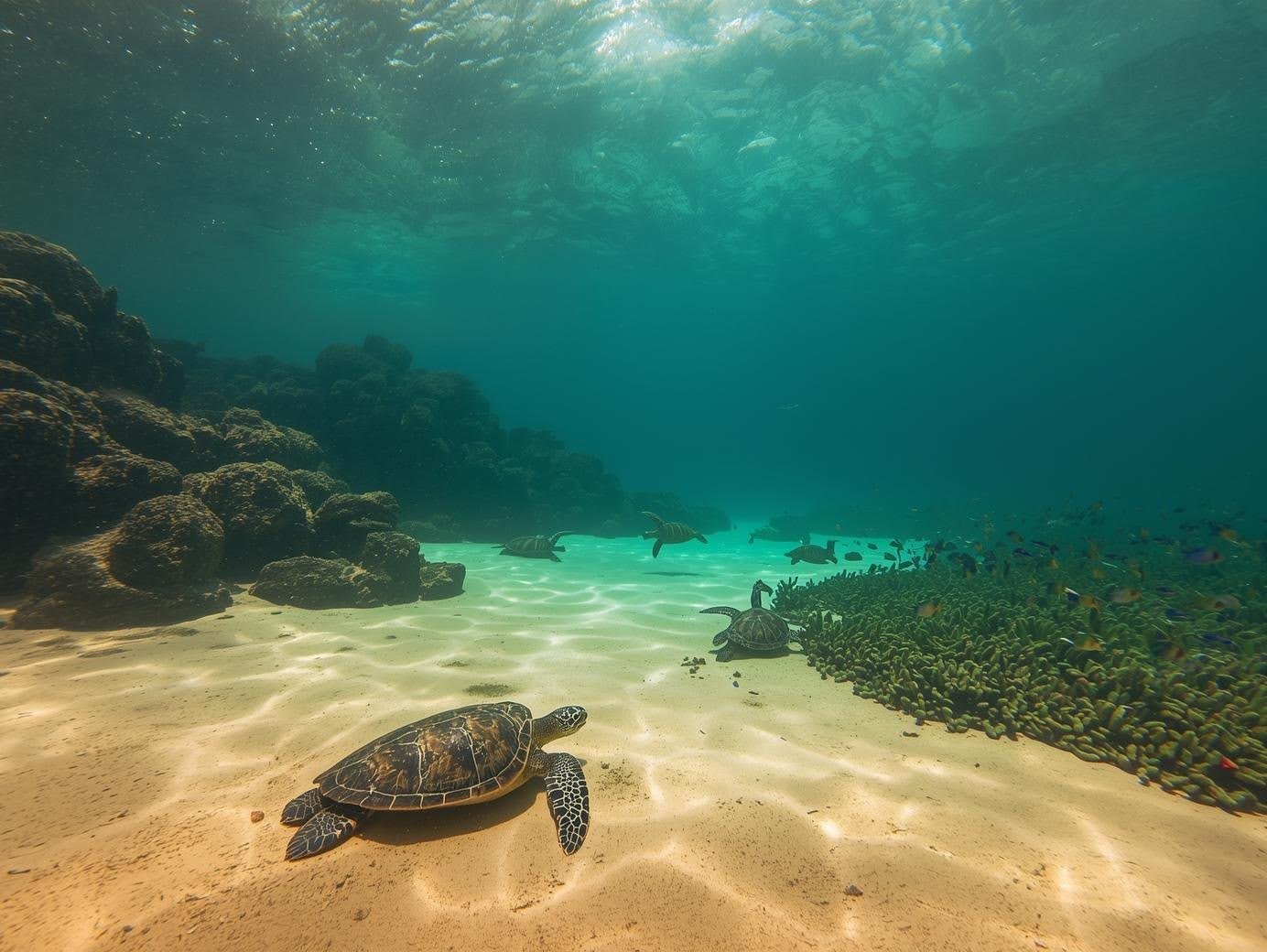
The Hawaiian green sea turtle is the most common type of turtle you’ll see in the waters around Oahu. Hawaiians call these turtles “honu,” and they are an important part of the culture of the islands. They stand for good luck, long life, and strength. Many Native Hawaiian families think of them as aumākua, or ancestral spirits, who protect and guide them.
Biology and Behavior
Hawaiian green sea turtles are fascinating creatures with unique characteristics.
- Appearance: The name refers to the turtle’s fat rather than its shell. Adults commonly measure 3 to 4 feet and weigh 250 to 400 pounds, according to NOAA.
- Diet: Adult honu mostly eat plants, like algae (limu) and seagrass, that they find in shallow coastal waters. Turtles eat this way to keep coral reefs healthy because they act like gardeners in the ocean, trimming the algae so that corals can grow. Juvenile turtles eat both plants and animals, including small invertebrates.
- Life cycle: Green turtles may live 70 years or more. Females generally mature at 25 to 35 years and migrate between feeding and nesting areas. Do not confuse a turtle resting on sand with one actively nesting.
Why are sea turtles so important?
A turtle on the beach is using part of its habitat, not performing for visitors. Understanding the connection between coastal feeding areas and resting beaches helps explain why crowding an animal can interrupt its daily activity.
- Reef Health: They eat algae to stop it from growing too much and covering up fragile coral reefs. Coral reefs that are healthy are very important because they give shelter and food to thousands of other marine species.
- Seagrass Beds: Their grazing also keeps seagrass beds healthy. These beds are important homes for many fish and invertebrates and help keep the seabed stable.
- Nutrient Cycling: Turtles move nutrients around the ocean ecosystem as they move between places where they eat and rest.
A sighting cannot tell you the condition of the whole reef or the turtle population. Appreciate the observation without treating one animal’s presence as proof that an ecosystem is healthy.
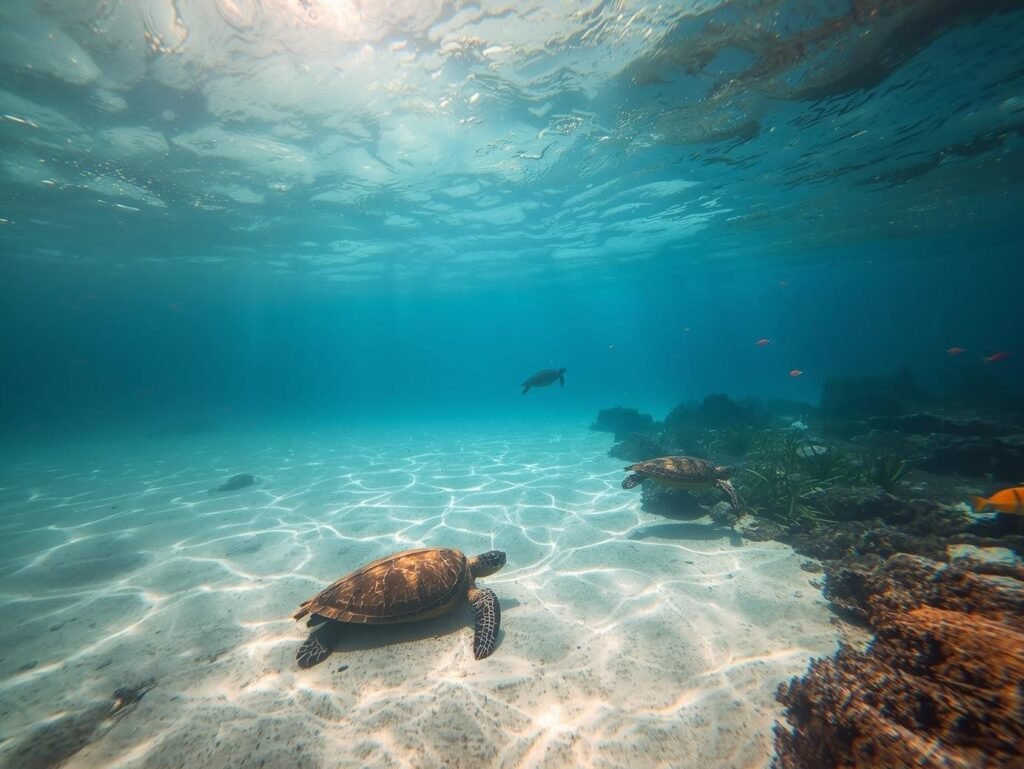
Where to Watch Turtles From Shore on Oahu
Oahu offers several incredible spots where you can respectfully observe sea turtles. You can’t be sure you’ll see something magical, but going to these places will make it more likely.
Laniakea Beach (Turtle Beach)
Laniakea Beach on Oahu’s North Shore is known for green turtles that come onto the sand to bask. NOAA describes conservation outreach at Laniakea that helps visitors observe without disturbing the animals. Stay behind any marked boundary and leave turtles a clear route to and from the ocean.
Best Time to Visit Laniakea Beach
There is no dependable appointment time for a basking turtle. You may find turtles resting, see them only offshore or see none at all. Do not rely on a claimed 11 a.m. to 2 p.m. guarantee, and do not wait close to an animal to encourage it to move.
Crowds and roadside traffic can complicate a visit. Use lawful parking and designated access, avoid blocking residents’ entrances and do not stop a vehicle abruptly for a sighting. When volunteers are present, follow their guidance and keep children within your group.
Other North Shore Stops
DLNR also identifies Aliʻi Beach as a basking location. Other North Shore stops offer coastal views, but a beach suitable for observing the ocean is not automatically suitable for entering it.
- Haleʻiwa Aliʻi Beach Park: Turtles may bask on the shoreline. Watch from the beach without crossing a turtle’s path; do not use the adjacent harbor as a swimming or viewing shortcut.
- Waimea Bay: Treat a stop as a coastal view rather than a promised turtle encounter. Large shorebreak and winter surf can make the water hazardous.
- Shark’s Cove: This rocky coastal area is better known for snorkeling than predictable basking. Read the Shark’s Cove guide before planning a separate water activity, and stay away from wave-washed rocks.
Watching turtles on the West Side (Leeward Coast)
On the leeward coast, distinguish a view from land from an offshore snorkeling destination. Keep well back from breaking waves and do not climb onto wet rocks to improve your viewing angle.
- Kahe Point: This is an exposed coastal and offshore viewing setting, not a reliable basking stop. Do not swim toward outflow pipes or follow dolphins in pursuit of a closer view.
- Mākaha: Wildlife may be seen offshore, but neither clear water nor a calm summer day is assured. Observe from dry ground and respect lifeguard instructions.
Waikiki and South Shore
You can find honu even in the busy center of Waikiki.
- Waikiki: A turtle may surface near shore, but sightings are incidental. Do not climb groins, seawalls or slippery rocks for a photograph.
- Turtle Canyon: This offshore reef is not a shore-based basking location. Do not confuse its name with a beach where turtles can be watched from land.
Seasonal Patterns For Shore Sightings
Turtles occur around Oahu year-round, but individuals move among feeding, resting and nesting habitats. For a separate explanation of how surf and weather affect water activities, see the Oahu snorkeling seasons guide.
For shore viewing, the immediate question is whether you can stand on dry, stable ground without entering a wave-wash area or crowding wildlife.
- During smaller surf: Nearshore animals may be easier to spot, but you should still stand back from the water and allow turtles to move freely.
- During large surf: Keep farther from the shoreline, heed closures and abandon a stop if the dry beach is narrow or waves wash through your viewing area.
A Guide to Watching Turtles with Respect
Following responsible wildlife viewing rules is very important for the safety of both the honu and you. The Endangered Species Act protects all sea turtles in Hawaii, and it is a federal offense to touch, chase, feed, or harass them. If you ever find a sick, injured, or stranded turtle, call the statewide NOAA Marine Wildlife Hotline at (888) 256-9840.
- Keep your distance: NOAA recommends at least 10 feet (3 meters) on land and in water. Use more space when needed and stay behind barriers.
- Don’t Feed Them: Giving turtles food is bad for their health and stops them from foraging in their natural way.
- No flash photography: If you’re taking pictures, don’t use a flash because the bright light can bother them.
- Give Basking Turtles Space: When a turtle is resting on the beach, it is conserving energy. Give it an even wider berth. Approaching too closely can scare it back into the water, causing it to expend precious energy.
- Protect the habitat: Leave sand, rocks and marine life in place. Avoid trampling shoreline vegetation or reef areas. Green turtles mainly eat algae and seagrass, not coral.
- Leave No Trace: Always pack out everything you bring to the beach, especially plastics, which can be mistaken for food by turtles and other marine life.
By following these simple rules, you help ensure that these magnificent creatures continue to grace Hawaii’s waters for years to come.
Choose Shore Viewing or a Separate Snorkeling Plan
If you want to snorkel as a separate activity, read our Oahu snorkeling locations guide. Staying on land is a complete way to enjoy turtle viewing; there is no need to enter the ocean to improve a sighting.