Boiling Pots: Hilo’s Churning River Pools

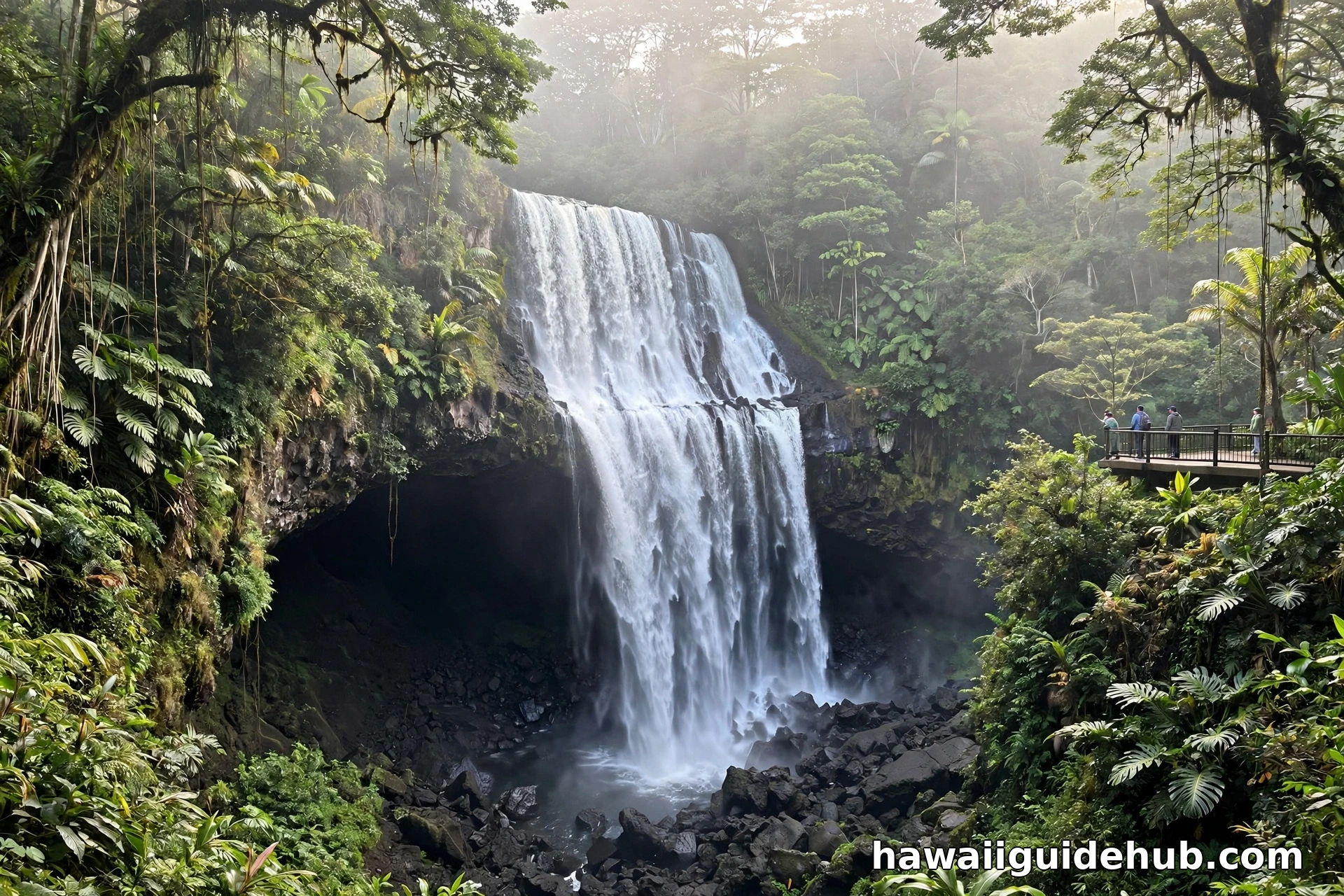
From the viewing platform above the Wailuku River in Hilo, the water below does something that stops most visitors mid-sentence. It churns, surges, and bubbles in a chain of dark rock pools, rising in one basin and vanishing into the next as if something enormous were stirring it from underneath. Those pools are the Boiling Pots, one of the most distinctive river features on Hawaiʻi Island, and they reward anyone who understands what they are looking at.
This is the complete guide to Boiling Pots Hawaiʻi. It covers where the pools sit inside Wailuku River State Park, how Peʻepeʻe Falls feeds them, why the water appears to boil, when the display is strongest, and the safety rules that matter here more than at almost any other roadside stop in the state. The pools are beautiful, easy to reach, and genuinely dangerous to enter, and this page treats all three of those facts with equal weight.
Boiling Pots at a Glance
| Location | Wailuku River State Park, off Waiānuenue Avenue, Hilo, Hawaiʻi Island |
| Feature | Terraced basalt pools on the Wailuku River below Peʻepeʻe Falls |
| Walk to viewpoint | Short paved path from the parking area, about 0.2 miles of viewpoint walking |
| Difficulty | Easy for the viewpoint; the river itself is off limits for swimming |
| Swimming | Not safe and not a designated swimming area; no lifeguards |
| Reservations | None for day use viewing; check State Parks notices before you go |
| Best viewing | After moderate rain upstream, when flow is strong but the river is not in flood |
| Pair it with | Rainbow Falls, about 1.5 miles downstream in the same state park |
Where Boiling Pots Is
Boiling Pots sits in the upland section of Wailuku River State Park, a short drive west of downtown Hilo on Waiānuenue Avenue. The park protects two famous stretches of the same river. Downstream, Rainbow Falls drops 80 feet over a lava cave. Upstream, the river runs through the stepped pools of Boiling Pots, with Peʻepeʻe Falls pouring in at the top of the sequence. Most visitors see both sections in a single outing, and the drive between them takes only a few minutes.
The Wailuku River itself deserves a moment of respect before any talk of viewpoints. At about 28 miles long, it is the longest river in Hawaiʻi, running between the lava flows of Mauna Kea and Mauna Loa down to Hilo Bay. That length matters for safety. Rain can fall on the high slopes miles inland, out of sight and out of earshot, and send a surge down the channel while the sky above Hilo stays blue. Everything in this guide follows from that one geographic fact.
Parking at the Boiling Pots section is a modest paved lot beside the viewpoint path, with restrooms nearby. There is no long hike here. A short, mostly level path leads to fenced overlooks above the pools, which makes this one of the most accessible river viewpoints on the island. Visitors who plan a wider Hilo day often combine the park with the gardens and bayside parks below town, and our Hawaiʻi itinerary guide shows how a Hilo day fits into a full island loop.
What Makes the Water Look Like It Is Boiling
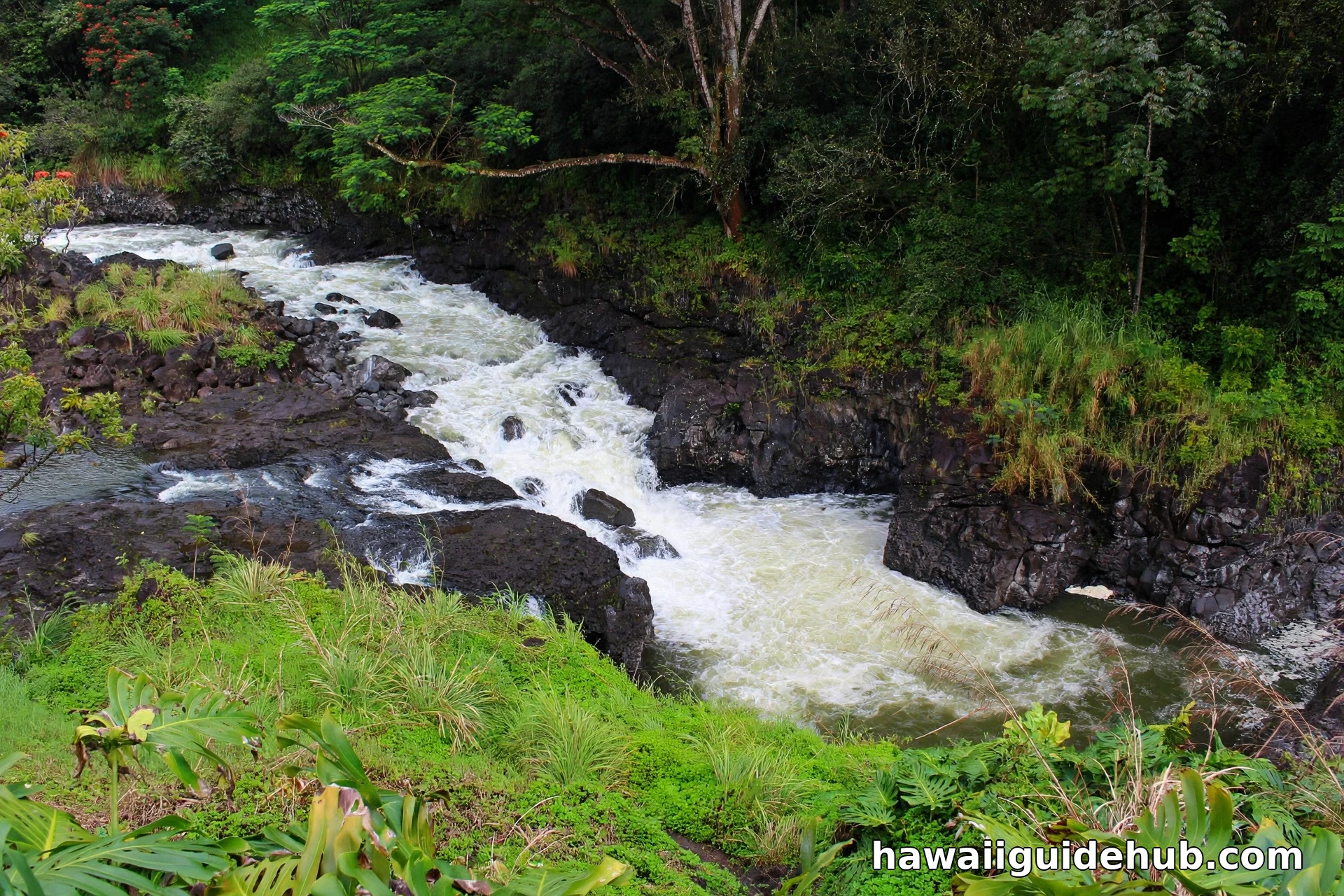
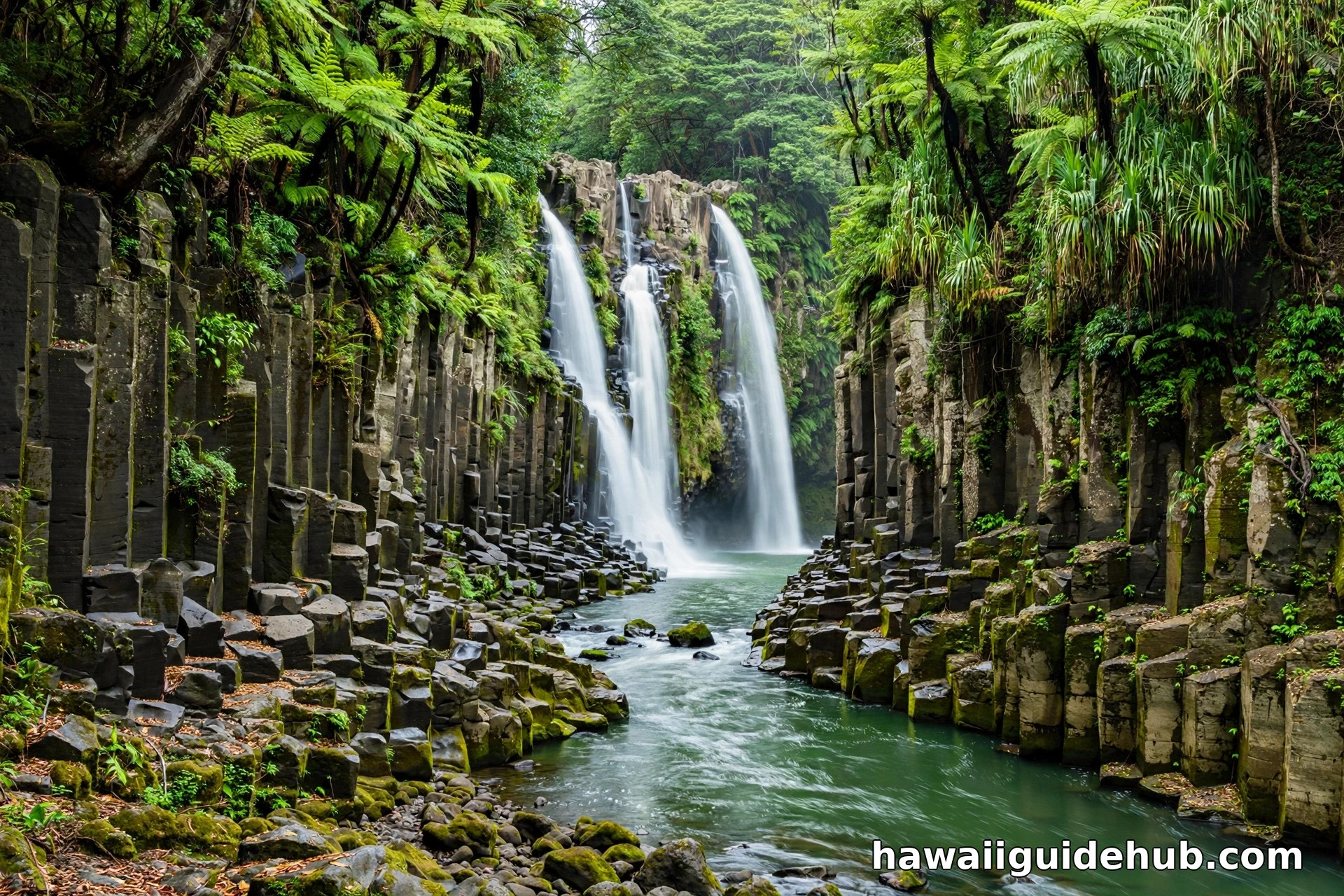
The pools are not hot. No volcanic heat is involved at all, despite the name and despite how convincing the effect can be after rain. The boiling look comes from hydraulics. The river here flows over and through a staircase of basalt, the dark volcanic rock that forms much of this coastline. Long ago, lava cooled slowly enough in places to crack into tall hexagonal columns, and the river has spent thousands of years carving those columns into a series of rounded basins connected by narrow chutes and partly hidden channels.
When the flow is strong, water pours into each basin faster than the narrow outlet can release it. It piles up, folds back on itself, and wells upward through submerged gaps between pools, so the surface heaves and bubbles exactly the way a pot does on a stove. Stand at the railing after a wet week and you can watch individual pools surge in sequence, one filling and spilling while the next one down the line starts to roil. On a dry, calm day the same pools can look almost placid, which is why timing changes this visit more than at most viewpoints.
Peʻepeʻe Falls completes the picture. The falls drop into the top of the pool sequence, sending a constant feed of aerated white water into the first basin. In wet weather the falls widen and split into multiple streams across the rock face, and the whole chain below them turns white and restless. The basalt columns framing the gorge are easiest to appreciate in lower water, when the dark geometric walls stand clear of the foam.
The Legend of Hina, Māui, and the Moʻo
Hawaiian tradition ties these pools to the same story that explains Rainbow Falls downstream. In the best known telling, the cave beneath Rainbow Falls was the home of Hina, mother of the demigod Māui. A giant moʻo, a lizard being named Kuna, lived upstream and tormented her, at one point trying to flood her out of her cave. Māui came to her defense and drove the moʻo from its hiding place among the deep pools above the falls. In some versions he calls on Pele for hot stones and drops them into the water, boiling the pools until the creature has to surface. Whether you take the story as history, metaphor, or both, it captures something true about this river: the calm surface and the violence underneath it are the same water.
Why You Must Not Swim Here
This section is the most important one on the page. Boiling Pots and the surrounding stretch of the Wailuku River are not a swimming place. There are no lifeguards, the State Parks division does not present this area as safe for swimming, and the river has a long, documented history of drownings, including people who entered water that looked manageable moments before it changed.
Three hazards combine here. The first is flash flooding, the river rising rapidly from rain falling far upstream, which can arrive with little local warning. The second is the plumbing of the pools themselves: the same submerged channels that create the boiling effect can pin or trap a swimmer underwater, and smooth, algae coated basalt offers almost no footing or handhold for climbing out. The third is simple current strength. Even at moderate flow, the chutes between pools move faster than a strong swimmer can fight for long.
The safe way to enjoy Boiling Pots is also the intended way: from the fenced viewpoints, behind the railings, on the paved paths. Stay off the rocks at the water edge, keep children within reach, and treat wet rock as ice. If you want a Hilo swim, the ocean parks east of town, with protected coves and lifeguards in season, are the right call. Travelers building a waterfall day on other islands should apply the same caution everywhere; our guide to Maunawili Falls on Oʻahu explains the same flash flood logic on a different trail.
Best Time to Visit Boiling Pots
Hilo is one of the wettest cities in the United States, and that climate is the engine of this attraction. The pools perform best in the days right after moderate rain has raised the river without pushing it into flood. Winter and spring, roughly November through March, bring the most consistent heavy flow, while the drier stretch of late spring and summer can leave the pools quiet and the falls thin. There is a balance to strike. A river in full brown flood is dangerous to approach and closes viewpoints, while a drought week makes the name hard to understand.
Morning is the calmest time at the viewpoint, with soft light in the gorge and the fewest tour groups. If you pair the visit with Rainbow Falls downstream, go there first on a sunny morning, when rainbows most often form in the mist at around 10 AM, then continue upstream to Boiling Pots. Always check the State Parks park notices page on the morning of your visit for closures, and check the local forecast for the mountains above Hilo, not only for the town itself. Temperatures in Hilo sit in the high 70s to low 80s Fahrenheit on most days, so the real comfort factors are rain gear and footwear rather than layers.
What to Bring and How Long to Stay
Most visitors spend 20 to 40 minutes at Boiling Pots, and an hour or more if they walk both the Boiling Pots and Rainbow Falls sections of the park. Bring shoes with tread, because the paved paths and viewpoint aprons get slick in the mist and rain. A light rain jacket is useful in Hilo in every month. Bring water even for a short stop, a camera for the pool sequence, and patience if the river is low, since reading the basalt columns and watching Peʻepeʻe Falls is still a worthwhile stop. Leave valuables out of sight in the car, as you would at any popular roadside lot.
Accessibility is comparatively good here. The viewpoint paths are short and paved, and the main overlooks can be reached without stairs, though surfaces can be wet and the farthest viewpoints involve gentle grades. Anyone with balance concerns should enjoy the first overlook and skip the lower paths when they are slick. Restrooms are available in the park section, and the whole stop works well for travelers who cannot manage the longer waterfall hikes elsewhere on the island, such as the trails described in our hiking in Kauaʻi guide for contrast.
Nearby Places to Combine With Boiling Pots
Rainbow Falls is the obvious partner stop, sitting downstream in the same park with its own parking area, top of falls viewpoint, and a stand of enormous banyan trees above the gorge. From Hilo, many visitors continue north along the Hāmākua Coast toward ʻAkaka Falls State Park, where a paved loop passes two tall waterfalls in dense rainforest. Others head south and east toward Hawaiʻi Volcanoes National Park for a full day that contrasts river scenery with active volcanic landscapes. The east side of the island rewards slow pacing, and the Kohala Coast on the dry northwest side makes a useful comparison stop later in a circle island trip, with the same volcanic geology under very different weather.
Video: Boiling Pots and the Wailuku River
See how dramatically the pools change between calm flow and flood conditions before you plan your own visit.
Frequently Asked Questions
Can you swim at Boiling Pots?
No. Boiling Pots is a viewpoint, not a swimming area. The pools have strong currents, submerged channels that can trap swimmers, slippery rock, and a real flash flood risk from rain falling far upstream. There are no lifeguards. Enjoy the pools from the fenced overlooks and swim instead at Hilo ocean parks designed for it.
Why is it called Boiling Pots?
When the Wailuku River runs high, water surging into each terraced basalt basin wells up through hidden channels and churns on the surface, which looks remarkably like a row of pots boiling on a stove. The water is not hot. The effect is pure hydraulics, and it is strongest after rain upstream.
How do you get to Boiling Pots?
Drive west from downtown Hilo on Waiānuenue Avenue into Wailuku River State Park and follow the signs for the Boiling Pots section, upstream from Rainbow Falls. Park in the paved lot and take the short paved path to the fenced viewpoints. No reservation is needed for a day use viewing stop, but check State Parks notices for closures before you go.
What is the difference between Boiling Pots and Rainbow Falls?
They are two features of the same river in the same state park. Rainbow Falls is a single 80 foot waterfall dropping over a lava cave about 1.5 miles downstream. Boiling Pots is a chain of terraced pools below Peʻepeʻe Falls, farther upstream. Most visitors see both in one outing.
When do the pools boil the most?
The churning effect peaks when the river runs high after rain in the mountains above Hilo, most often in the wetter months from November through March. If the river is in flood, stay well back and follow any closures. A moderate rise gives the best show from the safety of the overlook.
Boiling Pots earns its place on a Hilo itinerary not because it asks much of you, but because it explains so much. In one short walk you can read the whole story of this coast: lava that cooled into columns, a long river patiently carving them apart, rain gathered from two great volcanoes, and a Hawaiian legend that understood the danger hiding under a beautiful surface. See it after rain, keep to the railings, and let the river do the boiling.