Rip Currents in Hawaii: How to Spot Them and What to Do If You Get Caught

Rip currents are the most dangerous hazard on Hawaii beaches. They look like nothing special from shore, just a stretch of water that seems calmer than the surf around it, and they can pull even a strong swimmer out past the breaking waves in less than a minute. If you have been searching for anything about rip currents in Hawaii, this is the one complete guide you need: what they are, how to spot them, what to do if you get caught, and how to choose beaches where you are less likely to meet one.
The National Oceanic and Atmospheric Administration calls rip currents the number one safety threat at beaches. Across the United States, rip currents cause more than 100 deaths each year and account for over 80 percent of lifeguard rescues on surf beaches. Hawaii is no exception. Every year, visitors who are fine swimmers at home get into trouble in Hawaiian surf because they have never learned to read ocean water. This guide gives you that knowledge in plain language.
Rip Currents at a Glance
| The threat | The reality |
|---|---|
| Understand the danger | |
| What it is | A narrow channel of water flowing away from shore, through the surf zone and past the breaking waves |
| How fast | Up to 8 feet per second: faster than an Olympic swimmer |
| The biggest myth | That it is an undertow dragging you to the bottom; rip currents move you outward, not downward |
| When they are worst | During high surf, after storms, and near jetties, piers, and reef gaps |
| Protect yourself | |
| If you get caught | Swim parallel to the shoreline until you are out of the channel, then angle back to the beach |
| Prevention | Swim at lifeguarded beaches and ask the lifeguard about conditions before entering the water |
| Emergency | Call 911 and alert a lifeguard if you see someone in trouble |
What a Rip Current Actually Is
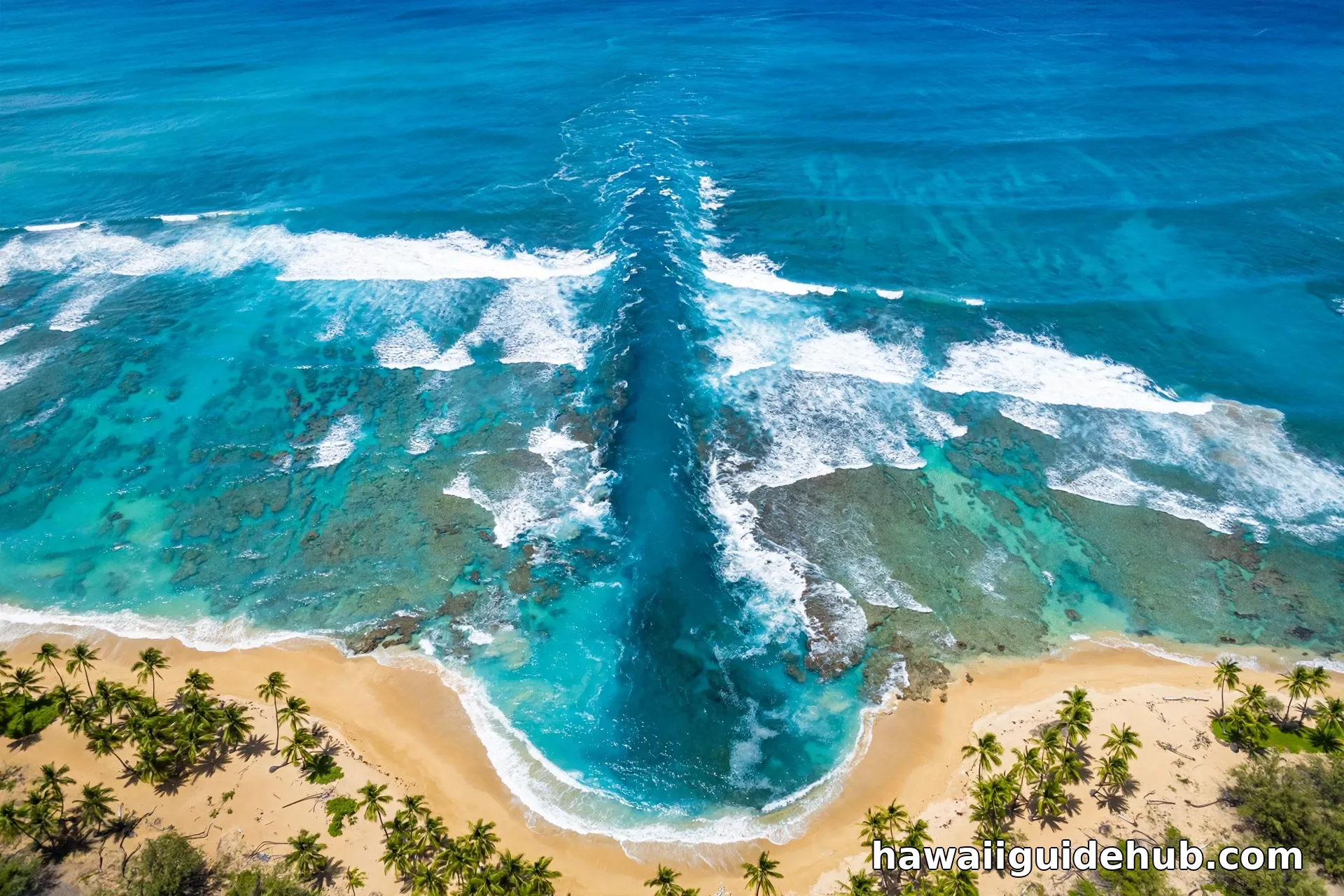
A rip current is a powerful, narrow stream of water that flows from the shoreline back out to sea. It forms when waves push water toward the beach and that water needs a way to escape back offshore. The returning water finds a low spot in the sandbar or a gap in the reef and rushes through it like water draining from a bathtub. The result is a channel, usually tens of feet wide, where the current flows seaward much faster than the surrounding water.
In Hawaii, rip currents form most often where waves break over reefs and sandbars with gaps, which describes a great many of the islands’ beaches. They are not the same thing as a rip tide, a term people often use by mistake. A rip tide is a strong current caused by tidal water rushing through inlets and harbor mouths. Rip currents are caused by waves, not tides, and they can appear on a calm sunny day just as easily as during stormy weather. Distant storms can send large swells to Hawaii even when the sky overhead is blue, which is why a beach can look perfect and still hide dangerous currents.
The most important thing to understand is what a rip current cannot do. It cannot pull you underwater. This is the myth that gets people killed, because swimmers who feel themselves being dragged outward panic, assume they are being pulled to the bottom, and exhaust themselves fighting the current head on. A rip current moves you away from shore, not down. It is a horizontal current. People drown in rip currents because they panic and tire, not because the water forces them under.
How to Spot a Rip Current Before You Swim
Rip currents can be hard to see from water level, which is exactly why you should study the water from the beach before you get in. Walk up to a slightly elevated spot, such as a dune or a lifeguard stand area, and look at the surf for a minute or two. You are looking for anything that breaks the pattern of the incoming waves.
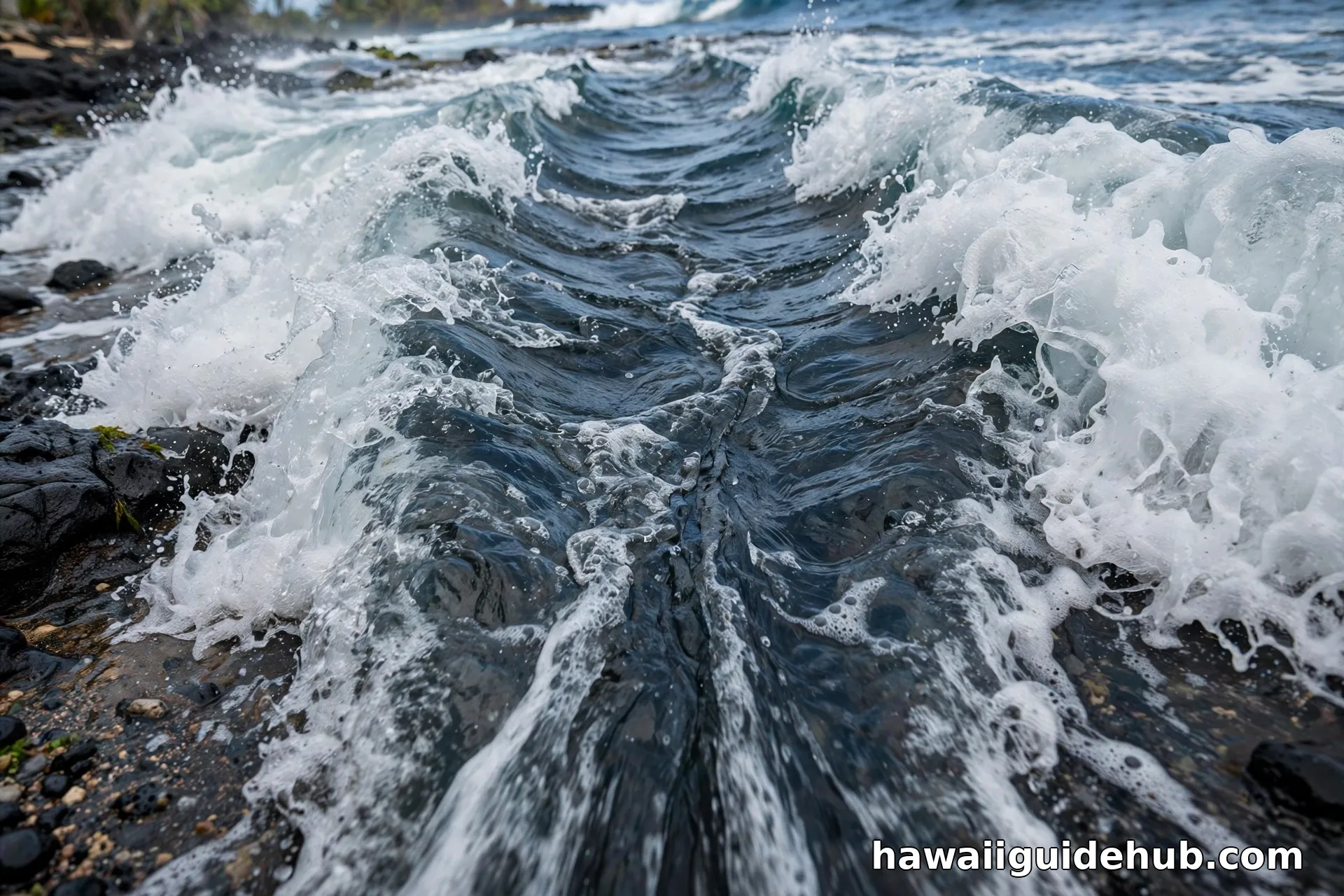
The National Oceanic and Atmospheric Administration lists four classic signs. First, a channel of churning, choppy water cutting through the surf. Second, an area with a noticeable difference in water color, often darker or muddier because the current is pulling sand and sediment offshore. Third, a line of foam, seaweed, or debris moving steadily out to sea in a narrow band. Fourth, a break or gap in the incoming wave pattern, a place where waves are not breaking the way they are on either side.
The cruelest trick of a rip current is that it often looks like the safest place to swim. Because the current suppresses breaking waves in its channel, the water inside a rip can look calmer and flatter than the surf around it. Inexperienced swimmers naturally drift toward that calm patch, which is exactly the wrong choice. If you see a suspiciously calm gap between breaking waves, treat it with suspicion and swim elsewhere. When in doubt, ask the lifeguard to point out the safe swimming area. That is literally what they are there for.

What to Do If You Get Caught in a Rip Current
Even careful swimmers get caught sometimes. What happens in the first thirty seconds decides the outcome, and the right moves are simple enough to memorize before your trip.
Do not fight the current
The instinct is to swim straight back to shore as hard as you can. Do not do this. A rip current can flow at up to 8 feet per second, which is faster than even an Olympic swimmer can sprint. Swimming directly against it is like running on a treadmill that keeps speeding up. You will exhaust yourself and go nowhere, and exhaustion is what turns a survivable situation into a drowning. Stay as calm as you can and conserve your energy.
Swim parallel to the shore
Rip currents are narrow, often only 30 to 100 feet wide. That means freedom is usually a short sideways swim away. Swim parallel to the shoreline, in the direction of the breaking waves if you can tell which way they are breaking toward you, until you feel the current release you. Once you are out of the channel, swim back to the beach at an angle, riding the incoming waves in rather than fighting them.
Float if you cannot swim out
If you are too tired to swim sideways, float or calmly tread water. Rip currents weaken as they move offshore, and many circulate back toward shore on their own. Facing the shore, wave your arms and call for help. Lifeguards are trained to spot this exact situation, and other beachgoers can call 911. The goal is to stay afloat and visible until help reaches you.
How to Help Someone Caught in a Rip Current
Watching someone struggle in the water triggers a powerful urge to swim out and save them. Resist it. Many people have died trying to rescue rip current victims, turning one emergency into two. The National Oceanic and Atmospheric Administration is blunt about this: do not become a victim yourself while trying to help someone else.
The right response has a clear order. First, get help from a lifeguard immediately. If no lifeguard is present, call 911. Second, yell instructions to the swimmer: tell them to stay calm and swim parallel to the shore. Third, if you can do so safely from land, throw them something that floats, a cooler lid, a boogie board, a life ring, anything buoyant. Never enter the water without a flotation device, and never attempt a swimming rescue unless you are trained, are a very strong swimmer, and have flotation to give the victim when you reach them.
Where Rip Currents Are Most Common in Hawaii
Rip currents can form at any beach with breaking waves, but some Hawaiian shorelines produce them more often than others. Beaches with powerful shore break and shifting sandbars are classic rip territory. On Oahu, the North Shore in winter is famous for massive surf, and even in summer the currents there deserve respect. Sandy beaches with offshore sandbars, like many on the west and south shores, develop rips when swells arrive from distant storms.
Structures make rips worse. Jetties, piers, rock groins, and reef channels concentrate the outgoing flow into permanent or semi-permanent rip currents. If you see rocks or a pier jutting into the surf, assume the water beside it may be moving seaward and give it a wide berth. Harbor mouths and stream mouths are also worth avoiding after rain, when the outflow adds to the current.
The season matters less than the surf. Rip currents happen year round in Hawaii because swells arrive from different directions in different seasons. Winter brings big north swells to north-facing shores, while summer brings south swells to south-facing beaches. Hurricane season, which runs June through November, can send long-period swells that create strong currents even on sunny days. For help picking calmer swimming spots, see our comparison of Kauai beaches for swimming conditions and facilities, and our guide to what to do on Oahu’s North Shore with honest notes on when the surf is safe for swimming.
Beach Safety Rules That Prevent Rip Current Emergencies
Knowing how to escape a rip current is your backup plan. The main plan is to avoid needing it, and that comes down to a handful of habits that Hawaii lifeguards repeat every day.
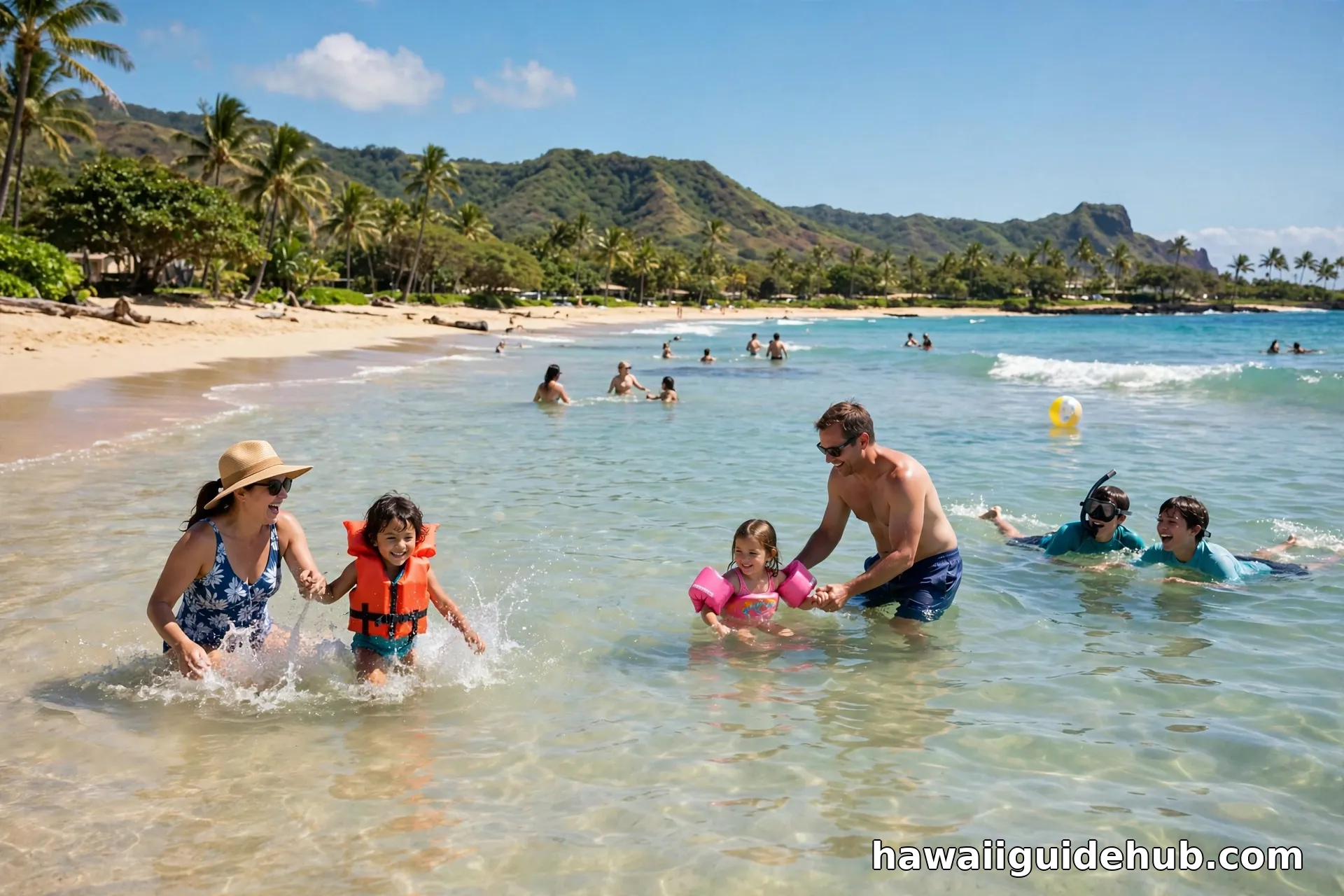
Swim at lifeguarded beaches whenever possible. Hawaii’s county lifeguards are professionals who watch the water all day, and they will warn you about rips before you ever get in. Ask them where it is safe to swim. Never swim alone, because a buddy can call for help if you get into trouble. Check the surf forecast before you go; the National Weather Service issues surf zone forecasts for Hawaiian waters, and high surf advisories mean stronger currents too.
Watch children constantly. Assign one adult to be the dedicated water watcher, with no phone and no distractions, because drowning is fast and silent. Be honest about your swimming ability. Ocean swimming is nothing like pool swimming, and many strong pool swimmers are humbled by their first Hawaiian surf. If you are not confident, stay in shallow water near shore, or choose a protected swimming area. For first time visitors still choosing where to base themselves, our guide to the best island in Hawaii for first time visitors includes notes on which islands have the calmest swimming beaches.
Finally, respect warning signs and never turn your back on the ocean. Waves arrive in sets, and a larger wave can follow several smaller ones without warning. If you are wading near shore, keep facing the surf so you can see what is coming. These small habits are the difference between a perfect beach day and a 911 call.
Video: Break the Grip of the Rip
This short video from the National Oceanic and Atmospheric Administration shows what rip currents look like and exactly how to escape one.
Frequently Asked Questions
Can a rip current pull you under the water?
No. Rip currents flow horizontally away from shore, not downward. They do not pull you under. People drown in rip currents because they panic, fight the current, and become exhausted. If you stay calm, float, and swim parallel to shore, you can survive one.
How do you get out of a rip current in Hawaii?
Do not swim straight back to shore. Swim parallel to the shoreline until you are out of the narrow current channel, then swim back to the beach at an angle. If you cannot swim out, float or tread water, wave your arms, and call for help. The current weakens farther from shore.
What does a rip current look like?
Look for a channel of choppy water, a patch of darker or discolored water, a line of foam or debris moving steadily seaward, or a gap in the incoming wave pattern. The dangerous trick is that rip currents often look calmer than the surrounding surf, so a suspiciously flat gap between breaking waves deserves caution.
Are rip currents common in Hawaii?
Yes. Rip currents can form at any Hawaiian beach with breaking waves, and they occur year round because swells reach the islands from different directions in different seasons. High surf, storms, and areas near jetties, piers, and reef gaps produce the strongest currents.
Should I swim at a beach with no lifeguard in Hawaii?
It is much safer to swim at a lifeguarded beach. Lifeguards watch for rip currents all day and will direct you to the safest swimming area. If you do swim at an unguarded beach, check conditions carefully from shore first, never swim alone, and stay within your depth.
What is the difference between a rip current and an undertow?
A rip current is a real, powerful seaward-flowing channel of water. An undertow, the idea of water dragging you along the bottom and holding you down, is largely a myth at ocean beaches. The backwash you feel under a breaking wave is brief and local; a rip current is the sustained current that carries swimmers offshore.
Rip currents deserve your respect, but they do not need to keep you out of the water. Learn what they look like, swim where lifeguards are watching, ask about conditions before you get in, and memorize the escape: relax, swim parallel to shore, and float if you tire. With those habits, Hawaii’s beaches give you everything you came for, warm water, golden sand, and surf you can enjoy with confidence. If you want to keep building your ocean knowledge, our Manta ray night snorkel guide covers how safe, guided ocean experiences work in Kona.