Typical Weather in Hawaii

Hawaii’s weather is the reason half the world wants to visit, and it is also the thing visitors misunderstand most. Yes, it is warm year-round. No, it is not the same everywhere, or all the time. Trade winds, mountains, and two distinct seasons create a patchwork of microclimates where one side of an island can be drenched while the other bakes in sun. This guide explains typical weather in Hawaii the way it actually works: the seasons, the wind, the rain, and what to pack for all of it.
Hawaii Weather at a Glance
| What | Typical | What it means |
|---|---|---|
| Seasons | Two: summer (kau, May-Oct) and winter (hoʻoilo, Nov-Apr) | Pack for two seasons, not four |
| Daytime high | 81°F in winter, 88°F in summer (Honolulu normals, NOAA) | Barely a 7-degree swing all year |
| Nighttime lows | 67-76°F at sea level, near freezing on the summits | Bring a jacket for the summits |
| Trade winds | Northeast winds cool the islands most days of the year | Nature’s air conditioning |
| Rain pattern | Windward (east) sides wet, leeward (west) sides dry | Pick your coast by the forecast |
| Ocean temperature | 75-82°F year-round | Swimmable every month of the year |
Hawaii Has Two Seasons, Not Four
Forget spring, summer, fall, winter as you know them. Hawaii has two seasons: kau, the warm dry summer season from May through October, and hoʻoilo, the cooler wet winter season from November through April. The difference is smaller than the names suggest. In Honolulu, NOAA climate normals put the average daily high at about 81°F in the winter months and 88°F in the summer months, a swing of only seven degrees. Nights run from the high 60s in winter to the mid 70s in summer. If you are choosing when to visit, our Maui winter guide and Oʻahu winter guide break down the seasonal differences island by island.
Winter is the season of bigger surf on the north shores, slightly cooler water, and more frequent rain, especially on the windward sides. Summer brings steadier trade winds, warmer water, and calmer conditions on the south shores. Neither season is bad; they are just different, and the “best” one depends entirely on what you want to do.
The Trade Winds Run the Show
The northeast trade winds are Hawaii’s air conditioning. These steady winds blow from the northeast most days of the year, strongest in summer, and they do two things: they keep temperatures comfortable even when the sun is intense, and they create the islands’ famous weather split. When the trades blow against a mountain, the air is forced upward, cools, and drops its moisture as rain on the windward (northeast-facing) side. By the time the air descends on the leeward (southwest-facing) side, it is dry and warm. This is why one island can hold both a rainforest and a desert within a few miles of each other.
When the trades weaken or reverse, usually in winter, Hawaii gets Kona winds from the south. Kona winds bring humid, still air and vog (volcanic haze) can drift over from the Big Island. Locals notice immediately: the air feels heavy, the mountains disappear behind haze, and everyone waits for the trades to return. They almost always do within a few days.
Windward vs. Leeward: Two Weathers on One Island

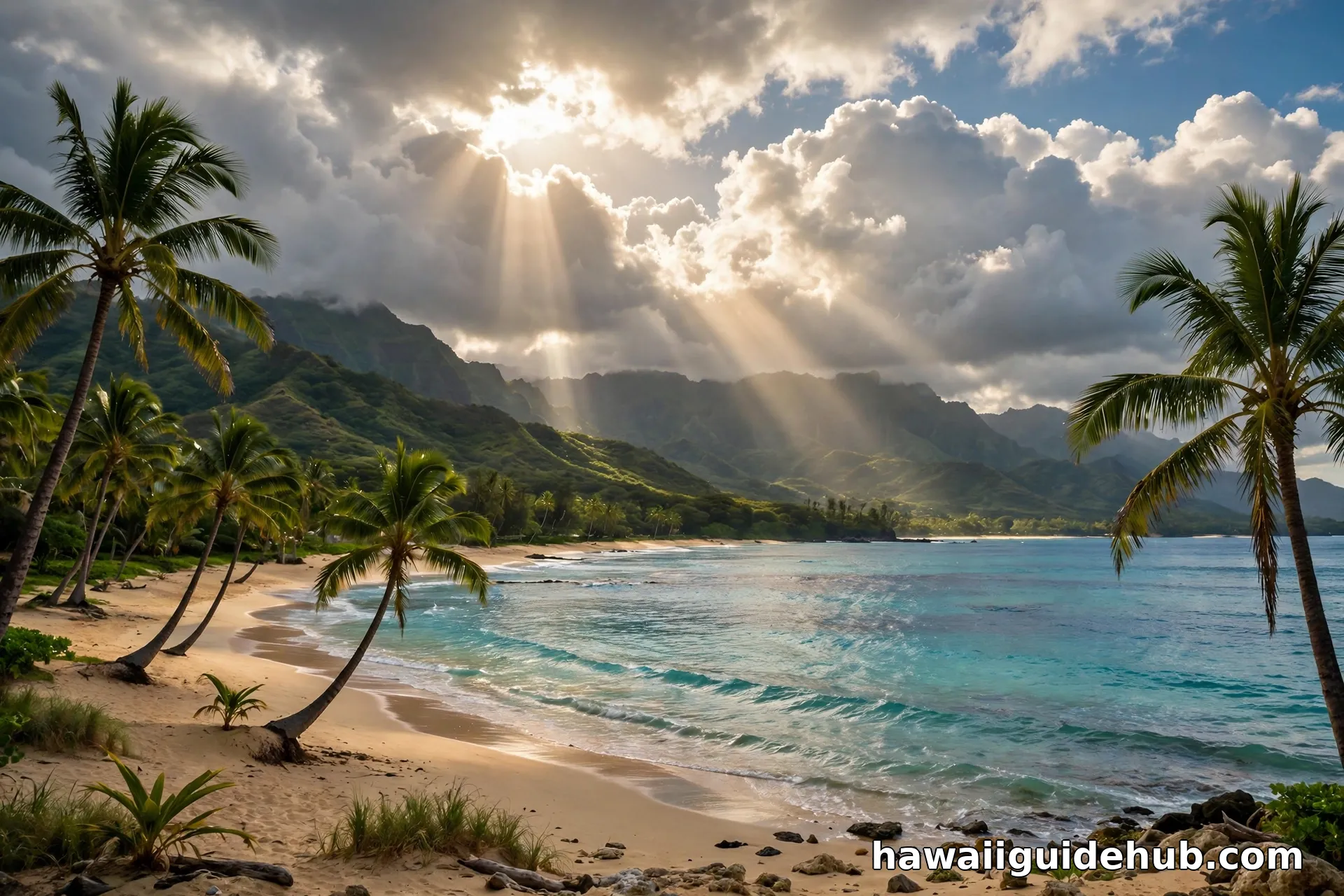
The windward-leeward split is the single most useful weather concept for a Hawaii trip. The windward (east and northeast) sides are lush, green, and rainy: think the Nā Pali Coast, the Road to Hāna, and Mānoa Valley. Mount Waiʻaleʻale on Kauaʻi, one of the wettest spots on Earth, averages about 373 inches of rain a year according to NOAA, with a record of 683 inches in 1982. On Maui, the Big Bog on Haleakalā’s slopes averages around 404 inches a year. These are the landscapes that earn Kauaʻi the nickname “Garden Isle.”
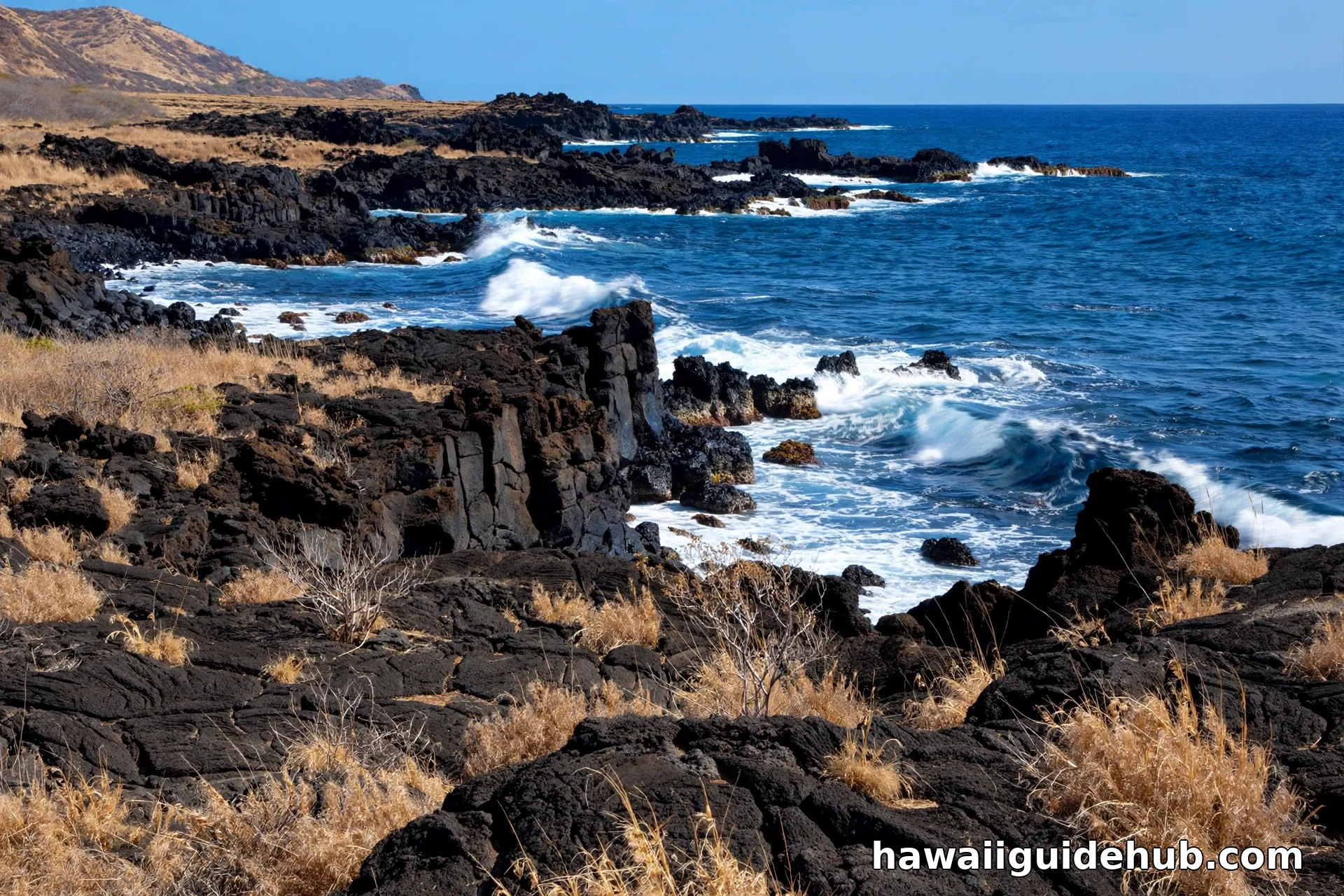
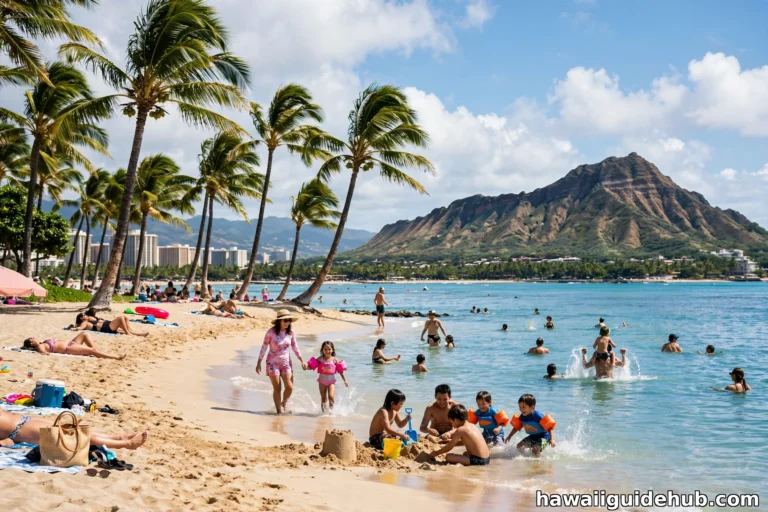
The leeward (west and southwest) sides are where the resorts cluster, and there is a reason: Waikīkī, Kāʻanapali, Wailea, and Poʻipū all sit in the rain shadow, with some areas getting as little as 10 to 20 inches of rain a year. The practical rule is simple. If it is raining where you are, drive to the other side of the island. On most islands, sunshine is never more than 30 to 45 minutes away. If you are still deciding which island fits your trip, our first-time visitor guide compares them.
Rain in Hawaii: What to Actually Expect
Hawaiian rain is not like mainland rain. Much of it falls as brief, warm showers, often at night or in the early morning, and the sun returns within minutes. The windward coasts get regular passing showers year-round; the leeward resort coasts can go weeks without meaningful rain in summer. Winter brings the heavier stuff: Kona storms and cold fronts can soak the whole island chain for days, and these are the events that close trails and swell rivers. Flash flooding is a genuine hazard in the mountains and valleys, so never cross a flooded stream and always check the National Weather Service Honolulu forecast before hiking in wet conditions.
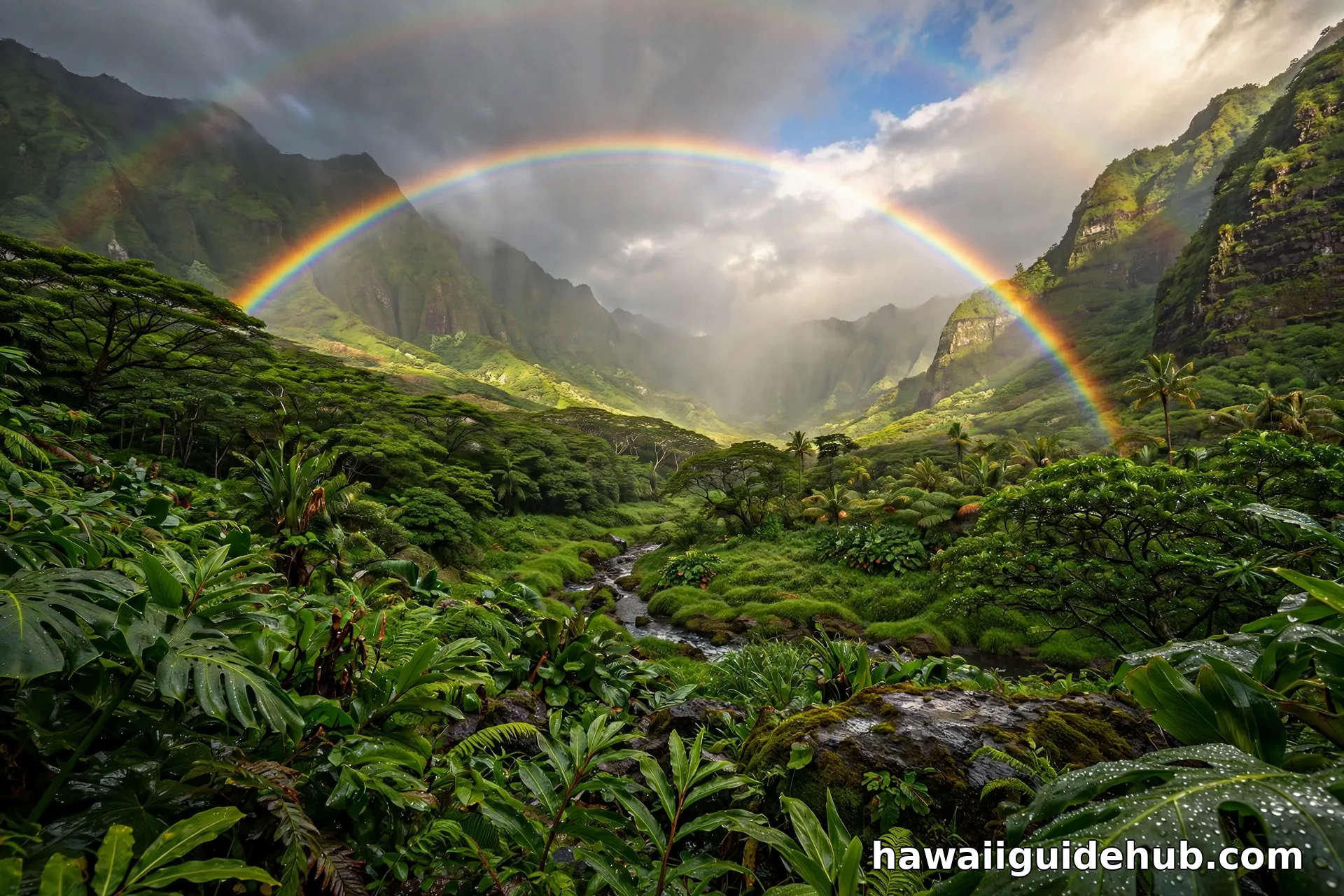
The payoff for the rain is everywhere. Rainbows are so common in Hawaii that license plates used to carry the nickname “Rainbow State,” and the brief showers are what keep the waterfalls flowing and the valleys impossibly green. Pack a light rain jacket even for a summer trip, and treat a passing shower as a photo opportunity, not a ruined day.
Temperatures: The Fine Print
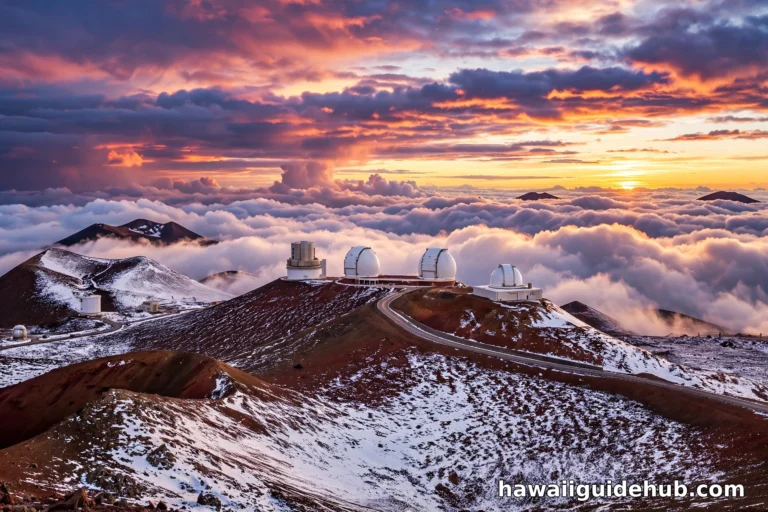
At sea level, temperature is almost boringly pleasant, which is exactly the point. But Hawaii’s weather changes fast with elevation, and this catches visitors off guard. The summit of Haleakalā on Maui sits at 10,023 feet, where temperatures run 30 to 40 degrees colder than the coast and winter mornings regularly dip near freezing. Mauna Kea on the Big Island reaches 13,803 feet, has recorded temperatures in the teens, and gets occasional snow in winter. The rule: dress for the beach at the bottom and winter at the top, because on a single day you can experience both.
Ocean temperatures are equally mild, ranging from about 75°F in winter to 82°F in summer. Most people swim comfortably without a wetsuit year-round, though you may want a rash guard for long snorkel sessions in winter. Humidity hovers around 60 to 70 percent, and the trade winds keep it from feeling oppressive.
Hurricanes and Storms
Hawaii’s hurricane season runs June through November, peaking in August and September. Direct hits are rare because the islands are small targets in a big ocean and the surrounding cooler water weakens most storms, but near-misses still bring heavy rain, high surf, and wind. Hurricane Iniki in 1992, which devastated Kauaʻi, is the reminder that rare does not mean never. If you are traveling in hurricane season, it costs nothing to glance at the Central Pacific Hurricane Center outlook before you fly, and travel insurance is worth considering for fall trips.
Hawaii Weather Month by Month
Using Honolulu’s NOAA climate normals as a baseline for sea-level weather, here is how the year typically unfolds. Temperatures are the daily highs and lows you can expect; rain figures describe the general pattern rather than a promise, since any given week can break the mold.
| Month | Typical high / low | What to expect |
| Jan-Feb | 80°F / 67°F | Coolest months; biggest north-shore surf; most rain |
| Mar-Apr | 81-83°F / 68-70°F | Transition; showers taper off; great value season |
| May-Jun | 85-87°F / 72-74°F | Summer begins; trades strengthen; calmer south shores |
| Jul-Sep | 88-89°F / 75-76°F | Warmest months; driest leeward coasts; hurricane season peak |
| Oct | 87°F / 74°F | Still warm; first winter swells arrive up north |
| Nov-Dec | 81-84°F / 69-72°F | Winter returns; wetter windward sides; whale season begins |
Whale season, worth planning around if it matters to you, runs roughly December through April, when humpbacks migrate to the warm waters between Maui, Molokaʻi, and Lānaʻi. It overlaps with the wetter months, which is why winter visitors often split their days between morning whale watching and afternoon beach time.
Weather and Your Itinerary: Island Notes
Each island bends the typical pattern a little. Oʻahu is the most “average”: Honolulu’s normals describe Waikīkī well, while the North Shore runs a touch cooler and wetter in winter. Maui has the sharpest contrasts: you can stand in the desert-like dryness of Lahaina, drive an hour, and be in the deluge of Hāna. Kauaʻi is the wettest overall, which is why it is the greenest, and the Nā Pali Coast can be socked in while Poʻipū shines. The Big Island contains nearly every climate on Earth, from the snowy summit of Mauna Kea to the lava deserts of the south, so check the forecast for the specific district you are visiting, not just “the Big Island.”
What to Pack for Hawaii Weather
Pack for three weathers, not one. Beach days need swimwear, reef-safe sunscreen, and a hat. Mountain and Upcountry excursions need a light jacket and closed shoes, because 60°F and drizzly at 4,000 feet feels nothing like the beach. And one warm layer, a fleece or hoodie, is non-negotiable if Haleakalā sunrise or Mauna Kea stargazing is on your itinerary. A compact rain jacket covers the passing showers, and quick-dry fabrics beat cotton everywhere. Leave the heavy coat at home; even in “winter,” sea-level Hawaii never needs it.
A simple packing checklist for typical Hawaii weather: two swimsuits (so one is always dry), reef-safe sunscreen, a wide-brim hat and sunglasses, a light rain jacket, one fleece or hoodie, one pair of closed walking shoes plus sandals, and a long-sleeve layer for breezy evenings. If your itinerary includes only beaches and towns, you will barely touch the warm layers. If it includes a summit sunrise, you will be grateful for every one of them.
Video: Hawaii’s Microclimates Explained
How Maui packs desert, rainforest, and alpine climates into one small island.
Frequently Asked Questions
What is the weather like in Hawaii year-round?
Warm and mild, with daytime highs of about 81°F in winter and 88°F in summer at sea level (Honolulu normals). The bigger variation is between places, not seasons: windward sides are wet and green, leeward sides are dry and sunny, and mountain summits can be near freezing.
When is the rainy season in Hawaii?
November through April (hoʻoilo) is the wetter season, with more frequent storms and heavier rain island-wide. But the windward sides get rain year-round, and the leeward resort coasts stay relatively dry even in winter.
What is the hottest month in Hawaii?
August and September are typically the warmest months, with Honolulu’s normal daily high around 88-89°F. The record high for Honolulu is 95°F, set in August 2019 and September 1994.
Does it rain every day in Hawaii?
Not on the leeward coasts where most visitors stay; those areas can go weeks without rain in summer. The windward sides do get frequent brief showers, often at night or in the morning, with sunshine returning quickly.
Is Hawaii humid?
Moderately. Relative humidity typically runs 60 to 70 percent, but the steady trade winds make it feel far less muggy than the same humidity on the mainland. When the trades drop and Kona winds take over, usually in winter, the air can feel noticeably heavier for a few days.
What is the coldest month in Hawaii?
January and February are the coolest months at sea level, with average highs around 80°F and lows in the upper 60s. At elevation, winter nights on Haleakalā and Mauna Kea regularly drop near or below freezing.
Do I need a jacket in Hawaii?
Yes, a light one. Evenings can feel cool with the trade winds, Upcountry and mountain areas run 10 to 20 degrees cooler than the beach, and Haleakalā sunrise or Mauna Kea at night demands a real warm layer. Pack one jacket and you are covered.
Typical weather in Hawaii is a deal with fine print: endless summer at the beach, real seasons in the mountains, and rain that makes the green possible. Understand the trades, respect the windward-leeward split, and pack for elevation, and the weather will do what it has always done, give you a great trip with a rainbow in it somewhere.