Puʻa Kaʻa State Park: Waterfalls, Swimming Pools & Your Road to Hāna Stop

Why Puʻa Kaʻa Deserves a Stop
Halfway along the Road to Hāna, most drivers are ready for two things: a restroom and a reason to get out of the car. Puʻa Kaʻa State Wayside delivers both, plus something better: a pair of waterfalls you can actually swim under, reached by a short paved path instead of a muddy trek. It is one of the few places on the entire Hāna Highway where a freshwater waterfall swim requires almost no effort, and the only stop for many miles with real parking, restrooms, and covered picnic tables in one place.
Managed by the Hawaiʻi Department of Land and Natural Resources as a state wayside park, Puʻa Kaʻa is designed for exactly this kind of visit: short, easy, and refreshing. There is no entrance fee, no reservation system, and no hiking required to reach the main falls. You pull in, walk a few minutes along a paved path, and you are standing at the edge of a clear jungle pool with water spilling over mossy rock above you.
This guide covers everything worth knowing before you stop: where the park sits on the Hāna Highway, what the waterfalls and pools are really like, how to swim them safely, what facilities to expect, and how to pair the stop with the sights around it. If this is your first time driving the highway, our guide for first-time visitors helps you plan the whole trip around stops like this one.
Puʻa Kaʻa at a Glance
| What the wayside provides | |
| Entry | Free; no reservations needed |
| Parking | Free paved lot on the ocean (makai) side; first come, first served |
| Hours | Daylight hours; commonly listed as 6am to 6pm |
| Facilities | Restrooms, covered picnic pavilions, trash cans |
| The draw | Two roadside waterfalls with swimmable pools, paved access path |
| What it does not provide | |
| Lifeguard | None; swim at your own risk |
Where the Park Sits on the Road to Hāna
You will find Puʻa Kaʻa at roughly mile marker 22.5 on the Hāna Highway (Highway 360), about two thirds of the way from Kahului to the town of Hāna. Heading toward Hāna, the parking lot and restrooms sit on the left, ocean side of the road, while the waterfalls and picnic area lie across the road on the mountain (mauka) side. The layout matters because the highway is narrow and busy here; pull fully into the lot rather than stopping on the shoulder.
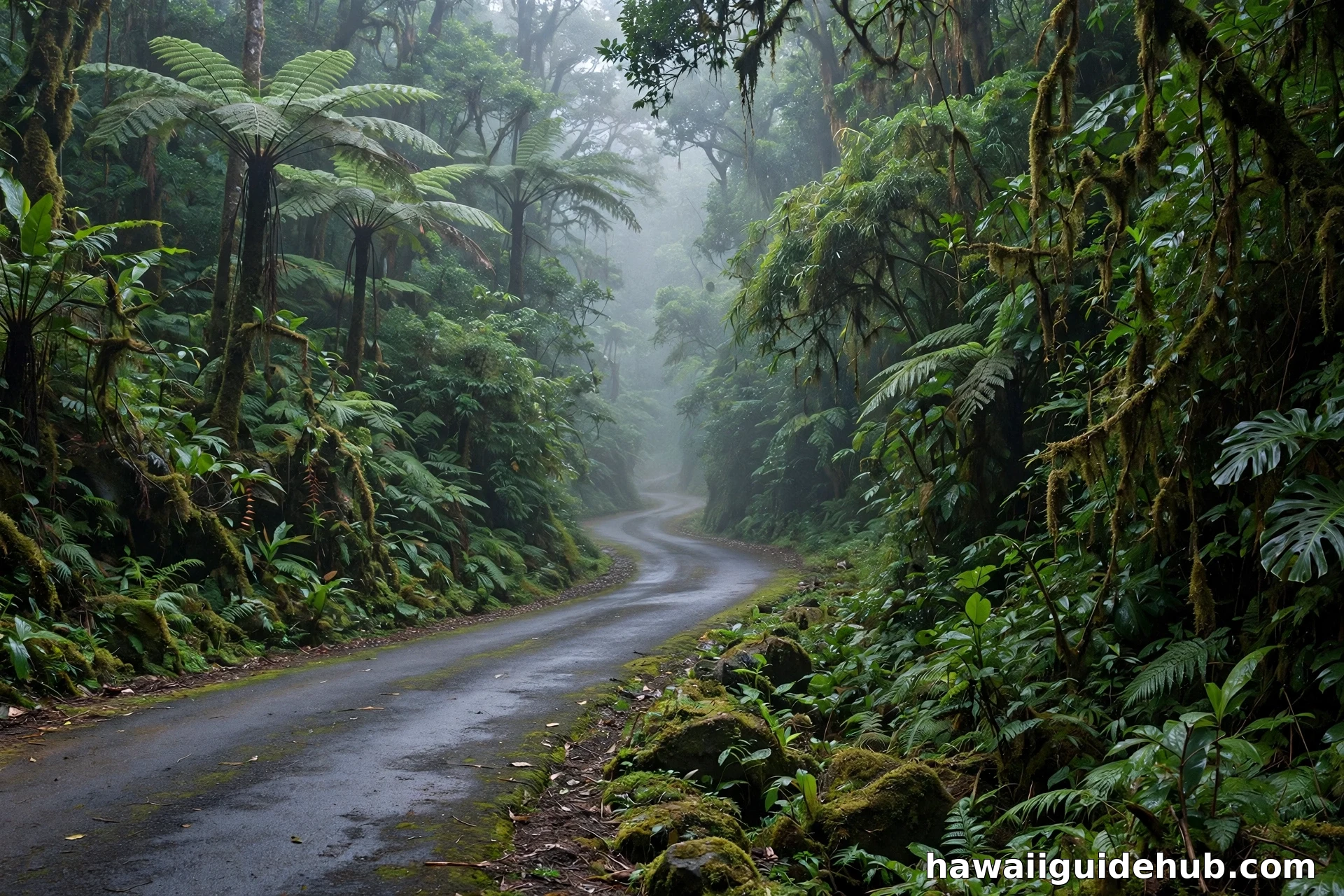
The park works well as a midpoint break. Keʻanae Peninsula, with its taro fields and famous banana bread, sits about six miles before it. Waiʻānapanapa State Park and its black sand beach wait roughly ten miles beyond. If you are pacing the drive with stops every 45 minutes or so, Puʻa Kaʻa lands naturally in the middle of the morning leg.
The Waterfalls and Pools
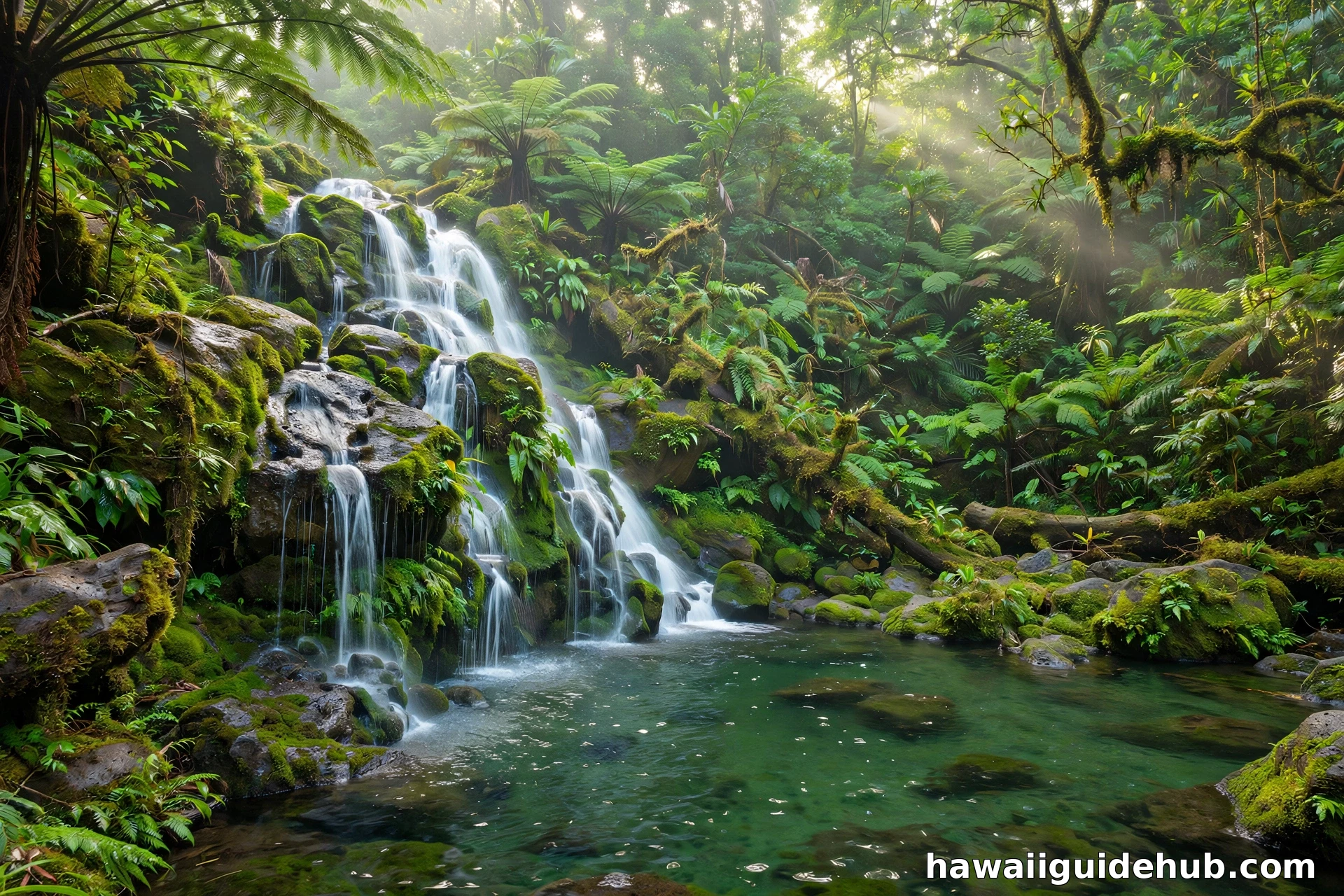
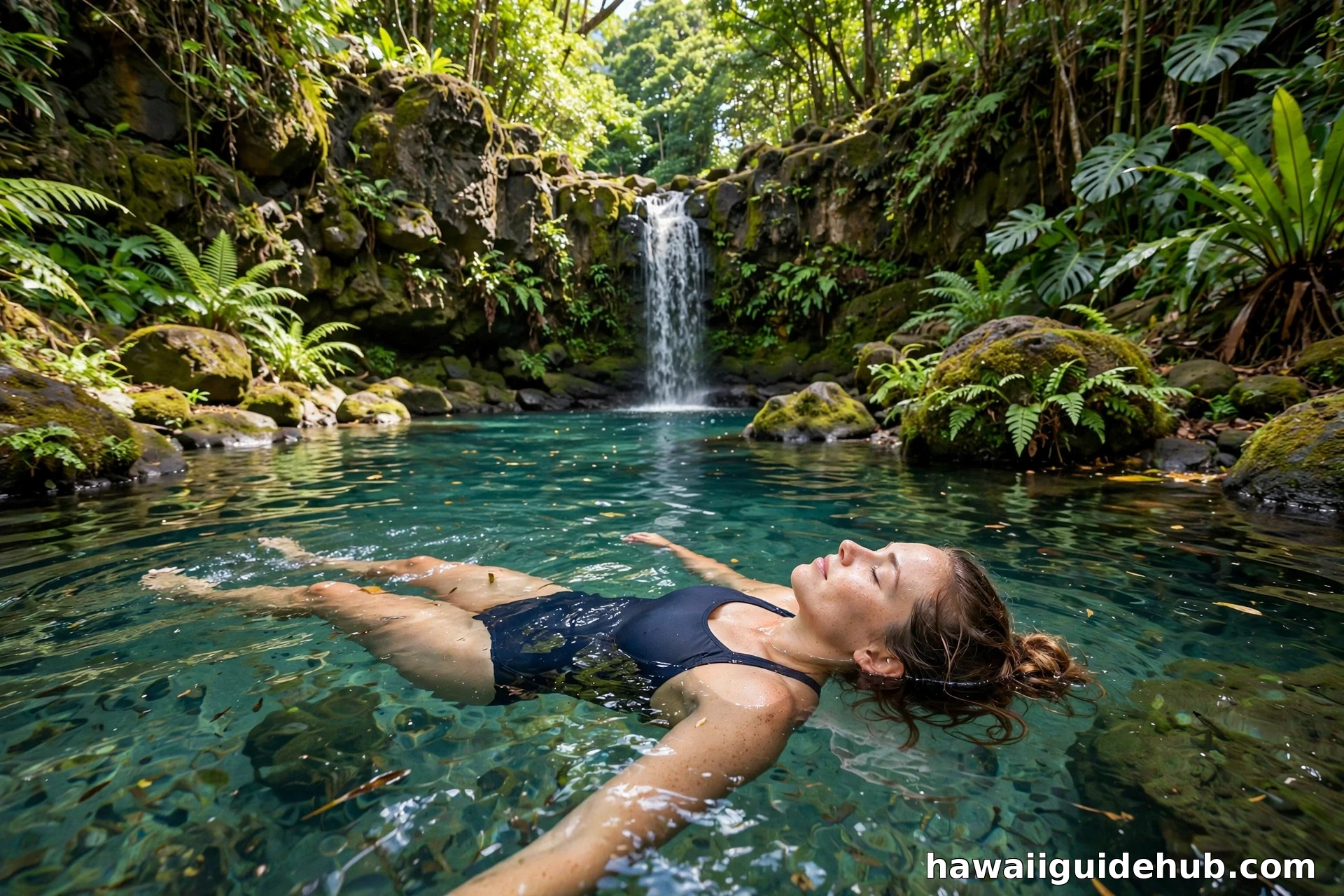
Two small waterfalls sit just off the road, reached by a short paved path with stairs from the picnic area. They are not towering cascades; expect intimate, jungle-grotto falls spilling over moss-covered rock into clear pools. That modesty is part of the appeal. The pools are big enough to wade and swim in, the water is cool and refreshing after hours in the car, and the setting feels far more secluded than it is, with the highway only a short distance away.
A dirt path continues upstream past the main pools toward a larger upper waterfall with its own swimming pool. Reaching it requires crossing a narrow viaduct (a small water channel bridge) and following the channel for a short stretch. This part of the park sees far fewer people, and the upper pool can feel like a private discovery. Treat it with respect: the path is often muddy and slippery, the viaduct crossing has no rails, and conditions change fast after rain.
What the Water Is Really Like
Freshwater pools on the windward side of Maui run cool year round, and Puʻa Kaʻa is no exception. Most swimmers describe the water as brisk rather than warm; it is the kind of cold that feels perfect for five minutes on a hot day. Water levels rise and fall with rainfall in the Koʻolau mountains above, so the falls can run gentle one week and vigorous the next. After heavy rain, skip swimming entirely and enjoy the falls from the bank.
Swimming Safely at Puʻa Kaʻa
Swimming here is allowed, and on a calm day it is one of the most pleasant freshwater swims on the Road to Hāna. A few honest cautions will keep it that way. The rocks in and around the pools are extremely slippery, coated in algae that you cannot always see. Water shoes with real grip make an enormous difference; bare feet on these rocks are how most injuries happen. Enter and exit the water slowly, using your hands on the rocks, and never dive or jump. The pools are shallow in places with hidden rock shelves.
There is no lifeguard on duty anywhere in the park. Swim with a buddy, keep children within arm’s reach, and stay out of the water if the stream is running high or brown after rain. Flash flooding is a real hazard in Hawaiian stream valleys: if water starts rising or turning muddy while you are in the pool, get out calmly and move to high ground. These are the same rules that apply at every waterfall pool in Hawaiʻi, and they matter most at the easy-access spots where people let their guard down. For more waterfall swims and ridge hikes across the islands, see our guide to outdoor adventures in Hawaii.
Facilities: Parking, Restrooms, and Picnic Areas
For a park of its size, Puʻa Kaʻa is well equipped. The paved parking lot holds a comfortable number of cars by Hāna Highway standards, though it still fills on busy mornings; arriving before 10am gives you the best shot at a space. Restrooms stand on the ocean side near the lot. They are basic park facilities, so set expectations accordingly, but on this stretch of highway any restroom is a welcome sight.
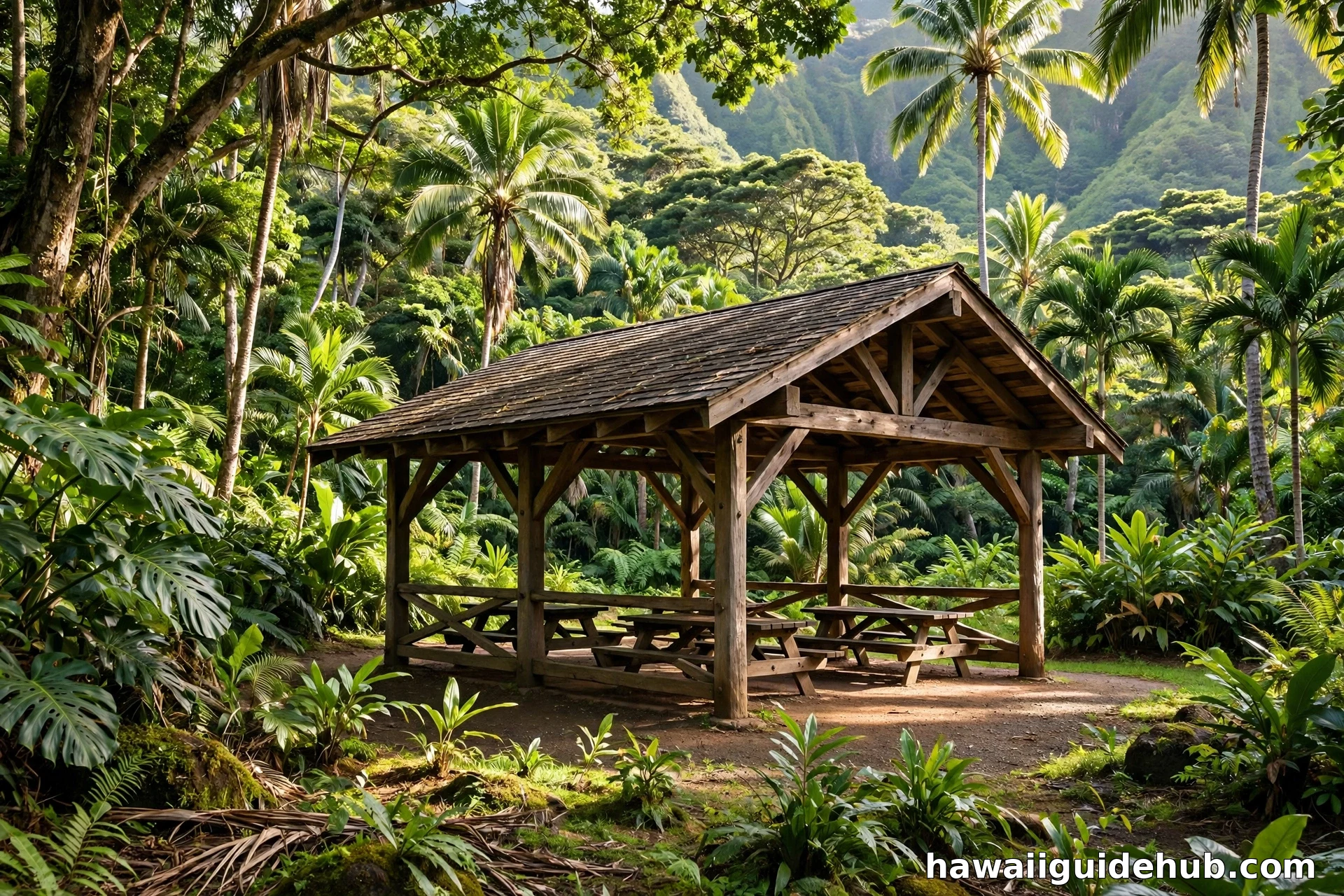
Several covered picnic pavilions with tables sit among the trees on the waterfall side, making this one of the best lunch stops on the drive. There are no food vendors or shops in the park, so pack your meal in Pāʻia or at one of the roadside stands before you arrive. For ideas on what to pack, browse our guide to must-try local dishes in Hawaii. Trash cans are provided; pack out everything you bring in and leave the pools cleaner than you found them. You may meet the park’s resident cats around the picnic area; admire them, but do not feed them.
The Upper Falls Trail: Worth It With Caution
From the picnic area, a dirt path heads upstream along Kailua Stream toward the larger upper falls. The route crosses a narrow concrete viaduct, follows it briefly, then drops to the pool below the falls. The whole detour adds perhaps 15 to 20 minutes round trip when conditions are good.
Be honest with yourself about conditions before going. After rain the path turns to slick mud, the viaduct crossing feels exposed, and the stream runs fast. The state does not maintain this as a formal trail, and it is the kind of route where sturdy shoes, dry weather, and good judgment matter more than fitness. If anything feels sketchy, the main pools by the road are the better swim anyway.
Best Time to Visit
Morning is the sweet spot. Arrive between 8 and 10am and you will likely share the pools with only a handful of people; by midday, tour vans and rental cars stack up and the parking lot fills. Early arrival also means calmer water and better light filtering through the canopy for photos.
Seasonally, waterfall flow follows rainfall. Our guide to when it rains in Hawaii explains the wet and dry patterns that decide how full the falls will be. The wetter months, roughly November through March, bring fuller falls and deeper pools but also muddier trails and a higher chance of a swim-canceling downpour. The drier summer months mean gentler flow and easier swimming, though the falls are never truly dry. Weekdays are noticeably quieter than weekends at every Road to Hāna stop, and Puʻa Kaʻa is no exception.
What to Bring
Pack like the stop might become the highlight of your drive, because it often does. A swimsuit worn under your clothes saves a changing-room scramble. Water shoes with grip are the single most useful item for the slippery pools. Bring a quick-dry towel, reef-safe sunscreen for before and after the swim, and mosquito repellent; the jungle setting means mosquitoes, especially in the shade of the picnic pavilions. Drinking water is essential since none is available in the park, and a small dry bag keeps your phone and keys safe while you swim. If you plan to picnic, bring everything including trash bags, because the nearest real food options are miles in either direction.
Nearby Stops Worth Pairing
Puʻa Kaʻa sits in a rich stretch of the highway, so plan the stops around it rather than treating it in isolation. Six miles before the park, the Keʻanae Peninsula offers taro fields, a historic stone church, and roadside banana bread that has fueled Hāna drivers for generations. The Garden of Eden Arboretum, with its manicured paths and waterfall overlooks, sits just down the road for travelers who want gardens without the mud.
Ten miles past Puʻa Kaʻa, Waiʻānapanapa State Park delivers the black sand beach, sea arch, and freshwater caves that anchor most Road to Hāna itineraries; note that it requires a parking reservation made in advance, unlike Puʻa Kaʻa. Together, Keʻanae, Puʻa Kaʻa, and Waiʻānapanapa make a natural three-stop morning that covers culture, waterfalls, and coastline before lunch. It is the kind of day that reminds you why Maui tops so many lists of reasons to visit Maui.
Practical Tips for the Stop
A few small decisions make the visit smoother. Use the restroom even if you do not think you need to; the next reliable facilities are a long way off. Keep swim time to 20 or 30 minutes so the stop does not eat your Waiʻānapanapa reservation window or your daylight. Lock valuables in the trunk and out of sight, as at every trailhead in Hawaiʻi. If the lot is full, do not invent parking on the highway shoulder; circle back later or continue to the next stop rather than creating a hazard on a blind curve. And check the Hawaiʻi DLNR Division of State Parks page before your trip for any closure notices; the park briefly closed for facility improvements in 2025, and storm recovery work occasionally affects Maui parks.
See Puʻa Kaʻa on Video
Watch this walkthrough of the park’s waterfalls and pools to see exactly what the stop looks like before you go.
Video: a look at the waterfalls and swimming pools at Puaʻa Kaʻa State Wayside Park on Maui’s Road to Hāna.
Frequently Asked Questions
Is Puʻa Kaʻa State Park free?
Yes. There is no entrance fee and parking is free. As a state wayside park it operates on a first-come, first-served basis with no reservation system.
Can you swim at Puʻa Kaʻa State Park?
Yes, swimming is allowed in the waterfall pools. The rocks are very slippery, there is no lifeguard, and you should stay out of the water after heavy rain when the stream runs high. Water shoes are strongly recommended.
How long should I spend at Puʻa Kaʻa?
Most visitors spend 30 minutes to an hour: enough for the restrooms, a look at both falls, a swim, and possibly a picnic. Add 20 minutes if you walk up to the upper falls in good conditions.
Are there restrooms at Puʻa Kaʻa State Park?
Yes. Restrooms are located on the ocean side of the highway near the parking lot, with the waterfalls and picnic area across the road on the mountain side.
What is the best time of day to visit Puʻa Kaʻa?
Morning, ideally before 10am. You will find easier parking, fewer people at the pools, and calmer water. Midday is the busiest period.
Is Puʻa Kaʻa State Park good for kids?
The main pools near the road work well for families because access is short, paved, and easy. Keep children within arm’s reach in the water, skip the upper falls trail with small kids, and bring water shoes for everyone.
A Stop That Earns Its Place
Puʻa Kaʻa will never be the most dramatic waterfall on the Road to Hāna, and that is precisely its value. It asks almost nothing of you: no reservation, no fee, no hike, no gamble on parking. In return it gives you cool water over your shoulders, a picnic table in the shade, and a proper rest before the highway winds on toward Waiʻānapanapa. Plan it as a deliberate stop rather than a drive-by, arrive early, swim carefully, and it may end up the most relaxing hour of your Hāna day.