Pololū Beach: Big Island’s Wild Black Sand Beach at the End of the Road

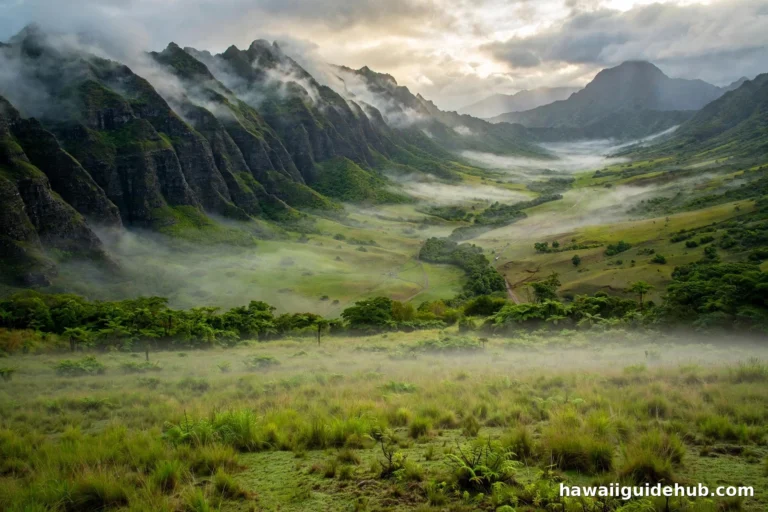
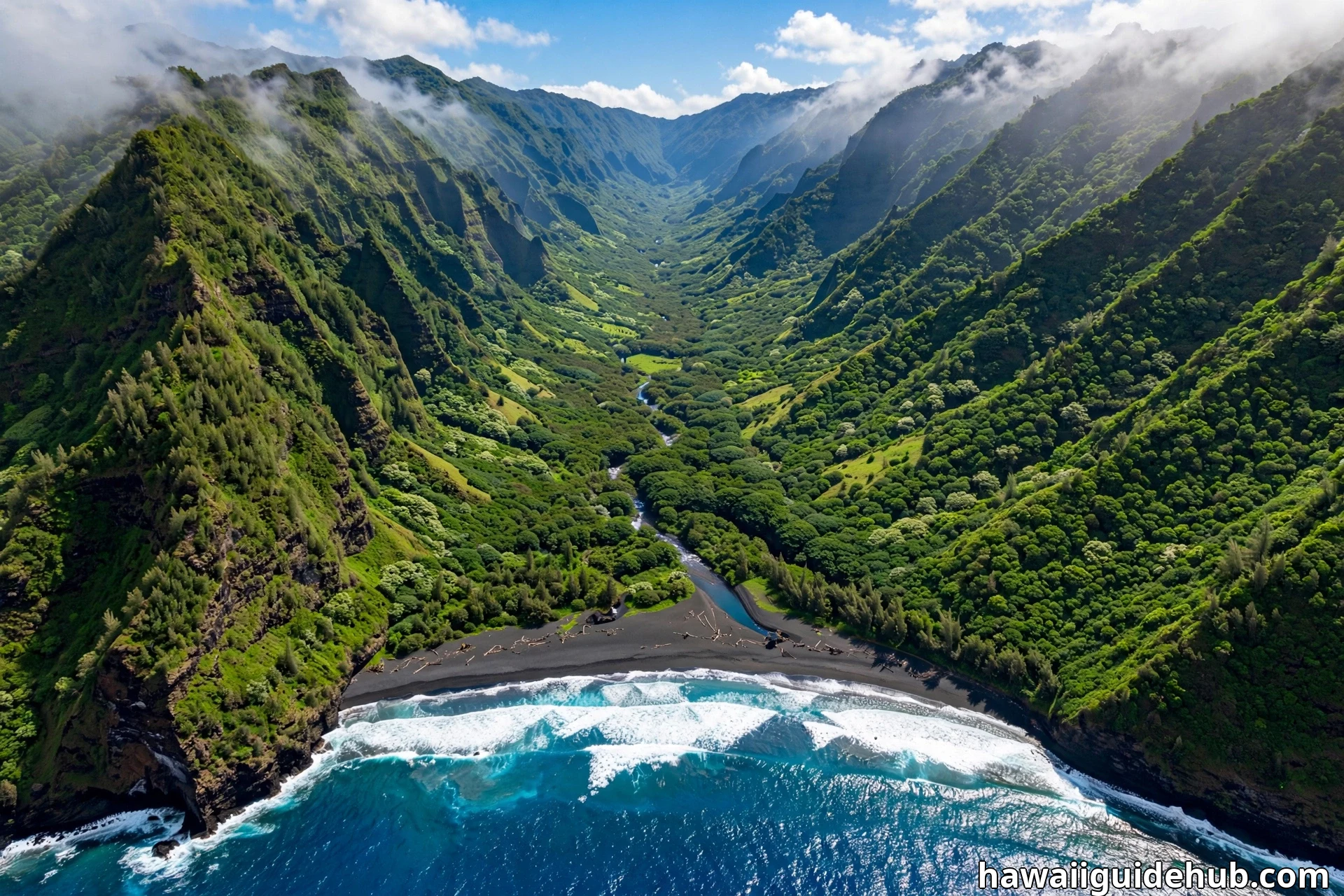
At the very end of Highway 270, where the pavement simply stops at a guardrail, the island of Hawaiʻi runs out of road and gives you Pololū. The Pololū Valley Lookout opens onto one of the most dramatic views in the state: a deep green valley carved into the Kohala Mountains, a wild black sand beach at its mouth, and headland after headland of emerald cliffs fading into the mist along the coast. For many visitors, the lookout alone is worth the drive. For the sure-footed, a steep trail drops 420 feet to the valley floor and one of the Big Island’s most remote beaches.
This guide covers everything you need for Pololū Beach: the lookout, the hike down, the beach itself, ocean safety, and the practical details that make or break the visit. It also covers the cultural weight of the place, because Pololū is not just scenery. It is a wahi pana, a storied and sacred valley with a history that reaches back centuries before the first road arrived.
Where Pololū Beach Is
Pololū Beach sits at the mouth of Pololū Valley on the northern tip of the Big Island, in the North Kohala district. To get there, you drive Highway 270, the ʻAkoni Pule Highway, through the ranch town of Waimea and the historic towns of Hawi and Kapaʻau, all the way to mile marker 28. That is where the road ends. The lookout and trailhead are right there, with the Pacific on one side and the valley dropping away on the other.
The drive itself is part of the experience. Highway 270 winds through some of the Big Island’s prettiest country, from rolling pastureland around Hawi to the lush windward cliffs near the end. From Kona, allow about an hour and fifteen minutes. From Waikoloa, it is roughly 45 minutes. From Hilo, plan on close to two hours. There is no fee to visit, no reservation system, and no entry gate. The lookout is free and open to everyone.
The Pololū Valley Lookout
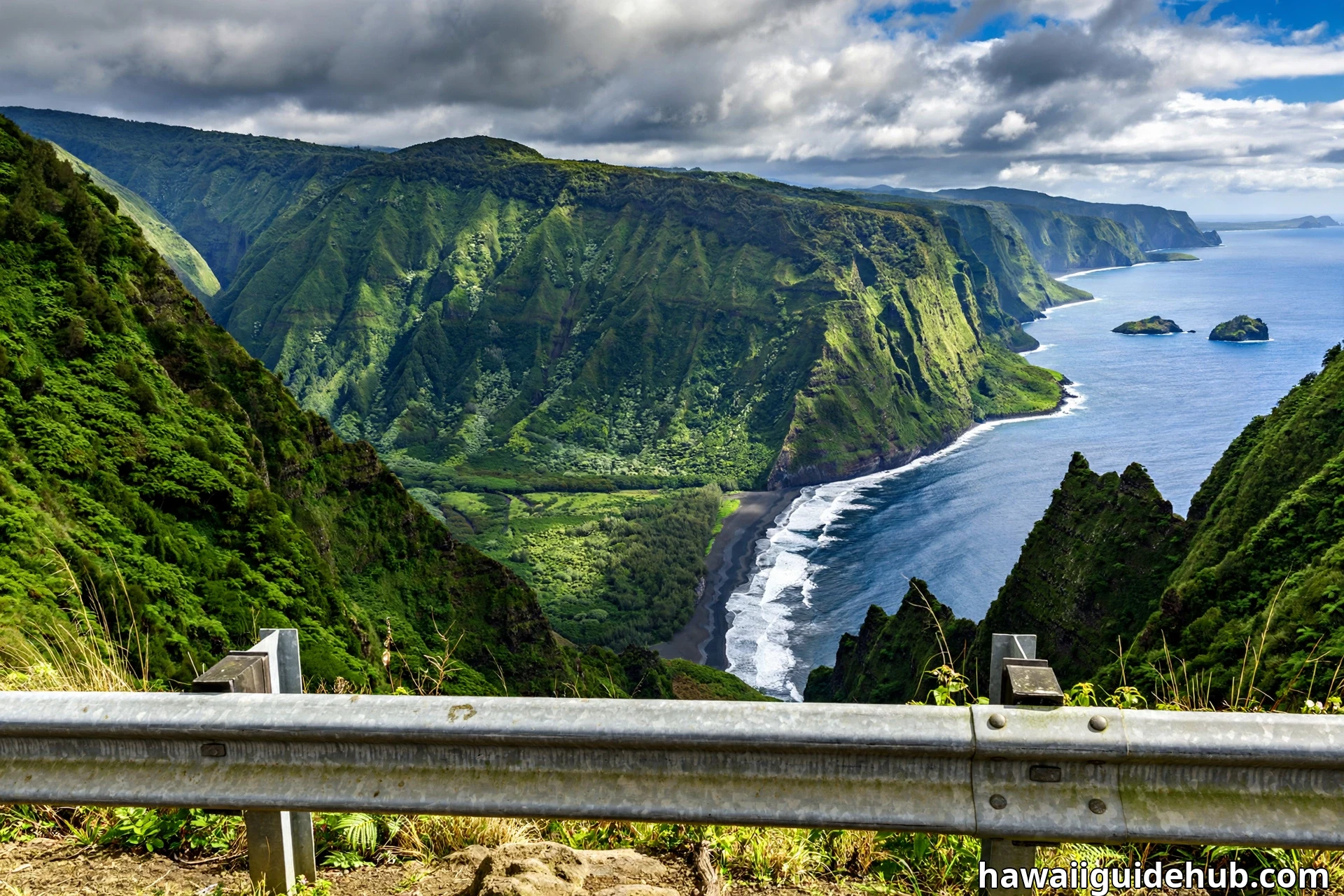
You do not need to hike to have a great visit. The lookout delivers the postcard view with zero effort: Pololū Valley spread below you, the black sand beach curving at its mouth, Pololū Stream threading through the greenery, and the Kohala coastline’s green headlands lined up into the distance with two small islets offshore. On clear mornings you can see deep into the valley. By afternoon, clouds often gather over the ridges and the whole scene turns moody and dramatic.
Parking at the lookout is the main logistical challenge. The lot is small, and the roadside space is limited. There is no real turnaround at the end of the road, so patience matters, especially mid-morning when tour vans arrive. Local residents live near the lookout, so park considerately, keep noise down, and never block driveways. Arriving before 9 in the morning or later in the afternoon gives you the best shot at easy parking and thinner crowds.
You will often find trail stewards at the lookout between about 8 in the morning and 4 in the afternoon. They are part of a stewardship program that helps manage visitors at this beloved and fragile place. They can answer questions about the trail, the valley’s cultural significance, and current conditions. Take a minute to talk with them. What they tell you is worth more than anything you will read online.
The Hike Down to Pololū Beach
The Pololū Trail, also known as the ʻĀwini Trail, begins at the lookout and switchbacks down the cliff face to the valley floor. The state’s Nā Ala Hele trail program rates it moderate. The numbers sound easy: 0.6 miles each way, about a kilometer, with 420 feet of elevation change. The reality is steeper than the numbers suggest. The trail drops fast on a dirt surface that turns slick after rain, with roots, loose gravel, and uneven footing throughout.
Plan on 20 to 25 minutes to get down and 30 to 45 minutes to climb back up. The return is the hard part. Every foot you descend must be climbed back, often in heat and humidity, and the uphill grind surprises people who breezed down. Give the whole outing about two hours so the beach does not feel rushed. Wear real hiking shoes with grip, not flip-flops. Bring more water than you think you need.
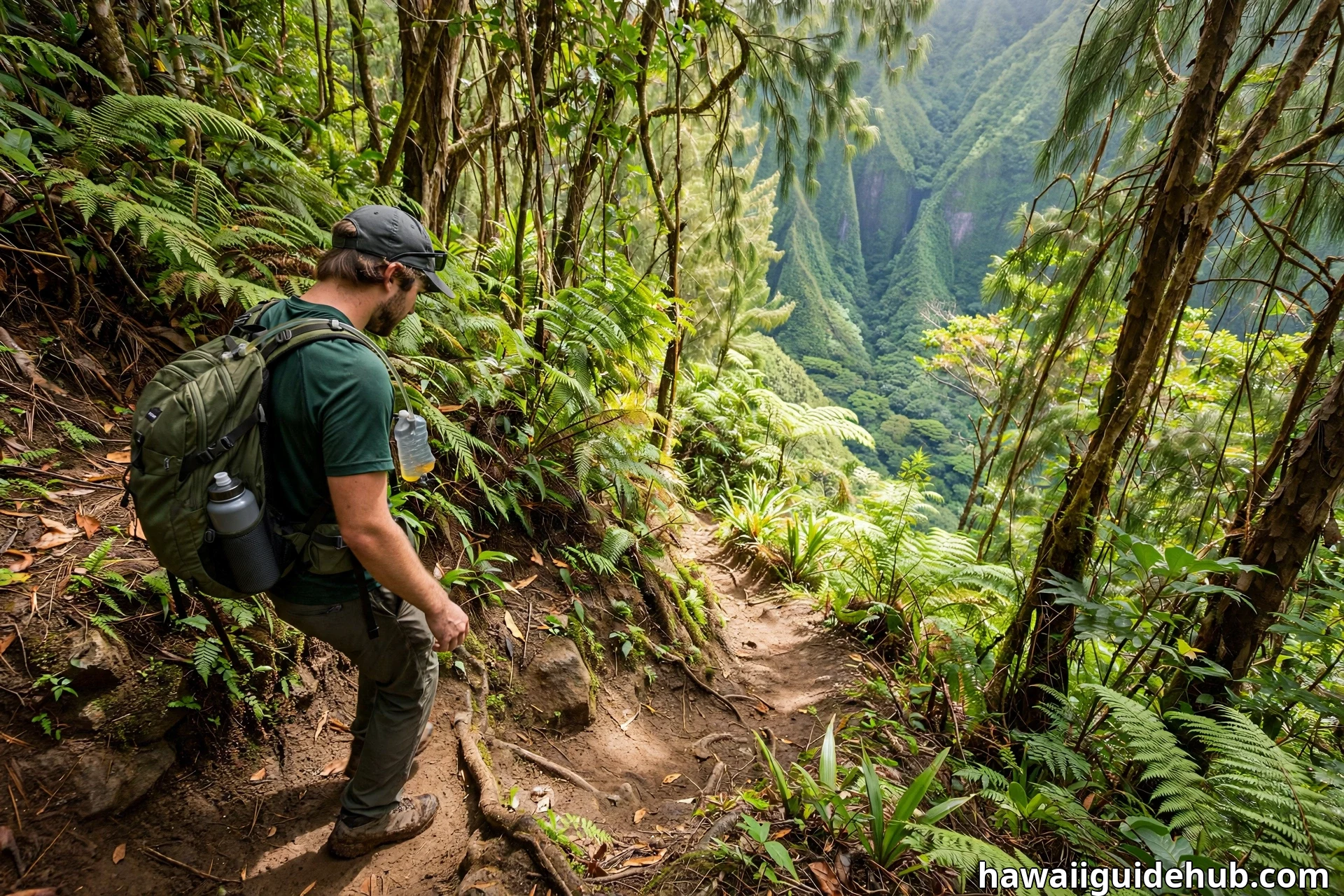
Part of what makes this trail special is its history under your feet. This is a section of the old government road to ʻĀwini, and the current trail was carved into the cliff around the 1850s to accommodate mules and horses. In places you can still see the historic cobblestones embedded in the path. Long before that, this route connected Kohala to the valleys beyond, and it famously carried the infant Kamehameha when he was transported to ʻĀwini for his protection. You are walking a trail with real weight behind it.
Pololū Beach Itself
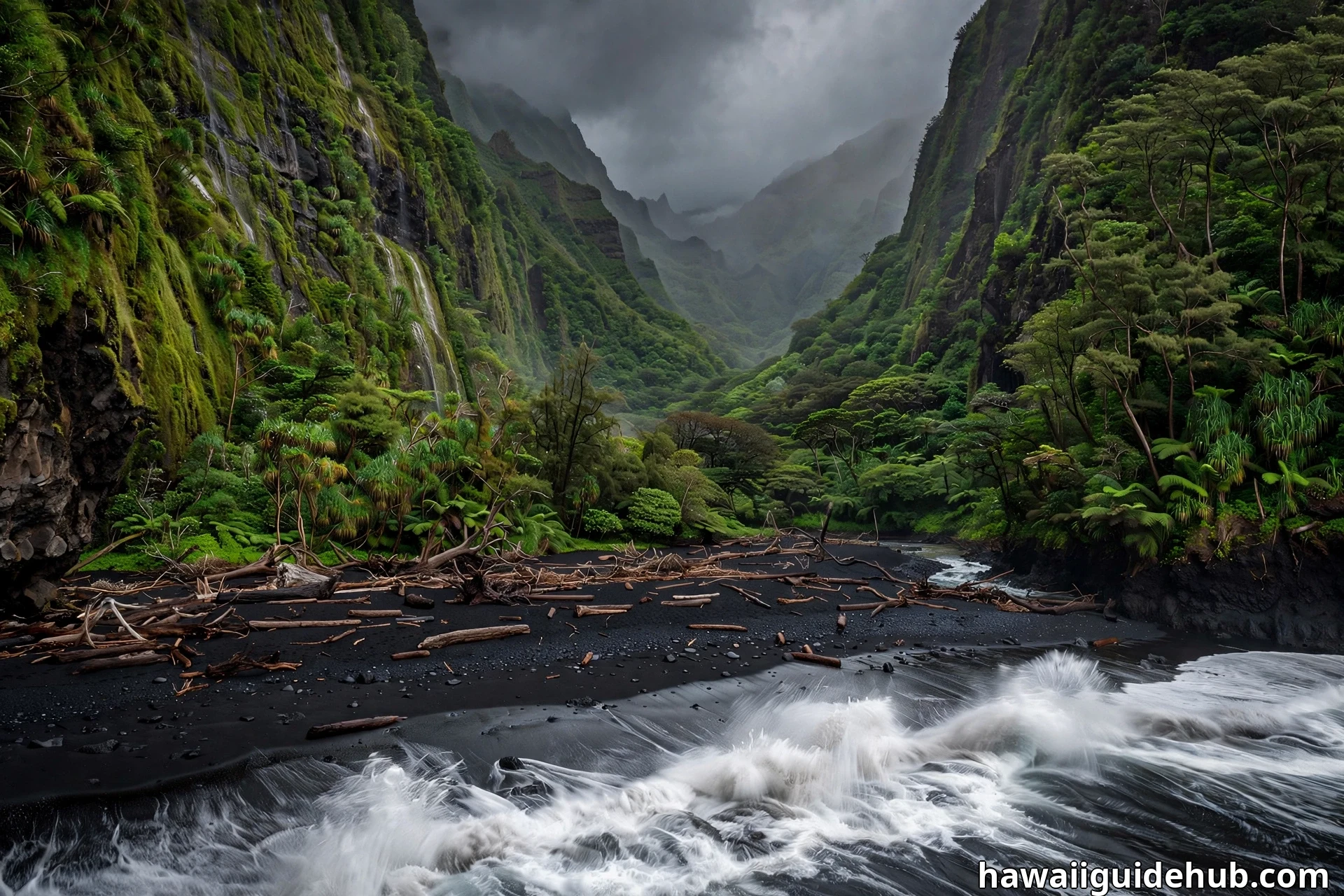
At the bottom of the trail, Pololū Stream meets the ocean at a wild black sand beach framed by towering cliffs on both sides. It is not a groomed beach. Driftwood litters the sand, the surf pounds in with real force, and the whole place feels remote even though you are less than a mile from the road. A yellow sand dune behind the beach shelters the verdant valley floor from the ocean’s moods.
The beach is beautiful and it is dangerous. There is no lifeguard here, and the state warns plainly about high surf, strong undertow, and rip currents. The shorebreak can be powerful enough to injure. This is a beach for looking at, photographing, and walking along, not for swimming or snorkeling. Wade only at the calm edge of the stream if conditions allow, keep children well back from the waterline, and never turn your back on the ocean. The waves here deserve your full respect.
What to Bring and What to Know
There are no facilities at Pololū. No restrooms, no drinking water, no trash cans, no emergency phone, and no cell coverage in the valley. Pack in everything you need and pack out everything you bring, including all trash. The nearest restrooms are at Keokea Beach Park, about ten minutes back toward Hawi. Bring water, snacks, sunscreen, bug spray, and sturdy shoes. A light rain jacket is smart even on sunny mornings, because weather moves fast on this coast.
Dogs are allowed on the trail but must stay on leash. There is no gate and no posted hours, but treat this as a daylight-only hike. Starting down in the late afternoon leaves you climbing back up in fading light on a steep trail, which is a bad combination. Morning is the best time for the hike: cooler air, better light for photos, and calmer conditions before the afternoon clouds build.
Respecting a Sacred Place
Pololū means long spear in Hawaiian, and the valley was renowned for kalo farming long before European contact. A distinctive variety of kalo with crimson stems grew here, and in the 1800s the valley also grew rice. In the 20th century the valley fell quiet, but its cultural significance never faded. This is a wahi pana, and visitors are expected to act like it.
Stay on the marked trail. Do not cut switchbacks or wander into the valley’s interior. Pack out every scrap of trash. Keep noise low. And know that the land beyond Pololū Valley is privately owned. Reaching the neighboring valleys legally requires an access permit from the landowner, whose office sits near the Hawi post office and grocery store you pass on the drive in. Do not trespass. The stewards at the lookout can explain the boundaries if you are unsure.
Hiking Safety Essentials
The Pololū Trail is short but it commands respect. Check the National Weather Service forecast before you leave your hotel. If heavy rain is falling or forecast, skip the hike. The trail becomes treacherously slick, and flash flooding is a real hazard in valley streams. Tell someone your plans. Carry more water than the short distance seems to require. And remember that help is far away: with no cell coverage and no emergency phone in the valley, a twisted ankle becomes a serious situation.
The ocean deserves its own warning, repeated because it matters. People are injured on Hawaiʻi’s wild beaches every year by underestimating the surf. At Pololū, the combination of shorebreak, undertow, and rip currents means the water is not a playground. Enjoy the beach with your feet on the sand. If you want to swim on the Big Island, the best things to do on the Big Island include far calmer beaches on the Kona side where lifeguards are on duty.
Best Time to Visit Pololū
Early morning is the sweet spot. Arrive between 7 and 9 and you get the best light for photography, the coolest hiking temperatures, the easiest parking, and the smallest crowds. The valley is often clearest in the morning before clouds gather over the Kohala ridges. Late afternoon brings dramatic light and fewer visitors, but it leaves you less margin for the hike. Midday is the busiest and hottest window.
Seasonally, the Kohala coast is greenest in the wetter months and the surf is roughest in winter, which only reinforces the no-swimming message. Summer tends to bring calmer mornings. But this is the windward side of the island, and rain can arrive in any month. That is part of what keeps the valley so lush. Pack for the possibility of a shower no matter when you visit.
Nearby Stops Worth Your Time
Do not rush back after Pololū. The North Kohala coast rewards a slow day. The town of Hawi, about eight miles back along Highway 270, has shops, galleries, and good lunch spots. Kapaʻau holds the original King Kamehameha statue, a landmark of Hawaiian history. Keokea Beach Park, on the way in, has the nearest restrooms and a pleasant shoreline for a picnic. If you are building a wider Big Island itinerary, our guide to outdoor adventures in Hawaii covers the island’s best hiking, snorkeling, and exploring beyond the Kohala coast.
For travelers planning their first trip, Pololū makes a strong case for the Big Island’s variety. Our guide for first-time visitors can help you weigh the islands, and if volcanoes are on your list, Hawaii Volcanoes National Park pairs naturally with a North Kohala day for the full Big Island story.
See Pololū Valley on Video
Photos do not quite capture the scale of the valley. This video walks the trail from the lookout down to the black sand beach, so you can see the switchbacks, the vegetation, and the beach itself before you go.
Pololū Beach FAQs
Can you swim at Pololū Beach?
No, and you should not try. There is no lifeguard, and the state warns of high surf, strong undertow, and rip currents. The shorebreak alone can cause serious injuries. Enjoy the beach from the sand.
How long is the hike to Pololū Beach?
The trail is 0.6 miles each way with 420 feet of elevation change. Allow 20 to 25 minutes down and 30 to 45 minutes back up, plus time on the beach. Give the whole outing about two hours.
Is there a fee or permit for Pololū Valley?
No. The lookout and trail are free, with no entry fee, no parking fee, and no permit or reservation required. Parking is limited, so arrive early.
Are there restrooms at Pololū?
No. There are no restrooms, no drinking water, and no trash cans at the lookout or in the valley. The nearest restrooms are at Keokea Beach Park, about ten minutes back toward Hawi.
Is the Pololū trail good for kids?
Fit older kids can handle it with close supervision, but the trail is steep, often muddy, and has drop-offs. It is not a casual stroll. Young children are better off enjoying the lookout view.
Can you continue past Pololū Valley?
The trail continues toward neighboring valleys, but the land beyond Pololū is privately owned. You need an access permit from the landowner to go farther legally. Check with the trail stewards at the lookout for current guidance.
A Valley Worth the Effort
Pololū Beach rewards visitors twice: first with one of Hawaiʻi’s great views from the lookout, then with a hike that earns every step. The black sand beach at the bottom is raw and powerful, the valley around it is steeped in history, and the whole place carries a quiet weight that stays with you after you climb back up. Go early, bring water, respect the land and the ocean, and you will understand why this short trail at the end of the road leaves such a long impression.