Kahaluʻu Surf Report: Your Guide to the Best Surfing in Hawaii

If you typed “kahaluu surf report” into a search box, you want to know what the waves are doing at Kahaluʻu and whether it is worth paddling out. This guide answers that and goes further. Kahaluʻu on the Big Island is one of the friendliest surf breaks in Hawaii, and it makes a perfect starting point for understanding how surfing works across the islands. Below you will find the Kahaluʻu break explained in plain terms, a simple primer on reading any Hawaii surf report, and a tour of the best surfing spots in Hawaii, from Waikiki to the North Shore.
Kahaluʻu: The Break Behind the Name
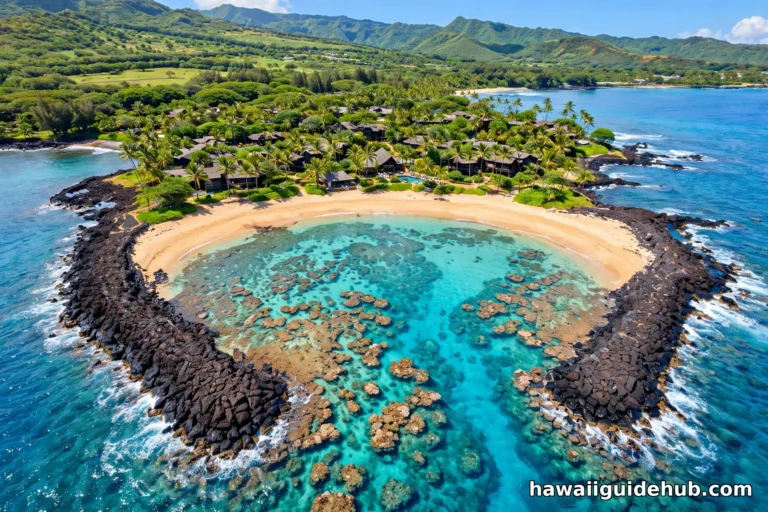
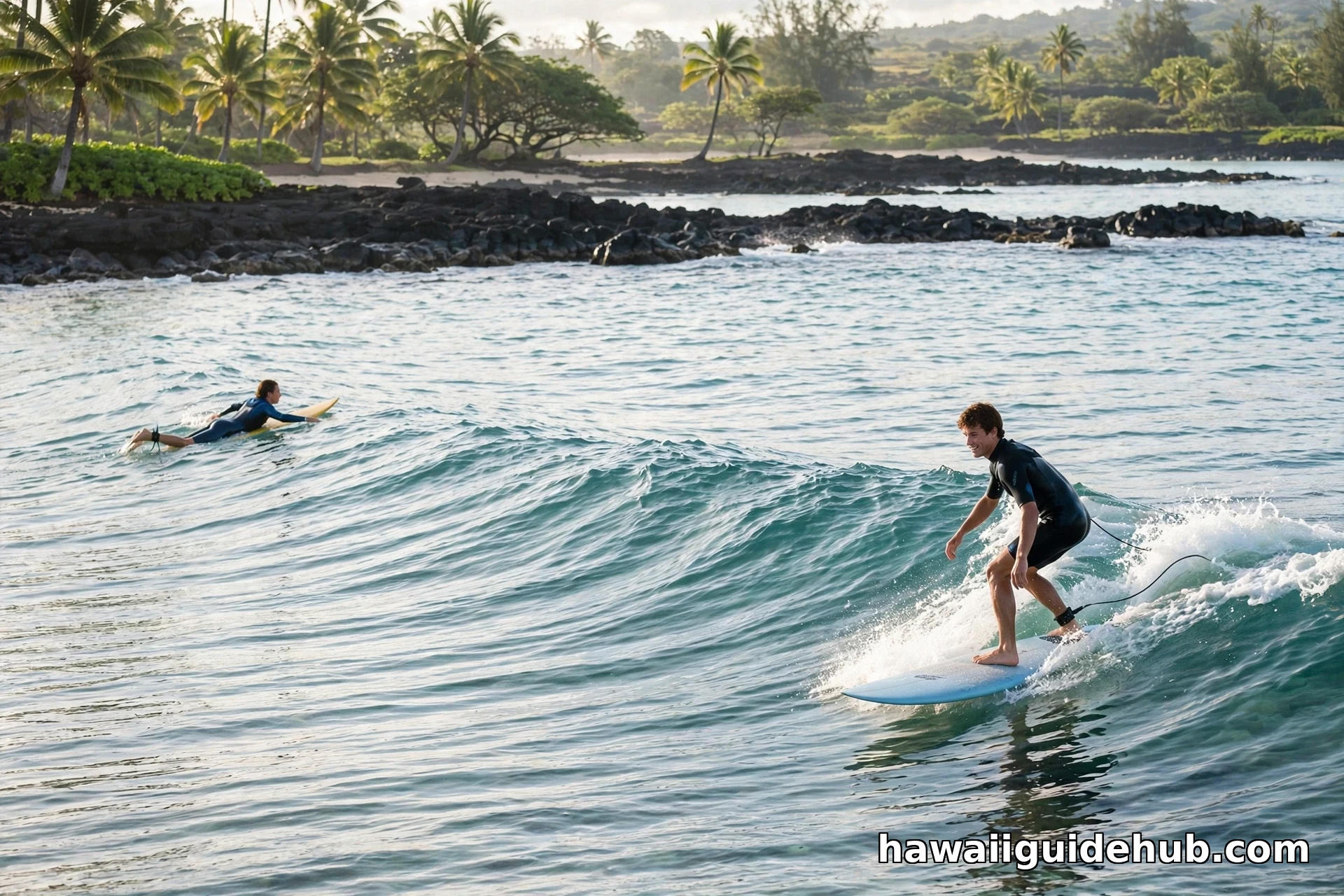
Kahaluʻu Beach Park sits on Aliʻi Drive a few miles south of Kailua-Kona, on the Big Island’s sunny Kona coast. The county park wraps around a small protected bay framed by an old rock wall that calms the water inside. That wall knocks the energy out of the incoming swell, so the waves arrive as gentle, rolling whitewater instead of heavy pitching barrels.
The break itself is a reef break. Waves form over a shallow coral reef and break in the same general area each time, which makes it predictable, a quality beginners love. On a typical day the surf runs two to four feet on the face, which means knee to waist high whitewater that is ideal for learning. When a solid south swell arrives in spring or summer, the outside peak can produce longer rides with a real shoulder to turn on, and more experienced surfers show up to enjoy it.
Getting to Kahaluʻu and What You Will Find
The park has lifeguards, restrooms, outdoor showers, and shaded pavilions, which puts it ahead of many surf spots that offer nothing but a dirt pullout. Surf schools operate right on the beach, and several rent boards by the hour, so you can show up with nothing and still get in the water.
One thing to know: Kahaluʻu is also one of the best snorkeling bays on the Big Island. Snorkelers cluster in the calm inner bay while surfers work the break farther out, so keep your eyes open and give them a wide berth. The bay sits within an area listed on the National Register of Historic Places, and the old rock wall is traditionally credited to the Menehune, the legendary master builders of Hawaiian lore. Hawaiian royalty used this bay as a retreat in the 1700s and 1800s, so you are surfing in genuinely historic water.
How to Read a Hawaii Surf Report
Surf reports look like alphabet soup until someone decodes them. Here is the plain version of the five numbers that matter.
Wave height. Hawaii traditionally measures waves on the Hawaiian scale, roughly half the wave face. If a local calls it three feet Hawaiian, the face is about six feet. Modern surf reports generally list face height, so two to four feet is small and friendly while ten feet is serious.
Swell direction. Direction decides which coast breaks. North and northwest swells light up Oʻahu’s North Shore, Maui’s Honolua Bay, and Kauaʻi’s north shore in winter. South swells wake up Waikiki, the Kona coast, and Kahaluʻu in summer. East swells usually just bring choppy trade wind waves.
Swell period. The seconds between wave crests, and it measures power. Under eight seconds is weak local windswell. Over twelve seconds is a groundswell with real push that traveled thousands of miles. Long period swells wrap into bays and break cleaner, which is why a three foot swell at sixteen seconds can surf better than a five foot swell at eight seconds.
Wind. Light offshore wind grooms the wave face smooth and is ideal. Strong onshore wind chops it up. The trades usually pick up by late morning, so dawn patrol is often the cleanest session of the day.
Tide. Many reef breaks need enough water over the coral, so a rising or mid tide is the sweet spot. Dead low tide can leave the reef dangerously shallow. Check the tide chart alongside the surf report before you paddle out.
The Best Surfing in Hawaii by Island
Hawaii invented surfing, or at least gave it to the world in its modern form, and every island has waves. Here is where to go depending on your island and your level.
Oʻahu: Waikiki and the North Shore
Oʻahu is the complete surf island. Waikiki, on the south shore, is where Duke Kahanamoku made surfing famous and remains the best place on earth to learn. The breaks at Canoes, Queens, and Pops are long, slow, forgiving rollers over deep reef, best on south swells in summer. Canoes, named for the outrigger canoes that share the lineup, is the classic beginner wave. Expect crowds and bring your manners.
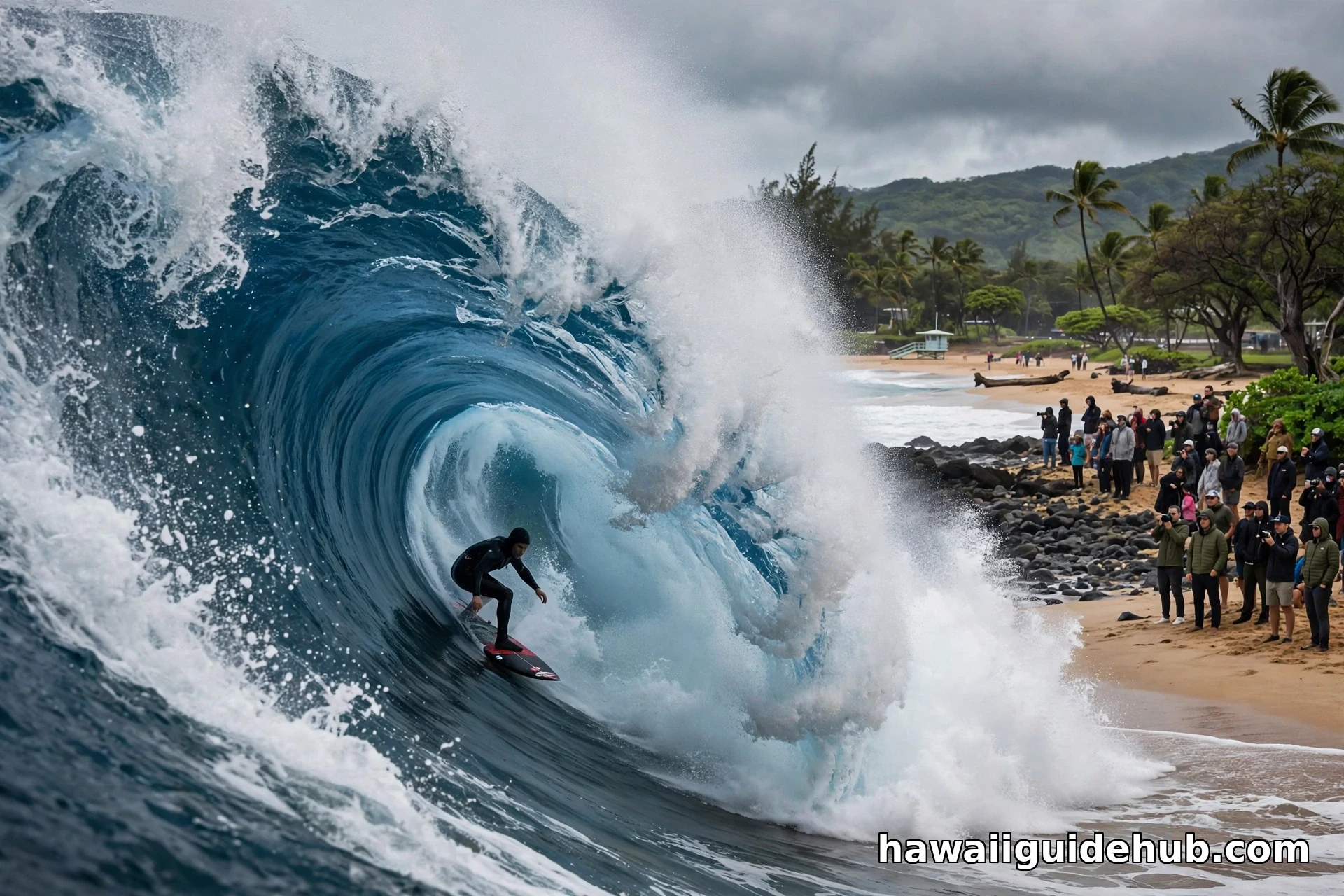
Then there is the North Shore, about an hour from Waikiki and a different universe. Banzai Pipeline, Sunset Beach, and Waimea Bay produce some of the heaviest waves on the planet when northwest swells arrive between October and March. This is expert only territory in winter. In summer the North Shore goes nearly flat, and spots like Chun’s Reef and Puaʻena Point become mellow. For the full picture of the island, see our Oʻahu island guide.

Maui: Honolua Bay and the West Side
Maui’s star break is Honolua Bay on the northwest coast, a world class right hand point break that fires on northwest winter swells. It breaks over reef with no real beach and a firm local pecking order, so it suits intermediate to advanced surfers who know the etiquette. The bay is also a marine preserve, which keeps the water absurdly clear.
For everyone else, Maui’s west side offers friendlier options. Lahaina’s Breakwall is a long, mellow reef break and one of the island’s classic beginner spots, and the cove at Kalama Park in Kihei works for learners. Maui is also the windsurfing capital of the world thanks to Hoʻokipa on the north shore. If Maui is on your itinerary, check our reasons to visit Maui.
Big Island: Kahaluʻu and the Kona Coast
The Big Island is not the first island surfers think of, but it has quietly excellent waves. Kahaluʻu is the headline act for beginners. Farther south in Kona, Banyans is a fast, hollow reef break for experienced surfers only, and Pine Trees offers consistent reef peaks that work much of the year. On the Hilo side, Honoliʻi is a river mouth spot popular with local longboarders, best when the trades are light.
The Big Island’s surf is less consistent than Oʻahu’s because the island’s shape blocks some swell directions, but when it turns on, the crowds are a fraction of Waikiki’s. Pair a surf morning at Kahaluʻu with the island’s other highlights from our best things to do on the Big Island guide.
Kauaʻi: Hanalei Bay and the East Side
Kauaʻi’s Hanalei Bay is one of the most beautiful surf settings in Hawaii, a two mile crescent backed by emerald mountains. The Point at the west end breaks best on winter northwest swells and can get serious. Pine Trees in the middle suits intermediates, and the pier area stays mellow for learners. On the east side, Kealia offers windswell waves, while Poʻipū on the south shore picks up summer south swells.
Which Hawaiian Island Is Best for Surfing?
The honest answer depends on your level. For a first timer, Oʻahu wins. Waikiki’s waves were practically designed for learning, surf schools are everywhere, and you can walk from your hotel to the beach with a rental board. The Big Island’s Kahaluʻu is a close second and arguably less intimidating than Waikiki’s crowds.
For an intermediate surfer, every island works. Oʻahu offers the most variety in the smallest area. Maui and Kauaʻi reward intermediates who rent a car and chase the daily conditions.
For advanced and expert surfers, Oʻahu’s North Shore in winter is the mecca. Nowhere else in Hawaii concentrates so many world class reef breaks in seven miles of coastline. Maui’s Honolua Bay and Kauaʻi’s Hanalei Point are worthy pilgrimages too. If you are still deciding where to base your trip, our best island for first-time visitors guide breaks down the tradeoffs beyond surfing.
Hawaii Surf Seasons: When to Go
Hawaii has two surf seasons, and they are mirror images. Winter, roughly October through March, belongs to the north. Massive North Pacific storms send northwest swells toward the islands, lighting up the North Shore of Oʻahu, Honolua Bay on Maui, and Hanalei on Kauaʻi. This is big wave season and spectator season. Even if you never paddle out, watching Pipeline or Waimea Bay on a big winter day is unforgettable.
Summer, roughly April through September, belongs to the south. Storms in the South Pacific send long period south swells to Hawaii’s southern shores. Waikiki wakes up, the Kona coast including Kahaluʻu gets its best surf of the year, and Kihei and Poʻipū turn on. Summer surf is generally smaller and friendlier, which makes it the best season for beginners.
The shoulder months of April, May, September, and October can deliver a bit of both. Trade winds blow most consistently in summer, so mornings are the call year round for the cleanest conditions.
Surf Safety in Hawaii
Hawaiian waves injure visitors every year, and almost all of it is preventable. The ocean here is more powerful than it looks, and reef breaks punish mistakes that a beach break would forgive.
Never surf alone, and never turn your back on the ocean, even on the sand. Watch any new break for at least twenty minutes before paddling out so you can see where the waves break and where the current pulls. Reef cuts are the most common injury; wear reef booties on shallow reef breaks, and clean any coral cuts thoroughly.
Rip currents are the real danger at many breaks. If you get caught, do not fight it. Paddle sideways across the current until it releases you, then angle back to shore. If you cannot comfortably swim in the ocean, you are not ready to surf unsupervised. Take a lesson instead. A two hour lesson teaches you more about staying safe than a week of trial and error.
Finally, respect the sun. Reef safe sunscreen is required by law in Hawaii, and the tropical sun will burn you through overcast in under an hour. Drink water before and after your session. For more ways to play outside safely, see our guide to outdoor adventures in Hawaii.
Surf Etiquette: The Unwritten Rules
Lineup etiquette is not optional in Hawaii. It is how a crowded reef break stays safe and fun, and locals take it seriously.
The surfer closest to the peak has the right of way. Do not drop in on someone else’s wave. Do not paddle through the lineup where people are riding; paddle around via the channel. Do not ditch your board when a set comes. Wait your turn, and do not snake around someone to steal their position.
At beginner breaks like Waikiki and Kahaluʻu the vibe is forgiving, but the same rules apply. Apologize when you mess up, which you will. Smile. And understand that at heavy local breaks, the pecking order is earned over years. Visitors are welcome, but humility is the price of admission.
Learning to Surf in Hawaii
Hawaii is the best classroom in surfing. The classic lesson runs about two hours: fifteen minutes of beach instruction on popping up and safety, then the rest in the water with an instructor pushing you into waves. Most first timers stand up at least once.

Book a lesson at Waikiki, Kahaluʻu, Lahaina, Kihei, Poʻipū, or Hanalei depending on your island. Go with a licensed school rather than a random beach operator; licensed instructors carry insurance and know the break. You will start on a big foam board, which is stable and catches waves easily. Wear a rash guard against sun and board rash. And go early. Lessons at 8 in the morning get the calmest wind and smallest crowds.
After a lesson or two, rent a board and practice on your own at a beginner break. Stay in the whitewater until you can consistently pop up and ride straight to the beach. Only then paddle out to the lineup.
See the Waves on Video
Frequently Asked Questions
What does the Kahaluʻu surf report usually say?
On a typical day, Kahaluʻu runs two to four feet with light morning winds, which is small, clean, and beginner friendly. South swells in spring and summer bump it up and add longer rides. Winter is usually smaller there since the energy goes to the north facing shores.
Is Kahaluʻu good for beginner surfers?
Yes, it is one of the best beginner breaks in Hawaii. The reef break produces predictable rolling whitewater, the bay is protected, lifeguards are on duty, and surf schools operate on the beach. It is gentler and less crowded than Waikiki, which many first timers prefer.
What is the best island in Hawaii for surfing?
Oʻahu has the most variety, with Waikiki for beginners and the North Shore for experts. But beginners will be happy at Kahaluʻu on the Big Island, Lahaina or Kihei on Maui, and Poʻipū on Kauaʻi. Advanced surfers should plan around Oʻahu’s North Shore in winter.
When is the best time to surf in Hawaii?
Summer, April through September, is best for beginners, with smaller friendly south swells on the south shores. Winter, October through March, is big wave season on the north shores and best left to experts, though it is spectacular to watch.
Do I need a wetsuit to surf in Hawaii?
No. Water temperatures run 75 to 82 degrees Fahrenheit year round. Boardshorts and a rash guard are enough for most sessions. A thin springsuit is nice for long sessions or windy days, but leave the thick wetsuit at home.
Can I surf in Hawaii without a lesson?
You can, but a lesson is strongly recommended for your first time. An instructor teaches you how to pop up, where to sit, how to avoid the reef, and the etiquette that keeps you safe and welcome. Two hours with a pro beats two weeks of guessing.
Hawaii’s waves range from the gentlest whitewater at Kahaluʻu and Waikiki to the heaviest barrels at Pipeline, and that range is exactly why the islands remain surfing’s spiritual home. Check the surf report, match the break to your ability, respect the ocean and the lineup, and you will understand why people plan their whole lives around these waves.