Attractions in Maui, Hawaii: The Definitive Guide to the Valley Isle

Maui packs an unusual amount of variety into one island. In a single day you can watch the sun rise above the clouds at 10,000 feet, drive a winding coastal highway past waterfalls and black sand beaches, and end the evening at a beachfront luau. The island’s attractions span two national park districts, sacred valleys, historic whaling towns, and some of the most famous beaches in the Pacific, and knowing how they fit together is the key to planning a trip that does not waste a minute.
This is the complete guide to attractions in Maui, Hawaii. It covers the island’s orientation and regions, the headline natural attractions, the cultural and historic sites, the best beaches and ocean activities, how to get around, practical logistics, and the nearby experiences that round out a Maui trip. Everything about what to see and do on Maui lives on this one page.
Maui Attractions at a Glance
| Question | Answer | What it means for planning |
|---|---|---|
| Top natural attraction | Haleakalā National Park (Summit and Kipahulu districts) | Two districts at opposite ends; don’t try both in one day |
| Most famous drive | The Road to Hana (Hana Highway, Route 360) | A full day with an early start, not a half-day add-on |
| Best-known beaches | Kāʻanapali, Wailea, Napili Bay, Makena (Big Beach) | Each suits a different day; don’t beach-hop blindly |
| Cultural highlight | ʻĪao Valley State Monument; Lahaina’s historic sites (check current access) | Check access before promising Lahaina |
| Top ocean activity | Snorkeling at Molokini Crater; whale watching in winter | Winter visitors get the bonus show |
| Getting around | Rental car essential; island is split into distinct regions | Book the car with the flight |
| Main airport | Kahului Airport (OGG) | Allow drive time to the resort coasts |
| Time needed | At least 4 to 5 days to see the highlights without rushing | Three nights means skipping something big |
Maui’s Regions: How the Island Fits Together
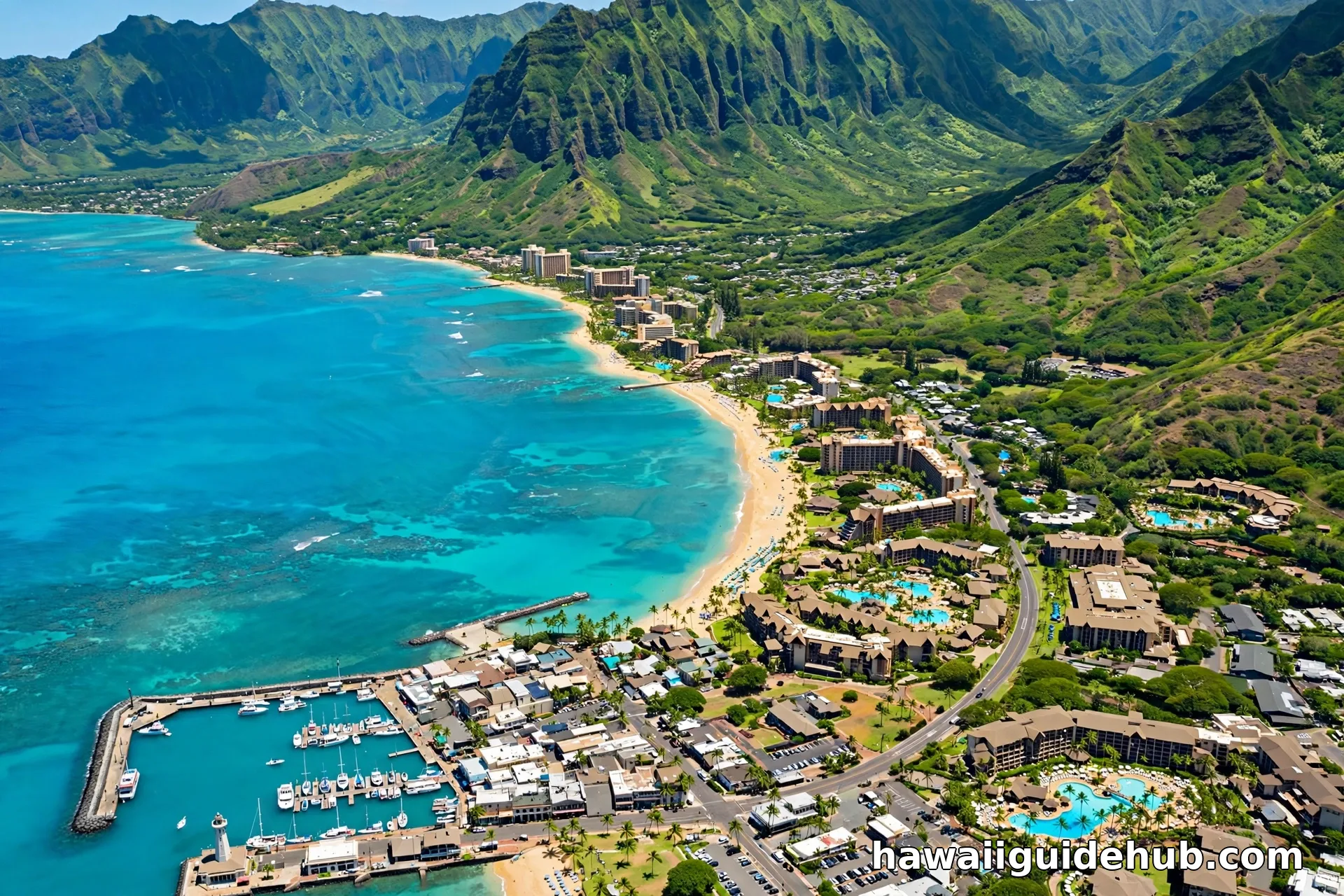
Maui is shaped like two islands joined at the middle. The larger eastern lobe holds Haleakala volcano, Upcountry, and the Road to Hana. The smaller western lobe holds the West Maui Mountains, Lahaina, Kaanapali, and Kapalua. The flat isthmus between them holds Kahului (the airport and commercial center), Wailuku (the county seat), and Kihei and Wailea on the south shore. Distances are deceiving: the island looks small on a map, but the Road to Hana alone eats a full day, and the drive to the Haleakala summit takes about two hours from the beach resorts.
Haleakala National Park
Haleakala is Maui’s crown jewel and one of the most visited national parks in Hawaii. The park has two separate districts that do not connect by road, and most visitors need to plan them as separate days.
The Summit District
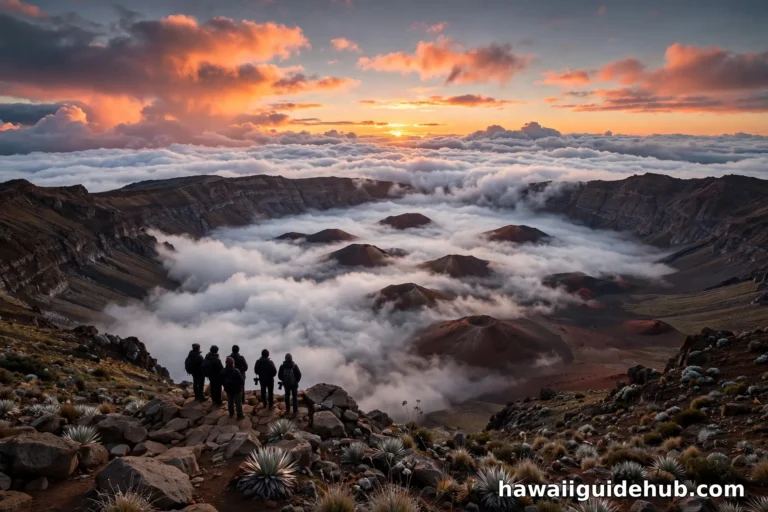
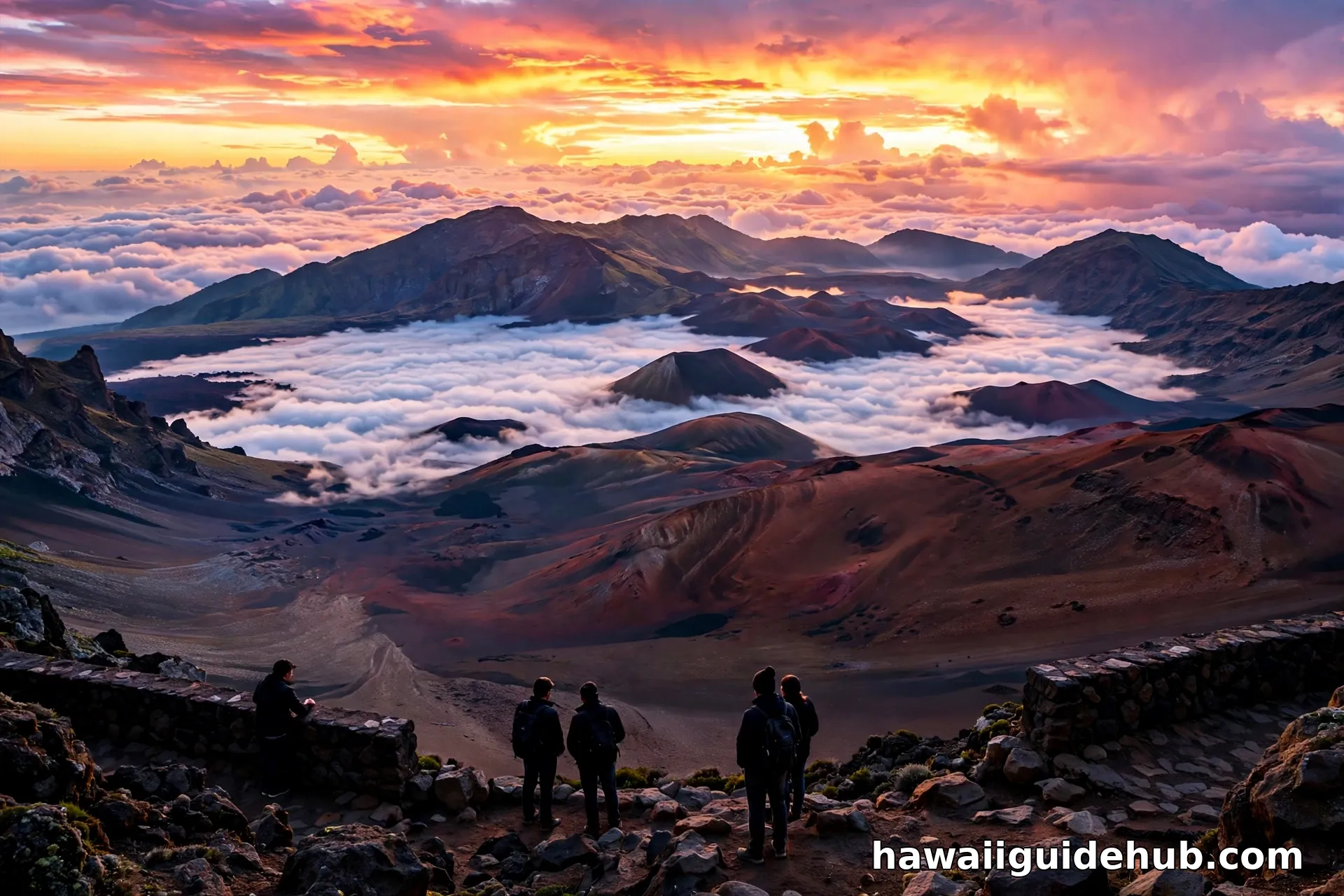
The Summit District rises to 10,023 feet at Puu Ulaula (Red Hill), the highest point on Maui. The main draws are sunrise above the clouds, sunset, stargazing, and hiking into the volcanic crater on trails like Sliding Sands. The drive up passes through multiple climate zones, from sugarcane fields to subalpine desert. It is cold at the top year round, often in the 40s Fahrenheit before sunrise, so bring real warm layers.
Logistics matter here. The park entrance fee is $30 per private vehicle, valid for three days at both districts. A separate sunrise reservation is required for vehicles entering the Summit District between 3:00 a.m. and 7:00 a.m.; it costs $1 per vehicle, is booked on Recreation.gov, and is released 60 days and 2 days in advance. Without a sunrise reservation, enter after 7:00 a.m. The park is cashless, so bring a card or a pass.
The Kipahulu District
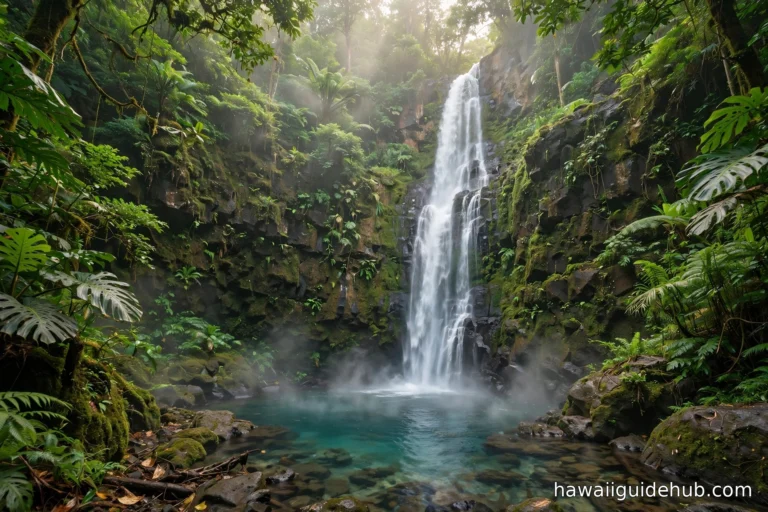
The Kipahulu District sits on Maui’s remote southeast coast, usually reached at the far end of the Road to Hana. Its centerpiece is the Pipiwai Trail, a 4-mile round trip through bamboo forest to 400-foot Waimoku Falls, passing the Pools of Oheo (the Seven Sacred Pools) along the way. Note that the pools are not open for swimming; they can be viewed from the Kuloa Point Trail. Kipahulu is open roughly sunrise to sunset, with hours posted seasonally.
The Road to Hana
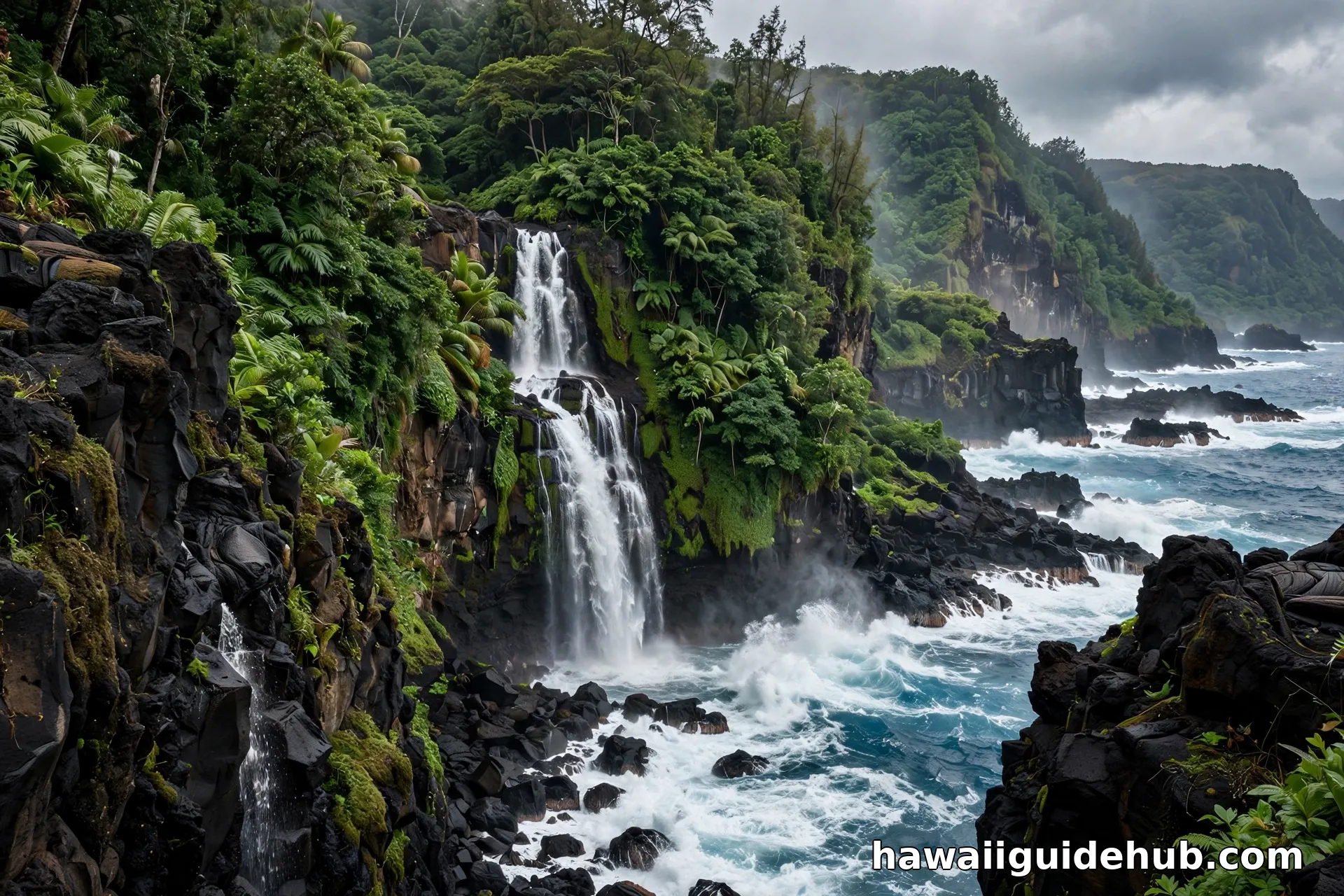
The Road to Hana (Hana Highway, Route 360) is one of the most famous scenic drives in the world: about 64 miles of winding coastal road with some 600 curves and 50-plus one-lane bridges, passing waterfalls, rainforest, and ocean vistas. The drive itself is the attraction, with stops at Twin Falls, the Garden of Eden arboretum, Wailua Valley viewpoints, Puaa Kaa State Park, Waianapanapa State Park’s black sand beach, and finally the town of Hana.
Plan this as a full day, leaving early. Drive times run 2.5 to 3 hours each way without stops, and you will want many stops. Waianapanapa State Park now requires advance reservations for nonresidents, so book before you go. Fill your gas tank, pack food and water, and download offline maps, because cell service is spotty. Respect private property and no-parking signs; the road passes through real communities that deal with heavy visitor traffic.
Iao Valley State Monument
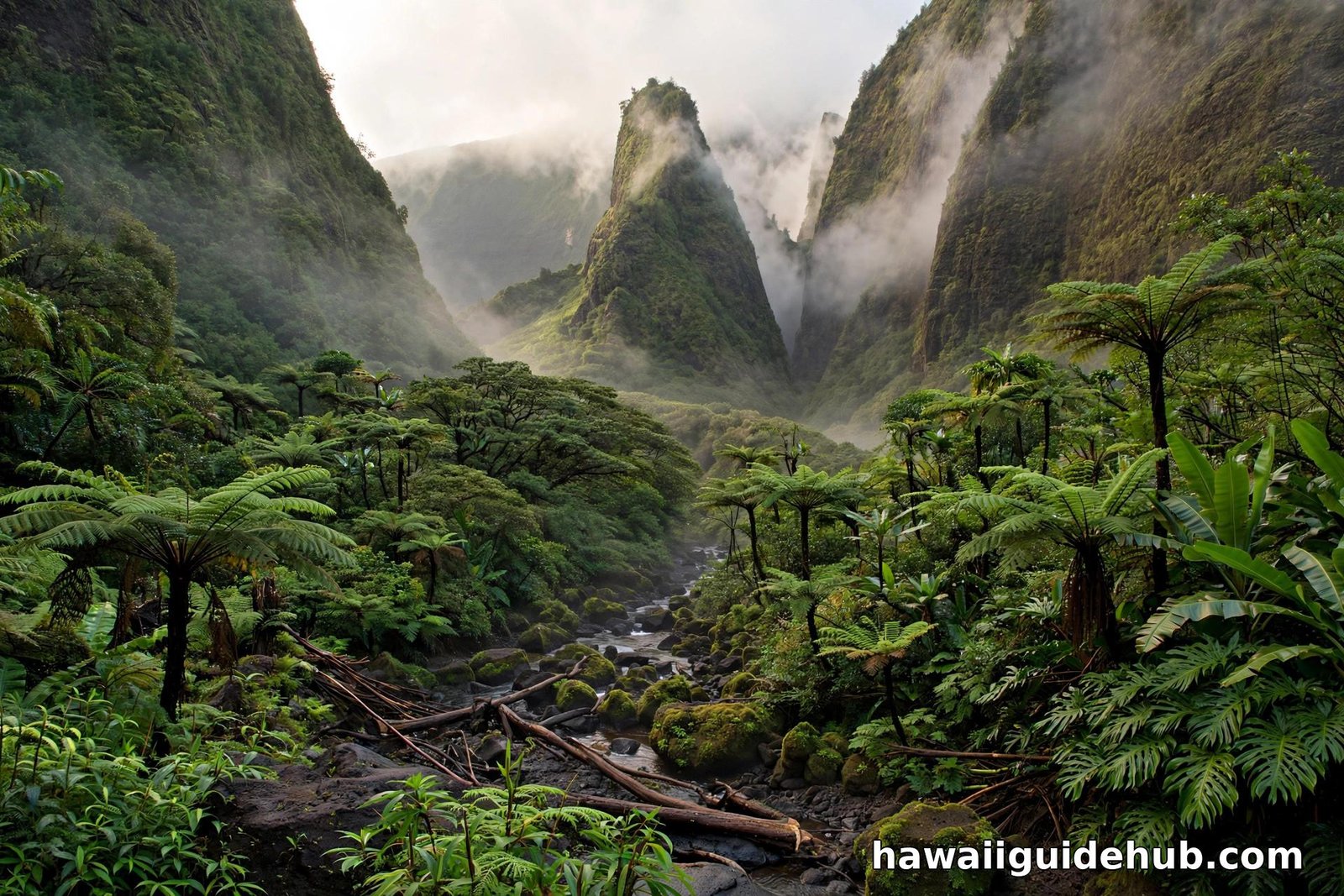
Iao Valley, just west of Wailuku, is one of the most sacred places in Hawaii. The emerald Iao Needle, a 1,200-foot lava remnant, rises from the valley floor where the Battle of Kepaniwai was fought in 1790. Paved paths and overlooks make it an easy, moving stop of an hour or two. The monument requires advance reservations for nonresidents, so check the Hawaii State Parks site and book ahead.
Maui’s Best Beaches
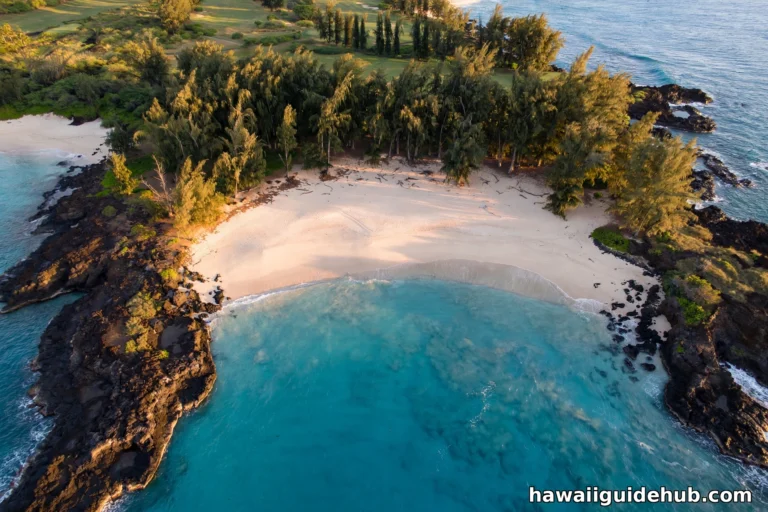
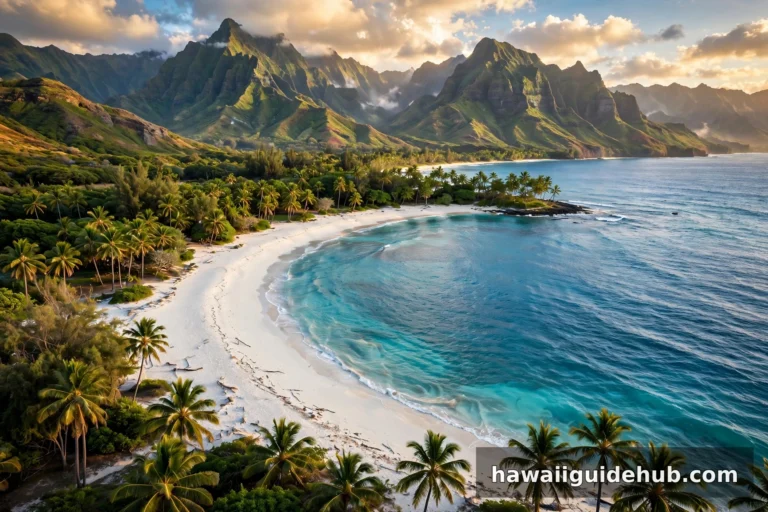
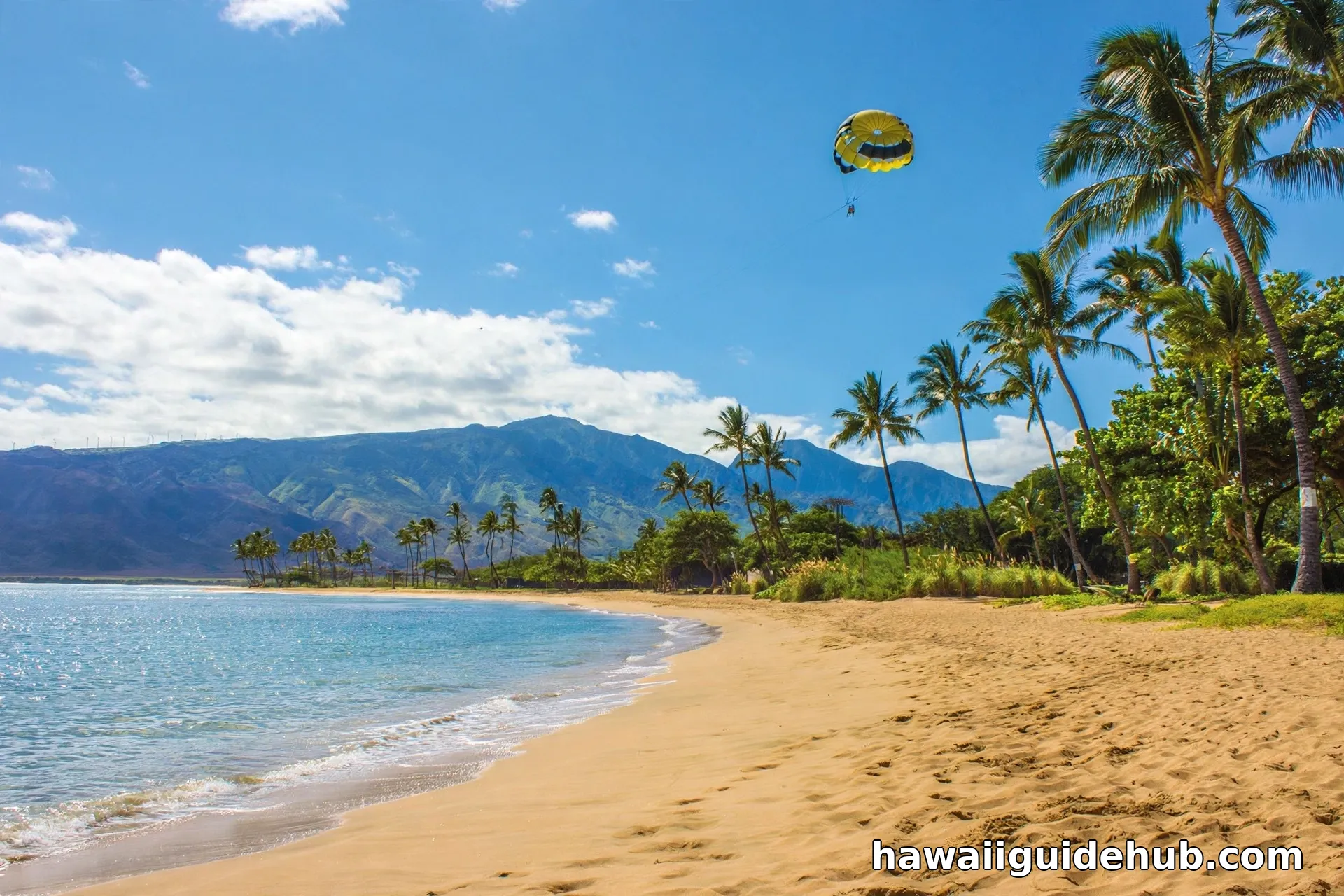
Maui’s beaches are the reason many visitors come, and they live up to the reputation. Kaanapali Beach, on the west side, is the classic: three miles of white sand, clear water, the daily cliff diving ceremony off Puu Kekaa (Black Rock), and a beachfront path lined with resorts. Wailea, on the south shore, holds a string of upscale crescent beaches with excellent snorkeling. Napili Bay is a beloved family beach with gentle water. Makena’s Big Beach (Oneloa) is wide and dramatic, with a shore break that demands respect.
Ocean safety is not optional reading on Maui. Conditions change daily: check surf and current reports, swim at lifeguarded beaches, never turn your back on the ocean, and stay out of the water when advisories are posted. South and west shore beaches are generally calmest in summer; winter brings bigger swells, especially on the north-facing shores.
Ocean Activities: Molokini, Whales, and Snorkeling
Molokini Crater, the crescent-shaped volcanic islet off Maui’s south shore, offers some of the clearest snorkeling in Hawaii, with visibility often exceeding 100 feet. It is reachable only by boat tour, usually departing from Maalaea Harbor. Winter, from December through April, is humpback whale season, when thousands of whales migrate to Maui’s warm waters to breed and calve; whale watching tours depart from Lahaina and Maalaea harbors, and whales are often visible from shore. Year-round snorkeling is excellent at spots like Honolua Bay and Ulua Beach when conditions allow.
Lahaina and West Maui
Lahaina was the capital of the Hawaiian Kingdom in the 19th century and grew into Maui’s historic whaling town and busiest visitor hub, known for Front Street, the famous banyan tree, and its art galleries and restaurants. The August 2023 wildfires devastated the town, and recovery is ongoing. Access, businesses, and the state of historic sites continue to change; check current official guidance before planning a Lahaina visit, and be respectful of a community still rebuilding.
Upcountry Maui and the North Shore
Upcountry Maui, the cool slopes of Haleakala around Makawao, Kula, and Ulupalakua, is a different island entirely: ranch land, lavender farms, wineries, and sweeping views. Makawao’s paniolo (cowboy) town strip is worth a wander. The drive through Upcountry is also the approach to the Haleakala summit. On the north shore, Paia is a funky former plantation town with great food and shopping, and Ho’okipa Beach Park nearby is one of the world’s great windsurfing spots and a reliable place to see Hawaiian green sea turtles basking on the sand.
Getting Around Maui
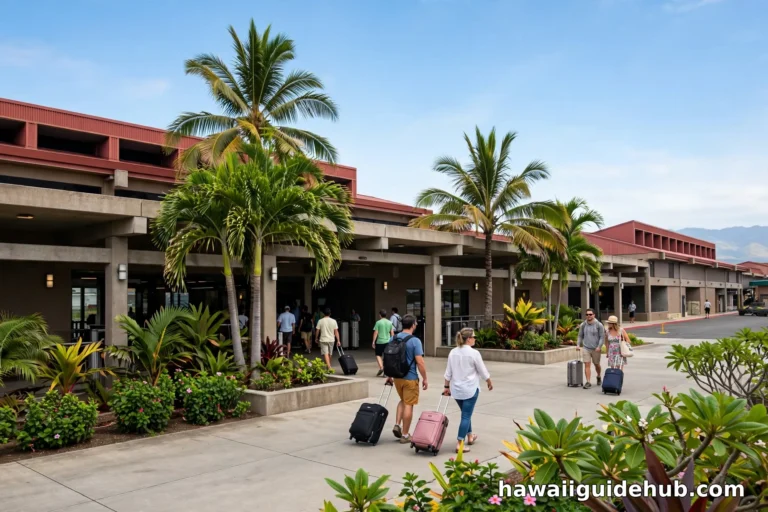
A rental car is essential on Maui. Public transit exists but will not get you to the attractions on this list efficiently. Book rental cars early, especially in winter and holiday periods, and expect premium pricing. Most visitors fly into Kahului Airport (OGG); the consolidated rental car facility there is efficient but allow extra time at peak hours. Driving times: Kahului to Lahaina/Kaanapali is about 45 minutes, to Wailea about 30 minutes, to the Haleakala summit about 2 hours, and around the Road to Hana a full day.
Practical Tips for Maui Attractions
Book the time-sensitive things first: Haleakala sunrise reservations, Waianapanapa and Iao Valley reservations, and any boat tours or luaus. Mornings are gold on Maui; the island’s weather is typically best before noon, crowds are thinner, and popular trailheads fill early. Bring layers for Haleakala, reef-safe sunscreen for the beaches, and far more water than you think you need for hikes. And build in a buffer day; Maui rewards the unhurried.
Maui’s Historic Towns
Beyond the beaches and the volcano, Maui’s small towns are attractions in their own right. Wailuku, the county seat, holds the historic Iao Theater, old plantation-era storefronts, and the Bailey House Museum with its missionary-era artifacts. Makawao, the paniolo (Hawaiian cowboy) town of Upcountry, mixes art galleries, boutiques, and a genuine ranching culture that dates to the 19th century. Paia, the former sugar plantation town on the north shore, is now Maui’s bohemian hub, with great restaurants, surf shops, and a walkable main street. Each town rewards an unhurried hour or two.
Maui for Families
Maui is one of the easiest Hawaiian islands for family travel. The west and south shore beaches offer calm, lifeguarded swimming for kids. The Maui Ocean Center in Maalaea is a well-regarded aquarium that gives context to everything you will see snorkeling. Submarine tours, Atlantis-style, run from Lahaina and thrill younger kids who cannot snorkel yet. The Road to Hana works for families if you keep it short: drive to Twin Falls or the Garden of Eden and back rather than the full loop. And the Haleakala summit, while cold, fascinates kids with its Mars-like crater landscape.
Maui’s Food Scene
Maui’s dining runs from food trucks to fine dining, and the island’s agricultural richness shows on the plate. Upcountry farms supply restaurants across the island; the Saturday farmers markets in Kahului and Upcountry are worth building a morning around. For local flavor on a budget, the plate lunch shops and food trucks around Kahului and Kihei deliver. Paia and Makawao hold the island’s most interesting independent restaurants. And no Maui trip is complete without shave ice, preferably with a snow cap and local fruit flavors.
Video: Top 10 Things to Do in Maui
A 4K tour of Maui’s top experiences, from the Haleakala sunrise and the Road to Hana to Molokini snorkeling and whale watching.
Frequently Asked Questions
How many days do you need on Maui?
Five days is a comfortable minimum for the highlights: a beach and resort day, Haleakala, the Road to Hana, a snorkel or whale watch day, and Upcountry or Iao Valley. A week lets you add a second beach area and a buffer day. Anything less forces painful choices.
What is the number one attraction on Maui?
Haleakala National Park, particularly sunrise at the summit, is the most iconic single experience. The Road to Hana is the most famous drive. Most visitors rank those two at the top, with Molokini snorkeling and whale watching (in season) close behind.
Can you do the Road to Hana and Haleakala in one day?
Technically possible and almost always a mistake. Each deserves a full day. Combining them means rushing both and driving tired on demanding roads. Split them across two days.
Is Maui expensive?
Maui is one of the priciest Hawaiian islands for visitors, with high accommodation, dining, and activity costs. The natural attractions themselves are affordable; Haleakala’s $30 vehicle fee covers three days, and beaches are free. Save by booking condos with kitchens, eating plate lunches and grocery bentos, and prioritizing free natural sights.
When is whale season on Maui?
Humpback whales are typically in Maui waters from December through April, with peak numbers in February and March. Tours run throughout the season, and shore-based viewing is excellent from west and south Maui beaches and overlooks.
Maui’s attractions work because they are so different from each other, and the island’s compact size lets you sample them all. Give the island at least five days, book the reservations early, respect the ocean and the land, and let the variety do the rest. Few places on earth pack this much into one island.