Road to Hana: The Complete Maui Driving Guide

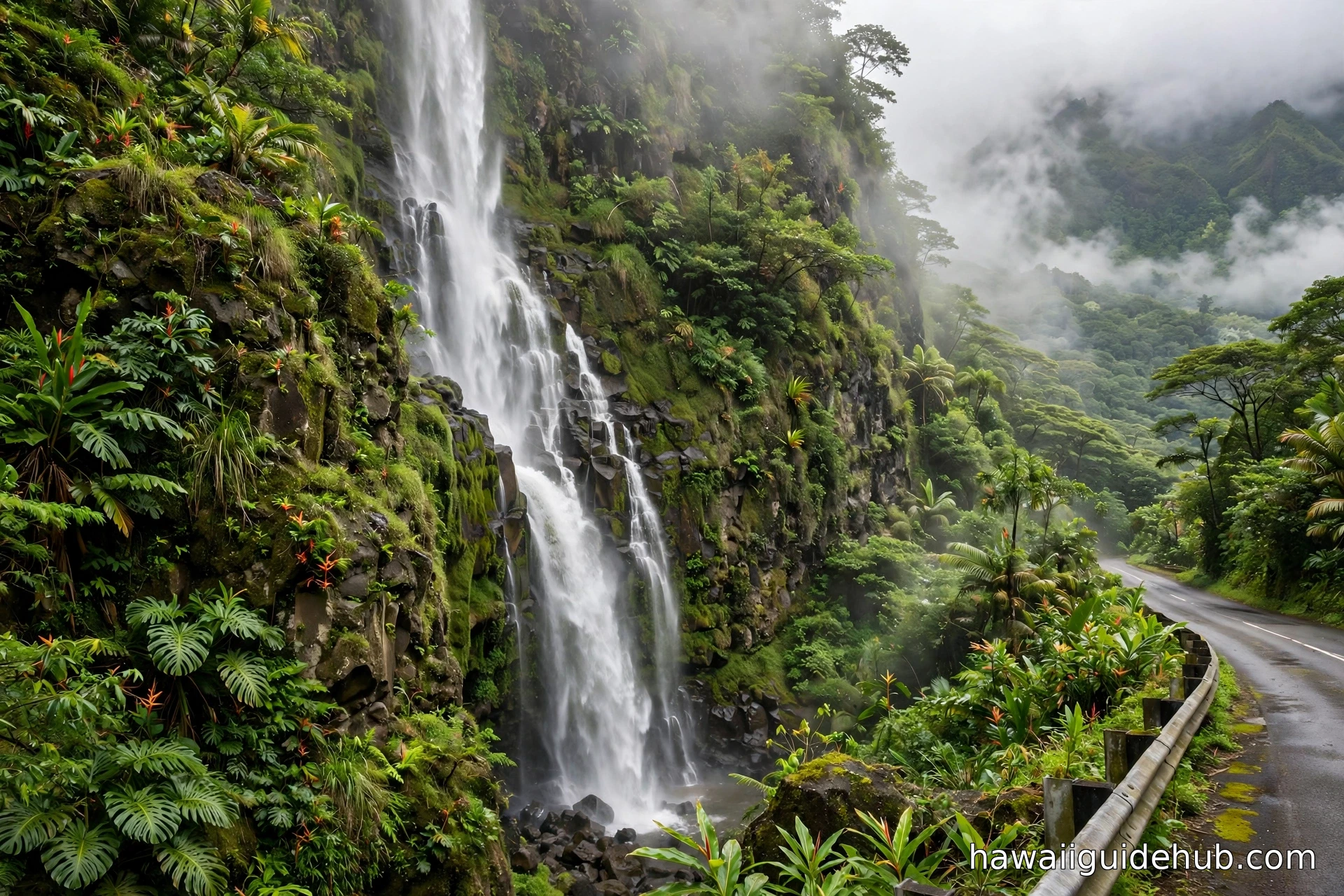
There is a moment on the Hana Highway when the road stops feeling like a road at all. The pavement narrows to a single lane draped over a stone bridge, the jungle closes in on both sides, and a waterfall appears around the next bend as if the island is showing off. You pull over, because everyone pulls over, and stand there listening to water hit rock while the trade winds move through the trees. That is the Road to Hana. It is not a drive you take to get somewhere. The drive is the somewhere.
Ask anyone who has done it and they will tell you the same thing: plan for the journey, not the destination. The town of Hana itself is small and quiet, and that is part of its charm. But the 64 miles between Paia and Hana hold more waterfalls, beaches, gardens, and roadside food stands than most islands fit into a week. This guide covers the whole experience, from how long the drive really takes to the stops worth your time and the reservations you need to make before you go.
What the Road to Hana Actually Is
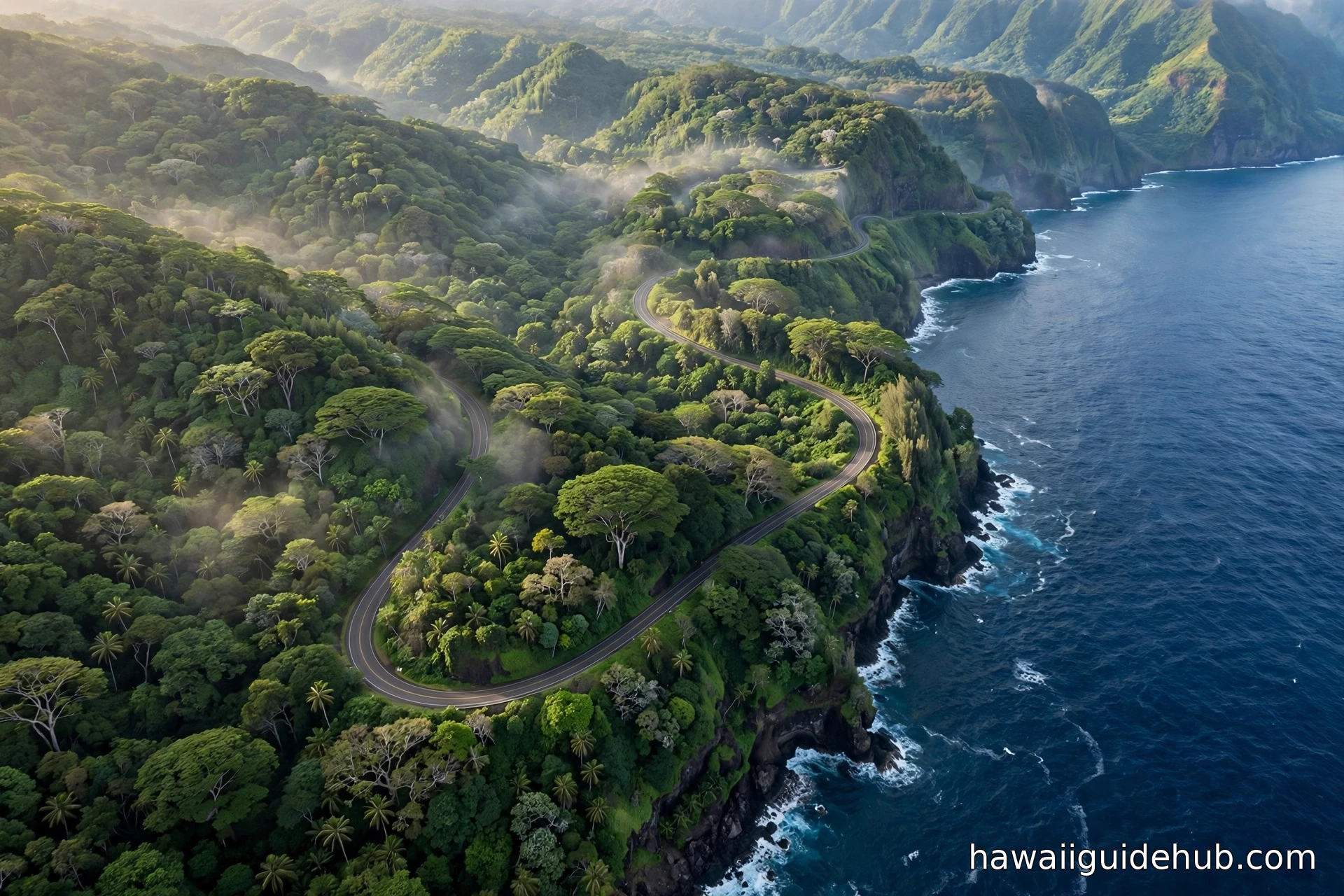
The Road to Hana is the Hana Highway, officially Hawaii Routes 36 and 360, running 64.4 miles along Maui’s northeastern coast from Kahului to the town of Hana. The most scenic stretch begins in Paia, a surf town about 15 minutes east of the airport, where the mile markers reset to zero and the road starts its famous winding.
The numbers tell the story. The highway threads through roughly 620 curves and crosses 59 bridges, 46 of which are only one lane wide. Speed limits drop to 15 miles per hour in places, and there are stretches where you will be yielding to oncoming traffic on a bridge barely wider than your car. Without stopping, the drive takes about two and a half to three hours. Nobody drives it without stopping, which is why most people budget a full day, often 10 to 12 hours round trip.
The road was built over decades, with major construction in the 1920s, to connect the remote communities of East Maui with the rest of the island. It earned a spot on the National Register of Historic Places in 2001. Driving it today, you pass through rainforest that gets over 300 inches of rain a year in places, which explains why there are waterfalls at what feels like every mile marker.
How Long Does the Drive Really Take
This is the question every visitor asks, and the honest answer depends entirely on how many times you stop. Here is a realistic breakdown:
- No stops: 2.5 to 3 hours one way from Paia to Hana
- A few quick photo stops: 5 to 6 hours one way
- The full experience with hikes and beach time: 8 to 12 hours round trip
Most travelers drive out in the morning, spend the day stopping along the way, reach Hana or the Kipahulu District by midafternoon, and drive back the same way they came. A smaller number stay overnight in Hana, which lets you split the drive across two days and see the far stops without rushing. There is no wrong approach, but starting early is the single best decision you can make. Leave Paia by 7 or 8 in the morning and you will be ahead of the tour vans and the midday crowds at the popular stops.
Before You Go: Reservations, Gas, and Ground Rules
A few things to sort out before you point the car east.
Book Wai’anapanapa in Advance
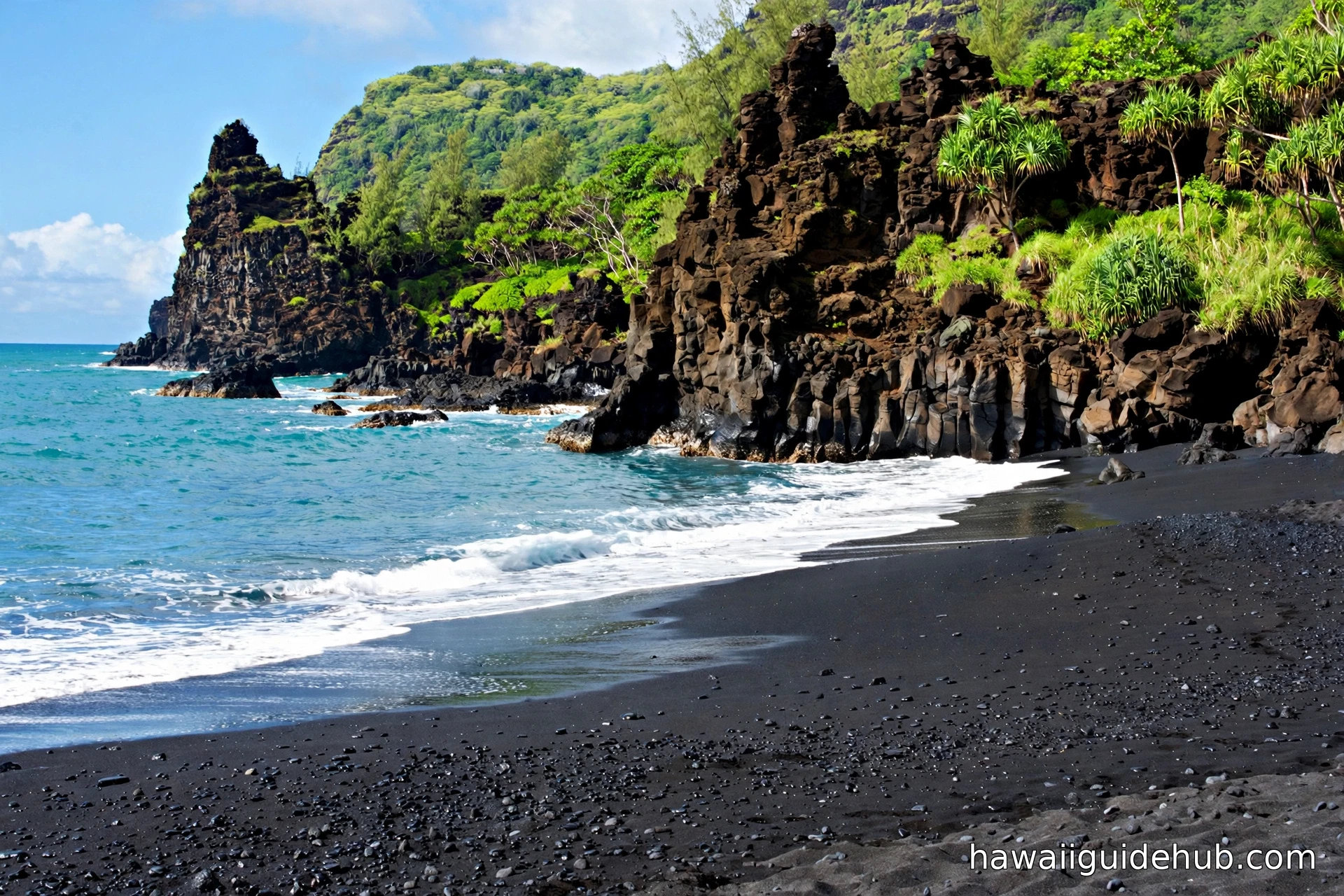
Wai’anapanapa State Park, home to the famous black sand beach at Pailoa Bay, requires advance reservations for all visitors. You need to book both entry and parking through the Hawaii DLNR reservation system, and slots open 30 days ahead. Nonresidents pay a per-person entry fee plus a per-vehicle parking fee. You must arrive within 30 minutes of your reserved start time or you can be turned away. Do not skip this step. It is the one reservation on the whole route that can ruin your day if you forget it.
Fill Up in Paia
There are no gas stations between Paia and Hana. Fill your tank in Paia before the mile markers start. The round trip is roughly 130 to 150 miles depending on how far past Hana you go, so a full tank handles it comfortably, but do not start on a quarter tank.
Pack Like You Mean It
Bring more water and snacks than you think you need, reef-safe sunscreen, bug repellent, a towel, and shoes you can hike in. Cell service drops out for long stretches, so download offline maps before you leave. A waterproof phone pouch earns its keep at every waterfall stop.
Know the Back Road Rules
Past the Kipahulu District, the road continues as the Pi’ilani Highway toward Kaupo and around the back side of Haleakala. This section is narrow, partially unpaved, and rough. Many rental car companies specifically prohibit driving it, and violating that clause can void your coverage. Unless you have a high-clearance vehicle and know what you are getting into, drive back the way you came. The return trip is faster anyway since you already know the stops you want to skip.
The Best Stops, Mile by Mile
You cannot stop everywhere. These are the stops that earn their place on a one-day itinerary.
Paia Town: Mile 0
Start here, not just with gas but with breakfast. Paia is a former plantation town turned surf town, full of cafes, bakeries, and boutiques. Grab coffee and something to eat, use a real restroom, and take a look at Ho’okipa Beach just east of town, where sea turtles haul out on the sand in the mornings and windsurfers fill the waves. It is technically before the official start of the winding road, which makes it the perfect warm-up.
Twin Falls: Mile 2
The first waterfall stop comes fast. Twin Falls sits on private farmland at Wailele Farm, with a short walk to a series of cascades and swimming holes. It gets crowded by midmorning, which is another reason to leave Paia early. There is a parking fee and a farm stand selling fruit and smoothies. The falls closest to the parking area are the easiest to reach, and the pools are swimmable when water levels are normal. If the water is brown or running hard after rain, stay out.
Garden of Eden Arboretum: Mile 10
This 26-acre botanical garden charges admission, and it is worth it for the Puohokamoa Falls viewpoint alone. The gardens hold some of the island’s most photographed rainbow eucalyptus trees, their bark peeling in strips of green, orange, and purple. Trails wind through bamboo groves and past ocean overlooks. Budget 45 minutes to an hour.
Ke’anae Peninsula and Aunty Sandy’s Banana Bread: Mile 16 to 17
The Ke’anae Arboretum at Mile 16 is a free state arboretum with more rainbow eucalyptus and native plantings, good for a 20-minute leg stretch. Then follow the road down to the Ke’anae Peninsula, a lava-rock point where the ocean crashes dramatically against black rock. This is where you will find Aunty Sandy’s, the banana bread stand that has achieved genuine legend status. The bread sells out, so earlier is better. Eat it looking at the waves.
Pua’a Ka’a State Wayside Park: Mile 22
A small state park with a waterfall and a pool that is one of the safer swimming spots on the route. There are restrooms and picnic tables, which makes it a natural lunch or rest stop. The falls are right by the road, so this one costs you almost no extra time.
Wai’anapanapa State Park: Mile 32
The black sand beach at Pailoa Bay is the signature stop of the whole drive. The 122-acre park packs in sea caves, a lava tube, blowholes, sea arches, and coastal hiking trails with ocean views in every direction. The sand gets its color from volcanic lava shattered by the surf into fine black grains. Swimming here is rough more often than not, so treat it as a place to explore, photograph, and walk rather than a swimming beach. Remember your advance reservation. Plan 1 to 2 hours.
Hana Town: Mile 34
Hana is the turnaround point for most drivers, and it is deliberately low key. There is a general store, a few food trucks, Hana Bay with its black sand beach, and the Hasegawa General Store, which has been serving the town since 1910. If you are doing the drive in one day, this is a good place to eat lunch and decide how much daylight you have left for the stops beyond town.
Beyond Hana: Wailua Falls and the Kipahulu District
About 10 miles past Hana, Wailua Falls drops 80 feet right beside the road. You can see it from your car, which makes it the easiest waterfall photo on the route. Keep going to Mile 42 and you reach the Kipahulu District of Haleakala National Park, which is where the day’s best hiking lives.
The Pools of ‘Ohe’o, better known as the Seven Sacred Pools, are a series of tiered freshwater pools cascading toward the ocean. They are beautiful and they are closed to swimming. The National Park Service prohibits entering the water here because of flash flood danger, slippery rock, and falling debris, and the closure is enforced with clear signage. Admire them from the Kuloa Point Trail, a short half-mile loop with coastal views.
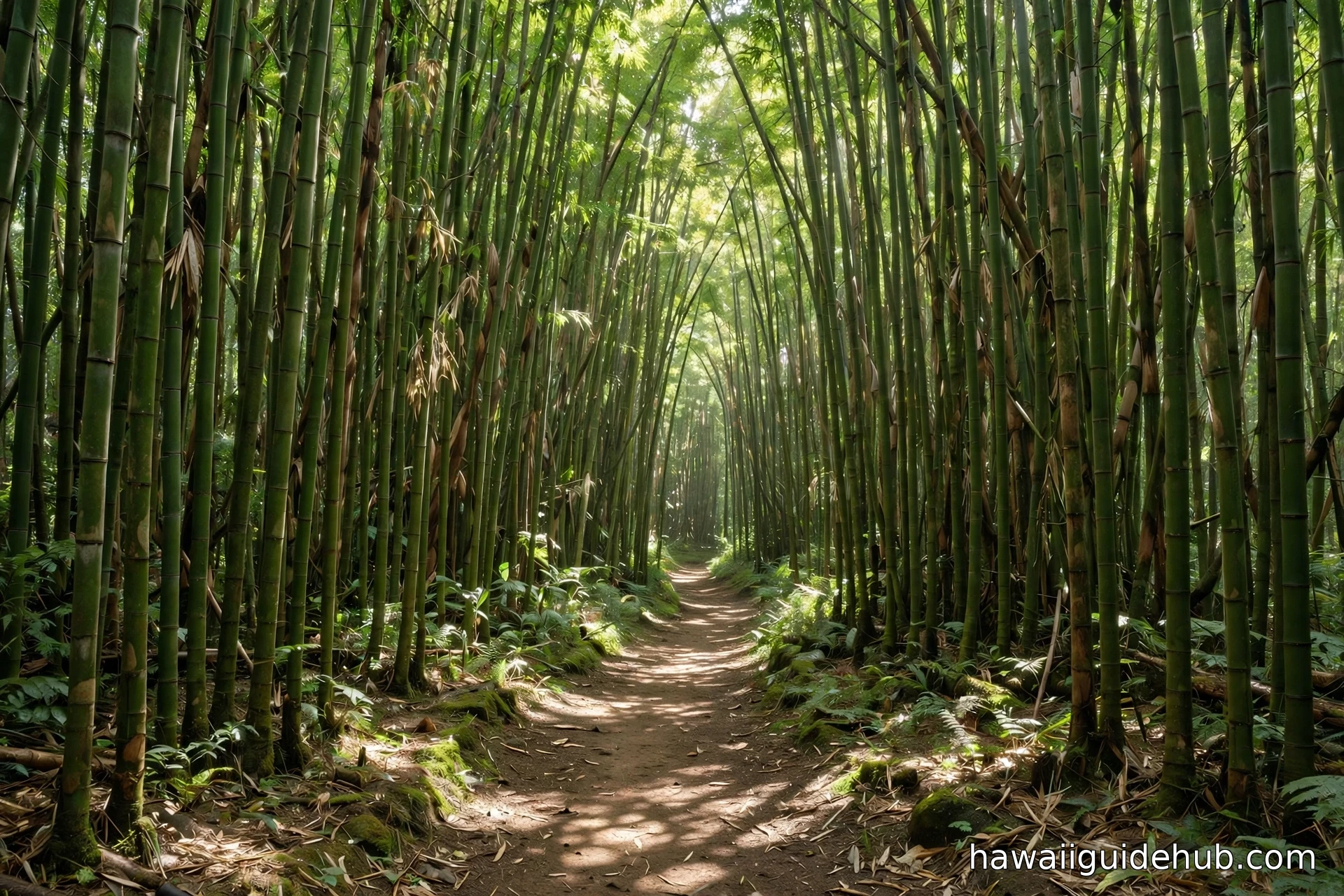
The real prize in Kipahulu is the Pipiwai Trail, a 4-mile round-trip hike through bamboo forest to the 400-foot Waimoku Falls. It takes 2 to 3 hours and it is the single best hike on the Road to Hana. The bamboo forest section, where thousands of stalks click together in the wind, is worth the walk on its own. Park entry is $30 per vehicle, good for 3 days across both districts of Haleakala National Park, so keep your receipt if you plan to visit the summit crater too.
Where to Eat Along the Way
Food is part of the experience on this road, not just fuel. Beyond Aunty Sandy’s banana bread, watch for the Halfway to Hana stand, fruit stands selling apple bananas and lilikoi, and Coconut Glen’s coconut ice cream near Wai’anapanapa. In Hana, the food trucks near Hana Bay serve plate lunches and fresh fish. Koki Beach, just past Hana, is known for Huli Huli chicken grilled roadside. Bring cash for the smaller stands, since not all of them take cards.
Driving Tips That Actually Matter
- Yield on one-lane bridges. The vehicle already on the bridge has the right of way. If you arrive first, go. If the other car is already crossing, wait.
- Pull over for locals. People live and work along this road. If a local driver is behind you, pull over at the next safe spot and let them pass.
- Never stop in the road. Use designated pullouts and parking areas only. Stopping on blind curves is how accidents happen.
- Respect private property. Many waterfalls and viewpoints sit on private land. Stay on marked paths, do not climb fences, and do not trespass for a photo.
- Watch the weather. East Maui is one of the wettest places in Hawaii. Heavy rain upstream can turn a calm stream into a flash flood with no warning. If water looks brown or is running hard, stay out of it.
- Drive out before dark. The road has no streetlights and the curves do not get easier to navigate at night. Plan your return so you are past the winding sections by sunset.
One Day or Two: Planning Your Itinerary
If you have one day, leave Paia by 7 AM, hit Twin Falls and the Garden of Eden in the morning, eat banana bread at Ke’anae around midday, spend the early afternoon at Wai’anapanapa, and reach the Kipahulu District by mid to late afternoon for the Pipiwai Trail or at least the ‘Ohe’o pools viewpoint. Drive back before dark.
If you have two days, stay overnight in Hana. Vacation rentals and the Hana-Maui Resort are the main options, and booking ahead is essential since rooms are limited. Day one covers everything up to Hana at a relaxed pace. Day two covers Kipahulu, Wailua Falls, and the beaches south of town before the leisurely drive back.
Either way, build your day around the timed entry at Wai’anapanapa. Pick a reservation window, then plan your other stops around it. The park’s booking system lets you choose from several time blocks starting early in the morning.
For travelers weighing whether the drive fits into a broader visit to Maui, the Road to Hana is usually the single biggest day of the trip. It pairs naturally with a Haleakala summit visit since your park pass covers both districts for three days. Many visitors base themselves in Wailea or West Maui and treat Hana day as the island’s eastern bookend. And if you are visiting Maui in winter, the waterfalls run fuller and the crowds thin out on weekdays.
Is the Road to Hana Worth It
Almost everyone who drives it says yes, with the same caveat: it is worth it if you treat it as the main event rather than a checkbox. The travelers who are disappointed are the ones who try to rush it, skip the reservations, or attempt it as a half-day add-on. Give it the full day, start early, stop often, and let the road set the pace. Six hundred curves sounds like a warning. It is actually the point.