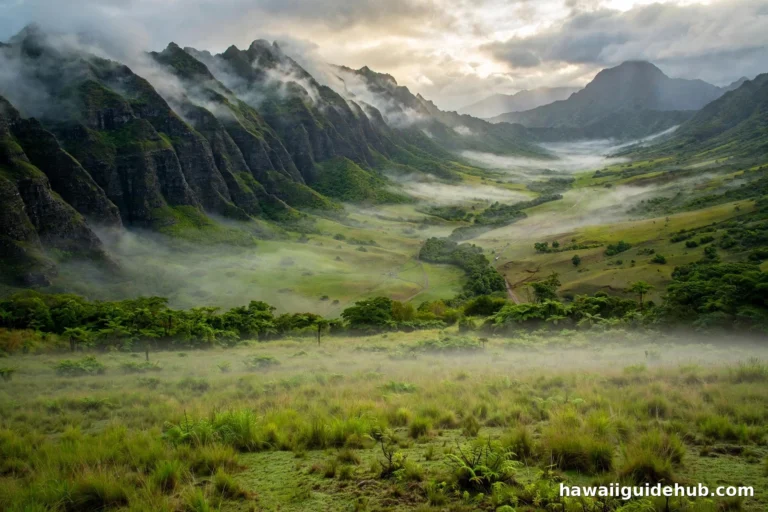
Keʻi Beach: Big Island’s Hidden Snorkeling Spot on the Kona Coast

At the end of a rough dirt road on the south Kona coast, past coffee farms and the small fishing village of Keʻei, the land gives way to a pocket of white sand that most visitors never see. Keʻei Beach is not the kind of place you stumble upon. You have to want to find it, and once you do, the payoff is a quiet, local-feeling beach at the edge of Kealakekua Bay, where the snorkeling is excellent, the crowds are thin, and the view across the bay reaches all the way to the Captain Cook Monument.
This is a beach for people who like their Hawaii a little unpolished. There are no restrooms, no lifeguard, no shade structures, and no snack stand. What there is: clear water, coral, sea turtles, a protected little tidepool, and a sense that you have slipped off the tourist map for a few hours. If that sounds like your idea of a good day, keep reading.
Where Keʻei Beach Is
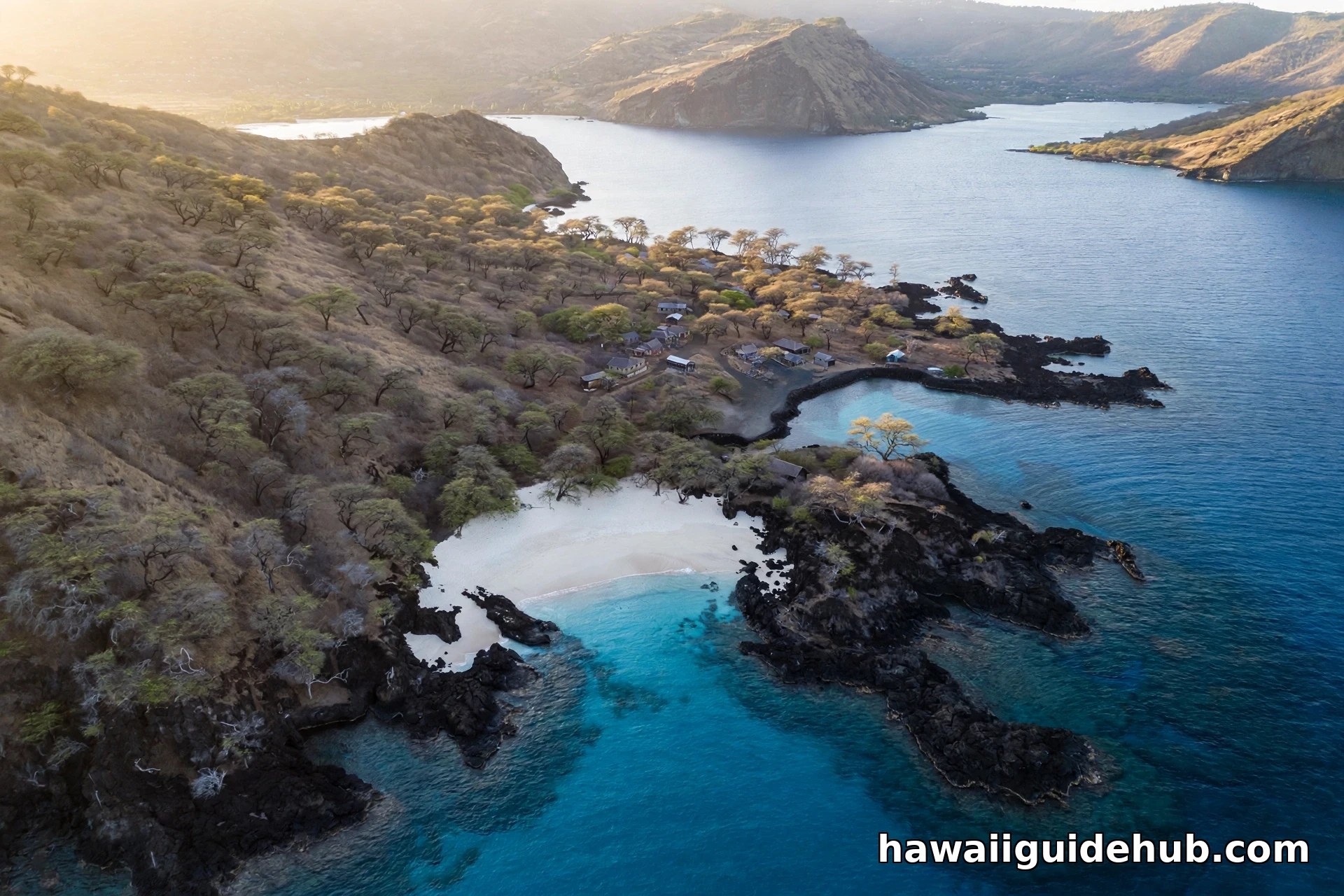
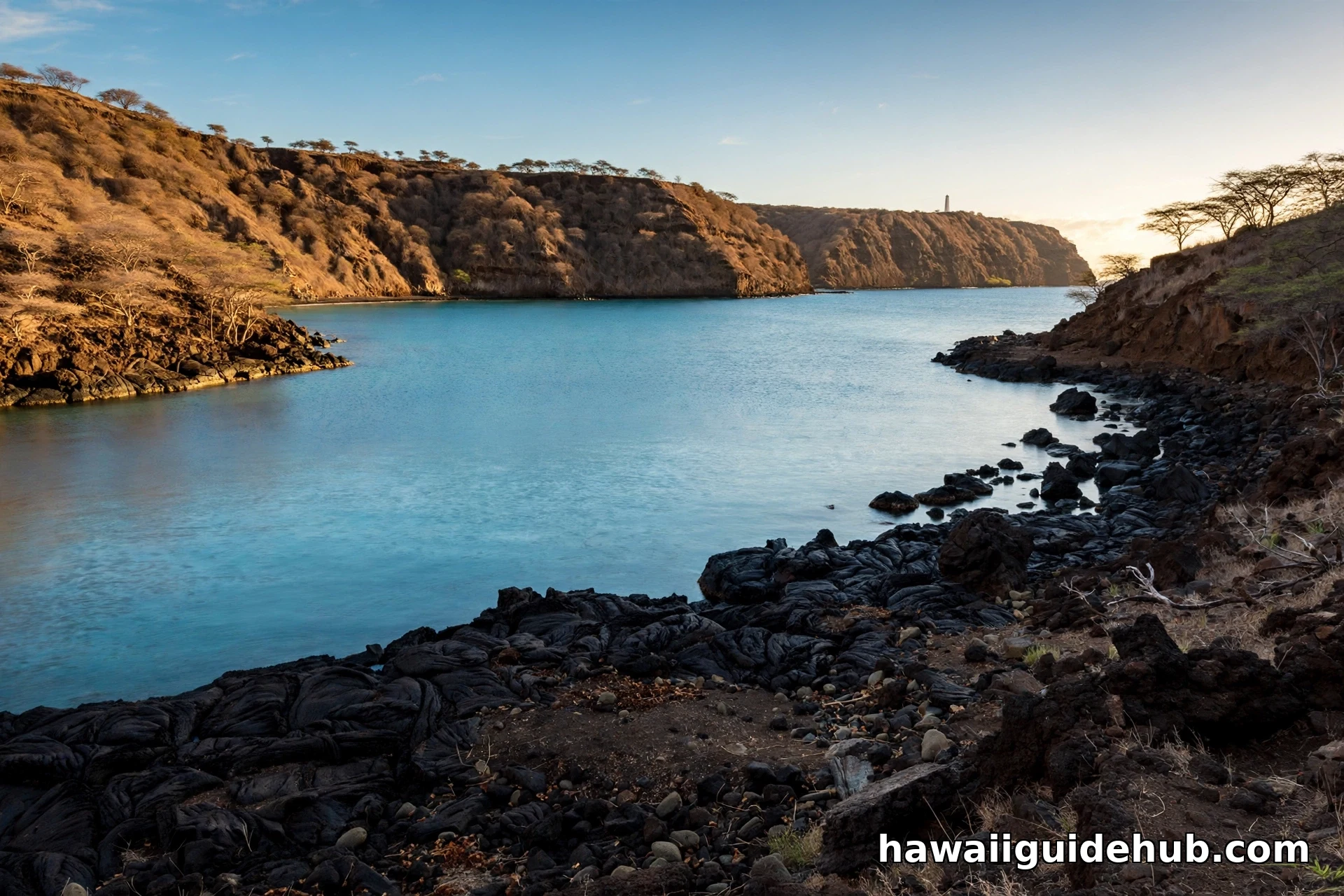
Keʻei Beach sits on the south Kona coast of the Big Island, in the Captain Cook area, roughly 12 miles south of Kailua-Kona. It fronts the tiny fishing village of Keʻei and faces Kealakekua Bay, the storied bay where Captain James Cook first anchored in Hawaii in 1779. You can see the white obelisk of the Captain Cook Monument from the shoreline on clear days, a small reminder that you are swimming at the edge of one of the most historically significant stretches of coastline in the islands.
The beach is sometimes called Keʻei Bay Beach, and older sources may spell it Keei or Keeʻi. It is the same place: a short crescent of sand at the bottom of Keʻei Road, where the road finally runs out and the ocean takes over.
What Makes Keʻei Special
Keʻei Beach earns its reputation the honest way. It does not have the long golden sweep of Hapuna or the famous name of Hōnaunau, but it has something harder to find: seclusion within reach of the Kona tourist belt. On a weekday you may share the sand with only a handful of people, and many of them will be locals who grew up swimming here.
The beach itself is a mix. A narrow band of white sand meets the water, and the bottom turns rocky quickly. Near the sand you will find a shallow tidepool area that kids and tentative swimmers like, and a little farther out the reef begins in earnest. For snorkelers who know what they are doing, the reef rewards the bumpy drive with healthy coral, schools of reef fish, and frequent visits from honu, the Hawaiian green sea turtle. For more on the marine life you might meet, see our guide to Hawaii’s iconic marine species.
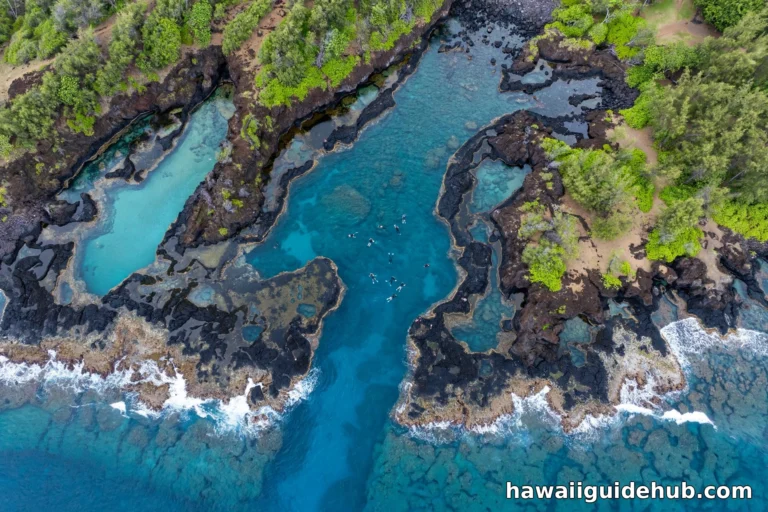
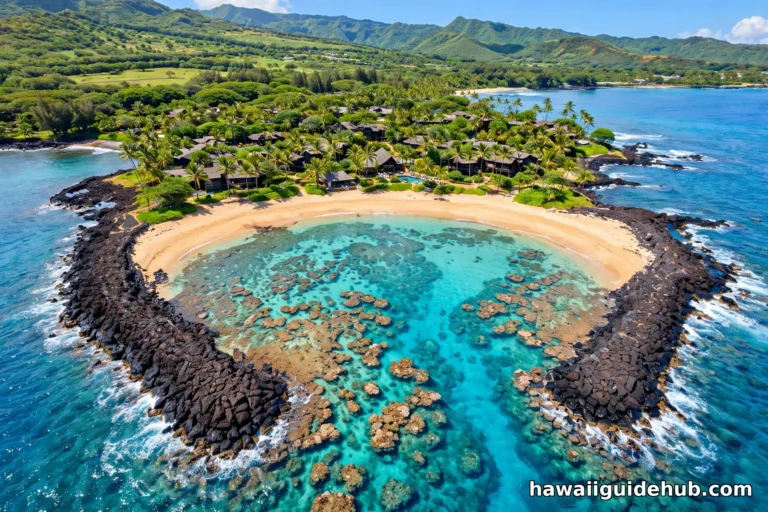
The setting does a lot of the talking. Black lava rock frames the sand, kiawe trees throw a little patchy shade, and the water runs through the whole tropical palette from turquoise at the shore to deep blue offshore. It is a working coastline too: this is a fishing village, and you will see locals casting from the rocks and keeping an eye on things, which is all the more reason to visit respectfully.
Getting There: The Dirt Road Part
Finding Keʻei Beach is part of the adventure. From Highway 160, also called Puʻuhonua Road, turn onto an unmarked dirt road on the ocean side between the Keʻei transfer station and Keawaiki Road. The turn is easy to miss, and some navigation apps get creative about routing you through private lanes, so slow down and watch for the opening.
The dirt road runs toward the ocean for a short distance. A four-wheel-drive or high-clearance vehicle is the comfortable choice, and it is what many reviewers recommend. That said, careful drivers do make it in a standard car by going slowly, watching for ruts, and pulling into the designated spots to let oncoming traffic pass on the narrow single-lane stretches. If the road looks too rough on the day you visit, you can park near the top and walk down in about 15 minutes.
Parking is limited, so arrive early, especially on weekends. There is a semi-designated parking area near the beach, and you will see where the line is drawn: private property begins where the houses start. Do not block driveways, do not park on vegetation, and do not wander past the marked boundaries. The families who live in Keʻei are the reason this place still feels like a neighborhood beach, and keeping it that way is on every visitor. Park where it is clearly okay, walk the rest if you must, and leave the car with nothing visible inside.
The Beach Itself
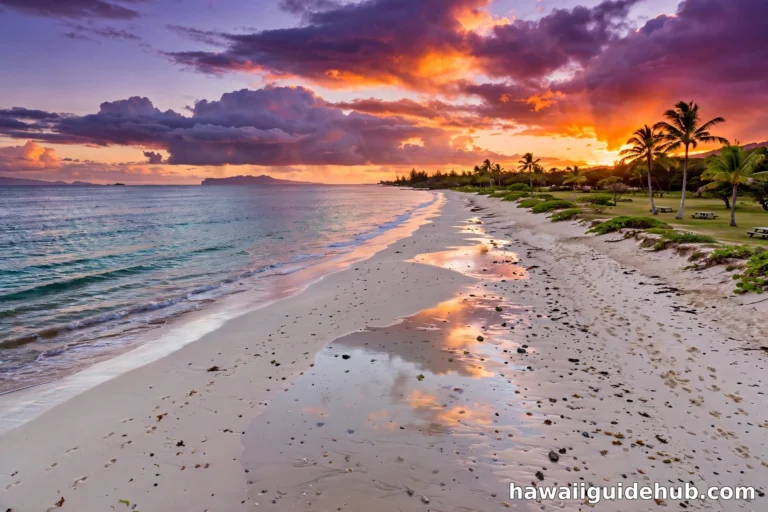
The sand at Keʻei is modest but pretty, a soft white pocket tucked between lava rock. It is enough for a towel, a beach umbrella, and a picnic, but this is not a lounging-all-day beach so much as a getting-in-the-water beach. The shoreline drops into a mostly rocky bottom, which is why so many visitors describe the entry the same way: beautiful, and bring water shoes.
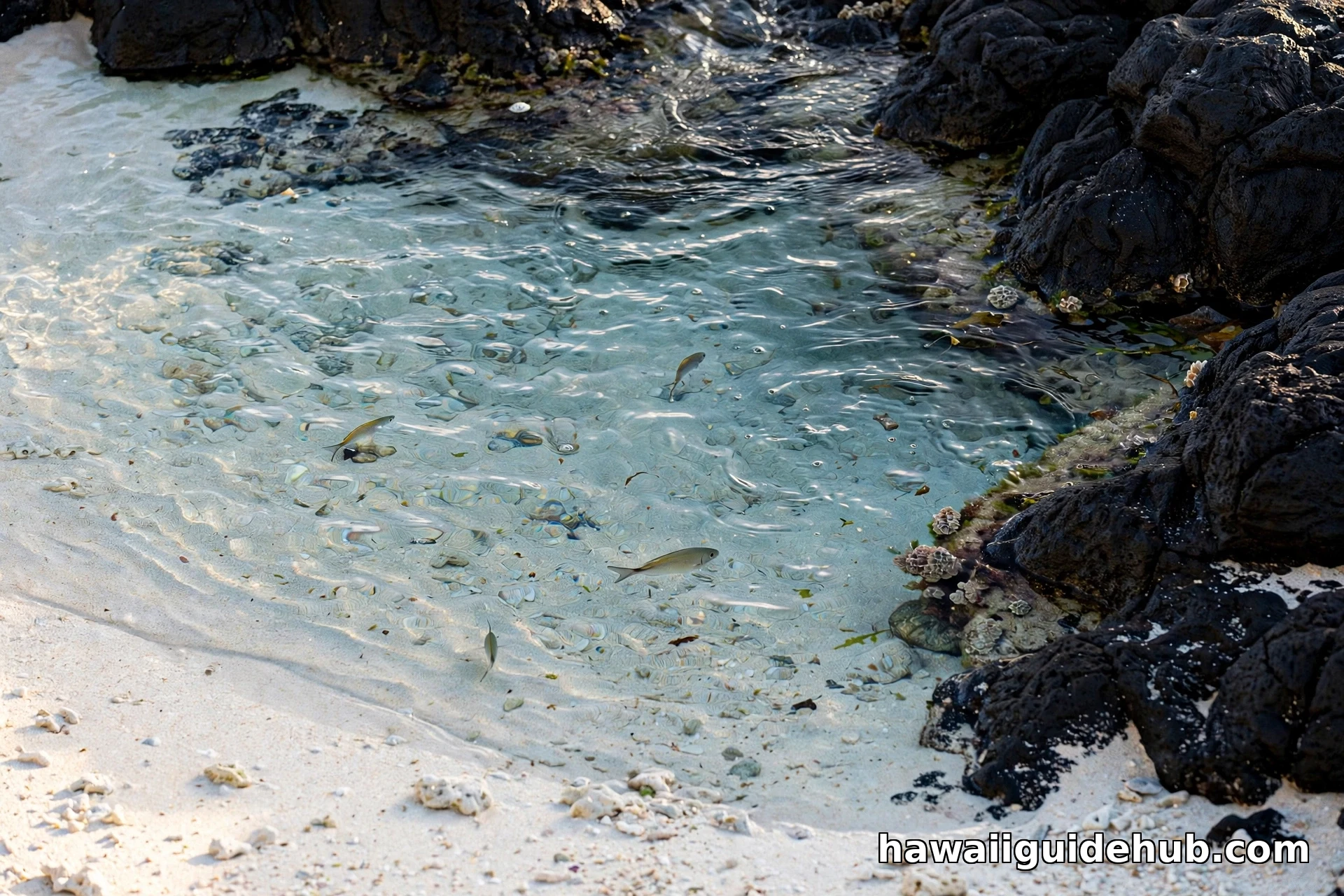
The tidepool near the sand is the friendliest water at Keʻei. At low tide it becomes a shallow wading area where small fish and crabs move through clear water, and it is the natural spot for kids or for anyone who just wants to float without committing to the reef. The main swimming area runs along the sandy stretch, and the reef edge begins not far out.
Shade is scarce. A few kiawe trees offer patchy cover, but most of the beach is open to the Kona sun, which runs strong here. If you plan to stay a while, bring a canopy or umbrella. There are no shade structures, and the nearest store is back up the road, so pack like you mean it.
Snorkeling at Keʻei Beach
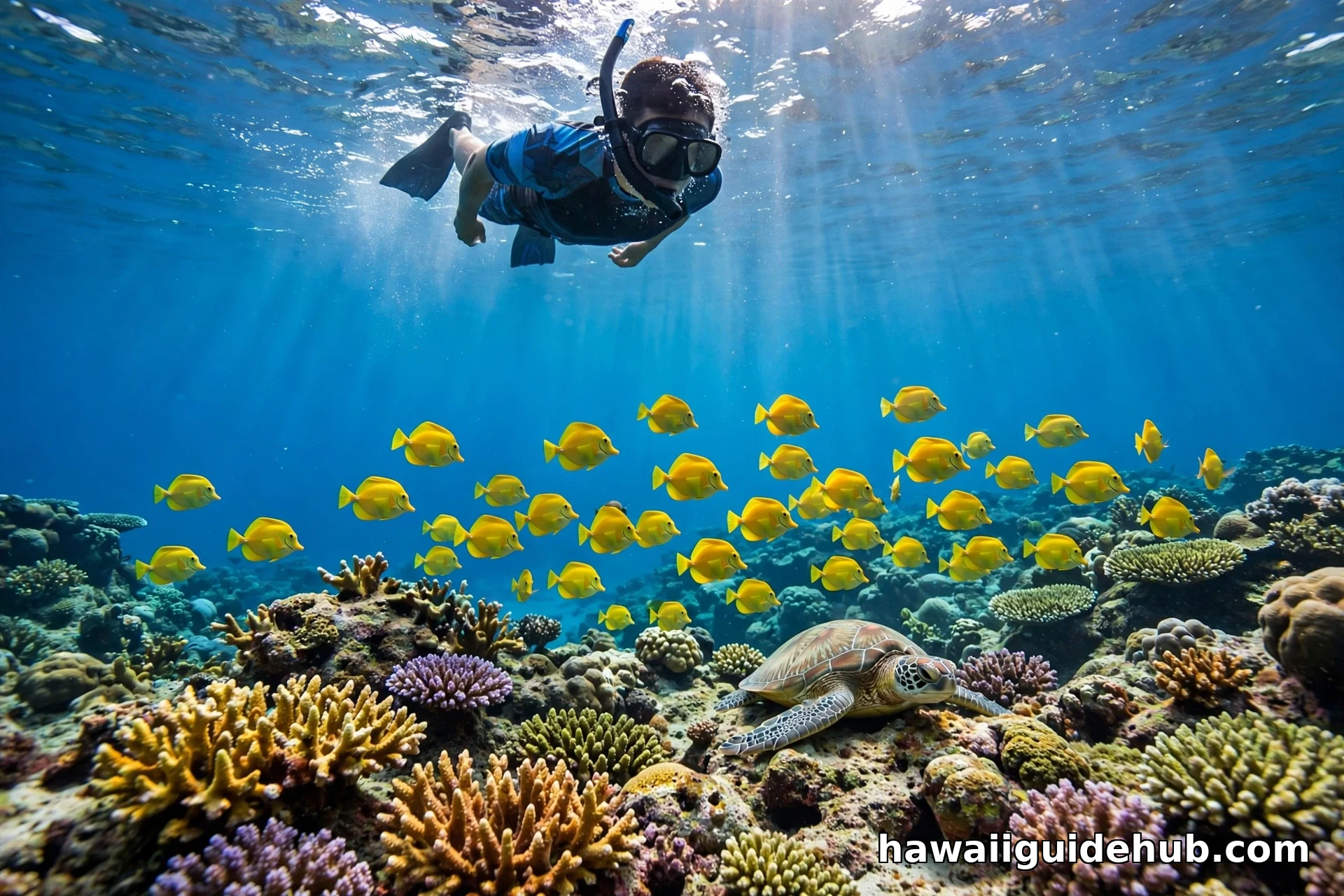
This is why most people come. The reef off Keʻei is in good shape, with coral heads, ledges, and a steady parade of reef fish. Snorkelers regularly report schools of yellow tang, parrotfish scraping at coral, butterflyfish pairs, and the occasional pufferfish or moray eel tucked into the rocks. Green sea turtles cruise through and rest on the reef here too; if you meet one, give it space and never touch it. Our sea turtle etiquette guide explains exactly how to watch honu without disturbing them.
A few things to know before you get in. First, the sea urchins. They are common along the rocky bottom, even close to shore, and stepping on one is the fastest way to ruin your day. Water shoes are close to mandatory, and enter the water carefully at a sandy spot rather than wading blindly over rock. Second, start your swim close in. Stay within the first few feet of the shore while you get your bearings, check the surge, and pick a line out over the sand rather than the reef. Third, do not step on or stand on the coral. It is living, it grows slowly, and a single misplaced fin kick can undo years of growth.
No Facilities: What That Really Means
Keʻei Beach has no restrooms, no outdoor showers, no drinking water, no lifeguard, and no trash cans. Plan as if you are going somewhere much farther from civilization than you are. That means water, sunscreen, food, a towel, and a dry bag for valuables, plus a trash bag to carry everything out, because there is nowhere to leave it.
The no-lifeguard part matters. You are swimming at your own risk, and the ocean here deserves respect. Check the surf before you commit: summer months tend to be calmer, while winter swells can make the entry rough and the water murky. If the water looks stirred up or the surge is pushing hard against the rocks, treat it as a beach day rather than a snorkeling day. Conditions on the Kona coast can change with the wind, so a quick check of a surf report before you drive down is worth the thirty seconds.
Visiting Tips From People Who Swim Here
A few practical habits make a Keʻei day go smoothly. Go in the morning, when the trade winds are usually light, the water is clearest, and the parking is emptiest. Afternoon winds can chop up the surface and cut visibility. Bring reef-safe sunscreen and apply it well before you get in, since the water here is thin and the sun is direct.
Keep the volume down and the footprint small. Keʻei is a residential shoreline, and the people who live along it notice how visitors behave. Speak at a normal volume, keep music in your headphones or off entirely, and clean up better than you found it. If someone from the neighborhood gives you directions or a heads-up about conditions, take it gratefully; local knowledge beats a guidebook on a place like this.
Dogs show up in visitor reports as welcome at Keʻei, which makes it unusual among Hawaii beaches. That said, keep any dog under control, leashed where appropriate, and away from other people’s towels and food. The same courtesy rules apply four-legged.
Nearby Stops Worth Your Time
Keʻei makes a natural anchor for a south Kona day. The obvious neighbor is Kealakekua Bay itself, just to the south. The bay is a marine conservation district with some of the clearest water on the island, and the Captain Cook Monument stands on its far shore. Reaching the monument takes a kayak, a boat tour, or the steep Kaʻawaloa Trail hike down, but you can admire it from Keʻei’s shoreline with no effort at all.
A short drive farther south brings you to Hōnaunau and Puʻuhonua o Hōnaunau National Historical Park, one of the most important cultural sites in Hawaii. Pair it with a stop at the nearby reef known as Two Step for more snorkeling, and you have a full day that runs from ancient Hawaiian history to a quiet evening beach. For help planning the wider area, see our roundup of the best things to do on the Big Island and our guide to outdoor adventures across Hawaii. If this is your first trip to the islands, our guide for first-time visitors will help you put Kona in context.
See Keʻei Beach on Video
Frequently Asked Questions
Is Keʻei Beach good for snorkeling?
Yes, it is one of the better shore snorkeling spots in the Captain Cook area. The reef offshore holds healthy coral and plenty of reef fish, and sea turtles are common visitors. Bring water shoes, enter at a sandy spot, and stay off the coral. Conditions are best in the morning and in the calmer summer months.
Are there restrooms or facilities at Keʻei Beach?
No. There are no restrooms, showers, drinking water, trash cans, or lifeguard at Keʻei Beach. Bring everything you need, including water and a trash bag, and pack everything out.
Can you drive to Keʻei Beach in a regular car?
Usually yes, with care. The dirt access road is rough in places and narrow, with room for one vehicle in stretches. A high-clearance vehicle or 4WD makes it easier, but careful drivers manage in a sedan by going slowly and using the pullouts. If the road looks bad on the day, park at the top and walk down.
Is there parking at Keʻei Beach?
Parking is limited to a small semi-designated area near the beach. Arrive early, especially on weekends, park only where it is clearly allowed, and never block driveways or private property. If the lot is full, consider coming back another time rather than parking somewhere questionable.
Is Keʻei Beach safe for kids?
The shallow tidepool area near the sand can work for supervised kids at low tide, but the beach is unguarded and the rocky bottom with sea urchins makes the water entry tricky. It suits confident swimmers and snorkelers better than small children. Families wanting lifeguards and soft entries will be happier at a county beach park.
Can you see the Captain Cook Monument from Keʻei Beach?
Yes. The white obelisk of the Captain Cook Monument is visible across Kealakekua Bay from the Keʻei shoreline on clear days. Reaching the monument itself requires a kayak, boat tour, or the steep trail hike to Kaʻawaloa, but the view from the beach costs nothing.
A Beach That Rewards the Effort
Keʻei Beach is not trying to impress anyone. It is a small, local, slightly rough-around-the-edges shoreline that happens to sit in front of excellent snorkeling water at the edge of one of Hawaii’s most famous bays. The dirt road keeps the crowds thin, the lack of facilities keeps expectations honest, and the reef keeps delivering for the snorkelers who make the trip.
Go prepared, go early, treat the neighborhood and the reef with respect, and Keʻei will give you the version of Hawaii that a lot of visitors say they are looking for: quiet water, wild coastline, and a beach that still feels like it belongs to the people who live there.