Haipuaʻena Falls: Maui’s Hidden Road to Hana Waterfall and Swimming Pool

Most of the waterfalls along the Road to Hana announce themselves. You hear them before you see them, you round a bend and there they are, you pull over with a dozen other cars. Haipuaʻena Falls does none of that. It sits quietly half a mile past mile marker 11, hidden behind a curtain of rainforest so dense you could drive by it a hundred times and never know it was there. That secrecy is exactly what makes it special.
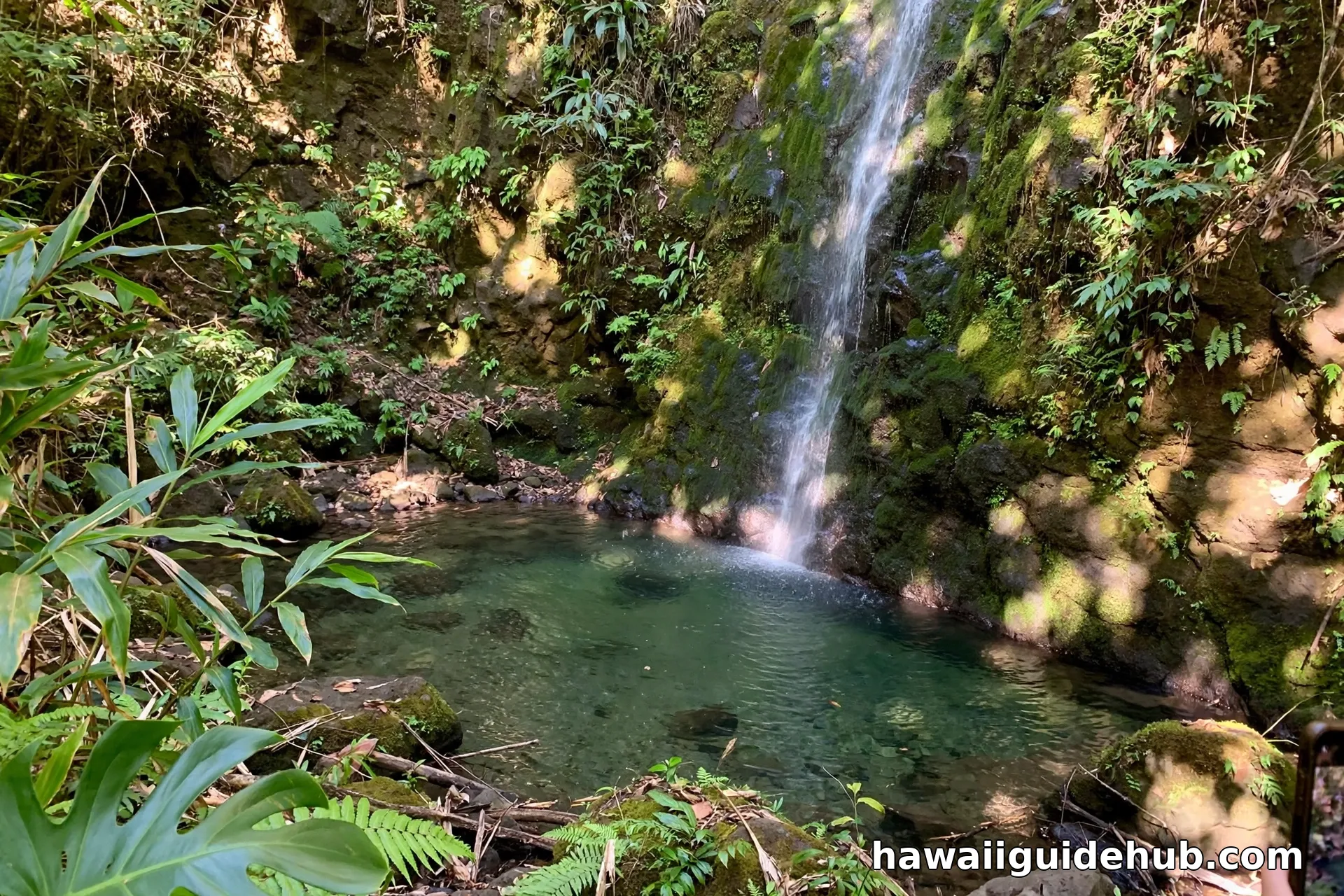
This is one of the rare Road to Hana waterfalls you can visit without a long hike, a paid tour, or a reservation. The walk from the road is about 100 yards. The reward is a mossy cliff, a 15 foot cascade, and a small deep pool wrapped in ferns and wild ginger. It is not the biggest or tallest waterfall on Maui, and it does not try to be.
This guide covers everything you need to know: where the falls are, how to find the trail, when to swim and when to stay out of the water, the upstream falls you should skip, parking, safety, and the nearby stops worth pairing with your visit. If you are still building your island itinerary, our reasons to visit Maui and our guide to outdoor adventures in Hawaii are good places to start.
Where Haipuaʻena Falls Hides
Haipuaʻena Falls is located on the Hana Highway (Route 360) in East Maui, about half a mile past mile marker 11. The falls sit on Haipuaʻena Stream, mauka (inland) of the highway. Unlike some roadside cascades that pour down right beside the road, this one cannot be seen from your car at all. The thick rainforest swallows it completely.
Your landmark is a bridge over the stream. On the Hana side of that bridge, there is a small turnout where the trail begins. If you pass mile marker 11, slow down and watch for the bridge. The turnout only holds a couple of cars, so it is easy to miss at driving speed. Drivers heading toward Hana will find the trailhead on their left side of the road once they cross the bridge.
Because the falls are not signed and not visible from the highway, a surprising number of Road to Hana drivers pass right by. On a busy Hana day, when the popular stops are packed, Haipuaʻena often sits quiet with just a handful of visitors, or sometimes nobody at all.
The Short Walk to the Falls
The trail to Haipuaʻena Falls is less a hike and more a short walk through the jungle. From the bridge, follow the path on the Hana side for roughly 100 yards, or about 90 meters. You will cross wet rocks, step over tree roots, and push through lush greenery the whole way.
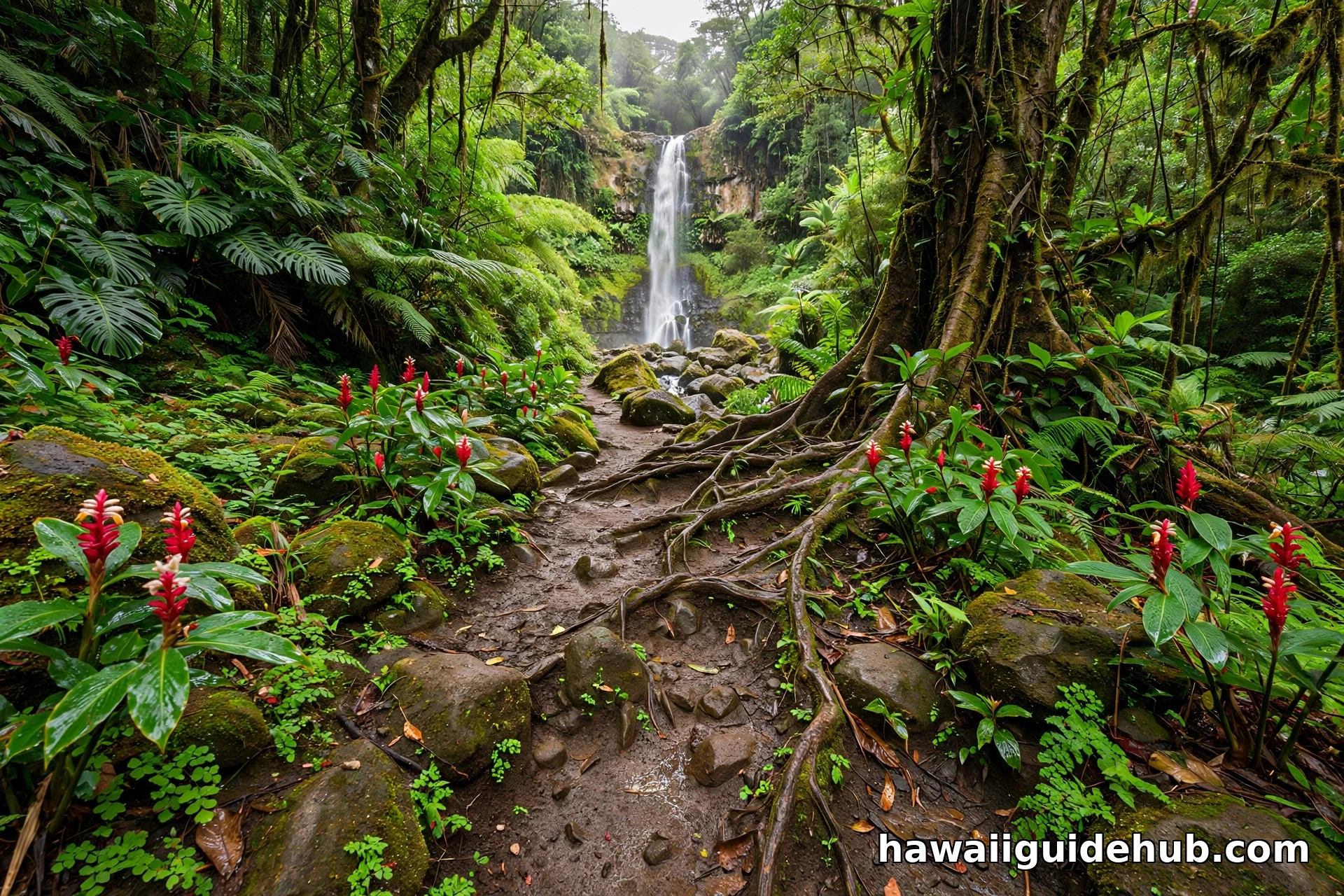
Wild ginger grows thick along the path, and the air smells sweet and green. Ferns climb the rock walls. The ground is almost always damp, even on dry days, because the rainforest canopy holds the moisture in. Take it slow. The rocks and exposed roots are slippery, and the last thing you want is to twist an ankle on a stop that should take five minutes to reach.
Within a couple of minutes the path opens up and the falls come into view. The sound reaches you first, a soft rush of water that gets clearer as the trees thin. Then the cliff appears, green and dripping, and the pool at its base.
The Falls and the Pool
Haipuaʻena Falls drops about 15 feet over a mossy rock wall into a small, deep pool. It is a modest waterfall by Maui standards, but what it lacks in height it makes up for in atmosphere. The rock wall behind the falls is covered in ferns. The pool is ringed with boulders and dense foliage. The whole scene feels like a secret garden that the highway forgot.

The pool is deeper than it looks, which is why it draws swimmers. The water is clear and cool, a welcome break from the humid Hana air. Ferns hang down from the cliff face beside the falling water, and on sunny mornings the light filters through the canopy in soft shafts. Photographers love this spot for the intimate, enclosed feeling. You do not need a wide lens or a long hike to get a frame full of tropical green and moving water.
One important rule for the base of the falls: do not stand directly under the cascade. The cliffs above shed rocks and debris without warning. It is tempting to pose under the falling water for a photo, but the rockfall risk is real. Enjoy the falls from a few steps back, where you can see the whole wall of green.
Can You Swim at Haipuaʻena Falls?
Yes, swimming is possible at Haipuaʻena Falls when conditions are right, and on a calm day it is one of the loveliest quick dips on the Road to Hana. The pool is deep enough to float in and cool enough to refresh you after the winding drive. Families often stop here specifically because the walk is short and the water is inviting.
But this is a wild mountain stream, not a managed swimming spot, so your decision to swim should depend entirely on what the water and sky are doing that day. Swim only when the water is clear and calm. If the stream is brown, muddy, or running fast, stay out. If it is raining hard, or if dark clouds are building over the mountains, stay out. Flash floods are the single biggest danger at Hawaiian waterfalls, and they can arrive in minutes even when it is sunny where you stand.
There are also health precautions to take with any freshwater stream in Hawaii. The water can carry leptospirosis bacteria, so do not drink it and keep it out of open cuts, scratches, and your eyes. If you have a fresh wound, it is better to admire the pool from the rocks than to get in.
Use common sense the way you would at any natural swimming hole. Never dive or jump into the pool without knowing the depth and what is under the surface. Never swim alone. There are no lifeguards here, so be conservative.
The Upper Falls: Why You Should Stay Below
A second, larger waterfall sits upstream from the main falls, and experienced hikers sometimes talk about climbing up to see it. Here is the honest advice: skip it.
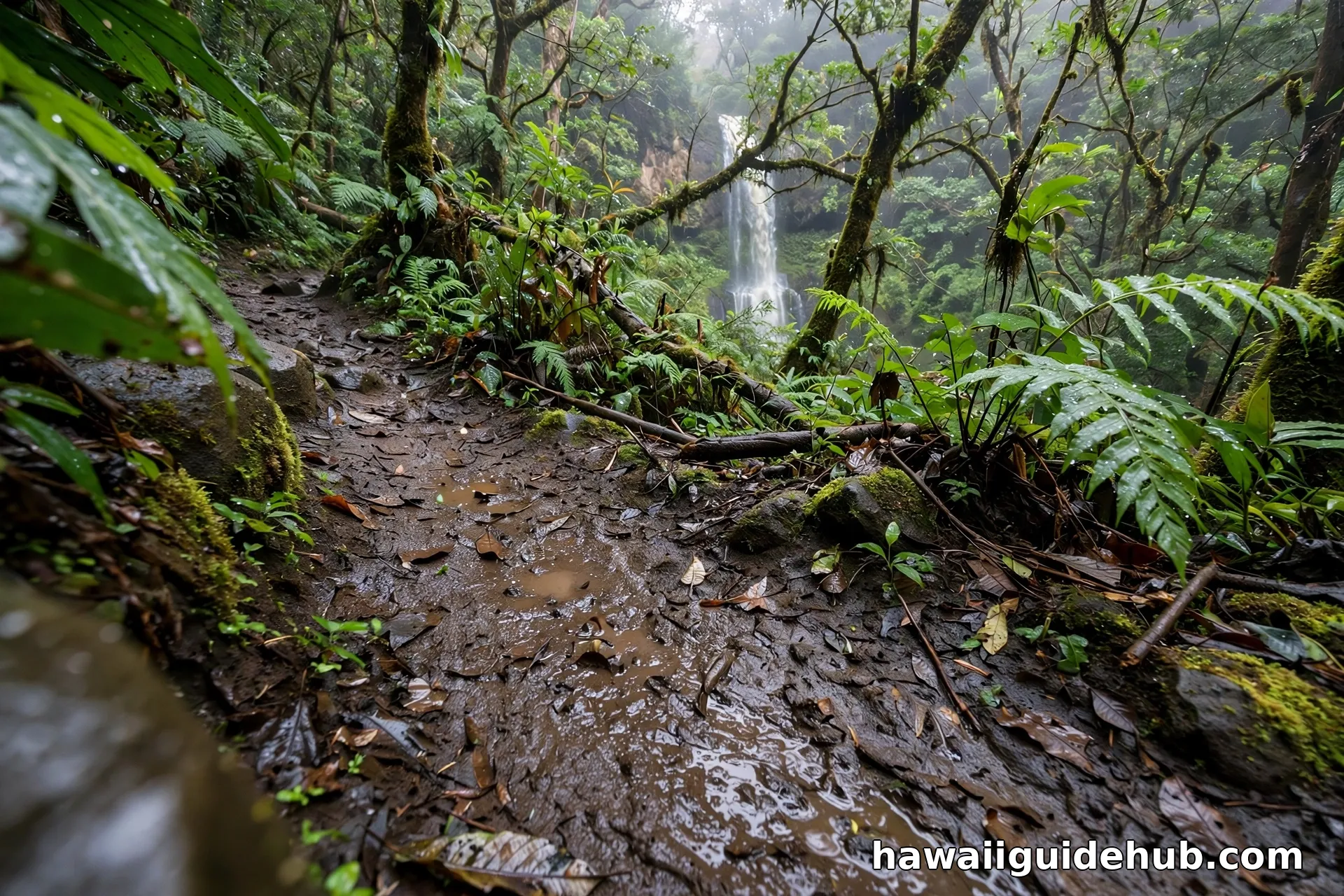
The trail to the upper falls is short but sketchy. It climbs a steep, muddy slope with almost nothing to hold onto, and the ground stays slippery even on dry days. One slip on that muddy hillside can mean a serious fall onto rocks below. Multiple visitors who have tried it report turning back because the risk was not worth it.
The lower falls and pool are the attraction here. They are easy to reach, beautiful, and safe to enjoy from below. If you are craving a bigger waterfall, keep driving. The Road to Hana has plenty of them ahead, and many are far easier and safer to view.
Parking and Access
Parking is the trickiest part of visiting Haipuaʻena Falls. There is no lot, no pullout with painted lines, and no attendant. There is only a small turnout near the bridge that fits a couple of cars. That is it.
Arrive early in the day for the best chance at a space. The Road to Hana gets busier as the morning goes on, and the popular stops fill up first, but even a couple of cars at Haipuaʻena can take all the available room. Never block the road, the bridge, or anyone else in. The Hana Highway is narrow, and blocking traffic here is dangerous and inconsiderate.
If the turnout is full when you arrive, do not squeeze in. Keep driving and try again on the way back, or save the falls for another Hana day. It is a five minute walk once you are parked, so a second attempt costs you very little. Have a backup stop in mind either way, because conditions at the falls can change hour by hour.
There are no facilities of any kind at the falls. No restrooms, no trash cans, no drinking water, no lifeguard. Bring everything you need and pack out everything you bring in, including food wrappers and sunscreen bottles. This is a pristine little watershed, and keeping it that way is on every visitor.
When to Visit
Morning is the best time to visit Haipuaʻena Falls. The light is soft and pretty in the rainforest, parking is easier, and you are more likely to have the pool to yourself. By midday the Road to Hana traffic builds and the small turnout becomes a gamble.
Weather matters more than the calendar here. The falls flow year round, fed by the wet East Maui watershed, so you do not need to time a particular season. What you do need is a dry or only lightly rainy day. After heavy rain the stream runs high and brown, the trail turns into a mud slick, and swimming is off the table. Check the forecast before you leave Paia, and glance at the sky and the water before you commit to the walk.
The drier months, roughly April through September, tend to bring more swimmable days, but East Maui can rain at any time of year. That is what keeps the rainforest green. If you are visiting during the wetter winter months, you will find the falls fuller and more dramatic, but you may need to settle for photos instead of a swim. For more ideas on timing your island trip, see our guide to the best places to visit in Maui in winter.
What to Bring
You do not need much for Haipuaʻena Falls, but the right few items make the stop much better. Wear shoes with real grip, not flip flops. The wet rocks and muddy roots will punish smooth soles. Water shoes are ideal if you plan to swim, since the pool edge and streambed are rocky.
Bring a swimsuit and a quick dry towel, plus a change of clothes in a dry bag for the drive afterward. Pack drinking water, reef safe sunscreen, and bug spray. The rainforest mosquitoes are no joke, especially in the shadier, damper spots near the stream. A small first aid kit with bandages is smart, since a slip on the rocks can mean scrapes, and you want to keep any wound clean and covered around stream water.
Keep valuables out of sight in your locked car, and take your key with you in a waterproof pouch if you swim.
Haipuaʻena Falls Visitor Guide
Here is the essential visit information in one glance, from directions to the safety rules that matter most.
Waterfall Safety Checklist
Hawaiian waterfalls demand respect. Run through this checklist before you leave the road.
Nearby Road to Hana Stops
Haipuaʻena Falls sits in a rich stretch of the Road to Hana, so it pairs naturally with the stops around it. Just before the falls, near mile marker 10, you will find the Garden of Eden Arboretum and Botanical Garden, a paid attraction with peacock filled grounds and waterfall views. Around mile marker 13, the Keʻanae Peninsula offers one of the most dramatic coastal views on the drive, with black lava rock, crashing surf, and the famous half and half cone from Aunty Sandyʻs Banana Bread stand.
Farther along, Honomanu Bay near mile marker 14 rewards a short detour with a wild black sand beach, and the Halfway to Hana stand near mile marker 17 is the classic shave ice stop.
On the food side, the Road to Hana is famous for its roadside stands. Banana bread, fresh coconut, and local plate lunch plates appear at turnouts all along the route. For a broader taste of the island, check out our guide to must-try local dishes in Hawaii before you go.
See Haipuaʻena Falls on Video
Get a feel for the Road to Hana drive and the waterfalls along it, including Haipuaʻena, in this Hawaii highlights video.
Frequently Asked Questions
Where exactly is Haipuaʻena Falls?
Haipuaʻena Falls is on the Hana Highway (Route 360) in East Maui, about half a mile past mile marker 11. The trail starts on the Hana side of the bridge over Haipuaʻena Stream. The falls are not visible from the road, so watch for the bridge and the small turnout.
How long is the hike to Haipuaʻena Falls?
The walk is very short, about 100 yards or 90 meters each way, and takes most people two to five minutes. The path is uneven with wet rocks, mud, and tree roots, so wear shoes with good grip and take your time.
Can you swim at Haipuaʻena Falls?
Yes, when conditions are right. The pool at the base of the lower falls is deep enough for a swim when the water is clear and calm. Do not swim if the water is brown, muddy, or rushing, or if heavy rain is falling or forecast. Never swim alone, and do not drink the stream water.
Is there parking at Haipuaʻena Falls?
Parking is very limited. There is a small turnout near the bridge on the Hana side that fits only a couple of cars. There is no parking lot. If the turnout is full, do not block the road. Continue driving and try again later.
Is Haipuaʻena Falls worth stopping for?
If you like quiet, intimate waterfalls and do not mind a short muddy walk, yes. It is one of the easiest waterfall swims on the Road to Hana and it is rarely crowded. If you only want big, dramatic falls, keep driving, because there are taller cascades ahead. But as a quick, peaceful stop, Haipuaʻena is hard to beat.
Haipuaʻena Falls will never be the most famous waterfall on the Road to Hana, and that is precisely its appeal. In the time it takes most visitors to find parking at a bigger stop, you can walk into a green, dripping rainforest grotto, float in a cool pool, and be back on the road. Just remember the rules that keep it safe: watch the weather, respect the water, stay off the slippery upper trail, and leave the place as pristine as you found it.