Black Sand Hawaii: Where to Find the Islands’ Most Striking Beaches

Most beach dreams are all white sand and postcards, but Hawaii has a wilder trick up its sleeve: beaches made of pure black sand. Stepping onto one feels like crossing into another world. The sand glitters like crushed glass under your feet, the turquoise water looks impossibly bright against it, and green sea turtles often nap on the shore as if they own the place. A black sand beach is not just a photo stop. It is a working geology lesson, a cultural landmark, and one of the most memorable half days you can spend in Hawaii.
This guide covers everything worth knowing: how black sand forms, the best black sand beaches in Hawaii, which ones are safe for swimming, how to behave around turtles, and the practical rules (like reservations and the “do not take sand” law) that catch visitors off guard.
What Black Sand Actually Is
Black sand is not dyed or dirty. It is basalt, the same volcanic rock that built the Hawaiian Islands, broken down into grains. When a lava flow at around 2,000 degrees Fahrenheit pours into the Pacific, the ocean water chills it so fast that the outer crust shatters into tiny glassy fragments. The USGS notes that black sand beaches are made up of fragments of volcanic minerals and glass, which give them their dark color. Wave action then grinds those shards down into sand, grain by grain.
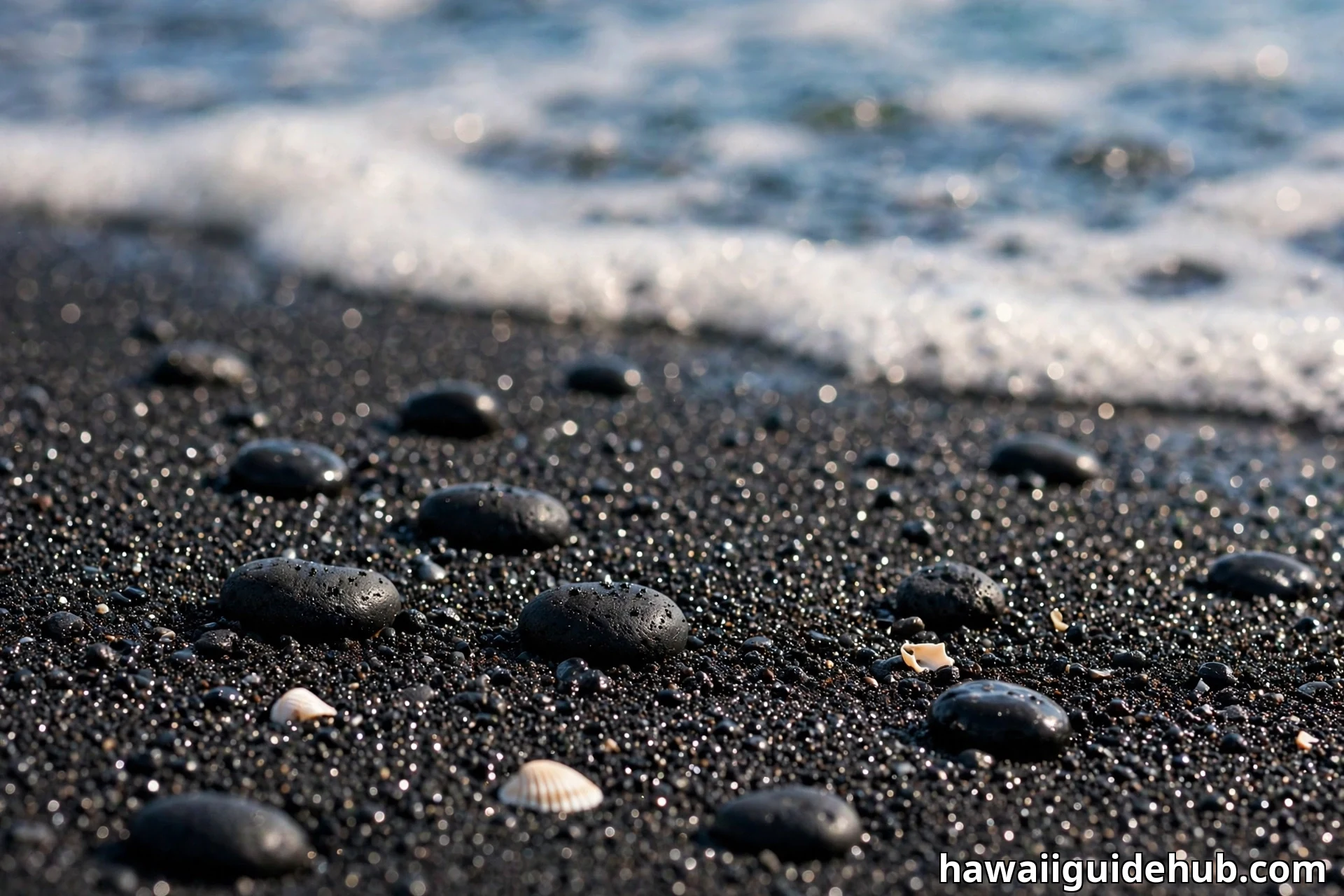
A few things make black sand different from ordinary beach sand in ways you will notice:
- It sparkles. Many black sand grains are bits of volcanic glass, so the beach glitters in the sun like crushed onyx.
- It gets hot. Dark colors absorb heat. At midday, black sand can burn bare feet, which is why experienced visitors arrive early or bring sandals.
- It is temporary. Black sand erodes and washes away much faster than white sand. Some black sand beaches disappear within years, and new ones are born whenever lava reaches the sea, which is exactly what happened on the Big Island during the 2018 Kilauea eruption.
Punaluu Black Sand Beach (Big Island)
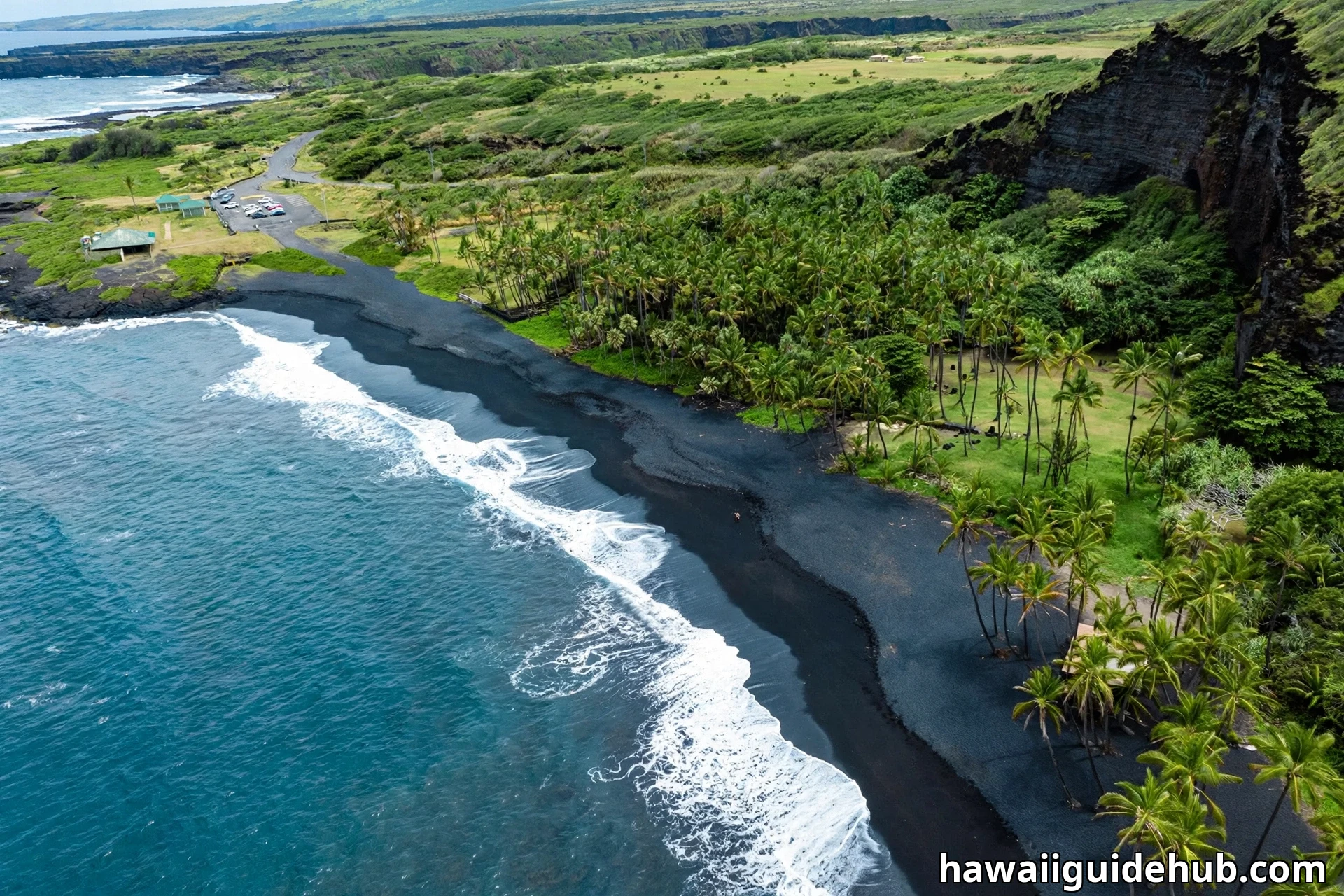
If you visit only one black sand beach in Hawaii, make it Punaluu. On the Kau coast in the southeastern corner of the Big Island, this is the most famous black sand beach in the state, and it earned the title. A broad crescent of jet black sand fringed with coconut palms sits between Hilo and Naalehu on Highway 11, an easy stop when you are driving between Hawai’i Volcanoes National Park and the Kona side. For more ideas in the area, browse our list of the best things to do on the Big Island.
The name Punaluu means “springwater diving place” in Hawaiian, a reference to the freshwater springs that bubble up right offshore. You can sometimes see the cool freshwater mixing with the saltwater in visible swirls, and the nearshore water can feel noticeably chilly in spots.
Punaluu is also the single best place in Hawaii to see green sea turtles, or honu, resting on land. They haul out onto the warm black sand throughout the day to bask, and on a good afternoon you might count a dozen or more along the shoreline. Hawksbill turtles, the rarest sea turtle in the Pacific, are seen here too. Both species are protected by federal and state law, so read the turtle etiquette section below before you go.
Facilities and swimming at Punaluu
Punaluu is one of the best-equipped black sand beaches. There are restrooms, picnic tables, drinking water, and a small store nearby, plus lifeguards on duty. The parking lots fill up by late morning, so arrive early.
Can you swim at Punaluu? Sometimes. On calm days the sheltered bay is fine for a dip, and snorkelers work the rocky edges. But this beach faces open ocean, and currents and shore break can turn serious fast. There is a well-known rip current near the boat channel. Swim only when the water is calm, stay near shore, and never turn your back on the waves. Many visitors simply enjoy the turtles, the scenery, and the picnic area, which is a perfectly good plan.
Kehena Black Sand Beach (Big Island)
Kehena, on the Puna coast east of Pahoa, is Punaluu’s wilder cousin. This is a small black sand beach tucked at the base of steep cliffs, reached by a rough trail down from the roadside. It has no facilities, no lifeguards, and often no one else around. It is also unofficially clothing optional, so expect a mix of nude sunbathers and families who did not get the memo. If that is not your scene, Punaluu is the better choice.
The drama here is the point: towering cliffs draped in green, black sand, and powerful surf pounding the shore. Dolphins and the occasional whale pass offshore in season. Swimming at Kehena is genuinely dangerous most days because of strong currents and shore break, so treat it as a look-but-don’t-swim stop unless you are a very experienced ocean swimmer and the water is dead calm.
Practical notes: parking is a small roadside pullout that fills early, the trail can be muddy and steep after rain, and there are no restrooms. Bring water, shade, and everything else you need.
Waianapanapa State Park (Maui)
Maui’s entry in the black sand contest is Honokalani, the black sand cove inside Waianapanapa State Park on the Road to Hana. If Punaluu is a sweeping shoreline, Honokalani is a secret room: a small crescent of dark sand cupped inside curved lava cliffs, with deep blue water and pandanus trees leaning over the cove. It is one of the most photographed spots on the entire Hana Highway, and one of the top reasons to visit Maui.
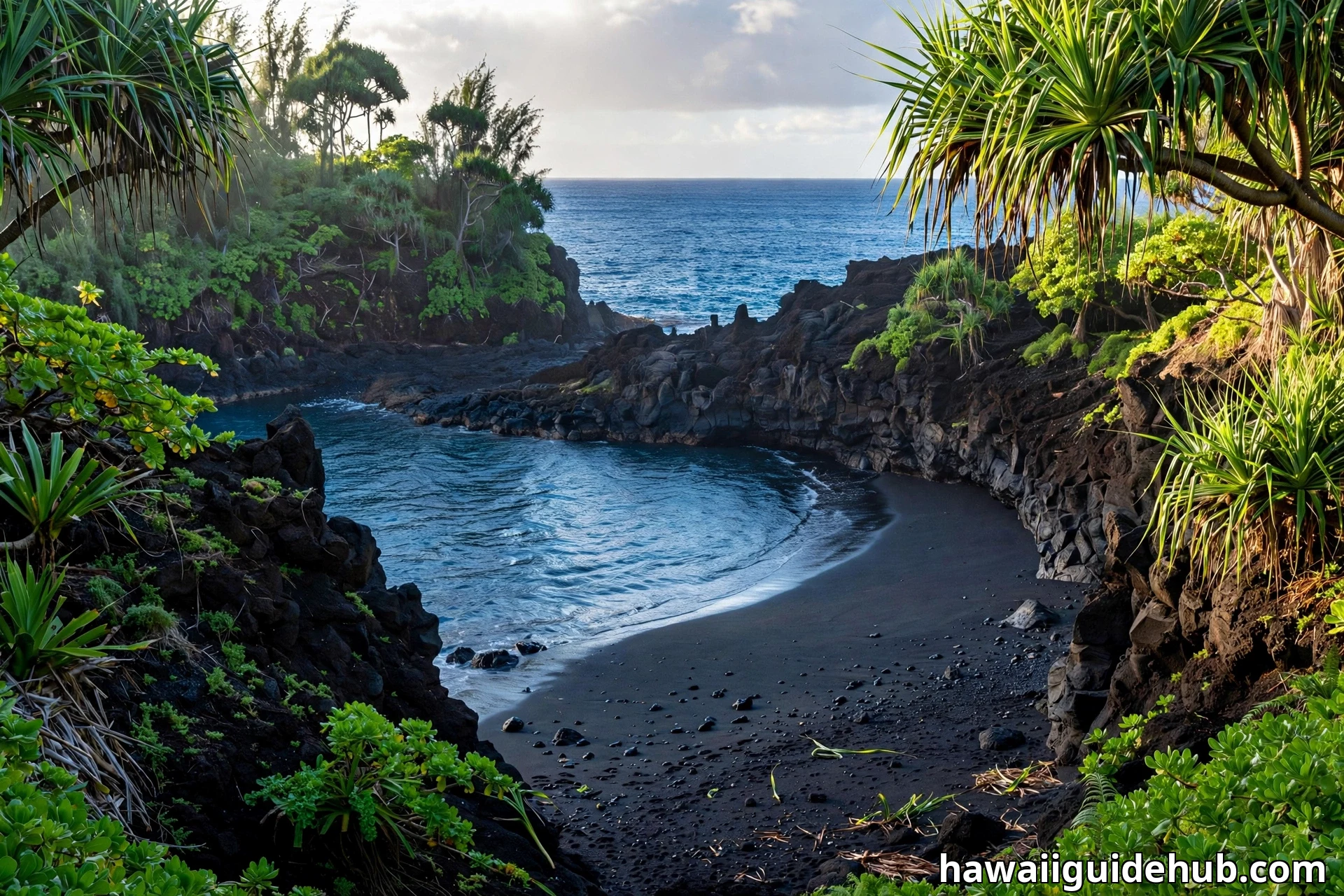
The park itself is much more than the beach. A coastal trail threads past sea caves, lava tubes, natural stone arches, and ocean blowholes, all in black lava. There are cabins and tent sites for overnight stays, restrooms, and picnic areas.
Reservations are required
This is the rule that ruins Road to Hana plans: non-residents must book entry and parking reservations for Waianapanapa in advance through the Hawaii state parks reservation system. Reservations open 30 days ahead and popular midday slots sell out. Arrive within the first 30 minutes of your time slot, because late arrivals can be turned away. The park opens at 7 AM and the last reservation slot ends at 6 PM. Plan your whole Hana day around that reservation window, because the drive’s timing is unpredictable.
More Black Sand Beaches Worth Knowing
The big three get the attention, but black sand shows up in other corners of the islands too:
- Pohoiki (Isaac Hale Beach Park), Big Island: a brand-new black sand beach born from the 2018 Kilauea eruption in Puna. The lava flow filled in the old boat harbor and left a fresh black sand shoreline behind. Facilities are basic and still being rebuilt, so check current conditions before driving out.
- Richardson Ocean Park, Big Island: a locals’ favorite on Hilo’s coast with black sand, tide pools, sea turtles, and lifeguards. It is one of the best swimming choices among Hawaii’s black sand beaches.
- Pololu Valley, Big Island: a black sand beach at the mouth of Pololu Valley on the Kohala coast, reached by a steep trail from the lookout. The scenery is stunning and the surf is rough, so this is a hiking and viewpoint stop, not a swimming beach.
- Waipio Valley, Big Island: the famous valley’s black sand beach is beautiful and almost entirely off limits to visitors now. The valley road is restricted to residents, so admire it from the lookout.
- Kaimu, Big Island: the original Kaimu black sand beach was buried by lava in 1990. A new black sand beach has been slowly forming in its place, a reminder that these beaches come and go on volcanic time.
Honu Etiquette: The Rules Around Turtles
Black sand beaches and sea turtles go together, and the rules around turtles are strict. NOAA and Hawaii DLNR guidance says to stay at least 10 feet (3 meters) from every sea turtle, on land or in the water. Touching, feeding, chasing, or blocking a turtle’s path to the ocean is prohibited. Green turtles are listed as threatened and hawksbills as endangered, and harassment can bring heavy fines.
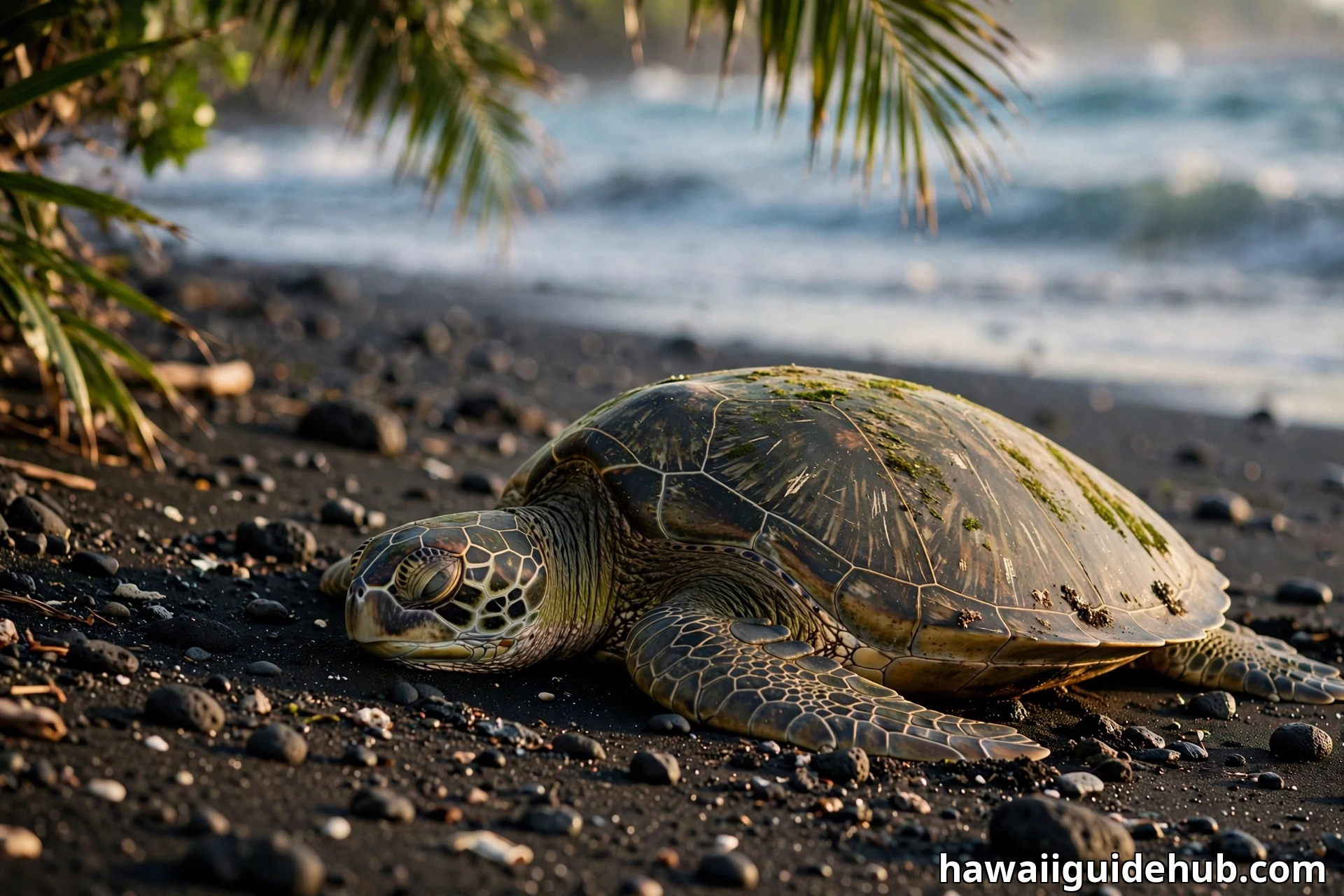
A few points visitors get wrong:
- Basking turtles are not stranded. A turtle lying on the sand is resting and warming up, which helps it digest. Do not pour water on it or try to push it back into the ocean.
- Photos are fine, selfies are not. Take your photo from the recommended distance. Lying next to a turtle for a picture is harassment.
- The 10-foot rule applies in the water too. If a turtle swims up to you while snorkeling, stay still and let it pass. Read our full sea turtle etiquette guide before any snorkel outing.
Swimming Safety at Black Sand Beaches
Here is the honest truth: many of Hawaii’s black sand beaches are terrible swimming beaches. They tend to face open ocean with strong currents, shore break, and rocky entries. That does not mean you can never swim, but it does mean you should be picky.
- Swim only at lifeguarded beaches on calm days. Punaluu and Richardson Ocean Park have lifeguards. Kehena, Pohoiki, and Pololu do not.
- Check conditions, not just the sky. A sunny day can still have dangerous surf. When in doubt, ask the lifeguard or stay on the sand.
- Watch the shore break. Black sand beaches often drop off quickly with a heavy shore break that can slam swimmers into the sand or rocks.
- Freshwater springs change the water. At Punaluu, cold freshwater springs feed into the bay, creating temperature shifts and visual distortions that can disorient snorkelers.
If swimming is your priority, pair your black sand visit with one of the calmer beaches from our guide to outdoor adventures in Hawaii, and consider combining Punaluu with a trip to Hawaii Volcanoes National Park, the source of the very lava that built these beaches.
Best Time to Visit and Photography Tips
Black sand beaches reward early risers. Mornings bring cooler sand, calmer water, fewer crowds, and soft light that makes the black sand glow rather than glare. Turtles often haul out in the late morning and early afternoon to bask, so mid-morning to mid-afternoon is prime turtle time.
For photos, the contrast is the whole game. Shoot with the turquoise water against the black sand, get low for texture shots of the glittering grains, and use the palm trees at Punaluu or the lava cliffs at Waianapanapa as framing. A polarizing filter cuts the glare off wet sand and deepens the water color dramatically. Overcast days can actually be kinder than harsh midday sun, because the black sand photographs richer without blown-out highlights.
See the Black Sand Beaches on Video
Black Sand Hawaii: Frequently Asked Questions
Which Hawaiian island has the best black sand beaches?
The Big Island has the most and the most famous: Punaluu, Kehena, Pohoiki, and Richardson Ocean Park. Maui has Waianapanapa State Park’s Honokalani cove on the Road to Hana. Oahu, Kauai, Molokai, and Lanai have very little true black sand.
Why is the sand at Punaluu black?
Basaltic lava from volcanic eruptions flowed into the ocean, cooled instantly, and shattered into tiny fragments. Wave action ground those fragments into sand. The dark color is simply cooled volcanic basalt.
Can you swim at black sand beaches in Hawaii?
It depends on the beach and the day. Punaluu and Richardson Ocean Park have lifeguards and are swimmable on calm days. Kehena, Pohoiki, and Pololu have dangerous currents and are best enjoyed from shore.
Is it illegal to take black sand from Hawaii?
Yes. Removing sand, rocks, or shells from Hawaii’s beaches and state parks is illegal. Local legend also warns that taking volcanic rock angers Pele and brings bad luck. Buy a postcard instead.
Do you need a reservation for Waianapanapa State Park?
Non-residents need advance entry and parking reservations through the Hawaii state parks reservation system, bookable up to 30 days ahead. Hawaii residents with valid ID are exempt. Arrive within the first 30 minutes of your slot.
When is the best time of day to visit a black sand beach?
Early morning for cool sand, calm water, and soft light. Mid-morning through afternoon for the best turtle viewing. Avoid midday if you plan to walk barefoot, because the sand gets hot enough to burn.
A Beach Unlike Any Other
Few places on Earth let you stand on sand made from shattered lava while a sea turtle naps ten feet away. Hawaii’s black sand beaches are equal parts geology lesson, wildlife encounter, and pure spectacle, and they cost nothing to visit. Pick your beach, respect the turtles, bring sandals for the hot sand, and give these dark shores the same care they give back in memories. The islands’ white sand beaches will still be there tomorrow. The black ones, born of fire and ground down by the sea, are worth seeing while they last.