Kalua Pig: Hawaii’s Legendary Underground-Roasted Pork

Few dishes carry Hawaii’s history in every bite the way kalua pig does. Shredded, smoky, and seasoned with almost nothing but salt, this is the pork that headlines luaus, anchors plate lunches, and shows up at backyard celebrations across the islands. The flavor is deceptively simple. Underneath it is a cooking method that predates contact with the outside world by centuries.
This is the single complete guide to kalua pig in Hawaii. It covers what the word kalua means, how a traditional imu earth oven works, what the pork tastes like, how it differs from mainland pulled pork, how to recognize the real thing, how home cooks imitate it, and where visitors encounter it. If you have been searching for anything about kalua pig, the answers are all here on this one page.
Kalua Pig at a Glance
| What it is | Pork slow cooked in an imu, a Hawaiian underground oven, then shredded |
| “Kalua” means | “To cook in an underground oven” in the Hawaiian language |
| Origin | Brought to Hawaii by Polynesian voyagers, who carried pigs (puaʻa) on their canoes; the earth oven method is centuries old |
| Seasoning | Hawaiian sea salt (paʻakai); smoke flavor comes from the fire, not spices |
| Cook time | Typically 6 to 10 hours sealed underground, per traditional practice |
| Texture and flavor | Fall-apart tender, juicy, gently smoky, clean pork flavor with a leaf-steamed earthiness |
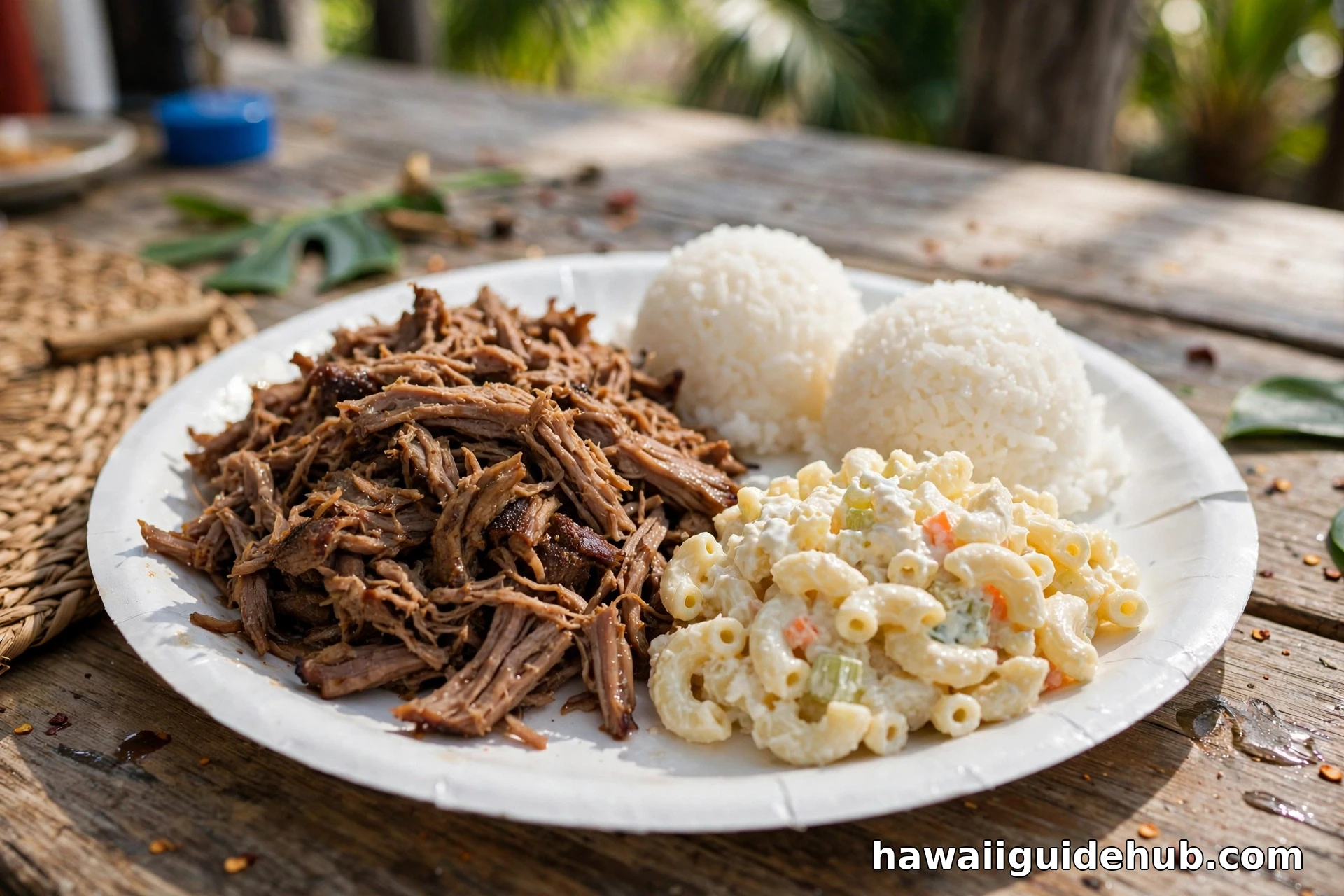
| Served with | Rice, poi, mac salad, cabbage; stars in plate lunches and luau feasts |
| Home version | Pork shoulder slow cooked with sea salt and liquid smoke; good, but not identical to imu cooking |
What Kalua Pig Actually Tastes Like
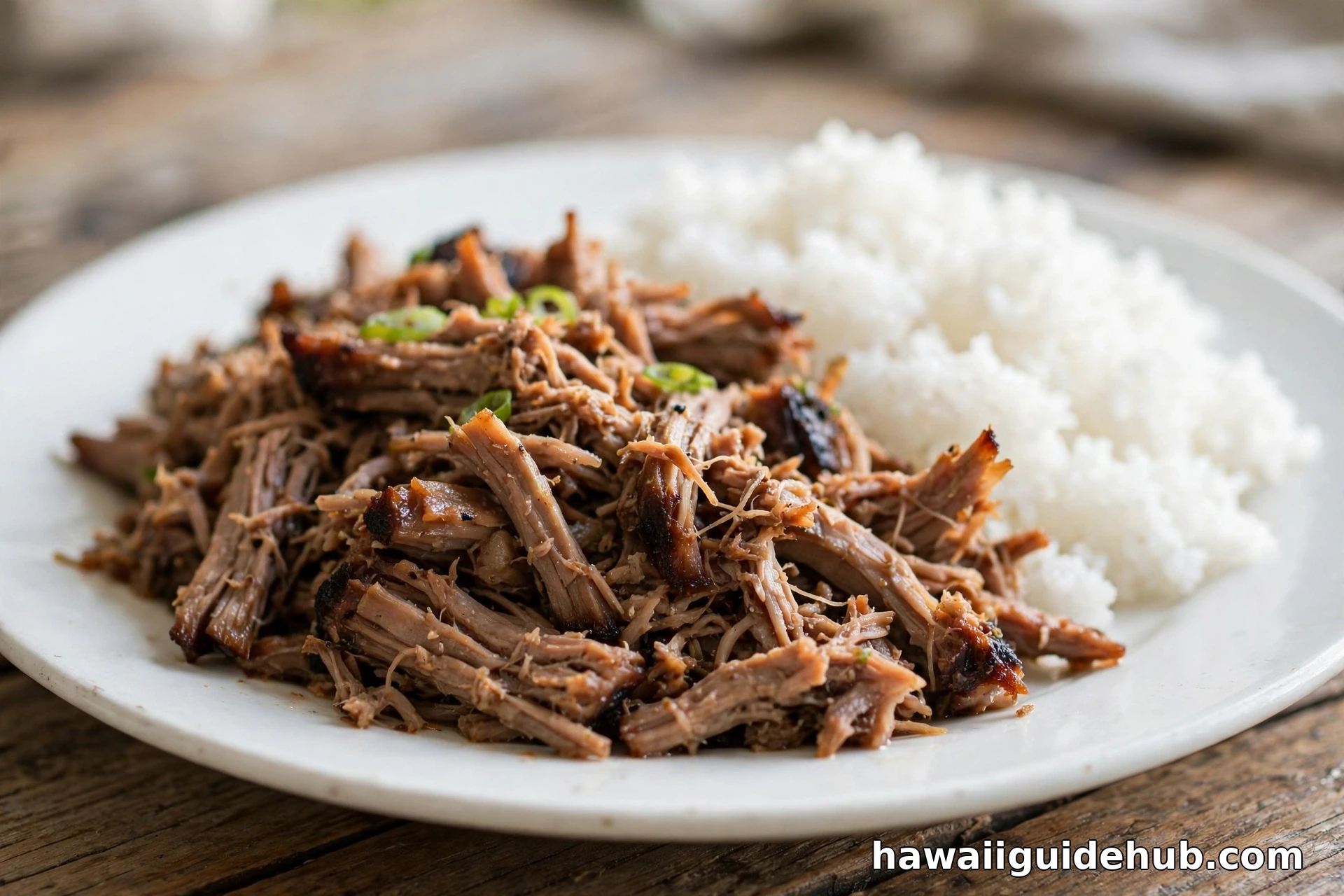
Forget everything you know about barbecue sauce. Real kalua pig has no sauce, no rub, and no sweetness. The pork is seasoned with Hawaiian sea salt and nothing else, and the smoke comes from the wood fire that heated the cooking stones. The result is clean, deep pork flavor with a soft smokiness that sits in the background rather than taking over.
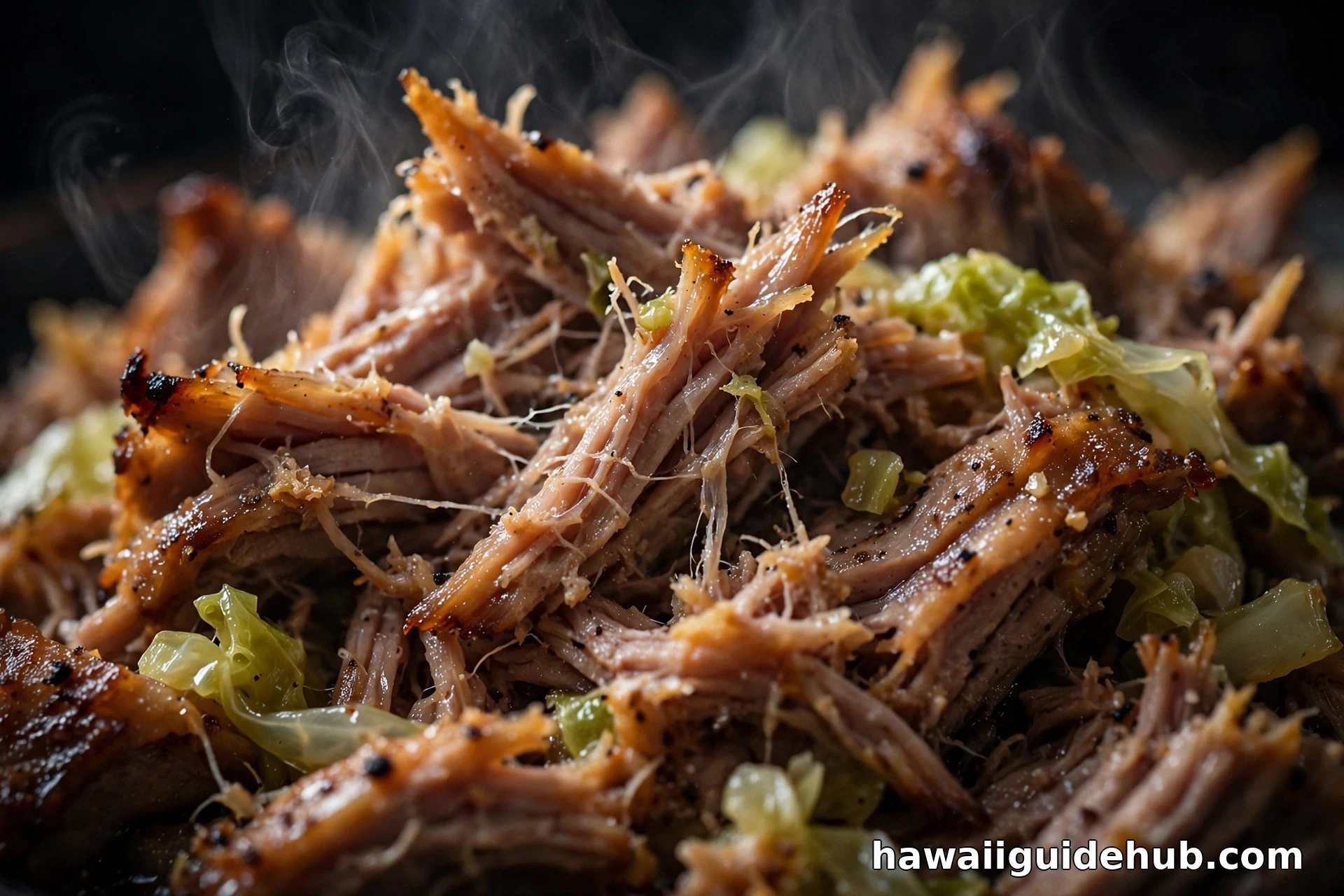
The texture is the other half of the experience. Hours sealed underground in steam turn a whole pig meltingly tender, so the meat pulls apart with a fork and the rendered fat mixes back through the strands. Good kalua pig is juicy but never greasy, smoky but never bitter, and simple enough that you can taste the quality of the pork itself. It is often described as the Hawaiian answer to pulled pork, but the comparison undersells it. Mainland pulled pork is built on smoke and sauce. Kalua pig is built on earth, steam, and salt.
What “Kalua” Means and Where the Dish Comes From
The word kālua literally means “to cook in an underground oven” in Hawaiian, and it can describe the method or the food cooked by it. Kalua pig is pork cooked this way. Kalua turkey, which shows up at Hawaii Thanksgiving tables, is the same method applied to a bird. The name tells you the technique, not a recipe.
The roots run back to the first Polynesian voyagers who settled the Hawaiian Islands roughly a thousand years ago. They arrived with a small set of plants and animals, including the pig, called puaʻa in Hawaiian. Earth oven cooking was not unique to Hawaii. Variations of it appear across Polynesia, from the Samoan umu to the Māori hāngi, because digging a pit, heating stones, and steaming food in leaves is one of humanity’s oldest slow-cooking technologies.
In old Hawaii, pork carried real weight. Under the kapu system of religious restrictions, eating was governed by strict rules, and pork was reserved for certain people on certain occasions. A whole pig roasted underground was celebration food, the centerpiece of large feasts. That association with gathering and ceremony is still alive. Today the imu is lit for weddings, graduations, baby luaus, fundraisers, and holidays, and the whole neighborhood knows when one is going.
One more piece of language worth knowing: the feast itself. What visitors call a luau was traditionally called an ʻahaʻaina, a gathering for eating. The word lūʻau originally named a dish, young taro leaves cooked in coconut milk, and the dish’s name gradually became the name for the feast. Kalua pig has been the star of those feasts for longer than anyone can date.
The Imu: Hawaii’s Original Underground Oven
An imu is a pit dug in the ground, typically a few feet across and deep enough to hold a whole pig plus layers of leaves and covering. Building one is an all-day, many-hands job, which is why it remains community cooking rather than weeknight cooking. The sequence has barely changed in centuries.
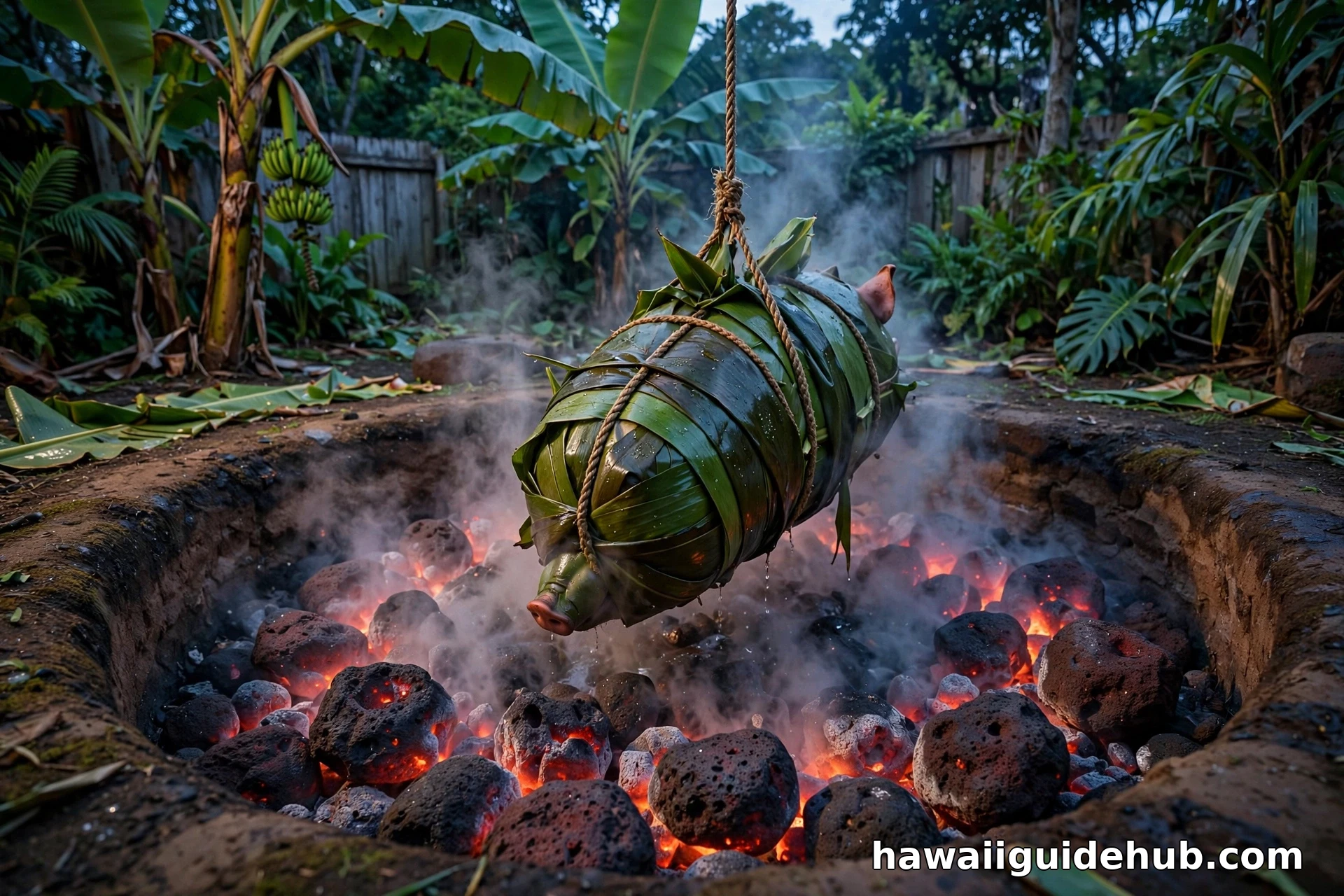
First, the pit is dug and lined with porous lava rocks. A fire is built on the rocks, often fueled by kiawe wood, a type of mesquite that grows widely in Hawaii, and burned down until the stones are glowing hot. The fire can take hours to do its job. Once the stones reach temperature, the pit is lined with banana stalks and ti leaves, which add moisture and create steam.
The pig goes in seasoned with Hawaiian sea salt and wrapped in more banana or ti leaves. Vegetables like taro, sweet potato, or breadfruit often go in alongside it. Everything is covered with wet burlap or mats, then the pit is sealed with a thick layer of sand or dirt to trap the heat, smoke, and steam. The pig cooks underground for six to ten hours while the family gets on with the party preparations. When the imu is opened, the meat is lifted out, bones are removed, and the pork is shredded by hand so the melted fat mixes evenly through it.
What the Imu Does to the Meat
Three things happen underground that no kitchen appliance quite reproduces. The radiant heat of the stones cooks the pig slowly and evenly from all sides. The wet leaves and sealed earth create a steam chamber that keeps the meat impossibly moist over a very long cook. And the smoke from the wood fire, filtered through layers of leaves, flavors the pork gently instead of aggressively. The banana and ti leaves add their own subtle green, earthy note that people who grew up with imu cooking recognize instantly.
Salt is the only seasoning, and it matters more than it sounds. Hawaiian sea salt, paʻakai, and especially the reddish ʻalaea salt colored by volcanic clay, seasons the meat cleanly without masking the smoke. There is no pepper, no garlic, no sugar in the traditional version. The restraint is the point. Imu cooking is about concentrating pork flavor, not covering it.
Kalua Pig vs. Mainland Pulled Pork: An Honest Comparison
Visitors often ask whether kalua pig is just Hawaiian pulled pork. The answer is no, and the differences are exactly what make it worth seeking out. Here is how the two stack up for someone deciding what to order.
| Kalua pig (imu) | Mainland pulled pork | |
| Cooking method | Sealed underground with hot stones and steam, 6 to 10 hours | Smoker or oven, low and slow, typically 8 to 14 hours |
| Smoke level | Gentle and earthy, filtered through leaves | Bold and forward, often the dominant flavor |
| Seasoning | Hawaiian sea salt only | Dry rubs, mops, and sauces with many spices |
| Moisture source | Trapped steam in the sealed pit | Fat cap, spritzing, and wrapping |
| Signature note | Subtle leaf-steamed earthiness | Bark, smoke ring, tangy sauce |
| Best test of quality | Can you taste clean pork and soft smoke with nothing hiding? | Is the bark caramelized and the meat juicy under sauce? |
| Verdict for visitors | Try the real thing at least once; it tastes like nothing on the mainland | Great in its own right, but a different dish entirely |
How Kalua Pig Is Served in Hawaii
Kalua pig is everywhere once you start looking. The most famous setting is the luau, where the imu pig is unveiled as the centerpiece of the feast. But locals eat it far more often in everyday forms. The plate lunch, Hawaii’s definitive casual meal, frequently features kalua pig or kalua pork with cabbage next to two scoops of rice and a scoop of mac salad. It shows up in sandwiches, on top of nachos, folded into quesadillas, and mixed into fried rice.
Two classic pairings deserve special mention. Kalua pig and cabbage is the beloved home-style combination, the smoky pork simmered with soft cabbage until the flavors marry. And kalua pig with poi is the traditional pairing that old Hawaiians would recognize: the mild, slightly tangy poi balances the rich saltiness of the pork perfectly. If you see both on a menu, order them together.
The Slow-Cooker Shortcut: Honest Kalua-Style Pork at Home
Almost nobody outside Hawaii has an imu in the backyard, so home cooks have developed a widely used shortcut. A pork shoulder (Boston butt) is rubbed with Hawaiian sea salt, given a small amount of liquid smoke, sometimes wrapped in banana leaves if they can be found, and slow cooked for 8 to 12 hours until it shreds. The result is genuinely delicious and a reasonable weeknight stand-in.
Be honest with yourself about what it is, though. Liquid smoke approximates the wood fire, but it cannot reproduce the leaf-steamed earthiness or the texture of a pig cooked under earth. Think of slow-cooker kalua pork as a tribute, not a replica. It is worth making at home, and it is worth tasting the real thing in Hawaii so you know what the tribute is aiming for. For more of the islands’ essential flavors, see our guide to must-try local dishes in Hawaii.
Where Visitors Encounter Kalua Pig
The surest way to taste imu-cooked kalua pig is at a luau that still roasts its pig underground, where the unveiling of the imu is part of the evening’s ceremony. Many commercial luaus now serve oven-roasted kalua-style pork, which is tasty but not the same experience. If the imu matters to you, it is worth asking before you book. Our guide to what to wear to a luau in Hawaii covers the practical side of the evening once you choose one.
Outside the luau, kalua pig is standard deli-counter fare. Grocery stores across the islands sell kalua pork by the pound, hot and ready, and local-style restaurants list kalua pig plates, kalua pork and cabbage, and kalua pig sandwiches as everyday menu items. It is affordable, filling, and authentically local. When you see it next to huli huli chicken on a menu, you are looking at two pillars of Hawaii’s food culture side by side.
Kalua Pig and Hawaiian Food Culture
Kalua pig endures because it is more than a recipe. The imu is communal by design. Digging the pit, tending the fire, wrapping the pig, and uncovering it hours later takes a crew, and that crew is usually family and neighbors. The work is the celebration as much as the eating. In a food culture shaped by many immigrant traditions, from Portuguese malasadas to Japanese-influenced plate lunches, kalua pig remains the dish that is unmistakably and originally Hawaiian. Learning its story is part of understanding Hawaiian cultural traditions the way locals live them.
Video: A Traditional Imu From Start to Finish
Watch the full imu process step by step: heating the stones, wrapping the pig in leaves, sealing the pit, and the unveiling hours later.
Frequently Asked Questions
What is kalua pig made of?
Just pork and Hawaiian sea salt, cooked in an imu underground oven lined with hot lava rocks and banana or ti leaves. The smoky flavor comes from the wood fire, not from added seasonings. Home versions add liquid smoke to imitate the effect.
Why is it called kalua pig?
Kalua describes the cooking method, not a cut of meat. In Hawaiian, kālua means “to cook in an underground oven,” so kalua pig is literally “underground-oven pig.” The same word gives us kalua turkey and other imu-cooked foods.
How long does it take to cook kalua pig in an imu?
The pig typically cooks sealed underground for 6 to 10 hours, and preparing the imu, digging the pit, heating the stones, and wrapping the food, takes several more hours before that. It is an all-day commitment, which is why imu cooking is reserved for celebrations.
Is kalua pig the same as pulled pork?
They are similar in texture but different dishes. Pulled pork is smoked with dry rubs and sauces, while kalua pig is steamed underground with only sea salt for seasoning and gets a gentler, earthier smoke filtered through leaves.
Can you make kalua pig without an imu?
Yes. The common home method is a pork shoulder rubbed with Hawaiian sea salt and liquid smoke, slow cooked 8 to 12 hours until shreddable. It captures the spirit of the dish, though imu cooking adds a leaf-steamed depth that shortcuts cannot fully match.
What do you serve with kalua pig?
The classic companions are steamed white rice, poi, mac salad, and cabbage. At a luau it is served alongside many other dishes; as a plate lunch it comes with two scoops of rice and mac salad.
Kalua pig is Hawaii’s edible history: a thousand-year-old cooking method, a pig carried across the Pacific by voyagers, and a feast tradition that still gathers whole neighborhoods around a hole in the ground. Taste it at a luau, order it as a plate lunch, or try the slow-cooker version at home, and you will understand why no celebration in Hawaii feels complete without it.