Crack Seed in Hawaiʻi: A Salty, Sour, Sweet Tradition

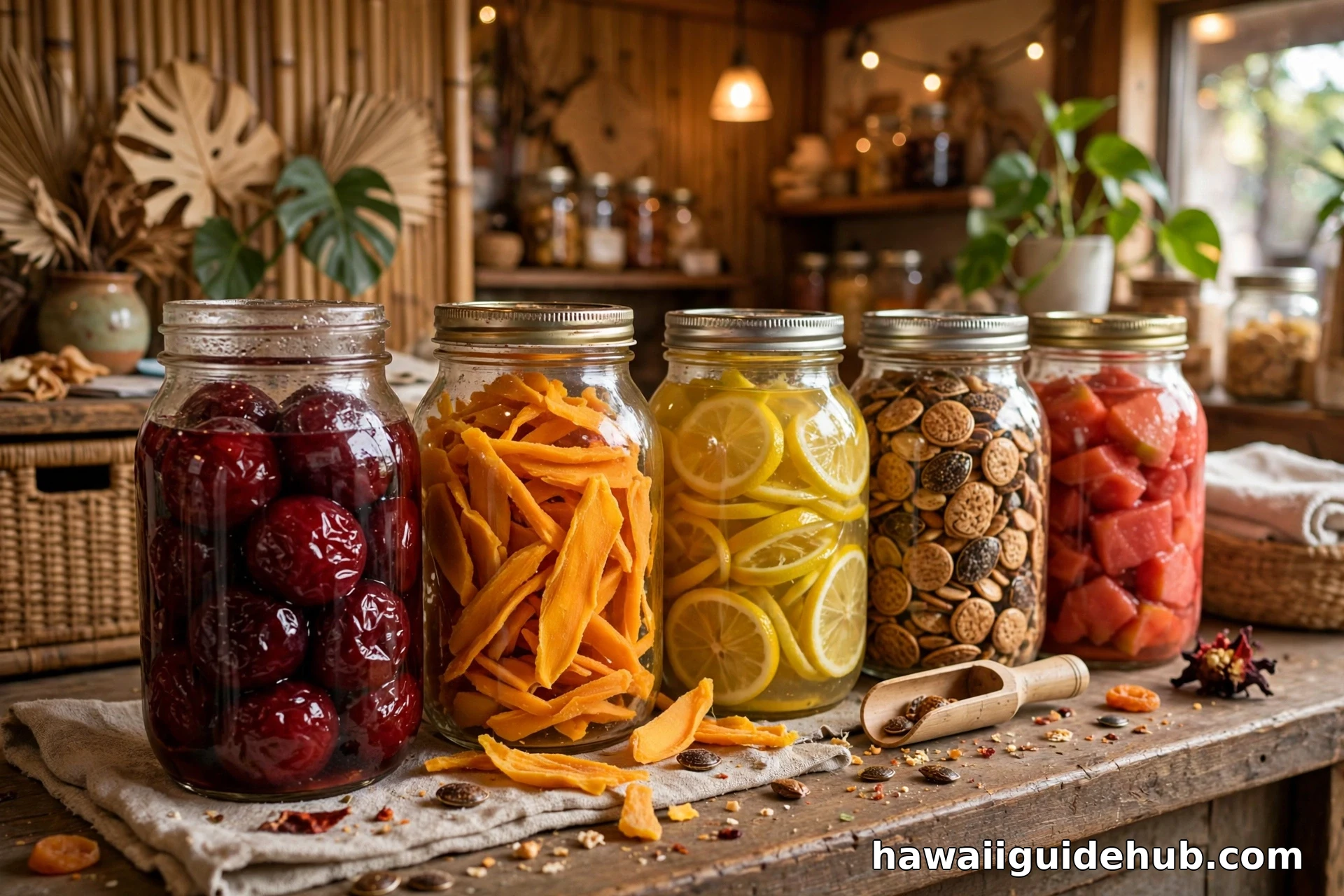
Ask a Hawaiʻi kid, of any age now, about the big glass jars on a crack seed store counter and watch their face change. Inside those jars sit glossy preserved plums, shredded mango the color of sunset, lemon peel, candied ginger, and seeds dusted red with li hing powder. Crack seed is not one snack. It is a whole category of preserved fruit that came to Hawaiʻi with Chinese plantation workers in the 1800s and became so local that many residents are surprised to learn it was ever anything else.
This is the complete guide to crack seed Hawaiʻi. It explains what crack seed actually is, where the name comes from, how the original see mui became li hing mui, what the main varieties taste like, how the snacks are made and served today, and where visitors encounter them, from old fashioned crack seed shops to shave ice stands. By the end you will be able to walk up to a jar counter, point with confidence, and understand what you are tasting.
What Crack Seed Is, in One Honest Definition
Crack seed is preserved fruit: plums, mango, lemon, papaya, ginger, cherries, and other fruit that has been pickled, salted, sugared, dried, or some combination of all four, often with licorice and other seasonings in the brine. The name describes the original form. The fruit was preserved with its seed inside, and the seed was cracked or split so the flavor of the preserving liquid could reach the kernel and the fruit could be worked around the pit as you ate it. In Cantonese the broader category is see mui, and that term traveled to Hawaiʻi with Cantonese immigrants in the 19th century, when they arrived to work on the sugar plantations.
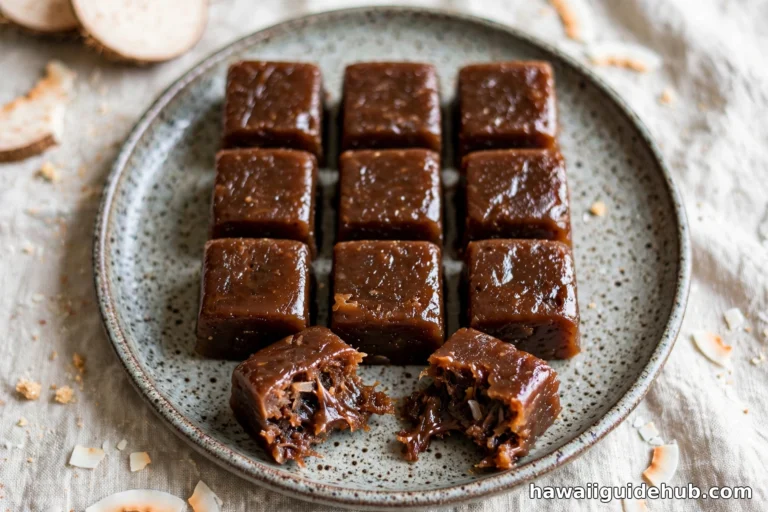
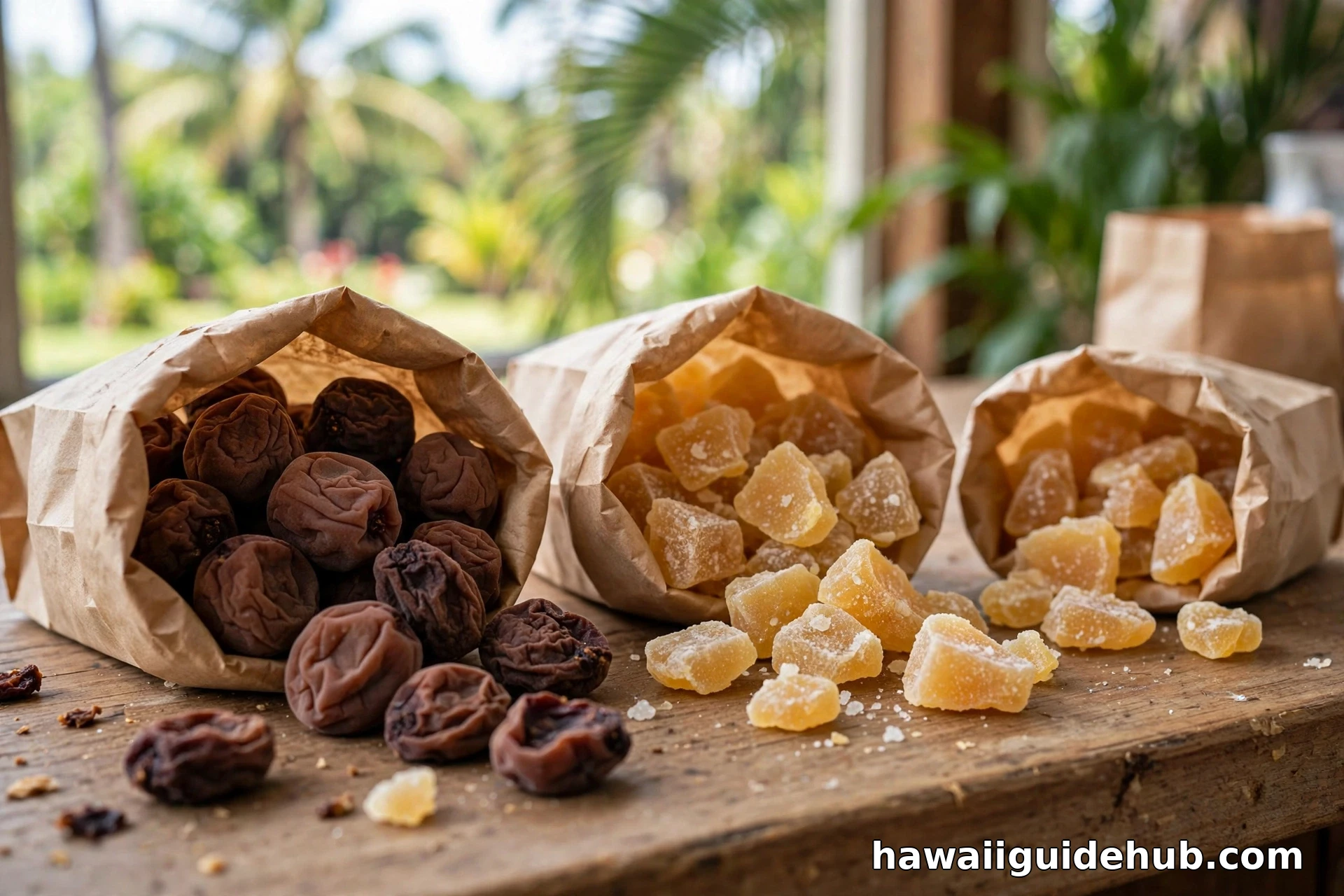
Over time the name outgrew the literal definition. Today crack seed covers whole preserved plums you suck and roll in your cheek, shredded dried mango, wet lemon peel, rock salt plum, candied ginger, preserved mandarin peel, and dozens of variations sold by the scoop or the bag. Japanese plantation workers who arrived later recognized a cousin of their own umeboshi in the salted plums and adopted the snacks, and crack seed settled into the shared plantation era food culture that still shapes how Hawaiʻi eats. Our guide to native Hawaiian fruits covers the fresh side of the island fruit story that crack seed preserves against.
Li Hing Mui: The Traveling Plum That Took Over
The most famous crack seed of all is li hing mui. The name comes from Cantonese and means traveling plum, a fitting label for a preserved food built to survive long journeys and then carried across an ocean. The base is the sour plum of the Prunus mume tree, see mui in Cantonese, pickled with licorice, salt, and sugar until it lands on a flavor that is sour first, then salty, then sweet, with a faint herbal depth underneath.
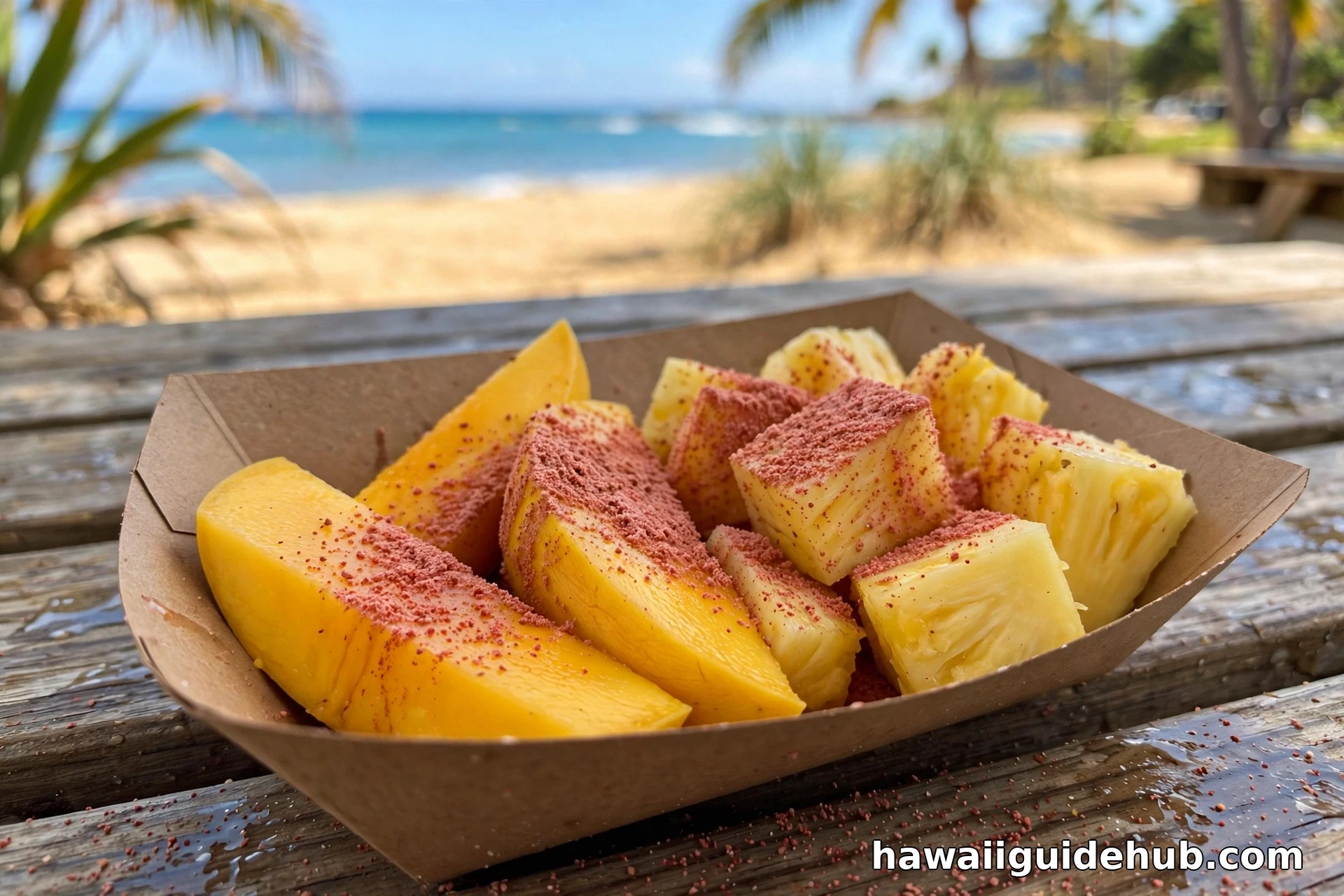
In the early 1900s an importer named Yee Sheong began bringing li hing mui and other preserved fruits from China to Hawaiʻi in quantity, and the company he founded, Yick Lung, turned a plantation snack into an island wide craze. Li hing mui is eaten three ways today. The whole preserved plum is eaten as a candy like snack, worked slowly around its seed. The dried fruit is sold in bags as a chewy, intensely flavored treat. And the plum skin and flesh are ground into li hing powder, the reddish seasoning that now gets sprinkled on fresh pineapple and mango, shaken over gummy candy, rimmed onto drink glasses, and mixed into shave ice syrups. That powder is the form most visitors meet first, often before they ever see the plum it came from.
| Variety | Base | Taste in one line |
| Red li hing mui | Preserved plum | Sour, salty, sweet, the classic |
| White li hing mui | Preserved plum, lighter cure | Cleaner salt and sour, less sweet |
| Rock salt plum | Salted plum | Strongly salty and mouthwatering |
| Shredded mango | Dried mango strips | Chewy, sweet, often li hing dusted |
| Wet lemon peel | Preserved lemon peel | Bitter, salty, sweet, old school favorite |
| Candied ginger | Ginger in sugar | Warm heat under clean sweetness |
| Preserved mandarin peel | Tangerine peel | Citrus bitter with licorice depth |
| Seedless li hing types | Plum or apricot, pitted | Same flavor arc, easier eating |
What Crack Seed Tastes Like
First timers should be warned fairly: crack seed is an acquired taste for many people, and the first bite can be a small shock. The flavors arrive in layers and at full volume. Sour hits first and makes your mouth water immediately. Salt follows, then a slow sweetness, and underneath everything sits licorice and the deep, almost wine like flavor of preserved fruit. Textures matter as much as taste. Some pieces are leathery and demand chewing, some are soft and wet from their brine, and the classic whole plum is less eaten than negotiated with, rolled in the cheek while the flavor lasts.
That intensity is the point. These were working snacks, cheap, portable, shelf stable in a hot climate without refrigeration, and strong enough to cut through a long day in the fields. A small bag lasts a long time because a little goes a long way. Visitors who bounce off the strongest salted plums usually convert through the gentler gateway items: li hing dusted dried mango, candied ginger, or fresh pineapple with a light shake of li hing powder at a beach park table.
How Crack Seed Is Made and Served
Traditional production is preservation in the oldest sense. Fruit is salted or brined to draw out moisture, sometimes with licorice root and sugar in the cure, then dried, candied, or kept wet in its seasoned liquid depending on the style. Cracking the seed of the whole plum styles lets the cure reach the kernel, which loyalists consider the best part, sucked clean at the end. Modern Hawaiʻi production continues locally: Jade Food Products, making crack seed in Hawaiʻi since 1961, is the last crack seed manufacturer based in the United States, while many shop jars still hold imported items made in Asia in the older styles.
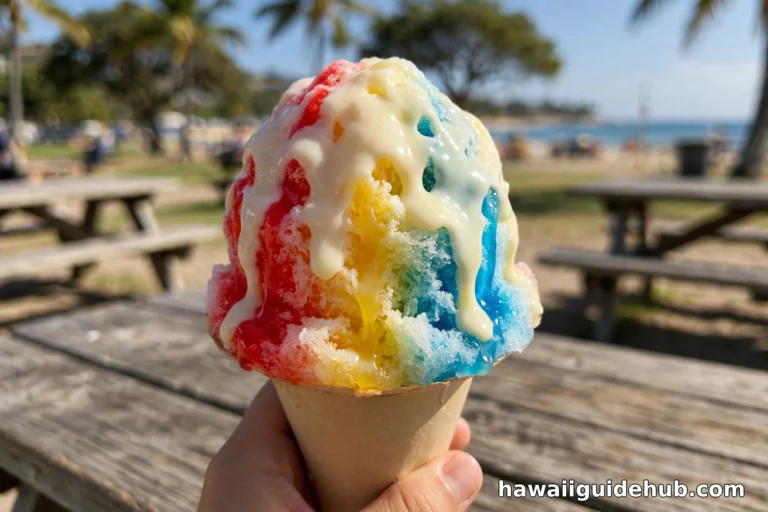
Serving has evolved further than production. Crack seed shops now coat gummy bears and sour candies with li hing powder as a house specialty. Shave ice stands offer li hing as a topping and flavor accent. Crack seed appears in baked goods, on popcorn, in li hing margarita rims at local bars, and in the snack mixes sold at every fundraiser and craft fair in the state. For another beloved local sweet that grew from the same plantation era mixing of cultures, compare our story of guri guri, the Maui sherbet with its own century of loyalty.
Where Visitors Encounter Crack Seed
The classic encounter is a dedicated crack seed shop, with jar counters, scoops, and staff who will let you sample before you commit. Honolulu has kept the tradition strongest, including the Crack Seed Center at Ala Moana Center and small family shops in Chinatown and neighborhood shopping centers on every island. Longtime stores double as community landmarks, the kind of place grandparents take grandchildren to recreate their own childhood orders. You will also find crack seed sections inside local supermarkets, drugstores, and convenience stores statewide, usually near the other local snacks.
A few buying notes help. Items are sold by weight or by the bag, and strong flavors mean a quarter pound goes further than you expect. Wet styles travel messier than dry ones, so visitors flying home usually choose dried mango, candied ginger, and sealed bags of powder or plums. Check agricultural inspection rules for fresh fruit, but dried and preserved crack seed in commercial packaging is a standard, inspection friendly souvenir. Prices vary by shop and item, generally a few dollars for a small bag, which makes crack seed one of the cheapest authentic tastes of local Hawaiʻi a visitor can buy. For the wider food culture these snacks belong to, our Hawaiʻi facts guide gives the background, and the traditional preserved and pounded foods at places like the Waiāhole Poi Factory show the Native Hawaiian preservation tradition that plantation snacks later joined.
How to Order at a Crack Seed Counter
Ordering is half the ritual, and it is simpler than the jars make it look. Most shops sell by weight, so start small: a quarter pound each of two or three items beats a full pound of one, especially on a first visit. Ask what is wet and what is dry. Wet items, packed in their seasoned liquid, carry the deepest flavor and the shortest patience for a hot car, while dry items travel well and keep for weeks in a sealed bag. If a shop offers samples, take them in order from mild to strong, because a rock salt plum will flatten your taste buds for anything gentler that follows it.
A reliable first order looks like this: shredded li hing mango for chew and balance, candied ginger for warmth, a small bag of red li hing mui for the full classic experience, and a packet of li hing powder to take home for fresh fruit. Add wet lemon peel only if someone in your group already loves bitter flavors, and add rock salt plum only if you are ready for the strongest salt in the case. Regulars will tell you the other rule of the counter: buy a little extra of whatever you taste first and love, because the shop that made it that way may not make it exactly that way forever.
Crack Seed in Everyday Local Life
Crack seed is woven into ordinary Hawaiʻi life in ways visitors rarely see. It rides in beach coolers next to the musubi, sits in office desk drawers, fills the candy dishes at family gatherings, and shows up in school fundraiser sales alongside boiled peanuts and li hing gummy candy. For many local families it is also a taste of ancestry, a direct line back to a great grandparent who worked the plantations and kept a jar by the door. That is why the closing of an old crack seed shop makes local news, and why the surviving shops are treated less like stores and more like landmarks.
Video: The Story of Li Hing Mui and Crack Seed
Watch how a preserved plum from China became the signature flavor of Hawaiʻi snacking.
Frequently Asked Questions
Why is it called crack seed?
The original preserved fruits were cured with the seed left inside, and the seed was cracked so the preserving flavors could reach the kernel. The name stuck and expanded until it covered the whole family of preserved fruit snacks, including modern seedless and shredded styles that have no seed at all.
What is the difference between crack seed and li hing mui?
Crack seed is the whole category: every preserved plum, mango, lemon peel, ginger, and seed snack in the jars. Li hing mui is the most famous member of that family, the preserved plum whose name means traveling plum, plus the reddish powder ground from it. All li hing mui is crack seed, but most crack seed is not li hing mui.
What does li hing mui taste like?
Sour first, then salty, then sweet, with licorice underneath. It makes your mouth water almost immediately, which is part of its appeal as a small, long lasting snack. The powder version delivers the same arc in milder form when it is dusted over fresh fruit or candy.
Is crack seed healthy?
It is a treat, not a health food. Preserved fruit carries real fruit fiber, but the cures add notable salt and sugar, and portions in Hawaiʻi are traditionally small for exactly that reason. Enjoy it the local way, a few pieces at a time, savored slowly rather than eaten by the handful.
Can you take crack seed home from Hawaiʻi?
Yes, in general. Dried, preserved, and commercially packaged crack seed is a common souvenir and passes agricultural inspection without the restrictions that apply to fresh fruit and plants. Keep wet styles sealed and packed carefully, and buy on your last days so bags travel fresh.
Crack seed survives because it does two things at once. It preserves fruit, and it preserves memory. The jars in a Honolulu crack seed shop hold the taste of plantation lunch pails, Chinatown storefronts, schoolyard trades, and beach park tables all at the same time. You do not have to love the first sour, salty bite for the tradition to win you over. You only have to understand what you are tasting, and now the next jar counter you meet will read like a menu instead of a mystery.