Musubi vs Sushi: What Is the Difference?

Visitors to Hawaii meet two foods that look similar at first glance: the neat rice triangles wrapped in seaweed at every convenience store, and the delicate plates of raw fish over seasoned rice at Japanese restaurants. One is musubi. The other is sushi. They share rice and nori, but they are different foods with different histories, and mixing them up is the most common mistake new visitors make.
This is the single complete guide to musubi vs sushi. It explains what each one is, the real differences in rice, shape, fillings, and origin, where spam musubi fits in, and which to try while you are in Hawaii. If you have been searching for anything about musubi versus sushi, the answers are all here on this one page.
The Quick Answer: Musubi vs Sushi
Musubi is a Japanese rice ball made from plain, lightly salted rice, usually formed into a triangle or block with a filling tucked inside and a strip of nori around it. Sushi is made from rice seasoned with vinegar, sugar, and salt, paired with raw fish, cooked seafood, vegetables, or egg. The rice is the fundamental difference: plain rice means musubi, vinegared rice means sushi.
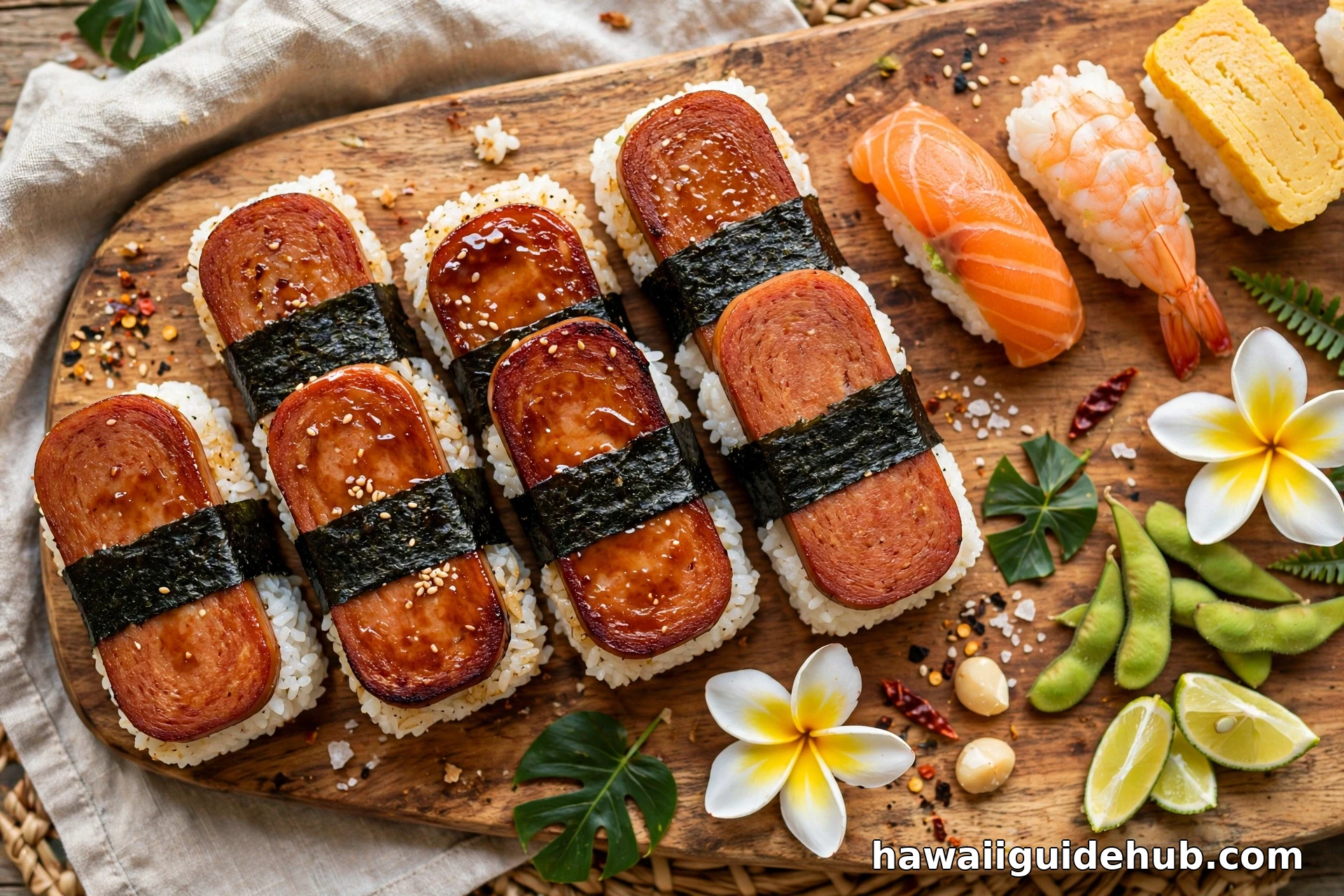
Spam musubi, the Hawaiian favorite, is a type of musubi, not a type of sushi. It takes the musubi form, a block of plain rice, and tops it with a slice of fried Spam before wrapping it with a strip of nori. Calling it “spam sushi” is common on the mainland, but in Hawaii nobody calls it that.
Musubi vs Sushi at a Glance
| Rice | Musubi: plain, lightly salted | Sushi: seasoned with vinegar, sugar, salt |
| Shape | Musubi: triangle or rectangular block | Sushi: many forms, nigiri, rolls, bowls |
| Filling | Musubi: tucked inside the rice | Sushi: placed on top of or beside the rice |
| Nori | Musubi: a simple strip as a handle | Sushi: full sheets wrapping rolls |
| Origin | Musubi: Japan, as onigiri | Sushi: Japan |
| Spam version | Musubi: spam musubi, born in Hawaii | Sushi: no traditional spam form |
| Eaten as | Musubi: portable snack or lunchbox food | Sushi: usually a sit-down meal |
What Musubi Is
Musubi, also called omusubi, is one of the oldest portable foods in Japan. At its simplest it is cooked short-grain rice, lightly salted, pressed by hand into a triangle or rounded block, sometimes with a filling hidden in the center. A strip of nori, dried seaweed, is wrapped around it partly as flavor and partly as a clean handle to hold while eating.
Traditional fillings are simple and savory: umeboshi (salted pickled plum), salted salmon, okaka (bonito flakes with soy sauce), or tuna mixed with mayonnaise. The rice itself is the star, which is why it is left plain. In Japan, musubi is everyday food: lunchboxes, picnics, train stations, and convenience stores all sell it. The distinction between “musubi” and “onigiri” varies by region in Japan, with onigiri the more common term in the west and musubi in the east, but outside Japan the two words describe essentially the same food.
Musubi traveled to Hawaii with Japanese plantation workers in the late 1800s and early 1900s, just as other immigrant foods did. It settled into local life as a lunchbox staple, the thing mothers packed for school and beach days. Like huli huli chicken and other plantation-era foods, it stayed humble and practical.
What Sushi Is
Sushi is a completely different construction built around one defining ingredient: vinegared rice. Sushi rice is cooked short-grain rice folded with a seasoning of rice vinegar, sugar, and salt while it is still warm. That sweet-tart seasoning is what makes sushi taste like sushi, and it is the one thing musubi never has.
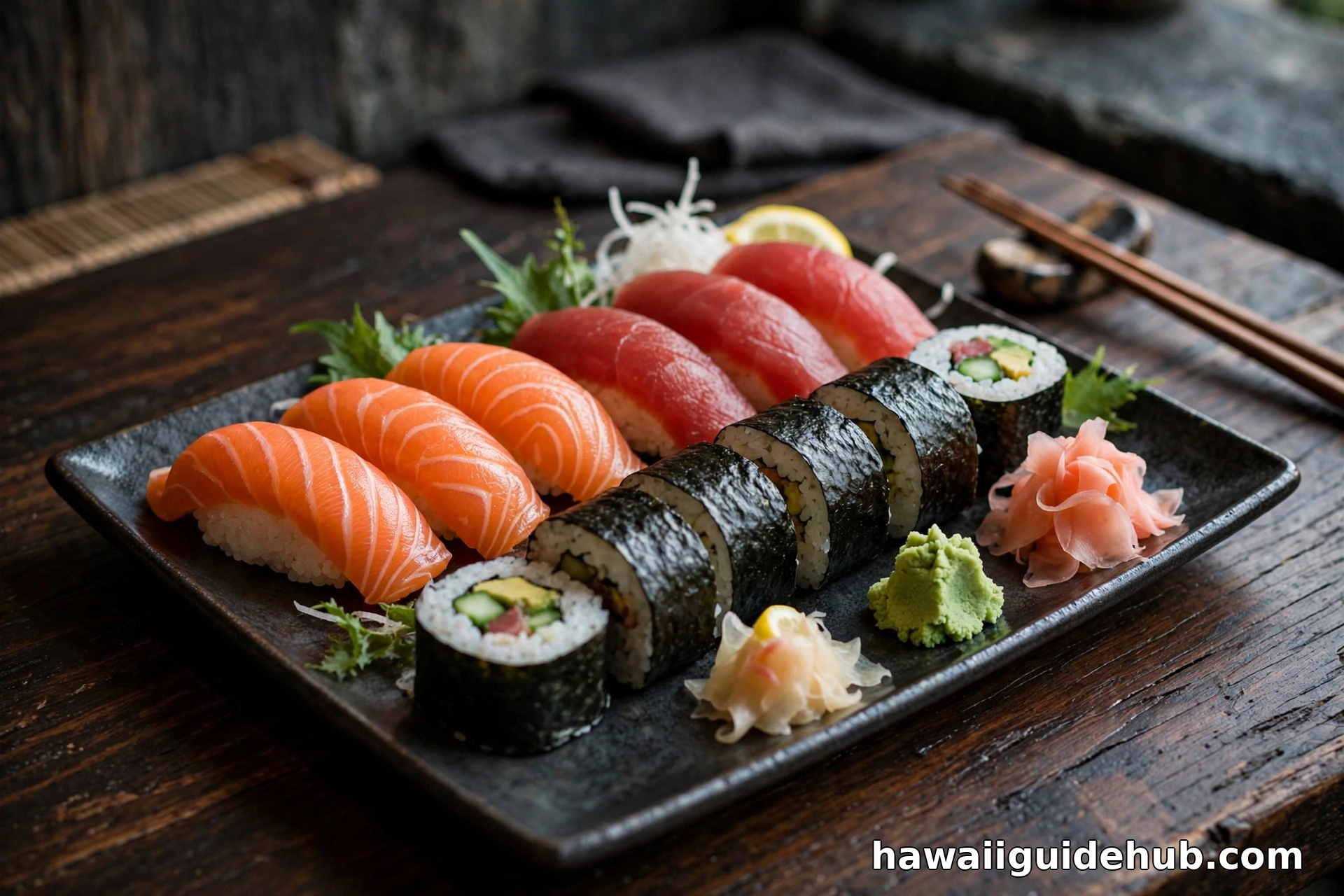
On top of or beside that seasoned rice go the toppings: most famously raw fish such as tuna, salmon, and yellowfin, but also cooked shrimp, tamago (sweet egg omelet), vegetables, and pickles. The main forms are nigiri (a slice of fish pressed over a small mound of rice), maki (rice and fillings rolled in a full sheet of nori and sliced), temaki (cone-shaped hand rolls), and chirashi (toppings scattered over a bowl of rice). Sashimi, sliced raw fish with no rice at all, is often served at sushi restaurants but is not sushi itself.
Sushi began in Japan as a method of preserving fish in fermented rice and evolved over centuries into the refined restaurant food known today. It is typically eaten fresh, often made to order, and treated as a meal rather than a snack. Hawaii has excellent sushi thanks to its Japanese heritage and access to fresh Pacific fish, but it occupies a different part of the food scene from musubi.
The Five Key Differences Explained
1. The rice
This is the difference that matters most. Musubi rice is plain steamed rice, sometimes mixed with a little salt or furikake seasoning. Sushi rice is deliberately seasoned with vinegar, sugar, and salt, which gives it a glossy look and a sweet-tart flavor. If the rice tastes seasoned and tangy, you are eating sushi. If it tastes like plain rice, it is musubi.
2. Where the filling goes
In musubi, the filling is hidden inside the rice ball. You bite through plain rice to discover the salmon or plum at the center. In sushi, the topping sits visibly on top of the rice (nigiri) or is rolled with it (maki). Spam musubi follows the musubi pattern in its own way: the Spam sits on top of the rice block rather than inside, but the rice underneath is plain, which keeps it firmly in the musubi family.
3. The nori
Musubi uses nori sparingly: a single strip wrapped around the rice as a handle and a flavor accent. Sushi rolls use full sheets of nori to enclose the rice and fillings entirely. When you see a whole sheet of seaweed doing structural work, you are looking at sushi.
4. Origin and status
Both foods are Japanese in origin, but they grew up differently. Musubi is humble home and travel food, made by hand and packed for the road. Sushi is restaurant craft, shaped by chefs and eaten fresh. Spam musubi adds a third story: a Hawaiian invention of the 1980s that fused Japanese form with American canned meat, created for local tastes.
5. How and when you eat it
Musubi is grab-and-go food. You buy it at a convenience store, unwrap it, and eat it with your hands at the beach, on a hike, or between errands. Sushi is usually a sit-down experience, eaten with chopsticks or fingers at a counter or table, often as a full meal. For more grab-and-go island eating, see our guide to late-night eats in Hawaii.
What Is Spam Musubi
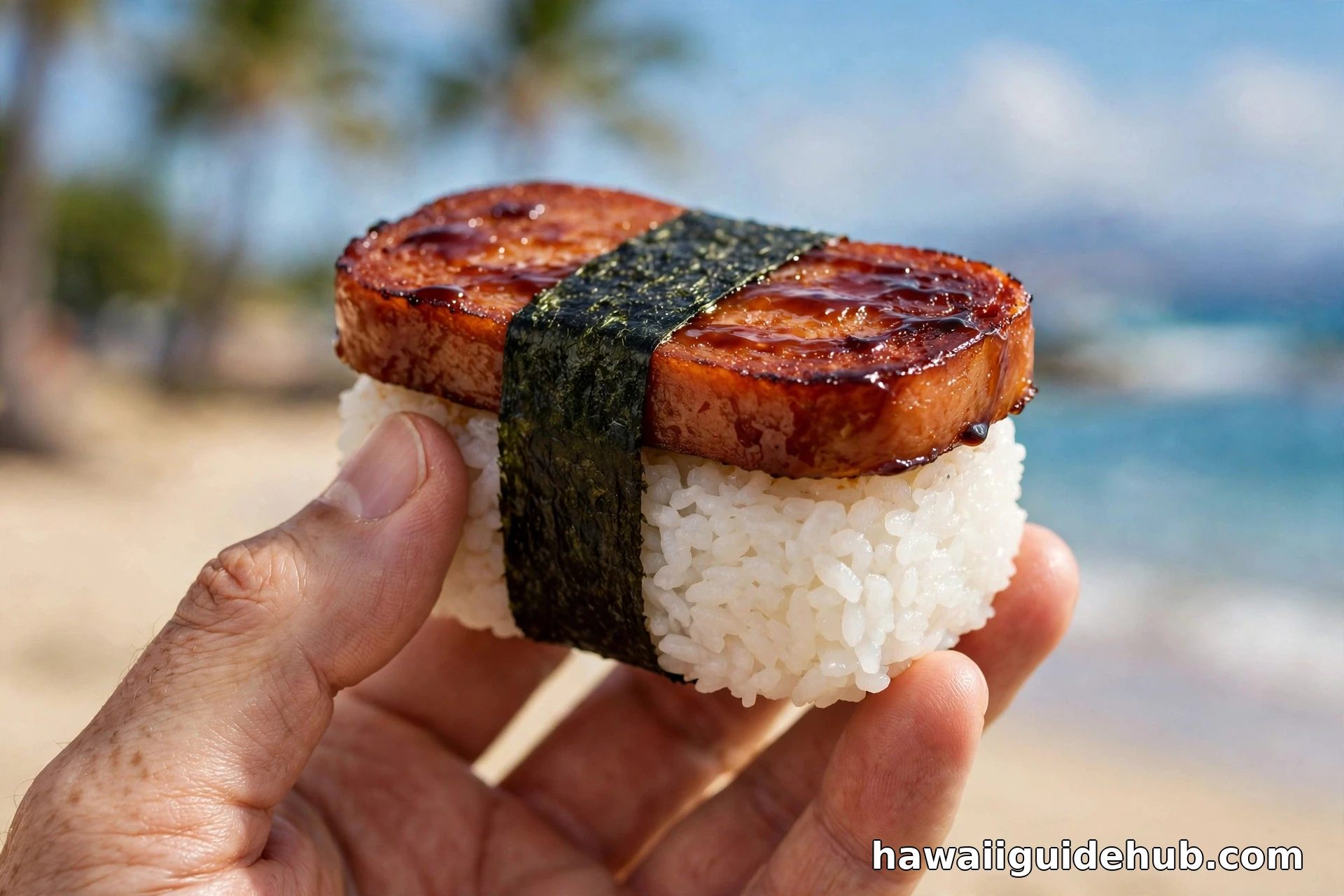
Spam musubi is Hawaii’s most famous musubi and its most misunderstood. It is a block of plain white rice topped with a slice of Spam that has been pan-fried and often glazed with a sweet soy-based sauce similar to teriyaki, all held together with a strip of nori. It is sold everywhere in Hawaii: convenience stores, grocery delis, dedicated musubi shops, and even gas stations.
The origin is usually traced to the early 1980s and credited to Barbara Funamura, who sold the combination at her restaurant in the Kukui Grove Center on Kauai, shaping the rice in a box mold that gave spam musubi its familiar rectangular form. Another account credits Mitsuko Kaneshiro, who sold handmade musubi from a Honolulu pharmacy and later her own shop. Both stories agree on the essentials: Japanese American cooks, Hawaii, early 1980s, and Spam meeting rice.
Spam itself became a Hawaii staple during and after World War II, when military rations made the canned meat abundant on the islands and fresh meat was scarce. Hawaii remains one of the highest per-capita consumers of Spam in the United States, and spam musubi is the dish that turned that history into an icon. Variations now include spam and egg musubi, teriyaki-glazed versions, and even spam musubi with furikake rice.
Is Spam Musubi Sushi?
No. Spam musubi is musubi, not sushi, and the rice proves it. The rice in spam musubi is plain steamed rice, not vinegared sushi rice. It is made by the musubi method, hand-pressed or mold-pressed, wrapped with a nori strip, and eaten as a portable snack. The confusion is understandable: to unfamiliar eyes, rice plus nori plus a topping looks like sushi. But in Hawaii, where both foods are eaten daily, nobody confuses them. If a menu or a mainland friend calls it “spam sushi,” you now know the correction.
How to Eat Musubi Like a Local
Eating musubi has its own small etiquette, and getting it right marks you as someone who pays attention. Unwrap the nori and eat the musubi with your hands, starting at one end and working across. The nori strip is there to keep your fingers off the rice, so hold it by the seaweed. Traditional musubi is eaten at room temperature, which is how the rice texture is best, and spam musubi is at its peak in the first few hours after it is made, when the rice is still soft and the Spam is warm.
Locals rarely eat just one. A typical convenience store run includes two or three musubi in different flavors: one spam, one with egg, maybe one traditional umeboshi for contrast. Pair them with a cold drink and you have the classic Hawaii lunch, eaten in a car, at a beach park, or on a tailgate. If you are building a full day of island eating, our guide to must-try local dishes maps out the rest of the menu.
Which Should You Try in Hawaii
Try both, because they serve different moments. Eat spam musubi the way locals do: grab one from a convenience store or musubi shop and eat it on the way to the beach. It costs a few dollars, needs no utensils, and tastes like Hawaii’s food history in a single bite. Traditional musubi with umeboshi or salmon is worth seeking at Japanese delis for the contrast.
Save sushi for a sit-down meal. Hawaii’s sushi scene is genuinely good, with fresh local fish and Japanese-trained chefs, especially on Oahu. Our guide to must-try local dishes covers where these foods fit into the wider island food landscape.
Watch: How Spam Musubi Is Made
This quick video shows the classic spam musubi build: fried Spam, pressed rice, and the nori wrap that holds it all together.
Frequently Asked Questions
What is the difference between musubi and sushi?
The rice. Musubi uses plain, lightly salted rice formed around a filling with a nori strip. Sushi uses rice seasoned with vinegar, sugar, and salt, paired with raw fish or other toppings.
Is musubi the same as onigiri?
Essentially yes. Onigiri and musubi describe the same Japanese salted rice ball; the preferred term varies by region in Japan. In Hawaii, “musubi” is the everyday word.
Is spam musubi raw?
No. The Spam in spam musubi is cooked, usually pan-fried and often glazed with a sweet soy sauce. Nothing about spam musubi is raw, which is another way it differs from much sushi.
Why is it called musubi and not sushi?
Because it follows the musubi tradition: plain rice, hand-formed, with a nori strip. The name describes the food’s family, and in Hawaii that family is musubi.
Where can I buy spam musubi in Hawaii?
Everywhere. Convenience stores, grocery store delis, dedicated musubi shops, and farmers markets all sell it. It is one of the cheapest and most widely available snacks in the islands, and fans of local sweets should also read our malasadas guide for the perfect dessert pairing.
Can you make musubi at home?
Yes, and it is easier than sushi. You need short-grain rice, salt, nori strips, and your filling of choice. A musubi press, a simple plastic mold shaped like a Spam can, gives you the classic rectangular form, but hand-shaping works fine. Spam musubi adds a slice of pan-fried Spam glazed with soy sauce and sugar. Unlike sushi, there is no vinegared rice to season and no raw fish to source.
Is musubi healthy?
Traditional musubi is simple and modest: rice, a little salt, seaweed, and a small filling. Spam musubi is saltier and richer because of the processed meat and glaze, so it is best enjoyed as a snack rather than a health food.
Musubi and sushi share a pantry but belong to different worlds: one is Japan’s portable rice ball, perfected for lunchboxes and beach days, and the other is Japan’s vinegared-rice craft, perfected at the sushi counter. In Hawaii you get a third gift, spam musubi, which took the humble rice ball and made it an island icon. Try all three and you will never confuse them again.