Hawaiian-Style Korean Chicken: The Crispy Local Favorite

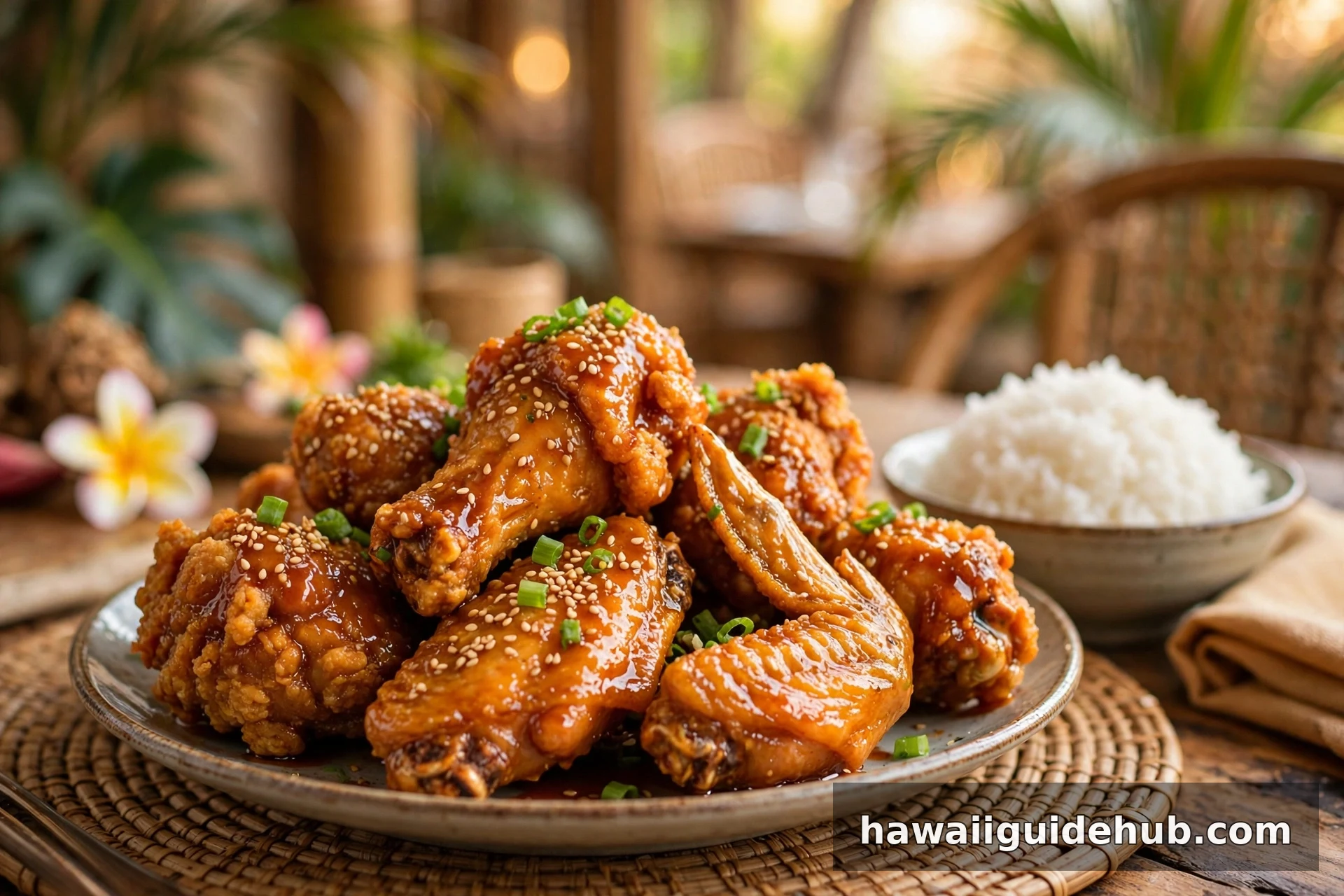
Some dishes travel across oceans and land in a new home. Hawaiian-style Korean chicken is one of them. It is shatteringly crisp fried chicken tossed in a glossy sweet and spicy glaze, and in Hawaii it has become as local as plate lunch itself. Order it at a lunch counter on Oʻahu and it arrives over rice with mac salad, just like everything else worth eating on the islands.
Hawaiian-Style Korean Chicken at a Glance
| What | Detail | The local edge |
|---|---|---|
| What it is | Double-fried chicken tossed in a sweet and spicy Korean glaze | Crunch first, glaze second |
| Also called | Hawaiian style korean chicken, yangnyeom-style chicken | Order by either name; kitchens know both |
| Signature glaze | Gochujang, soy sauce, honey or sugar, garlic | Sweet heat you can dial up or down |
| Key technique | Two fries: first at 325°F, second at 375°F | The hotter second fry is the whole crunch secret |
| Texture | Extra crisp, less greasy, sticky glaze | Stays crisp under the glaze |
| Heat level | Mild to medium, easy to adjust | Kid-friendly as written |
| Serving style | Plate lunch with rice and mac salad | The two-scoop rice rule applies |
| Hands-on time | About 56 minutes, plus 30 minutes marinating | Mostly waiting, not working |
| Origin story | Korean immigrants first arrived in Hawaii in 1903 | Over a century of local history in one plate |
What Hawaiian-Style Korean Chicken Actually Is
Korean fried chicken, known in Korea as yangnyeom chicken when it is sauced, is famous for two things: a thin, crackly crust that stays crisp under sauce, and a sticky glaze built on gochujang, the fermented Korean chili paste. The Hawaiian style keeps that soul but cooks it the local way. Island kitchens often add mochiko, sweet rice flour, to the dredge for extra crunch, and some versions lean on a soy and ginger glaze instead of gochujang. The result is less about strict Korean technique and more about the local plate: crispy chicken, bold sauce, and rice underneath to catch every drop.
If you grew up in Hawaii, this flavor is pure comfort food. It is sweet, savory, crispy, and sticky, and it sits on menus next to mochiko chicken and huli-huli chicken as part of the islands’ fried chicken canon. Visitors usually meet it first at a plate lunch counter, where a scoop of red-glazed chicken lands on rice like it was always meant to be there. Korean food has been part of Hawaii’s table for more than a century.
How Korean Food Became Hawaii Local Food
The story starts on January 13, 1903, when the steamship Gaelic arrived in Honolulu carrying 102 Korean immigrants, the first large group of Koreans to enter the United States. They had been recruited as laborers for sugarcane plantations on various Hawaiian islands. Within two years, more than 7,000 Koreans had followed them across the Pacific. They brought their food with them, and over the generations, dishes like kimchi, bulgogi, and kalbi ribs folded into the everyday local diet. Today you will find kimchi on plate lunch menus and Korean barbecue as standard plate lunch fare across the state.
Korean fried chicken itself is a newer arrival. As Korean-style fried chicken boomed around the world, Hawaii was a natural early adopter, a Pacific crossroads with a deep love of both fried chicken and bold Asian flavors. Major Korean chains noticed: bb.q Chicken opened in Honolulu’s Kahala neighborhood in 2021, and Kyochon opened its first Hawaii store in October 2023. But the Hawaiian style most locals know best is the lunch-counter version, the kind Hawaii’s beloved Zippy’s restaurants made famous: sweet, savory, crispy, sticky, and unapologetically served over rice. Home cooks across the islands have been copying that style for years, which is exactly what this recipe does.
What It Tastes Like
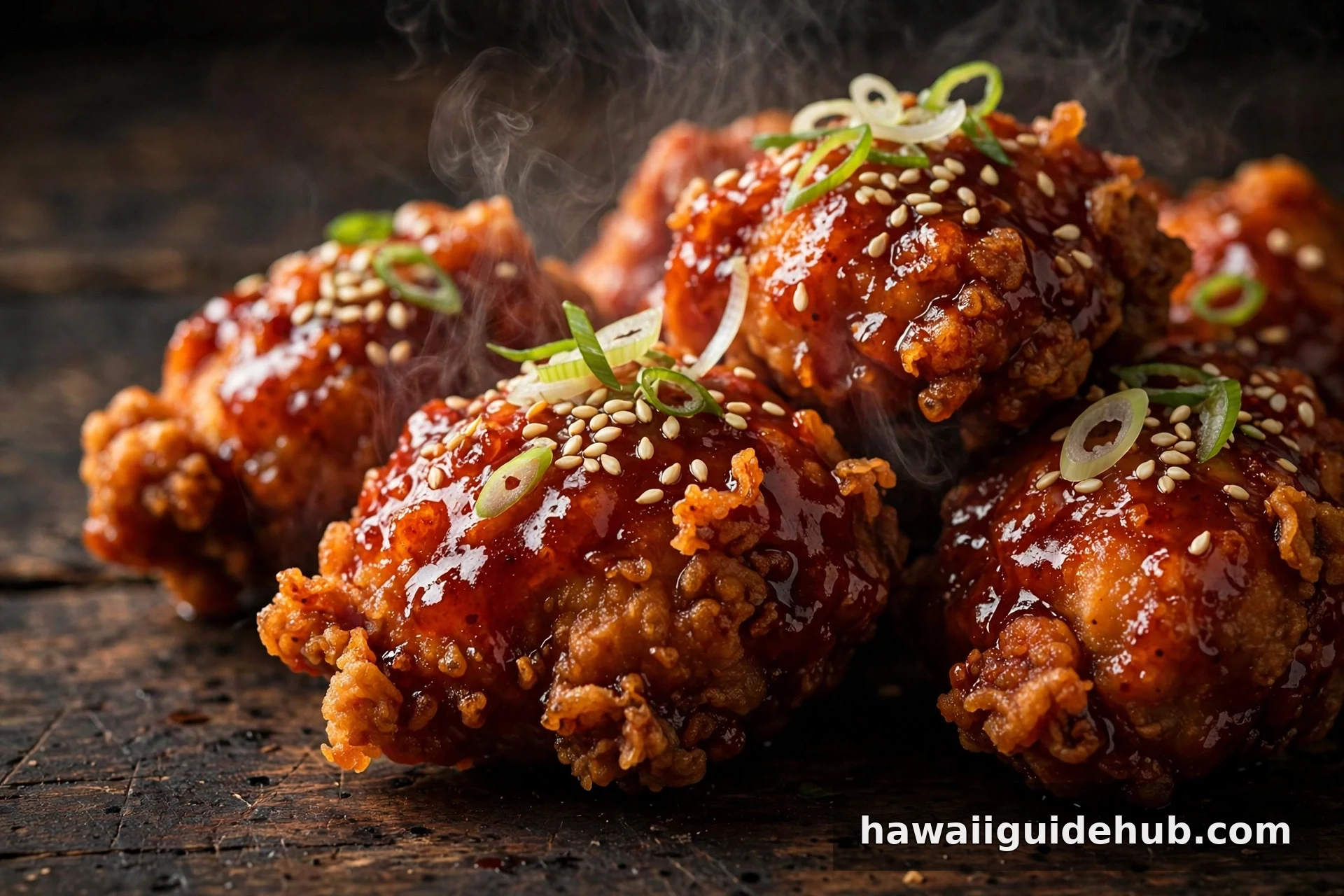
The first bite is all crunch, a crust that shatters instead of crunching softly. Then the glaze hits: sweet first, then savory, then a slow-building warmth from the gochujang and garlic. Think sticky barbecue with a Korean accent, glossy and garlicky, with toasted sesame and green onion cutting through the richness. Because the chicken is fried twice, the crust stays crisp much longer than single-fried chicken, and the double fry renders out extra fat, so it eats lighter than it looks.
Eaten the Hawaiian way, over rice, each bite gets a little sauce-soaked starch with it. That combination of crispy, sticky, and soft is the whole point. It is the reason this dish moved from Korean restaurants onto general local menus and never left.
Hawaiian-Style vs Classic Korean Fried Chicken
The two styles share a technique and a philosophy, but they diverge in the details. Here is how they compare.
| Classic Korean (yangnyeom) | Hawaiian-style | |
| Coating | Thin potato starch or cornstarch | Flour plus cornstarch, sometimes mochiko |
| Glaze | Gochujang, honey, soy | Gochujang or soy-ginger, often sweeter |
| Serving | With pickled radish, often with beer | With rice and mac salad, plate lunch style |
| Chicken cut | Wings most common | Thighs, wings, and drumettes all common |
| Setting | Korean chicken joints | Lunch counters, food courts, home kitchens |
Ingredients
This recipe serves four as a main dish. The ingredient list looks long, but most of it is pantry staples, and the method is straightforward.
For the chicken
- 2 pounds boneless chicken thighs, cut into 2-inch pieces (wings or drumettes also work)
- 1/2 cup milk or buttermilk
- 3 cloves garlic, minced
- 1 teaspoon grated fresh ginger
- 1 teaspoon kosher salt
- 1 cup cornstarch
- 1/2 cup all-purpose flour (or mochiko sweet rice flour for extra crunch)
- 1 teaspoon garlic powder
- 1/2 teaspoon black pepper
- Vegetable or peanut oil, for deep frying
For the gochujang glaze
- 1/3 cup gochujang (Korean fermented chili paste)
- 1/4 cup honey
- 2 tablespoons soy sauce
- 2 tablespoons rice vinegar
- 3 cloves garlic, finely grated
- 1 tablespoon brown sugar
- 1 teaspoon sesame oil
- Toasted sesame seeds and sliced green onions, for garnish
The Authentic Method, Step by Step
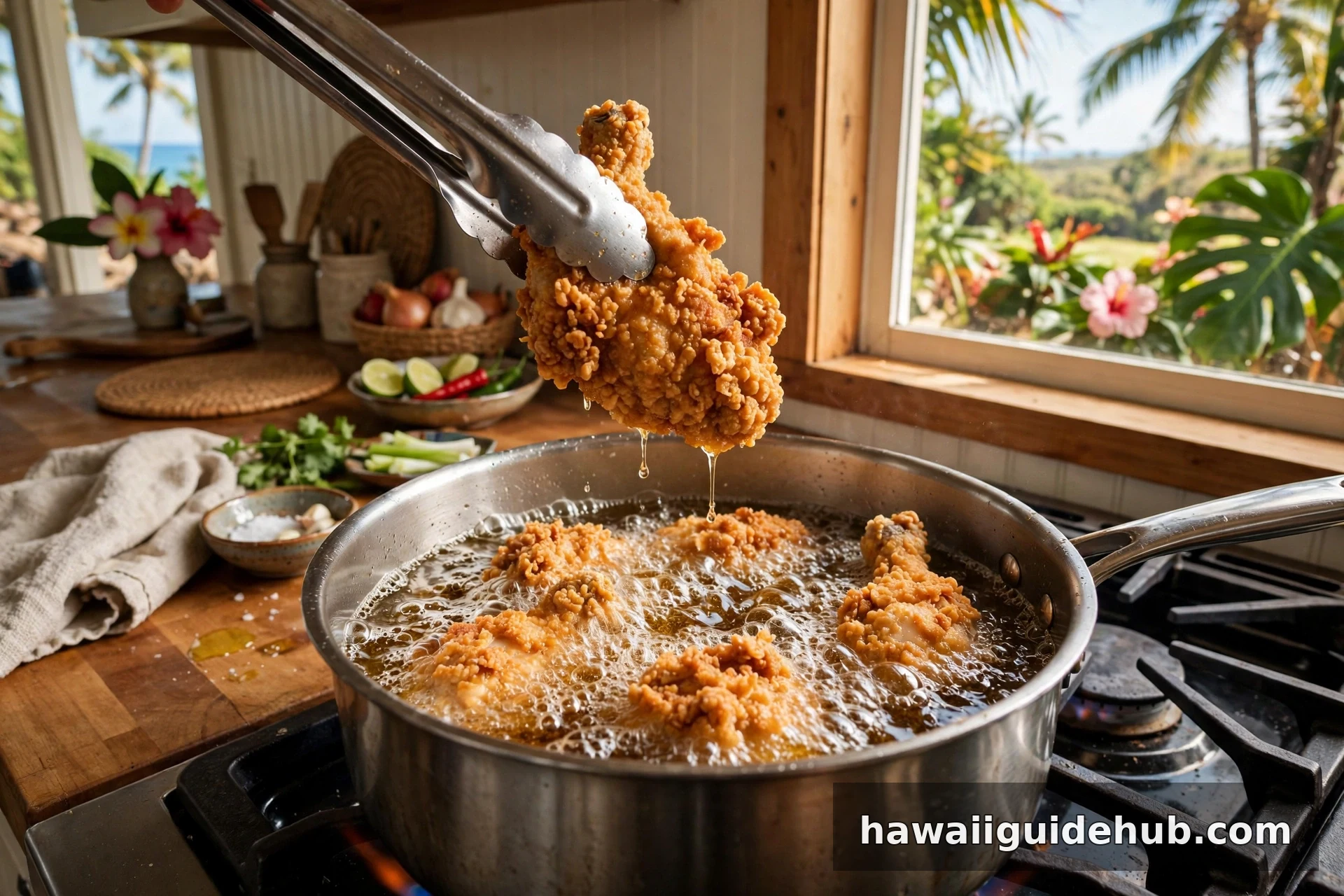
The whole process takes about 56 minutes of hands-on time, plus 30 minutes of marinating. Follow the two temperatures exactly. They are the difference between good fried chicken and great Korean fried chicken.
Step 1: Marinate the chicken (30 minutes)
Toss the chicken pieces with the milk, minced garlic, grated ginger, and salt in a large bowl. Cover and refrigerate for 30 minutes. The milk tenderizes the meat and the garlic and ginger season it from the inside. Do not skip this. Bland chicken cannot be saved by glaze alone.
Step 2: Dredge and rest (10 minutes)
Whisk together the cornstarch, flour, garlic powder, and black pepper in a shallow dish. Lift the chicken from the marinade, letting the excess drip off, and coat each piece thoroughly, pressing the starch mixture on so it adheres. Lay the coated pieces on a wire rack and rest them for 10 minutes. This rest hydrates the coating, which is the secret to a crust that clings instead of sliding off in the oil.
Step 3: First fry (7 minutes at 325°F)
Heat about 2 inches of oil in a heavy pot to 325°F. Fry the chicken in batches, without crowding the pot, for about 7 minutes, turning once. The pieces will be pale gold and cooked most of the way through. Lift them out to a wire rack set over a baking sheet. This first fry cooks the chicken gently and sets the crust.
Step 4: Rest and drain (5 minutes)
Let the chicken rest on the rack for 5 minutes while you raise the oil temperature. During this rest, surface moisture evaporates, which is exactly what you want before the second fry. Use the time to whisk the glaze ingredients together in a large bowl.
Step 5: Second fry (4 minutes at 375°F)
Raise the oil to 375°F and fry the chicken a second time, in batches, for about 4 minutes until deep golden brown and audibly crisp. The hotter oil drives off remaining moisture and renders extra fat, which is why double-fried chicken tastes less greasy. Check that the thickest pieces reach 165°F inside. Drain on the wire rack, never on paper towels, which trap steam and soften the crust.
Step 6: Glaze and toss (2 minutes)
Warm the glaze in a saucepan over medium heat for 2 minutes until it loosens and turns glossy. Pour it over the hot chicken in the large bowl and toss quickly to coat every piece. Work fast and serve immediately. The crust stays crispest in the first 15 minutes after glazing. Shower with sesame seeds and green onions.
Tips for Maximum Crispiness
A few small habits separate crunchy chicken from soggy chicken. Keep these in mind every time you fry.
- Pat the chicken dry before it goes into the marinade, and shake off excess marinade before dredging. Wet chicken steams instead of crisping.
- Do not crowd the pot. Too many pieces at once drops the oil temperature, and cool oil makes greasy chicken. Fry in batches and let the oil recover between them.
- Use a thermometer. Guessing oil temperature is the most common frying mistake. The two temperatures in this recipe, 325°F then 375°F, are doing real work.
- Rest on a rack, not paper towels. Air circulation underneath keeps the bottom crust crisp.
- Glaze at the last minute. Toss the chicken in sauce right before it hits the table. Glazed chicken waiting around goes soft.
Easy Substitutions That Still Work
Missing an ingredient should not stop you. These swaps keep the spirit of the dish intact.
- No gochujang: whisk 2 tablespoons sriracha with 1 tablespoon tomato paste and 1 teaspoon sugar. It will not taste identical, but it lands in the same sweet and spicy territory. Gochujang is worth buying, though. It keeps for months in the fridge.
- Gluten-free: use tamari instead of soy sauce and replace the flour with more cornstarch or rice flour.
- Chicken breast instead of thighs: it works, but cut the pieces smaller and watch the time closely, since breast dries out faster. Thighs stay juicier and are the local favorite.
- Honey instead of sugar, or the reverse: the glaze is flexible. Brown sugar gives a deeper caramel note, honey gives a floral gloss.
- Milder version: halve the gochujang and add an extra tablespoon of honey. You keep the color and sweetness with much less heat.
- No deep fryer: a heavy pot with 2 inches of oil works perfectly. An air fryer at 400°F for 18 to 20 minutes gives a decent weeknight version, though it will never match the shatter of the double fry.
How to Serve It: The Plate Lunch Way
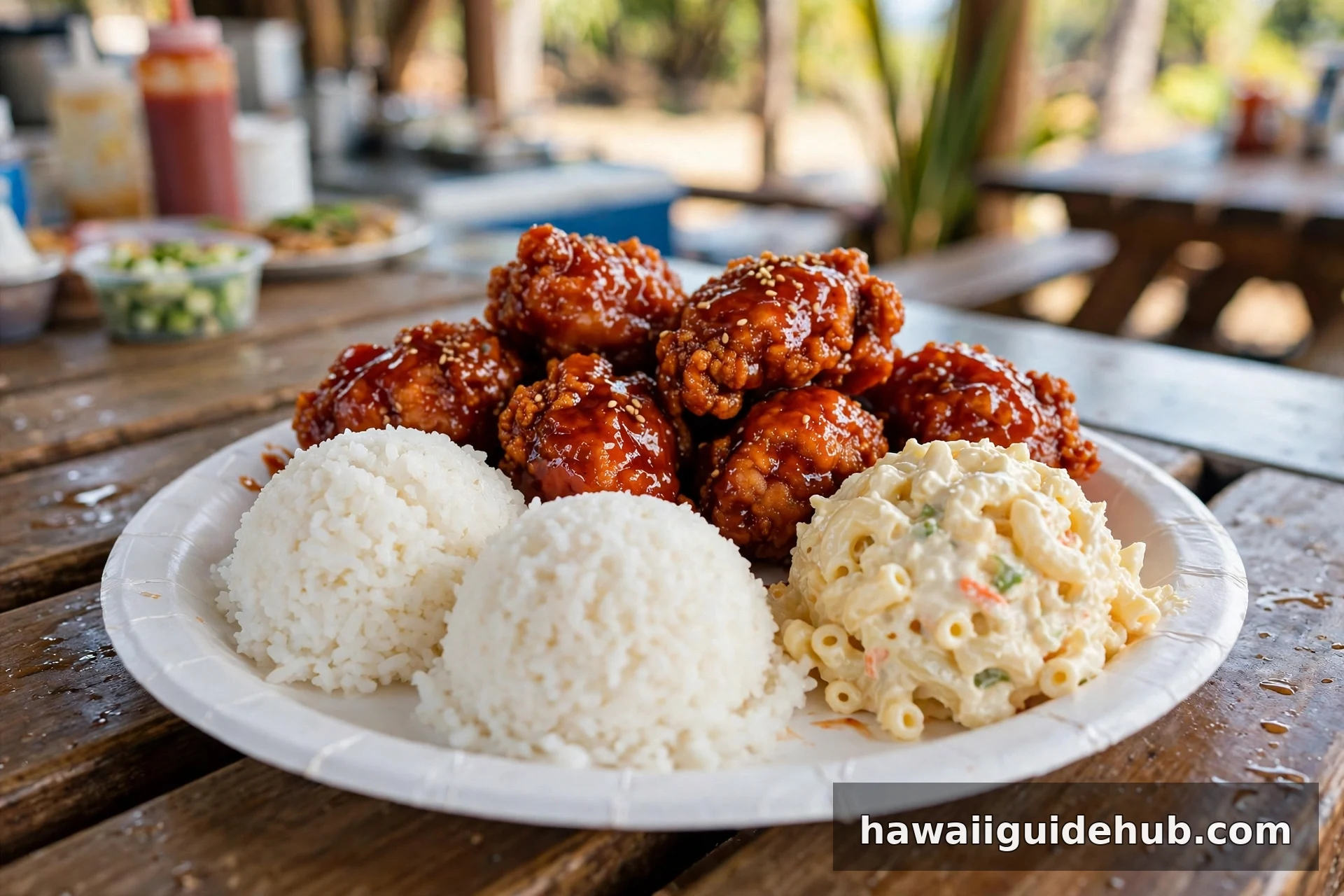
In Hawaii, this chicken is almost always a plate: two scoops of white rice, a scoop of mac salad, and the glazed chicken on top or alongside. The rice soaks up the extra glaze, which is half the pleasure. Add kimchi or quick-pickled cucumbers on the side and you have the full local spread. For a lighter meal, serve the chicken over shredded cabbage with extra green onions, Korean pub style.
Where Visitors Encounter Korean Chicken in Hawaii
You do not have to hunt for this dish. Korean-style fried chicken shows up on lunch-counter menus, food-court stalls, and drive-inn style restaurants across Oʻahu, Maui, Kauaʻi, and the Big Island. Honolulu’s Koreatown, officially recognized by the State of Hawaii in 2016, is the densest cluster of Korean restaurants in the state and a good place to taste the more traditional versions alongside the local adaptations. If you want context for how this dish fits into the islands’ wider food culture, our guide to must-try local dishes in Hawaii puts it alongside the other plates that define local eating.
The dish also belongs to a longer story. Korean flavors arrived with plantation workers and never left, which is why the same lunch counter might serve kalbi ribs, meat jun (a Korean-influenced egg-battered meat), and Korean fried chicken side by side. For more on how plantation history shaped what Hawaii eats, the story of malasadas and Hawaii’s Portuguese roots tells a parallel tale from another immigrant community.
Video: Hawaiian Korean Chicken Recipe
Watch a Hawaii home cook make Hawaiian Korean chicken with a soy-ginger glaze, the local style behind this recipe.
Frequently Asked Questions
What is Hawaiian-style Korean chicken?
It is Hawaii’s local adaptation of Korean fried chicken: double-fried chicken tossed in a sweet and spicy glaze, often made with gochujang or a soy-ginger sauce, and typically served plate lunch style with rice and mac salad. It is crispier and often sweeter than the Korean original.
Is this the same as Zippy’s Korean fried chicken?
Close. Zippy’s, the beloved Hawaii restaurant chain, serves one of the most famous local versions, sweet, savory, crispy, and sticky over rice. This recipe recreates that Hawaiian style at home. It is a copycat in spirit rather than an exact replica of any restaurant’s recipe.
What is gochujang?
Gochujang is a Korean fermented chili paste made from chili powder, glutinous rice, fermented soybeans, and salt. It tastes sweet, savory, and moderately spicy all at once. Find it in the Asian aisle of most supermarkets or at any Asian grocery store. It keeps for months refrigerated.
Why do you fry the chicken twice?
The first fry at 325°F cooks the chicken through and sets the crust. The rest lets surface moisture escape. The second fry at 375°F drives off the last moisture and renders extra fat, which creates the signature glassy crunch and keeps the chicken from tasting greasy. Single-fried chicken simply does not stay crisp under glaze.
Can I make it less spicy?
Yes. Halve the gochujang and add an extra tablespoon of honey. You will keep the glossy red color and sweet-savory flavor with much gentler heat. For a no-heat version, use the soy-ginger glaze style some Hawaiian cooks prefer: soy sauce, sugar, ginger, and garlic simmered into a syrup.
Can I use chicken breast instead of thighs?
You can, but thighs are better here. Breast meat dries out faster during the double fry, while thighs stay juicy. If you use breast, cut the pieces a little smaller and pull them a minute early, checking for 165°F inside.
How do I store and reheat leftovers?
Refrigerate leftovers in an airtight container for up to 3 days. Reheat in a 400°F oven or air fryer for 8 to 10 minutes to re-crisp the crust. Skip the microwave, which turns the crust rubbery.
Hawaiian-style Korean chicken tells the story of Hawaii on a plate: Korean technique, local pantry, plantation history, and the plate lunch format that holds it all together. The recipe takes an afternoon, the double fry is non-negotiable, and the payoff is a platter of glossy, crackling chicken that tastes like the islands’ best lunch counters. Make it once and it will likely join your regular rotation, just as it joined Hawaii’s.