Saimin Broth Recipe: Hawaii’s Classic Noodle Soup, Explained

Saimin broth is the quiet soul of Hawaii’s most beloved noodle soup. Clear, golden, and deeply savory, it tastes like the islands themselves: a little Japanese, a little Chinese, a little Filipino, and entirely local. Ask any longtime Hawaii resident what comfort food means to them and many will point to a steaming bowl of saimin, eaten late at night at a fluorescent-lit saimin stand with chopsticks in one hand and a spoon in the other.
This guide is the single complete resource for saimin broth recipe questions. It explains what the broth is made of, why it tastes the way it does, how the traditional method works step by step, how home cooks can adapt it with supermarket ingredients, where the dish came from, and where visitors can taste the real thing. Everything about the broth lives on this one page.
Saimin Broth at a Glance
| Element | The choice | Why |
|---|---|---|
| The base | Dashi elements (kombu, dried shrimp, bonito, dried shiitake), shoyu, salt | Layered umami that stays light |
| The seasoning | Shoyu and salt, used with restraint | Keeps the broth golden rather than dark |
| The character | Clean and umami-rich, gently salty, never heavy or greasy | The signature saimin lightness |
| The roots | Hawaii’s plantation era, blending Japanese, Chinese, and Filipino noodle traditions | Three cultures in one bowl |
| The toppings | Kamaboko fish cake, green onions, char siu, Spam, egg, nori | The finishing layer |
| The condiment | Chinese hot mustard on the side | The classic pairing |
| Storage | Refrigerate 3 to 4 days, or freeze up to 3 months | |
| Where to taste it | Saimin stands and local restaurants across the islands, including famous Kauai shops |
What Saimin Broth Tastes Like
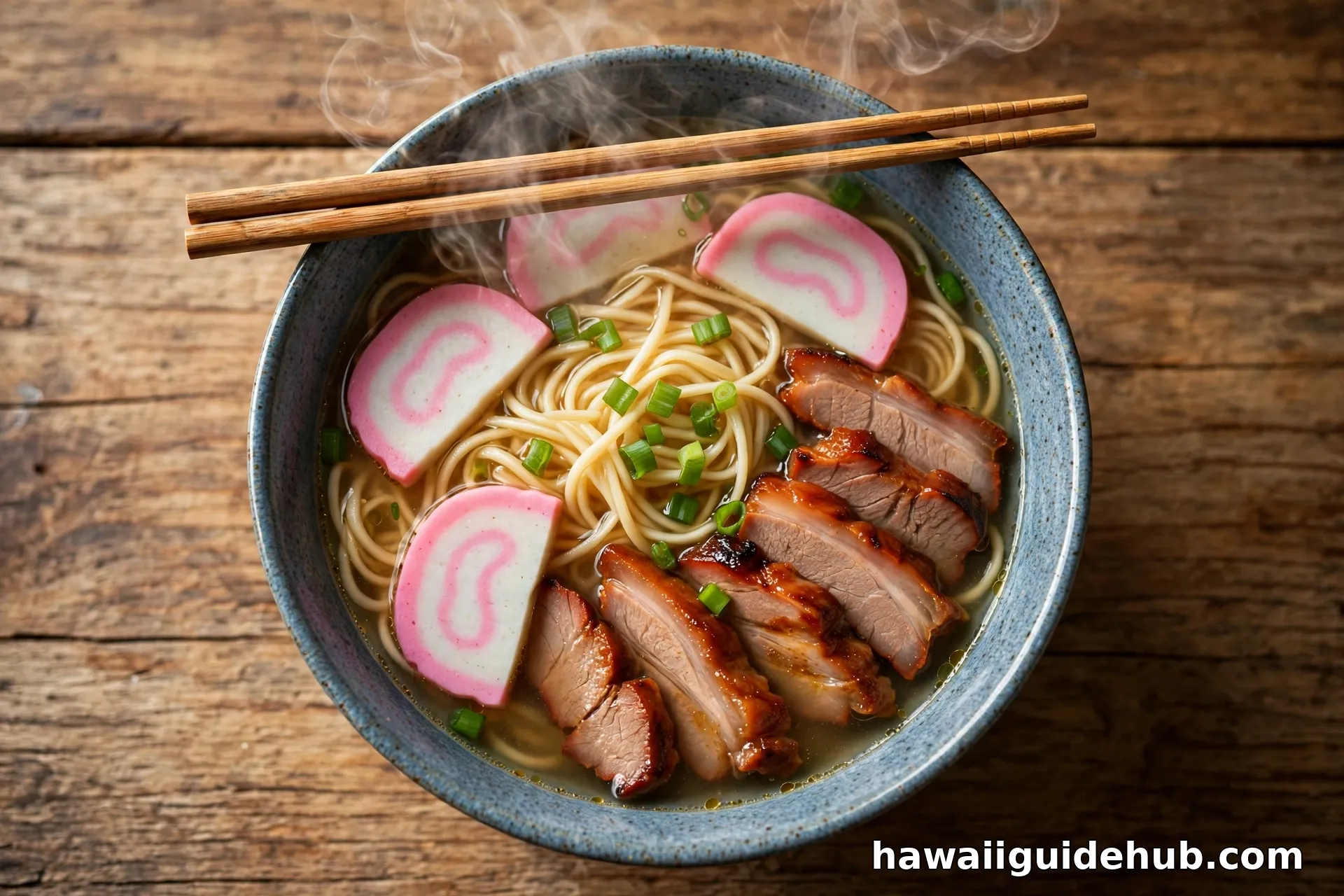
The first thing you notice about real saimin broth is its clarity. Unlike the milky, collagen-thick tonkotsu broth of Japanese ramen or the dark, soy-forward broth of some Chinese noodle soups, saimin broth is translucent and golden. It looks delicate, but the flavor is anything but thin. A proper bowl delivers a wave of umami from the sea: the briny sweetness of dried shrimp, the oceanic depth of kombu kelp, the smoky lift of bonito flakes, and the earthy roundness of dried shiitake mushrooms.
Salt and shoyu season it, but restraint is the point. Saimin broth should taste balanced enough to drink straight from the bowl, which is exactly how locals finish it. The noodles, toppings, and condiments add texture and contrast, but the broth is the foundation. When a saimin stand gets the broth right, regulars can taste the difference immediately, and they will drive across town for it.
Compared with ramen, saimin is lighter in body and simpler in construction. Ramen broths often simmer for twelve hours or more to extract gelatin and fat. Saimin broth is typically simmered gently for a much shorter time, sometimes under an hour, because the goal is a clean dashi-style extraction rather than a rich stock. The result is a soup you can eat every day without feeling weighed down, which is precisely what plantation workers needed from it.
The History Behind Saimin Broth
Saimin was born in the plantation camps of Hawaii in the late 1800s and early 1900s. Sugar and pineapple plantations recruited laborers from China, Japan, Portugal, Korea, Puerto Rico, and the Philippines, and these workers lived side by side in camp housing. At mealtimes, noodle traditions collided. Chinese workers brought wheat noodles and clear soups. Japanese workers brought dashi, shoyu, and a reverence for clean broth. Filipino workers brought their own noodle dishes and resourcefulness with dried seafood.
Out of those shared kitchens came saimin: soft wheat noodles in a dashi-influenced broth, topped with whatever was affordable and on hand. It was cheap, filling, warming, and fast. Plantation stores and camp kitchens served it, and as workers left the plantations for towns, they opened saimin stands that became neighborhood institutions. By the mid twentieth century, saimin was firmly Hawaii’s unofficial state soup.
The broth reflects that mixed heritage in every sip. The Japanese contribution is the dashi base: kombu and dried fish or shellfish simmered briefly for umami. The Chinese contribution is the wheat noodle and the habit of seasoning with soy. The Filipino and broader local contribution is improvisation: dried shrimp, a pantry staple across Southeast Asian cooking, gives many saimin broths their distinctive sweet brininess. No single immigrant cuisine can claim saimin. That is the point, and it is why the dish exists nowhere else but Hawaii.
Today saimin is so embedded in local life that even McDonald’s restaurants in Hawaii sell it. Saimin stands with decades of history still draw lines, and family recipes for the broth are guarded the way mainland families guard chili or barbecue sauce recipes. When Hawaii residents move to the mainland, a homemade pot of saimin broth is one of the first things they learn to recreate.
The Core Ingredients of Authentic Saimin Broth
Traditional saimin broth is built in two layers: the dashi layer, which provides umami, and the seasoning layer, which provides salt and balance. Here is what goes into each layer and why it matters.
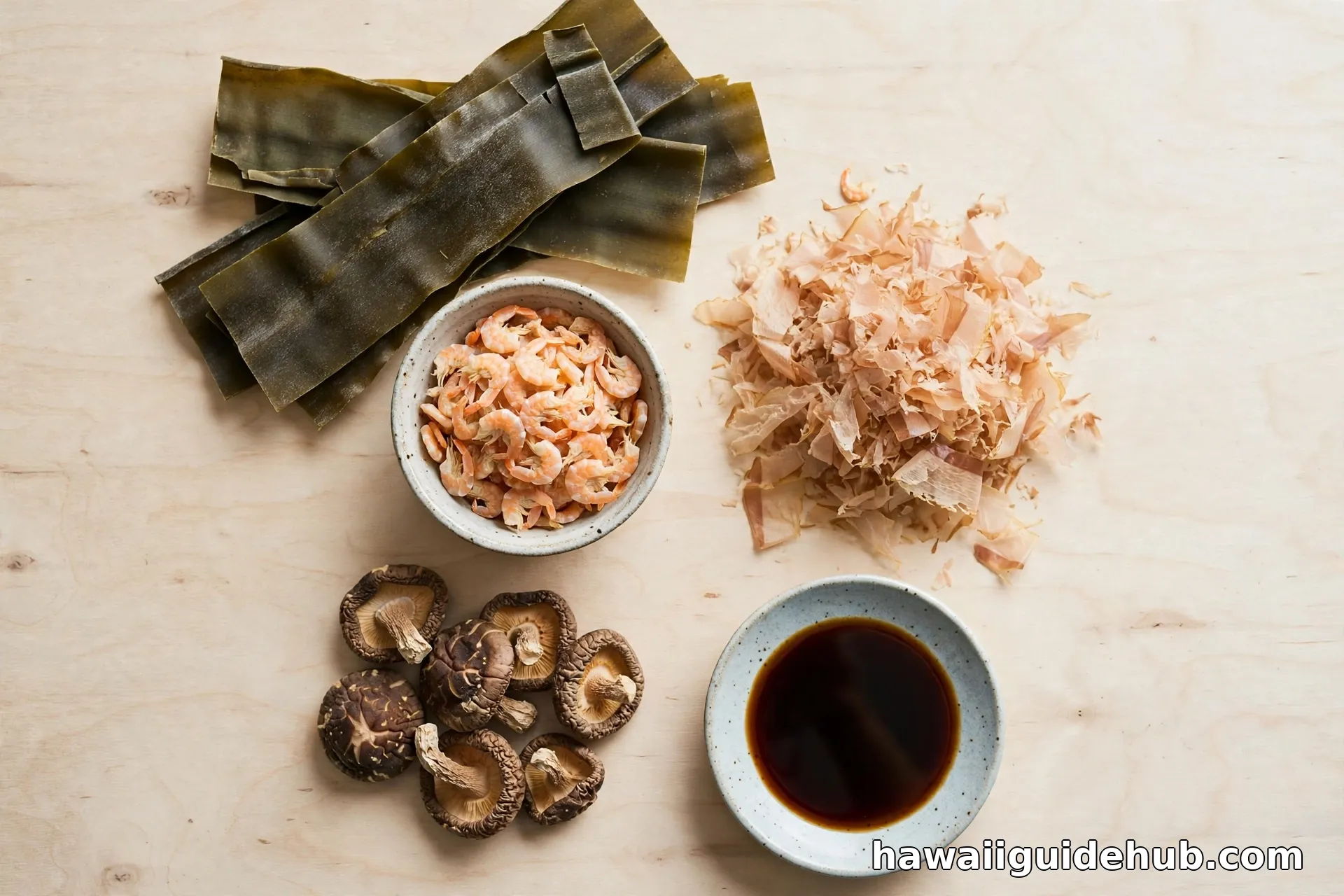
| Kombu (dried kelp) | The backbone of the dashi. Adds deep oceanic umami and a subtle sweetness. Wiped clean, never rinsed, and removed before the water boils hard. |
| Dried shrimp | The signature saimin ingredient. Gives the broth its characteristic sweet brininess that separates it from plain Japanese dashi. |
| Bonito flakes (katsuobushi) | Smoky, savory depth. Steeped briefly and strained out so the broth stays clear. |
| Dried shiitake mushrooms | Earthy roundness and an extra layer of umami that lingers on the palate. |
| Shoyu (soy sauce) | Seasoning and color. Used with restraint so the broth stays golden rather than dark. |
| Salt | Fine-tunes the seasoning. Many old recipes call for Hawaiian sea salt. |
| Water | The canvas. Because the broth is so light, clean-tasting water genuinely matters. |
Some family recipes add a light chicken stock or a few pork bones for extra body, a nod to the Chinese side of saimin’s heritage. Others keep it purely dashi-based. Both are authentic. What makes a broth inauthentic is heaviness: if it coats the spoon like gravy or tastes predominantly of chicken fat, it has drifted away from saimin toward ramen.
How Saimin Broth Is Made: The Traditional Method
The classic home method is simple and forgiving. It takes about an hour, most of it hands-off simmering. The quantities below make roughly eight generous bowls.
Step 1: Soak the kombu
Place two large pieces of kombu in a large pot with about ten cups of cold water. Let it sit for twenty to thirty minutes. Starting cold and giving the kelp a head start draws out glutamates gently, which is the whole secret of good dashi.
Step 2: Add the dried ingredients
Add roughly a cup of dried shrimp, a small handful of dried shiitake mushrooms, and a cup of bonito flakes to the pot. Bring the water up slowly over medium heat. Watch it closely: just as it approaches a boil, lift out the kombu. Boiled kombu turns bitter and can make the broth cloudy.
Step 3: Simmer gently
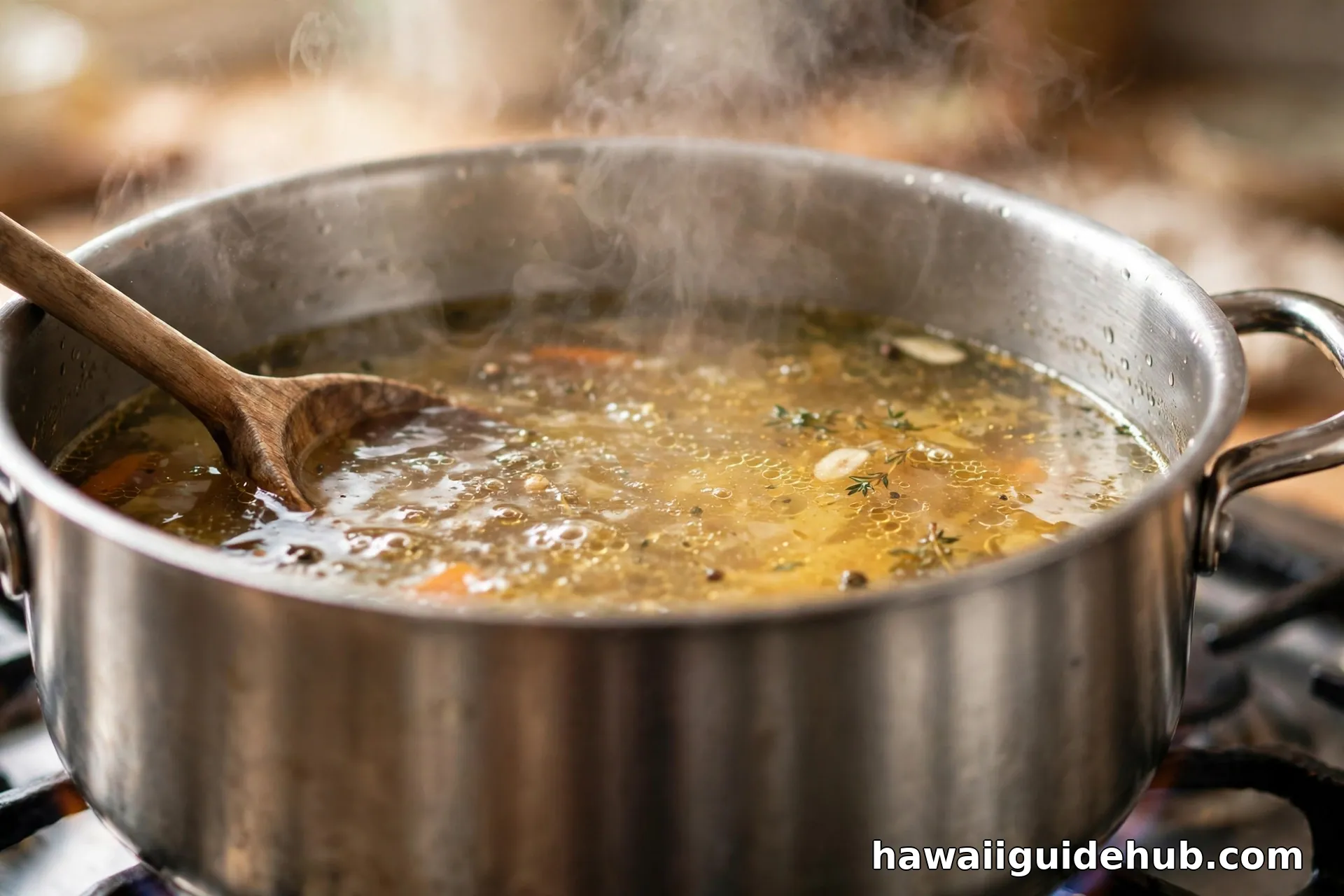
Lower the heat to a bare simmer and let the pot go for ten to fifteen minutes. Skim off any foam that rises. The broth should barely tremble, never roll. Aggressive boiling emulsifies proteins and clouds the liquid, which ruins the signature clarity.
Step 4: Strain
Strain the broth through a fine-mesh sieve lined with cheesecloth or a clean kitchen towel. Press the solids gently to extract liquid, but do not squeeze aggressively. Return the clear broth to the clean pot.
Step 5: Season
Warm the strained broth over low heat and season with shoyu, starting with about a quarter cup, and salt to taste. The broth should taste savory and complete on its own, with the shoyu supporting rather than dominating. Taste as you go. Every brand of shoyu has a different salt level, so there is no substitute for tasting.
Step 6: Serve over fresh noodles
Cook fresh or frozen saimin noodles separately in plain boiling water, drain, and divide among warmed bowls. Ladle the hot broth over the noodles and add toppings. Never cook the noodles in the broth itself: the starch they release will cloud it.
Regional Variations Across the Islands
Like any folk dish, saimin varies from stand to stand and island to island. Kauai is famous for Hamura Saimin in Lihue, a no-frills institution whose broth regulars describe as the benchmark: clean, shrimp-forward, and deeply comforting. Oahu’s older saimin stands each have loyal followings who will argue at length about whose broth is superior, and the arguments are part of the fun.
Some shops lean Japanese, with a pronounced kombu and bonito character. Others lean Chinese, adding pork bones or a whisper of ginger to the pot. A few old-timers still finish with a pinch of MSG, a mid-century habit that modern home cooks usually skip in favor of the natural glutamates in the kombu and shiitake. None of these versions is wrong. The through line is always the same: clear, light, savory, and drinkable.
Fried saimin is a related but separate dish worth knowing about. It uses the same noodles stir-fried with vegetables and meat rather than served in soup. If you see it on a menu, it is delicious, but it is not what this broth recipe is for.
Toppings and How Saimin Is Served
The classic garnish set is sliced kamaboko (the pink-and-white cured fish cake), chopped green onions, and strips of char siu pork or Spam. A thin omelet sliced into ribbons, a sheet of nori, and a soft wedge of boiled egg are all common additions. The toppings go on after the broth is ladled, so they warm through without overcooking.
Saimin arrives very hot and is eaten with chopsticks for the noodles and a deep-bowled Chinese-style spoon for the broth. Chinese hot mustard is the traditional table condiment: a small dab stirred into the broth adds a nasal-clearing heat that cuts the richness of the pork toppings. Some people add a splash of shoyu at the table, but a well-made broth needs nothing.
Portion custom matters too. Saimin is often ordered in small, regular, or large sizes, and many stands offer a “saimin and barbecue stick” combination plate that pairs the soup with grilled teriyaki beef skewers. That pairing, soup plus skewers, is a plantation-era lunch counter tradition that survives intact.
Substitutions for Home Cooks
Not everyone has an Asian market nearby, so here is how to adapt without losing the soul of the dish. If you cannot find kombu, use a smaller amount of any dried kelp or a teaspoon of dashi powder per cup of water as a base, then build from there. Dried shrimp is the hardest ingredient to replace: a spoonful of fish sauce or a few extra bonito flakes gets you partway there, though the sweet brininess will be milder.
Fresh shiitake can stand in for dried in a pinch, but dried mushrooms have a more concentrated umami punch, so use more of the fresh ones. For the noodles, look for fresh or frozen saimin noodles at Asian grocery stores; in a real pinch, thin fresh wheat noodles or even wonton noodle strands work better than instant ramen bricks, which are fried and flavored in ways that fight the clean broth.
Vegetarian cooks can make an excellent saimin broth by doubling the kombu and shiitake, adding extra dried mushrooms, and seasoning carefully with shoyu and salt. The result will not have the shrimp sweetness, but it will still be recognizably saimin: clear, savory, and comforting.
Where Visitors Encounter Saimin
Visitors meet saimin in three main places. Dedicated saimin stands, often decades old and cash-friendly, are the pilgrimage sites. Local plate-lunch restaurants and okazuya delis usually have it on the menu as a side or small bowl. And zippy-style fast food chains across the islands serve it as a standard menu item, which tells you how mainstream the dish is.
For a deeper taste of Hawaii’s local food culture beyond the bowl, explore our guides to must-try local dishes across the islands, the story of malasadas and Hawaii’s Portuguese roots, how to make lomi lomi salmon at home, and the beloved huli huli chicken tradition. Together they sketch the same plantation-era story that saimin broth tells in a single sip.
Watch: How Saimin Is Made
Saimin Broth FAQs
How is saimin broth different from ramen broth?
Saimin broth is lighter, clearer, and quicker to make. It is dashi-based, built from kombu, dried shrimp, bonito, and shiitake, and simmered gently for under an hour. Ramen broths are typically richer, often simmered for many hours to extract gelatin and fat, with a heavier body and more complex seasoning.
Can I make saimin broth ahead of time?
Yes. The strained, seasoned broth keeps in an airtight container in the refrigerator for 3 to 4 days, and it freezes well for up to 3 months. Reheat gently on the stovetop without boiling, and cook the noodles fresh just before serving.
What noodles should I use for saimin?
Use fresh or frozen saimin noodles if you can find them at an Asian market. They are soft, thin wheat noodles made specifically for the dish. Thin fresh wheat or wonton noodles are the next best choice. Avoid instant ramen bricks, which are fried and pre-seasoned.
Is saimin broth gluten free?
The broth itself can be made gluten free by using tamari instead of shoyu, since kombu, dried shrimp, bonito, and shiitake contain no gluten. The traditional wheat noodles are not gluten free, so pair the broth with rice noodles if you need to avoid gluten entirely.
Why is my saimin broth cloudy?
Cloudiness usually comes from boiling too hard, leaving the kombu in past the boiling point, cooking the noodles in the broth, or squeezing the strained solids too aggressively. Keep the heat at a bare simmer, remove kombu early, strain gently, and always cook noodles separately.
Do I need MSG in saimin broth?
No. Some old stand recipes used it, but the kombu, dried shrimp, bonito, and shiitake already provide abundant natural glutamates. Most modern home cooks skip it entirely and still get a deeply savory broth.
The Bowl That Tastes Like Home
Saimin broth endures because it is honest food. It asks for a handful of humble dried ingredients, a gentle hand with the heat, and the patience to taste as you season. In return it gives you the flavor of Hawaii’s plantation camps, its harbor towns, and its late-night saimin stands, all in a single clear golden bowl. Make it once at home and you will understand why generations of islanders have called it comfort in its purest form.