Papio Fish Hawaii: The Trevally Guide

Papio is Hawaii’s beloved inshore game fish: any trevally (jack) under 10 pounds. Catch one over 10 pounds and it becomes ulua. The papio is a major local food fish, the prize of shore fishermen, and the young form of some of the ocean’s most powerful predators. This guide covers what papio are, the trevally species behind the name, how to catch and cook them, and the rules.
This page covers the papio definition, the growth stages, the species, fishing methods, cooking, and FAQs. Everything about papio fish Hawaii is on this one page.
The Short Answer
Papio (pah-PEE-o) is the Hawaiian name for any trevally or jack under 10 pounds; fish over 10 pounds are called ulua. The main species: giant trevally (ulua aukea, over 100 lbs) and bluefin trevally (ʻomilu, up to 3 feet). Hawaiians named three growth stages: pāpio (young), paʻuʻu (intermediate), ulua (adult). Minimum legal harvest is 10 inches for personal consumption. Papio are prized eating: most are caught and eaten by the fisherman’s family.
Papio to Ulua: The Growth Stages
| Stage | Size | Note |
| Pāpio | Under 10 lbs | The eating size; inshore catch |
| Paʻuʻu | Intermediate | Transition stage |
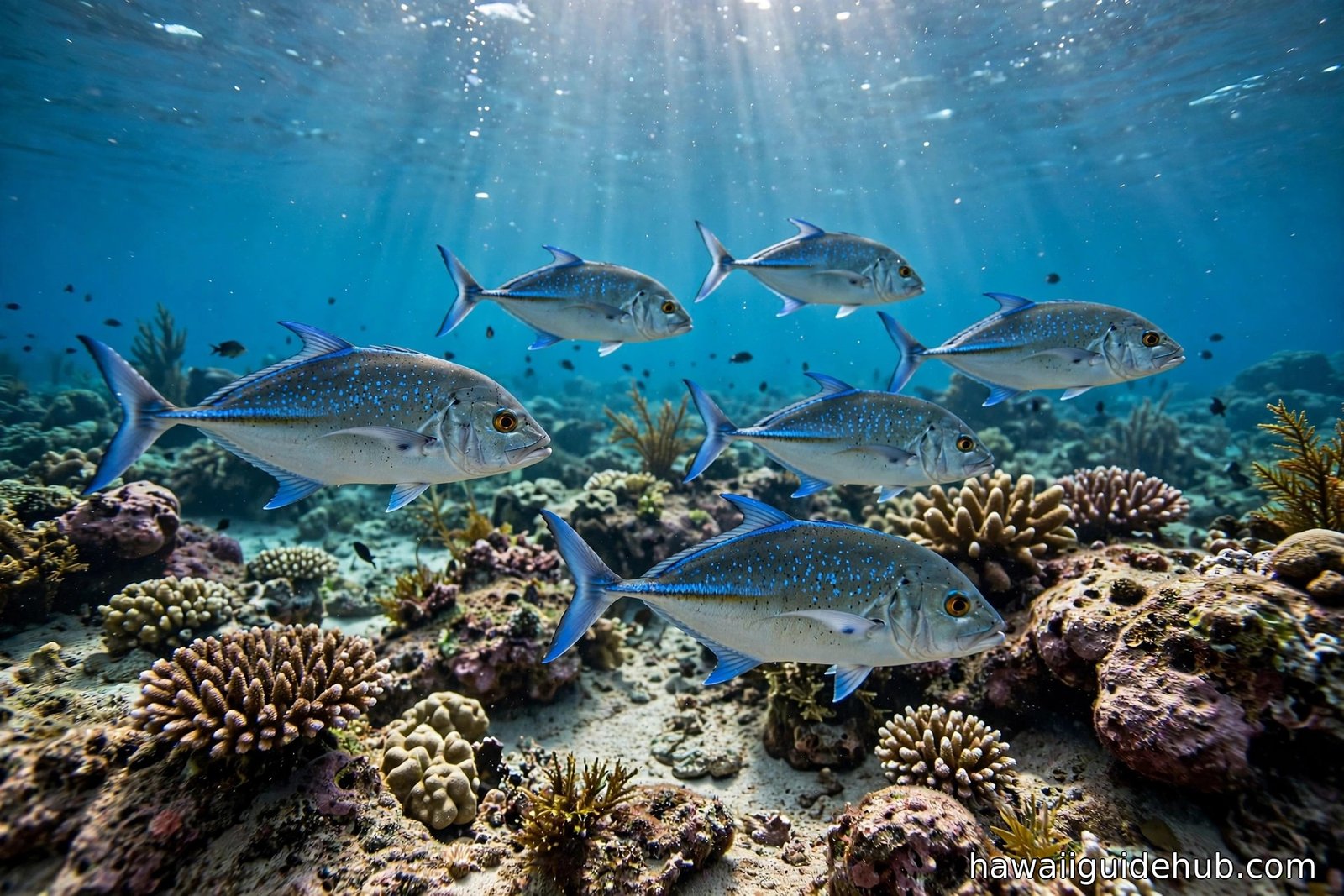
| Ulua | 10+ lbs to 100+ lbs | Giant trevally; trophy fish |
The Species Behind the Name
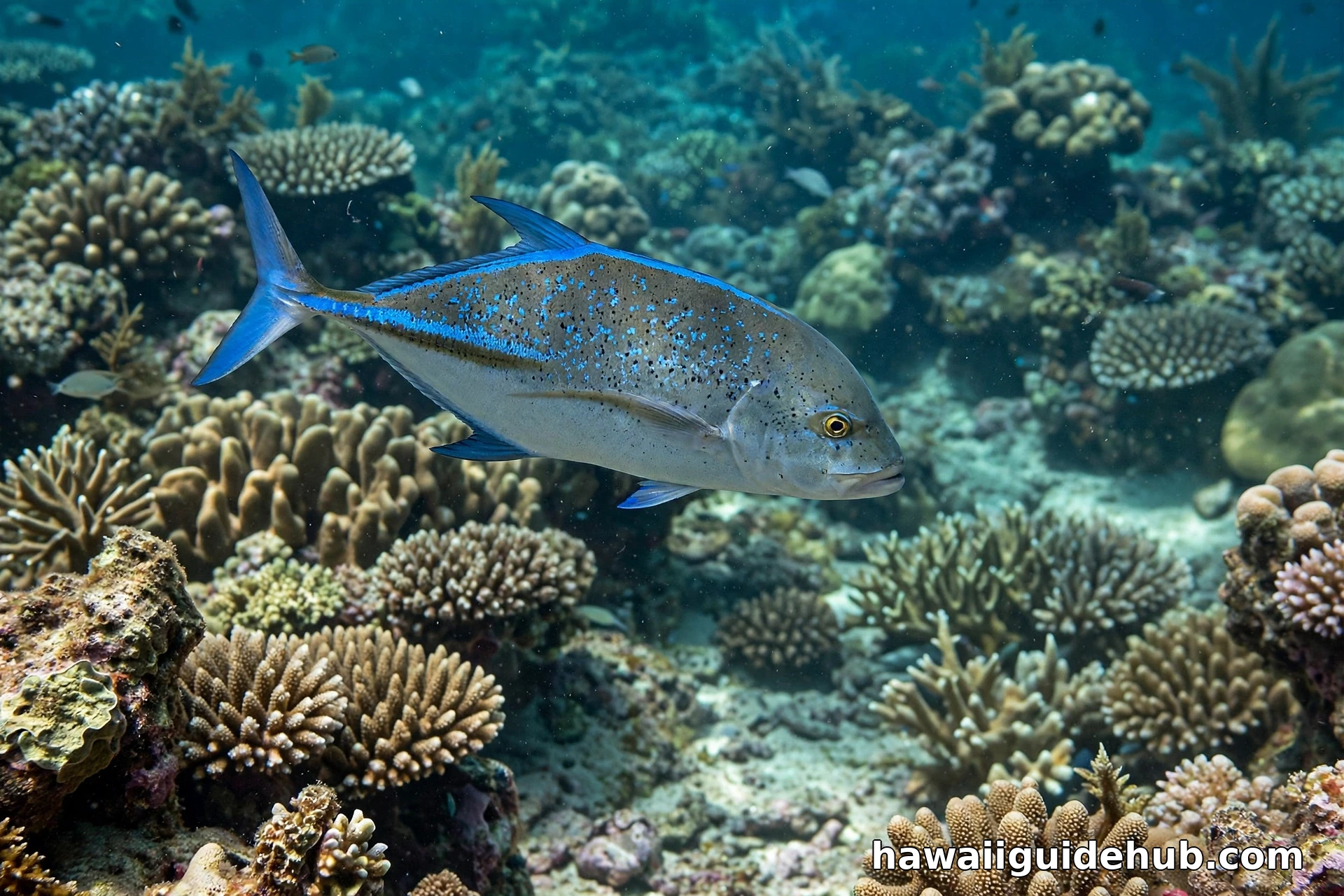
“Papio” covers young fish of several species. The giant trevally (ulua aukea, Caranx ignobilis): solid grey adults, over 100 pounds, one of the ocean’s strongest fish. The bluefin trevally (ʻomilu): fluorescent blue-green fins, up to 3 feet, a top reef predator that hunts with moray eels. When young, both school together in groups of 20-50 and are hard to tell apart: all are papio. The name describes the size, not the species.
How to Catch Papio
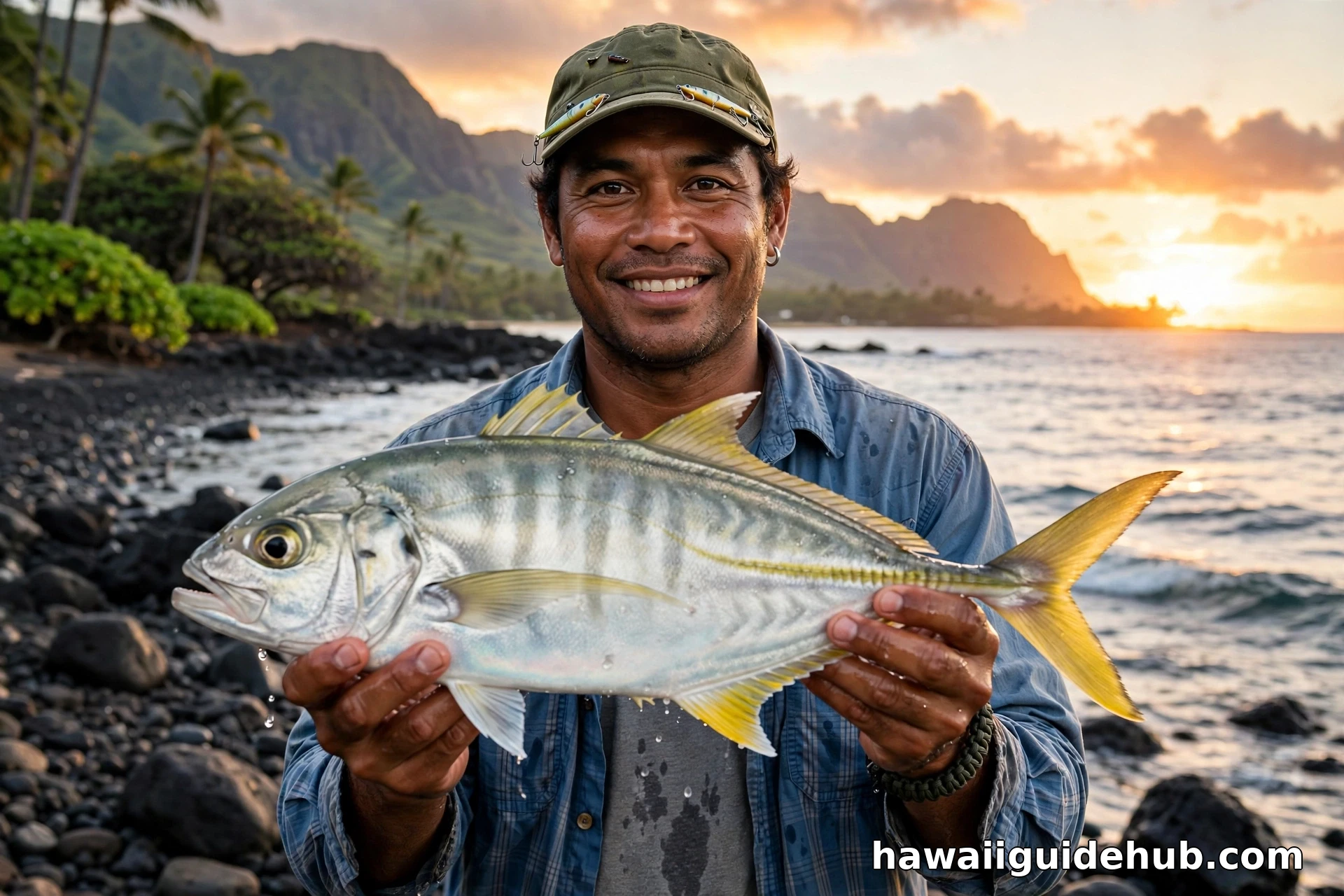
Papio are the backbone of Hawaii’s shore fishery: caught by whipping (casting and retrieving lures), dunking bait, and fly fishing. White papio hunt in bays, stream mouths, and harbor channels during the day; the bigger ulua feed at night. Live ʻoama (juvenile goatfish) is the classic bait that outfishes everything else. Light tackle, dawn and dusk, rocky shorelines: the formula has not changed in generations. Most papio are released or eaten: the fishery is personal, not commercial.
How to Cook Papio
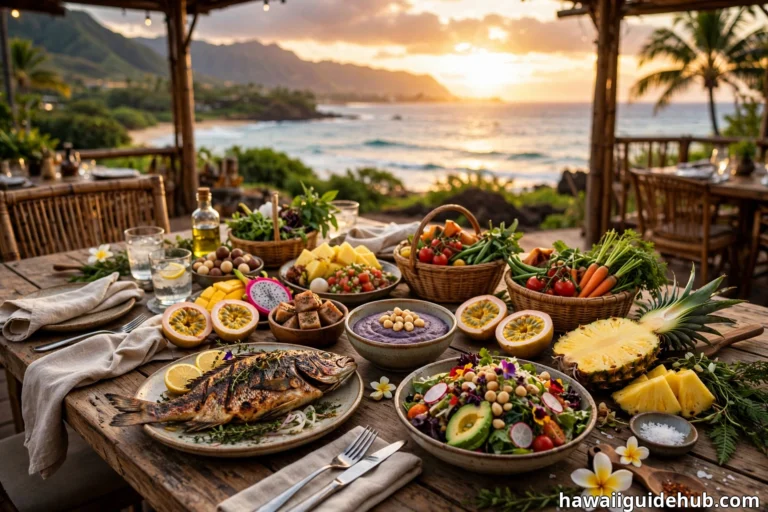
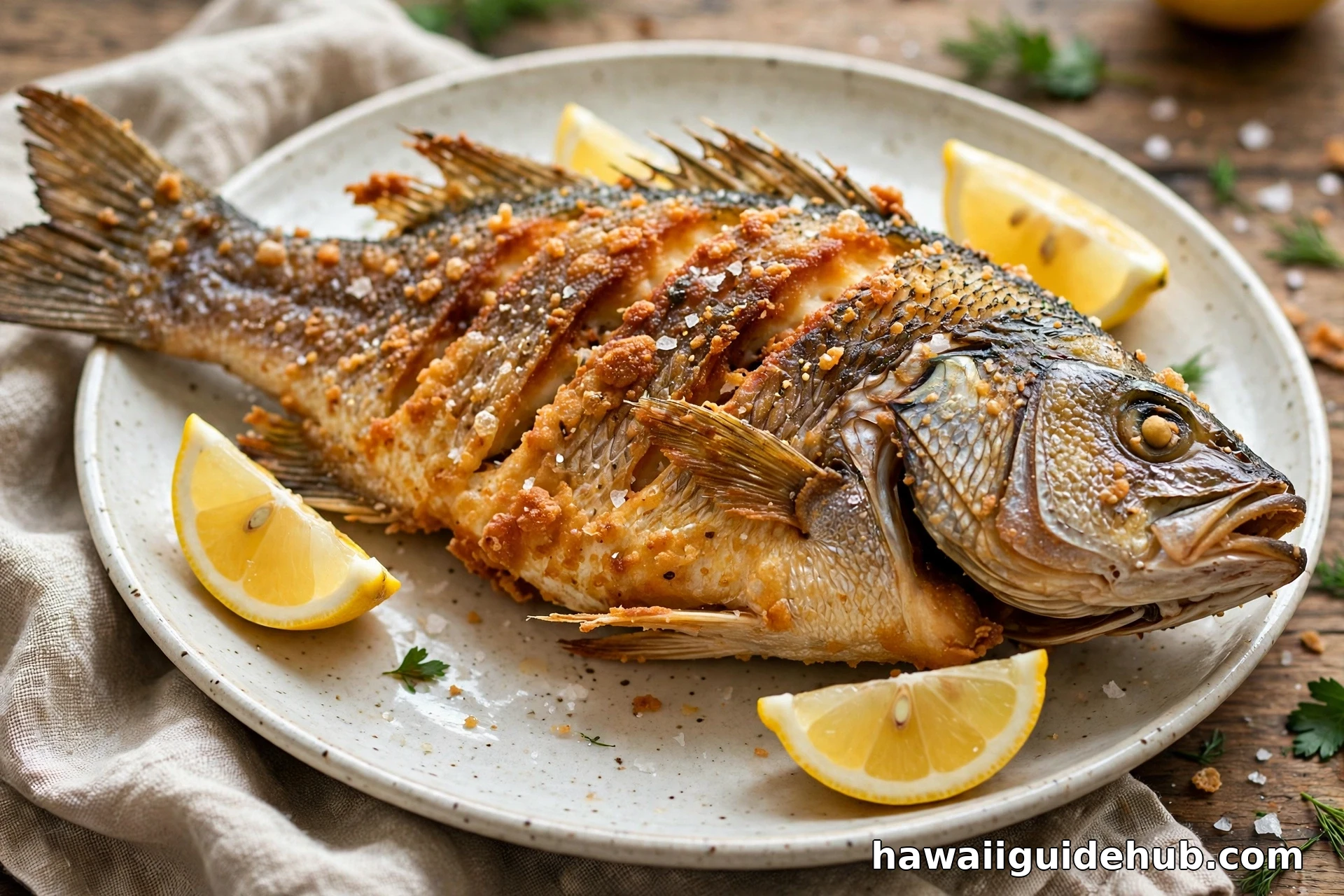
Papio are excellent eating: firm, sweet, versatile. Classic preparations: fried whole (crispy skin, the local favorite), steamed with ginger, baked, or eaten raw as sashimi. Clean and fillet leaving the skin on; the skin crisps beautifully. Most papio go straight from the shore to the family table: the freshest fish is the one you caught. Simple cooking honors the catch.
The Rules
Per Hawaii regulations, giant trevally (ulua/papio) of at least 10 inches fork length may be harvested for personal consumption; 16 inches for commercial harvest. Always check current DLNR rules: regulations change. The Ulua and Papio Tagging Project (2000-2016) studied the fishery with volunteer anglers: the science supports careful harvest. Respect the minimums: the fishery belongs to everyone.
For Hawaiian food culture, see Hawaiian traditions: hula, chanting, and storytelling, the significance of ohana, and Hawaii’s history before the 50th star.
The ʻOmilu: Bluefin Beauty
The ʻomilu (bluefin trevally) is the most beautiful: fluorescent blue-green fins, electric colors, and explosive speed. Adults reach 3 feet and patrol the reef as apex predators. They hunt in pairs, herd baitfish, and even cooperate with moray eels: the eel flushes prey from caves while the ʻomilu waits outside to strike. More ʻomilu on a reef means a healthier reef: they are an indicator species. Watching one hunt is watching perfection.
The Ulua: Giant of the Reef
The ulua (giant trevally, ulua aukea) is the heavyweight: over 100 pounds, solid grey, immensely powerful. It is one of the most sought-after sport fish in the Pacific: the fight is legendary and humbling. Ulua hunt at night in the shallows, using the darkness as cover. Landing a 100-pound ulua from shore is a lifetime achievement: the fisherman joins a small, respected club. The papio you catch today could be the ulua of someone’s dreams tomorrow.
Whipping: The Classic Technique
Whipping is Hawaii’s signature shore technique: casting and retrieving lures (often oama-like soft baits) along the reef edge. The rhythm is meditative: cast, retrieve, repeat, for hours at dawn. Dawn and dusk are prime: the papio feed in low light. Rocky points, reef channels, harbor mouths: the structure holds fish. Whipping is accessible (basic gear works) and addictive: the strike of a papio on light tackle is electric.
Night Fishing for Ulua
Ulua fishing is a night game: slide live bait (oama, akule) down the line into the dark water and wait. The equipment is heavy: 80-130 lb line, big reels, sand spikes. The wait can be hours; the strike is violent. Ulua fishermen are a dedicated tribe: they know the moon phases, the tides, the spots. It is less fishing than hunting: patience, knowledge, and respect for a worthy adversary.
Papio in Hawaiian Culture
The ulua was sacred: offered to the god Kū in war rituals as a substitute for human sacrifice. The three growth-stage names (pāpio, paʻuʻu, ulua) reflect a culture that observed fish closely and named what it saw. Papio fed families; ulua fed ceremonies. The fish connected the reef to the gods: catching one was provision, offering one was devotion. Modern fishermen inherit this: the respect, the sharing, the gratitude.
The Tagging Project
Hawaii’s Ulua and Papio Tagging Project (2000-2016) enlisted volunteer anglers to tag and release giant trevally: the data revealed growth rates, movement patterns, and fishery health. Over 80% of tagged fish were under 3 years old: the fishery targets young fish. The science guides the rules: minimum sizes protect the breeding stock. Anglers as scientists: the project proved fishermen and researchers are natural allies.
Cooking Papio: Three Ways
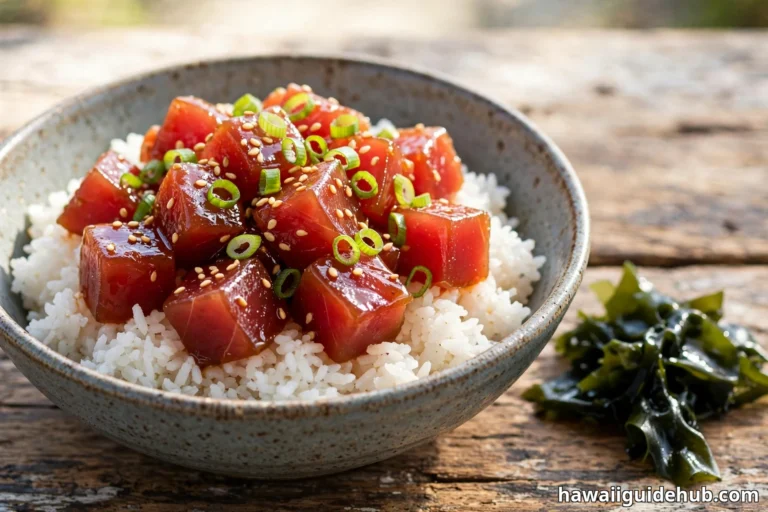
One: fried whole. Score, salt, fry in hot oil until the skin crisps: the local classic that never disappoints. Two: steamed. Ginger, green onions, hot oil: the Chinese-Hawaiian way that honors delicate flesh. Three: raw. Sashimi or poke with Hawaiian salt and limu: the freshest papio needs nothing else. All three share a rule: the fish must be fresh. Papio deteriorates fast: ice it immediately, cook it today.
Catch and Release
Many papio fishermen release: the sport is the strike, not the meat. Release carefully: wet hands, quick hook removal, minimal handling, revive in the water before letting go. Undersized fish must be released: the law and the ethic agree. The released papio grows into the ulua someone else dreams of: release is an investment in the future. The best fishermen are conservationists.
Where to Catch Papio
Papio haunt structure: rocky points, reef channels, harbor mouths, stream mouths, and sandy pockets near reef. Every island has its spots: Makapuʻu on Oahu, the Kona coast on the Big Island, Honolua on Maui. Ask at local tackle shops: they know the current bite. Dawn and dusk, moving water, structure: the formula works everywhere. The best spot is the one you know: local knowledge beats Google.
The Bait: ʻOama and More
Live ʻoama (juvenile goatfish) is the premium papio bait: lively, shiny, irresistible to hungry trevally. Also effective: akule, opelu, shrimp, squid. Artificials work too: soft grubs, spoons, plugs. Match the hatch: see what baitfish are present and imitate them. Fresh is best: live bait outfishes dead bait, and fresh dead outfishes frozen. The bait matters as much as the spot.
Fly Fishing for Papio
Fly fishing for papio is the purist’s game: sight-casting to cruising fish on the flats. The take is visual and violent: you see the fish eat. Light saltwater fly gear, crab and shrimp patterns, calm mornings: the recipe. It is challenging (papio are wary) and transcendent (the eat is unforgettable). The flats of Oahu and Maui offer the best opportunities. Bring patience: the fish will test it.
Papio vs Other Jacks
Hawaii has other jacks: kahala (amberjack), kamanu (rainbow runner), kagami ulua (African pompano). Papio/ulua/ʻomilu are the trevally branch: deep-bodied, powerful, the inshore specialists. Each has its devoted fans: kahala for sashimi, pompano for the table. But papio is the people’s fish: the one caught from shore, eaten at home, and loved by all. The jack family is large; papio is the heart.
The Family Table
The papio tradition ends at the table: the fisherman’s family and friends sharing the catch. Fried papio, rice, mac salad: the local plate. The fish tastes better shared: the catch is the excuse, the gathering is the point. This is Hawaii’s fishing culture: not trophies on walls, but food on tables. The papio feeds more than bodies: it feeds community.
The Strike
The papio strike is unforgettable: a sudden, violent hit that nearly rips the rod from your hands. On light tackle, a 5-pound papio fights like a fish twice its size: runs, head shakes, blistering speed. The first run is the test: hold on, keep the line tight, let the drag work smoothly. Veterans remember their first papio strike forever: the moment the shore came alive. It is why they keep coming back at dawn.
Tackle for Papio
Papio tackle is light: 8-12 lb line, medium-light rod, small lures and hooks. The light gear makes the fight sporting: heavy gear ruins the fun. Fluorocarbon leaders (papio are leader-shy), small soft plastics, spoons, and live bait rigs. Keep it simple: a basic spinning setup catches papio. The fish do not care about your gear budget: they care about presentation. Skill beats equipment.
The Ethics of the Shore Fishery
The shore fishery runs on ethics: take only what you need, release the small ones, respect other fishermen’s space, pack out your trash (including tangled line, which kills birds and turtles). The spots are shared: the regulars know each other, and newcomers are welcome if they are respectful. The unwritten rules matter more than the written ones: the culture sustains the fishery. Fish like you belong: because you do, if you act like it.
The Next Generation
Shore fishing is how Hawaii’s kids learn the ocean: grandparents teaching grandchildren to whip at the same spots they fished as kids. The papio is the teacher: abundant enough for success, challenging enough for real lessons. The values transfer: patience, respect, sharing, conservation. Every papio fisherman was once a kid with a hand-me-down rod: the tradition continues one dawn at a time. The future of the fishery is in small hands.
From Papio to Ulua: The Dream
Every papio fisherman dreams of the ulua: the 100-pound giant that validates a lifetime of dawns. Few will catch one; all will chase it. The dream is the point: it keeps them on the shore, watching the water, learning the ocean. The papio is the reality; the ulua is the aspiration. Together they are Hawaii’s fishing story: humble, hopeful, and hooked for life.
Video: Papi’o Trevally Jacks
Papi’o jacks: Hawaii’s inshore fighters.
Frequently Asked Questions
What is a papio fish?
Any trevally or jack under 10 pounds. Over 10 pounds, it is called ulua.
Is papio a baby ulua?
Yes: papio are the young of ulua (giant trevally) and ʻomilu (bluefin trevally).
Is papio good to eat?
Excellent: a major local food fish. Fried, steamed, baked, or raw.
What is the difference between papio and ulua?
Weight: under 10 lbs is papio, 10+ lbs is ulua. Same fish, different stage.
What is ʻomilu?
The bluefin trevally: colorful, up to 3 feet, a top reef predator. Young ones are papio.
What is the legal size for papio?
10 inches minimum for personal consumption, per Hawaii regulations.
Papio fish is Hawaii’s fishing culture in miniature: the shore catch, the family meal, the name that changes as the fish grows. From the 10-inch papio to the 100-pound ulua, it is one of the great fish stories of the Pacific. Catch it, cook it simply, share it generously: that is the papio tradition, and it has fed Hawaii for centuries. The next dawn is coming: the papio are waiting.