Kalama Beach Park: Kailua’s Quiet Local Favorite

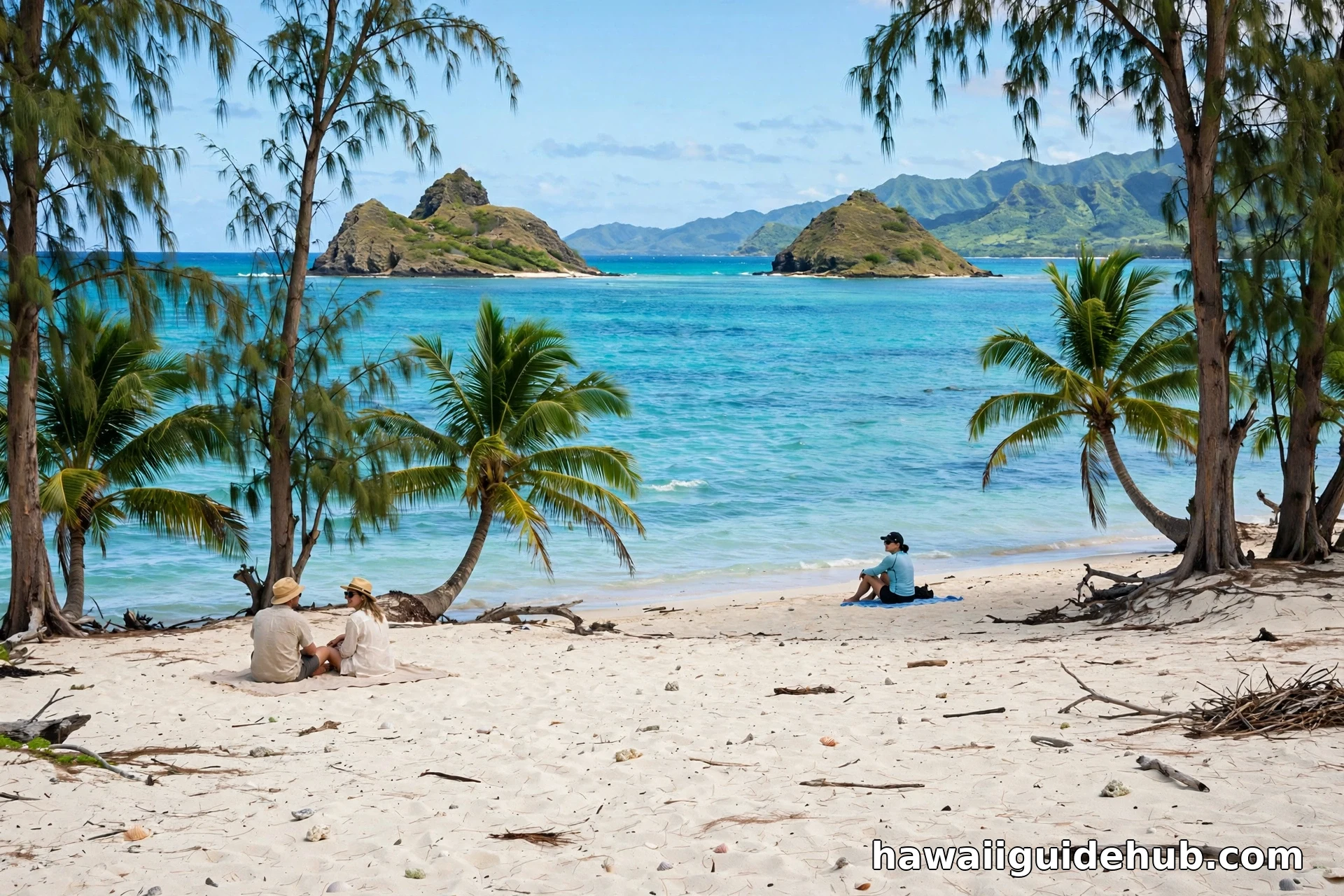
Kalama Beach sits on the quiet middle stretch of Kailua Bay, where the crowds thin out, the water stays gentle, and the view runs the full crescent of one of Oahu’s most beautiful bays. Part beach, part historic park, it is where Kailua locals go when they want the bay without the bustle of Kailua Beach Park.
This guide covers everything you need for a visit: where to find Kalama Beach, swimming and water conditions, windsurfing and paddling, parking and facilities, the estate’s fascinating history, and how it compares to its famous neighbors, Kailua Beach and Lanikai.
Kalama Beach at a Glance
| Category | The verdict |
|---|---|
| Location | 248 N Kalaheo Avenue, Kailua, on Kailua Bay’s 4-mile stretch of white sand |
| Crowds | Light, mostly locals |
| Best for | Swimming, bodyboarding, beach walks, picnics |
| Swim safety | Lifeguard tower installed in 2024 |
| Facilities | Restrooms, outdoor shower, picnic areas, small parking lot |
| Parking | 7:00 AM to 6:00 PM; gates close at 6:00 PM |
| The view | Mokulua Islands to the south, Mokapu Peninsula to the north |
Where Is Kalama Beach?
Kalama Beach Park sits at 248 North Kalaheo Avenue in Kailua, on Oahu’s windward side about 12 miles northeast of Waikiki. It occupies the central section of Kailua Bay, a nearly four-mile unbroken ribbon of white sand that runs from the Mokapu Peninsula in the north to the Mokulua Islands in the south. Kailua Beach Park anchors the southern end of the bay; Lanikai sits just beyond it. Kalama is the bay’s quiet middle, and you can walk the shoreline in either direction for miles.
Getting there is straightforward: take the Pali Highway (Highway 61) from Honolulu over the Koolau mountains into Kailua, then turn onto North Kalaheo Avenue. The park entrance is about half a mile ahead on the ocean side of the road. If you are new to the windward side, our guide to the windward side of Oahu explains what makes this coast so different from Waikiki.
Why Locals Love It
Kailua Beach gets the fame, but Kalama gets the regulars. The sand is the same powdery white, the water the same turquoise, yet the crowds are a fraction of what gathers at the main beach park a mile south. On a weekday morning you may share the shoreline with a handful of swimmers, a few bodyboarders, and residents walking their dogs along the waterline.
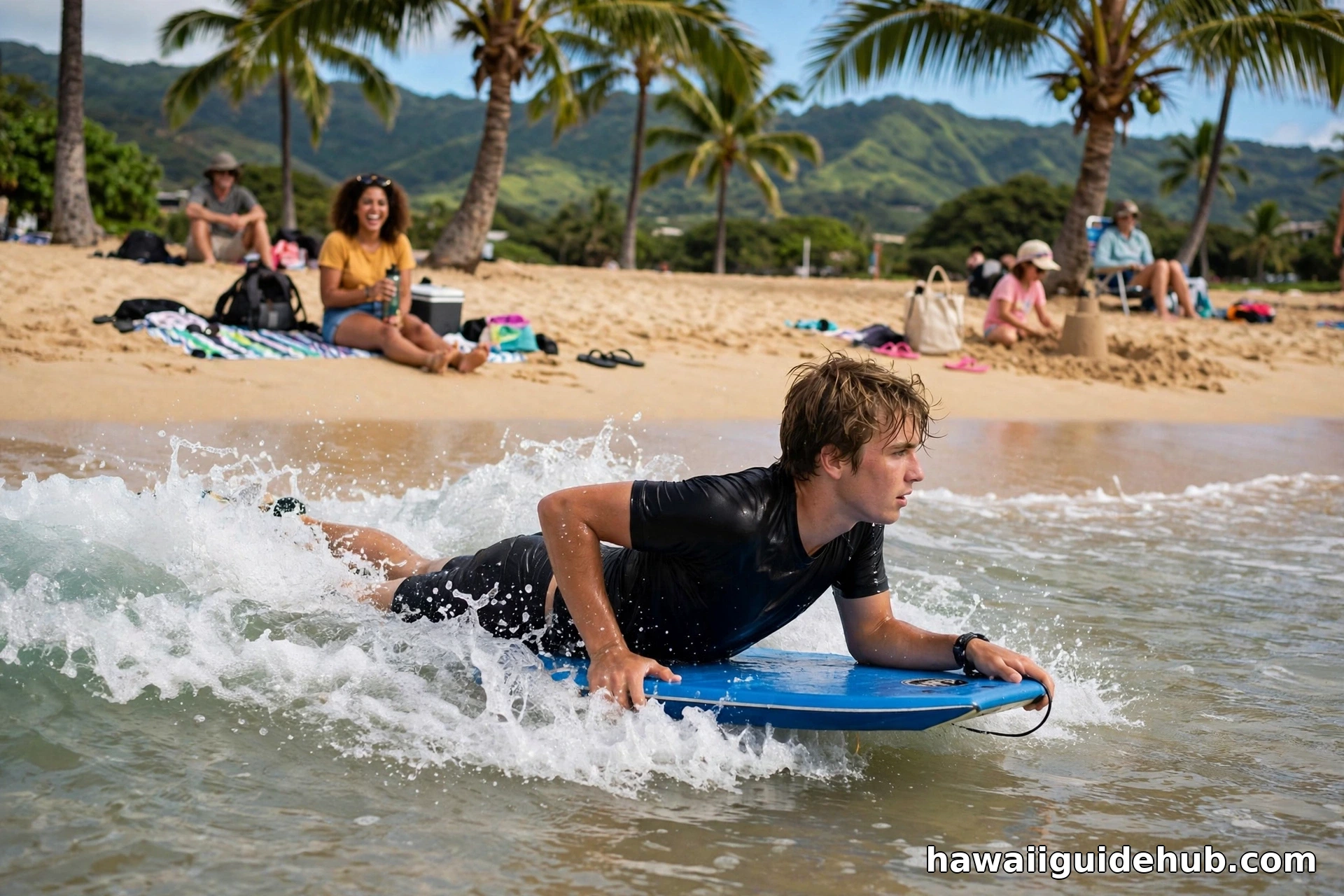
The park behind the sand adds to the appeal. Lawns shaded by ironwood and coconut palms, covered pavilions, and a historic beachfront house give Kalama the feel of a neighborhood gathering place rather than a tourist attraction. Birthday parties, family picnics, and community classes fill the calendar. It is the kind of beach you plan a whole unhurried day around.
Sunrise at Kalama Beach
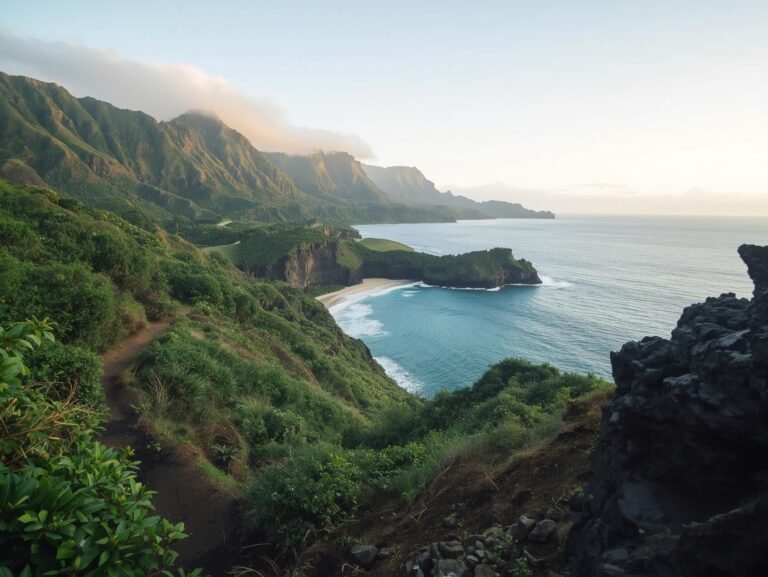
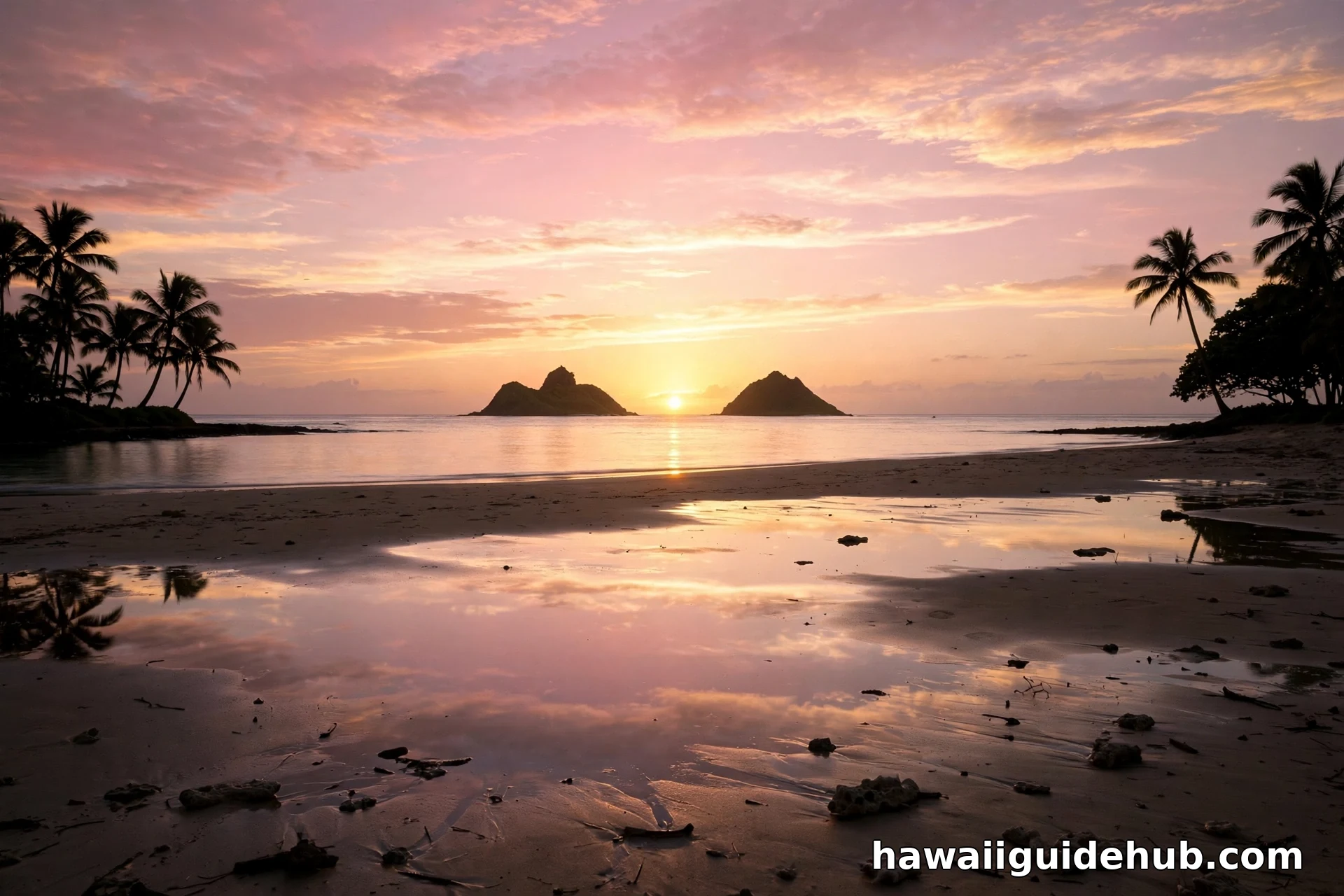
Kalama faces due east, which makes it a superb sunrise beach. The sun climbs straight out of the Pacific, often silhouetting the Mokulua Islands in the first light. Photographers arrive in the blue hour to catch the islands against a pastel sky, and early swimmers get the calmest water of the day as a bonus. The parking lot opens at 7:00 AM, which is after sunrise for much of the year, so sunrise chasers typically park on the street and walk in. Bring a light cover-up: windward mornings can be breezy before the sun is fully up.
The Boettcher Estate Story
Kalama Beach Park has an unusual past. The park’s centerpiece is a beachfront house designed in 1937 by Vladimir Ossipoff, Hawaii’s most celebrated modernist architect, for the Boettcher family, with landscaping by Richard Tongg. Mae Bleakie Boettcher, widow of the original owner, sold the estate to the City and County of Honolulu in 1978, and it became a municipal park. The estate was listed on the National Register of Historic Places in 2002.
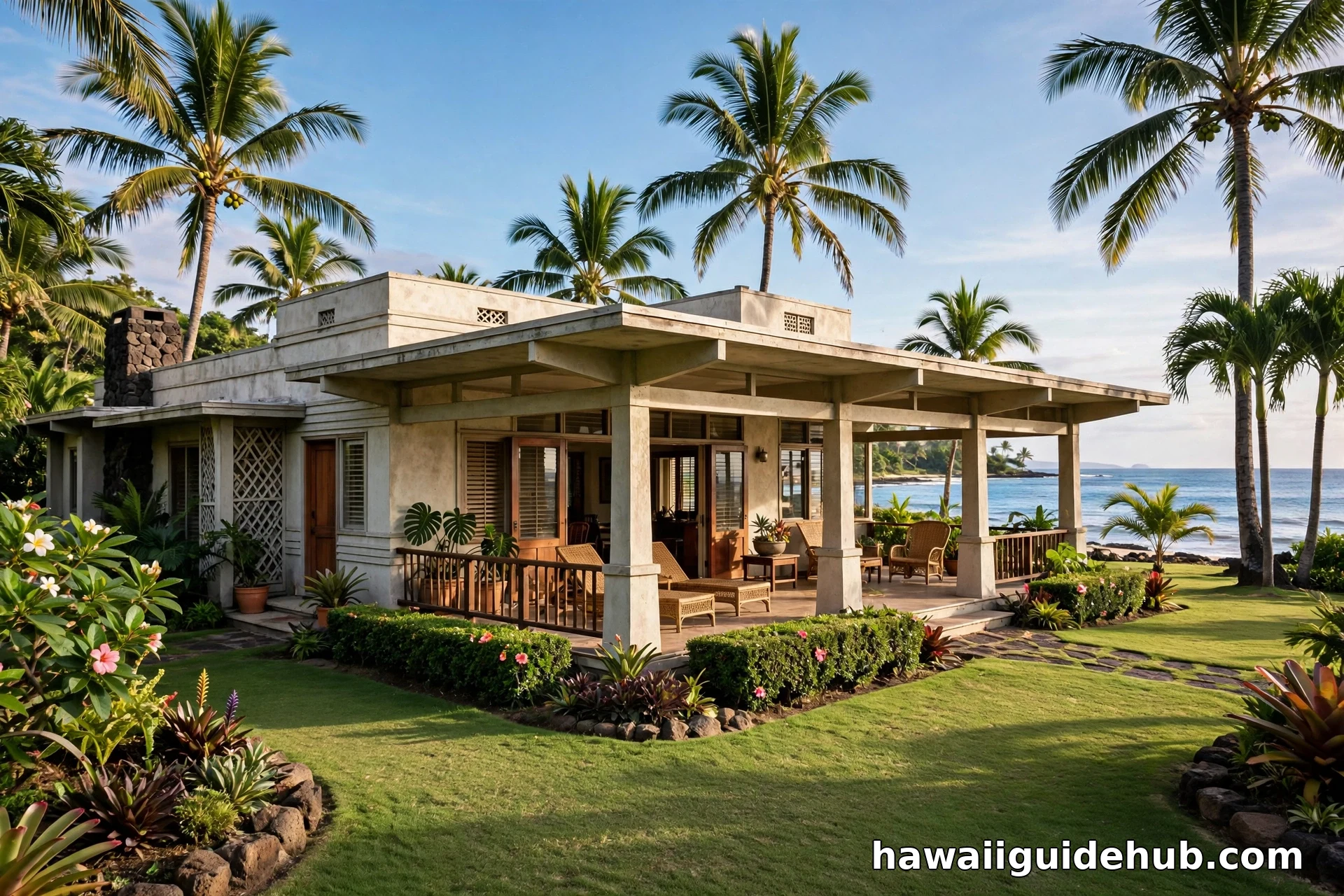
The name Kalama carries its own history. Kalama means “the torch” in Hawaiian. The area was Kailua’s first housing tract, developed in 1925 by Harold K. L. Castle, who named it after Queen Kalama, the wife of King Kamehameha III, who had once owned land in the Kailua area. The old house has served as a community space for classes such as yoga and lei making, keeping the estate a living part of the neighborhood rather than a museum piece.
Swimming and Water Conditions
Kalama’s gentle waves make it a friendly beach for beginner swimmers and bodyboarders. Mornings are typically the calmest, with the water glassy before the trade winds arrive. By afternoon the wind picks up and the surface turns choppy, which is exactly when the windsurfers and kiteboarders come out to play.
A few cautions apply. The surf here can be shore break prone, and near the shoreline the ocean floor is rocky and shallow in patches, so reef shoes are a smart idea. Winter swells that light up Oahu’s north shore can wrap into Kailua Bay and roughen conditions, and like elsewhere on the bay, summer occasionally brings Portuguese man-of-war, whose sting is painful. A lifeguard tower was installed at the beach in 2024, but you should still check ocean conditions before entering and swim near the tower.
Windsurfing, Kiteboarding, and Paddling
Kailua Bay is one of the world’s great wind sport venues, and Kalama sits right in the middle of it. The steady trade winds that make afternoons choppy for swimmers are perfect for windsurfing and kiteboarding, and you will often see colorful sails and kites working the bay offshore. The central bay location gives riders long reaches in both directions.
Stand-up paddling and kayaking are popular on calmer mornings. Experienced paddlers make the crossing to the Mokulua Islands, the twin islets offshore that serve as seabird sanctuaries, but the islands look much closer than they are, and the open ocean between is subject to swells and currents. Only attempt the crossing if you are an experienced paddler with proper safety gear.
Facilities and Parking
Kalama Beach Park keeps facilities simple but sufficient: restrooms, an outdoor shower, picnic tables, and covered pavilions on a grassy lawn. The small parking lot is open from 7:00 AM to 6:00 PM, and the gates close at 6:00 PM sharp. Set an alarm if you are lingering for sunset, because cars do get locked inside. If the lot is full or you arrive outside those hours, street parking is usually available on nearby Hauoli Street and Kainalu Drive.
There are no food vendors in the park, so pack a cooler or plan to eat in Kailua town, which is a few minutes away by car and full of restaurants, markets, and shave ice shops. The picnic pavilions make Kalama an ideal bring-your-own-lunch beach.
What to Bring
Kalama rewards the well-packed. Reef shoes handle the rocky patches near shore. A cooler with lunch and drinks covers the lack of concessions. Reef-safe sunscreen, a rash guard, and a beach umbrella or shade tent matter because shade on the sand is scarce. Bodyboards are perfect for the gentle shore break, and a mesh bag keeps sandy gear contained for the ride home. If you plan to stay through the afternoon wind, a light windbreaker makes the breezy hours comfortable.
The Best Time to Visit
Morning is Kalama’s golden window: calm water, soft light, easy parking, and the beach at its emptiest. Midday is prime picnic time under the ironwoods. Afternoons belong to the wind, better for watching windsurfers than for swimming. Stay for sunset and you will see the sky light up over the Mokulua Islands, just be sure your car is out of the lot before the 6:00 PM gate closure.
Weekdays are noticeably quieter than weekends, when local families claim the pavilions early, so plan a weekday visit if your schedule allows. If you are planning a wider Oahu itinerary, our complete Oahu island adventure guide will help you fit Kalama into a full day on the windward side.
Kalama Beach vs. Kailua Beach vs. Lanikai
Travelers often ask which of the three to choose. Kailua Beach Park is the biggest and busiest, with the most facilities, kayak rentals, and crowds, and it has been designated one of America’s best beaches. Lanikai is the postcard: impossibly clear water and powdery sand, but almost no parking and no facilities at all. Kalama splits the difference: real facilities, real parking, gentle water, and a local atmosphere, at the cost of slightly rockier shoreline and no rentals on site.
The honest answer is that you cannot go wrong. They share the same bay, the same sand, and the same views. Many visitors do two in one day: the famous one in the morning, Kalama in the afternoon when the crowds peak elsewhere.
Exploring Kailua Town After the Beach
When you have had enough sun, Kailua town is a few minutes inland and worth the detour. The town center holds a farmers market, independent boutiques, and some of the island’s best casual food, from plate lunch counters to the shave ice shops that windward visitors swear by. Stock up on poke and fresh fruit for a second beach picnic, or linger over coffee before the drive back over the Pali. It is an easy, pleasant end to a beach day, and it beats sitting in traffic on an empty stomach.
Can You Snorkel at Kalama Beach?
Snorkeling at Kalama is a morning-only affair, and even then it is modest. The nearshore water is sandy with rocky patches, and visibility drops once the afternoon wind stirs the surface. On a calm, clear morning you can spot small reef fish around the rocks, but this is not a snorkeling destination. If snorkeling is a priority, head to Hanauma Bay or Shark’s Cove on a calm day instead, and treat Kalama as your swimming, paddling, and lounging beach.
Tips for Your Visit
Bring reef shoes for the rocky patches near shore, and reef-safe sunscreen for the strong midday sun. There is little shade on the sand itself, though the park’s trees offer relief. Pack drinking water and snacks, since there are no concessions. If you are dreaming of a sunset gathering on the sand, read our guide to having a beach bonfire in Hawaii first, since open fires are restricted on most Oahu beaches. And as always, never turn your back on the ocean, and keep an eye on children near the shore break.
Watch: Kalama Beachfront
A look at the Kalama beachfront and shoreline:
Kalama Beach FAQs
Where is Kalama Beach?
Kalama Beach Park is at 248 North Kalaheo Avenue in Kailua, Oahu, on the central stretch of Kailua Bay. From Honolulu, take the Pali Highway (Highway 61) into Kailua and turn onto North Kalaheo Avenue.
Is Kalama Beach good for swimming?
Yes, especially in the morning when the water is calmest. The gentle waves suit beginners and bodyboarders, though the surf can be shore break prone and the ocean floor is rocky in spots near shore. A lifeguard tower was installed in 2024.
Is there parking at Kalama Beach Park?
Yes, a small lot open 7:00 AM to 6:00 PM. The gates close at 6:00 PM, so move your car before then. Street parking on nearby Hauoli Street and Kainalu Drive is the backup.
Does Kalama Beach have restrooms and showers?
Yes, the park has restrooms and an outdoor shower, plus picnic tables and covered pavilions. There are no food vendors, so bring your own food and water.
Can you windsurf at Kalama Beach?
Yes. Kailua Bay is a renowned wind sport destination, and the afternoon trade winds at Kalama are ideal for windsurfing and kiteboarding. Mornings are better for swimming and paddling.
Is Kalama Beach less crowded than Kailua Beach?
Noticeably. Kalama draws mostly locals and far fewer visitors than Kailua Beach Park a mile to the south, making it one of the quieter swimmable beaches on the windward side.
Kalama Beach is the windward side at its most easygoing: historic grounds, gentle water, and a view that stretches the whole of Kailua Bay. It will not hand you everything the way a resort beach does, and that is precisely the point. Skip the crowds, pack a picnic, arrive early for the glassy morning water, and enjoy the beach the way Kailua locals have for generations.