Do You Need Water Shoes in Hawaii? The Honest Answer

Do you need water shoes in Hawaii? The honest answer: not always, but when you need them, you really need them. Hawaii’s beaches range from powder-soft sand where shoes are pointless to lava-rock entries where going barefoot is asking for a trip-ruining injury. This guide gives the real answer beach by beach: when water shoes are essential, when they are dead weight in your suitcase, what to buy, and where to get them cheap.
This page covers the short answer, the verdict by beach type, the real hazards (urchins, coral, lava, hot sand), what kind of water shoes to get, where to buy them, reef etiquette, kids, and FAQs. Everything about water shoes in Hawaii is on this one page.
The Short Answer
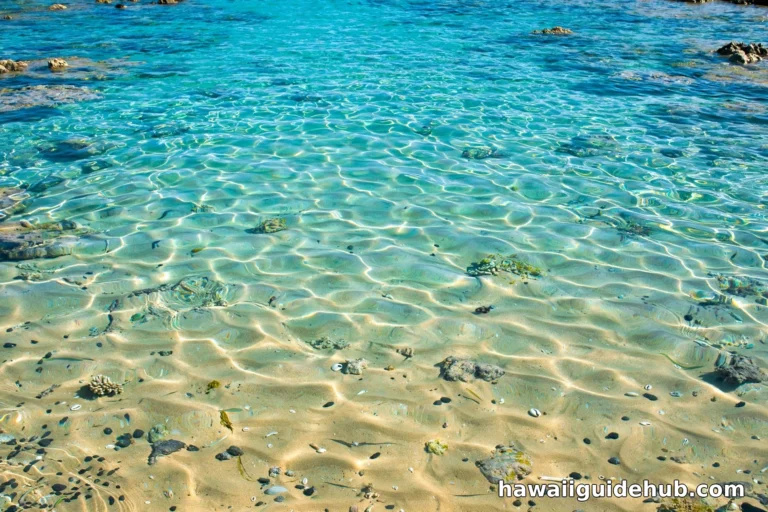
You do not need water shoes for Hawaii’s soft-sand beaches like Waikiki or Kaanapali. You should wear them for reef-entry snorkeling (Hanauma Bay, Shark’s Cove), lava-rock shorelines, tide pools, and stream hikes. They protect against sharp coral, lava rock, sea urchin spines, and scorching sand. They are cheap and sold everywhere in Hawaii, so do not stress about packing them: buy them there if your plans change.
The Verdict by Beach Type
| Beach / activity | Example | Verdict | Why |
| Soft sand beach | Waikiki, Kaanapali | Skip | Nothing to step on; shoes fill with sand |
| Reef-entry snorkeling | Hanauma Bay, Shark’s Cove | Yes | Sharp coral and lava at entries |
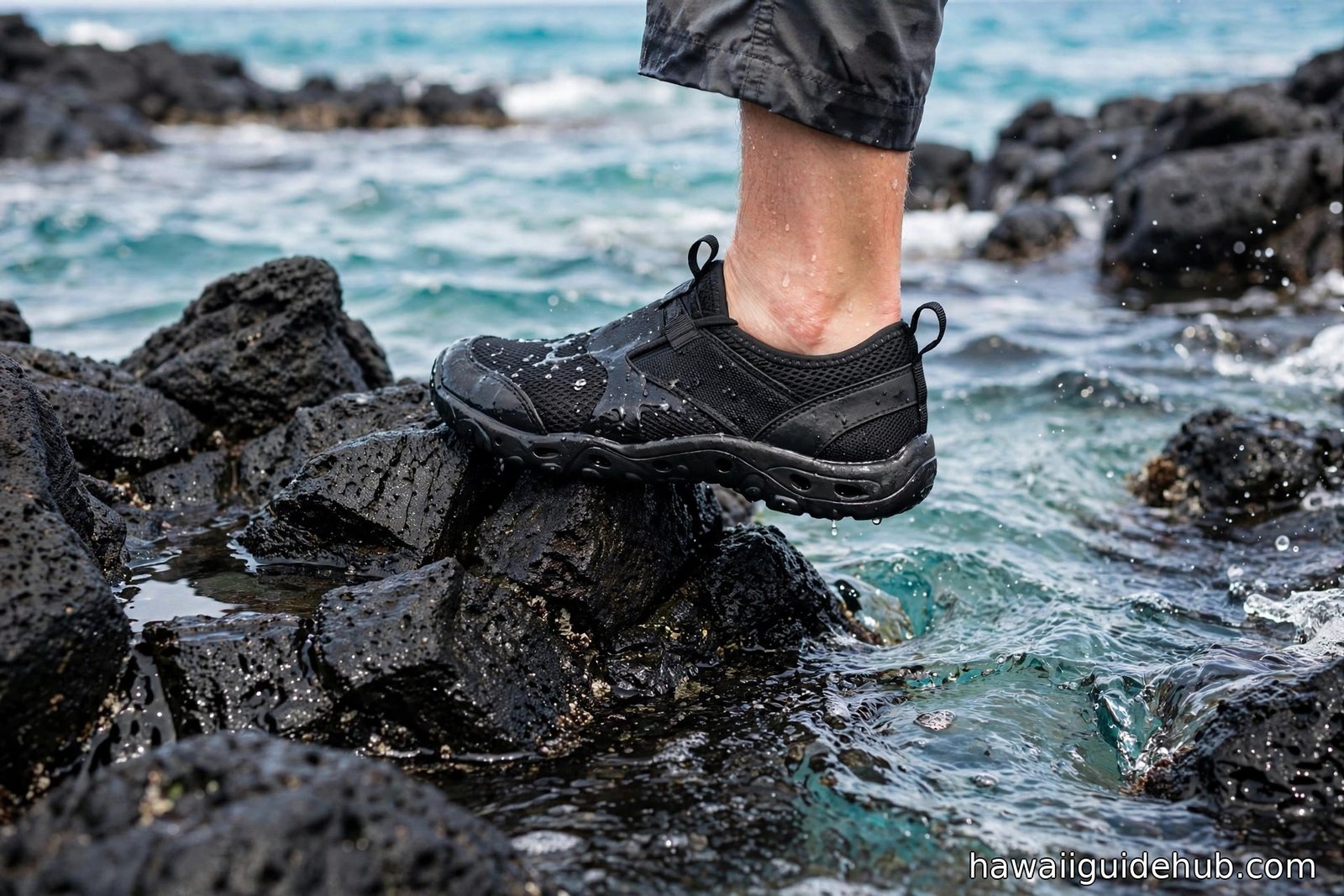
| Lava rock coast, tide pools | South Point, tide pools | Yes | Urchins, razor-sharp rock |
| Boat snorkel tours | Catamaran trips | Usually no | Ladders and sandy entries |
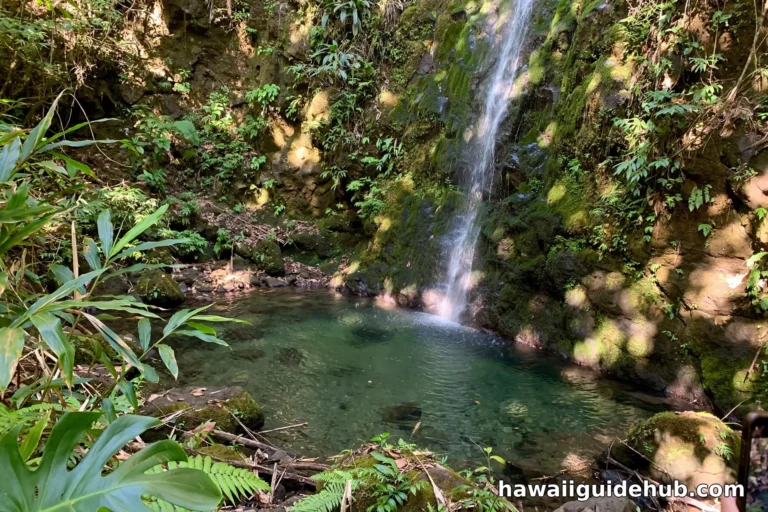
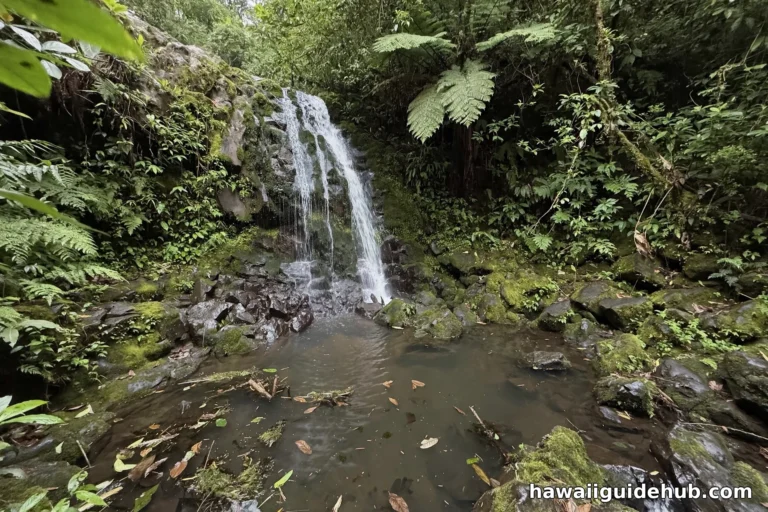
| Stream hikes, waterfalls | Manoa Falls trail | Yes | Slippery rocks, stream crossings |
What You Are Actually Protecting Against
Four hazards, in order of likelihood. Sharp coral and lava rock: cuts that bleed impressively and can get infected in tropical water. Sea urchins (wana): long black spines that snap off in your foot; the spines work their way out over days and the puncture can get infected. Hot sand and hot pavement: midday sand and the walk down to Hanauma Bay can genuinely burn bare feet. Broken shells and hidden rocks under sand: the minor stuff that still ruins an afternoon. Water shoes handle all four.
Sea Urchins: The Real Reason
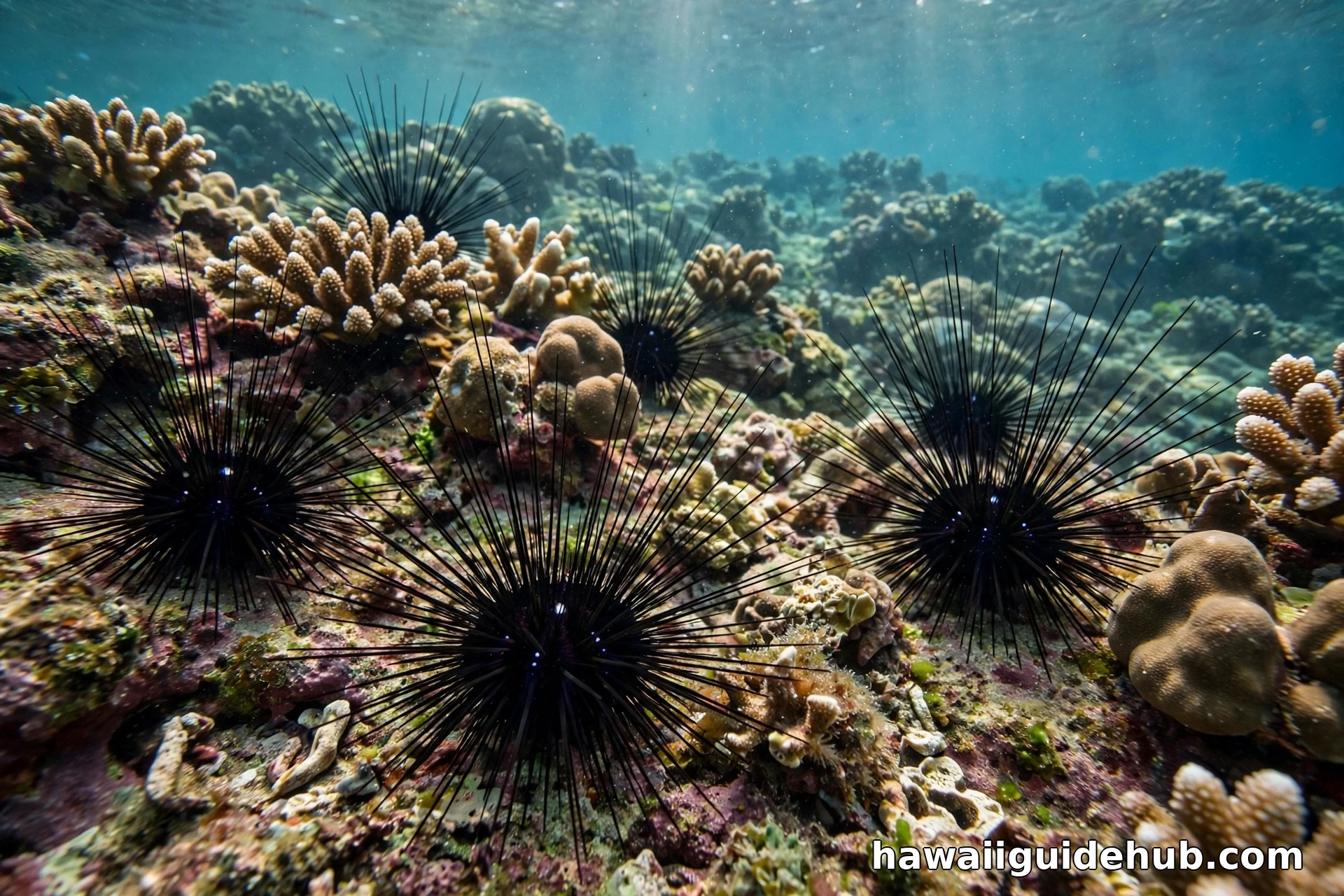
If one creature justifies water shoes in Hawaii, it is the wana, the long-spined sea urchin. They cluster in rocky shallows and tide pools, black pincushions of brittle spines. Step on one and the spines break off in your skin: painful, and the tiny fragments can take days to work out. Locals treat urchin stings with vinegar soaks and patience. Water shoes do not make you invincible, a direct stomp can still push a spine through thin neoprene, but they turn most encounters into non-events. Watch where you step regardless.
What Kind to Get
You want a rubber sole and a mesh or neoprene top: the classic “reef walker.” Fit should be snug: loose water shoes fill with sand and pebbles and become worse than bare feet. Closed toes beat open toes on lava rock. Drainage matters: good water shoes dump water and sand as you walk. For snorkeling, make sure they fit inside your fins or buy fin-compatible socks instead. Do not bring heavy hiking sandals for the water: they get waterlogged and the straps chafe.
Buy Them in Hawaii, Not Before
Here is the local secret: water shoes are cheap and everywhere in Hawaii. ABC Stores, Walmart, Target, and Longs stock them for a few dollars: the same basic reef walkers that cost triple at mainland outdoor shops. Unless you need a specific fit or fin-compatible pair, save the suitcase space and buy on arrival. Every beach town has them. This is the rare travel item where “buy it there” is genuinely the best advice.
The Reef Rule: Shoes Are Not a License to Stomp
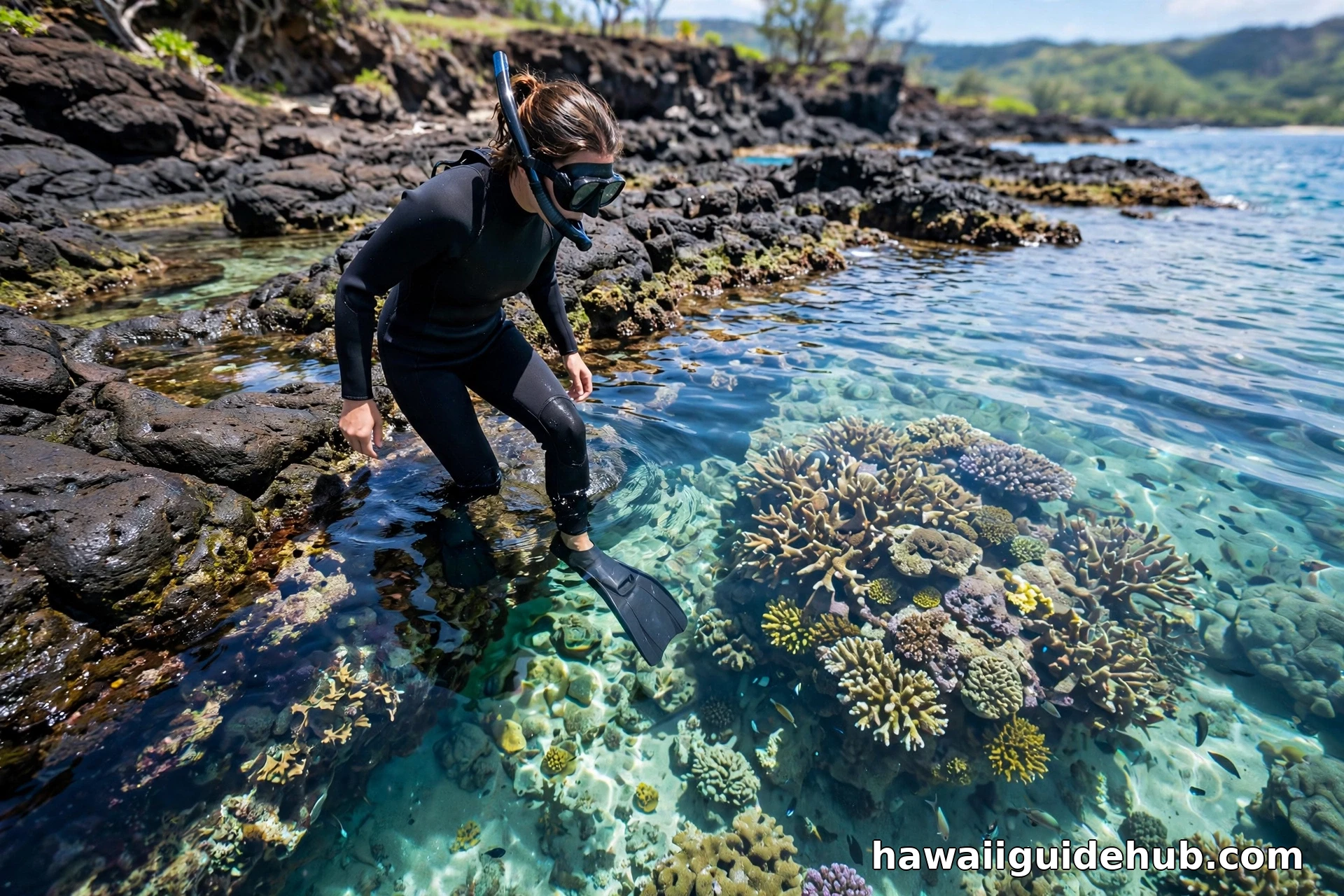
Critical etiquette: water shoes protect your feet during entry and exit; they do not make it okay to walk on the reef. Coral is a living animal that dies underfoot, and Hawaii’s reefs are already stressed. Enter over sand channels where possible, float once you are in, and never stand on coral. The shoes are for the rocks at the shoreline, not for hiking across the reef flat. Tread lightly: the reef was here first.
For rocky snorkel spots, see Shark’s Cove, the best place to snorkel on Oahu, manta ray night snorkel in Kona, and encountering Hawaii’s iconic marine species.
Water Shoes for Kids: Non-Negotiable
Adults can pick their beaches; kids run straight into the water without looking. Cheap kids’ water shoes are sold in every beach town, and they prevent the two classic kid injuries: urchin spines and hot-sand burns. They also give small feet grip on slippery rocks. If you are traveling with children and visiting any rocky shoreline, just buy the shoes on day one. The five dollars will be the best-spent money of the trip.
The Sand Problem: When Shoes Make Things Worse
Water shoes have a failure mode: sand. On soft-sand beaches, loose-fitting water shoes scoop up sand and trap it against your feet, creating a grinding paste that blisters faster than bare feet would. This is why the verdict table says skip them on Waikiki: they do not just add nothing, they subtract comfort. If you must wear them on sand, get a truly snug fit and rinse them out. Otherwise, go barefoot like everyone else and enjoy it.
Alternatives That Work
Water shoes are not the only option. Old sneakers with good tread work for rocky entries in a pinch, though they get waterlogged and heavy. Sport sandals with heel straps (the Teva style) handle shore entries and double as walking sandals, though pebbles get under the straps. Neoprene dive socks fit inside fins and protect against blisters. Barefoot with careful foot placement works on familiar sandy entries. But for the price of a shave ice, dedicated water shoes beat every alternative on rocky ground.
What Locals Actually Do
Watch locals at a rocky entry and you will see the full spectrum. Fishermen in tabis, the split-toe reef boots that grip lava like nothing else. Aunties in cheap reef walkers bought at Longs. Surfers barefoot, because they know every rock on their home break. Kids in whatever was on sale. The common thread: nobody is precious about it. Water shoes in Hawaii are a tool, not a fashion statement. Buy the cheap ones, beat them up, leave them for the next visitor or toss them at trip’s end.
Caring for Your Water Shoes
Rinse them in fresh water after every use: salt and sand destroy the glue and the mesh. Dry them out of direct sun to keep the neoprene from cracking. Shake out sand before it compacts into the sole. A five-dollar pair treated this way lasts a whole trip easily; a good pair lasts years of vacations. Do not leave them in a hot car trunk for a week: the heat delaminates cheap soles. Treat them like the humble workhorses they are.
The Injury You Want to Avoid: A Cautionary Tale
Every urgent-care clinic near a rocky beach has the story: the visitor who stepped on an urchin on day two and spent the rest of the trip soaking their foot in vinegar and limping. Urchin spine removal is not an emergency, but it is miserable: the spines are brittle, they break under the skin, and the foot stays tender for days. Coral cuts get infected with tropical efficiency. These are not rare events; they are the most common beach injuries in Hawaii. Five dollars of rubber would have prevented nearly all of them.
Packing Strategy: The Final Word
So here is the packing strategy. If your trip is Waikiki and resort pools only, skip the water shoes entirely. If you plan any snorkeling from shore, any tide pools, any waterfall hikes, or any beach you have not researched, do not pack them: buy them in Hawaii for a few dollars on day one. One pair per person, snug fit, cheap. They weigh nothing, they save vacations, and when the trip is over you will not miss the suitcase space. The honest answer was never yes or no: it was “it depends, so spend five dollars and stop worrying.”
The Hot Sand Factor
Underestimated until experienced: Hawaiian sand at midday can burn. Dark sand beaches get genuinely hot, and even light sand radiates heat that makes the walk from towel to water a hopping sprint. Parking lots and the paved walk down to beaches like Hanauma Bay are worse: barefoot visitors do the hot-foot dance daily. Water shoes solve this completely, and they double as the walk-to-the-beach shoe, saving you from carrying slippers. If you burn easily or travel with kids, this alone justifies the purchase.
For Surfers, Paddlers, and Boaters
Surfers mostly go barefoot: wax and rock knowledge beat rubber. But reef-break surfers walking over sharp reef to the lineup often wear booties, the surfing cousin of the water shoe. Paddlers launching from rocky shores wear them for the put-in. Boaters use them on wet decks and rocky landings. If your Hawaii trip involves any paddle sport from a rocky launch, pack or buy a pair: the launch is always rockier than the brochure suggests.
Are They Ever Required?
Rarely required, often strongly recommended. Some guided tide-pool walks and waterfall tours require closed-toe footwear, and water shoes qualify. Certain beach parks with urchin-heavy entries post advisory signs. Dive boats do not require them. The general rule: nobody will stop you from going barefoot, but the lifeguards treating urchin stings wish you would not. “Required” is the wrong question; “wise” is the right one.
Buy Cheap, But Don’t Trash Them
One environmental footnote: the “buy cheap and toss them” advice has a cost. Millions of visitors times five-dollar shoes is a lot of neoprene in island landfills. Better options: buy a decent pair and keep them for future trips, pass them to the next visitor at your hotel, or donate them to a hostel free bin. Some shops take back used gear. The shoes are cheap, but the islands are not a disposable destination. Enjoy the five-dollar convenience; skip the five-dollar waste.
The One-Beach Test
Still unsure? Apply the one-beach test: look at photos of the beach you will visit most. If you see smooth sand meeting the water with no rocks in sight, skip the shoes. If you see dark rock, reef, or tide pools anywhere near the entry, buy them. If you are snorkeling from shore anywhere, buy them. It takes thirty seconds of looking at a photo to decide, and it is the most reliable test there is. When in doubt, the five-dollar default wins: buy them, and you will never regret having them.
Video: What to Pack for Hawaii
A local’s packing advice for Hawaii, including when water shoes matter.
Frequently Asked Questions
Do I need water shoes for Waikiki?
No. Waikiki is soft sand; water shoes are unnecessary.
Do I need water shoes for Hanauma Bay?
Yes, recommended. The entry has coral and rock, and the walk down gets hot.
Can I just buy water shoes in Hawaii?
Yes: ABC Stores, Walmart, and Target sell cheap reef walkers everywhere.
Do water shoes protect against sea urchins?
Mostly: they stop glancing contact, but a hard direct stomp can still push a spine through.
Can I wear water shoes instead of fins for snorkeling?
For casual shore snorkeling, yes. For covering distance or current, fins are far better.
Are water shoes okay for kids?
Absolutely: kids run into the water without looking, and cheap kids’ sizes are everywhere.
Water shoes are the cheapest insurance in your beach bag: a few dollars, almost no weight, and the difference between a great snorkel day and a ruined one. Buy them in Hawaii, wear them where the rocks are, skip them where the sand is soft, and never use them as an excuse to walk on the reef. Your feet and the coral will both thank you.