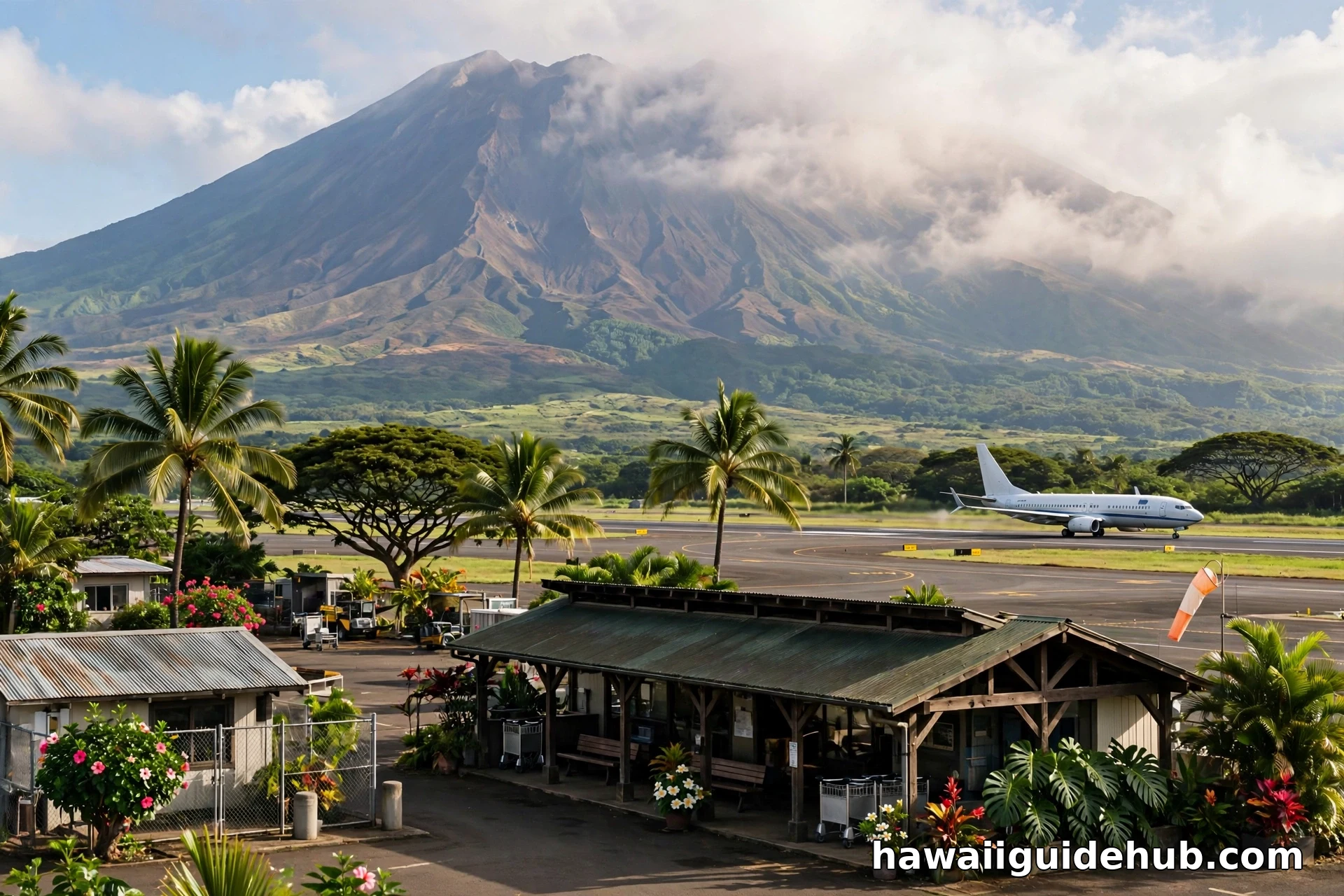
Hilo Airport

Hilo International Airport (ITO) is the Big Island’s east-side gateway, a small, easygoing airport that drops you minutes from downtown Hilo, the Hamakua Coast waterfalls, and Hawaii Volcanoes National Park. Unlike the busy resort-side airport at Kona, Hilo’s airport feels like the town it serves: unhurried, open-air, and refreshingly simple to navigate.
If you are flying into the windward side of Hawaii Island, this guide covers everything you need: which airlines serve Hilo and where they fly, the airport’s remarkable history, terminal facilities, rental cars and ground transportation, parking, and practical tips for a smooth arrival and departure.
Hilo Airport at a Glance
| Flying into Hilo | The details | Plan around it |
|---|---|---|
| Airport codes | ITO (IATA), PHTO (ICAO) | Use ITO when booking flights |
| Address | 2450 Kekūanāoʻa Street, Hilo, HI 96720 | East-side base for the volcanoes |
| Operator | Hawaii Department of Transportation | State-run like all major Hawaiʻi airports |
| Airlines | Hawaiian Airlines and Southwest Airlines | Interisland plus select mainland routes |
| Destinations | Honolulu, Kahului, and Las Vegas (from August 2026) | The Las Vegas nonstop is new; schedules may shift |
| Runways | 9,800 ft main runway; 5,600 ft secondary runway | Handles jets comfortably |
| Drive to downtown Hilo | About 10 minutes | Practically in town |
| Drive to Hawaii Volcanoes National Park | About 45 minutes | The closest airport to the park |
Which Airlines Fly to Hilo?
Two airlines currently serve Hilo with scheduled passenger flights. Hawaiian Airlines operates the most service, connecting Hilo with Honolulu and Kahului on Maui. Southwest Airlines flies between Hilo and Honolulu, and has announced new nonstop service between Hilo and Las Vegas starting in August 2026, which will restore Hilo’s first nonstop link to the mainland United States in years.
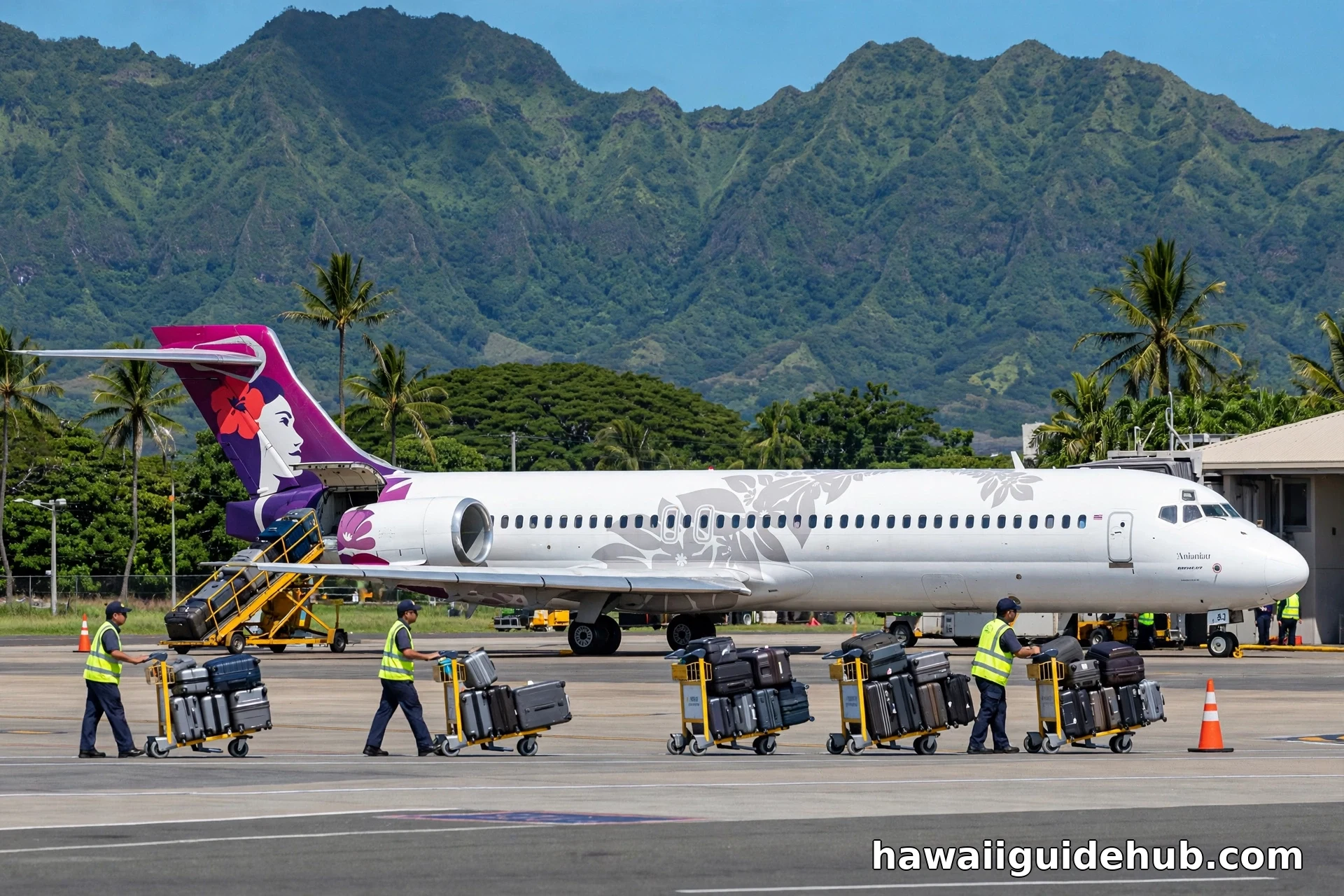
Honolulu is by far the busiest route: more than 660,000 passengers flew between Hilo and Honolulu in the year ending October 2025, making it one of the busiest interisland corridors in the state. Kahului traffic is far smaller, around 34,000 passengers in the same period. If you are coming from the mainland, you will almost certainly connect through Honolulu, which offers frequent onward hops to Hilo throughout the day.
United Airlines ended its Los Angeles service in 2023, so Hilo currently has no nonstop mainland flights until the Southwest Las Vegas service begins. When comparing airports, remember that Kona International Airport on the island’s west side carries roughly twice Hilo’s passenger volume and far more mainland nonstops. Choose Hilo when your plans center on the east side; choose Kona for the resort coast. Our roundup of the best things to do on the Big Island will help you decide which side suits your trip.
A Remarkable History
Hilo’s airport is nearly a century old. In 1927 the Territory of Hawaii legislature authorized $25,000 to build a landing strip at Keaukaha, on Hawaiian Homes Commission land, and the field was dedicated on February 11, 1928. Scheduled interisland service began on November 11, 1929, when Inter-Island Airways, the forerunner of Hawaiian Airlines, started thrice-weekly flights between Hilo and Honolulu aboard an eight-passenger Sikorsky S-38. The fare was $32.
During World War II the airport came under military control, and on April 19, 1943, it was renamed General Lyman Field for General Albert Kualiʻi Brickwood Lyman, the first U.S. Army general of Hawaiian ancestry. The name lasted until May 1989, when the state legislature renamed it Hilo International Airport. The main terminal still carries the Lyman name, a quiet nod to that history.
Hilo once had far grander ambitions. In the late 1960s and 1970s, United, Pan Am, Braniff, Continental, Northwest, and Western all flew nonstop between Hilo and the mainland, with 747s on the ramp and overseas passengers peaking above 300,000 a year in 1971. Beginning in 1979, carrier after carrier pulled out, and by the mid-1980s Hilo had lost all mainland service. The airport settled into its modern role: the interisland gateway for east Hawaii.
Terminals and Facilities
Hilo’s passenger terminal is refreshingly compact: three interconnected buildings totaling about 220,000 square feet, with just seven passenger loading bridges. You will not get lost here. The central building holds ticketing and baggage claim, with gates fanning out through the east and west wings. Hawaiian Airlines operates a Premier Lounge below Gate 6 for eligible travelers.

Facilities cover the essentials: a gift shop, newsstand, lei stands, a restaurant, an ATM, and free WiFi. The airport is fully accessible, with family restrooms and assistance available on request. A separate commuter terminal west of the main building serves helicopter and air tour operators, a reminder that some of the island’s best sightseeing leaves from this ramp.
One detail visitors love: the airport keeps an indoor-outdoor feel with garden areas of native plants, very much in the spirit of old Hawaii air travel. It is a small grace note that sets the tone for the east side of the island.
Rental Cars and Ground Transportation
Rental car counters sit just across the street from the terminal, an easy walk with your bags. The major brands are all represented, but book ahead: Hilo’s fleet is smaller than Kona’s, and cars can sell out during holidays and festival weekends. If you are staying on the east side or driving to the volcano, having your own car is close to essential.
Taxis queue right outside baggage claim, and hotel shuttles serve the Hilo-area properties. The county’s Hele-On Bus provides public transit connections for budget travelers, though schedules are limited, so check times in advance. Ride-share availability varies by hour; it is generally fine during the day but thin late at night. There is no rail or dedicated airport express, which surprises no one who knows Hilo.
Parking at Hilo Airport
The airport offers ample public parking right by the terminal, plus a cell phone lot where drivers can wait free for arriving passengers. In January 2026 the Hawaii Department of Transportation rolled out a new streamlined parking system to make entering and exiting the lots faster. If you are picking someone up, the cell phone lot is the stress-free move: wait there until your party has bags in hand, then swing through the arrivals curb for a quick pickup.
What to Do Near Hilo Airport
One of Hilo Airport’s best features is how close everything sits. Rainbow Falls, the 80-foot cascade famous for morning rainbows in its mist, is about 10 minutes away in Wailuku River State Park. Liliuokalani Gardens, the largest formal Japanese garden outside Japan, edges Hilo Bay a few minutes farther. Downtown Hilo itself, with its historic storefronts, farmers market, and museums, is an easy first stop before you head up the coast or out to the volcano.

If you land early and your room is not ready, this cluster of sights makes a perfect soft landing: falls, gardens, lunch in town, then onward. It beats sitting in any airport, and it is all within a 15-minute radius of the runway.
Tips for Flying Through Hilo
Arrive 90 minutes before an interisland flight; the airport is small but security lines bunch up around banked departures. Make sure your ID is REAL ID compliant, as the TSA began full enforcement in May 2025. Pack a light jacket in your carry-on: Hilo is famously rainy, and you may walk across the ramp in a shower. For the full picture on island weather, see our guide to when it rains in Hawaii.
If you are connecting through Honolulu, leave at least 90 minutes between flights; interisland gates can be a long walk from the mainland arrivals. And when you land at Hilo, pause before rushing out: the open-air terminal, the smell of rain and flowers, and Mauna Kea looming inland make for one of the most atmospheric arrivals in American aviation.
Connecting Through Honolulu: What to Know
Almost every Hilo-bound traveler from the mainland connects through Honolulu, so it pays to understand the drill. Your mainland flight arrives in the main overseas terminal; interisland departures to Hilo leave from the interisland terminal, a walk of 10 to 15 minutes depending on your gates. Allow at least 90 minutes between flights, more if you need to reclaim and recheck bags, which is required when switching from an international arrival.
The Hilo hop itself is short, under an hour gate to gate, and the descent over the Hamakua Coast on a clear day is spectacular: waterfalls threading green cliffs, then the runway appearing at the edge of Hilo Bay. Sit on the left side of the plane for the best coastal views on approach.
Hilo vs. Kona: Which Airport Should You Choose?
The answer depends entirely on your itinerary. Fly into Hilo if you are staying in Hilo town, exploring the Hamakua Coast, or visiting Hawaii Volcanoes National Park, which is about 45 minutes away versus two hours from Kona. Fly into Kona for the Kohala and Kona coast resorts, beaches, and manta ray dives. Many visitors fly into one and out of the other, turning the cross-island drive into part of the trip. If your plans lean west, browse the best things to do in Kona before you book.
The Future of Hilo Airport
Hilo is Hawaii’s smallest major airport by passenger count, operating well below the capacity its 9,800-foot runway was built for. Kona handles roughly twice the passengers, and the east side’s smaller hotel base has kept growth slow for decades. But change is stirring: Southwest’s announced Las Vegas nonstops, starting August 2026, would be Hilo’s first mainland service in years and a real test of whether the windward side can support more.
For travelers, the airport’s smallness is a feature, not a bug. Short walks, short lines, and a terminal you can learn in one visit. Whatever the future brings, Hilo International Airport is likely to keep the quality that regulars love most: it feels like arriving somewhere, not processing through something.
First-Timer Mistakes to Avoid
A few easy errors trip up first-time Hilo arrivals. Do not assume your Kona hotel is a quick drive away: it is two hours across the island via the Saddle Road, longer around the coast. Do not skip the rental car reservation, especially around the Merrie Monarch Festival in spring, when Hilo’s small fleet books out completely. Do not plan a tight same-day connection on arrival day without a buffer; island weather delays happen. And do not leave the airport hungry without a plan if you land late: Hilo town quiets down quite early, so grab food before the drive to your lodging.
Watch: Hilo Airport Tour
This walkthrough covers arrivals, departures, baggage claim, rental car pickup, and the commuter terminal:
Hilo Airport FAQs
What is the airport code for Hilo?
Hilo International Airport uses ITO (IATA) and PHTO (ICAO). It is located at 2450 Kekūanāoʻa Street in Hilo and is operated by the Hawaii Department of Transportation.
Which airlines fly to Hilo, Hawaii?
Hawaiian Airlines flies from Honolulu and Kahului, and Southwest Airlines flies from Honolulu, with new Las Vegas nonstops announced from August 2026. Most mainland travelers connect through Honolulu.
Are there nonstop flights from the mainland to Hilo?
Not currently. United ended its Los Angeles service in 2023. Southwest has announced three weekly nonstops between Hilo and Las Vegas starting in August 2026, which will restore mainland service.
How far is Hilo Airport from downtown Hilo?
About 10 minutes by car. Hawaii Volcanoes National Park is roughly 45 minutes away, making Hilo the closest airport to the volcano.
Is there public transportation from Hilo Airport?
The county Hele-On Bus serves the airport with limited schedules. Most visitors rent a car, take a taxi, or use a hotel shuttle, as ride-share can be thin late at night.
Should I fly into Hilo or Kona?
Choose Hilo for Hilo town, the Hamakua Coast, and Hawaii Volcanoes National Park. Choose Kona for the west-side resorts and beaches. Many travelers fly into one airport and out of the other.
Hilo International Airport will not overwhelm you, and that is its charm. It is a human-scale airport with a century of stories, delivering you straight into the lush, rainy, real Hawaii of the windward side. From the runway you are minutes from waterfalls, gardens, and a historic downtown, and less than an hour from an active volcano. Few airports in America offer that. Step off the plane, take a breath of that Hilo air, and start exploring.