
Hawaiʻi Parks
On This Page
Hawaiʻi Parks: An Overview
Hawaiʻi protects its most remarkable landscapes through three layers of public parks: national park units managed by the National Park Service, a statewide system of state parks and monuments, and county beach parks that keep the shoreline open to everyone. Together they cover volcanic summits, plunging sea cliffs, black sand beaches, lush valleys, and places of deep cultural meaning. If you plan to hike, swim, sightsee, or simply find a quiet beach, you will spend much of your trip inside one of these parks.
Understanding the three systems matters because each one has different rules. National parks charge entrance fees and follow federal regulations. State parks are managed by the Hawaiʻi Department of Land and Natural Resources, and several of the most popular ones now require advance reservations for nonresidents. County parks, which include many of the best swimming beaches, are generally free and open from sunrise to sunset, though some close at night and a few require permits for camping.
A few practical realities apply everywhere. Hawaiʻi has no general statewide park pass that covers everything, so expect to pay separate fees at national parks and at certain state parks. Parking lots at famous trailheads and beaches fill early, often before 9 a.m., so plan morning arrivals. Many parks have no drinking water, no food, and limited or no cell service, so carry what you need. Weather can change fast with elevation: a sunny beach morning can turn into a cold, wet afternoon at a 4,000-foot lookout, and summit areas can be genuinely cold.
Cultural respect is not optional. Many parks protect heiau (temples), burial sites, and other wahi pana, storied places. Stay on marked trails, never move or stack rocks, do not take lava rocks or sand, and treat every cultural site as you would a place of worship. Some areas are kapu, off limits, and signs marking them should be obeyed without exception.
National Parks and Historic Sites
Hawaiʻi has two national parks and six additional National Park Service units, for eight federal sites in total. The two national parks are the headline destinations, but the historic sites preserve chapters of Hawaiian history you will not find anywhere else.
Hawaiʻi Volcanoes National Park
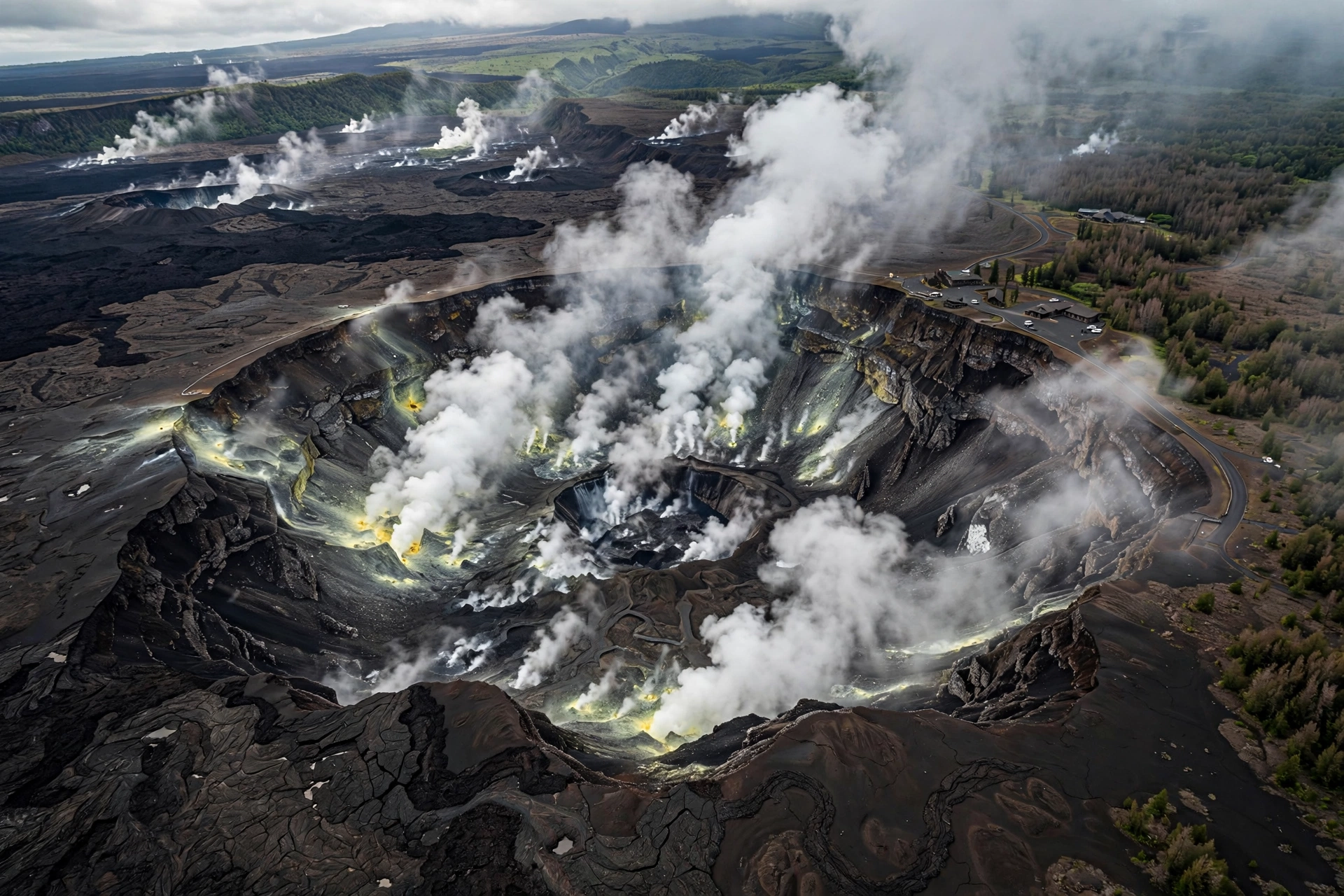
On the Big Island, Hawaiʻi Volcanoes National Park protects Kīlauea and Mauna Loa, two of the most active volcanoes on earth. The park stretches from sea level to the 13,677-foot summit of Mauna Loa and covers more than 335,000 acres. Kīlauea has been the star for most visitors: its summit caldera, the vast solidified lava lake of Kīlauea Iki, steam vents, and lava tubes tell the story of an island still being built.
Volcanic activity changes constantly, and what is erupting today may be quiet next year. Before you go, check the current status on the USGS Hawaiian Volcano Observatory and National Park Service websites. When lava is visible, the park sets up designated viewing areas, and rangers enforce closures around hazardous zones. Never cross closure barriers: new lava benches collapse, gases are toxic, and the terrain beyond marked areas can be deadly.
Even without an active eruption, the park rewards a full day. The Kīlauea Iki Overlook and the trail that descends across the crater floor, the Thurston Lava Tube, the steam vents along Crater Rim Drive, and the Chain of Craters Road down to the coast where lava once met the sea are the classic stops. Bring warm layers: the summit area sits near 4,000 feet and is often 15 to 20 degrees cooler than the Kona or Hilo coasts. An entrance fee applies, and the pass is valid for seven days.
Haleakalā National Park
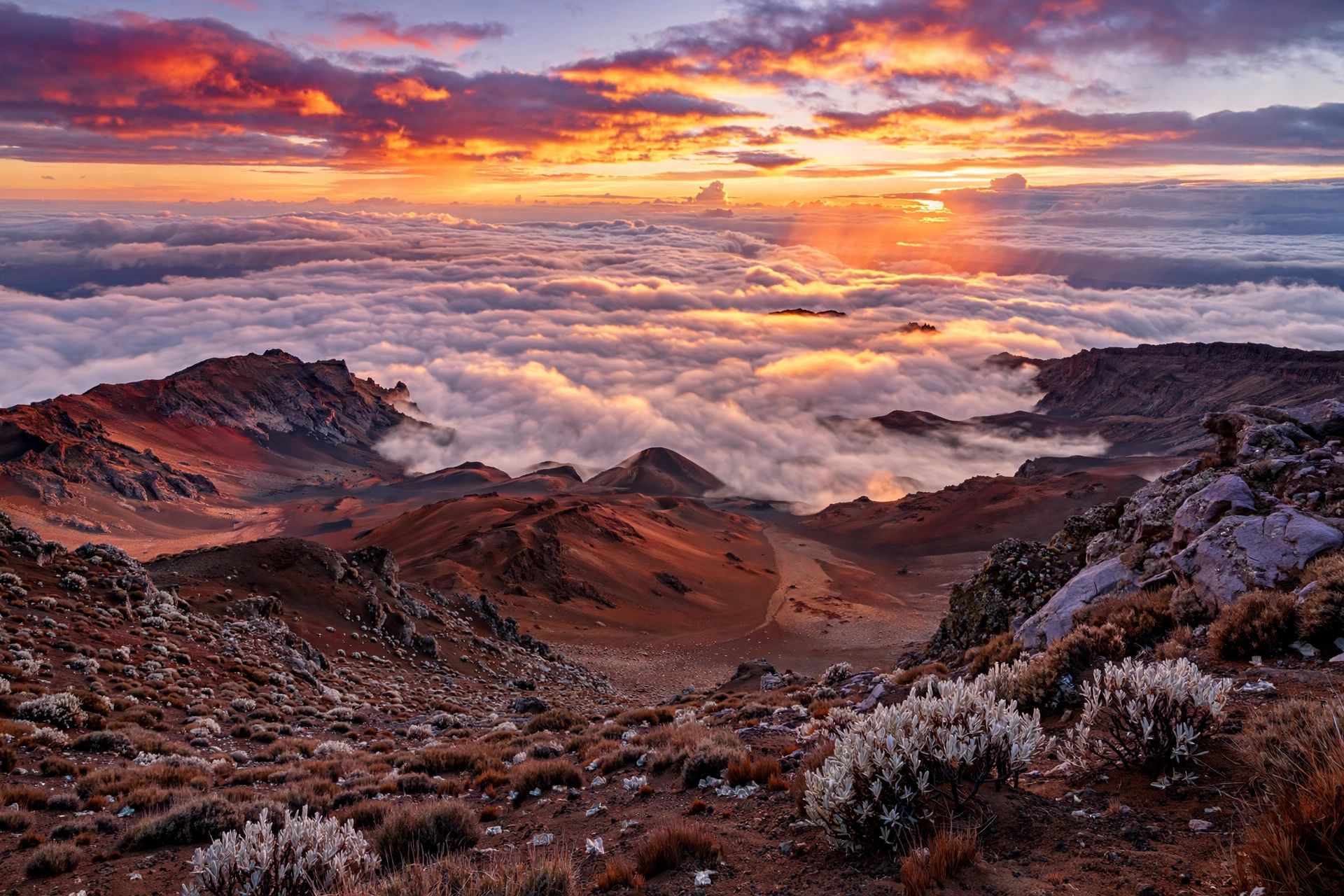
On Maui, Haleakalā National Park protects the massive shield volcano that forms the eastern half of the island. The summit district centers on a vast erosional crater, seven miles across, filled with cinder cones in red, brown, and gray. Sunrise from the 10,023-foot summit is one of the most famous experiences in Hawaiʻi, and it requires an advance reservation made through the federal recreation booking site, separate from the park entrance fee.
Daytime visits need no sunrise reservation and are often clearer and far less crowded. The Sliding Sands and Halemauʻu trails descend into the crater for otherworldly day hikes among the cinder cones, where the silversword plant grows nowhere else on earth. The park’s separate Kīpahulu district on the windward coast, reached via the Road to Hāna, protects waterfalls, pools, and the grave of Charles Lindbergh. Note that the pools at ʻOheʻo Gulch are frequently closed to swimming because of flash flood danger, so check current conditions.
National Historical Parks and Historic Sites
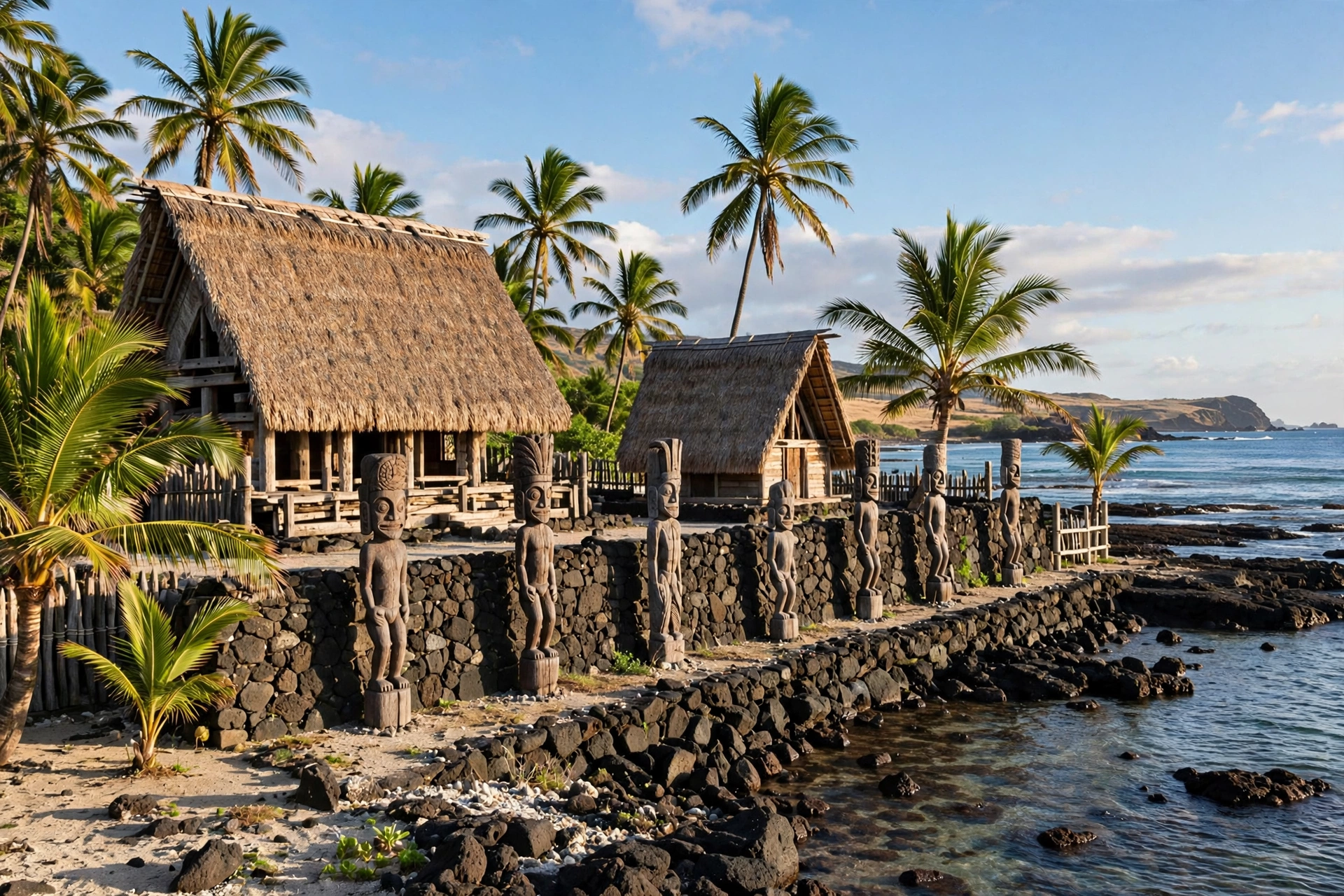
The remaining six NPS units preserve Hawaiian culture and history. Puʻuhonua o Hōnaunau National Historical Park on the Big Island’s Kona coast protects a royal place of refuge, where those who broke kapu could be absolved, with reconstructed temples, carved kiʻi images, and a royal fishpond. Nearby Kaloko-Honokōhau National Historical Park preserves ancient fishponds, petroglyphs, and sea turtle habitat.
Puʻukoholā Heiau National Historic Site protects the temple Kamehameha the Great built to fulfill a prophecy before unifying the islands. Kalaupapa National Historical Park on Molokaʻi’s isolated peninsula preserves the settlement where people with Hansen’s disease were exiled beginning in 1866, including the stories of Saint Damien and Saint Marianne Cope. Access is strictly limited and currently by authorized tour only, with visitors required to be at least 16 years old. On Oʻahu, Honouliuli National Historic Site preserves the site of Hawaiʻi’s largest incarceration camp from World War II; it has limited public access, so check the park website before planning a visit. The Ala Kahakai National Historic Trail traces 175 miles of ancient coastal trails along the Big Island’s west coast, with accessible segments near several beach parks.
State Parks by Island
Hawaiʻi’s state park system includes parks, monuments, recreation areas, waysides, and historic sites managed by the Division of State Parks. Nonresidents now pay entrance or parking fees at many of the most visited state parks, while Hawaiʻi residents generally enter free. Several parks require advance reservations, which are covered in the permits section below. Here are the standouts on each island.
Oʻahu State Parks
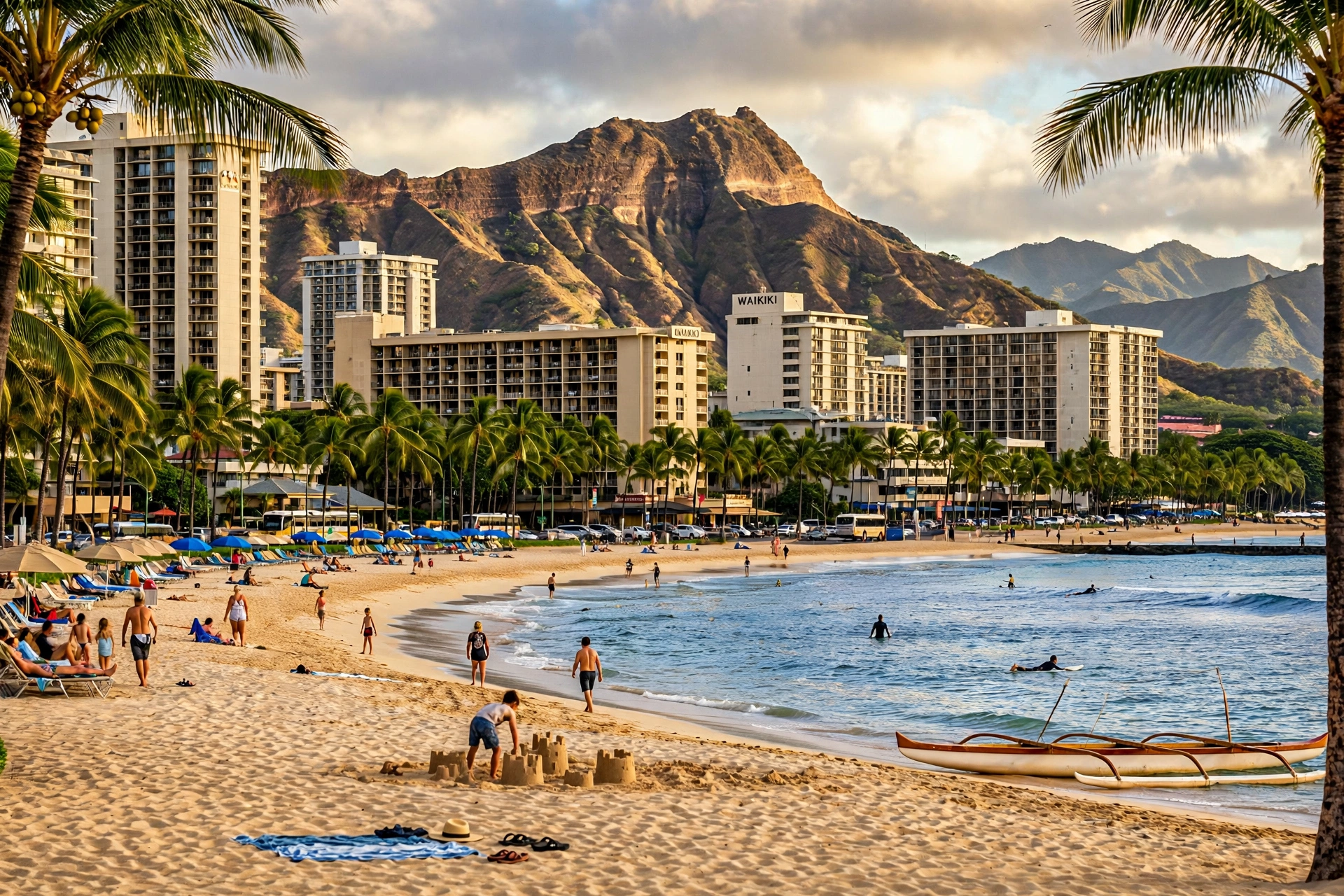
Oʻahu’s most visited state park is Diamond Head State Monument, the volcanic crater rising behind Waikīkī. The 0.8-mile trail to the 760-foot summit passes through tunnels and bunkers to a panoramic view of the south shore. Advance reservations with timed entry are required for all non-residents (Hawaiʻi residents with valid ID enter free without a reservation), and the parking lot is small, so many visitors arrive by bus, rideshare, or on foot from Waikīkī.
Nuʻuanu Pali State Wayside offers one of the island’s great views from the 1,200-foot cliffs where Kamehameha’s forces won the decisive battle for Oʻahu. The lookout is famously windy, and the gusts can be strong enough to lean into. Kaʻena Point State Park protects the island’s northwestern tip, a seabird sanctuary reached by a 2.5-mile coastal hike where monk seals often rest on the beach; stay well back and never approach them. ʻIolani Palace State Monument in downtown Honolulu is the only royal palace in the United States and operates as a museum with guided tours. For beach time, Mālaekahana State Recreation Area on the North Shore offers camping near a quiet beach, and Sand Island State Recreation Area near Honolulu Harbor is a local favorite for shore fishing and sunset views.
Maui State Parks
Waiʻānapanapa State Park on the Road to Hāna centers on a black sand beach framed by lava cliffs, sea arches, blowholes, and freshwater caves. It is one of the most photographed spots in Hawaiʻi, and out-of-state visitors must make advance reservations for entry and parking. Arrive early or late in the day to avoid the midday crowds that arrive with the Road to Hāna traffic.
ʻĪao Valley State Monument protects the lush valley where the Battle of Kepaniwai was fought, with the 1,200-foot ʻĪao Needle rising from the valley floor. Reservations are required for nonresidents. Polipoli Spring State Recreation Area on the slopes of Haleakalā offers cool mountain camping among redwoods and a trail network that feels nothing like the beach image of Maui. Makena State Park on the south shore includes Big Beach, one of Hawaiʻi’s largest undeveloped beaches, where shore break can be powerful and lifeguards urge caution.
Kauaʻi State Parks
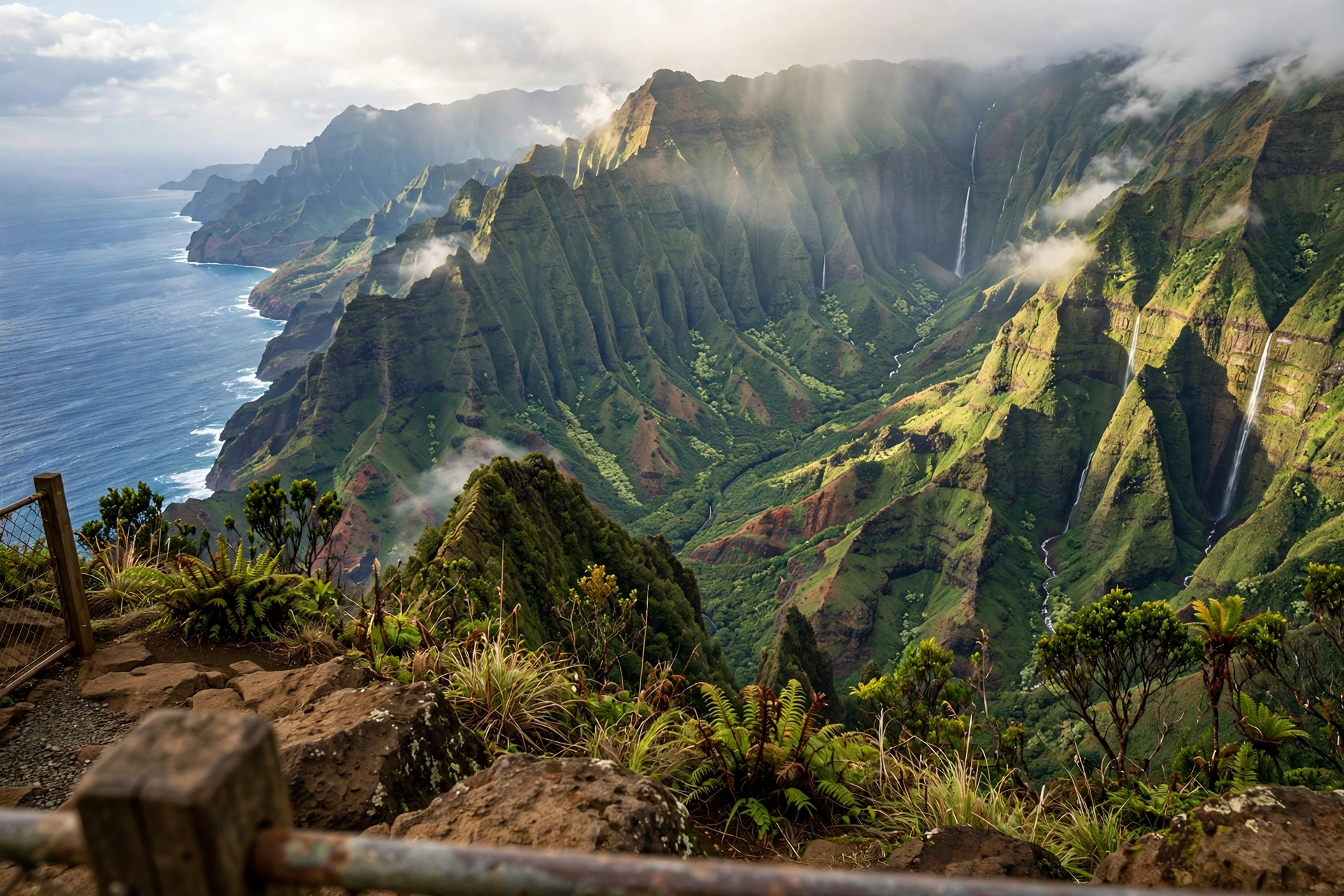
Kauaʻi’s state parks include some of the most dramatic scenery in the islands. Waimea Canyon State Park, the “Grand Canyon of the Pacific,” drops 3,000 feet through red and green layers, with lookouts along the canyon road and trails into the gorge. Continuing up the road, Kōkeʻe State Park offers native forest, misty lookouts over Kalalau Valley, and cooler mountain air.
Hāʻena State Park at the end of the road on the north shore is the gateway to the Kalalau Trail and Keʻe Beach. Entry is strictly controlled with advance reservations for all nonresidents, whether arriving by car, shuttle, or on foot, and the daily visitor cap fills far in advance. Overnight hikers on the Kalalau Trail need separate camping permits for Nā Pali Coast State Wilderness Park, which are among the hardest permits in Hawaiʻi to obtain. Polihale State Park on the west side offers miles of white sand beneath towering cliffs, but the access road is rough dirt and the ocean here is dangerous for swimming most of the year. Wailua River State Park protects the Wailua River valley, Fern Grotto, and several heiau, while Russian Fort Elizabeth State Historical Park preserves the remains of a 19th-century Russian fort near Waimea.
Current conditions (October 2026): Overnight Kalalau Trail access is closed until further notice following Hurricane Lowell (September 2026). Hāʻena State Park is scheduled to reopen October 15, 2026, with day-use hiking to Hanakāpīʻai. Always verify current park status before visiting.
Big Island State Parks
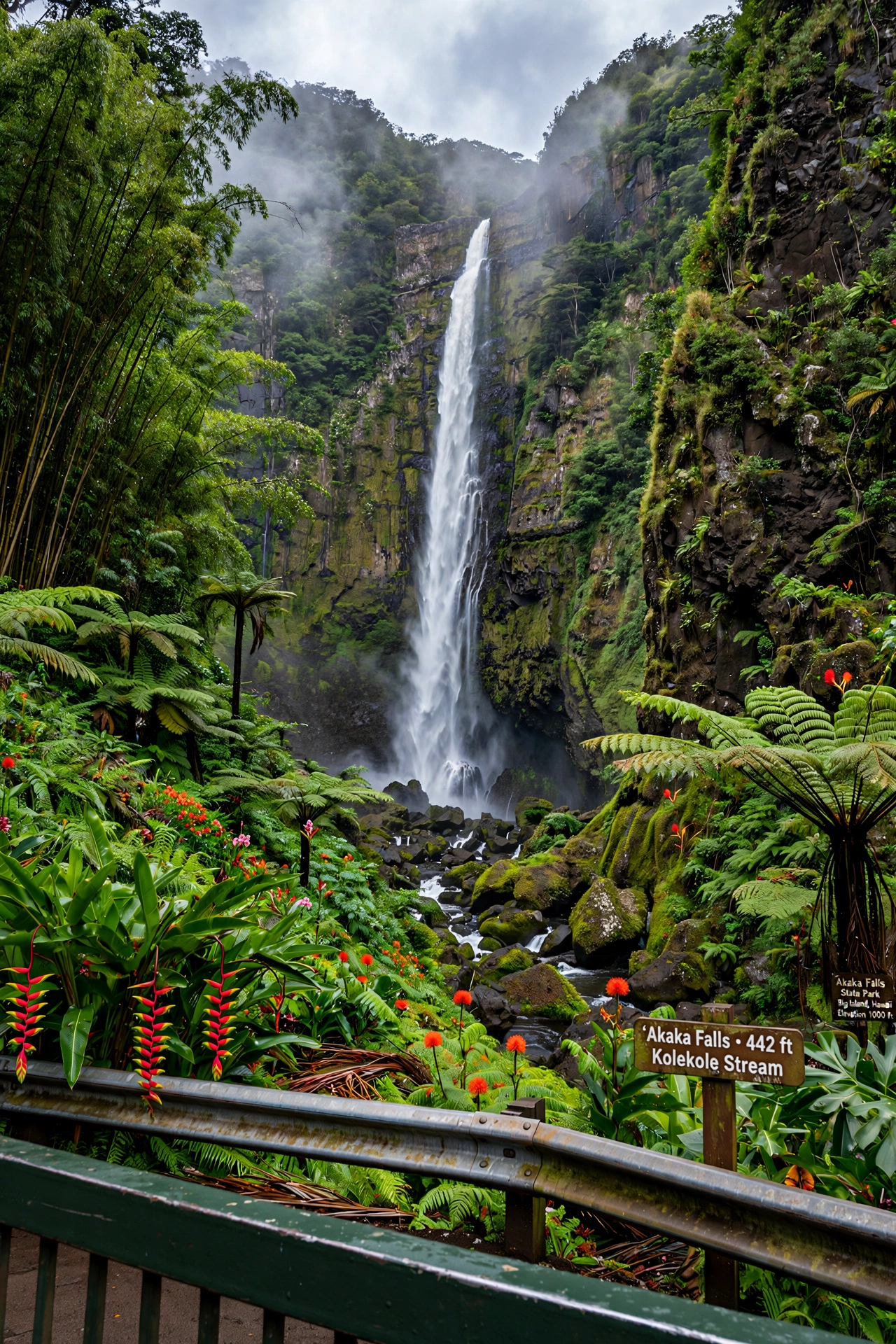
The Big Island’s state parks span black sand beaches, waterfalls, and high mountain country. Akaka Falls State Park protects the 442-foot ʻAkaka Falls on a short, paved loop trail through rainforest, an easy stop on the Hāmākua Coast. Hapuna Beach State Recreation Area is consistently ranked among the best beaches in Hawaiʻi, with a long white sand beach, lifeguards, and facilities, though winter surf can be rough.
Kekaha Kai State Park on the Kona coast protects Maniniʻōwali Beach (Kua Bay), a postcard cove reached by a rough access road that rewards careful drivers. Mauna Kea State Recreation Area at 6,500 feet offers cool mountain camping and is a staging point for summit trips. Lava Tree State Monument preserves lava molds of tree trunks from a 1790 eruption. Wailuku River State Park in Hilo includes Rainbow Falls and the Boiling Pots, best seen in the morning. MacKenzie State Recreation Area and Isaac Hale Beach Park on the Puna coast show the island’s raw volcanic shoreline, where new black sand beaches formed after the 2018 eruption. Kalopa State Recreation Area on the Hāmākua Coast offers native forest trails and cabins in cool upland country.
Molokaʻi and Lānaʻi
Molokaʻi’s main state park is Palaʻau State Park, home to the famous overlook with its sweeping view of the Kalaupapa Peninsula far below. The park also protects a sacred phallic stone and ironwood-shaded picnic grounds. Lānaʻi has no state parks; its public shoreline access, including Hulopoʻe Beach Park with its tide pools and the landmark Puʻupehe, is managed by the county. Both islands reward visitors who slow down: the parks here are quiet, uncrowded, and deeply local in character.
County and Beach Parks
County parks are the backbone of beach access in Hawaiʻi. Each county manages its own shoreline parks, and they are generally free, open from sunrise to sunset, and equipped with restrooms, showers, and picnic tables. Many of the islands’ best swimming beaches are county parks: think of the lifeguarded bays, family beaches with calm water, and the long sandy stretches where locals spend their weekends.
Because they are free and close to towns, county beach parks fill up on weekends and holidays. Arrive before 9 a.m. for parking at the popular ones. Alcohol rules vary by county and many beach parks prohibit it. Camping in county parks requires a permit where camping is allowed at all, and some parks close overnight. Dogs are generally not allowed on beaches in Hawaiʻi, though rules differ by county and leashed dogs may be permitted in certain park areas away from the sand.
A few county parks deserve special mention. On the Big Island, the county manages beaches along the Kona and Kohala coasts as well as the Puna district’s newer black sand beaches. On Maui, the county parks include family beaches along the west and south shores. Kauaʻi’s county beach parks dot the east and south shores. Oʻahu’s city and county park system is enormous, covering famous beaches from the North Shore to the Windward side. Always check ocean conditions before swimming at any beach park: lifeguard presence, warning signs, and the color of the water tell you more than any guidebook.
Permits and Reservations
The reservation era has arrived for Hawaiʻi’s most popular parks, and it catches many visitors by surprise. Rules change, new parks join the reservation systems, and time slots sell out, so treat this section as a starting map and always verify current requirements on the official park websites before your trip.
On Oʻahu, Diamond Head State Monument requires advance reservations for all visitors, with timed entry. On Maui, Waiʻānapanapa State Park requires advance reservations for out-of-state visitors, and ʻĪao Valley State Monument requires reservations for nonresidents. Haleakalā National Park requires a separate sunrise reservation in addition to the park entrance fee; daytime visits do not need it.
On Kauaʻi, Hāʻena State Park requires advance reservations for all nonresidents, including pedestrians and shuttle riders, and the Kalalau Trail requires overnight camping permits that are released in advance and sell out within minutes. Day hikers on the first two miles to Hanakāpīʻai need Hāʻena entry reservations but not camping permits. For the national parks, Hawaiʻi Volcanoes National Park charges an entrance fee with no general reservation requirement, though special programs may need booking.
Camping permits are a separate system. State park campgrounds require permits booked in advance through the Division of State Parks, and popular campgrounds on holiday weekends book out early. Backcountry camping in places like the Nā Pali Coast requires its own permits. County park camping, where allowed, needs county permits. Commercial filming, weddings, and large events in parks require special use permits everywhere.
Book reservations the moment your dates are set, especially for Hāʻena, the Kalalau Trail, and Haleakalā sunrise. Screenshot or save your confirmation codes, since cell service at park entrances is unreliable. If a park you wanted is full, treat it as a sign to explore somewhere less famous: Hawaiʻi has no shortage of remarkable places that require no reservation at all.
Park Etiquette and Safety
Good behavior in Hawaiʻi’s parks protects fragile places and keeps you safe. Start with the basics of Leave No Trace: pack out everything you bring in, stay on marked trails, and leave rocks, plants, coral, and sand where you found them. Taking lava rocks is widely believed to bring bad luck through the legend of Pele’s curse, and more practically, removing anything from parks is illegal.
Give wildlife space. Hawaiian monk seals rest on beaches to recover, and the law requires keeping at least 50 feet away. Sea turtles need at least 10 feet. Never touch, feed, or chase any wild animal. At seabird sanctuaries and nesting areas, stay on trails and keep noise down. If you see a seal with a red tape perimeter or a posted sign, the boundary is there for the animal’s protection.
Water safety deserves its own warning. Drowning is a leading cause of visitor deaths in Hawaiʻi. Never turn your back on the ocean, never swim alone at unguarded beaches, and respect warning signs and red flags. Flash floods can turn a calm stream into a deadly torrent within minutes during rain, which is why swimming in waterfall pools is discouraged and sometimes prohibited. On land, heat and dehydration sneak up fast on exposed trails: carry more water than you think you need, wear sun protection, and tell someone your plans when hiking remote areas.
Cultural etiquette matters as much as physical safety. Do not climb on heiau walls or enter closed cultural sites. Keep voices low at places of worship and memorials. Ask before photographing cultural practitioners or ceremonies. Learn a few basic courtesies: the shoreline below the high water mark is public land in Hawaiʻi, but the land above it may be private, so use marked access paths rather than cutting across property.
Frequently Asked Questions
How many national parks are in Hawaiʻi?
Hawaiʻi has two national parks, Hawaiʻi Volcanoes National Park and Haleakalā National Park, plus six additional National Park Service units including national historical parks and historic sites, for eight federal sites in total.
Do I need reservations for Hawaiʻi state parks?
Some of them, yes. Diamond Head on Oʻahu, Waiʻānapanapa and ʻĪao Valley on Maui, and Hāʻena State Park on Kauaʻi require advance reservations for nonresidents. Many other state parks need no reservation. Check the Division of State Parks website before your visit, since requirements change.
Are Hawaiʻi state parks free?
Hawaiʻi residents generally enter state parks free. Nonresidents pay entrance or parking fees at many popular parks, with fees varying by park. National parks charge federal entrance fees for everyone. County beach parks are generally free.
Can I camp in Hawaiʻi parks?
Yes, in designated campgrounds with advance permits. State park campgrounds require permits through the Division of State Parks, backcountry areas like the Nā Pali Coast need separate permits, and county park camping needs county permits where allowed. Book early for weekends and holidays.
Which is the best national park in Hawaiʻi?
It depends on your interests. Hawaiʻi Volcanoes National Park is unmatched for geology and the story of an island being born, while Haleakalā offers the famous sunrise, crater hiking, and the Road to Hāna’s Kīpahulu district. Visitors with time for both rarely regret it.
Do I need a permit to hike the Kalalau Trail?
Day hikers on the first two miles to Hanakāpīʻai need Hāʻena State Park entry reservations. Anyone going beyond Hanakāpīʻai must have an overnight camping permit for Nā Pali Coast State Wilderness Park, which sells out extremely fast when released.
Are dogs allowed in Hawaiʻi parks?
Generally no. Dogs are prohibited in national parks except in limited developed areas, and state parks restrict them as well. Service animals are permitted. Some county parks allow leashed dogs in designated areas away from beaches. Check each park’s rules before bringing a pet.
What should I do if a park I wanted to visit is fully booked?
Use it as an invitation to explore. Hawaiʻi’s lesser-known parks, county beach parks, and island hiking trails offer remarkable experiences with no reservations. The islands reward travelers who venture beyond the famous names.
Related Guides
- Hawaiʻi Volcanoes: the statewide volcanoes hub, from Kīlauea to Haleakalā
- Maui Travel Guide: Haleakalā National Park, Waiʻānapanapa, and ʻĪao Valley in island context
- Kauaʻi Travel Guide: Waimea Canyon, Kōkeʻe, and the Nā Pali Coast
- Oʻahu Travel Guide: Diamond Head, Kaʻena Point, and the island’s park system
- Big Island Travel Guide: Hawaiʻi Volcanoes National Park and the island’s state parks
- Molokaʻi Travel Guide: Palaʻau State Park and Kalaupapa in island context
- Lānaʻi Travel Guide: Hulopoʻe Beach Park and the island’s shoreline access
- Best Time to Visit Hawaiʻi: seasons, crowds, and planning around park reservations
- Hawaiʻi Weather: microclimates and packing for park days at any elevation
A Final Note
Hawaiʻi’s parks protect places that took millions of years to form and hold meanings far older than any visitor’s trip. The reservation you book, the trail you stay on, and the distance you keep from wildlife all shape whether these places remain remarkable for the people who come next. Plan carefully, travel gently, and let the parks set the pace. The islands have been here a long time, and the best experiences in their parks come to those who slow down enough to notice.