Hawaii Lifted Trucks: Culture, Laws & Guide

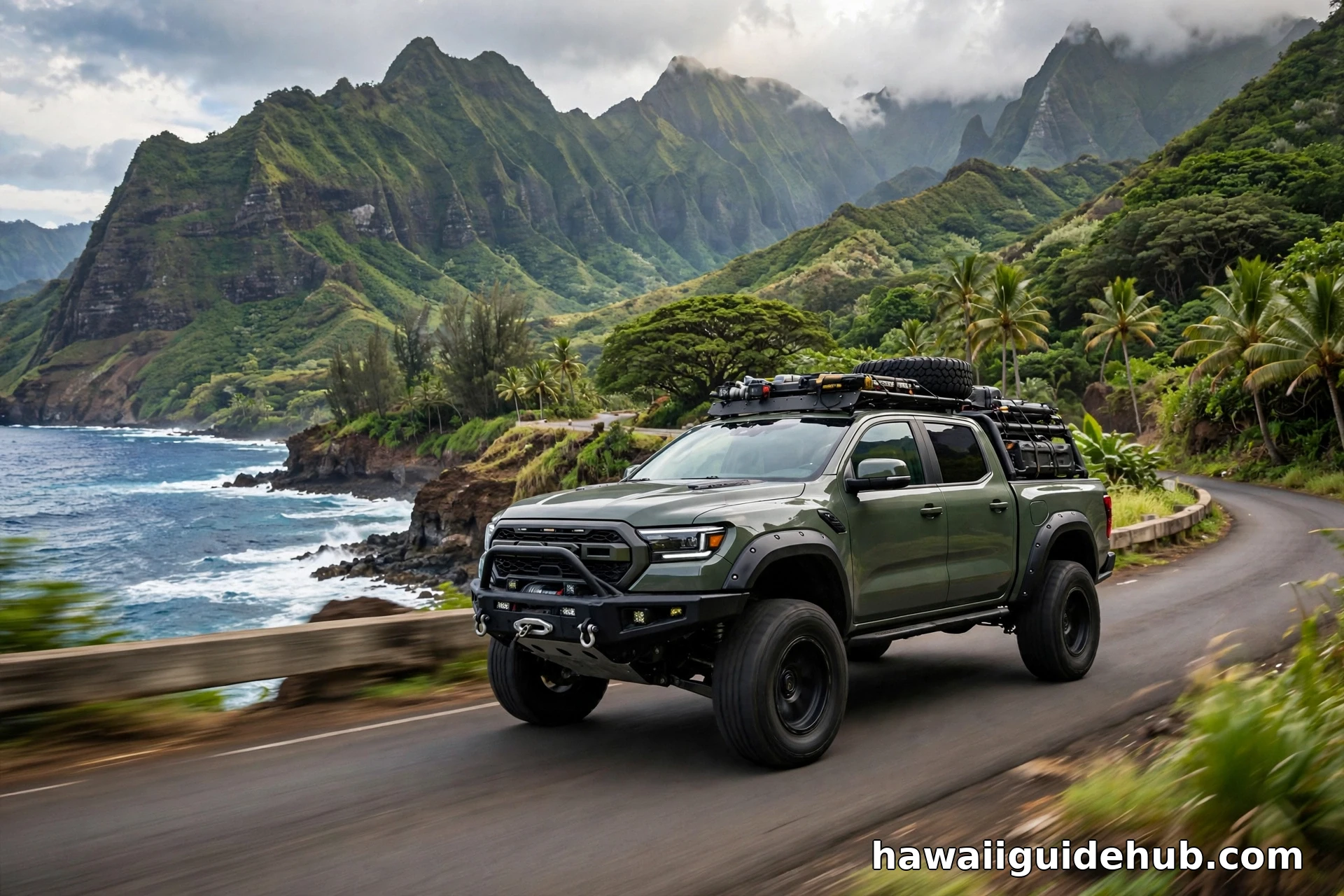
Lifted trucks are Hawaii’s unofficial state vehicle: Toyotas on big tires, rumbling down country roads, parked at the beach, gathered at night meets. The lifted truck is island culture on wheels: work, play, and identity in one. This guide covers Hawaii’s lifted truck culture, the lift laws you must know, the truck meet scene, and what visitors should know.
This page covers the truck culture, Hawaii’s lift laws, bumper height limits, the meet scene, and FAQs. Everything about Hawaii lifted trucks is on this one page.
The Short Answer
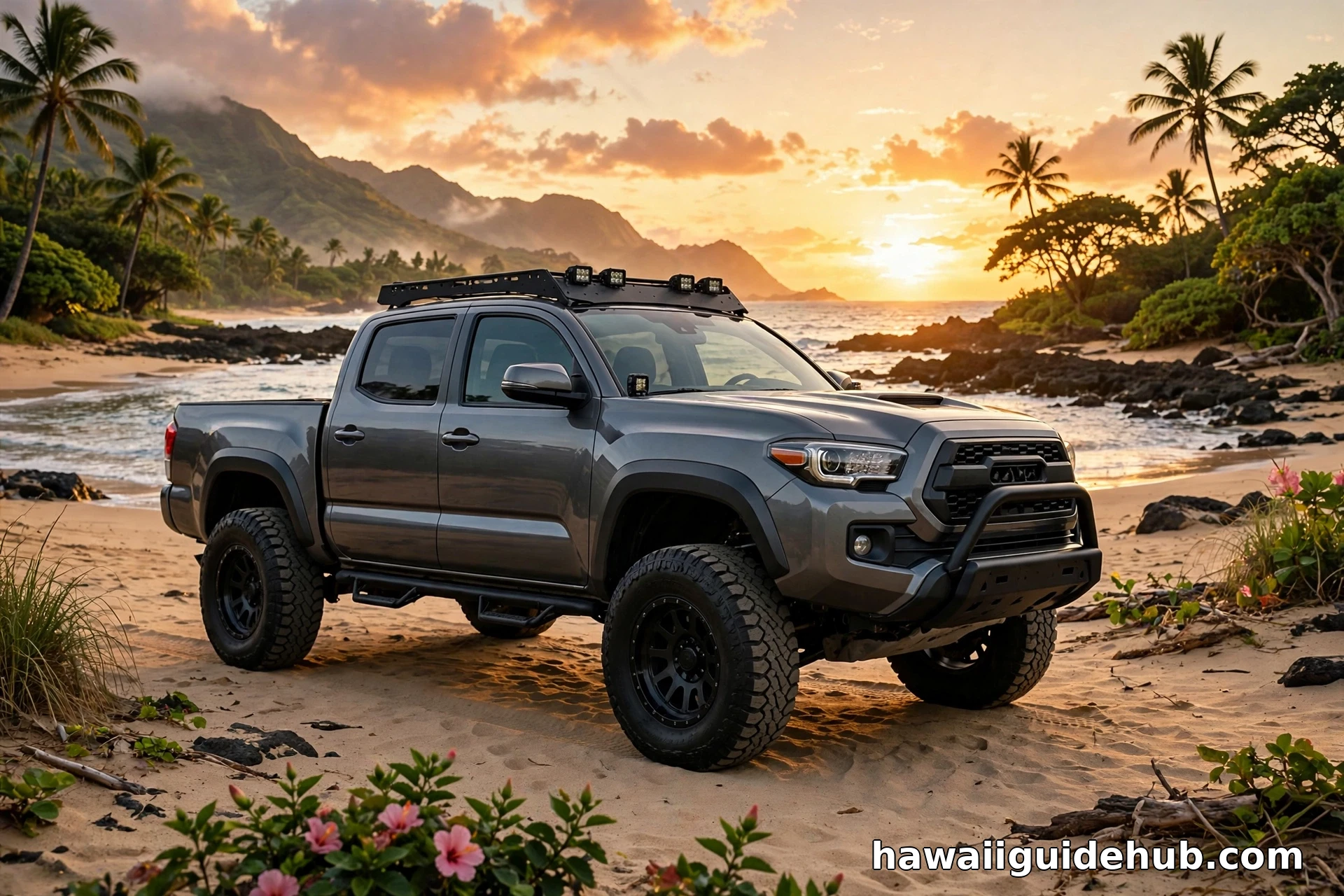
Hawaii’s lifted truck culture centers on Toyotas (Tacomas, 4Runners, Tundras): lifted, big tires, built for beach and backroad. Hawaii regulates lifts: bumper height limits by GVWR (29″/33″/35″), body lifts max 3 inches, fenders must cover tires. Truck bed riding now requires age 16+. Night meets (High N Wide, Rigs & Grindz) draw hundreds. It is culture, not just transportation.
Hawaii Lift Law Limits
| Rule | Limit (per Hawaii County Code) |
| Bumper height, GVWR ≤ 4,500 lbs | 29 inches front and rear |
| Bumper height, 4,501-7,500 lbs | 33 inches front and rear |
| Bumper height, 7,501-10,000 lbs | 35 inches front and rear |
| Body lift | 3 inches maximum |
| Fenders | Must cover tire tread |
Why Trucks Rule Hawaii
The truck fits island life perfectly: haul surfboards, tow boats, carry coolers, handle dirt roads, and look good doing it. Toyota dominates for good reason: reliability in the salt air, parts everywhere, mechanics on every island who know them. The lifted truck is the Swiss Army knife of Hawaii: work vehicle, family car, beach rig, and status symbol. One vehicle does everything: the island demands versatility.
The Truck Meet Scene
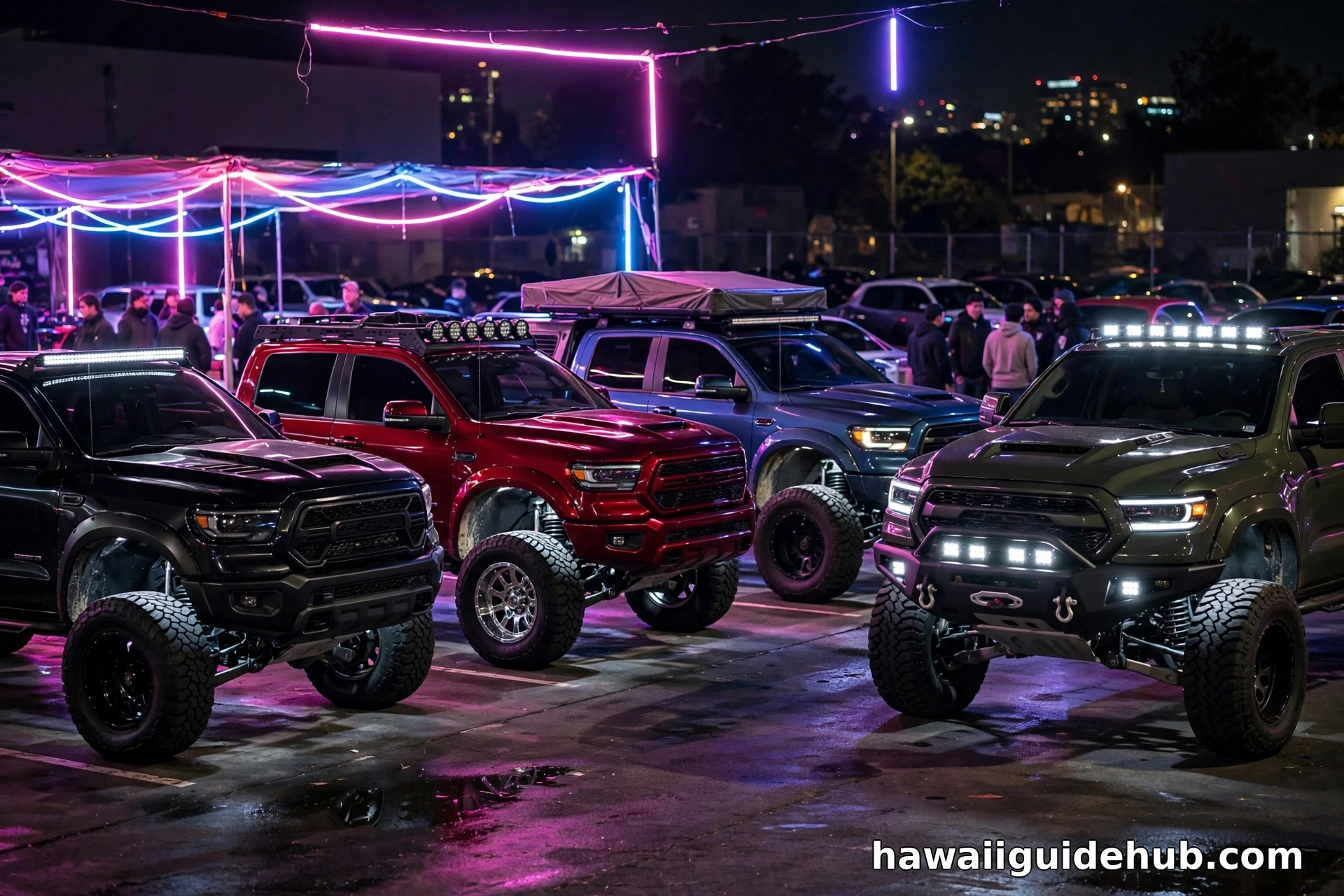
Truck meets are Hawaii’s car culture at its best: hundreds of lifted and built trucks gathering in parking lots, showing builds, sharing food, and celebrating ohana. Events like High N Wide (Kona) and Rigs & Grindz (Kauai) draw big crowds: neon, sound systems, and community spirit. The meets are family-friendly: kids, grills, and good vibes. It is motorsport as potluck: everyone brings something.
The Laws: What Gets You Cited
Hawaii police actively enforce the modification rules: oversized tires without fender coverage (tire tread beyond the fender fails safety inspection), excessive bumper height, and illegal window tint ($287 fine). Fines for lift violations run $57-$72+, and unsafe vehicles can be towed on the spot. The message is clear: build it, but build it legal. The laws exist for safety: flying rocks and blind spots hurt people.
Truck Bed Riding: The New Law
Riding in truck beds is island tradition: but in 2026, Hawaii raised the minimum age from 12 to 16 (signed by Gov. Green). The law responds to real danger: ejections on faster roads. The tradition continues on back roads: but the back of the truck is no place for kids. Culture adapts: the truck stays, the rules evolve.
For island life, see the best things to do on the Big Island, the best five things to do in Hawaii Volcanoes National Park, and the best things to do in Kona.
The Toyota Dynasty
Toyota owns Hawaii’s truck market: Tacomas, 4Runners, and Tundras are everywhere you look. The reasons compound: they survive the salt air, parts are stocked on every island, mechanics know them inside out, and resale values are absurd (a 10-year-old Tacoma sells for mainland-new prices). The Tacoma is the default: the island’s workhorse, beach rig, and family car in one. Other brands have loyal fans: but Toyota is the establishment.
Lifted vs Slammed
Hawaii’s truck scene has two poles: lifted (big tires, off-road stance) and slammed (lowered, street style). The lifted truck dominates the country; the slammed mini-truck rules the town. Both are built with obsession: the details matter. The rivalry is friendly: the meets welcome both. It is the island’s automotive yin and yang: up and down, mud and pavement.
Building a Legal Lift
The legal lift recipe: suspension lift within bumper height limits, body lift under 3 inches, fender flares covering the tire tread, proper alignment, and legal window tint. Get the safety inspection: it is the real test, not the parking lot opinion. Shops know the rules: use a reputable builder who guarantees inspection passage. The illegal lift costs more in fines and impound risk than the legal one costs in parts. Build it right: the first time.
The Beach Truck
The beach truck is a lifestyle: tailgate down, cooler open, surfboards racked, friends in the bed (16+ now). The lifted truck handles the sand access roads that sedans cannot. Beach days revolve around the truck: it is the base camp. The salt air rusts: beach trucks are maintained religiously. The truck earns its keep: every scratch is a story.
Truck Culture and Music
Hawaii’s music romanticizes the truck: country roads, dusty highways, and tailgate sunsets fill the songs. The lifted truck is a lyrical fixture: as Hawaiian as the ukulele. Local artists sing about trucks the way Nashville does: with love. The culture is audible: roll down the windows at a meet and listen. The soundtrack is the scene.
The Economics
Trucks are expensive in Hawaii: shipping, demand, and the Toyota premium inflate prices. A build costs thousands: lift kit, tires, wheels, lights, audio. But the truck holds value: it is an asset, not just a vehicle. Many owners do the work themselves: the garage is the clubhouse. The economics make sense: the truck works, plays, and appreciates.
Safety Inspections
Hawaii’s safety inspection (required regularly) is where illegal lifts die: bumper height measured with a tape, tire coverage checked, tint tested with a meter. Fail and you cannot register: the truck is grounded until fixed. The inspection keeps the scene honest: the wildest builds are often the most compliant. Know the checklist before you build: the inspector is the final judge.
For Visitors: Rental Reality
Visitors do not need a lifted truck: standard rentals handle every tourist road, including the Saddle Road and Volcano. Renting a lifted truck is possible (specialty outfits) but unnecessary and expensive. Admire the local builds; drive your sensible sedan. The truck is their culture: you are a guest. Enjoy the show from the sidewalk.
The Night Meet Experience
Arrive at dusk: the lot fills with lifted trucks, neon underglow, and LED light bars. Walk the rows: every build has a story, and owners love telling them. The food appears: someone always grills. Kids play between the trucks; aunties hold court in camp chairs. The sound-off and 2-step contests provide the entertainment. It is a block party with horsepower: the most welcoming scene in Hawaii car culture.
Generations of Truck Owners
The truck passes down: father to son, the old Toyota becoming the kid’s first build. Grandfather’s farm truck, father’s beach truck, son’s show truck: the lineage is real. The knowledge transfers: how to lift, how to weld, how to pass inspection. The truck is inheritance: metal, memory, and mana. Families are built around trucks: literally and figuratively.
The Work Truck
Before the show truck, there is the work truck: hauling lumber, towing boats, carrying tools. Hawaii’s trades run on pickups: construction, landscaping, fishing. The lift helps: ground clearance for job sites. The work truck is respected: dents are badges. The show truck gets the glory; the work truck gets the job done. Most owners have been both.
Off-Roading in Hawaii
Hawaii’s off-road opportunities are limited but beloved: Kaena Point (Oahu), Peacock Flats, and private land. The lifted truck opens these: trails that demand clearance. Tread lightly: stay on designated routes, respect closures, pack out everything. The off-road community polices itself: access depends on behavior. The trail is a privilege: earn it.
The Future: Electric Trucks?
Electric trucks are coming to Hawaii: instant torque, silent running, and no gas station. The culture is curious but cautious: range, charging, and the soul of the build. Early adopters lift their Lightnings and Rivians: the scene adapts. The truck endures: whatever powers it. The future is electric; the culture is eternal.
The Sound System
The truck’s sound system is a point of pride: subwoofers, amps, and speakers tuned for the parking lot. The sound-off competition is the meet’s main event: who hits hardest, cleanest, loudest. The builds are engineering: electrical systems upgraded to feed the beast. The music is local: reggae, Jawaiian, hip-hop. The bass is the heartbeat: feel it in your chest.
Lighting: The Night Show
LED light bars, underglow, rock lights: the night meet is a light show. The lighting is functional (trail visibility) and theatrical (the glow). Quality matters: cheap LEDs fail in the rain. The best builds light up like small cities: tasteful, bright, and legal (colors matter: know the rules). The night belongs to the lit: the trucks become lanterns.
The Build Process
The build is the journey: lift kit first, then tires, wheels, lights, audio, and the endless details. Most owners build over years: paycheck by paycheck, mod by mod. The garage is the workshop; friends are the crew. The build thread documents everything: the forum is the diary. The finished truck is never finished: there is always the next mod.
Respect the Road
The truck community’s code: no street racing, no burnouts in neighborhoods, respect the meets’ rules. The bad apples get the meets shut down: everyone knows it. The culture self-polices: elders correct the young. The road is shared: drive like your grandmother is watching. Respect keeps the scene alive: the privilege of gathering depends on behavior.
The Island Difference
Mainland truck culture is about mud and horsepower; Hawaii’s is about ohana and the beach. The island truck is cleaner, more social, and more integrated into daily life: it is the family car. The builds reflect the place: salt-resistant coatings, beach-ready setups, and the aesthetic of the islands. The culture is distinct: you know a Hawaii truck when you see one. The island shapes the machine.
Why Visitors Notice
Visitors notice the trucks because they are everywhere and unmistakable: the lifted Tacoma is as Hawaiian as the rainbow. The trucks are a window into local life: work, family, and fun in one vehicle. Notice with respect: these are people’s pride, not tourist attractions. A wave and a smile are welcome; touching the truck is not. The trucks tell Hawaii’s story: listen.
The Truck as Ohana
In the end, the truck is ohana: it carries the family to the beach, to the game, to the gathering. It is where kids learn to drive, where stories are told, where the coolers ride. The lifted truck is not about the lift: it is about who rides along. The culture’s heart is not horsepower: it is the people in the seats (and, of age, in the bed). The truck is the vehicle; ohana is the destination.
Video: Toyota Trucks Hawaii Truck Meet
Hawaii’s Toyota truck culture: the Kauai meet.
Frequently Asked Questions
Are lifted trucks legal in Hawaii?
Yes, within limits: bumper heights by GVWR, 3″ max body lift, fenders covering tires.
What is the max bumper height in Hawaii?
29″ (≤4,500 lbs GVWR), 33″ (4,501-7,500), 35″ (7,501-10,000), front and rear.
Why are there so many Toyotas in Hawaii?
Reliability, parts availability, resale value: Toyotas thrive in island conditions.
Can you ride in a truck bed in Hawaii?
Age 16+ as of 2026. It is tradition, but the law now restricts it.
What are Hawaii truck meets like?
Community gatherings: lifted trucks, food, music, families. Welcoming and fun.
Do I need a lifted truck to visit Hawaii?
No: a regular rental handles all tourist driving. The trucks are local culture.
Hawaii’s lifted trucks are more than vehicles: they are the island’s rolling culture. The lift, the tires, the meet, the ohana: it all connects. Respect the laws, appreciate the builds, and understand: in Hawaii, the truck is not transportation. It is identity, community, and the freedom of the open island road. The next time a lifted Tacoma rumbles past, you will know: that is Hawaii, driving by.